
You did not ruin your career. Even if it feels like you just lit your CV on fire.
I’m going to say this bluntly: one failed course or rotation does not doom your residency chances. What kills people isn’t the failure itself. It’s the silence, the pattern, or the weird attempts to hide it.
You’re terrified this one red mark is going to glow neon on ERAS and scream “Do not rank” to every PD. I know that sick feeling—refreshing your transcript, replaying the moment you saw “Fail,” imagining some program director reading it and closing your file after 3 seconds.
Let’s drag this into the light and dismantle it properly.
Step 1: Understand What Program Directors Actually See
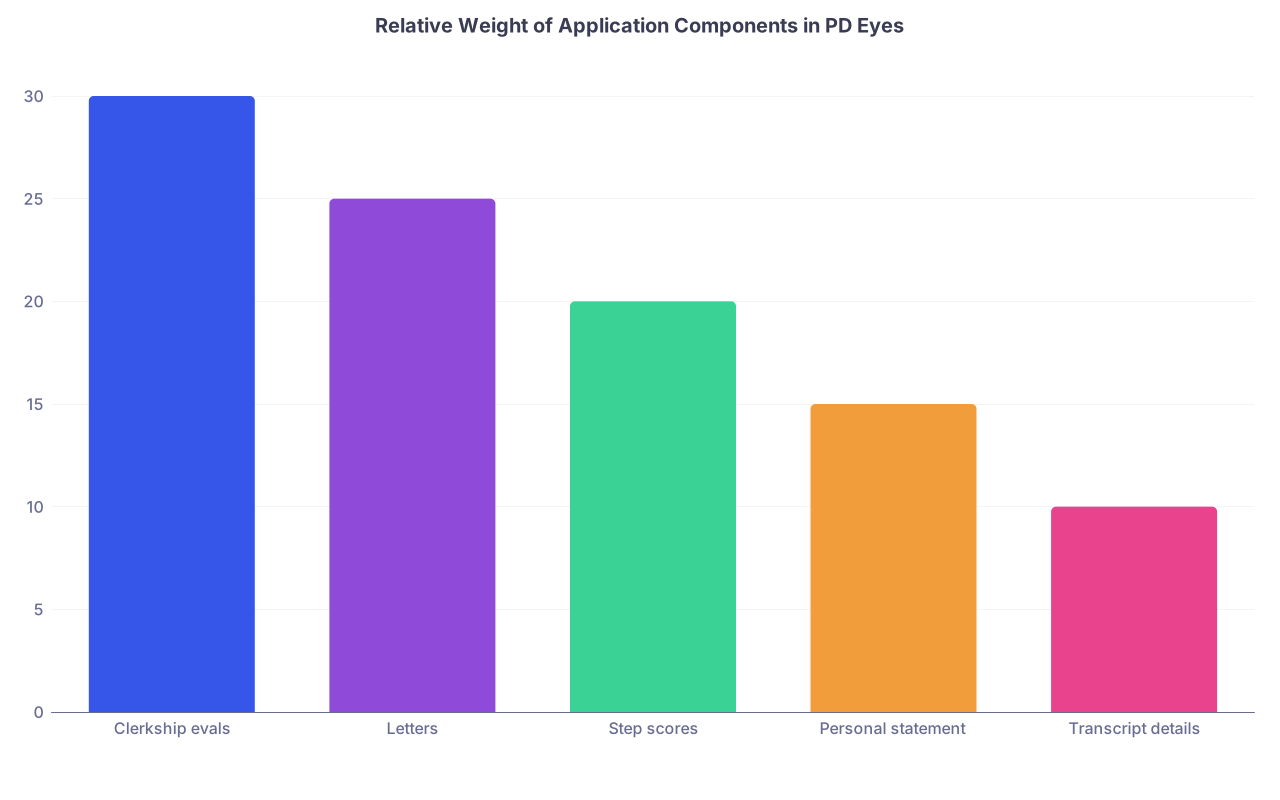
| Category | Value |
|---|---|
| Clerkship evals | 30 |
| Letters | 25 |
| Step scores | 20 |
| Personal statement | 15 |
| Transcript details | 10 |
Your brain: “They’re going to stare at my one fail and ignore everything else.”
Reality: Most PDs skim like busy humans, not forensic auditors.
They generally care about:
- Patterns, not one-offs
- How recent the problem was
- Whether you recovered or kept crashing
They’re triaging hundreds (or thousands) of apps. Here’s roughly how their eyes move:
- Specialty-relevant stuff (core clerkships, Step scores, SLOEs in EM, etc.)
- Letters and narrative comments (“Great to work with,” “below level,” “lack of initiative”)
- Transcript for trends: repeated failures, remediation, leaves
- Red flags: unremediated failures, professionalism issues, unexplained gaps
One failed course or rotation—especially early, remediated, and followed by stronger work—usually gets filed in their heads as: “Ok, what happened, and did they get better?”
Not: “Trash app, next.”
If you failed:
- A pre-clinical course → PDs care less than you think, especially if Step/clinical improved
- A core rotation → PDs care more, but it’s still not auto-doom if you show clear improvement and have strong evals elsewhere
- An elective in the specialty you’re applying into → this one stings, but again: explain, offset, and overwhelm it with other strengths
The CV isn’t about pretending the failure doesn’t exist. It’s about making sure it’s one data point, not your entire story.
Step 2: Decide Where (and How) to Address the Failure
The failure will be visible in at least one place (transcript, MSPE, ERAS). Your choice is whether to pretend it’s not there or to control the story.
Silence looks worse than a short, clear explanation.
You have three main tools:
- CV / ERAS Experiences section – you don’t mention the fail directly here, but you build a counter-narrative of competence and growth.
- Personal statement – optional place for a brief owning-it paragraph if it’s significant enough.
- Secondary questions / “concerns” essay – this is usually the best place to explain it if schools/programs ask.
Here’s the general rule I use:
One isolated fail, remediated, with later strong performance?
→ Address only if there’s a specific prompt or if your advisors strongly say you should. Otherwise, let your upward trend do the talking.Fail in a core rotation or repeated failures?
→ You probably need a concise, mature explanation somewhere (PS or “red flags” section), and your CV needs to be aggressively strong in other ways.
You’re not writing a confession letter. You’re answering the unspoken PD question:
“Can I trust this person to show up, learn, improve, and not collapse under stress?”
Step 3: Make Your CV Scream “Growth,” Not “Damage Control”
Your CV can’t erase the failure. But it can shrink it.
There are three big levers:
- Show you can do the work now
- Show people actually liked working with you
- Show you occasionally leave your room and contribute to something bigger than yourself
1. Academics & Clinical Performance: Build an Upward Arc
If you failed a rotation, you want the next ones—especially in similar fields—to look strong. On the CV, you can’t list grades, but you can highlight:
- Honors / high passes in later clerkships
- Sub-I’s or acting internships with good narrative evals
- Any “selected by department for X” or “invited to return as…” type roles
Example line in your CV under Clinical Experience:
- Sub-intern, Internal Medicine – University Hospital
– Took primary responsibility for a 6–8 patient census; consistently recognized in evaluations for thorough notes, follow-through, and strong teamwork
You’re quietly telling them: Whatever happened before, I can handle the job now.
If your med school allows it, get involved in:
- Teaching roles (peer tutor, OSCE TA)
- Curriculum committees
- Anything that implies “we trusted this person with responsibility after the failure”
Those roles on a CV are subtle but powerful. You don’t become a tutor or small group facilitator if faculty secretly think you’re a disaster.
2. Letters: The Real Counterweight
Honestly, letters of recommendation do more to fix the “I failed a rotation” narrative than any single line on your CV.
You want letters that say things like:
- “I would rank this student in the top half/third of students I’ve worked with in the last 5 years.”
- “Made significant progress over the course of the rotation and responded well to feedback.”
- “Reliable, prepared, and a strong team member.”
You can’t control every word, but you can choose letter writers strategically:
- Pick attendings who saw you on good days, not just when you were drowning.
- Prefer those who watched you improve, not just glide through easily.
- Don’t avoid someone just because they saw you struggle at first—if you clearly got better and they like you, that “growth arc” is valuable.
And yes, you can gently address your previous fail with a mentor and say:
“I’m worried about how this failure looks in my application. You’ve seen how I’ve worked since then—do you feel comfortable speaking to my growth in your letter?”
If they say yes and they mean it, that letter is gold.
Step 4: Add Substance So the Fail Is Just One Line in a Busy CV
You’re not padding. You’re building evidence that you are more than that one grade.
Think about your CV like this:
“How many reasons am I giving them to believe in me that have nothing to do with that failure?”
Some high-yield things to add or strengthen:
-
- Even a small project with a poster presentation looks good.
- Especially powerful if it’s in your chosen specialty.
QIs / Committees / Systems work
- “Participated in a multidisciplinary QI project to reduce ED boarding times”
- “Member, Clinical Skills Curriculum Working Group”
This reads as: “We trust them around actual problems,” which is the opposite of doom.
Teaching / Mentoring
- Peer tutoring
- Near-peer OSCE coaching
- Pre-med mentoring
Programs love people who teach. It signals patience, communication skills, and enough mastery to help others.
Service / Volunteer
- Free clinics
- Community outreach
Not just checkbox stuff. Real, ongoing involvement tells programs: this person shows up.
| Category | Strong Example |
|---|---|
| Research | Poster at national/regional meeting |
| Teaching | Long-term peer tutor or OSCE coach |
| Leadership | Elected role or project lead |
| Service | 1+ year consistent clinic/volunteering |
That fail is a single word on a transcript. You want pages of your CV telling a louder story.
Step 5: If You Do Explain It, Do It Like an Adult, Not a Defendant
If you need to address it (core failure, pattern, or advisors insist), keep it tight and grown-up.
Template you can adapt:
During my [X year/rotation], I failed [course/rotation name]. I struggled with [brief, specific issue—time management, adapting to clinical expectations, personal health issue if you’re comfortable]. I remediated the course and have since focused on [concrete changes: increased use of feedback, structured study schedule, seeking mentorship]. My subsequent performance in [later rotations/Step scores/other metrics] reflects the growth from that experience.
What you don’t do:
- Blame every other person in the story
- Write three paragraphs defending your honor
- Use dramatic language (“devastated,” “crushed my dreams,” “unfair”)
Program directors are allergic to excuses. They’re usually okay with:
- “I underestimated the adjustment needed for clinical rotations.”
- “I didn’t seek help early enough.”
- “I was managing a health/family issue and didn’t adjust my workload appropriately.”
They are not okay with:
- “The attending had it out for me.”
- “The exam wasn’t fair.”
- “I actually knew the material; the grade didn’t reflect my knowledge.”
You’re not arguing a court case. You’re showing you can take a punch, learn, and get back up.
Step 6: Think Strategically by Specialty
Some specialties freak you out more than others.
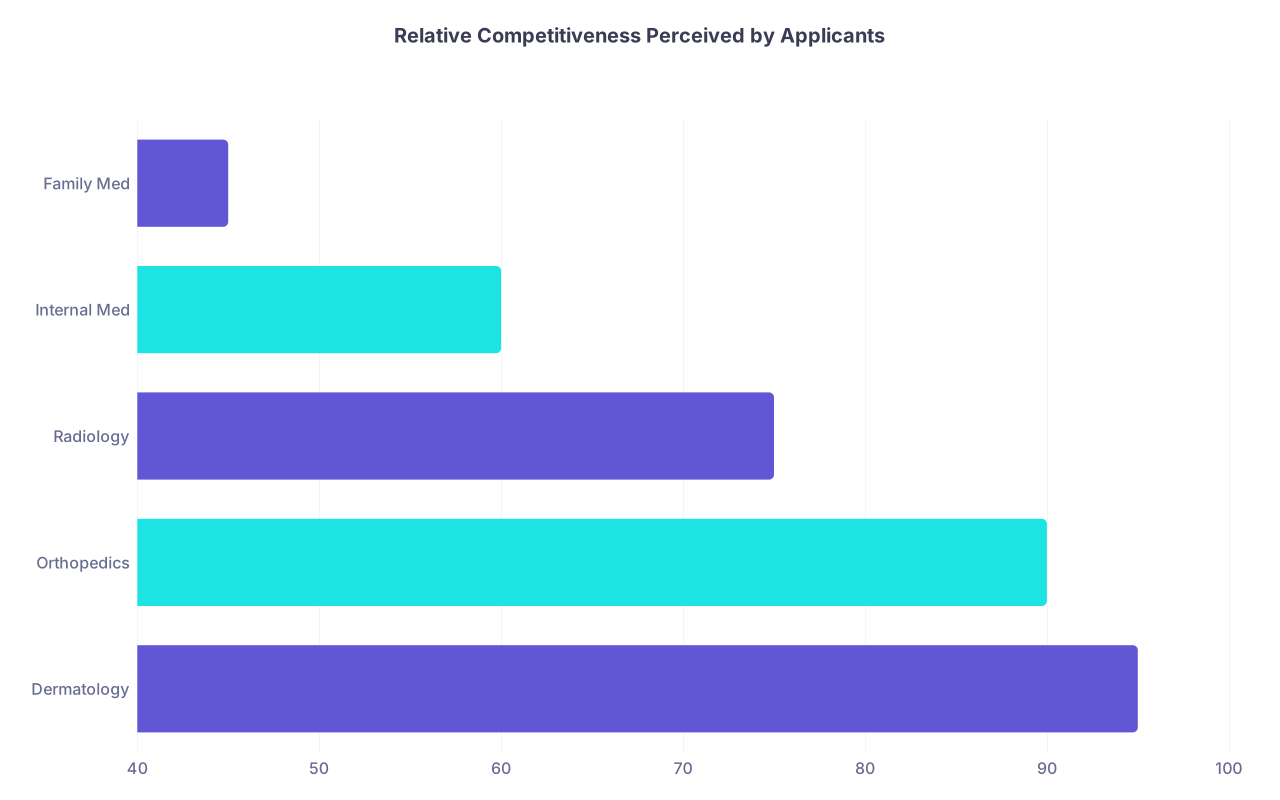
| Category | Value |
|---|---|
| Dermatology | 95 |
| Orthopedics | 90 |
| Radiology | 75 |
| Internal Med | 60 |
| Family Med | 45 |
Reality check:
Hyper-competitive (Derm, Ortho, ENT, Plastics, etc.)
A core fail hurts more, yes. You’ll need:- Exceptional letters in the field
- Research, preferably with publications
- Possibly backup specialties on your rank list
Is it impossible? No. But you need realistic eyes wide open and a very strong story of later excellence.
Moderately competitive (EM, Anesthesia, Rad, OB, some IM fellowships)
A fail is a dent, not a death sentence. Strong SLOEs/letters, solid Step 2, and clean clinical performance after the fail can absolutely overcome it.Primary care / community-focused (FM, Psych, Peds, many IM programs)
These programs tend to weigh fit, communication, and work ethic heavily. A fail with a clear growth story and strong clinical feedback after? Completely survivable.
This is where a trusted advisor or dean’s office is critical. Ask very directly:
“With my record—including this fail—what’s a realistic range of specialties and program tiers?”
Not because you’re giving up. Because you don’t want to gamble your whole future on magical thinking.
Step 7: Mentally Reframe This So It Stops Owning You
You might roll your eyes at this part, but it matters.
If you walk into interviews broadcasting “I’m the person who failed,” people feel that. You answer questions tentatively, over-explain, apologize for existing.
You need a different script in your own head:
“I had a measurable failure. I fixed it. Here’s the proof.”
That “proof” is:
- Improved clinical comments
- Strong letters
- A more mature, structured CV
- The ability to discuss it calmly without spiraling
It’s not about pretending it wasn’t a big deal. It was a big deal. But it’s part of your professional development, not your obituary.

Practical Action Plan (So You Don’t Just Sit and Panic)
Here’s what I’d do in your shoes, in order:
Get the facts
- Meet with your dean/advisor.
- Ask them: “How is this recorded on my MSPE and transcript? How do PDs typically view this?”
Fix everything you can still fix
- Crush your remaining rotations.
- Prioritize strong relationships with attendings for letters.
- If you’re pre-Step 2: aim for a score that shows you clearly know the content.
Be intentional with your CV
- Add at least one substantive new thing: research, teaching, QI, or consistent volunteering.
- Clean up descriptions so they sound like a competent future resident, not a club enthusiast.
Decide your explanation strategy
- No explanation if it’s minor/early and your record afterward is clean? Totally fine.
- Short, clear explanation if it’s a core or late fail or if it created a pattern.
Run everything past someone who’s seen a lot of applications
- Not just your friend who matched last year.
- Someone in advising or a faculty mentor who has actually been on selection committees.

| Step | Description |
|---|---|
| Step 1 | Failure occurs |
| Step 2 | Meet with dean or advisor |
| Step 3 | Focus on strong later performance |
| Step 4 | Plan clear explanation |
| Step 5 | Add research or teaching |
| Step 6 | Secure strong letters |
| Step 7 | Refine CV and ERAS |
| Step 8 | Apply strategically by specialty |
| Step 9 | Pattern of issues? |

FAQs
1. Should I ever mention the fail directly on my CV?
No. The CV isn’t where you confess. It’s where you present your experiences and accomplishments. The fail shows up on your transcript/MSPE. If it needs explanation, use the personal statement or designated “academic difficulties” section, not your experience bullets.
2. Is my application doomed if I failed a core rotation in the specialty I want?
Not automatically, but it raises the difficulty level. You’ll need:
- Strong performance and possibly honors in other rotations in that specialty or adjacent ones
- Very strong letters from attendings who can say “I trust this person as a resident”
- A clear explanation of what happened and how you’ve changed
Some hyper-competitive programs may quietly screen you out. Many will not, if the rest of your app is solid.
3. Will programs assume I’m lazy or incompetent because of one failure?
Some will side-eye it. Many will just be curious. Your job is to show a pattern after the fail that screams the opposite: reliable, hardworking, improving. Programs care more about whether this is an ongoing risk than about one past stumble. That’s why upward trends and strong letters matter so much.
4. Should I bring it up in interviews if they don’t ask?
Usually no. Don’t volunteer bad news out of nowhere. But you should be fully prepared with a calm, concise answer if they do ask. And if there’s a natural, relevant moment (like “Tell me about a time you failed and what you learned”), then yes—that’s a perfectly appropriate time to use this story, framed around growth and changed behavior.

Key takeaways:
- One failed course or rotation doesn’t doom your CV; patterns and lack of growth do.
- A strong, substance-filled CV and solid letters can shrink that failure into a single line in a much bigger story.
- If you explain it, do it briefly and like an adult—own it, show what changed, and let your subsequent performance prove the rest.