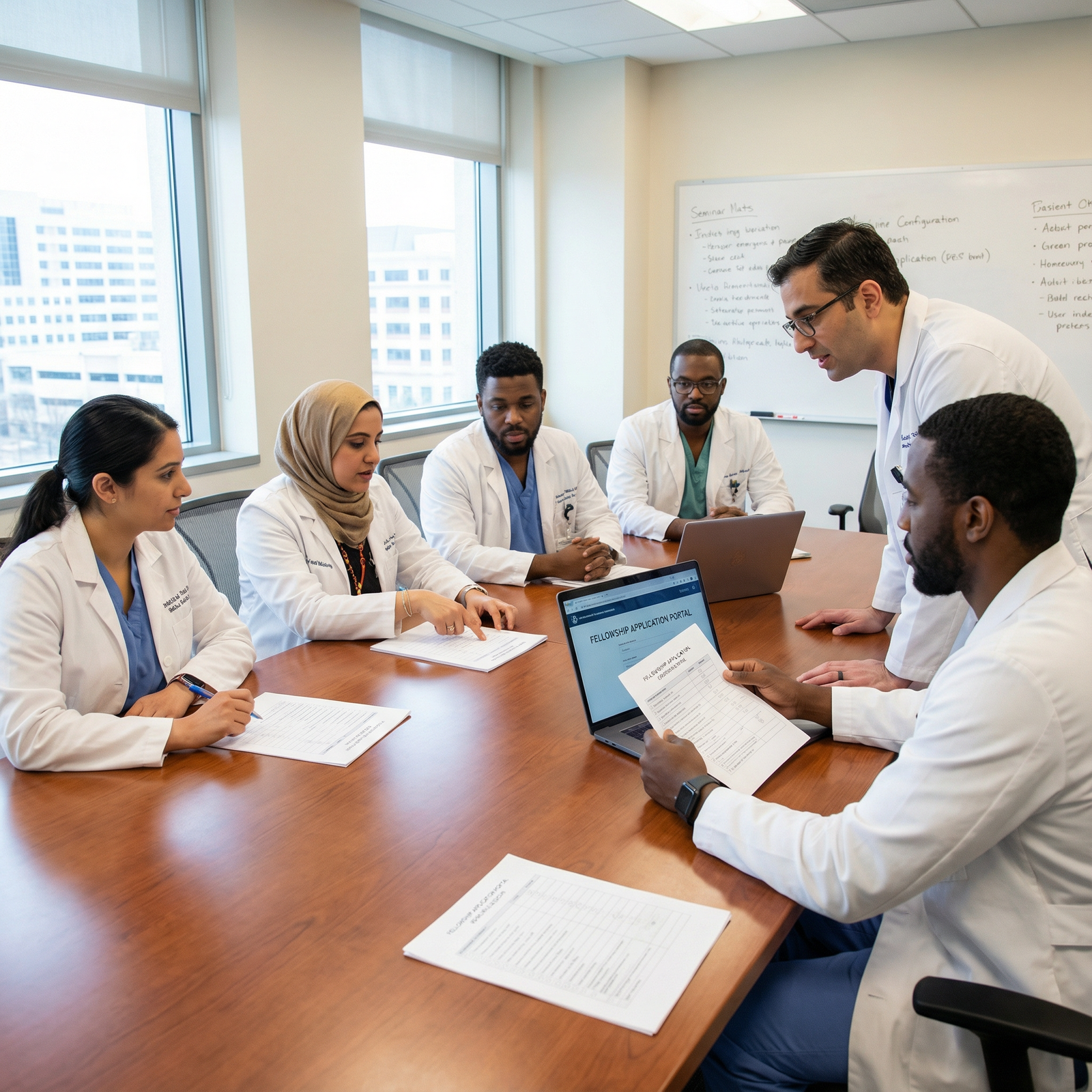
Understanding the Fellowship Landscape as a Caribbean IMG in Anesthesiology
Finishing anesthesiology residency is a major milestone—but for many residents, it’s only the beginning. Critical care, pain medicine, cardiac anesthesia, pediatric anesthesia, regional, OB, transplant, and perioperative medicine fellowships can dramatically expand your career options and earning potential. As a Caribbean IMG, especially from schools like SGU, AUC, Ross, Saba, and others, you can be highly competitive for these positions—but the preparation needs to be intentional and start early.
Because your path includes both “Caribbean medical school residency” challenges and the realities of being an IMG in the U.S. system, you must be more strategic than many of your U.S.-grad peers. This article outlines a step‑by‑step roadmap—from PGY‑1 through fellowship application—to help you navigate the anesthesia match for fellowship confidently.
We will focus on:
- When and how to start preparing
- Building a standout profile as a Caribbean IMG
- Crafting a strong application for anesthesiology fellowships
- Managing the fellowship application timeline
- Common pitfalls and how to avoid them
Throughout, we’ll highlight issues that matter specifically to Caribbean IMGs in anesthesiology and how to turn potential disadvantages into clear strengths.
Start Early: Laying the Foundation in Residency
Clarify Your Goals in PGY‑1 and PGY‑2
Many anesthesiology residents wait until late PGY‑3 to think seriously about fellowship. As a Caribbean IMG, that’s usually too late if you want maximum choice. You don’t have to commit to a single subspecialty early, but you do need a rough direction.
Ask yourself:
- Do I want a procedure-heavy career (e.g., cardiac, regional, interventional pain)?
- Am I drawn to high-acuity, ICU‑based care (critical care, cardiac, transplant)?
- Do I like longitudinal patient relationships (chronic pain, perioperative medicine clinic)?
- Where do I want to practice—academic center, private practice, community hospital, hybrid?
Once you have a preliminary sense, you can start tailoring your rotations, projects, and mentors accordingly.
Action steps in PGY‑1/early PGY‑2:
- Keep an informal “career journal” documenting rotations you like/dislike and why.
- Talk with senior residents and recent graduates about their fellowship experiences.
- Attend your department’s fellowship information sessions (even as a PGY‑1).
- Sign up for subspecialty grand rounds (cardiac, pain, critical care, peds) when possible.
Embrace and Leverage Your Caribbean Background
Program directors are well aware of the stigma some people attach to Caribbean schools. Instead of ignoring it, strategically address and reframe it.
You bring:
- Proven resilience (navigating SGU residency match or another Caribbean medical school residency route)
- Cultural and linguistic diversity
- Experience adapting to new systems and environments
- Often, superior grit and work ethic
In interviews and personal statements, highlight:
- Specific challenges you faced (visa issues, travel disruptions, limited home research infrastructure)
- Concrete steps you took to overcome them
- Skills these experiences gave you (adaptability, resourcefulness, maturity)
This narrative can transform a perceived liability into a compelling asset.
Build a Strong Clinical Reputation First
No amount of research or networking will overcome a poor clinical reputation. For anesthesiology fellowships—especially competitive ones—programs want confident, reliable, technically skilled clinicians.
Focus on:
- Foundational knowledge: Know core physiology, pharmacology, and ASA guidelines cold.
- Procedural competence: Intubations, regional blocks, central lines, arterial lines, epidurals, ultrasound skills.
- Professionalism: Be prepared, on time, communicative, and receptive to feedback.
- Teamwork: CRNAs, nurses, surgeons, and ICU staff often informally influence how you’re perceived.
Ask for mid-rotation feedback and act on it. Being “coachable” is highly valued and noted in letters.
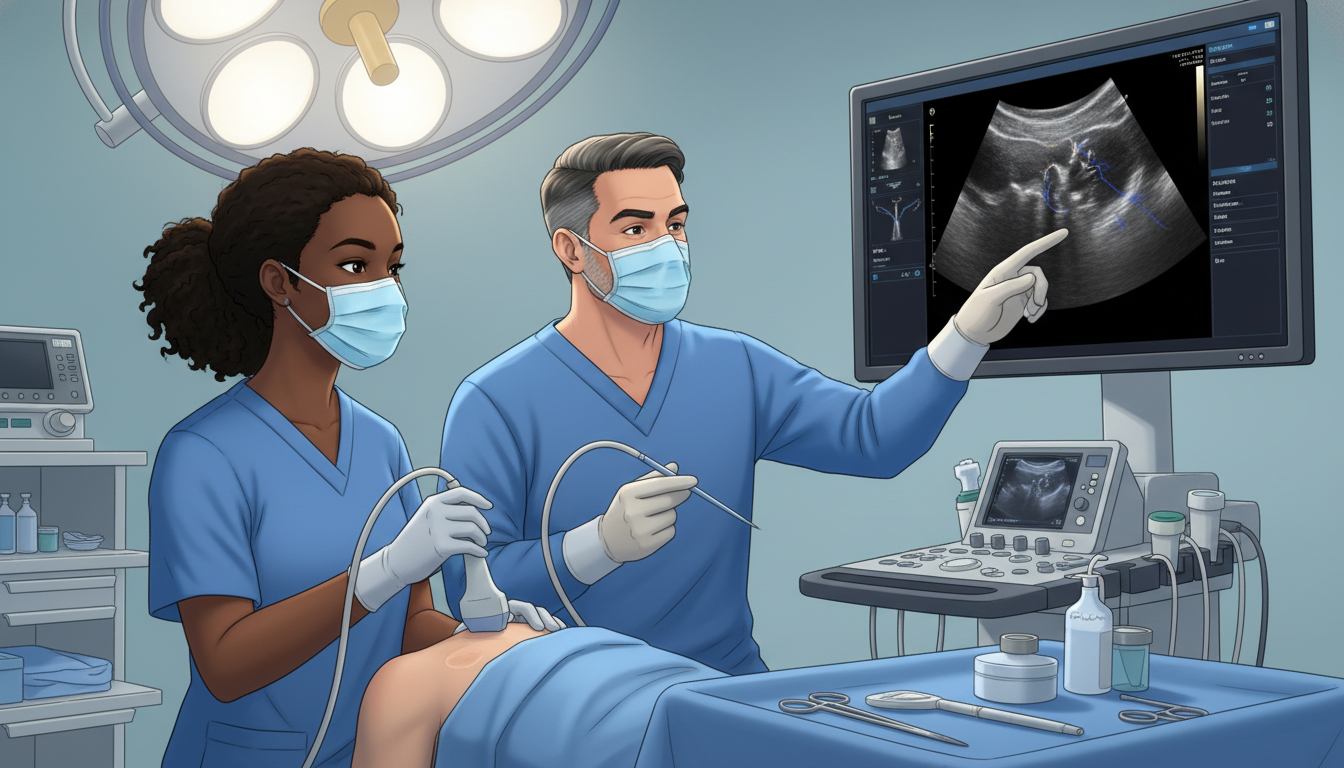
Building a Competitive Profile for Anesthesiology Fellowships
Clinical Performance and Key Rotations
For most anesthesiology fellowships, your clinical performance is the foundation of your application.
Prioritize:
- Strong home-institution rotations in your target subspecialty (e.g., CT anesthesia months if you’re aiming for cardiac).
- Away rotations (if feasible) at programs where you might want to match. This can be especially helpful for Caribbean IMGs who want to “get on the radar” of academic centers.
For example:
- Cardiac anesthesia: Maximize exposure to cardiac ORs, TEE, and post-op CT ICU management.
- Critical care: Take as many ICU rotations as residency allows (MICU, SICU, CTICU, Neuro ICU).
- Pain medicine: Seek clinic time, procedure days (ESIs, RFA, SCS), and multidisciplinary pain rounds.
- Pediatrics: Aim for robust peds OR block and possibly NICU/PICU exposure.
Ask fellowship-trained attendings in your area of interest to observe you closely and, if appropriate, eventually serve as letter writers.
Research: Quality Over Quantity, but Start Now
As a Caribbean IMG, scholarly activity can significantly boost your application—especially if your USMLE scores or school brand are not automatic “hooks.”
Aim for:
- At least one to two meaningful projects in your preferred subspecialty
- A mix of:
- Case reports or series (fastest to completion)
- Retrospective studies or QI projects
- Educational projects (simulation curricula, teaching tools)
How to get started:
- Identify an engaged mentor in your area of interest during PGY‑1 or early PGY‑2.
- Ask: “Do you have any ongoing projects I could help with?”
- Look for projects that can realistically reach submission within 6–12 months.
- Track your role clearly—fellowship programs will ask what exactly you did.
Even if your Caribbean medical school offered limited research opportunities, residency-based research is what matters most now.
Pro tip for IMGs: Aim to present at subspecialty meetings (e.g., ASA, SCA for cardiac, ASRA for regional/pain, SCCM for critical care). Presentations show initiative and help with networking.
Networking and Mentorship: Your Multiplier
Because you may enter residency with less of a built-in U.S. network compared to U.S. grads, deliberate networking is critical for the anesthesia match at the fellowship level.
Key strategies:
- Develop a primary career mentor (often a fellowship-trained anesthesiologist in your area of interest).
- Build a “mentor board”: one for research, one for career strategy, one for personal/professional balance if possible.
- Attend subspecialty and national meetings and:
- Introduce yourself to leaders in the field.
- Attend “meet the experts” or trainee networking sessions.
- Follow up with a brief thank-you email and a CV attached.
Let your mentors know:
- Your long-term goals (e.g., “I see myself in academic cardiac anesthesia with an interest in mechanical circulatory support.”)
- Any perceived weaknesses in your application where you want guidance (e.g., visa, exam attempts, limited research background).
Mentors who understand the Caribbean IMG pathway can help you navigate biases and target realistic but ambitious options.
Understanding and Navigating the Fellowship Application Timeline
Many residents underestimate how early the fellowship process starts. “How to get fellowship?” is partly a question of being early and organized.
Big Picture: Anesthesiology Fellowship Timelines
For most anesthesiology subspecialties, you apply during PGY‑3 for a fellowship that begins after PGY‑4:
- Pain Medicine: ERAS, typically opens in late fall–winter of PGY‑3
- Critical Care, Cardiac, Peds, Regional, OB: Use SF Match or subspecialty-specific processes; some dates vary
Always check:
- ERAS website for anesthesia match subspecialties that use ERAS
- SF Match website for subspecialties listed there
- Each fellowship’s individual program website for exact deadlines
General Preparation Timeline (Caribbean IMG–Focused)
PGY‑1 (CA‑0)
- Identify broad interest areas.
- Meet potential mentors.
- Begin one research or QI project if possible.
- Focus on strong early clinical performance.
PGY‑2 (CA‑1)
- Narrow subspecialty interests.
- Request targeted subspecialty rotations.
- Deepen involvement in research; aim for at least one abstract submission.
- Attend at least one relevant national or regional conference if funding allows.
PGY‑3 (CA‑2)
Early PGY‑3:
- Finalize your fellowship decision.
- Identify and confirm letter writers.
- Update CV and gather research outputs.
Mid PGY‑3:
- Write personal statement(s).
- Confirm ERAS or SF Match dates for your fellowship type.
- Submit your application as early as realistically possible.
Late PGY‑3:
- Interview season: attend interviews, send follow-up emails, maintain clinical performance.
PGY‑4 (CA‑3)
- Finalize rank lists (if applicable).
- Plan gap coverage (moonlighting, additional skills) if there’s a time gap between residency and fellowship start.
- Continue to develop subspecialty‑relevant skills.

Application Components: How to Stand Out as a Caribbean IMG
Letters of Recommendation: Your Most Powerful Asset
For anesthesiology fellowships, letters often carry more weight than test scores, especially for applicants from Caribbean schools.
Aim for:
- At least three strong letters, typically:
- One from the program director (PD)
- One from a fellowship-trained attending in your target subspecialty
- One additional letter from someone who knows your work very well (could be another subspecialist, ICU director, or research mentor)
What makes a letter strong:
- Specific examples of your clinical excellence (e.g., managing a difficult airway, handling a crashing ICU patient).
- Comments on your work ethic, reliability, and ability to function at the level of a new fellow.
- Explicit comparison to peers (“among the top 10% of residents I’ve worked with in 10 years”).
- Acknowledgement—and positive framing—of your IMG/Caribbean background, when appropriate (“Despite the challenges inherent to the Caribbean medical school residency pathway, Dr. X has excelled in our high-volume academic setting…”).
Help your letter writers help you:
- Provide an updated CV, personal statement draft, and a short bullet list of things you hope they’ll highlight.
- Remind them of specific cases or projects you worked on together.
Personal Statement: Tell a Coherent, Honest Story
Your personal statement should answer:
- Why this subspecialty?
- Why you will be good at it?
- What you hope to do with the training?
- How your background (including Caribbean training) has prepared you uniquely for it?
Structure suggestion:
- Opening vignette: A brief clinical moment that crystallized your interest.
- Development: How your residency experiences (rotations, research, teaching) deepened that interest.
- Caribbean IMG narrative:
- Acknowledge the path honestly.
- Highlight resilience, adaptability, and the skills gained from that journey.
- Future goals: Academic vs. community practice, research interests, teaching aspirations, or leadership aims.
Avoid:
- Generic platitudes (“I love helping people…”).
- Overemphasis on deficits (low scores, visa struggles) without a strong growth narrative.
- Negative comments about your Caribbean school or prior institutions.
CV and Experiences: Align with Subspecialty
Your CV should make your interest in the subspecialty unmistakable:
Include:
- Subspecialty-related rotations (with brief descriptions if allowed).
- Research projects, abstracts, posters, and manuscripts in the field.
- QI initiatives tied to your fellowship interest (e.g., improved PACU pain protocols for pain medicine applicants).
- Teaching activities (resident lectures, medical student sessions, simulation teaching).
- Leadership roles (chief resident, committee membership, wellness initiatives).
If you’re preparing for fellowship in a competitive area (e.g., pain medicine at a top academic center), consider:
- Additional certifications or courses (e.g., ultrasound workshops, advanced TEE courses).
- Hands-on experiences that differentiate you from others.
Addressing Common IMG-Specific Issues
1. Visa Status
- Be clear and honest about your visa type and future needs.
- Research which programs are IMG- and visa-friendly (ask mentors, senior residents, and check program websites).
- Some fellowships may not sponsor visas; build a diverse list.
2. USMLE Scores / Attempts
- Scores often matter less for fellowship than residency, but they still appear in context.
- If you had multiple attempts or lower scores, make sure your current in-training exam performance and clinical evaluations are strong.
- Focus on demonstrating a steep upward trajectory in performance.
3. Caribbean School Bias
- Know that some programs may informally favor U.S. grads. Don’t waste energy on places that are clearly closed.
- Target programs with a history of taking IMGs and specifically Caribbean graduates into residency or fellowship.
- Use your SGU residency match or similar success as evidence that you’ve already thrived in the U.S. system.
Interviewing and Ranking: Converting Opportunities into Offers
Preparing for Fellowship Interviews
Expect questions in several domains:
Motivation and fit
- “Why critical care vs. cardiac?”
- “What do you see yourself doing 5–10 years from now?”
Clinical reasoning
- Case-based questions about hypotension in the OR, ventilator management, anticoagulation in regional anesthesia, etc.
Professionalism and teamwork
- “Tell me about a conflict with a colleague and how you handled it.”
IMG/Caribbean path
- “Tell me about your training background and how it has shaped you.”
For a Caribbean IMG:
- Prepare a confident, non-defensive, concise explanation of your path:
- Why you chose a Caribbean school
- What you gained from that experience
- How your residency and performance now demonstrate your abilities
Have a few specific examples ready:
- A challenging case you managed in your chosen subspecialty.
- A QI or research project where you improved patient care.
- A time you navigated a systems issue (e.g., limited resources, communication breakdown) and improved outcomes.
Questions You Should Ask Programs
Show you’re thinking seriously about training quality and long-term fit:
- “How do fellows balance service and education? How is protected learning time enforced?”
- “What are your graduates doing now? Academic vs. private breakdown?”
- “How much exposure is there to complex cases (e.g., LVAD, transplant, pediatric congenital cardiac)?”
- “Are there opportunities for teaching, resident supervision, and scholarly work?”
- IMG-relevant: “Do you currently have or have you recently had fellows on visas?”
Ranking Strategy for Caribbean IMGs
When making your rank list, weigh:
- Training quality: Case mix, autonomy, procedural exposure, fellow–faculty ratio.
- Program culture: Supportive vs. malignant, how they treat residents and fellows.
- IMG friendliness: History with Caribbean IMGs or visa holders.
- Geography and personal life: Support system, cost of living, family considerations.
- Career goals: Academic vs. community, research-oriented vs. clinically focused.
Avoid over-ranking highly “prestigious” programs that have minimal track record with IMGs if you have more realistic great-fit options elsewhere. Your goal is not just “to match,” but to land at a place where you will thrive and be well-trained.
Life After Fellowship: Positioning Yourself for the Career You Want
Preparing for fellowship doesn’t end once you match. Use fellowship itself strategically.
Maximizing Fellowship Training
- Volunteer to manage the most complex cases (within reason and safety).
- Seek regular feedback and identify weaknesses early (e.g., TEE image interpretation, regional block selection).
- Continue research or QI projects started in residency or beginning new fellow-driven initiatives.
Preparing for Your First Post-Fellowship Job
During fellowship:
- Attend job talks, career panels, and departmental meetings.
- Ask recent graduates how they navigated job searches as former IMGs.
- If you want to stay in academics, build a small but coherent niche (e.g., ERAS in LVAD patients, perioperative hemodynamics in sepsis, novel pain protocols).
Your Caribbean background will matter less and less as your professional track record grows. By the time you are finishing fellowship, what matters most is:
- Your reputation as a clinician
- Your technical and cognitive skills
- Your collegiality and professionalism
- Your contributions to the department (teaching, QI, research, leadership)
FAQs: Fellowship Preparation for Caribbean IMG in Anesthesiology
1. As a Caribbean IMG, can I realistically match into competitive anesthesiology fellowships like cardiac or pain?
Yes—many Caribbean IMGs match into highly competitive fellowships each year, including cardiac and pain. You will likely need to demonstrate stronger-than-average clinical performance, secure outstanding letters from subspecialty attendings, and ideally have some relevant research or scholarly output. Programs that have previously trained IMGs or Caribbean graduates are often the most receptive.
2. When should I start preparing my fellowship application timeline as an anesthesiology resident?
Start conceptual planning in PGY‑1 and early PGY‑2: explore interests, seek mentors, and, if possible, get involved in a project. By early PGY‑3, you should have a clear subspecialty goal, confirmed letter writers, and an updated CV. Application submission (via ERAS or SF Match) often occurs in mid‑PGY‑3 for a fellowship that starts after PGY‑4.
3. I don’t have much research from my Caribbean medical school. Will that hurt my fellowship chances?
Programs care much more about your residency accomplishments than your medical school record. Lack of prior research is not fatal, but you should try to participate in at least one or two scholarly projects during residency—case reports, retrospective studies, QI projects, or educational initiatives. Strong clinical evaluations plus even modest, focused scholarly activity can be very competitive.
4. How do I decide whether I really need a fellowship in anesthesiology?
Ask yourself:
- Do you want to focus on a highly specialized area (cardiac, critical care, pain, peds, regional, OB)?
- Will a fellowship meaningfully expand your career options, job locations, or income?
- Do you enjoy the subspecialty enough to spend another year (or more) training?
Talk to both fellowship-trained attendings and general anesthesiologists who did not pursue fellowship. For some career paths (e.g., high-level academic positions, advanced pain practices, complex cardiac centers), fellowship training is almost essential. For others, especially in some community settings, general anesthesia practice may meet your goals without additional training.
By starting early, seeking strong mentorship, structuring your experiences intentionally, and telling a clear, confident story about your Caribbean and IMG journey, you can position yourself competitively for anesthesiology fellowships in the U.S. With focused preparation, the anesthesia match at the fellowship level can open doors to a rich, rewarding career that reflects both your skills and your resilience.