
Understanding the Fellowship Landscape for Caribbean IMGs in Pediatrics
For a Caribbean medical school graduate in pediatrics, fellowship aspirations are absolutely realistic—but they require earlier and more deliberate planning than many peers from U.S. schools. Whether you trained at SGU, AUC, Ross, Saba, or another Caribbean institution, you can build a strong path to subspecialty training if you understand the landscape and start early.
Why You Face a Different Playing Field
Caribbean IMGs are often viewed by fellowship program directors through a slightly more skeptical lens, especially in competitive pediatrics subspecialties. This doesn’t mean you can’t succeed; it means you must be intentional in how you:
- Demonstrate clinical excellence and reliability
- Build a track record of scholarship
- Show commitment to your subspecialty interest
- Network strategically with faculty, program leadership, and alumni
Program directors do routinely rank Caribbean IMGs, and institutions like SGU often highlight an impressive SGU residency match list that includes pediatrics and even fellowships. However, getting from a Caribbean medical school residency in pediatrics to a competitive fellowship requires you to outperform the average.
Which Subspecialties Are More IMG-Friendly?
While there are exceptions everywhere, the following broad tendencies often apply:
More accessible (for many IMGs):
- Pediatric Endocrinology
- Pediatric Nephrology
- Pediatric Infectious Diseases
- Pediatric Gastroenterology (varies by region/program)
- Pediatric Hospital Medicine (still evolving as a formal fellowship)
Moderately competitive:
- Pediatric Critical Care
- Pediatric Hematology/Oncology
- Neonatology
- Child Abuse Pediatrics
More competitive / often difficult for IMGs:
- Pediatric Cardiology
- Pediatric Emergency Medicine
- Pediatric Pulmonology (some programs more IMG-friendly than others)
- Highly research-intensive programs at top-tier academic centers
None of these lists are absolute. A strong file can overcome the odds; a weak file can struggle even in less competitive fields. But use this to calibrate expectations and strategy.
Key Principles for Caribbean IMGs Targeting Pediatric Fellowship
Start early—intern year, not PGY-3.
Fellowship applications come quickly. You will usually apply in late PGY-2 or early PGY-3. That means your first year sets the foundation for letters, research, and mentorship.Focus on signal strength in one subspecialty.
Explore broadly in medical school, but by the middle of PGY-1 you should begin to narrow interest and build a coherent narrative.Do more than your peers.
You are competing in the same pool as U.S. grads. Plan on more research, more scholarly output, stronger letters, and clearer subspecialty commitment than the “average” candidate.Leverage every advantage of your Caribbean background.
Your path shows resilience, adaptability, and often multicultural experience—these can be framed as strengths, not liabilities, if you tell your story well.
Building a Competitive Profile: PGY1–PGY3 Roadmap
To understand how to get fellowship as a Caribbean IMG in pediatrics, break the process into concrete steps across your residency years.

PGY-1: Foundation and Exploration
Primary goals:
- Establish yourself as a strong resident
- Explore subspecialties and find your niche
- Begin relationship-building with potential mentors
1. Crush the basics of residency performance
Program directors and fellowship selection committees want to see that you are:
- Clinically competent and improving
- Reliable, professional, and easy to work with
- Strong in communication with families and teams
Actionable steps:
- Ask for mid-rotation feedback and apply it.
- Be punctual, prepared, and highly responsive.
- Volunteer for learning opportunities (presenting cases, teaching students).
Poor performance or professionalism issues are major red flags—and much harder to fix later than a lack of publications.
2. Systematically explore subspecialties
Use your rotations to gather data:
- On each subspecialty (NICU, PICU, heme/onc, GI, cards, endocrine, etc.), ask yourself:
- Do I enjoy the patient population and pathology?
- Do I like the workflow and pace?
- Could I see myself doing this long term?
- Keep a brief reflection log after key rotations or consult months.
Early in PGY-1 you may not know if you want neonatology vs heme/onc vs PICU—that’s normal. But by late PGY-1, you should begin leaning strongly in one direction.
3. Identify potential mentors early
For each rotation:
- Notice which attendings teach well, care about trainees, and are active academically.
- Ask if you can meet briefly to discuss your interests and background.
When you find someone aligned with your interests:
- Share your story as a Caribbean IMG, your peds match journey, and long-term goals.
- Ask, “Would you be open to advising me on how to build a competitive profile for fellowship in your field?”
Mentorship at this stage does not have to be formal—but it should be intentional.
4. Start dabbling in scholarship
Even in PGY-1 you can:
- Join a case report or small quality-improvement (QI) project
- Ask senior residents about ongoing research projects
- Offer to help collect data or work on a literature review
You don’t need a first-author publication yet; you need to get into the pipeline of scholarly work.
PGY-2: Consolidation, Scholarship, and Visibility
PGY-2 is the critical year for fellowship preparation. Many of your application elements must be in place by the end of this year.
Primary goals:
- Commit to a subspecialty focus
- Produce tangible scholarly output
- Secure fellowship-caliber letters of recommendation
1. Clinically, become a leader
PGY-2 is when:
- You supervise interns and students
- You take more responsibility for patient care and decision-making
Fellowship programs want residents who are:
- Trusted team leaders
- Calm under pressure
- Skilled at teaching junior learners
Practical actions:
- Volunteer to give noon conference or morning report on a subspecialty topic.
- Ask a faculty mentor to observe a teaching session and give feedback.
2. Finalize your subspecialty choice (early-mid PGY-2)
By this point, you should be able to state clearly:
“I am aiming for a pediatric endocrinology fellowship, with particular interest in diabetes care in underserved populations.”
or
“I plan to apply for pediatric critical care, especially given my interest in ventilator management and sepsis outcomes.”
A coherent focus helps:
- Shape your research portfolio
- Guide your elective choices
- Strengthen your personal statement and narrative
3. Intensify research and scholarly activity
To be competitive as a Caribbean IMG, you should aim to have at least one to three tangible scholarly products by application time:
- Accepted or submitted manuscript(s) (original research, QI, or case series)
- Abstracts presented at regional or national meetings
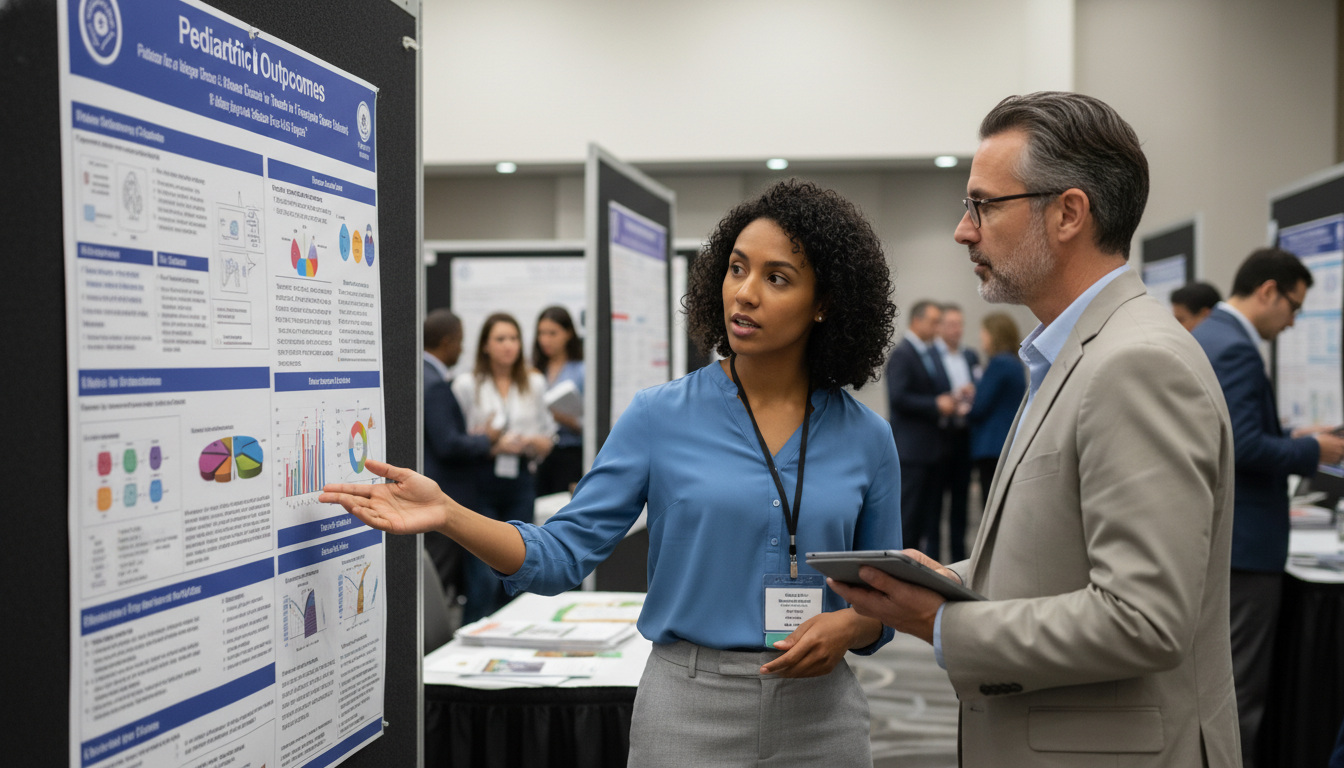
- Posters or oral presentations at institutional research day
Targeted strategies:
Find low-barrier entry projects:
- Case reports of interesting patients on your service
- Retrospective chart reviews where the data have already been collected
- QI projects already started by your mentor’s group
Aim for visibility in your chosen field:
- For pediatric endo: local/state pediatric society poster, national endocrine or pediatric endocrine society meetings
- For neonatology: regional perinatal conferences or PAS abstracts
Be realistic but persistent:
- A small retrospective study at a community program can still impress if it’s well executed.
- The quality of your role (idea generation, data analysis, writing) often matters more than the impact factor of the journal.
4. Secure strong mentors and letter writers
By mid-late PGY-2, you should have:
- 1–2 subspecialty faculty who know you very well and can comment on your growth, clinical reasoning, and scholarship.
- Your Program Director (PD) as a major letter writer.
How to cultivate strong letters:
- Schedule career meetings:
“I plan to apply for pediatric heme/onc fellowship. Could we meet to discuss steps to become a strong applicant, and if I continue to progress well, might I ask you for a letter next year?” - Provide them with:
- Updated CV
- Draft personal statement when the time comes
- A summary of your key accomplishments and cases you worked on together
5. Strategic electives and away rotations
If your residency program has limited exposure in your field:
- Request elective time at a nearby academic children’s hospital in your subspecialty of interest.
- Ask your PD:
- “For someone with my background (Caribbean IMG, pediatric resident here) who wants fellowship in X, would an away rotation at Y Children’s Hospital be helpful?”
Away rotations can:
- Broaden your clinical experience
- Help you meet additional mentors and potential letter writers
- Demonstrate you can succeed in a higher-acuity, academic environment
PGY-3: Application Execution and Interview Strategy
PGY-3 is the year where your prior preparation becomes your formal application.
Primary goals:
- Polish your application materials
- Apply strategically to an appropriate range of programs
- Interview and rank programs thoughtfully
1. Understanding the fellowship application timeline
The fellowship application timeline varies by field, but for most pediatric subspecialties in the U.S.:
December–February of PGY-2:
- Confirm subspecialty decision
- Finalize projects to submit as abstracts for spring/summer meetings
March–May of PGY-2:
- Begin drafting personal statement
- Update CV with latest scholarly work and presentations
June–July before PGY-3:
- ERAS application opens and can often be submitted
- Request final letters of recommendation formally
July–September of PGY-3:
- Interviews (virtual or in-person depending on field/year)
Fall of PGY-3:
- Rank lists and match day (via NRMP or subspecialty match, depending on field)
Start at least 3–4 months before application opening to avoid rushing critical components.
2. Application strategy as a Caribbean IMG
You should generally:
- Apply broadly (often 20–40 programs, depending on competitiveness of field)
- Include a mix of:
- Academic institutions known to accept IMGs
- Regional programs near your residency institution
- Programs with a track record of taking Caribbean graduates
Leverage:
- Your PD and faculty to identify IMG-friendly programs
- Alumni from your residency or Caribbean school (e.g., SGU graduates) who matched that subspecialty:
- Ask where they interviewed.
- Ask which programs seemed most welcoming to IMGs.
3. Creating a compelling personal statement
Your personal statement should:
- Briefly acknowledge your path as a Caribbean IMG without over-defending it.
- Focus on what you’ve done since—your growth, resilience, and clinical maturity.
- Tell 1–2 specific patient or clinical stories that shaped your subspecialty interest.
- Highlight your scholarship and future career goals (academic, community, research, global health, etc.).
Avoid:
- Overly apologizing for board scores or being an IMG.
- Generic statements about “loving kids” or “wanting to make a difference.”
- Long descriptions of medical school that don’t connect to your current trajectory.
4. Interview performance
On interview day, programs want to see:
- Professionalism and warmth with faculty and co-fellows
- Clear articulation of your subspecialty interest, research, and career plans
- Evidence that you will be a hardworking, low-maintenance fellow
Prepare for common questions:
- “Why this subspecialty?”
- “Tell me about a challenging case and what you learned.”
- “Describe a conflict with a colleague and how you handled it.”
- “What are your career goals 5–10 years from now?”
As a Caribbean IMG, be ready to answer:
- “Tell me about your medical school experience in the Caribbean and how it prepared you for U.S. training.”
- Focus on diverse clinical exposures, adaptability, and resilience.
5. Ranking programs strategically
When ranking:
- Prioritize programs where:
- You felt relaxed and respected
- Fellows seemed genuinely supported and not burned out
- Faculty showed real interest in your background and goals
Don’t rank based solely on prestige. For career success and future job prospects, a well-resourced, supportive mid-tier program can outperform a top-tier name where you are invisible or overworked.
Strengthening Your Application as a Caribbean IMG: Key Domains
1. Clinical Excellence and Evaluations
Even with publications, fellowship directors will hesitate if your clinical evaluations are weak. Steps to optimize:
- Proactively ask rotation directors:
“Is there anything I can improve to function at a fellow level in the future?” - Seek diverse experiences:
- NICU, PICU, subspecialty clinics, ED, hospitalist rotations
- Demonstrate ownership:
- Know every detail of your patients
- Anticipate next steps in care plans
- Communicate clearly with families and consultants
2. Board Scores and Exams
If you had weaker USMLE Step 1 or Step 2 CK scores—which is common among some Caribbean graduates—emphasize:
- Passage and strong performance on pediatric in-training exams if possible.
- Any improvement trend over time.
If your scores are strong:
- Let them be a reinforcing signal that you belong in competitive academic environments.
3. Research and Scholarship: Quality Over Hype
For Caribbean IMGs, scholarship can be the big differentiator. Maximize:
- First- or second-author works if possible
- Involvement in:
- Data design/analysis
- Manuscript writing
- Abstract preparation and presentation
Do not underestimate:
- Small QI projects leading to meaningful institutional changes
- Case series or careful retrospective studies that show attention to detail
Have a 2–3 sentence elevator pitch for each project ready for interviews:
- Background
- Your role
- Key finding or impact
4. Networking and Visibility
In addition to local networking:
- Attend at least one regional or national pediatric conference before applications.
- Introduce yourself briefly to faculty after sessions relevant to your field:
- “I’m a PGY-2 pediatric resident and Caribbean IMG interested in [subspecialty]. I really liked your talk on X. Would you have any advice for someone like me targeting fellowship in this field?”
Keep a simple spreadsheet of:
- Contacts
- Where you met them
- Any follow-up (emails, shared projects, advice given)
5. Leveraging Your Caribbean Background
Frame your path as an asset:
- You’ve worked across different healthcare systems (Caribbean clinical rotations, U.S. rotations, residency).
- You bring cultural competence and adaptability.
- You had to be self-directed and resilient to navigate the Caribbean medical school residency match and then the SGU residency match style of pathway (if SGU or similar).
Within reason, you can highlight:
- Global health or underserved care experiences
- Language skills
- Community engagement
Preparing for Life Beyond Fellowship: Thinking Ahead Early
Although your immediate focus is on how to get fellowship, thinking one step beyond can sharpen your strategy.
Academic vs Community Career Goals
If you aim for an academic career (teaching, research, leadership):
- Seek fellowships with:
- Strong research infrastructure
- Protected time and mentorship for scholarly work
- A track record of fellows moving into faculty roles
If you are drawn more to community practice:
- You might favor fellowships with:
- Broad clinical exposure
- High-volume patient care
- Less heavy research pressure
Clarifying this early helps you choose the right fellowship environment and mentors.
Early Steps for Future Subspecialization or Leadership
If you foresee roles such as:
- Program director
- Division chief
- Quality/safety leadership
Then during fellowship, prioritize:
- Education projects
- QI and systems-based work
- Committee involvement at hospital or society levels
Thinking one step ahead makes your current fellowship choices more strategic and aligned.
FAQs: Fellowship Preparation for Caribbean IMG in Pediatrics
1. As a Caribbean IMG in pediatrics, do I have a real chance at fellowship in a competitive subspecialty like NICU, PICU, or cardiology?
Yes, but the bar is higher. You will likely need:
- Strong clinical performance and evaluations
- Multiple scholarly outputs (at least abstracts and ideally publications)
- Mentors who are well known in the field and can write detailed letters
- Broad application strategy, including IMG-friendly institutions
Many Caribbean IMGs match into competitive fields every year, but it rarely happens by accident.
2. Does doing residency at a community program hurt my chances compared to a big-name children’s hospital?
It can be a relative disadvantage for certain research-heavy fellowships, but it is not fatal. You can offset this by:
- Seeking electives at academic children’s hospitals
- Collaborating with academic faculty or institutions on research
- Building a robust portfolio of scholarship and strong letters from respected mentors
Fellowship committees increasingly focus on what you have actually done, not just where you trained.
3. How many fellowship programs should I apply to as a Caribbean IMG?
The exact number depends on the field and your strength as an applicant, but Caribbean IMGs should generally apply more broadly than U.S. MDs with similar profiles. For many pediatric subspecialties, that might mean 20–40 programs, adjusted for:
- Your board performance
- Strength of your research
- Program director’s guidance on your competitiveness
4. I’m late to the process (mid-PGY-2) and don’t have much research. Can I still match?
It’s harder, but not impossible. Options include:
- Fast-tracking a case report or small QI project to at least an abstract/poster
- Highlighting any prior scholarly work from medical school if relevant
- Emphasizing clinical excellence, teaching involvement, and strong letters
If your application will be weak this cycle, consider:
- Delaying application by a year
- Doing a chief resident year or a research year to build a stronger portfolio
Used wisely, an extra year can dramatically strengthen your competitiveness.
By starting early, being intentional, and consistently going one step beyond your peers, you can turn a Caribbean medical school background and a hard-earned peds match into a successful pediatrics fellowship and a fulfilling subspecialty career.