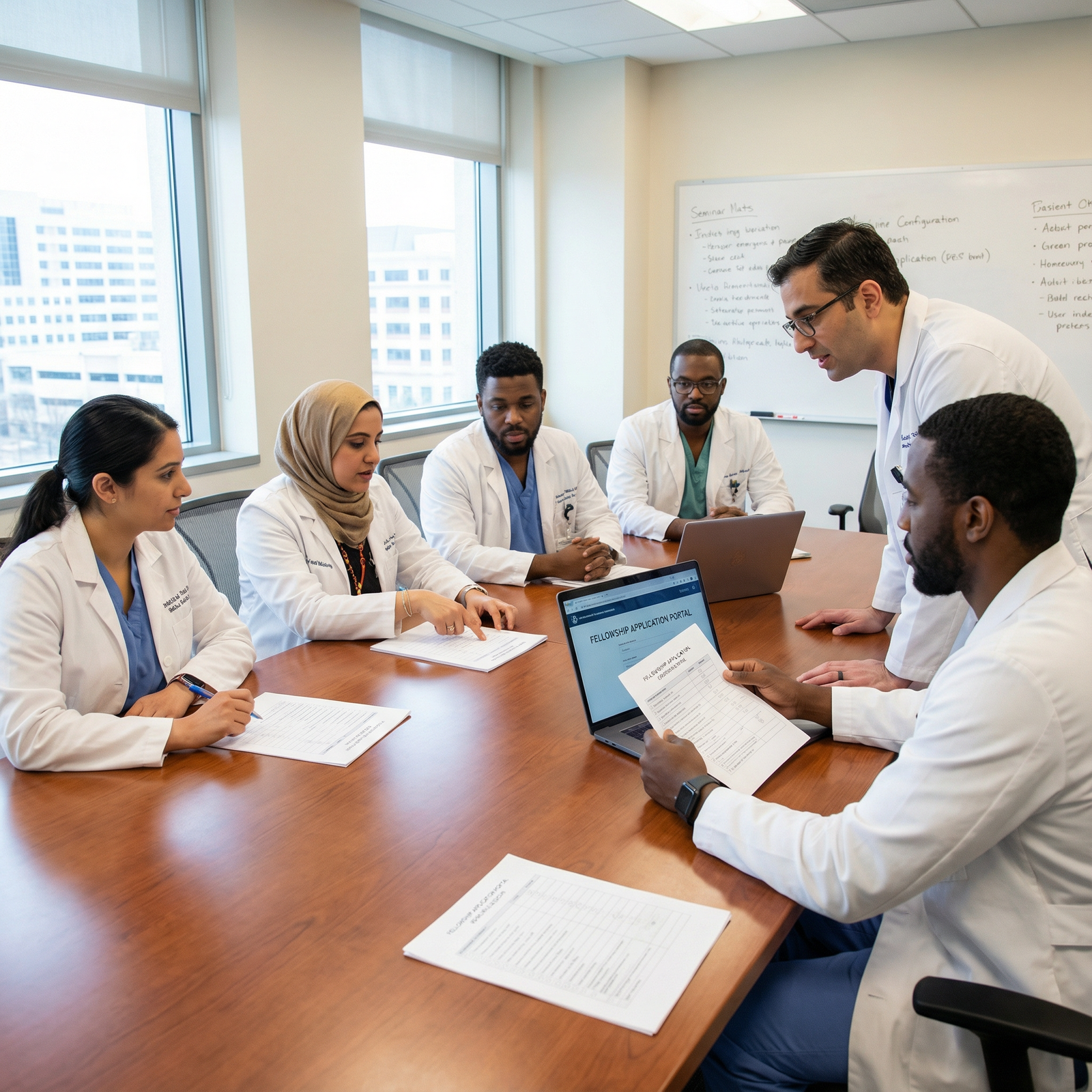
Understanding the Fellowship Landscape in PM&R as a Caribbean IMG
For an international medical graduate from a Caribbean medical school, the road from PM&R residency to fellowship is absolutely achievable, but it requires early planning and strategic execution. Many SGU residency match alumni and other Caribbean graduates successfully pursue fellowships in pain medicine, sports medicine, spinal cord injury, brain injury, pediatric rehab, and more. Your status as a Caribbean IMG shapes how program directors review your file—but it doesn’t close doors if you present a strong, coherent application.
Why Fellowship Matters in PM&R
While you can practice as a general physiatrist without fellowship training, subspecialty training can:
- Expand your procedural skills (e.g., EMG, ultrasound-guided injections, interventional spine)
- Increase your competitiveness in saturated job markets
- Improve earning potential and practice flexibility (academic, private, hybrid)
- Provide a focused niche (sports, pain, brain injury, SCI, pediatrics, cancer rehab, neuromuscular)
For Caribbean IMGs, fellowship can also help “reframe” your CV—showing that once given an opportunity (residency), you excelled enough to be selected for advanced training.
Common PM&R Fellowships
The most common fellowship paths for physiatrists include:
- Pain Medicine (ACGME-accredited) – Highly competitive; often multidisciplinary (PM&R, Anesthesiology, Neurology).
- Sports Medicine (ACGME) – PM&R, Family Medicine, EM backgrounds; MSK and ultrasound-heavy.
- Spinal Cord Injury (SCI) Medicine (ACGME)
- Brain Injury Medicine (BIM) (ACGME)
- Pediatric Rehabilitation Medicine (ACGME)
- Neuromuscular Medicine (ACGME) – Often EMG-focused.
- Hospice & Palliative Medicine, Sleep Medicine, Clinical Informatics, others (ACGME) – Open to PM&R in many cases.
- Non-ACGME fellowships – MSK/ultrasound, interventional spine, cancer rehab, pain/MSK hybrids, research fellowships.
Understanding the spectrum of options early in residency allows you to align rotations, research, and mentors with your long-term goals.
From Caribbean Medical School to Fellowship: What Program Directors Look For
Your pathway—Caribbean medical school residency, then PM&R, then fellowship—raises two immediate questions for fellowship directors:
- Did you overcome earlier academic hurdles and perform strongly when given a US clinical opportunity?
- Are you clearly committed to, and prepared for, this subspecialty (through rotations, research, and mentorship)?
Core Components of a Competitive PM&R Fellowship Application
Most programs reviewing a physiatry match candidate rely on the following pillars:
- Residency performance
- Strong in-service exam scores
- Excellent clinical evaluations
- Evidence of initiative and professionalism
- Letters of recommendation
- From subspecialists in your desired field (e.g., pain, sports, SCI)
- From your program director or chair
- Scholarly output
- Research, QI projects, abstracts, posters, or publications
- Subspecialty-specific work when possible
- Subspecialty exposure
- Electives and longitudinal experiences
- Procedure logs (for pain, sports, MSK, EMG)
- Personal statement
- Clear narrative explaining why this field and why you
- Interview performance
- Maturity, insight, and alignment with program strengths
Your “Caribbean IMG” label becomes less important if your residency evidence is strong, consistent, and clearly oriented toward your chosen subspecialty.
The Added Layer for Caribbean IMGs
Relative to US graduates, you may need to more explicitly:
- Demonstrate academic resilience: Step exams, ITE scores, and remediation-free progress.
- Show continuous upward trajectory: Stronger performance in 2nd and 3rd residency years.
- Provide US-based mentorship: Well-known physiatrists who can personally vouch for you.
- Address any red flags (exam failures, leaves of absence) succinctly and honestly in your application or, if necessary, during interviews.
You are not “penalized” simply for attending a Caribbean school, but if your metrics are average, you must offset this through deliberate strengths—research, procedures, leadership, or niche expertise.
Timeline: When to Start Preparing for Fellowship in PM&R
Understanding the fellowship application timeline is critical, especially for competitive fields like pain and sports medicine. The centralized ERAS cycles vary slightly between specialties, but a general framework for PM&R residents looks like this:
PGY-1 (Intern Year): Laying the Foundation
Even if you matched into Transitional Year or a preliminary medicine year:
- Stabilize clinically: Master workflow, documentation, time management.
- Clarify career interests:
- Learn about different PM&R fellowships through webinars, PM&R societies, podcasts.
- Talk with senior residents and faculty about their paths (pain vs. sports vs. SCI, etc.).
- Guard your academic record:
- Avoid professionalism issues.
- If you have any Caribbean medical school residency or medical school gaps, keep performance now clean and strong.
Actionable steps:
- Join AAPM&R and relevant subspecialty sections (e.g., Pain, Sports).
- Attend at least one national or regional meeting (virtual or in person if possible).
- Start a simple CV document and update it regularly.
PGY-2: Exploration and Early Positioning
PGY-2 is often your first true PM&R year. This is when you should make your fellowship preparation deliberate.
- Identify 1–2 top fellowship interests (e.g., pain vs. sports).
- Seek rotations:
- Ask chief residents or your program director which rotations line up with each subspecialty.
- Try to get at least one high-yield subspecialty rotation in PGY-2 (pain, EMG, sports, SCI, TBI).
- Start research:
- Approach faculty with a clear ask: “I’m interested in pain/sports/SCI—are there ongoing projects I could join?”
- Be realistic: case reports, QI projects, retrospective chart reviews are all valuable.
- Begin tracking procedures / experiences:
- Maintain a log of EMGs performed, injections assisted, US-guided procedures, spasticity management, etc.
Milestone by end of PGY-2: You should have chosen a primary fellowship interest or at least narrowed down to 1–2 serious options.
PGY-3: Consolidation and Application Preparation
PGY-3 is critical. For many fellowships, you’ll submit applications in this year for a start after PGY-4.
- Optimize elective planning:
- Schedule key subspecialty rotations in the first half of PGY-3 when possible to generate strong letters.
- Secure mentors:
- Identify at least one fellowship-trained physiatrist in your target field who knows you well enough to write a detailed letter.
- Increase scholarly visibility:
- Push to complete at least one presentation (local, regional, or national).
- If possible, aim for a poster at AAPM&R, AAP, or a subspecialty society.
- Prepare your application materials:
- Draft your CV and personal statement early (winter/spring).
- Request letters of recommendation 2–3 months before deadlines.
- Know your application platform:
- Some fellowships (pain, sports, SCI, BIM) are on ERAS.
- Others, especially non-ACGME, may use institutional portals or email.
Typical application window: Late PGY-3 (often December–June, depending on specialty and year). Always verify the current fellowship application timeline for your subspecialty.
PGY-4: Interview Season and Backup Planning
- Interviews typically occur in late PGY-3 and early PGY-4.
- Maintain strong performance; programs can and do ask for updated letters or evaluations.
- Rank list decisions: Be realistic and balanced; include a mix of aspirational, solid, and “safety” programs if available in your field.
- Parallel planning:
- If you’re aiming for hyper-competitive fellowships (e.g., ACGME Pain), develop a backup plan:
- General PM&R job with continued exposure in your field.
- Non-ACGME fellowship.
- A research position that strengthens your profile for a re-application.
- If you’re aiming for hyper-competitive fellowships (e.g., ACGME Pain), develop a backup plan:
Building a Strong Portfolio: Research, Rotations, and Networking
Your Caribbean background is least relevant when the objective data in your file clearly support a successful physiatry match and fellowship trajectory. That data is built from three main domains: clinical excellence, scholarly activity, and relationships.
Clinical Excellence: Standing Out in Day-to-Day Work
Directors often say they can teach procedures, but they can’t teach attitude. Your daily behavior matters:
- Be reliable:
- Show up on time, know your patients, anticipate next steps.
- Own your learning:
- Read before and after seeing key diagnoses (SCI, TBI, stroke, MSK conditions).
- Ask thoughtful questions that demonstrate preparation.
- Show initiative:
- Volunteer for presentations (journal club, case conference).
- Help with QI projects or guideline creation on your service.
These behaviors turn ordinary rotations into strong letters of recommendation—often the single most influential part of your application.
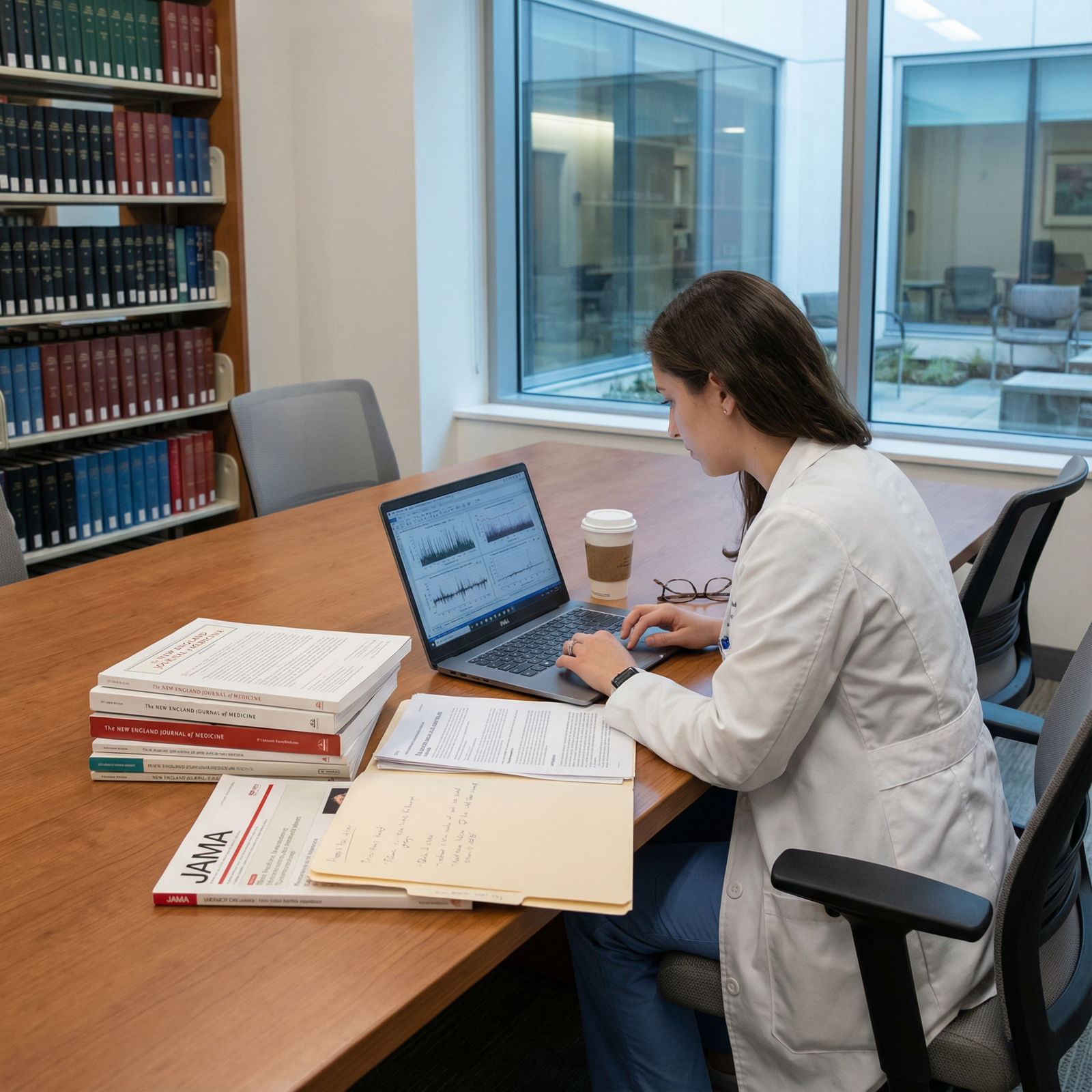
Research and Scholarly Output: What Is Realistic for a Busy Resident?
You do not need an R01 grant or multiple first-author publications. For many fellowship programs, especially within PM&R, a consistent pattern of scholarly engagement is enough.
Realistic options during residency:
- Case reports:
- Rare rehab complications, novel uses of spasticity treatments, unusual sports injuries.
- Retrospective chart reviews:
- Outcomes of patients using a specific injection protocol.
- Utilization of spasticity meds or orthotics in a given patient group.
- Quality improvement projects:
- Reducing falls on the rehab unit.
- Improving pain assessment workflows or EMG reporting.
- Educational projects:
- Developing an ultrasound teaching curriculum for residents.
- Creating patient education materials for SCI or TBI.
Aim for:
- At least one poster or oral presentation.
- Preferably one publication (can be case report, review article, or research).
For Caribbean IMGs, this scholarly evidence helps reassure programs that you are accustomed to the rigor of US academic environments.
Subspecialty Rotations and Procedure Exposure
If you’re targeting:
- Pain Medicine:
- Rotations in pain clinics (PM&R, anesthesia).
- Exposure to fluoroscopic and ultrasound-guided spine and peripheral joint procedures.
- Document your participation and read about every procedure you see.
- Sports Medicine:
- Sideline coverage, sports clinics, MSK ultrasound.
- Work with athletic trainers and team physicians when possible.
- SCI or Brain Injury:
- Inpatient units, ventilator weaning, spasticity management, intrathecal pump clinics.
- Peds Rehab or Neuromuscular:
- Specialty clinics, multidisciplinary team meetings, EMG labs.
If your home program lacks certain experiences:
- Seek away rotations (as a visiting resident) at institutions with strong fellowships.
- Leverage national society mentorship programs to identify host sites.
- Be proactive early—paperwork, housing, and approvals can take months.
Networking and Mentorship: Being Visible Without Being Pushy
As a Caribbean IMG, you may start with fewer built-in connections, making intentional networking critical.
Where to network:
- National meetings (AAPM&R, AAP, specialty societies)
- Virtual grand rounds and webinars
- Subspecialty listservs and social media (professional accounts)
How to approach potential mentors:
- Send a concise, respectful email:
- Who you are (Caribbean IMG, PM&R resident at X)
- Your interest (e.g., pain, sports)
- A specific question or request (advice, brief Zoom meeting, review of project idea)
- Follow up judiciously, not aggressively.
- Show that you’ve done background homework on their work.
Over time, strong mentors can:
- Help you understand how to get fellowship in your chosen area.
- Advocate for you informally with fellowship directors.
- Write key letters of recommendation.

Application Strategy: Positioning Yourself as a Caribbean IMG in the Physiatry Match for Fellowship
Once you’ve built your experience, you need to present it strategically in your application: CV, personal statement, letters, and interviews.
Crafting Your CV and Personal Statement
CV tips:
- Organize by:
- Education (Caribbean medical school, residency)
- Certifications and exams
- Clinical experience (key rotations, leadership roles)
- Research and scholarly work
- Teaching and leadership
- Awards and honors
- Highlight PM&R-specific details:
- Procedure logs or representative numbers (e.g., “Performed >150 EMG/NCS studies as primary operator”).
- Ultrasound experience, spasticity management, interventional exposure.
Personal statement focus:
- Tell a coherent story:
- Your path from Caribbean training to PM&R.
- Pivotal experiences that led you to your chosen subspecialty.
- Show insight into the field:
- Not just “I like spine and procedures,” but an understanding of patient populations, multidisciplinary care, and long-term outcomes.
- Address Caribbean background strategically if needed:
- You do not need to apologize for your pathway.
- Briefly emphasize resilience, adaptability, and the diversity of training experiences you gained.
Letters of Recommendation: Quality Over Quantity
For a strong application for PM&R residency or fellowship:
- Aim for at least:
- One letter from your program director or chair
- Two letters from subspecialists in the field you’re applying to
- Choose letter writers who:
- Supervised you directly, preferably on an inpatient or outpatient subspecialty rotation.
- Can comment specifically on your clinical skills, work ethic, and potential as a fellow.
- Ask early, and provide:
- Your updated CV
- A brief summary of your career goals and fellowship interests
- Any particular experiences they might highlight
Interview Performance: Converting Invitations into Offers
When you reach the interview stage, programs have already judged your academic record acceptable. Interviews now assess:
- Fit with the program’s culture and mission.
- Communication skills and professionalism.
- Maturity, insight, and teachability.
Prepare to discuss:
- Why you want this subspecialty and this program.
- Specific cases that shaped your interest (without violating HIPAA).
- Your research or QI projects—know your data and your role.
- Future plans: academic vs. community practice, research, leadership.
As a Caribbean IMG, anticipate potential questions such as:
- “Tell me about your path through a Caribbean school to PM&R.”
- “What challenges have you faced and how have you addressed them?”
Answer with confidence, honesty, and focus on growth—emphasizing that your background has made you resilient, adaptable, and highly motivated.
Special Considerations: Visas, Backup Plans, and Non-ACGME Paths
Visa and Sponsorship Issues
If you’re on a J‑1 or H‑1B visa:
- Confirm early which fellowships sponsor your visa type.
- Contact program coordinators directly if the website is unclear.
- Be ready to explain:
- Your current visa status.
- Timeline and any requirements (e.g., J‑1 waiver obligations).
Some pain and sports medicine programs, for instance, may not sponsor visas, narrowing your options. That makes strategy and early inquiry essential.
Backup Planning: If You Don’t Match the First Time
If you do not match in your first physiatry fellowship attempt:
- Do not panic; many successful physiatrists took non-linear paths.
- Consider:
- A general PM&R job in your area of interest (e.g., spine/MSK clinic for future pain or sports fellowship).
- A non-ACGME fellowship to build skills while reapplying.
- A dedicated research year with a strong mentor.
During this time:
- Strengthen exam performance (e.g., pain or sports boards if applicable later).
- Increase procedure volume and document skills.
- Publish or present additional research or QI work.
Non-ACGME Fellowships: Pros and Cons
For some Caribbean IMGs, non-ACGME fellowships—especially in interventional spine, MSK/ultrasound, or pain—can provide:
- High-volume procedural experience.
- Mentorship and exposure at institutions that may later support an ACGME application.
- A bridge to private practice opportunities.
However:
- They may not be board-eligible pathways in certain subspecialties.
- Quality varies; vet programs carefully by talking to alumni and reviewing case volumes, outcomes, and educational structure.
FAQs: Fellowship Preparation for Caribbean IMGs in PM&R
1. As a Caribbean IMG, do I really have a chance at competitive fellowships like Pain or Sports Medicine?
Yes. Many Caribbean graduates, including SGU residency match alumni, successfully enter these fellowships. You need strong in-training exam scores, excellent clinical evaluations, substantiated procedural experience, and convincing subspecialty-specific letters. Your Caribbean background becomes far less important once you demonstrate high-level performance in a US PM&R residency and targeted subspecialty engagement.
2. How early should I decide on a fellowship, and what if I change my mind?
Ideally, narrow your interests by the end of PGY-2 to align rotations, research, and mentorship with your target subspecialty. That said, PM&R is flexible, and some residents pivot during PGY-3. If you change fields (e.g., from sports to pain), be transparent with mentors and quickly seek relevant rotations and projects. Programs value self-awareness; changing your mind is acceptable if you can clearly explain your reasons and still show meaningful preparation.
3. What if my residency program has limited exposure to my desired subspecialty?
This is common, especially for smaller programs. Consider:
- Away rotations or visiting resident blocks at institutions with strong services in your field.
- Virtual or hybrid experiences: telehealth clinics, remote case conferences, online electives.
- National society mentorship programs that can connect you with external research or educational projects. Creativity and initiative can compensate for local limitations, particularly if you document your efforts and outcomes.
4. How does fellowship preparation differ from preparing for residency as an IMG from a Caribbean medical school?
For residency, the “Caribbean medical school residency” discussion often focuses on Step scores, clinical grades, and securing US letters of recommendation to clear initial filters. For fellowship, the emphasis shifts heavily to residency performance, subspecialty alignment, and professional reputation. While your Caribbean origin remains in your file, what matters much more is how you performed in PM&R: your in-service scores, evaluations, procedural competence, scholarly work, and the strength of mentors who can vouch for you.
By approaching fellowship preparation with early planning, focused subspecialty engagement, and thoughtful presentation of your achievements, you can successfully navigate the physiatry match at the fellowship level as a Caribbean IMG—and build a meaningful, specialized career in Physical Medicine & Rehabilitation.