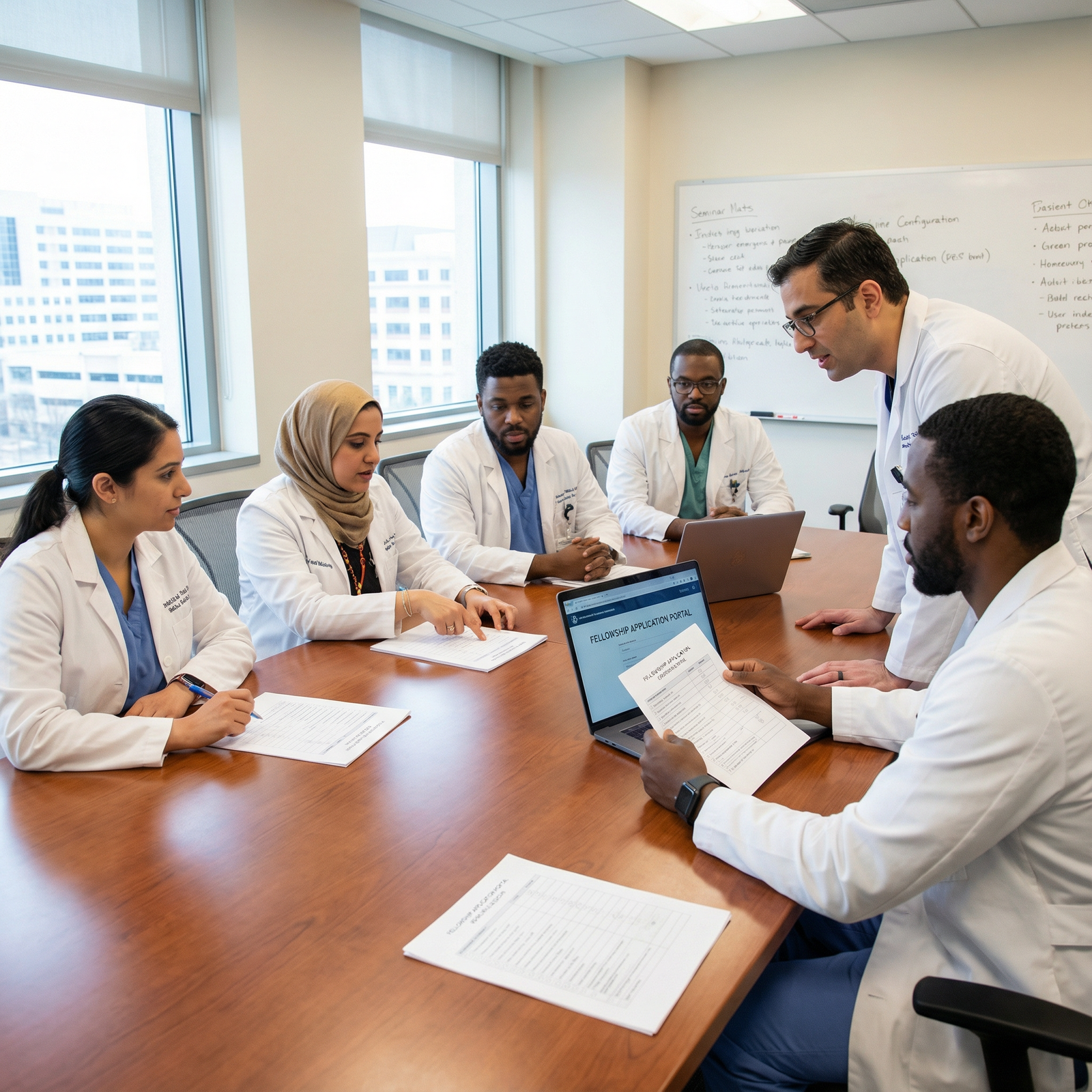
Understanding Your Fellowship Options as a DO in Emergency Medicine
As a DO graduate in Emergency Medicine (EM), you have more fellowship options than ever before. The fully unified ACGME accreditation system and increasing acceptance of osteopathic training mean that most EM fellowships are open to DOs, especially if your residency is ACGME-accredited (which nearly all EM programs are now).
Before you can plan effectively, you need a clear map of what’s possible.
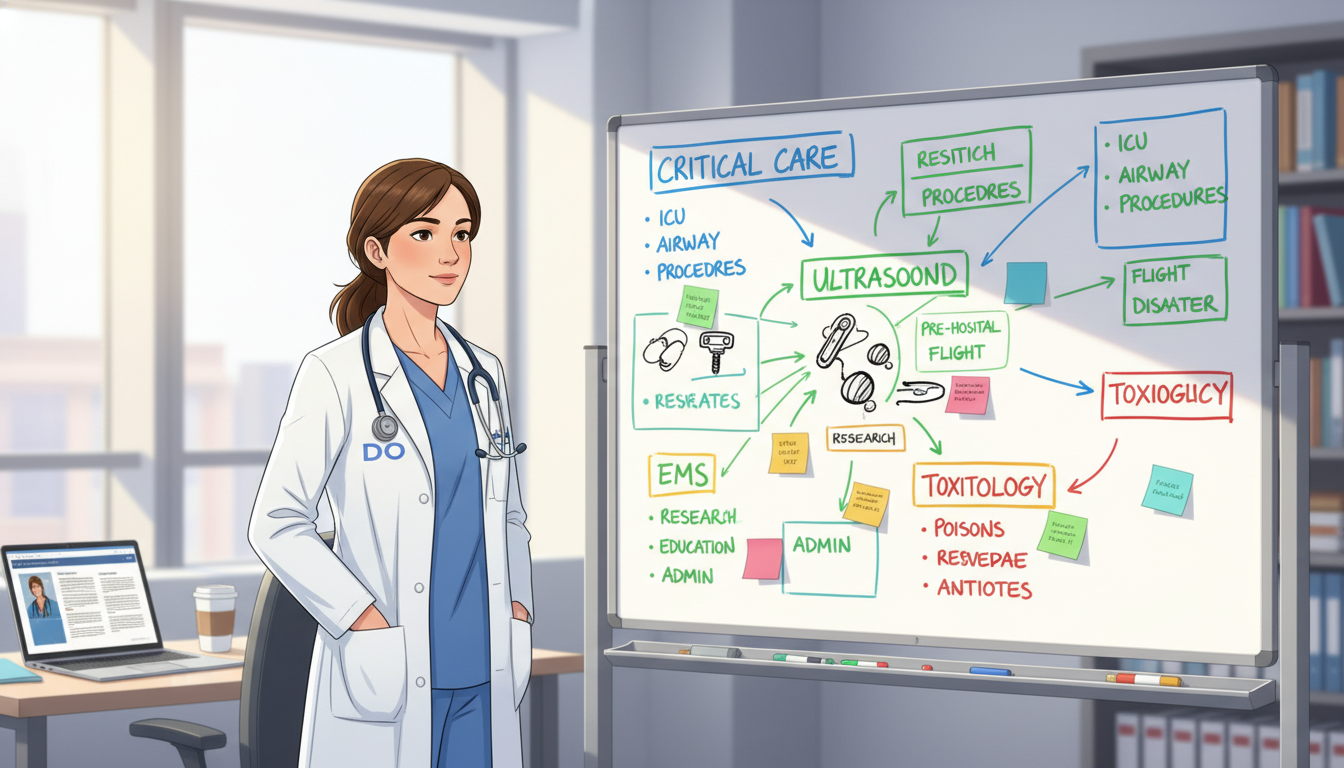
Common EM Fellowship Pathways
Below are the most common fellowships EM physicians pursue, with brief notes highly relevant to DO graduates:
- Emergency Ultrasound (EUS)
- Among the most accessible fellowships
- Many community and academic programs
- Excellent for building a niche and academic profile
- Critical Care Medicine (CCM)
- Paths: Anesthesia CCM, Internal Medicine CCM, Surgical CCM, and EM/CCM
- Some internal medicine–based CCM fellowships are open to EM, others are not—read eligibility carefully
- Historically more variable acceptance of DOs, but this is improving
- Toxicology
- Strong alignment with EM practice
- Often more DO-friendly with a long history of EM-based training programs
- EMS / Prehospital Medicine
- Natural fit for EM; many programs explicitly welcome DOs
- Strong future leadership opportunities in systems-based care
- Pediatric Emergency Medicine (PEM)
- Traditionally pediatric-based but more EM-based routes now
- Some programs still favor pediatric residency graduates; check eligibility closely
- Sports Medicine
- Historically very DO-friendly, especially via Family Medicine–based programs
- EM-based sports medicine fellowships are fewer, but accessible
- Hyperbaric & Undersea Medicine
- Niche but DO-friendly; often hospital system–based
- Medical Education / Simulation
- Sometimes non-ACGME but highly valuable for academic careers
- Often welcome EM-trained DOs with interest in teaching and curriculum design
- Administration / Healthcare Leadership
- Mix of fellowships, MPHs, MBAs, and certificate programs
- Growing field for EM physicians who want to lead departments or systems
How DO Status Affects Fellowship Access
Most ACGME fellowships do not formally distinguish between MD and DO, but in practice, subtle differences remain:
- Residency pedigree matters
- Coming from a well-known EM program (academic or high-volume community) helps
- Strong EM program reputation can completely overshadow the MD/DO difference
- USMLE vs COMLEX
- Some fellowship programs prefer or require USMLE scores
- If you have USMLE, it can make competitiveness easier to assess
- If you only took COMLEX, emphasize your clinical performance and in-training exam scores
- Perceived bias
- Still exists in pockets—especially in certain university-heavy programs
- Strategic program selection and targeted networking can effectively counteract this
Aligning Fellowship Choice With Your Long-Term Career
Do not pick a fellowship just because it seems prestigious. Anchor the decision to your long-term vision:
- Academic EM leadership
- Consider Ultrasound, CCM, Medical Education, EMS, Administration, or combined tracks
- Community practice with a niche
- Ultrasound, Toxicology, EMS, Sports, Hyperbaric can all differentiate your practice
- Intensive care career
- Critical Care (via EM) with a clear understanding of board eligibility
- Global health or humanitarian work
- EMS, Toxicology, or Ultrasound paired with a Tropical Medicine or Global Health certificate/Master’s
Write out a 10-year vision: What do you want your practice, schedule, and impact to look like? Then evaluate which fellowship type moves you most directly toward that vision.
When to Start: Building a Fellowship Timeline During Residency
The fellowship application timeline in Emergency Medicine can surprise residents with how early it starts. For many subspecialties, you will be applying about a year before fellowship begins—often in the middle of PGY-2.
Here is a generalized, EM-oriented timeline that you can adjust based on your specialty of interest.
PGY-1: Exploration and Foundation
Primary goals:
- Learn your specialty well
- Explore fellowship options
- Establish early mentors
Action steps:
Early research (first 6 months)
- Attend departmental conferences that feature fellowship-trained faculty
- Ask each of your attendings:
“Did you consider fellowship? Why or why not?”
Their stories will clarify the trade-offs. - Attend national EM or osteopathic EM conferences if possible (ACEP, SAEM, ACOEP).
Choose 1–2 fellowship interests by end of PGY-1
- You don’t have to commit, but you should narrow.
- Read fellowship websites to confirm eligibility for DO graduates.
Start basic scholarly activity
- Case reports, QI projects, or involvement in a small study
- Aim for at least one poster or abstract by end of PGY-1 to show early engagement.
PGY-2: Commitment and Application Prep
For most EM fellowships, PGY-2 is the decisive year.
Early PGY-2 (July–December): Decide and Prepare
- Lock in your fellowship choice (or top two) by early fall.
- Schedule regular meetings with a fellowship-trained mentor in that area.
- Identify 3–4 programs you’re especially interested in and:
- Learn about their program culture and selection preferences
- Clarify whether they interview DOs regularly
- Identify faculty you’d like to connect with at conferences
Mid to Late PGY-2 (January–June): Application Year for Many Fellowships
- Many fellowships begin interviews and ranking during this period, particularly:
- Ultrasound
- Toxicology
- EMS
- Some Critical Care pathways
- Prepare core materials:
- Updated CV (see next section)
- Fellowship-focused personal statement
- LORs from your PD and at least one fellowship-aligned faculty member
- Track individual timelines:
- Not all EM fellowships use a single match system
- Some follow NRMP; others use SAEM, specialty-specific matches, or direct offers
Key point: For EM, the EM match (EM residency) is behind you, but the EM match mentality (organized, early, deliberate) still applies. Approach fellowship with the same intensity you used for your osteopathic residency match.
PGY-3 (and beyond): Interviewing, Ranking, and Contingency Planning
For a 3-year EM residency:
- Many fellowship applications are submitted during PGY-2
- Interviews occur late PGY-2 into early PGY-3
- Fellowship start date: August after graduation
For a 4-year EM residency:
- Shift everything back a year
- PGY-3 becomes your main application year
During this phase:
- Complete interviews (in-person or virtual)
- Rank programs if there is a match system
- Solidify backup plans:
- No-fellowship year with strategic clinical job
- Gap-year research or education roles
- Re-applying with a stronger profile
For those preparing for fellowship after already starting as an attending (e.g., you graduated and later decided on fellowship):
- Map out 12–18 months before your ideal start date
- Reduce clinical hours or shift patterns to create time for:
- Research
- Visiting/observerships
- Networking, conference attendance
- Carefully align your job contract end date to the fellowship start date
Strengthening Your Application as a DO Graduate
Your core competitiveness as a DO in the EM fellowship world has three main pillars:
- Clinical performance
- Scholarly activity
- Professional identity and networking
1. Clinical Excellence: Your Baseline Currency
Fellowship directors want fellows who can function autonomously and safely. Demonstrate this through:
- Strong rotation evaluations
- Especially in ED, ICU, and any fellowship-related rotations
- In-Training Exam performance
- Shows fund of knowledge and trajectory
- If earlier scores are weak, demonstrate improvement over time
- Shift leadership and professionalism
- Volunteer for teaching junior residents and students
- Take ownership of challenging cases and follow-ups
If your DO program had a reputation for strong procedural training or high-volume ED exposure, highlight this explicitly in your CV and personal statement.
2. Scholarly Activity and Niche Identity
Fellowships want to see evidence that you are already acting like a subspecialist-in-training.
Examples by fellowship type:
- Ultrasound
- QA shifts, ultrasound teaching for medical students
- Image archiving/review projects, ultrasound-guided procedure workshops
- Critical Care
- ICU research projects, sepsis QI initiatives
- Extra ICU elective time, ventilator management workshops
- Toxicology
- Case series of toxic ingestions, collaboration with poison centers
- Journal clubs focused on tox literature
- EMS
- Ride-alongs, protocol development projects
- Involvement with prehospital training or disaster drills
Aim for:
- 1–2 posters or abstracts at a national or regional meeting
- 1 manuscript (case report, review, or original research) if possible
- Demonstrable continuity: multiple activities in the same niche over time
3. Letters of Recommendation and Mentorship
For a DO graduate, strong letters can more than offset less “name-brand” pedigree.
Ideal letter package:
- Program Director (PD) – speaks to your global performance and reliability
- Fellowship-subspecialist in your field – ideally from your own institution
- Additional mentor – could be a research mentor, chief, or department leader
What makes a letter powerful:
- Specific examples of clinical decision-making
- Concrete descriptions of your teaching or leadership
- Direct comparisons: “Among the top 10% of residents I’ve worked with in 10 years”
- Explicit endorsement of your readiness for fellowship
Tell your letter writers clearly:
“I’m preparing for fellowship in [X]. Could you support my application with a strong, detailed letter?”
If anyone hesitates, thank them and ask someone else.

Strategic Program Selection and Overcoming DO-Specific Barriers
Not all fellowship programs are equally DO-friendly, and not all are equally suitable for your long-term goals. Be strategic rather than chasing only the “top-name” institutions.
How to Evaluate Programs as a DO Applicant
Use these lenses:
- Track record with DOs
- Have they trained DO fellows or faculty previously?
- Check program websites and ask current trainees directly.
- Culture and mentorship
- Are faculty approachable and invested in education?
- Do they support diverse career paths (academic, community, hybrid)?
- Breadth and volume of clinical exposure
- High case volume and diversity are more important than logo recognition.
- Career outcomes of past fellows
- Where are prior graduates working now?
- Do those careers align with what you want (academic, community, leadership)?
Networking Tactics That Work for DO Graduates
Because some DOs may face subtle skepticism from certain institutions, proactive networking can level the field.
Conferences
- Target national meetings in your fellowship niche, e.g.:
- SAEM, ACEP, ACOEP, SCCM, NACCT (Tox), NAEMSP (EMS)
- Introduce yourself to faculty with:
- “I’m a DO EM resident at [Program], interested in [fellowship type]. I’d appreciate your advice on preparing for fellowship and what you look for in applicants.”
- Target national meetings in your fellowship niche, e.g.:
Email Outreach
- Brief, professional emails to fellowship directors:
- 2–3 sentence introduction
- 1–2 sentences on your background and interest
- Ask 1–2 specific questions (e.g., “Do you consider DO applicants?” is fair if not obvious from their website)
- Brief, professional emails to fellowship directors:
Visiting rotations / away rotations
- If your residency allows, consider a visiting elective at a program you’re very interested in.
- This is especially helpful if:
- You’re coming from a smaller or less-known DO EM residency
- You’re targeting a major academic center
Managing Perceived Disadvantages in the Osteopathic Residency Match
If your DO graduate residency was not your “dream program” from the osteopathic residency match, that does not close the door to fellowship. Address it indirectly through:
- Demonstrated growth: strong senior-year performance, leadership roles, excellent letters
- Consistent niche work: projects and teaching that clearly support your fellowship interest
- Professionalism and maturity: no red flags, strong interpersonal reputation
Many fellowship directors care vastly more about “who you are now” than “where you matched as a PGY-1.”
Transitioning From Residency to Fellowship (or Attending Life First)
Once you secure a fellowship, you face a new set of questions: how to prepare for the transition and what to do if you’re still thinking ahead to fellowship while finishing residency.
Financial and Lifestyle Considerations
Fellowship pay is usually at the resident PGY level, sometimes slightly higher.
If you have significant loans or financial obligations:
- Create a 3–5 year financial plan that includes:
- Income estimates for fellowship
- Projected attending salary afterward
- Strategies for minimizing moonlighting during intense fellowships like CCM
- Create a 3–5 year financial plan that includes:
Moonlighting during fellowship
- Common in EM-based fellowships such as Ultrasound or Toxicology
- More restricted in ICU-heavy fellowships
- Clarify policies during the interview process
How to Get Fellowship if You’re Already an Attending
If you complete EM residency, start working as an attending, and then decide you want to pursue fellowship:
Define your why clearly
- Why now, and why this subspecialty?
- How will it change your long-term career path?
Stay academically active
- Participate in research, QI, or education at your current institution
- Seek out subspecialty mentors even if your hospital doesn’t have a formal fellowship
Time your application cycle
- Work backwards: if you want fellowship to start July 2027, plan to apply in mid–2026
- Negotiate your attending contract to allow an exit at the right time
Leverage your attending experience
- Emphasize:
- Autonomy
- Teaching roles
- System-level contributions (protocols, committees, leadership)
- Emphasize:
Being a DO attending applying for fellowship can be a strength: you bring real-world perspective and maturity that many programs value.
FAQs: Fellowship Preparation for DO Graduates in Emergency Medicine
1. As a DO graduate, do I need USMLE scores to be competitive for an EM fellowship?
Not strictly, but they can help. Many fellowship programs increasingly accept COMLEX alone, especially if your EM residency is well-regarded and your clinical performance is strong. If you already have USMLE scores, include them. If you don’t, focus on:
- Strong SLOEs and rotation evaluations
- Improved in-training exam performance
- Robust scholarly activities and letters of recommendation
Few programs make USMLE an absolute requirement at the fellowship level, but check individual program policies.
2. How early in residency should I decide on a fellowship?
Aim to narrow to 1–2 serious options by the end of PGY-1 and commit by early PGY-2. Since many EM fellowships begin their application cycles during PGY-2 (or PGY-3 in a four-year program), waiting until late residency will limit your options. Early exploration doesn’t lock you in permanently, but it lets you:
- Plan electives strategically
- Build relevant research or QI projects
- Identify mentors and letter writers in your chosen niche
3. Can I still get a fellowship if my DO EM residency is community-based and not “name-brand”?
Yes. Many successful fellows come from strong community-based DO and MD EM programs. To stand out:
- Show exceptional clinical performance and progression
- Build a track record of niche-specific activities (projects, teaching, scholarship)
- Obtain powerful, detailed letters from respected faculty
- Use networking (conferences, email outreach, visiting rotations) to introduce yourself to fellowship programs
Program reputation helps, but your individual performance and trajectory matter far more.
4. What if I’m not sure whether fellowship is worth it for my career and finances?
Clarify with a structured approach:
- Shadow the future: Talk to 3–5 physicians:
- 1–2 who did your target fellowship
- 1–2 who seriously considered it but did not pursue it
- 1 who is 5–10 years out practicing with that fellowship
- Compare scenarios:
- Option A: EM attending only, no fellowship
- Option B: EM + fellowship, with projected income and lifestyle changes over 10 years
- Ask yourself:
- Does fellowship move me closer to my ideal day-to-day practice?
- Will I regret not gaining this subspecialty skillset?
- Am I willing to trade 1–2 more years of trainee salary for the long-term benefits?
If your answers are mixed, you can work 1–2 years as an attending, stay academically engaged, and reassess. Fellowship is most powerful when it’s part of a clear, intentional long-term plan—not just a default next step.
By approaching the process with intentional planning—understanding your options, following a realistic fellowship application timeline, and leveraging your strengths as a DO—you can move from a successful osteopathic residency match in Emergency Medicine to a focused, fulfilling subspecialty career.