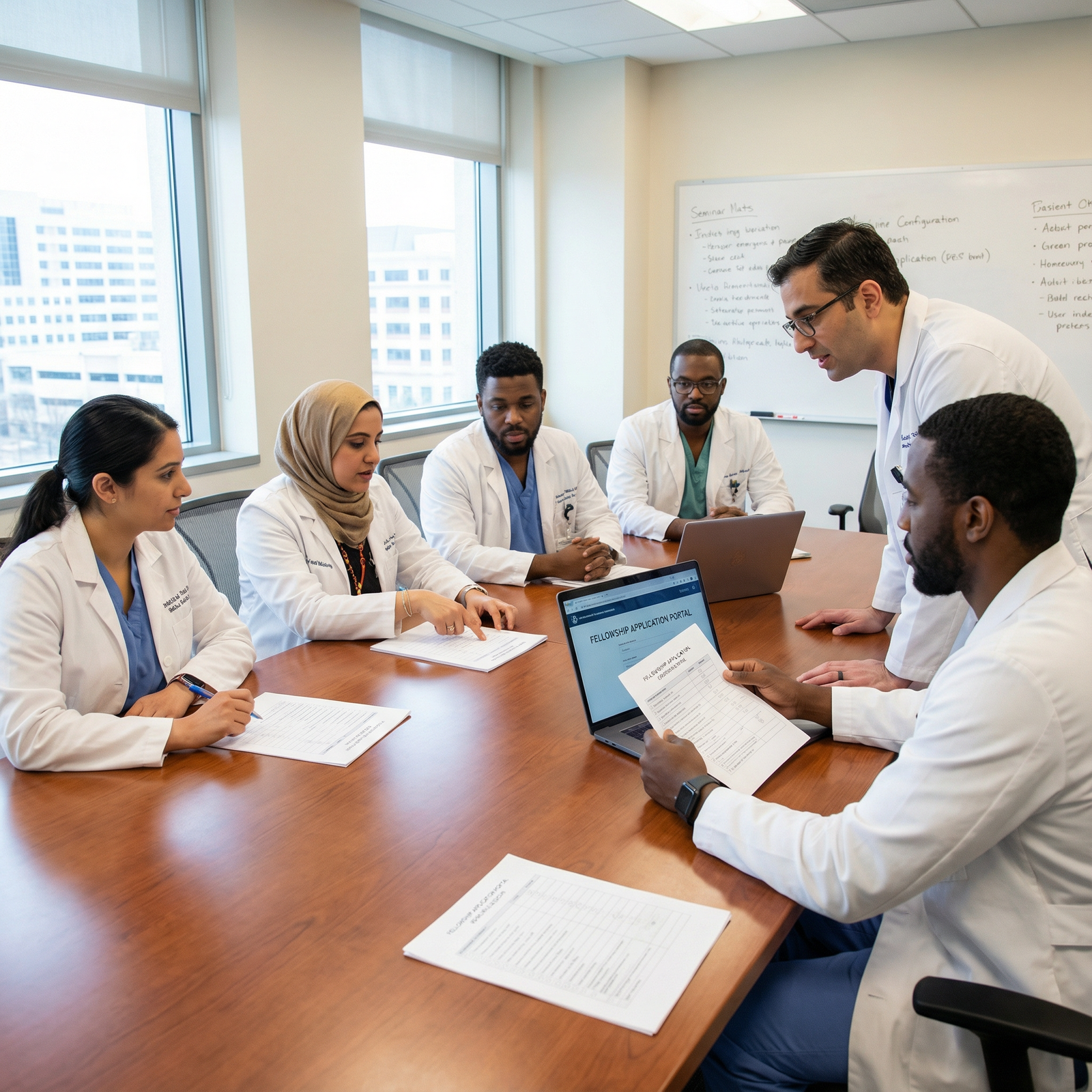
Understanding the Fellowship Landscape for DO Graduates in General Surgery
For a DO graduate in general surgery, fellowship preparation is both exciting and daunting. You’re navigating competitive environments where program directors may still have subtle biases, while also making high‑stakes decisions about your long‑term career. Success in the surgery residency match was one big hill; now you’re facing the next: how to get fellowship training that fits your clinical interests, lifestyle goals, and long-term aspirations.
This guide is written specifically for osteopathic graduates completing (or in) general surgery residency who are considering fellowships in fields such as surgical critical care, minimally invasive surgery, colorectal, trauma/acute care, breast, transplant, vascular, or surgical oncology. We’ll walk through how to think strategically about your trajectory, what to prioritize in residency, and how to manage the fellowship application timeline without letting it derail your current training.
You’ve already navigated the osteopathic residency match or integrated into an ACGME general surgery residency as a DO graduate. The good news: strong performance, consistent mentorship, and targeted preparation can position you very competitively for most general surgery fellowships, including at major academic centers.
Clarifying Your Fellowship Goals as a DO General Surgery Resident
Before you obsess over applications, you need clarity: Why do you want a fellowship, and what kind of surgeon do you want to be? These answers will shape every decision you make from PGY‑1 onward.
1. Academic vs. Community Career
Ask yourself:
- Do you want to be in a high‑volume tertiary/academic center with research, teaching, and subspecialized practice?
- Or a community practice where you might do a broader mix of cases with less emphasis on research or teaching?
This distinction impacts how aggressively you must pursue research, what kinds of programs to target, and whether you need a “big‑name” fellowship.
Example:
- A DO resident aiming for a career in academic surgical oncology at an NCI‑designated center will likely need:
- Strong research output (abstracts, publications)
- Excellent letters from known academic surgeons
- Exposure to complex oncologic cases and tumor boards
- A DO resident planning community colorectal practice may still benefit from fellowship but can often match into excellent regional programs without a long research portfolio, as long as clinical performance and recommendations are strong.
2. Matching Fellowship Type to Your Strengths
Different general surgery fellowships value different strengths:
- Surgical Critical Care / Trauma / Acute Care Surgery
- Values: Crisis management, ICU knowledge, teamwork, night float performance
- Good if: You thrive in high‑acuity settings and enjoy ICU management and multidisciplinary care
- Minimally Invasive / Bariatric Surgery
- Values: Advanced laparoscopy, high case numbers, technical precision, ergonomic awareness
- Good if: You excel in laparoscopic/robotic skills and enjoy metabolic disease and foregut work
- Colorectal Surgery
- Values: Complex pelvic dissection, cancer care, inflammatory bowel disease management
- Good if: You like longitudinal relationships and multidisciplinary cancer/IBD care
- Surgical Oncology
- Values: Research productivity, tumor board involvement, complex oncology cases
- Good if: You’re academically oriented and comfortable with long, complex operations
- Breast Surgery
- Values: Communication, shared decision‑making, oncoplastic approaches
- Good if: You enjoy counseling, survivorship care, and multidisciplinary collaboration
- Vascular, Transplant, Thoracic
- Often more competitive; require early and focused experience, strong letters, and usually substantial research exposure.
3. DO‑Specific Considerations
As a DO graduate, you should be realistic but not self‑limiting:
- Many programs now view DO vs MD as less important than your performance, board scores, letters, and fit.
- Some historically MD‑heavy fellowships may still show a bias in their match lists. Study their past fellows.
- Your osteopathic background can be a strength when you frame it as:
- A holistic, patient‑centered approach
- Strong interpersonal skills and communication
- Interest in functional outcomes and quality of life after surgery
Action step:
During PGY‑1 and early PGY‑2, keep a running list of:
- Procedures you like
- Rotations you enjoy
- Attendings you could imagine emulating
Revisit this every 3–6 months to see patterns and narrow your fellowship interests.
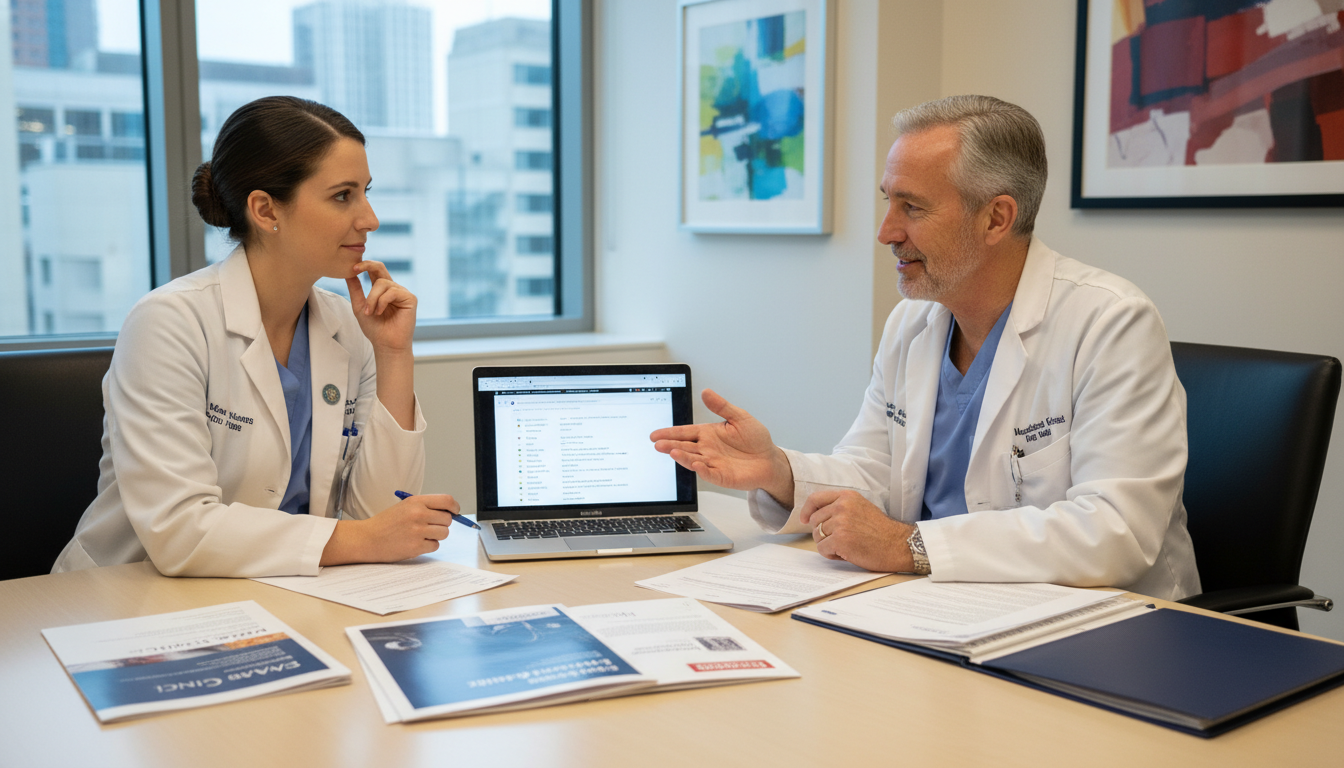
Building a Competitive Portfolio During General Surgery Residency
Your day‑to‑day residency performance is still the foundation. Fellowship programs want a colleague who can run a service, operate safely, and function on day one.
1. Clinical Excellence Comes First
Regardless of fellowship type, programs look for:
- Strong operative evaluations (especially PGY‑3 and PGY‑4)
- Evidence of progressive autonomy
- Solid clinical judgment and reliability
- Good team dynamics and leadership
Practical tips:
- Treat every case like it might be your letter‑writing attending watching:
- Show up early, read the case, know the indication and anatomy.
- Communicate clearly with nursing, anesthesia, and junior residents.
- Ask for targeted feedback:
- “What’s one thing I can do next time to improve?”
- Keep track of your milestone evaluations and logbook; be ready to discuss your growth at interviews.
2. Case Log Strategy and Breadth of Experience
Fellowship directors scrutinize your surgical case logs, especially:
- Volume in procedures relevant to their specialty
- Evidence of autonomy vs observer roles
- Whether your experience is balanced (emergency vs elective, open vs minimally invasive)
If you’re aiming for:
- Minimally Invasive Surgery:
Seek high laparoscopic volume: foregut, hernia, bariatric exposure, robotic cases. - Colorectal:
Aim for robust laparoscopic and open colorectal resections, pelvic dissection, and IBD operations. - Trauma/SCC:
Focus on high‑acuity trauma/acute care rotations and SICU months with strong evaluations.
Action step:
Every 6–12 months, review your ACGME case logs with your program director or mentor. Identify gaps and request targeted rotations or extra cases (e.g., elective MIS lists, colorectal service, extra ICU month) that align with your fellowship goals.
3. Research and Scholarly Output for DO Residents
For many general surgery fellowships, some degree of scholarship is now expected, and for highly academic subspecialties, it’s essential.
What “Enough Research” Looks Like
It varies by field:
Highly academic specialties (surgical oncology, transplant, HPB, some MIS)
Competitive candidates often have:- Multiple abstracts/posters at regional/national meetings
- 1–3 peer‑reviewed publications
- Possibly a dedicated research year (not always required, but advantageous)
Moderately academic (colorectal, breast, SCC, trauma, general MIS)
Strong candidates may have:- Several presentations
- At least 1–2 publications or accepted manuscripts
- Ongoing involvement in quality improvement (QI) or outcomes projects
Primarily clinical (certain community‑focused fellowships)
Research is helpful but less critical; clinical evaluations, letters, and fit often carry the most weight.
As a DO graduate, research output can counteract any lingering bias by showing you can thrive in an academic environment.
How to Get Involved Early
- PGY‑1 / early PGY‑2:
- Join projects already in motion rather than trying to design your own from scratch.
- Ask faculty: “Do you have a project I could help with in a limited capacity? Data collection? Chart review?”
- Later PGY‑2 / PGY‑3:
- Take on more ownership (first author roles, IRB submissions).
- Consider cross‑institutional collaborations or multi‑center projects if available.
Realistic goal:
By the time you apply for fellowship (usually late PGY‑3 or early PGY‑4), aim for:
- At least 2–3 abstracts/posters, and
- 1–2 peer‑reviewed papers (published or accepted), if you’re targeting academic fellowships.
4. Letters of Recommendation: Who and How
Strong letters can outweigh your DO status and even moderate research numbers.
You ideally want:
- One letter from your program director or Chair
- Two letters from subspecialty surgeons in your target field (or closely related)
- Optional: A fourth letter from a respected surgeon who knows you exceptionally well
What matters most:
- Writers must know you well enough to comment on:
- Clinical performance
- Technical skill
- Professionalism and reliability
- Potential as a fellow and future colleague
- Letter writers with regional or national recognition in their field carry added weight, but a detailed, heartfelt letter from a strong clinician who trained many fellows can be just as powerful.
Action step:
Starting PGY‑2, intentionally cultivate longitudinal relationships with potential letter writers:
- Ask for ongoing feedback.
- Follow up on research projects.
- Help them on clinical tasks (e.g., weekend rounds, clinics) when appropriate.
- Before requesting a letter, ask explicitly:
“Do you feel you can write me a strong letter for a [colorectal/MIS/etc.] fellowship?”
Navigating the Fellowship Application Timeline as a General Surgery DO
Understanding the fellowship application timeline is critical. Different specialties use different match systems (ERAS/NRMP vs SF Match vs direct application). Planning ahead minimizes last‑minute stress and maximizes your chances.
1. General Timeline Overview
For most ACGME‑accredited general surgery fellowships:
- Applications open: Typically during PGY‑3 or early PGY‑4 (depending on fellowship length and timing)
- Interviews: Often late PGY‑3 to mid‑PGY‑4
- Match: About one year before fellowship start
- Fellowship start: Immediately after residency (July 1)
You must tailor this to your chosen subspecialty, but as a framework, consider:
- PGY‑1–2: Explore interests, start research, build relationships.
- Early PGY‑3: Decide on fellowship field, ramp up research, identify letter writers.
- Mid‑PGY‑3: Prepare CV, personal statement, and finalize fellowship list.
- Late PGY‑3–early PGY‑4: Submit applications, attend interviews.
- Late PGY‑4: Match and sign contracts.
2. Specialty‑Specific Fellowship Application Timeline
While exact dates change annually, this is a practical overview for common general surgery fellowships:
Surgical Critical Care / Trauma
- Applications often via ERAS.
- Many programs interview PGY‑3 to early PGY‑4.
- SCC fellowships can be more accessible as an initial fellowship for DO graduates.
Minimally Invasive Surgery / Bariatrics
- Apply late PGY‑3 or early PGY‑4.
- Some highly competitive programs expect robust MIS case logs and strong letters.
Colorectal Surgery (via ERAS/NRMP)
- Applications often submitted PGY‑3.
- Very structured match; be ready early with strong case exposure and letters.
Breast Surgery, Surgical Oncology, HPB, Vascular, Transplant
- Many use ERAS; some (especially HPB/Onc/Transplant) have high academic expectations.
- For these, start building your portfolio (research, subspecialty exposure) as early as PGY‑2.
Action step:
In PGY‑2, look up your target fellowship’s application and match system (ERAS, SF Match, direct). Build a personal fellowship application timeline with internal deadlines for CV completion, letters, personal statement, and research outputs.
3. Application Components and Strategy
Your fellowship application will typically include:
- Curriculum Vitae (CV)
- Emphasize: clinical responsibilities, leadership (chief roles, committees), academic activity (presentations, publications), and teaching.
- Personal Statement
- Address:
- Why this specific subspecialty?
- What you bring as a DO graduate in general surgery?
- Long‑term career goals (academic, community, hybrid).
- Avoid generic statements; be specific about cases, mentors, or experiences that shaped your decision.
- Address:
- Letters of Recommendation
- Plan to request letters 2–3 months before applications open.
- Provide your CV and personal statement draft to your letter writers.
For a DO graduate, the personal statement is a key place to:
- Briefly acknowledge your osteopathic training as a foundation for:
- Holistic patient care
- Emphasis on function and quality of life
- Then pivot to your allopathic-integrated experience through an ACGME surgery residency, showing you operate comfortably in any environment.

Strategic Program Selection: Where Should a DO Graduate Apply?
Knowing how to get fellowship training that fits you is partly about where you apply and how broadly you cast your net.
1. Understand Your Competitiveness Honestly
Talk candidly with:
- Your Program Director
- Subspecialty mentors
- Recently matched fellows from your program
Ask them to assess your competitiveness based on:
- Board scores and in‑training exam performance
- Case volume/complexity
- Research output
- Letters and interpersonal reputation
Then build three “tiers” of programs:
- Reach programs: Top‑tier academic centers, heavy research focus, or places with historically low DO representation.
- Target programs: Solid academic or high‑volume community/academic hybrid programs where your profile fits their usual fellow.
- Safety programs: Community‑focused or less competitive programs that still offer solid operative experience.
For most DO general surgery residents, a reasonable application range might include 15–30 programs, with at least:
- 4–6 reach
- 6–10 target
- 4–6 safety
(Adjust based on specialty competitiveness and your profile.)
2. Evaluating Program Fit
Consider:
Operative volume and autonomy
- Are fellows allowed to be primary operators on major cases?
- How many cases per fellow per year?
Faculty engagement
- Is there structured teaching, or are you just service coverage?
- Are faculty involved in regional/national societies?
Research expectations vs opportunities
- Is there time built into the schedule for scholarly work?
- Are residents/fellows actually publishing?
Geography and lifestyle
- Will the location and call schedule be sustainable for you (and your family, if applicable)?
As a DO graduate, also check:
- Program websites and fellow lists to see if they have trained DO fellows before.
- If not, don’t automatically rule them out, but prepare to highlight your strengths and address any subtle bias by demonstrating outstanding performance and professionalism during interviews.
Performing Well on Fellowship Interviews and Making Your Final Decision
Once you’ve secured interviews, your goal is to present yourself as a capable, collegial, and self‑aware surgeon who will contribute positively to the program.
1. Preparing for Interviews
Common areas you’ll be asked to discuss:
Why this subspecialty? Why now?
Why their program? (Know key program features: volumes, faculty, disease focus)
Specific cases that were:
- Complicated
- Ethically challenging
- Technically difficult
Your role in:
- Managing complications
- Leading the team
- Communicating with patients/families
Your research:
- Be able to briefly summarize each project—question, methods, and results.
DO‑specific preparation:
- Be ready, if asked, to describe your osteopathic background without sounding defensive:
- “My DO training emphasized treating the whole patient and understanding functional outcomes beyond the operation itself, which I’ve found invaluable in managing complex surgical patients. In residency, I’ve combined that with high‑volume operative training and evidence‑based decision‑making at an ACGME program.”
2. Questions You Should Ask Programs
Programs expect your questions to be thoughtful and specific. Examples:
- “What qualities have made your most successful fellows stand out?”
- “How is operative autonomy structured across the year?”
- “What is the balance between clinical service demands and research or academic time?”
- “Where have your recent fellows gone after graduation (academic vs community, locations)?”
These questions will help you evaluate how well the fellowship will position you for preparing for fellowship‑to‑practice transition and longer‑term goals (e.g., future faculty positions, additional subspecialization).
3. Ranking Programs and Final Decision
When constructing your rank list, consider:
- Training quality and operative experience
- Faculty mentorship and culture
- Compatibility with your career goals (academic vs community)
- Geographic and family factors
Avoid over‑weighting prestige alone. A strong, mid‑tier program where you operate extensively and build supportive mentorship may serve you better than a brand‑name institution where fellows have limited hands‑on exposure.
For DO graduates, a program where you are embraced and actively supported may have more long‑term value than a name where you remain on the margins.
Looking Beyond Fellowship: Long‑Term Career and Secondary Fellowships
Fellowship is not only about the next 1–2 years; it’s the bridge from general surgery residency to the rest of your career.
1. Preparing for Fellowship While Still a Resident
Use your final years of residency to:
- Hone independence: Take “chief‑level” responsibility seriously.
- Practice efficient documentation and billing awareness.
- Develop a professional identity:
- Join your subspecialty’s national society (e.g., SAGES, ASTS, ASCRS, AAST).
- Attend at least one national or regional meeting before fellowship if possible.
2. Fellowship as a Stepping Stone to Advanced Roles
If you think you may later pursue another fellowship (e.g., MIS then HPB, or SCC then Trauma/ACS), plan ahead:
- Choose a fellowship with:
- Strong operative volume in your future interest area
- Exposure to research or disease types that will be relevant
- Ask current fellows or faculty:
“How do graduates from this fellowship do when preparing for fellowship in an even more specialized field or transitioning to faculty roles?”
3. DO Graduate Advantages in Practice
Your combined DO background and surgical subspecialty training can offer unique advantages:
- Enhanced patient trust and satisfaction due to communication skills and holistic framing of care.
- Strong adaptability across academic and community settings.
- Favorable perception by many community hospitals and patients who specifically appreciate osteopathic training.
Over time, your fellowship performance and practice outcomes will matter far more than your degree initials.
Frequently Asked Questions (FAQ)
1. As a DO graduate in general surgery, do I need a research year to match into a good fellowship?
Not always. A dedicated research year can help if you’re targeting highly academic fellowships (e.g., surgical oncology, HPB, transplant at top‑tier institutions). However, many DO graduates successfully match into strong general surgery fellowships without a full research year by:
- Getting involved early in resident‑level projects
- Presenting at regional/national meetings
- Securing a couple of solid publications
The key is aligning your scholarly profile with the level of academic intensity expected in your target subspecialty.
2. Will being a DO hurt my chances in the surgery residency match for fellowship?
Your performance in residency generally matters far more than your degree. Some programs may still have historical MD‑dominant rosters, but many fellowship directors value:
- Strong clinical evaluations
- Robust case logs
- Excellent letters from respected surgeons
- A track record of professionalism and teamwork
Strategic program selection and excellent interviewing can overcome most bias. DO graduates regularly match into competitive fellowships across the country.
3. How many fellowship programs should I apply to as a DO general surgery resident?
It depends on your specialty and overall competitiveness, but a typical strategy might involve 15–30 applications, spread across reach, target, and safety programs. More competitive subspecialties (e.g., HPB, some MIS, surgical oncology) may warrant applying at the higher end of that range, especially for DO graduates aiming at academic centers.
4. When should I start preparing my fellowship application materials?
Ideally:
- Begin updating your CV and tracking academic activities from PGY‑1.
- Identify likely letter writers by mid‑PGY‑2.
- Solidify your fellowship field choice and start drafting your personal statement early PGY‑3.
- Have your application materials polished and letters requested 2–3 months before your specific fellowship’s official application opening date.
This pacing allows you to integrate feedback, avoid rushed writing, and ensure your application accurately reflects your strengths and trajectory.
Fellowship preparation for a DO graduate in general surgery is absolutely achievable with early planning, honest self‑assessment, and focused effort. By aligning your clinical performance, research activity, mentorship relationships, and application strategy with your long‑term goals, you can navigate the osteopathic residency match–to–fellowship pipeline successfully and position yourself for a rewarding surgical career.