Understanding the Fellowship Landscape in Anesthesiology
For an MD graduate in anesthesiology, fellowship training can significantly shape your long‑term career trajectory. Whether you trained at an allopathic medical school and matched directly into anesthesiology residency or transitioned from another path, deliberate fellowship preparation is essential.
Fellowship training in anesthesiology is typically one year (some are two years), highly structured, and increasingly expected in many practice settings. Common ACGME-accredited anesthesiology fellowships include:
- Adult Cardiothoracic Anesthesiology
- Critical Care Medicine
- Pain Medicine
- Pediatric Anesthesiology
- Regional Anesthesiology and Acute Pain Medicine
- Obstetric Anesthesiology (not always ACGME, sometimes institution-specific)
- Neuroanesthesiology (emerging/varies by institution)
Non-ACGME fellowships also exist (e.g., advanced regional, simulation, research, global health, perioperative medicine), often at large academic centers.
Why Pursue a Fellowship?
Fellowship preparation begins with clarifying why you want further training. Common reasons include:
Clinical depth and specialization
- Managing transplant cases, complex cardiac surgery, or high‑acuity ICU patients
- Becoming a pain specialist who works in clinic, procedures, and interdisciplinary pain teams
Career competitiveness and flexibility
- Many academic and tertiary-care private practices increasingly prefer or require fellowship-trained anesthesiologists for subspecialty services.
- Fellowship can open doors to leadership roles in ICUs, pain services, or perioperative clinics.
Academic and research career paths
- Fellowship often provides protected research time, mentorship, and teaching experience.
- For those preparing for fellowship with an eye to later pursuing another subspecialty or a research career, choosing a program with strong scholarly infrastructure is essential.
Lifestyle and practice style considerations
- Pain medicine and some perioperative/consultative roles may involve less OR time and more clinic time.
- Critical care and cardiac anesthesiology can come with heavy call but also distinct professional identities.
Before you commit, identify which of these motivations resonates most with your long-term vision. This will guide your choice of fellowship, the type of program, and even the timing of your application.
Choosing the Right Anesthesiology Fellowship

Selecting a fellowship is not just picking a subspecialty; it’s choosing the environment, mentors, and skillset that will define your early attending years.
Step 1: Clarify Your Clinical Interests
During CA‑1 and CA‑2 years, actively explore:
Rotations: Take notes on which rotations you look forward to:
- Thriving in the CT OR with complex hemodynamics and TEE? Consider cardiothoracic.
- Enjoying multi-organ support in the ICU? Consider critical care medicine.
- Drawn to longitudinal patient relationships and interventional procedures? Explore pain medicine.
- Inspired by epidurals, complex parturients, and L&D team dynamics? Look at obstetric anesthesiology.
Case types and settings:
- Do you prefer long, complex cases vs. high-turnover ambulatory practice?
- OR vs. ICU vs. clinic vs. procedural suite?
Create a brief reflection document: what work energizes you, what drains you, and where you felt “in flow.” That document becomes a grounding tool as people around you express their preferences and biases.
Step 2: Consider Career Setting and Geography
Ask yourself:
Academic vs. private/consulting groups
- Academic careers often benefit from fellowships like cardiothoracic, critical care, pediatrics, or pain, especially if you aspire to research or education.
- Many large private practices value fellowship training to staff specialized services (cardiac line, ICU, pain clinic, regional service).
Urban vs. suburban vs. rural
- In smaller or rural hospitals, one subspecialty may give you the broadest utility (e.g., critical care for mixed ICU, regional for orthopedic-heavy practices).
- Pediatric or complex cardiac expertise may be more relevant in large tertiary or quaternary centers.
Long‑term geographic goals
- If you want to practice in a specific region, see where most fellows from a program end up. Many stay local due to networking and job offers from affiliated hospitals.
Step 3: Understand Program Variation
Two fellowships in the same subspecialty can feel very different. When preparing for fellowship applications, look at:
Case mix and volume
- Cardiac: CABG, valve, LVAD, transplant volumes; exposure to ECMO.
- Critical care: surgical ICU vs. mixed medical-surgical; presence of neuro-ICU, CTICU, trauma ICU.
- Pain: balance of interventional procedures, medical management, cancer pain, neuromodulation.
- Pediatric: NICU exposure, complex congenital cases, transplant, pain, regional.
Education and supervision style
- Structured didactics, journal clubs, high-fidelity simulation.
- Attending supervision vs. graduated autonomy.
- Opportunities to supervise residents and SRNAs (critical for those interested in academic teaching roles).
Research infrastructure
- Availability of mentors for clinical, translational, or outcomes research.
- Protected research time, IRB support, accessible statisticians.
- History of fellows presenting at ASA, SCCM, SCA, ASRA, or pain-specific meetings.
Culture and well-being
- Fellow call burden and post-call policies.
- Program responsiveness to feedback.
- Relationship between fellows and residents: collaborative or competitive?
Step 4: Talk to the Right People
Your insight into programs and subspecialties will be much stronger if you:
Meet early with subspecialty mentors
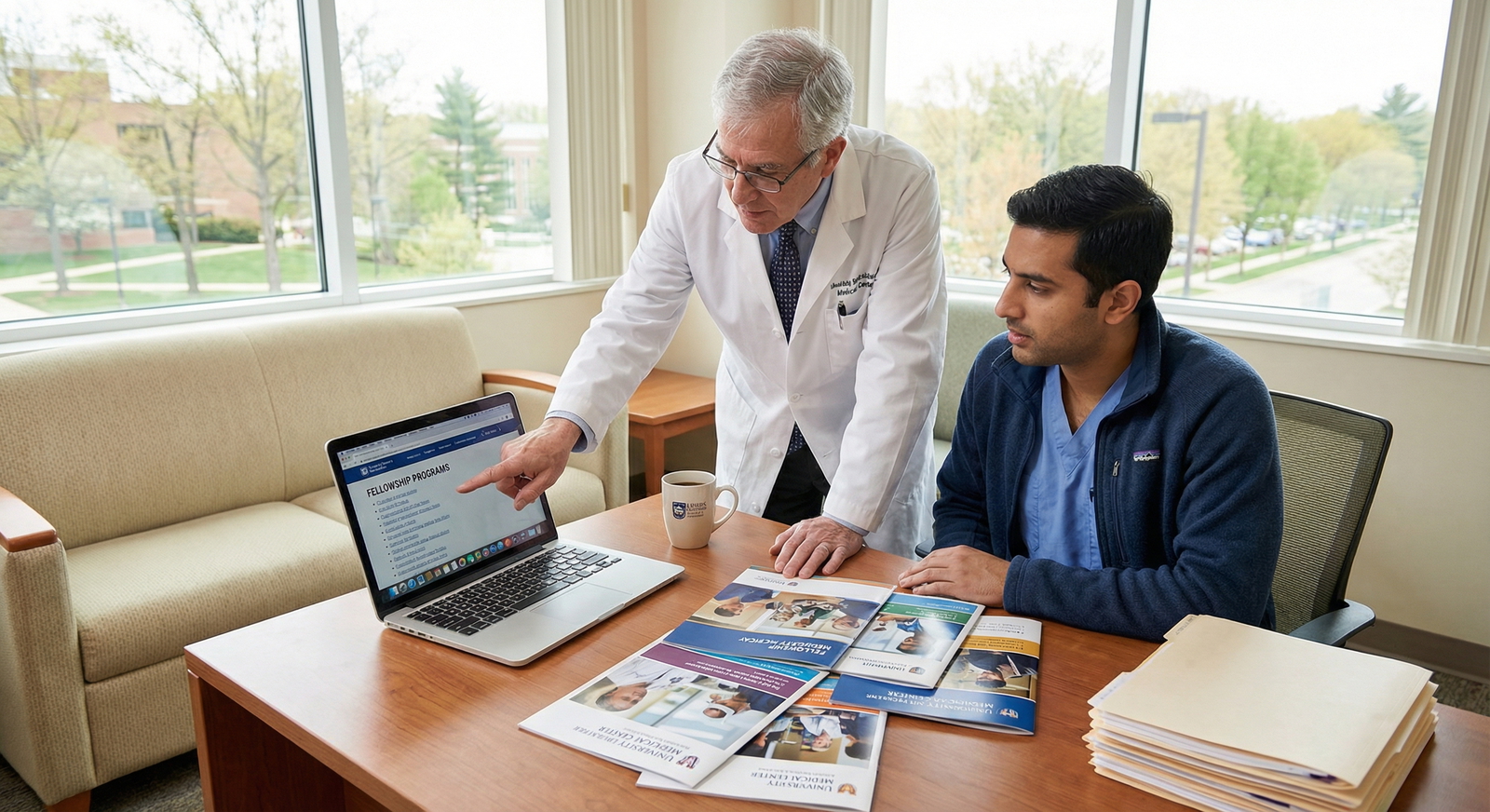
- Ask CT, ICU, pain, or pediatric faculty for casual career chats.
- Seek honest input: “Given my strengths and interests, which paths do you see fitting well?”
Talk to current and recent fellows
- Ask about day-to-day schedule, workload, and what surprised them.
- Where did recent graduates go? Academic vs. private, and what roles?
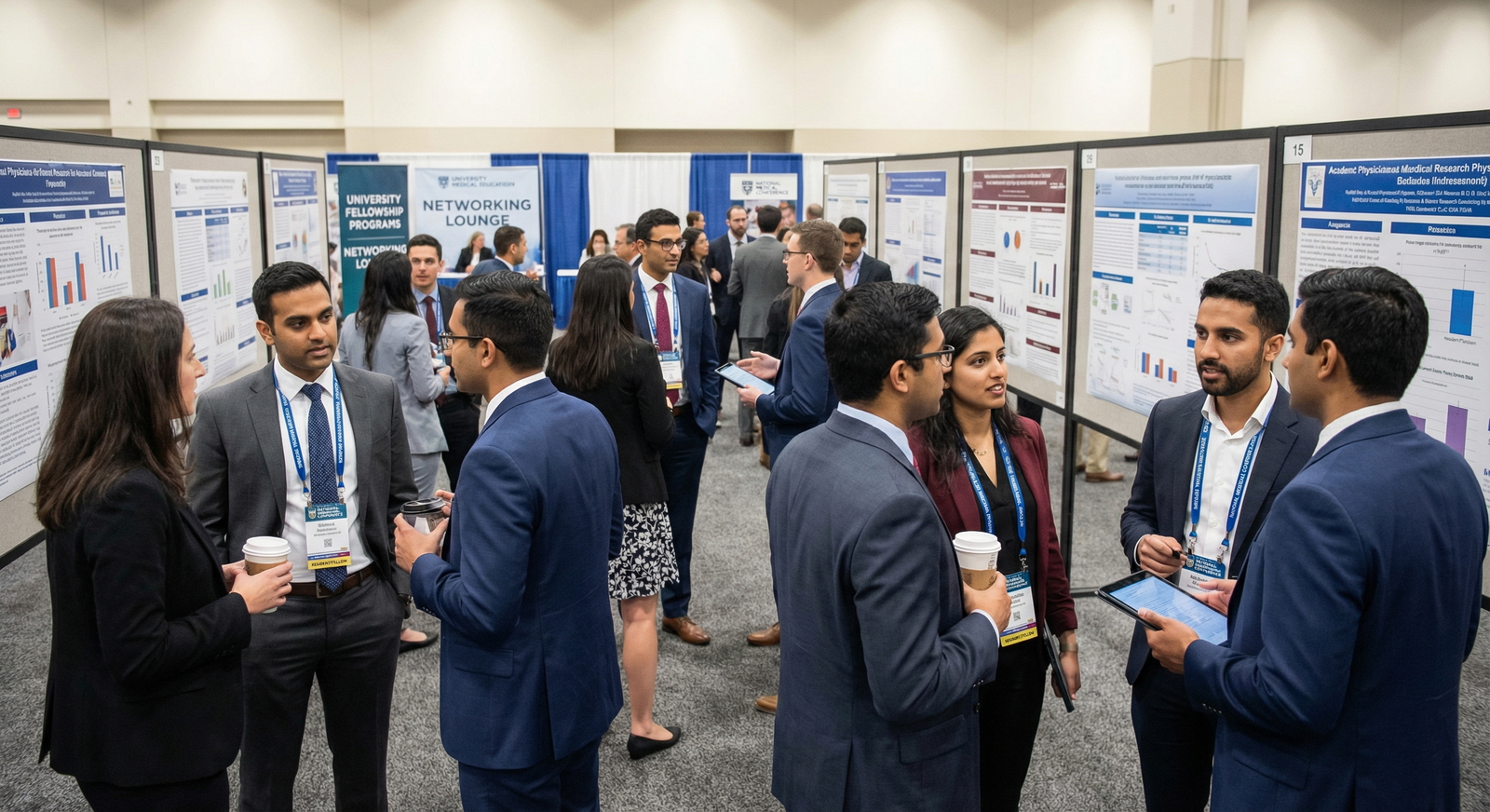
Use national meetings strategically
- Attend ASA, SCA, SCCM, ASRA, or regional society meetings as a CA‑1/CA‑2.
- Visit fellowship booths, ask questions, attend fellowship interest sessions.
This early exploration phase is foundational for MD graduate residency trainees aiming at the anesthesia match for fellowship programs and beyond.
Building a Competitive Fellowship Application During Residency

Whether you are a recent MD graduate residency trainee from an allopathic medical school match or came from a different pathway, the fundamentals of becoming a strong fellowship candidate are similar.
Clinical Excellence as Your Foundation
Fellowship directors look first for reliable, thoughtful, clinically strong residents.
Strive for solid evaluations
- Show up prepared, anticipate next steps, and communicate clearly with surgeons, nurses, and consultants.
- Ask for specific feedback: “What can I do next week to function more like a CA‑3?” and implement it.
Be known for professionalism
- On-time reliefs, staying to help when the board is tight, managing conflict calmly.
- Respond promptly and professionally to emails and administrative requests.
Seek graduated responsibility
- Volunteer for challenging cases with supervision.
- Step up as a senior resident: running the board, troubleshooting, and helping juniors.
Letters of recommendation frequently comment on reliability, team orientation, and professionalism just as much as technical skill.
Strategic Scholarship and Research
You do not need a PhD to match into a fellowship, but evidence of scholarly engagement strongly enhances your application, especially if you’re preparing for fellowship in academic environments or envision preparing for a second fellowship later.
Actionable steps:
Join or initiate projects early (CA‑1 year)
- Ask attendings on rotations if they have ongoing projects needing help: chart reviews, QI, case reports.
- Connect with your department’s research director or coordinator.
Tailor projects to your target subspecialty
- Cardiothoracic: outcomes of valve surgeries, TEE-based studies.
- Critical care: sepsis protocols, ventilator management audits.
- Pain: retrospective analyses of interventional techniques, opioid stewardship QI.
- Pediatrics: perioperative anxiety interventions, PACU outcomes.
Aim for tangible products
- Abstracts at ASA, regional or subspecialty meetings.
- Peer-reviewed publications, even case reports or small series.
- QI projects with documented impact on your department.
Include a separate “Scholarly Activity” section on your CV listing peer-reviewed publications, abstracts, presentations, and QI work.
Leadership, Teaching, and Volunteer Roles
Fellowship selection committees value leadership potential and engagement beyond minimum requirements:
Departmental roles
- Residency program committees, wellness initiatives, simulation curriculum design.
- CA‑3 chief resident roles or “class representative” positions.
Teaching
- Leading medical student or junior resident teaching sessions.
- Participation in simulation, airway workshops, or ultrasound teaching.
Professional organizations
- Involvement in state anesthesia societies, ASA resident/advocacy committees.
- Presenting at resident sections, networking with faculty leaders.
When asked later “how to get fellowship positions at top programs,” these experiences demonstrate your maturity and commitment to the specialty beyond day‑to‑day clinical work.
Professional Networking and Mentorship
Intentional networking is one of the most undervalued aspects of fellowship preparation:
Cultivate 1–2 primary mentors and several “micro-mentors”
- Primary mentors: help you shape your overall career and application strategy.
- Micro-mentors: short-term guidance on specific issues (a research project, an away rotation, or an application question).
Stay visible
- Present at local grand rounds or M&M conferences.
- Volunteer to help with departmental events or visiting professor days.
Use alumni networks
- Ask your program to connect you with former residents now in fellowships or early practice in your target subspecialty and region.
These relationships often translate into stronger, more personalized letters and informal advocacy for your application.
Fellowship Application Timeline and Process for Anesthesiology
Understanding the fellowship application timeline and planning backward is key. Systems evolve, but some general patterns apply.
Typical Timeline (ERAS/NRMP and Non-NRMP)
For many anesthesiology subspecialties:
CA‑1 year (PGY‑2)
- Explore interests through rotations and early mentorship.
- Join at least one project, attend at least one national or regional meeting if possible.
Early CA‑2 (PGY‑3)
- Narrow focus to 1–2 fellowship types.
- Confirm mentors and begin structured fellowship preparation.
- Draft an initial CV and personal statement outline.
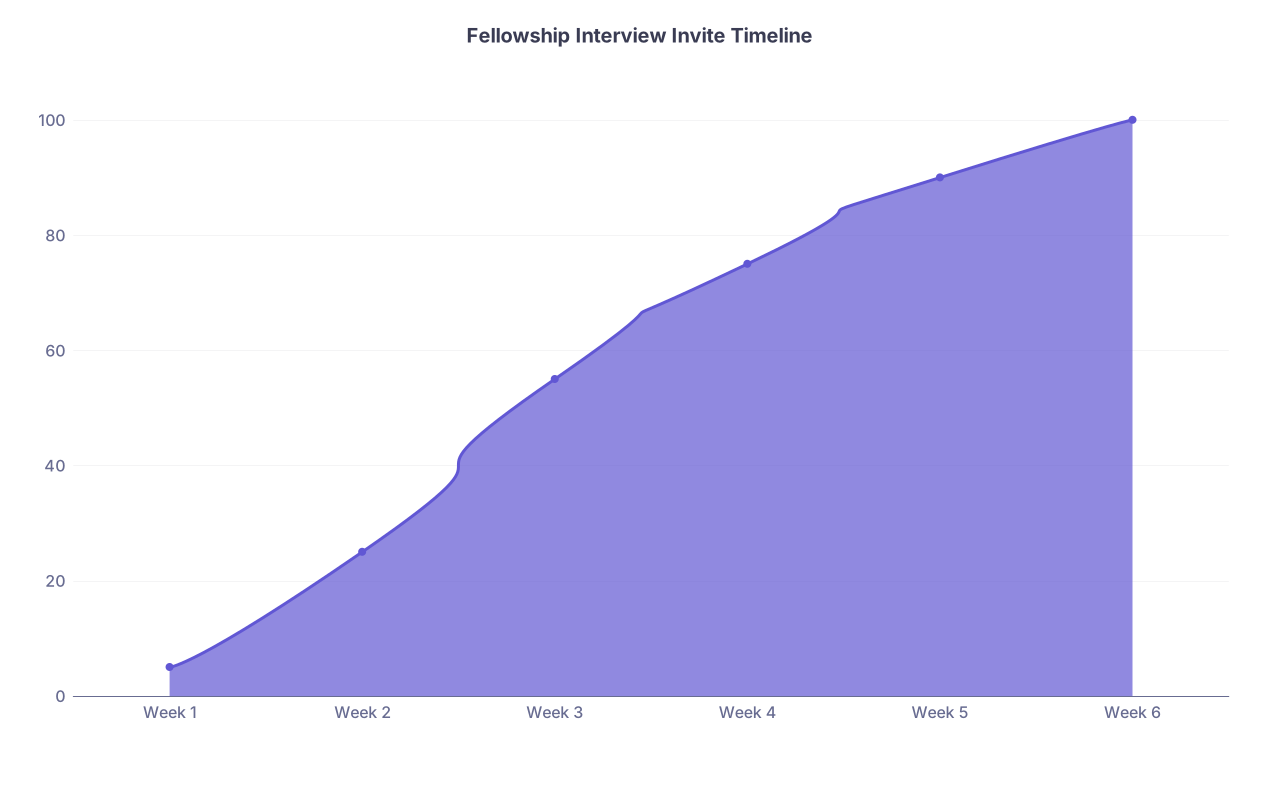
Late CA‑2 to early CA‑3 (PGY‑3 to PGY‑4)
- Submit fellowship applications (ERAS for many ACGME fellowships; direct applications for others).
- Interviews usually occur during this period.
CA‑3 (PGY‑4)
- Finalize rank lists and contracts.
- Continue to build your skills aligned with your chosen fellowship.
Because subspecialties occasionally change their match mechanisms (ERAS vs. SF Match vs. direct), always verify current processes via:
- ASA subspecialty society websites (SCA, SCCM, ASRA, etc.)
- Program websites
- Fellowship coordinators
- NRMP/ERAS announcements
Key Components of the Application
Curriculum Vitae (CV)
- Organized and up-to-date; highlight anesthesiology-specific achievements.
- Include education, training, honors, research, teaching, leadership, volunteer work, professional involvement, and skills (e.g., languages, ultrasound certificates).
Personal Statement
- 1 page, focused and specific to the subspecialty.
- Explain:
- What drew you to this area of anesthesiology.
- How your experiences prepared you for fellowship.
- Your career goals and how this specific type of training fits.
- Avoid generic statements that could apply to any fellowship.
Letters of Recommendation
- Usually 3 letters (sometimes 4 permitted).
- Strong letters often come from:
- Subspecialty faculty in your desired area.
- Program Director or Chair (often required or strongly recommended).
- Research mentor, if scholarly work is significant and relevant.
When requesting letters:
- Ask early (3–4 months before deadlines).
- Provide your CV, draft personal statement, and a short summary of your contributions to their rotation or project.
- Ask directly: “Do you feel able to write a strong, positive letter for my anesthesiology residency fellowship application?”
Transcripts and Evaluations
- Programs may review your medical school transcript, USMLE/COMLEX scores, and in-training exam performance.
- While test scores matter, fellowship directors often emphasize residency performance and subspecialty fit more heavily.
Fellowship Interviews
Interviews are your opportunity to assess program fit as much as they assess you.
Common questions you may be asked:
- Why this subspecialty and why now?
- Why this specific program or geographic region?
- Describe a challenging clinical case and how you handled it.
- Tell us about a time you received critical feedback and what you did with it.
- What are your 5- to 10-year career goals? Are you preparing for fellowship with research or education in mind?
Questions you should ask:
- What are the strengths and limitations of your program?
- How do fellows transition to independent practice after training?
- What is the balance between service and education, especially call responsibilities?
- What research or QI projects are available for fellows?
- Where have recent fellows gone for jobs or additional training?
Make notes after each interview day. When ranking programs, factor in both your analytic impressions (case mix, academic strengths) and your intuitive sense of belonging and support.
Thriving in Residency While Preparing for Fellowship and Beyond
Balancing day-to-day residency demands with fellowship preparation is challenging, especially during intense rotations.
Time Management and Prioritization
Create a fellowship preparation calendar
- Map application deadlines, letter request dates, personal statement draft timelines, and interview windows.
- Include conference abstract deadlines and departmental presentations.
Use “micro-blocks” of time
- 20–30 minutes after work every few days to update your CV, refine your personal statement, or respond to mentors’ emails.
- Reserve larger blocks on lighter weekend days for research or studying.
Say no strategically
- It’s better to do 2–3 meaningful projects than 7 incomplete ones.
- Be honest with mentors about your capacity.
Maintaining Clinical Growth
Don’t let your focus on the anesthesia match at the fellowship level distract from the broader goal of becoming a well-rounded anesthesiologist.
- Use each rotation to master foundational skills, even if it’s not your target subspecialty.
- Seek feedback from non-fellowship faculty to ensure you’re developing a broad base of competence.
Preparing for Fellowship and Beyond: Thinking Ahead to Jobs and Additional Training
Some residents worry about when to focus on preparing for fellowship versus preparing for first jobs or even additional subspecialty training. Consider:
Single fellowship track (most common)
- Use fellowship to crystallize your niche and develop a specific skillset.
- Start job search 9–12 months before fellowship graduation.
Multiple fellowships (less common but relevant in areas like cardiac + critical care)
- Plan your fellowship sequence and verify eligibility rules (e.g., which boards you can sit for, funding limits).
- Understand that each additional year delays full attending compensation; align this with long-term goals like academics or highly specialized practice.
If you later ask yourself “how to get fellowship training in a second area,” your track record of excellence, research, and professional reputation from the first fellowship will heavily influence opportunities.
Frequently Asked Questions (FAQ)
1. When should I start preparing for a fellowship in anesthesiology?
Begin informal exploration in your CA‑1 year: talk to faculty, note which rotations you enjoy, and attend subspecialty conferences or lectures. Formal preparation—identifying a target fellowship, engaging in subspecialty research, and building relationships with mentors—should be underway by early CA‑2 year. Application materials are usually finalized between late CA‑2 and early CA‑3, depending on the subspecialty and match system.
2. Do I need to do research to match into an anesthesiology fellowship?
Research is not strictly required, but it significantly strengthens your application, especially for academic or highly competitive programs. A few well-executed projects—a case report, a retrospective study, or a QI initiative—show intellectual curiosity and commitment. Programs in cardiothoracic, critical care, and pain often value research involvement highly because it aligns with their academic missions.
3. How important are USMLE scores and medical school pedigree for fellowship?
By the time you’re applying for fellowship, your performance in anesthesiology residency usually carries more weight than your USMLE scores or which allopathic medical school match you came from. Fellowship directors focus on your clinical evaluations, letters of recommendation, subspecialty fit, professionalism, and scholarly activity. Exceptionally low scores may come up if there are concerns about exams like subspecialty boards, but strong residency performance can more than compensate.
4. Can I get a good job without doing a fellowship?
Yes. Many anesthesiologists practice successfully without fellowship training, especially in community settings. However, certain practice types—complex cardiac, transplant, tertiary-level PICU/ICU, or advanced pain practices—often require or strongly prefer fellowship training. If you desire a specialized role, academic career, or leadership position in a subspecialty service, completing a fellowship significantly broadens your options.
Fellowship preparation for an MD graduate in anesthesiology is a multi-year, strategic process that begins early in residency and culminates in a decision that will shape your professional life for decades. By clarifying your goals, cultivating mentorship, building a focused track record of clinical and scholarly excellence, and understanding the fellowship application timeline, you position yourself not only to match successfully, but to thrive in the subspecialty and career you ultimately choose.