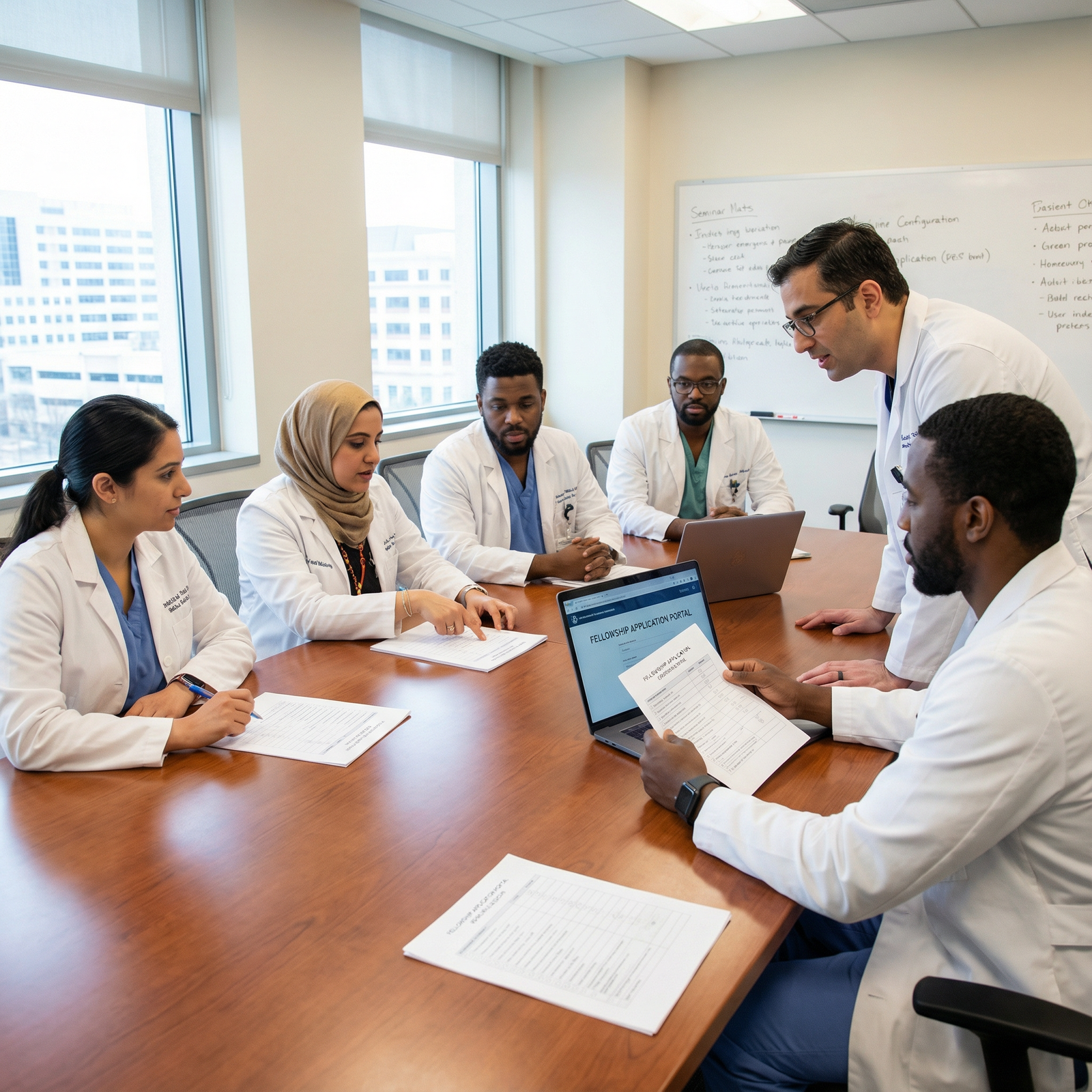
Entering neurology residency as a Caribbean IMG is a major achievement. For many, it’s also just the beginning—especially if you’re aiming for a competitive fellowship in epilepsy, stroke, neurocritical care, movement disorders, neuromuscular, or clinical neurophysiology.
This guide walks you through fellowship preparation for Caribbean IMG in neurology from day one of residency, with a special focus on the realities of being an international medical graduate (IMG) from a Caribbean medical school. Whether you trained at SGU, AUC, Ross, or another Caribbean program, you can absolutely build a strong fellowship application—if you plan early and strategically.
Understanding the Fellowship Landscape for Caribbean Neurology IMGs
Before you can optimize your path, you need a realistic picture of the neurology fellowship ecosystem and where Caribbean IMGs fit within it.
Common Neurology Fellowships
Most residents interested in a neuro match pursue one of the following:
- Vascular Neurology (Stroke)
- Neurocritical Care
- Epilepsy
- Clinical Neurophysiology
- Movement Disorders
- Neuromuscular Medicine
- Headache Medicine
- Behavioral/Neurocognitive Neurology
- Multiple Sclerosis / Neuroimmunology
- Neuro-oncology
- Interventional Neurology (usually post stroke fellowship + additional training)
- Palliative Neurology / Neuro-palliative (emerging niche)
Each fellowship has its own competitiveness, procedural exposure, and research expectations. For example:
- Epilepsy / Clinical Neurophysiology
- Heavy emphasis on EEG experience
- Programs often value residents with early exposure to EEG and epilepsy rotations
- Vascular Neurology
- Strong stroke rotation evaluations
- Comfort with acute stroke codes and quality improvement projects
- Neurocritical Care
- ICU exposure (neuro-ICU, MICU, SICU)
- Often expects strong letters from intensivists and neurologists
Where Caribbean IMGs Stand in Neurology Fellowships
As a Caribbean IMG, you may not have the built-in brand recognition of U.S. allopathic schools, but you can still position yourself strongly for most neurology fellowships. Key points:
- Caribbean graduates do match into reputable neurology fellowships, including at academic centers.
- Programs care more about your neurology residency performance than which medical school you attended—once you’ve secured a solid residency spot.
- Some hyper-competitive niches (top-tier academic movement disorders, neuro-immunology at large quaternary centers) may be harder to access but not impossible with:
- Strong research profile
- High-quality letters
- Strategic networking and away rotations
If you trained at a school like SGU, leveraging your institution’s alumni success and networks (e.g., SGU residency match and fellowship outcomes) can help you find mentors who have already traveled this path.
Clarifying Your Goals Early
By the end of PGY-1 (intern year), aim to answer three questions:
- Do I definitely want a fellowship, or am I open to general neurology?
- Which subspecialties genuinely interest me, not just what sounds prestigious?
- Where on the spectrum do I fall: academic vs. community vs. hybrid practice?
Your answers will guide how aggressively you need to pursue research, what rotations to prioritize, and how to time your applications.
Year-by-Year Strategy: From PGY-1 to Fellowship Match
Your neuro match success is built over years, not months. Here’s a structured plan.
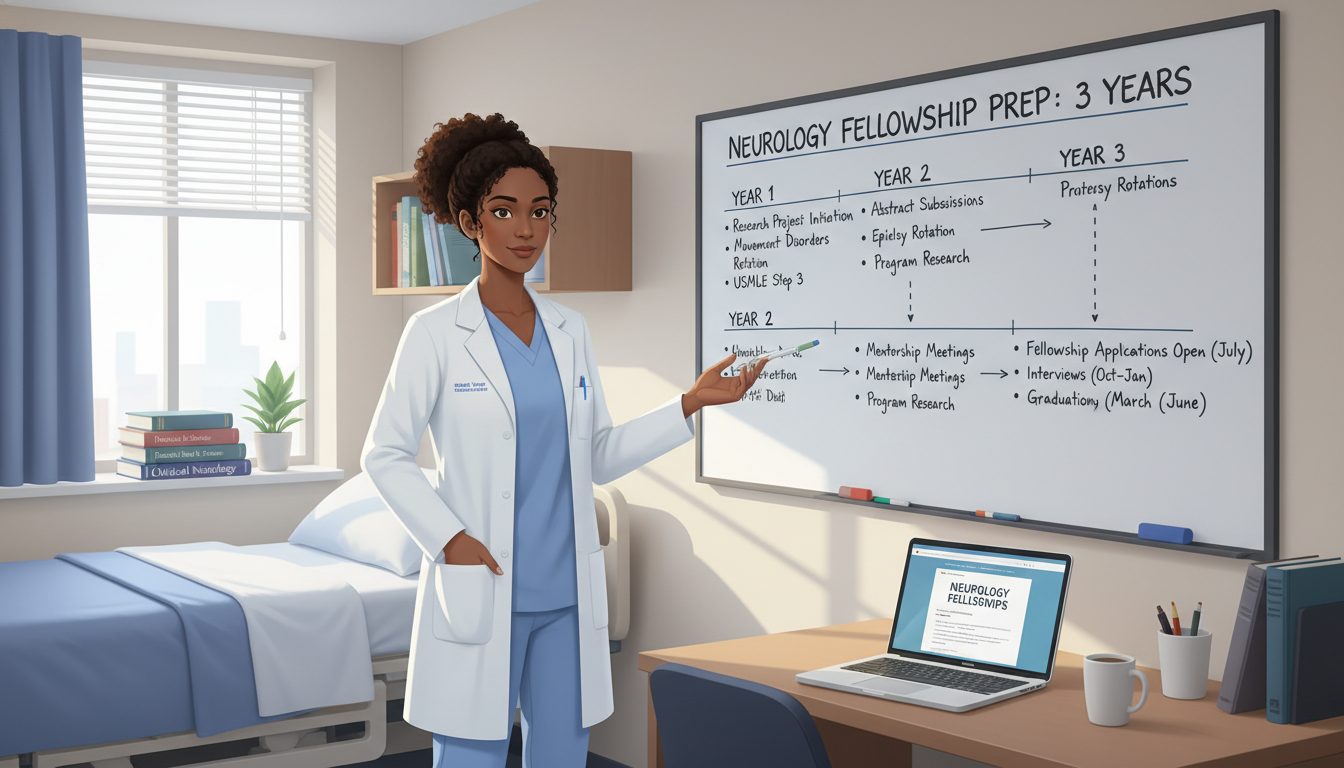
PGY-1: Laying the Foundation
PGY-1 (preliminary year or transitional year) is when you create the conditions for a strong neurology training experience.
Core Goals:
- Build a reputation as:
- Reliable
- Hardworking
- Honest and teachable
- Secure early mentors in neurology (even if your PGY-1 is mostly internal medicine)
Action Steps:
Connect with Neurology Early
- If your preliminary year hospital has neurologists:
- Request a neurology elective if allowed.
- Attend neurology grand rounds on your days off or when post-call.
- If not, stay connected to your matched neurology program:
- Email the PD or APD:
- Introduce yourself
- Express your interest in neurology and possible subspecialties
- Ask if you can join virtual didactics or conferences
- Email the PD or APD:
- If your preliminary year hospital has neurologists:
Learn Core Medicine Well
- Fellowship directors want neurologists who:
- Understand systemic disease
- Manage comorbidities safely
- Focus on:
- Solid note-writing
- Efficient workups
- Professional communication with nurses and consultants
- Fellowship directors want neurologists who:
Early Research Exploration
- If you have time:
- Reach out to neurology faculty (especially at your future residency site) for low-barrier projects:
- Chart reviews
- Case reports
- Case series
- Reach out to neurology faculty (especially at your future residency site) for low-barrier projects:
- Don’t panic if research in PGY-1 isn’t possible; PGY-2–3 are more critical.
- If you have time:
PGY-2: Positioning Yourself for Fellowship
PGY-2 is pivotal for fellowship preparation in neurology. This is often your first dedicated year of neurology training.
Core Goals:
- Confirm (or narrow) your intended subspecialty.
- Become known as a strong neurology resident.
- Get involved in meaningful scholarly work.
Action Steps:
Take Neurology Rotations Seriously
- On wards, consults, and stroke services:
- Show up early, know your patients deeply.
- Practice succinct case presentations.
- Ask thoughtful questions (demonstrate curiosity, not insecurity).
- Your daily behavior is what generates strong letters later.
- On wards, consults, and stroke services:
Identify a Primary Mentor
- Choose a subspecialist aligned with your interest:
- Stroke attending for vascular neurology
- Epileptologist for epilepsy/clinical neurophysiology
- Neurointensivist for neurocritical care
- Don’t overcomplicate the ask. Start with:
- “I’m a PGY-2 interested in [X subspecialty]. I’d love your guidance on how to prepare for fellowship and whether there are any projects I can help with.”
- Choose a subspecialist aligned with your interest:
Engage in Research and Scholarly Activity
- Start with manageable projects:
- Case report of an interesting neuro case you admitted
- Quality improvement in stroke unit (e.g., door-to-needle times)
- Retrospective chart review in epilepsy or neuro-ICU
- Your goal:
- At least 1–2 submitted abstracts/posters by the end of PGY-2
- For Caribbean IMGs with fewer pre-residency publications, this is where you start closing the gap.
- Start with manageable projects:
Attend Conferences
- Target:
- AAN (American Academy of Neurology) as the main conference
- Subspecialty meetings (e.g., AES for epilepsy, NCS for neurocritical care, ISC for stroke)
- Benefits:
- Networking with potential fellowship directors
- Presenting research as a resident (looks very strong on applications)
- If cost is an issue:
- Apply for resident travel scholarships
- Ask your department about conference funding
- Target:
PGY-3: Building a Competitive Application Profile
PGY-3 is when your fellowship application components must take shape.
Core Goals:
- Cement your subspecialty decision.
- Create a fellowship-ready CV.
- Prepare your letters and personal narrative.
Action Steps:
Subspecialty Rotations and Electives
- Schedule electives in your desired fellowship field:
- 1–2 months of stroke/neuro-ICU for vascular neurology or NCC
- Dedicated EEG/EMU time for epilepsy or clinical neurophysiology
- Movement disorders clinic if that’s your interest
- If possible, consider:
- External electives / away rotations at institutions you may want to apply to for fellowship—especially valuable for Caribbean IMGs to:
- Show your capability in a new environment
- Get a letter from a well-known name in the field
- External electives / away rotations at institutions you may want to apply to for fellowship—especially valuable for Caribbean IMGs to:
- Schedule electives in your desired fellowship field:
Deepen Research Productivity
- Aim to have by the end of PGY-3:
- 1–2 posters or platform presentations (regional or national)
- At least 1 manuscript submitted (case report, review, or original research)
- Strategically choose projects that are:
- Feasible within residency time constraints
- Closely tied to your chosen subspecialty (e.g., EMU outcomes if going for epilepsy)
- Aim to have by the end of PGY-3:
Identify Letter Writers
- You need 3–4 strong letters, ideally:
- 1 from your Program Director
- 1 from your primary subspecialty mentor
- 1 from another neurology faculty who supervised you closely (preferably in your intended subfield)
- Optional: 1 from a related non-neurology attending (e.g., ICU attending for neurocritical care)
- Ask early (late PGY-3 / early PGY-4), and be explicit:
- “Would you feel comfortable writing me a strong letter of recommendation for [X fellowship]?”
- You need 3–4 strong letters, ideally:
Shape Your Narrative as a Caribbean IMG
- Reflect on how your journey from Caribbean medical school to neurology residency:
- Demonstrates resilience, adaptability, and motivation
- Exposed you to diverse patient populations
- Integrate this into:
- Your personal statement
- Interviews, when asked about your background
- Reflect on how your journey from Caribbean medical school to neurology residency:
PGY-4: Application Execution and Interviews
PGY-4 is when your long-term planning has to translate into a successful neuro match for fellowship.
Core Goals:
- Submit polished, timely applications.
- Interview effectively.
- Strategically rank programs.
Action Steps:
- Know the Fellowship Application Timeline
While details vary, most ACGME neurology fellowships follow an approximate fellowship application timeline:
- Summer–Fall PGY-3: Identify programs, start CV and personal statement drafts.
- Late PGY-3 to Early PGY-4:
- ERAS opens/applications accepted for many neurology fellowships (e.g., vascular neurology, epilepsy).
- Some fields use SF Match or direct applications—check each subspecialty’s website early.
- PGY-4 Fall–Winter:
- Interviews typically occur.
- Winter–Spring:
- Rank lists submitted (if a match is used) or offers extended directly.
- 1 year later:
- Fellowship start.
For “how to get fellowship” right from a timing standpoint, you must check:
- AAN fellowship directories
- Individual program websites
- Match systems (ERAS, NRMP, SF Match, or non-match for smaller fellowships)
- Application Components
Your application should include:
- CV:
- Focus on neurology experience, leadership, and scholarly work.
- Highlight Caribbean school achievements (honors, leadership, community service).
- Personal Statement:
- 1–1.5 pages, focused and specific:
- Why this subspecialty?
- How your experiences (including as a Caribbean IMG) shaped your interest?
- Long-term career vision: academic, community, or hybrid.
- 1–1.5 pages, focused and specific:
- Letters of Recommendation:
- Ensure they’re uploaded early.
- Provide writers your CV, personal statement draft, and bullet points of key things you’d value if they addressed.
- Interview Preparation
Fellowship interviews are usually more conversational and academic than residency interviews.
You should be prepared to discuss:
- Specific cases in your subspecialty:
- A complex stroke you managed
- A challenging status epilepticus patient
- A difficult ICU decision involving goals of care
- Your research:
- Be able to explain it at both a high and detailed level.
- Your future goals:
- “Where do you see yourself in 5–10 years?”
- “How will this fellowship help you get there?”
Also expect subtle questions about your path as a Caribbean IMG:
- “Tell me about your journey from Caribbean medical school to here.”
- “How has your background shaped your clinical approach?”
Your responses should:
- Be confident, not defensive.
- Emphasize strengths: adaptability, broad clinical exposure, determination.
- Ranking and Decision-Making
When ranking programs or choosing between offers, consider:
- Training exposure:
- Case volume
- Autonomy
- Procedural opportunities (e.g., thrombectomy shadowing for stroke, continuous EEG exposure for epilepsy)
- Mentorship and career support
- Research opportunities if you’re leaning academic
- Location and lifestyle, including visa implications for non-U.S. citizens
Strategic Advantages and Challenges Unique to Caribbean IMGs
Being a Caribbean IMG shapes your neurology fellowship preparation in specific ways—some challenging, some beneficial.

Common Challenges
Perceived Prestige Gap
- Some programs may favor U.S. MD/DO applicants, especially at top-tier academic centers.
- Limited name recognition of Caribbean medical schools compared to major U.S. institutions.
Research Access
- If your residency program has limited research infrastructure, it can be harder to produce multiple publications.
Visa Issues (If Applicable)
- J-1 or H-1B status can narrow potential programs.
- Some fellowships simply cannot sponsor visas.
Networking Deficits
- Fewer built-in home institution networks compared to large U.S. med schools.
- Less exposure to “known” neurology names early on.
Leverageable Strengths
Grit and Resilience
- The path through Caribbean medical school residency and then fellowship is inherently demanding.
- Fellowship directors recognize that IMGs who made it through neurology residency often:
- Work extremely hard
- Are highly motivated to succeed
Diverse Clinical Backgrounds
- Many Caribbean medical school graduates have:
- Broad clinical exposure
- Multicultural, multilingual experience
- Especially valuable in:
- Stroke and general neurology dealing with diverse populations
- Neurocritical care with ICU families from varied backgrounds
- Many Caribbean medical school graduates have:
Rapid Growth Trajectory
- Your development curve from early struggles (USMLE, adapting to new systems) to successful residency performance can be a compelling story of growth.
Actionable Strategies to Overcome Barriers
Target Programs with a Track Record of IMGs
- Look at current and past fellows on program websites.
- Email current fellows (especially if they’re IMGs or Caribbean grads) for honest insight.
Maximize Your Neurology Residency Brand
- If your residency is mid-tier but solid, you can still match to strong fellowships by:
- Being top 10–20% of your residency class.
- Getting letters that emphasize your excellence compared to peers.
- If your residency is mid-tier but solid, you can still match to strong fellowships by:
Be Proactive About Visa Issues
- Clarify your visa status early.
- Email programs that don’t explicitly state sponsorship:
- Brief, professional inquiry about whether they sponsor J-1 or H-1B visas.
- Work with your GME and institutional legal teams as early as PGY-2 if possible.
Building a Fellowship-Ready CV: Concrete Components
Your CV is the structural backbone of your neurology fellowship application. Here’s what a strong CV for a Caribbean IMG should include.
1. Clinical Excellence
- Rotations with positive feedback—especially in:
- Stroke
- ICU
- Epilepsy / EMU
- Awards or recognition:
- Resident of the Month / Year
- Teaching awards from medical students or peers
2. Research and Scholarly Activity
At minimum, you should aim for:
- Case reports or case series related to your subspecialty interest.
- Quality improvement projects:
- Example: “Reducing door-to-needle times for tPA in acute ischemic stroke.”
- Conference presentations:
- Poster or platform presentations at:
- AAN
- AES, NCS, ISC, or other subspecialty meetings
- Poster or platform presentations at:
- Manuscripts:
- A few well-executed, peer-reviewed papers carry more weight than a long list of non-peer-reviewed abstracts.
3. Teaching and Leadership
Fellowship directors value neurologists who can teach and lead.
Examples:
- PGY-3/4 role as chief resident or member of:
- Education committee
- Morbidity and mortality committee
- Teaching roles:
- Leading med student neurology lectures
- Running resident noon conference sessions
- Creating a mini-curriculum (e.g., a stroke code simulation series)
4. Service and Professionalism
Include:
- Volunteer experiences:
- Free clinics
- Stroke awareness campaigns
- Professional society involvement:
- AAN resident member
- Participation in AAN resident leadership programs if available
Practical Example: A Sample Path to Fellowship
To make this real, consider a fictional but typical case:
Dr. A, SGU graduate, matched into a mid-sized community-based neurology residency with some academic ties. Interested in epilepsy.
- PGY-1:
- Did IM prelim year at same hospital system.
- Attended neurology grand rounds, met the epilepsy attending.
- PGY-2:
- On general neurology, consistently performed at top of class.
- Approached epilepsy attending for mentorship:
- Co-authored a case report on non-convulsive status epilepticus.
- Presented a poster at AAN.
- PGY-3:
- Did 2 months close in the EMU.
- Led a quality improvement project on EEG order utilization.
- Submitted a small retrospective study to a mid-tier journal.
- Secured letters from:
- Program Director
- Epilepsy mentor
- Another EEG faculty member
- PGY-4:
- Applied broadly to epilepsy and clinical neurophysiology fellowships.
- Attended AES and met program directors.
- Matched into a university-affiliated epilepsy fellowship with a strong EMU.
This is a realistic trajectory for a Caribbean IMG who is proactive but not superhuman. The key is consistency over time.
FAQs: Fellowship Preparation for Caribbean IMG in Neurology
1. As a Caribbean IMG, do I need significantly more research than U.S. grads to match a neurology fellowship?
No, you don’t need dramatically more, but you often need to be above average relative to your residency cohort to offset any perceived school prestige gap. A strong mix of:
- 1–3 meaningful publications
- Several posters or abstracts
- Projects clearly linked to your subspecialty
is usually sufficient for most neurology fellowships outside the absolute top tier programs.
2. Should I decide my subspecialty in PGY-1, or is it okay to wait?
You don’t need to commit in PGY-1, but you should seriously narrow down by mid-PGY-2. Some fellowships (stroke, epilepsy, neurocritical care) expect evidence of sustained interest:
- Targeted electives
- Subspecialty-specific research
- Letters from faculty in that field
Waiting until late PGY-3 makes it harder to build that track record in time.
3. How important is the name of my neurology residency for fellowship chances?
The quality and reputation of your performance in residency generally matter more than the name alone. Caribbean medical school residency pathways often lead to community or mid-tier academic neurology programs; from there, you can still:
- Match to strong university-affiliated fellowships
- Build a robust portfolio through excellent clinical performance and research
Top-tier neuro programs may prefer applicants from similarly prestigious residencies, but many are open to strong IMGs with compelling applications.
4. If I want to do a second fellowship or subspecialize further, when should I start preparing?
If you’re preparing for fellowship after an initial fellowship (e.g., stroke then neurointervention, or epilepsy then clinical neurophysiology), start planning during the first 6–9 months of your initial fellowship:
- Continue subspecialty research that bridges into the second field.
- Network at relevant conferences (e.g., stroke → interventional neurology meetings).
- Clarify visa status and long-term career goals.
The same principles of timing, mentorship, and targeted experience apply—just compressed into a shorter timeline.
Fellowship preparation for Caribbean IMG in neurology is absolutely achievable with deliberate planning, honest self-assessment, and consistent effort. From neurology residency through the neuro match and into application season, your success will come from building a coherent story: a motivated neurologist who has grown through the Caribbean medical school residency path, developed focused interests, and now brings real value to a fellowship program and future patients.