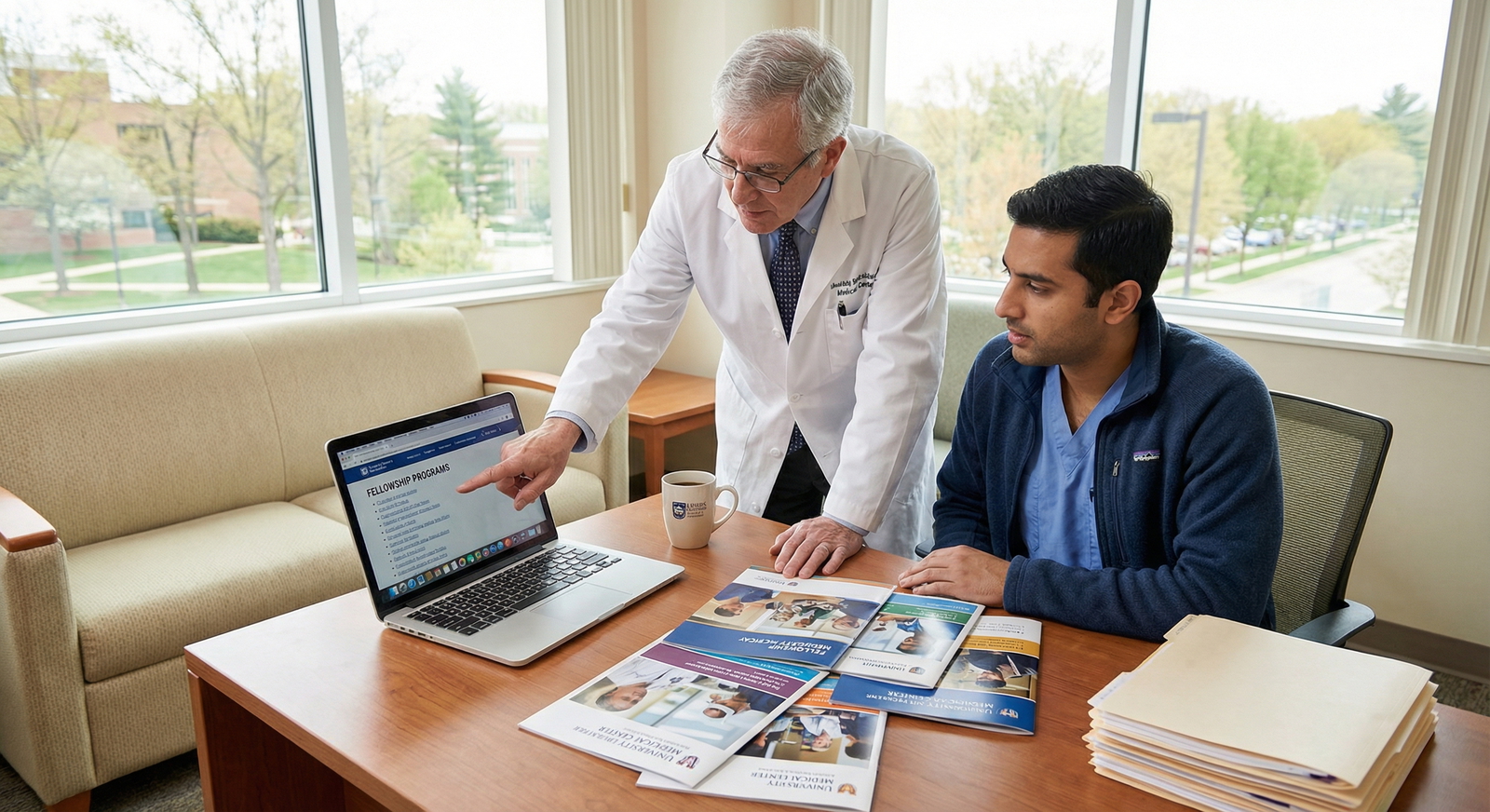
Understanding the Fellowship Landscape as a DO Graduate in Internal Medicine
If you are a DO graduate in internal medicine and already thinking about fellowship preparation, you are doing one of the most important things right: starting early. The path from internal medicine residency to subspecialty training is competitive and nuanced, and DO graduates face some specific considerations—though the playing field is far more level now than it used to be.
Fellowships in internal medicine include (but aren’t limited to):
- Cardiology
- Gastroenterology (GI)
- Pulmonary & Critical Care Medicine (PCCM)
- Hematology/Oncology (Heme/Onc)
- Nephrology
- Endocrinology
- Infectious Diseases
- Rheumatology
- Geriatrics
- Palliative Care / Hospice
- Hospital Medicine fellowships (various tracks)
- Academic/research fellowships (e.g., health services research, QI)
These programs expect you to demonstrate:
- Strong clinical foundation in internal medicine
- Evidence of academic productivity (research, QI, presentations)
- Commitment to the subspecialty (electives, mentorship, longitudinal interests)
- Professionalism, teamwork, and leadership
- Clear goals and maturity in your personal statement and interviews
For a DO graduate residency pathway, the unified ACGME system has dramatically improved access to competitive fellowships. However, subtle biases may still exist, and your job is to make your application so strong that those biases are overshadowed by your achievements, evaluations, and professional reputation.
This article will walk through a strategic, step-by-step plan—from intern year through the fellowship application timeline—emphasizing practical strategies for DO internal medicine residents.
Laying the Foundation in PGY-1: Clinical Strength & Reputation
Your intern year is about building credibility. Before any program director seriously considers you for a competitive fellowship, they need to be convinced you are a strong internist in training.
1. Prioritize Clinical Excellence
In PGY-1, your most important job is to:
- Show up early, prepared, and reliable
- Own your patients and their stories
- Communicate clearly with nurses, consultants, and families
- Read every day about the patients you are caring for
Program leadership and faculty will be watching for:
- The “trajectory” of your growth
- Your ability to manage volume and acuity
- How you respond under pressure
- Your professionalism and resilience
Strong performance evaluations and informal reputation will directly influence:
- Which letters of recommendation you can obtain later
- Which faculty are willing to advocate for you
- Whether your program director will “go to bat” for you in the IM match
2. Lean Into Your Osteopathic Background
As a DO graduate in internal medicine, you bring added value:
- A holistic, patient-centered approach
- Strong grounding in communication and bedside manner
- Understanding of musculoskeletal and functional issues
Rather than downplaying your DO background, emphasize:
- How your osteopathic training informs your approach to chronic disease, multimorbidity, and functional status
- Any OMT exposure that is relevant to your future subspecialty (e.g., chest wall mechanics in pulmonology, musculoskeletal pain in rheumatology or palliative care)
You don’t need to use OMT every day to demonstrate that your DO education shapes how you think about patients.
3. Start Exploring Subspecialty Interests (Without Locking In)
Use PGY-1 to learn what you genuinely enjoy:
- Pay attention to which consult services you look forward to calling
- Notice which pathologies you naturally read about after shifts
- Reflect on inpatient vs. outpatient vs. ICU environments
You don’t need to decide in PGY-1, but you should:
- Narrow down to 2–3 potential fields
- Start introducing yourself to subspecialty faculty
- Ask informal questions about lifestyle, job market, and fellowship expectations
A simple script:
“Dr. X, I really enjoyed working with you on this rotation. I’m early in my training but interested in [cardiology/GI/rheum/etc.]. Would you be open to a brief meeting sometime to talk about career paths in your field?”

Building a Competitive Profile in PGY-2: Research, Electives, and Visibility
PGY-2 is your prime time to become a serious fellowship applicant. The fellowship application timeline typically means you’ll apply early in PGY-3, so the groundwork must be visible by mid-PGY-2.
1. Clarify Your Subspecialty Target
By early PGY-2, aim to decisively choose a subspecialty (or at most two if they are closely related, like Heme/Onc, or Pulm/Crit):
- Ask yourself what type of day you want long-term (procedural vs. cognitive, inpatient vs. outpatient).
- Talk to multiple fellows in the field to understand the realities: call schedules, burnout, job prospects.
- Consider the length of training (e.g., cardiology and GI are longer and more competitive than, say, nephrology or geriatrics).
Once you decide, everything else should align: electives, projects, mentors, conferences, and reading.
2. Strategic Elective Planning
Work with your chief residents and program leadership to plan:
- Subspecialty electives in your chosen field (preferably with known fellowship educators)
- ICU rotations, especially if your field values critical care exposure (cardiology, GI, PCCM, Heme/Onc)
- Outpatient clinics in your field to demonstrate longitudinal interest
- Away or “audition” rotations only if truly helpful (more common for highly competitive subspecialties or if your home program has limited exposure)
Make your electives count:
- Identify 1–2 potential letter writers and let them know you’re interested in fellowship.
- Volunteer for mini-projects: case reports, QI initiatives, small chart reviews.
- Be proactive: offer to follow up on interesting patients, help with M&M presentations, or co-present teaching sessions for students.
3. Start or Deepen Research and Scholarly Activity
In many internal medicine fellowship fields, research is a key differentiator—especially for competitive programs. As a DO graduate residency applicant, a strong scholarly record directly addresses any residual skepticism.
You do not need a PhD-level portfolio, but you should aim for:
- 1–3 abstracts, posters, or oral presentations
- 1–2 review articles, case reports, or original manuscripts
- Involvement in at least one meaningful QI or systems-based project
Practical steps:
- Find a mentor with a track record of publishing fellows and residents.
- Ask: “What’s a small project we could realistically finish before fellowship applications?”
- Consider:
- Case reports on unique presentations
- Retrospective chart reviews using existing databases
- Quality improvement projects (e.g., reducing readmission, optimizing guideline adherence)
- Educational projects (curriculum development, simulation)
For competitive fellowships (cardiology, GI, PCCM, Heme/Onc):
- Start projects by early PGY-2 so you have something accepted/presented by the time you apply.
- Aim to present at regional or national society meetings (ACC, ACG, CHEST, ASCO, etc.).
4. Attend Conferences and Network
Professional societies often have reduced fees for residents and DO graduates are increasingly visible in these spaces. This is valuable for:
- Seeing cutting-edge work in your field
- Meeting potential letter writers or future fellowship program directors
- Presenting your own work, which signals serious interest
Networking does not need to be awkward:
- Start conversations by asking people what they’re working on.
- Introduce yourself succinctly: “I’m a PGY-2 DO resident in internal medicine at [Institution], interested in [subspecialty].”
- If you meet a key academic figure, follow up once with a brief, polite email referencing your conversation.
PGY-3 and the Fellowship Application Timeline: Execution and Details
The fellowship application timeline for internal medicine (ERAS-based specialties) typically follows this pattern (exact dates vary by year):
Late PGY-2 / Early PGY-3 (Dec–Apr of PGY-2):
- Firm up subspecialty choice
- Finalize projects for submission
- Identify letter writers
- Start drafting your personal statement and updating your CV
Spring–Early Summer of Application Year (usually PGY-2 late → PGY-3 early):
- ERAS opens to applicants
- Request MSPE and transcripts if needed (most focus is on residency evaluations)
- Confirm fellowship application requirements and deadlines
Summer (PGY-3 early):
- Submit ERAS application
- Letters of recommendation uploaded
- Programs review applications
Late Summer–Fall (PGY-3):
- Interview invitations and interviews
- Rank list creation (if NRMP used; some fellowships use other match systems or direct offers)
1. Curriculum Vitae (CV) and Application Polish
Your CV for fellowship should be:
- Clean, consistent, and reverse-chronological
- Focused on internal medicine and your chosen field
- Clear about your DO degree and any dual training (e.g., MPH, MBA)
Highlight:
- Leadership roles (chief resident, committees, resident councils)
- Teaching experiences (lectures to students, small groups, simulation)
- Research and QI (with your role clearly indicated)
- Honors and awards
- Professional society memberships and involvement
As a DO graduate, there is no need to “hide” your osteopathic degree—own it confidently and professionally.
2. Letters of Recommendation: Strategy and Selection
Aim for 3–4 strong letters:
- 1 letter from your program director (mandatory for most programs)
- 1–2 letters from subspecialty faculty in your chosen field
- Optional 1 additional letter from a general internal medicine or ICU faculty member who knows you well
Ideal letter writers:
- Have observed you directly in both clinical and professional contexts
- Are known in the fellowship community (helpful but not mandatory)
- Can speak to your growth, work ethic, and fellowship potential
Approach them early:
- Ask in person if possible: “Would you feel comfortable writing a strong letter of recommendation for my application to [X] fellowship?”
- Provide:
- Updated CV
- Personal statement draft
- Brief bullet list of key projects, cases, and strengths you’d like highlighted
- Timeline and submission instructions
For DO applicants, a respected allopathic subspecialist letter can sometimes carry additional weight in certain circles, but the most important factor is how well they know your work.
3. Personal Statement: Telling a Coherent Story
Your personal statement should:
- Explain why you’re drawn to this field (with specific examples)
- Show that you understand the realities of the specialty
- Demonstrate your growth from osteopathic student to internal medicine resident
- Point toward realistic career goals (academic vs. community, research vs. clinical focus)
Avoid clichés (“I love the complexity of internal medicine”) unless you add concrete, personal details. Useful elements:
- A specific patient story that illustrates your “why”
- A description of a project or experience that solidified your interest
- How your DO background informs your subspecialty perspective
- What kind of fellow and faculty member you aspire to be
Keep it tight—most statements should be 1 page.
4. Interview Preparation: Presenting Yourself as a Colleague
Fellowship interviews feel more like advanced job interviews than residency interviews. Programs are asking: “Do I want this person in my call room, my clinic, and my research meetings for 2–3 years?”
Prepare for:
- Common questions:
- “Why this specialty?”
- “Why our program?”
- “Tell me about a difficult case you managed.”
- “What are your career goals?”
- “Tell me about a time you had a conflict on the team and how you handled it.”
- Questions about your research or QI projects
- Behavioral questions about resilience and professionalism
Be ready to also answer questions about your DO background:
- How your training shaped your clinical reasoning
- What you value about osteopathic medicine
- Any specific skills or perspectives you bring because of that training
Develop your own questions about:
- Mentorship and scholarly support
- Clinical responsibilities and call
- Educational structure and board pass rates
- Procedural opportunities (if relevant)
- Fellow autonomy and culture
Practice with:
- Faculty mentors
- Co-residents and chief residents
- Mock interviews through GME office if available

Navigating DO-Specific Considerations in the IM Match and Beyond
The osteopathic residency match has merged with the allopathic system under ACGME, but some nuances remain for DO graduates.
1. Standardized Exams
As a DO, your portfolio might include:
- COMLEX Level 1–3
- USMLE Step 1–3 (if taken)
Many internal medicine fellowship programs are now comfortable with COMLEX alone, but some competitive programs may still prefer or be more familiar with USMLE scores. If you already have USMLE scores from medical school, make sure they are accurately reported in ERAS.
If you do not have USMLE scores:
- Focus on strengthening other aspects of your application (scholarly output, clinical excellence, letters).
- Look at program websites or contact program coordinators to clarify whether COMLEX-only applicants are accepted and how they are evaluated.
2. Program Selection and Reach
When considering where to apply:
- Use a tiered strategy:
- Core “match-appropriate” programs where your profile (board scores, residency reputation, research) aligns well
- A handful of “reach” programs (often more research-heavy, top academic centers)
- Some “safer” options where your application will be very competitive
Factors that affect your competitiveness:
- Reputation of your internal medicine residency program
- Strength of letters (especially from well-known subspecialists)
- Volume and quality of scholarly work
- Clinical evaluations and leadership roles
Talk with:
- Your program director
- Division chief in your chosen field
- Recent fellows from your program, especially DO graduates who have successfully matched
Ask them frankly: “Where have recent graduates with a similar profile to mine matched? How can I be more competitive?”
3. Geographic Realities and Flexibility
If you are geographically flexible, your chances of IM match success in a competitive subspecialty increase significantly. If you have constraints (family, partner job, visa issues), you may need to:
- Apply more broadly within your region
- Consider a slightly less competitive subspecialty if your ultimate goal is location-bound
- Discuss long-term planning with mentors (for example, doing a fellowship in a slightly less competitive region, then returning to your desired area for practice)
Long-Term Planning: How to Get Fellowship and Prepare for Life After
Fellowship preparation is not just about the application. It’s also about preparing yourself for the career you want after subspecialty training.
1. Clarify What You Want From Fellowship
When thinking about how to get fellowship positions that truly fit you, ask:
- Do I want an academic or community career?
- How important is research to my future?
- Do I want a heavy procedural practice or more cognitive/clinic-based?
- How much ICU time do I want long-term?
- What lifestyle and income expectations do I have?
Use these answers to:
- Focus your application list
- Ask targeted questions on interview day
- Decide whether to prioritize programs with strong research vs. strong clinical exposure
2. Preparing for Fellowship as a DO Graduate
As you near the end of residency and begin fellowship:
- Solidify your internal medicine fundamentals: your success as a subspecialist rests on your core IM skills.
- Seek advanced reading in your chosen field (guidelines, landmark trials, subspecialty textbooks).
- Identify potential fellowship mentors early: the same strategies that got you into fellowship will help you thrive in it.
For DO graduates, imposter syndrome can be common—especially in highly academic programs. Combat this by:
- Remembering that you earned your spot through merit
- Continuing to work hard, ask questions, and show humility
- Leveraging your strengths: communication, whole-person focus, adaptability
3. Thinking Beyond Fellowship: Early Career Planning
Even as a resident preparing for fellowship, it is wise to think a step ahead:
- Attend “career pathway” or “jobs after fellowship” sessions at conferences
- Ask faculty how they navigated first-job decisions, contracts, and negotiation
- Pay attention to which aspects of clinical care bring you the most meaning
This long view not only helps you choose the right fellowship, it also makes your personal statement and interview narrative more compelling: programs prefer applicants who have thought realistically about where their training will lead.
FAQs: Fellowship Preparation for DO Graduate in Internal Medicine
1. As a DO graduate in internal medicine, am I at a disadvantage for competitive fellowships like cardiology or GI?
You may encounter some residual bias at a minority of highly competitive academic centers, but the unified ACGME system and growing DO presence in subspecialty leadership have significantly narrowed this gap. A strong portfolio—excellent evaluations, robust letters, meaningful research, and clear commitment to the field—can overcome most DO-related concerns. Talk to mentors to identify programs historically friendly to DO graduates.
2. How early should I start fellowship preparation during residency?
You should start thinking about fellowship in broad terms during PGY-1, but the heaviest preparation occurs in PGY-2. Use PGY-1 to build clinical excellence and explore possible fields. In PGY-2, lock in your subspecialty, align electives, start or accelerate research, identify mentors, and prepare your application materials. By early PGY-3, your file should already be strong; you’re mainly refining and submitting.
3. What if my research experience is limited—can I still match into fellowship?
Yes, particularly in less research-heavy subspecialties or more community-oriented programs. However, having some scholarly activity is important for nearly all fellowships. Even if you don’t publish multiple papers, focus on what is feasible: case reports, QI projects, small retrospective reviews, or educational projects. Emphasize the impact of these efforts and your willingness to grow academically.
4. How many programs should I apply to for internal medicine fellowship?
It depends on your competitiveness, subspecialty, and geographic flexibility. Competitive fields like cardiology, GI, and Heme/Onc typically require broader application lists than nephrology or geriatrics. Many residents apply to 20–40 programs for competitive specialties, but this number should be individualized with guidance from your program director and subspecialty mentors. The key is a balanced list: some reach, many match-appropriate, and a few safer options aligned with your profile.
By approaching fellowship preparation systematically—starting early, leveraging your DO strengths, building a robust scholarly and clinical record, and aligning your application with your long-term goals—you can successfully navigate the osteopathic residency match and secure an internal medicine fellowship that fits your aspirations.