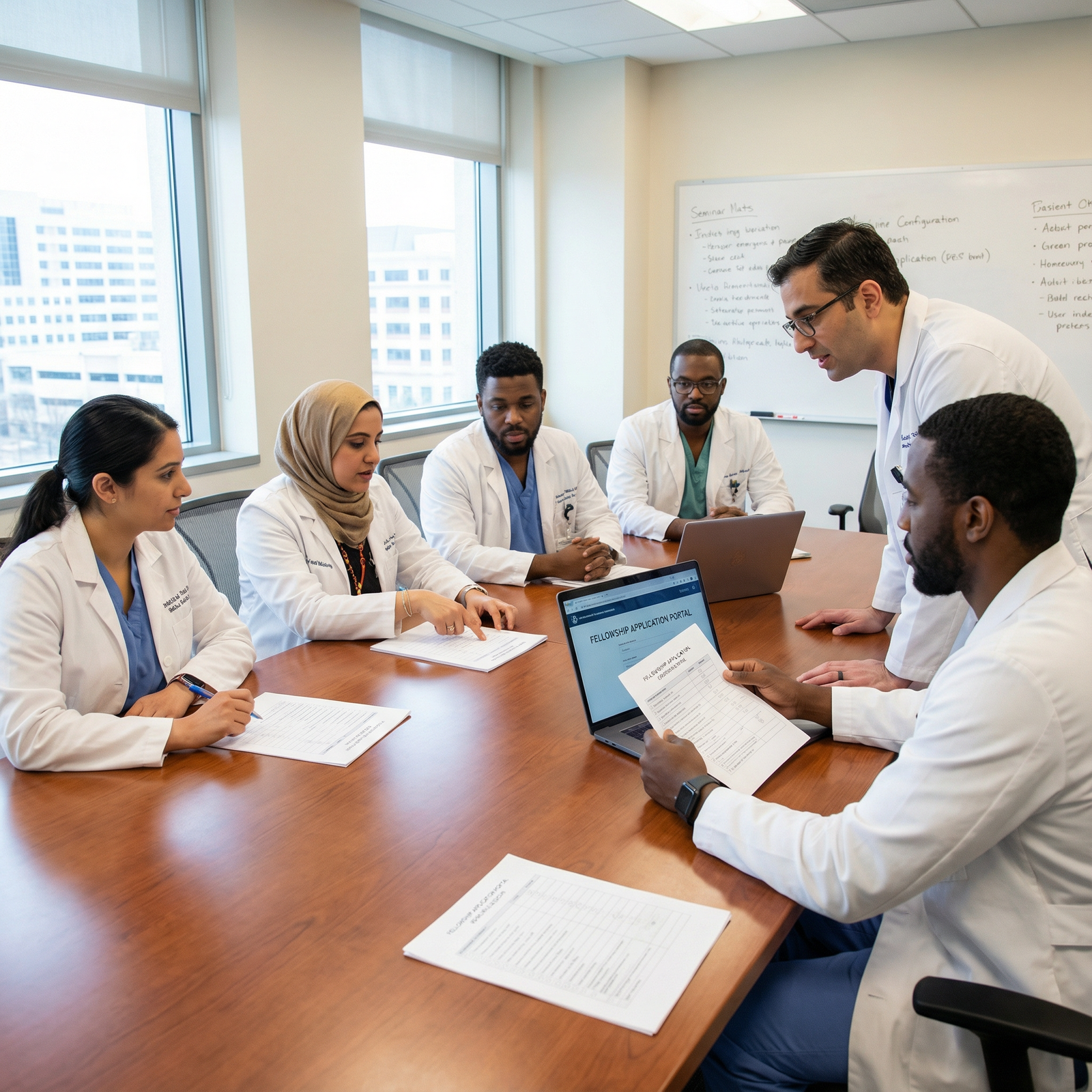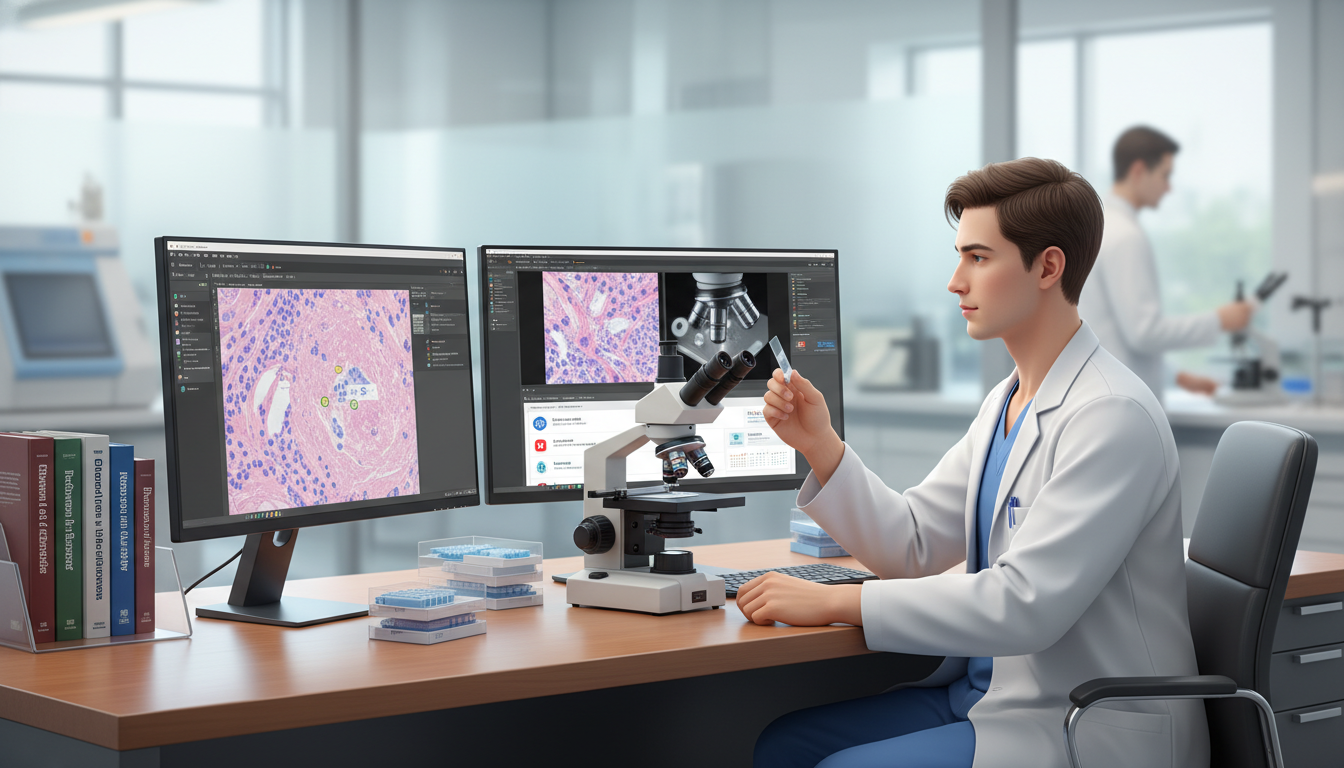
Understanding Fellowship Preparation as an MD Graduate in Pathology
The transition from pathology residency to fellowship is one of the most consequential moves in your early career. For an MD graduate residency trainee, the fellowship you choose will shape not only your day-to-day diagnostic focus but also your future job opportunities, academic prospects, and lifestyle.
This guide is designed for graduates of allopathic medical school match programs who are in, or approaching, pathology residency and want a clear, structured approach to fellowship preparation. We’ll walk through how to choose a subspecialty, build a competitive profile, navigate the fellowship application timeline, and strategically plan for long-term career goals.
We will focus primarily on common pathology fellowships (e.g., surgical pathology, hematopathology, cytopathology, molecular genetic pathology, transfusion medicine, dermatopathology, neuropathology, pediatric pathology, forensic pathology), but the principles apply broadly.
1. Clarifying Your Career Vision Before Choosing a Fellowship
1.1 Start with the end in mind
Before you worry about application logistics, you need clarity on why you’re pursuing fellowship and what kind of pathologist you want to become. Many MD graduate residency trainees fall into the trap of choosing “popular” fellowships without aligning them to long-term goals.
Reflect on:
Preferred practice setting
- Academic medical center
- Large private group or community hospital
- Subspecialty reference/consulting lab
- Public health or forensic setting
- Industry, diagnostics, or pharma
Type of work you enjoy
- High-volume diagnostic sign-out
- Complex, rare-case consultation
- Procedures (e.g., bone marrow biopsies, FNA cytology, autopsies)
- Laboratory management and transfusion support
- Research and translational pathology
- Teaching and education
Lifestyle priorities
- Predictable vs variable hours
- Call responsibilities (e.g., transfusion medicine, forensics)
- Flexibility for non-clinical roles (research, industry, informatics)
A simple exercise:
- Write down three attending roles you admire.
- List what they actually do in a week (clinical, admin, research, teaching).
- Identify which fellowship(s) are common among these attendings.
This anchors your choices in real-world examples rather than abstract impressions.
1.2 Mapping common fellowships to career paths
Below is a high-level mapping to help conceptualize where fellowships often lead:
Surgical Pathology
- Broad subspecialty exposure; common for academics and large private groups.
- Good if you like diverse organ systems and complex morphologic work.
Hematopathology
- Ideal for those who enjoy hematologic malignancies, flow cytometry, marrow biopsies, and integrating morphology with molecular.
- Highly valued in both academic and large community settings.
Cytopathology
- Strong for breast, thyroid, lung, and gynecologic cytology; hands-on procedures in some settings (e.g., ROSE for EBUS/FNA).
- Can complement surgical pathology or other subspecialty areas.
Molecular Genetic Pathology
- Aligns with precision oncology, germline testing, and NGS-based diagnostics.
- Attractive to those aiming for academic or industry roles, and leadership in personalized medicine.
Transfusion Medicine / Blood Banking
- Suited to those interested in laboratory management, patient blood management, apheresis, and clinical consultation.
- Often leads to medical directorship roles and strong integration with other clinical services.
Dermatopathology
- High-volume, pattern-based diagnostic work.
- Can be combined with dermatology or used in mixed practices with derm-heavy sign-out.
Neuropathology, Pediatric Pathology, Forensic Pathology
- More niche, with defined academic or public-sector options.
- Great for trainees strongly drawn to these patient populations or organ systems.
Your fellowship preparation should be grounded in understanding how each option fits your intended professional identity.
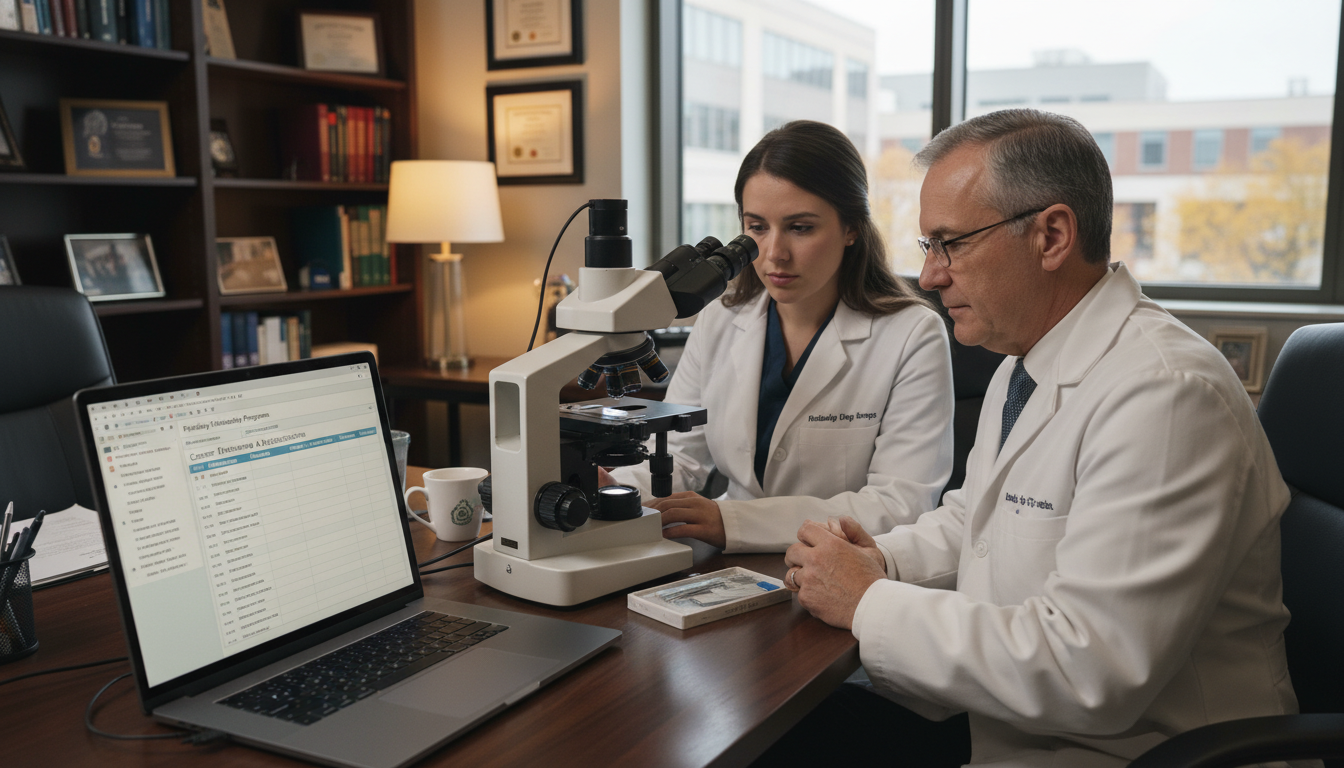
2. When to Start: The Fellowship Application Timeline in Pathology
2.1 General timing for MD graduate residency trainees
The fellowship application timeline in pathology varies by subspecialty and institution, but in general, you should think in terms of:
Late PGY-1 / early PGY-2
- Begin exploration (rotations, reading, talking to mentors).
- Start documenting your interests and experiences.
Mid to late PGY-2
- Transition to decision and early preparation.
- Identify 1–2 preferred subspecialties and geographic constraints.
- Start drafting your CV and personal statement skeleton.
Early PGY-3
- Actively apply for most fellowships (especially competitive ones).
- Request letters of recommendation.
- Attend interviews.
Late PGY-3 / early PGY-4
- Finalize offers and sign contracts.
- In some subspecialties or regions, you may still find late-cycle positions or “off-cycle” openings.
Because pathology fellowships often recruit relatively early in residency compared to clinical specialties, your pathology match into residency should be quickly followed by career exploration. The earlier you know your interests, the more deliberately you can build a competitive profile.
2.2 NRMP vs non-NRMP fellowships
Some pathology fellowships (like dermatopathology or certain subspecialties) participate in an NRMP match, while others rely on direct offers and rolling admissions. You must:
- Check each subspecialty’s current rules (they evolve).
- Know whether a centralized match applies or if individual programs manage their own timeline.
- Recognize that even with a match, applications are often due well in advance of the rank list deadline.
2.3 Building a backward-planned timeline
A practical way to structure your fellowship preparation:
Identify your likely fellowship start year
Example: Residency ends June 2028 → fellowship starts July 2028.Determine typical application window for that fellowship:
- Some open 18–24 months before start date.
- Others use structured timelines (e.g., common offer dates).
Work backward:
- 24–30 months before: Clarify interests and seek mentorship.
- 18–24 months before: Begin applications, finalize CV and personal statement.
- 12–18 months before: Complete interviews, negotiate, sign offers.
- 6–12 months before: Fine-tune skills and research output in your chosen area.
If you are an MD graduate residency trainee who feels “late,” don’t panic. Many excellent programs still have off-cycle or late openings; you simply need to expand your search and be more flexible about geography or program type.
3. Strengthening Your Fellowship Application Profile
3.1 Core components reviewers care about
When fellowship directors review your file, they typically focus on:
- Letters of recommendation
- Clinical performance and evaluations
- Pathology-specific skills and exposure in the target area
- Scholarly work: case reports, posters, papers, QI projects
- Personal statement and narrative coherence
- Professionalism, communication, and fit with their program
Each of these is within your control, especially if you start early.
3.2 Clinical performance and evaluations
Even in pathology, where standardized test scores become less central after the allopathic medical school match, your day-to-day performance matters significantly:
- Take ownership of cases on each subspecialty service.
- Show reliability: punctual sign-outs, timely reports, follow-through on addenda.
- Demonstrate initiative: independently read around cases, review literature, and present brief, relevant updates.
- Seek specific feedback from attendings: “What skills would make me a stronger candidate for a hematopathology fellowship?”
Programs want fellows who are safe, thorough, and proactive diagnosticians—not just strong test takers.
3.3 Letters of recommendation: quality over quantity
Aim for 3–4 high-quality letters, with at least:
- One from your department chair or program director.
- Two from key attendings in your target subspecialty (or related areas).
- Optional: One from a research mentor, especially if you’re aiming for academic or research-heavy fellowships.
To maximize letter quality:
- Request letters from attendings who know you well, not just those with big names.
- Provide:
- Updated CV
- Draft of your personal statement
- Summary of your work with them (key cases, projects, rotations)
- Clarification of your career goals (e.g., “I’m pursuing cytopathology fellowships with interest in academic practice.”)
Ask early and politely, and follow up with gentle reminders as deadlines approach.
3.4 Strategic scholarly activity
You do not need a PhD or dozens of papers to land a strong pathology fellowship, but some targeted productivity helps:
Case reports and case series
- Use unusual or educational cases from your rotations.
- Submit to pathology journals or case-report platforms.
Posters and abstracts
- USCAP, CAP, ASCP, ASH (if Heme), or subspecialty meetings.
- Even one or two strong posters in your intended area can stand out.
Quality improvement (QI) projects
- Workflow improvements in grossing, reporting, or tumor board operations.
- Laboratory utilization reviews (e.g., test ordering patterns, reflex testing algorithms).
Original research (if feasible)
- Particularly valuable for molecular genetic pathology, hematopathology, pediatric or neuropathology, but useful for any field.
Example: If you’re targeting a pathology residency to hematopathology fellowship pathway, prioritize:
- A marrow or lymph node diagnostic challenge case-report.
- An abstract on immunophenotypic patterns or molecular alterations.
- Participation in a project optimizing flow cytometry panels.
Document your contributions clearly on your CV, and be prepared to discuss what you learned from each project.

4. Crafting Strong Fellowship Applications
4.1 Writing a focused, honest personal statement
Your personal statement should not be a generic life story. It should:
- Explain why this subspecialty genuinely fits your strengths and interests.
- Describe specific experiences that shaped your decision (rotations, cases, mentors).
- Highlight what you bring to their program (skills, attitudes, potential contributions).
- Convey future goals (academic, community, research, leadership).
A simple structure:
Opening vignette or moment of clarity
E.g., a complex lymphoma case that made you appreciate integrated H&E, flow, and molecular work.Development of interest
Outline specific rotations, mentors, or projects that deepened your commitment.Your strengths and contributions
What do you do well? Pattern recognition? Teamwork? Teaching? Translational thinking?Future direction
How does this fellowship fit into your 5–10 year plan?
Avoid:
- Overly dramatic narratives.
- Excessive repetition of your CV.
- Unrealistic promises or vague aspirations.
4.2 Presenting your CV effectively
For a pathology fellowship, your CV should emphasize:
Education and training
- Allopathic medical school match details, residency program, and graduation dates.
Certification and exams
- USMLE scores (if asked), progress toward board eligibility.
- Any pathology in-service scores can be mentioned if strong and relevant to the program’s culture.
Pathology experiences
- Rotations, leadership roles (chief resident, committee work), teaching.
Scholarly activity
- Organized by Publications, Abstracts/Posters, Presentations, and QI Projects.
Professional involvement
- Membership in CAP, ASCP, USCAP, or subspecialty societies.
- Participation in resident councils or committees.
Keep formatting clean, consistent, and easy to scan.
4.3 Interview preparation: beyond slide talk
Fellowship interviews may be in-person or virtual, but the goals are similar:
- Assess your interpersonal skills and professionalism.
- Confirm that your interests align with the fellowship’s strengths.
- Evaluate whether you will integrate well into their team culture.
Common questions to prepare for:
- “Tell me about your path into pathology and your interest in this subspecialty.”
- “What are your long-term career goals?”
- “Describe a challenging case or situation and how you handled it.”
- “How do you handle diagnostic uncertainty or disagreement?”
- “What do you hope to gain from this fellowship that you don’t already have?”
You should also prepare insightful questions to ask them:
- “How are fellows integrated into tumor boards and multidisciplinary conferences?”
- “What is the balance between service and education?”
- “What opportunities exist for research or QI projects?”
- “How are fellows evaluated and mentored throughout the year?”
Bring (or have handy for virtual interviews):
- Knowledge of their major case volumes and subspecialty strengths.
- Awareness of any notable faculty interests or research areas.
- A clear explanation of why their program in particular appeals to you.
5. Planning Beyond Fellowship: Setting Up for a Sustainable Career
5.1 Preparing for fellowship while still in residency
Your last 1–2 years of residency should be used to strategically align your experiences with your upcoming fellowship:
Request electives in your target area.
Example: If you matched into a cytopathology fellowship, take extra rotations in cytology, breast, and thoracic pathology.Refine core skills:
- Pattern recognition in your subspecialty.
- Report writing and clear diagnostic language.
- Basic familiarity with relevant molecular techniques.
Continue scholarly productivity:
- Case reports or projects directly tied to your fellowship area.
- Presentations at local or national meetings.
This not only boosts your confidence but also helps you enter fellowship with momentum, rather than starting from scratch.
5.2 Preparing for fellowship and beyond: thinking about “how to get fellowship” vs “preparing for fellowship”
Many residents focus solely on how to get fellowship—i.e., securing a spot. That is necessary but insufficient. Your parallel goal is preparing for fellowship so that you:
- Hit the ground running.
- Maximize learning rather than just surviving service demands.
- Position yourself for the next career step—job or advanced training.
For example, if you anticipate a hematopathology fellowship followed by academic practice:
- Build early relationships with heme/onc colleagues.
- Attend multidisciplinary conferences regularly.
- Read key foundational hematopathology texts before fellowship starts.
- Learn basic bioinformatics and molecular concepts relevant to heme malignancies.
5.3 The bridge to your first job and potential second fellowship
In pathology, many MD graduate residency trainees pursue more than one fellowship (e.g., surgical pathology + a subspecialty, or heme + molecular). When planning:
Clarify if a second fellowship is truly necessary for your goals.
- Academic careers or ultra-specialized roles may benefit.
- Community practice may value broad competence plus one focused area.
Understand the fellowship application timeline again, because:
- You may need to apply for your second fellowship during your first fellowship year.
- This requires even more foresight and time management.
Think about your geographic and personal priorities:
- Will you relocate multiple times?
- How do partner/family needs influence your fellowship sequencing?
Your fellowship preparation should include not just getting into a program, but also planning how that program positions you for your intended long-term practice.
6. Practical Strategies and Common Pitfalls for Pathology Fellowship Preparation
6.1 Concrete action plan for each PGY year
PGY-1 (or first year if combined AP/CP path)
- Focus on foundational AP/CP skills.
- Keep a running “interests file” of rotations/cases that resonate with you.
- Attend different tumor boards to sample subspecialty flavor.
PGY-2
- Narrow your interests to 1–3 potential fellowship areas.
- Seek mentors in those subspecialties.
- Start at least one small scholarly project (case report or poster).
- Attend a major pathology meeting if possible.
PGY-3
- Decide on your primary fellowship target.
- Clean up and update your CV.
- Draft your personal statement.
- Request letters of recommendation.
- Submit fellowship applications early in the cycle.
- Prepare for and attend interviews.
PGY-4 (if AP/CP combined and fellowship not yet started)
- Finalize fellowship contracts.
- Schedule electives aligned with your fellowship.
- Complete and submit any ongoing research or QI projects.
- Begin reading key subspecialty texts and recent major review articles.
6.2 Common mistakes to avoid
Waiting too long to decide
- You do not need perfect certainty, but delaying exploration and mentorship until late PGY-3 compresses your options.
Choosing a fellowship solely based on perceived job market buzz
- The job market shifts, and your happiness depends more on fit and interest than on trendy subspecialties.
Undervaluing program culture
- High-volume, prestigious programs can still be poor fits if you do not align with their teaching style, expectations, or environment.
Neglecting communication and professionalism
- Late emails, missed deadlines, sloppy application materials, or interview no-shows are remembered.
Ignoring financial and personal factors
- Cost of living, geographical support systems, and partner/family needs matter for your well-being during intense fellowship years.
6.3 Leveraging your allopathic training and MD background
As an MD graduate from an allopathic medical school match:
Emphasize your strong understanding of clinical medicine, which supports:
- Better communication with clinical teams.
- More informed pathology interpretations in complex cases.
- Insightful participation in tumor boards and multidisciplinary care.
Use clinical electives, if you had them, to connect with future collaborators:
- Heme/onc, surgery, dermatology, GI, pulmonary, or pediatrics.
Highlight communication skills learned in medical school and early residency:
- Presentations.
- Teaching junior trainees.
- Patient/family engagement in autopsy or transfusion-related discussions (where applicable).
These strengths are valuable across all fellowship types and will distinguish you from peers who view pathology as purely microscopic.
FAQ: Fellowship Preparation for MD Graduate in Pathology
1. When should I start preparing for a pathology fellowship during residency?
You should begin exploration in late PGY-1 or early PGY-2, narrow down your interests during PGY-2, and be actively preparing applications by early PGY-3. Because many pathology fellowships recruit 18–24 months before the start date, waiting until late PGY-3 can limit your options.
2. Do I need more than one fellowship to be competitive for jobs?
Not necessarily. Many pathologists practice successfully with a single fellowship (or none, in some settings). Multiple fellowships can be helpful if:
- You want an academic, highly subspecialized career.
- You’re entering a competitive niche (e.g., dermpath, neuropathology) and want complementary training (e.g., surgical pathology). Focus on alignment with your career goals rather than accumulating fellowships as “badges.”
3. How important is research or publications for the pathology match into fellowship?
For most pathology fellowships, you don’t need extensive research, but some scholarly activity is beneficial:
- 1–3 case reports, posters, or QI projects can distinguish you.
- More research is advantageous for academic or research-heavy programs, molecular genetic pathology, neuropathology, or pediatric pathology. Quality and relevance to your subspecialty interest matter more than sheer quantity.
4. How does fellowship preparation relate to future subspecialty boards and long-term career planning?
Your fellowship is the major bridge between residency and your final practice profile. Good preparation helps you:
- Enter fellowship with strong foundational skills, making the year more educational than stressful.
- Build a case log, experience, and knowledge base that supports subspecialty board exams.
- Network with mentors and potential employers.
- Position yourself for additional training (if needed) or direct entry into academia, community practice, or industry.
Thinking about preparing for fellowship and not just how to get fellowship will give you a smoother transition into the career you envision.
By thinking deliberately about your subspecialty fit, understanding the pathology fellowship application timeline, and proactively strengthening your clinical, scholarly, and professional profile, you can navigate this phase of residency life and challenges with confidence—and set yourself up for a rewarding, sustainable career in pathology.