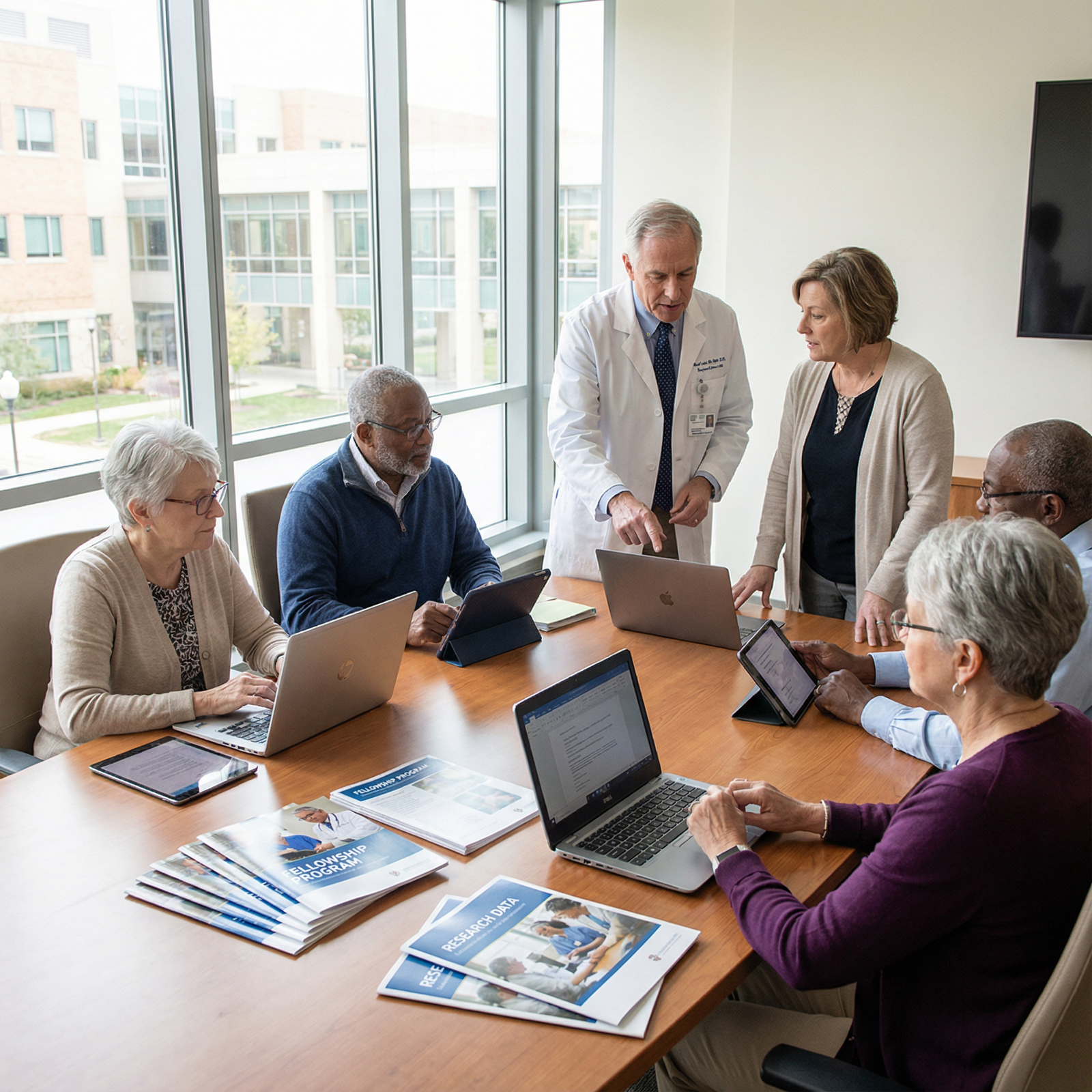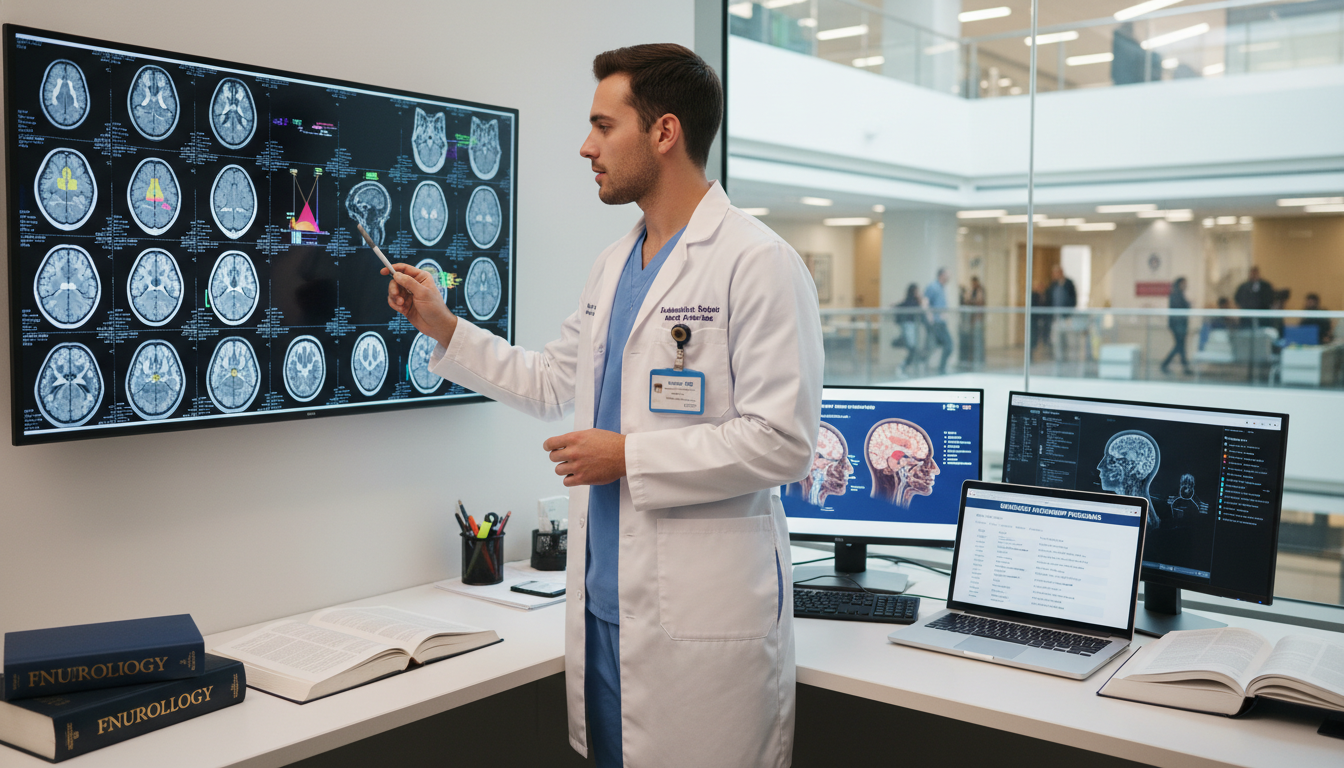
Understanding the Transition: From Neurology Residency to Fellowship
For an MD graduate in neurology, fellowship is often the bridge between being a broadly trained neurologist and becoming a true subspecialist. Whether you are aiming for epilepsy, neurocritical care, stroke, movement disorders, neuromuscular medicine, or behavioral neurology, your fellowship preparation should be intentional, strategic, and early.
Many residents underestimate how early the process starts. Because the neurology fellowship and allopathic medical school match timelines can differ widely by subspecialty, you must think about fellowship during your PGY-2 or early PGY-3 year, not at the end of residency. Proper planning will not only strengthen your application, but also give you more control over your career trajectory and work–life balance.
This guide focuses on:
- How to explore subspecialties and decide if you want fellowship
- The fellowship application timeline and logistics (NRMP and non-NRMP)
- Practical strategies to build a competitive neurology residency portfolio
- How to get fellowship positions in competitive fields
- Preparing for life during and after fellowship, including future academic or private practice careers
Clarifying Your Direction: Do You Need a Neurology Fellowship?
Before you can prepare effectively, you need clarity about your goals. Not every MD graduate in neurology needs a fellowship, but for many, it significantly shapes career opportunities.
Why Neurology Fellows Are in Demand
Fellowship training has become the norm in many neurology career paths because:
- Clinical complexity has increased (e.g., advanced epilepsy surgery programs, complex movement disorder management, neuroimmunology).
- New technologies (e.g., advanced neuroimaging, neurophysiologic monitoring, neurointerventional procedures) require focused training.
- Reimbursement and job structures often favor subspecialty expertise in both academic and large private groups.
- Academic careers in neurology almost always require fellowship training.
Common neurology fellowships include:
- Vascular neurology (stroke)
- Epilepsy / Clinical neurophysiology
- Neurocritical care
- Movement disorders
- Neuromuscular medicine
- Multiple sclerosis / Neuroimmunology
- Behavioral neurology & neuropsychiatry
- Headache medicine
- Neuro-oncology
- Interventional neuroradiology / Endovascular surgical neuroradiology (varies by institution)
- Pain medicine, palliative care, or sleep medicine (often cross-disciplinary)
Questions to Guide Your Decision
Ask yourself:
What clinical scenarios energize me?
- Do acutely unstable ICU patients excite you? Think neurocritical care.
- Do pattern recognition and EMG interests point to neuromuscular?
- Do you enjoy managing chronic, longitudinal diseases? Consider MS, epilepsy, or movement disorders.
Where do I want to practice?
- Small community hospitals may prioritize general neurology with stroke call.
- Academic centers often recruit subspecialists, especially in stroke, neuroimmunology, epilepsy, neurocritical care, and movement disorders.
What lifestyle and schedule do I want?
- Neurocritical care and stroke often involve significant call.
- Headache and some behavioral neurology practices may have more predictable schedules, often outpatient-focused.
Do I want to do research or teach?
- If you envision an academic career, fellowship is almost essential.
- Look for fellowships with strong research infrastructure and mentorship.
If you’re uncertain, it’s still beneficial to prepare. Many steps that strengthen a fellowship application also make you a stronger neurology resident and physician.
Timeline and Strategy: When and How to Start Fellowship Preparation
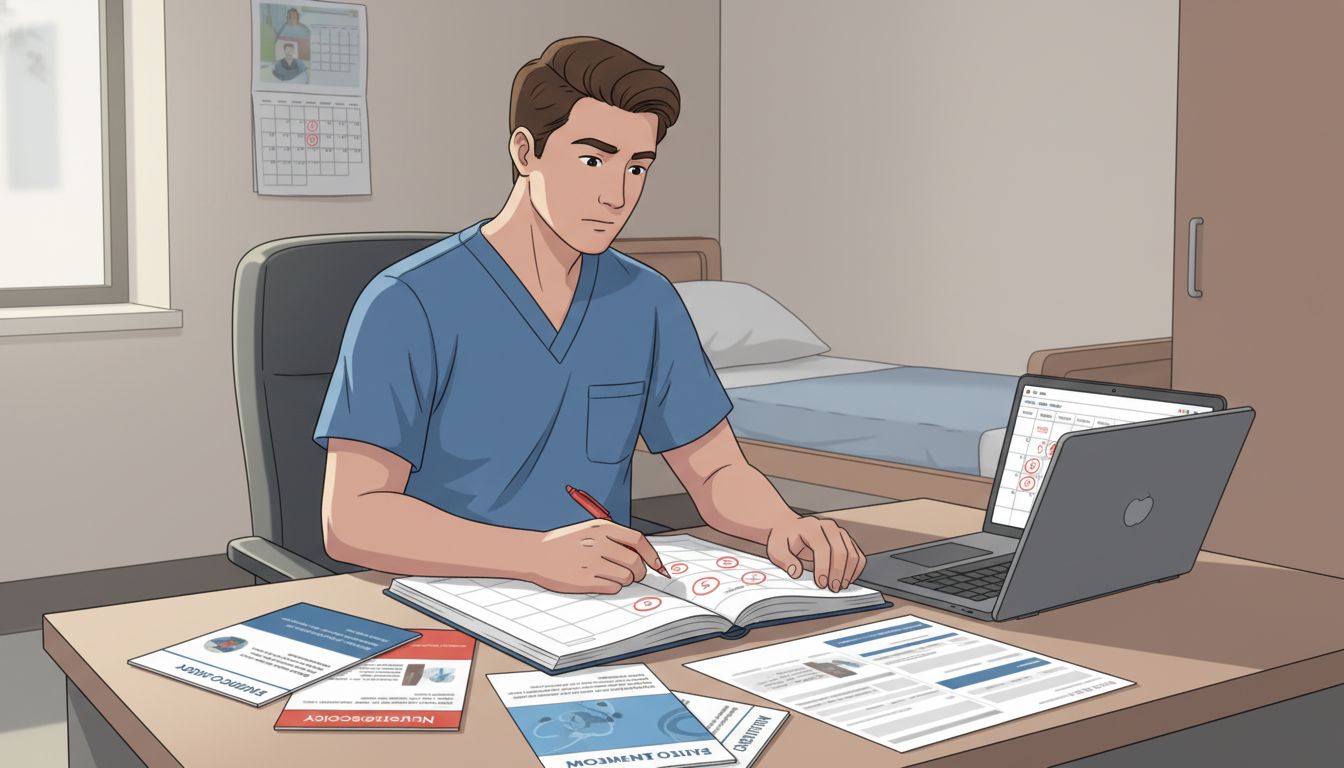
The most common mistake is starting too late. The fellowship application timeline in neurology is fragmented: some subspecialties participate in NRMP or other organized matches, while others use direct applications and “rolling” offers.
General Timeline (U.S.-based, adjust for local systems)
PGY-1 (Intern year)
- Focus: Core clinical skills, professionalism, and transition to residency.
- Fellowship focus: Minimal, but start reflecting on what you enjoy.
PGY-2 (First neurology year for most)
- Explore specialties, meet potential mentors, and begin scholarly activity.
PGY-3
- This is the critical year for most neurology fellowships.
- Many applications are submitted 12–18 months before fellowship start.
- For July fellowship start after PGY-4, applications can begin as early as January–June of PGY-3, depending on the field.
PGY-4
- Interviewing and finalizing fellowship plans if not already done.
- Some late-cycle fellowships, secondary matches, and off-cycle positions may still be available.
Example: Neuro Match vs Non-Match Fellowships
Different neurology subspecialties coordinate through different match or application systems:
- Vascular Neurology: Often participates in the NRMP fellowship match.
- Epilepsy / Clinical Neurophysiology: May participate in NRMP or dedicated epileptology matches, depending on the cycle.
- Neurocritical Care: Moving increasingly toward standardized match structures, but programs may vary.
- Movement Disorders, Neuromuscular, MS/Neuroimmunology: Many still use direct applications, emails, and institutional portals, with offers made on a rolling basis.
For MD graduates from allopathic medical school backgrounds (U.S. MD), the allopathic medical school match experience for residency is more standardized than fellowship. In fellowship, the process is more fragmented, requiring:
- Careful tracking of deadlines by subspecialty
- Awareness of whether your target programs use NRMP, SF Match, or institutional processes
- Early communication with program coordinators
If you are targeting more than one subspecialty (e.g., open to either stroke or epilepsy), you must pay extra attention to how different match systems and timelines might intersect so you do not violate any rules.
Building a Competitive Neurology Residency Portfolio
Regardless of the exact neuro match structure or subspecialty, fellowship directors look for certain core elements: clinical competence, professionalism, scholarly interest, and a clear, consistent narrative of why you are pursuing that particular field.
1. Clinical Performance and Evaluations
Your day-to-day performance during neurology residency remains the foundation of your application.
- Be reliable: Show up on time, follow through on tasks, and be available for your team.
- Demonstrate ownership: Know your patients thoroughly and anticipate next steps.
- Be teachable: Respond constructively to feedback and show visible improvement.
- Show subspecialty interest in real time: If you’re interested in neurocritical care, volunteer for extra call or elective time in the neuro ICU; for epilepsy, engage deeply on EMU rotations.
Actionable steps:
- Request mid-rotation feedback to correct issues early.
- Ask senior residents or fellows what qualities your target chairs and PDs value most.
- Maintain a list of notable cases that illustrate your growth; these can be used in personal statements and interviews.
2. Subspecialty-Focused Rotations and Electives
Purposeful elective planning is critical for fellowship preparation.
- Aim for at least 1–2 dedicated rotations in your intended subspecialty by early PGY-3.
- If available, consider away electives at institutions where you might apply for fellowship—especially useful if your home program does not have that subspecialty or you want to be known to another institution.
Examples:
- Future vascular neurologist: Stroke service, neurocritical care, neuroradiology.
- Future epileptologist: Epilepsy monitoring unit, clinical neurophysiology (EEG), neurosurgery (epilepsy surgery conference).
- Future movement disorders specialist: Movement clinic, deep brain stimulation conference, neuropsychology for movement disorders.
During each elective:
- Introduce yourself to the subspecialty director early: “I am strongly considering fellowship in this field and would love feedback on how to prepare.”
- Volunteer for educational activities (present cases, help with journal clubs, prep teaching slides).
3. Research and Scholarly Activity
For many fellowships, particularly in academic centers, scholarly work is a major differentiator.
Types of projects that are realistic and impactful within residency:
- Case reports or case series: Especially in rare neuroimmunologic conditions, unusual stroke presentations, or complex epilepsy surgeries.
- Retrospective chart reviews: Example topics: tPA outcomes in a specific population, seizure outcomes after surgery, complications in neurocritical care.
- Quality improvement (QI) projects: E.g., stroke door-to-needle time improvements, seizure safety protocols.
Practical advice:
- Start with small, achievable projects that can realistically be completed in 6–12 months.
- Align projects with your target subspecialty for maximum impact.
- Aim to produce at least:
- One poster or platform presentation at a regional or national meeting (AAN, subspecialty society conferences).
- One manuscript submission by early PGY-3 or PGY-4.
If you are considering preparing for fellowship with an academic track (e.g., future faculty member), ask about getting involved in:
- Longitudinal research projects
- Basic or translational neuroscience labs (if available)
- Mentored grants (residency research awards, small seed grants)
4. Letters of Recommendation
Strong letters can outweigh marginal differences in board scores or publications.
Ideal letter writers for neurology fellowship:
- Subspecialty division chief or fellowship director in your chosen field
- Program director or department chair
- A faculty member who has observed you longitudinally, such as a research mentor or continuity clinic preceptor
How to secure strong letters:
- Be known: Consistent engagement over time, not just a single month-long elective.
- Share your CV, personal statement draft, and your target fellowship list.
- Ask: “Do you feel you can write a strong, supportive letter for my application?” This gives them a chance to decline if they don’t know you well enough.
- Give your writers ample time—ideally 4–6 weeks before deadlines.
5. USMLE/COMLEX and In-Training Exams
For most neurology fellowships, board scores are less decisive than for residency, but they still matter:
- Solid but not perfect scores are usually fine if the rest of your application is strong.
- Significant failures or multiple attempts should be briefly addressed and contextualized, ideally with clear evidence of subsequent success (e.g., strong in-training exam performance, clinical excellence).
If you struggled, you can frame it as:
- An earlier challenge that led to improved study strategies and resilience.
- A turning point that showed your commitment to neurology and patient care.

Navigating the Application: How to Get Fellowship in Neurology
Once your foundation is strong, you need a tactical approach to the actual application process.
1. Researching Fellowship Programs
Start by building a structured list of programs:
- Use:
- AAN career tools and subspecialty society websites
- NRMP and other match websites for participating programs
- Institutional program webpages
- Track for each program:
- Deadline
- Application method (ERAS, institutional portal, email, NRMP, etc.)
- Research opportunities (protected time, mentorship, lab access)
- Call schedule and workload
- Fellowship size and types of positions (clinical vs research tracks)
- Visa sponsorship (for IMGs and some MD graduates with particular status)
Look for programs whose strengths match your goals—for example:
- If you want to be an academic movement disorders specialist, look for:
- NIH-funded research in movement disorders
- A strong DBS surgery program
- History of graduates obtaining faculty positions
2. Crafting a Strong Personal Statement
Your personal statement should answer:
- Why this subspecialty?
- Why you (what experiences shaped your interest)?
- What do you hope to do after fellowship (prep for academic career, subspecialty private practice, clinical educator, etc.)?
Structure suggestion:
- Opening vignette: Brief, specific clinical scenario that illustrates your connection to the subspecialty.
- Development: Key rotations, mentors, or research that solidified your interest.
- Your contribution: Unique strengths—teaching, quality improvement, research, communication skills.
- Future plans: Describe how this fellowship will help you achieve your goals and what type of role you envision in 5–10 years.
Avoid:
- Overly dramatic stories or generic statements (“I love neurology because the brain is complex”).
- Criticizing other specialties or programs.
- Vague, non-committal career goals; be as specific as you reasonably can.
3. CV and Portfolio Optimization
Update your CV to highlight fellowship-relevant achievements:
- Structure:
- Education and training
- Certifications and exams
- Honors and awards
- Research and publications
- Presentations and posters
- Teaching and leadership
- Volunteer and outreach activities
- Professional memberships
Tips:
- Use consistent formatting and clear headings.
- For each research project, clearly state your role (“First author; data collection and analysis; manuscript drafting”).
- Include teaching activities—lectures to medical students, morning reports, resident teaching sessions.
4. Communicating with Programs
Professional communication can make a difference, especially in non-match settings.
Before applying:
- A brief, polite email to the fellowship director can signal interest:
- 3–5 sentences
- Who you are (MD graduate in neurology at X program)
- Your subspecialty interest and why their program
- CV attached
- A brief, polite email to the fellowship director can signal interest:
After applying:
- Confirm receipt of materials if not acknowledged.
- If you have a major update (new publication, award), a short update email is appropriate.
Do:
- Be concise, respectful, and specific.
- Proofread carefully.
Don’t:
- Email excessively or demand instant responses.
- Ask questions that are clearly answered on the program’s website.
5. Preparing for Fellowship Interviews
Interview structure usually includes:
- Meetings with the program director, division chief, and faculty
- Conversations with current fellows
- Sometimes a brief presentation (e.g., a case you managed or a research project)
Common interview themes:
- Your interest and commitment to the subspecialty
- Teamwork and communication
- Handling stress, uncertainty, and difficult cases
- Ethical challenges and professionalism
- Your academic or clinical goals post-fellowship
Preparation tips:
- Review your own application thoroughly; be ready to discuss any listed project or experience.
- Prepare 3–4 thoughtful questions about:
- Educational structure
- Research mentorship
- Clinical exposure and graduated responsibility
- Practice concise answers to:
- “Why this fellowship and not another field?”
- “Tell me about a challenging case and what you learned.”
- “Where do you see yourself in 5–10 years?”
Virtual interviews:
- Test your camera, microphone, and internet connection.
- Choose a quiet, neutral background and professional attire.
- Have a printed copy of your CV and notes on each program.
Beyond the Match: Preparing for Fellowship and Future Career
Once you secure a neurology fellowship, your preparation isn’t over. This is where preparing for fellowship transitions into preparing for your long-term career.
1. Transitioning from Resident to Fellow
Key differences you’ll experience:
- More autonomy and responsibility, especially in consultations and specialized procedures.
- Often you will supervise residents and students.
- You will represent the subspecialty in multidisciplinary meetings.
Before starting fellowship:
- Refresh core knowledge with targeted reading in your subspecialty.
- Familiarize yourself with major guidelines (e.g., stroke, epilepsy, MS) and landmark trials.
- Ask your incoming program for suggested reading lists or protocols.
2. Planning Early for Post-Fellowship Jobs
During fellowship, keep your eye on the long-term horizon:
- If you aim for academia:
- Meet with potential mentors early.
- Clarify expectations for protected research time.
- Work toward at least one first-author publication during fellowship.
- If you prefer private practice:
- Seek experiences that align with high-demand clinical skills (e.g., EMG/NCV in neuromuscular, Botox and DBS management in movement disorders, complex stroke call).
- Network with practice groups, attend local neurology society meetings.
3. Fellowship Application Timeline and Future Training
Some neurology fellows pursue second fellowships (e.g., finishing epilepsy then doing clinical neurophysiology, or stroke then endovascular training). If you think multiple fellowships may be right for you:
- Clarify why additional training is necessary and how it fits into your career.
- Recognize the impact on your overall timeline to independent practice.
- Understand how additional fellowships may affect long-term earnings and lifestyle.
The fellowship application timeline for a second fellowship typically starts during the first half of your initial fellowship—so the cycle continues. If you foresee this, ask your first fellowship mentors about:
- Optimal sequencing of fellowships
- Timing for applications
- How to get fellowship offers that synergize rather than conflict
FAQs: Fellowship Preparation for MD Graduate in Neurology
1. When should I seriously start planning for neurology fellowship during residency?
By early PGY-3 at the latest. Some subspecialties have deadlines 12–18 months before fellowship start. To be fully prepared, begin exploring subspecialties and potential mentors in PGY-2, line up electives, and start at least one focused project or research activity.
2. I’m an MD graduate from an allopathic medical school with average board scores. Can I still get a competitive neurology fellowship?
Yes. A strong neurology residency performance, good letters of recommendation, evidence of subspecialty interest (rotations, projects), and professionalism can outweigh only-average exam scores. Focus on:
- Building strong relationships with subspecialty mentors
- Completing at least one scholarly project
- Crafting a clear, authentic narrative in your personal statement
3. How different is the fellowship “match” from the allopathic medical school match for residency?
The allopathic medical school match for residency is centralized (NRMP) and highly structured. In contrast, neurology fellowship processes vary:
- Some use the NRMP or other match systems.
- Others rely on direct applications and rolling offers.
- Timelines differ between subspecialties and even between programs in the same field.
You must track deadlines and application methods for each program individually and be mindful of rules regarding offers and acceptances.
4. If I’m not sure about academia, is a neurology fellowship still worth it?
Often yes, but it depends on your goals. A fellowship can:
- Make you more competitive for subspecialty-heavy private practices.
- Allow you to command a more specific clinical niche (e.g., stroke director, epilepsy program lead, movement disorders subspecialist).
- Expand your skill set in procedures and complex case management.
If you’re uncertain, talk to neurology attendings in both academic and private practice settings, ask about their fellowship experience, and observe how their training shaped their current roles.
By approaching fellowship preparation methodically—clarifying your goals, strengthening your neurology residency performance, building a targeted portfolio, and navigating the application process thoughtfully—you position yourself for success not just in the neuro match, but in the entire arc of your neurology career.