Understanding the Fellowship Landscape as a US Citizen IMG in Emergency Medicine
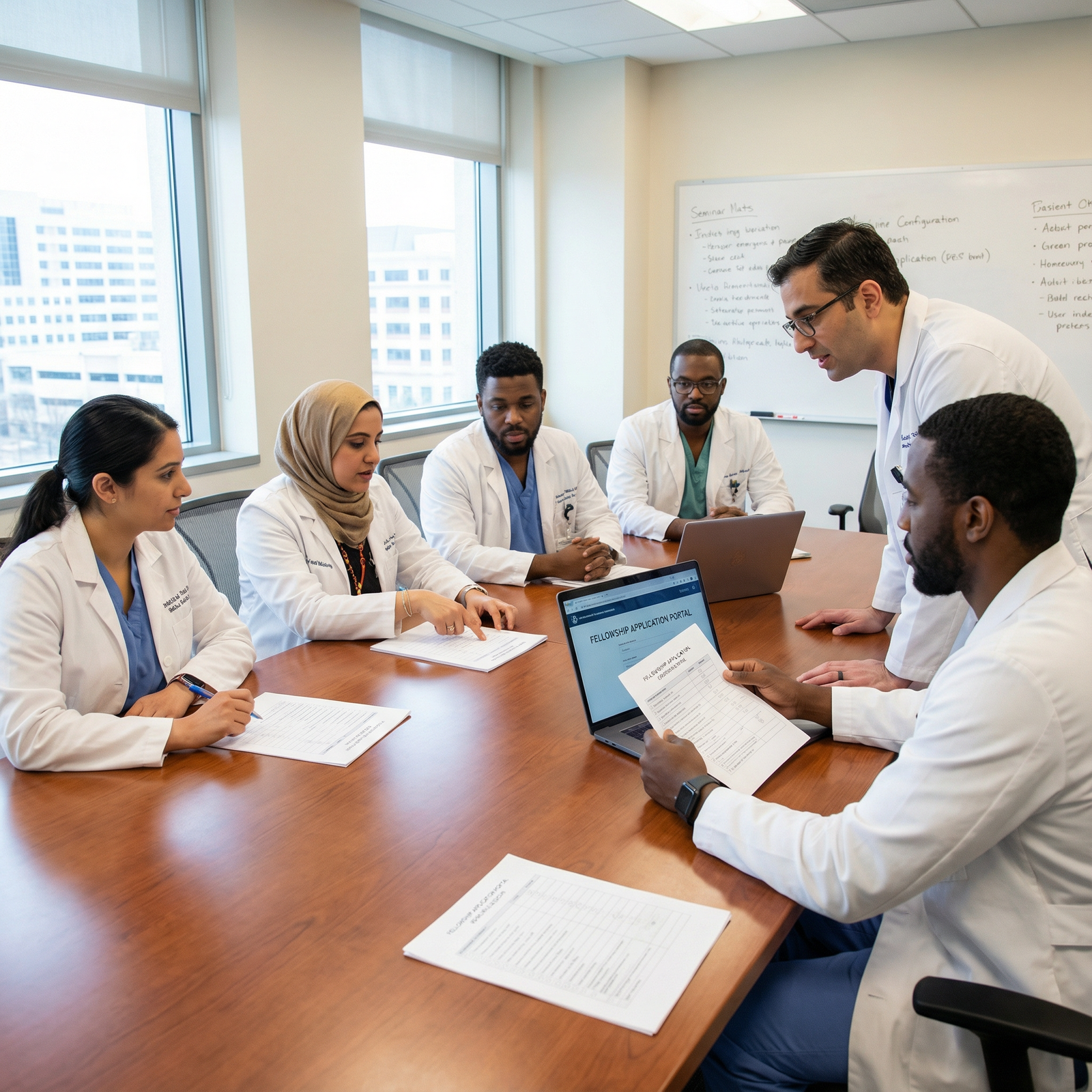
For a US citizen IMG in Emergency Medicine, fellowship preparation starts long before residency graduation—and ideally before you even submit your ERAS for EM. As an American studying abroad, you’re in a unique position: you don’t face visa issues, but you do face significant competition, variable perceptions of international schools, and program directors who may know less about your training background.
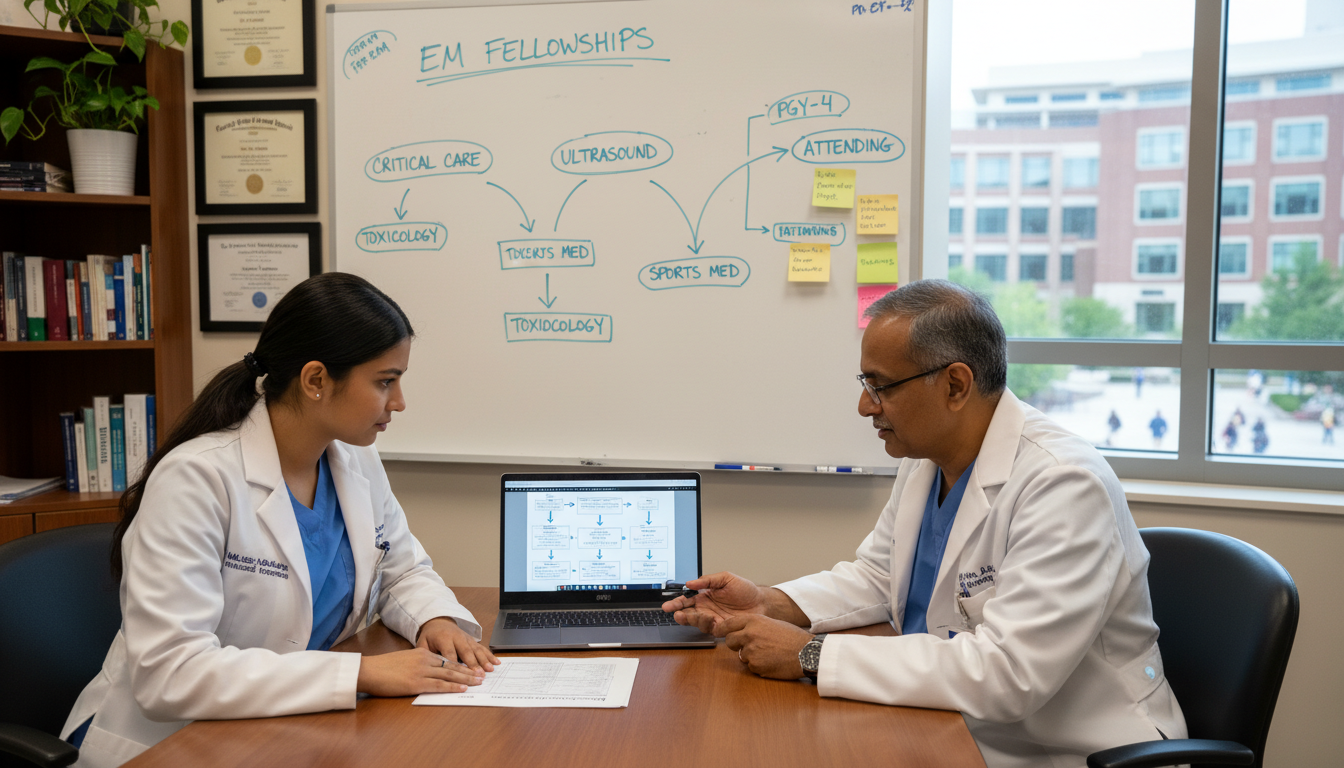
Emergency Medicine fellowship opportunities are expanding, and EM graduates now frequently pursue subspecialty training in:
- Critical Care Medicine (CCM)
- Ultrasound (POCUS)
- Medical Toxicology
- EMS/Prehospital Medicine
- Pediatric Emergency Medicine
- Global Health / International EM
- Research / Clinical Investigator pathways
- Administration / Operations / Quality
- Education and Simulation
- Sports Medicine
- Palliative Care and others (in select centers)
For a US citizen IMG, the core challenge isn’t just how to get fellowship, but how to position yourself strategically throughout residency so that you are a competitive, credible, and well-supported candidate.
This article will walk through a stepwise strategy from early residency through submission of your fellowship application, focusing on:
- How being a US citizen IMG specifically affects your path
- How to choose the right fellowship and programs
- Building a CV that stands out for the EM match and then for fellowship
- Constructing a realistic fellowship application timeline
- Practical steps to maximize letters, mentorship, research, and interviews
Everything here is tailored to US citizen IMG emergency physicians planning subspecialty training in the United States.
Step 1: Clarify Your Long-Term Career Vision Early
Why starting early matters for US Citizen IMGs
As an American studying abroad, you’ve already navigated added hurdles to secure an emergency medicine residency. Fellowship programs will look for evidence that:
- You can thrive in complex academic environments
- Your training has prepared you for advanced practice
- You have a clear, coherent long-term plan
If you can articulate a strong, consistent narrative—“This is where I’m going and why”—it helps counteract any lingering bias about where you attended medical school.
Ask yourself three big-picture questions
1. What kind of emergency physician do I want to be 10–15 years from now?
Examples:
- “I want to be an ED-based intensivist running the ED-ICU interface.”
- “I want to be the ultrasound director at a major academic center.”
- “I want to work in community EM but be the go-to expert in toxicology and overdose care.”
2. Do I want an academic, hybrid, or community-focused career?
- Academic: research, teaching, leadership; fellowships like Critical Care, Ultrasound, EMS, Tox, Global Health, Pediatric EM commonly align here.
- Hybrid: clinical-heavy with niche leadership or teaching roles; ultrasound, operations/admin, EMS, and tox fit well.
- Community-focused: some fellowships (ultrasound, EMS, admin) still offer value, especially in leadership and system design.
3. What do I enjoy doing day-to-day?
- Do you love procedures and physiology? → Consider Critical Care or EM-CCM.
- Do you love pattern recognition and technology? → Ultrasound.
- Do you love systems, prehospital care, and logistics? → EMS.
- Do you love rare presentations and complex pharmacology? → Medical Toxicology.
- Do you love children and family-centered care? → Pediatric EM (PEM).
- Do you love teaching & curriculum design? → Education or Simulation tracks.
The earlier you clarify these, the more intentionally you can build your experiences throughout residency, which is critical in a competitive environment for a US citizen IMG in emergency medicine.
Step 2: Align Your Residency Strategy with Future Fellowship Goals
The EM match and future fellowship: thinking two steps ahead
If you’re a medical student or early intern reading this, the EM match and fellowship may feel far apart, but they’re connected. Many fellowship programs prioritize:
- Graduates from recognized EM programs
- Evidence of early interest in the subspecialty
- Mentorship relationships with known faculty
For a US citizen IMG, that means intentionally choosing and navigating residency with fellowship in mind.
Program selection considerations (if you are still applying to EM)
If you have not yet matched into emergency medicine, factor fellowship preparation into your EM match strategy:
Presence of the fellowship you want
- Programs that already have your desired fellowship often provide built-in mentors, elective rotations, and research infrastructure.
- Example: If you want Ultrasound, look for residencies with an EM ultrasound fellowship and multiple ultrasound faculty.
Academic vs community
- University-based academic programs tend to have more structured paths toward fellowship: research support, subspecialty faculty, national exposure.
- High-volume community programs may still be competitive for certain fellowships, but you’ll need to be proactive with research and networking.
Track record of graduates matching into fellowships
- Ask on interview day and at second looks:
- “Where have your recent graduates gone for fellowship?”
- “Do you have any US citizen IMG graduates who matched into fellowship?”
- Ask on interview day and at second looks:
If you’ve already matched, your focus shifts to optimizing the opportunities you have.
Action plan for each year of residency
PGY-1: Exploration and foundations
Goals:
- Become a solid, reliable intern
- Explore subspecialty areas
- Start networking and identify preliminary mentors
Action steps:
- Shadow or rotate with subspecialty faculty (ICU, ultrasound, tox, EMS, peds ED) and note what resonates.
- Ask for small, achievable projects: QA work, case reports, short curriculum tasks.
- Attend departmental or divisional conferences in your area of interest (e.g., ultrasound conference, EMS briefing).
Pitfall to avoid as a US citizen IMG:
- Being “invisible” during PGY-1. You want at least one faculty member aware of your career interests and commitment.
PGY-2: Commitment and CV-building
Goals:
- Commit to one primary fellowship direction (and maybe one backup)
- Produce tangible outputs: posters, abstracts, teaching roles
Action steps:
- Choose a primary subspecialty interest by mid-PGY-2.
- Ask: “Could you mentor me toward a fellowship in X?” to a key faculty member.
- Get on a meaningful project:
- For Critical Care: ED-ICU handoff process, sepsis outcomes, resuscitation checklists.
- For Ultrasound: image quality improvement, ultrasound education sessions.
- For EMS: prehospital guideline implementation, cardiac arrest outcomes.
- For Tox: overdose trends, regional poison center collaboration.
- Go to a national meeting (ACEP, SAEM, AAEM, SCCM, NAEMSP, ACMT, etc.) and introduce yourself to fellowship faculty there.
PGY-3 (and PGY-4 in 4-year programs): Execution and application
Goals:
- Finalize your fellowship target list
- Complete projects and submit for presentation or publication
- Prepare for letters, personal statement, and interviews
Action steps:
- Secure letters of recommendation by late spring/early summer:
- Program Director
- Chair or Vice-Chair
- Fellowship-area mentor (e.g., Ultrasound Director, EMS Medical Director)
- Polish your scholarly work: submit abstracts, posters, manuscripts when possible.
- Plan electives strategically in your intended subspecialty—ideally at your home institution and, if possible, at a place that might be a fellowship target.
Step 3: Build a Fellowship-Competitive CV as a US Citizen IMG
Components fellowship programs scrutinize
Clinical performance
- Strong evaluations, evidence of growth, and no significant professionalism issues.
- Consistent feedback that you are reliable, coachable, and good with patients and teams.
Subspecialty engagement
- Electives, rotations, or special roles in your target field:
- Ultrasound shifts and teaching
- ICU “junior faculty” nights or procedures
- Ride-alongs and “EMS resident” role
- Tox consult rotations
- Pediatric EM longitudinal clinic or QI work
- Electives, rotations, or special roles in your target field:
Scholarly activity
- Posters at regional or national meetings
- Manuscripts (even co-authorship)
- QI projects with measurable outcomes
- Educational innovations (curricula, simulation cases, workshops)
Leadership and teaching
- Chief resident roles
- Teaching medical students, paramedic students, or junior residents
- Simulation teaching or bedside teaching evaluations
Specific strategies by major EM fellowship type
Critical Care Medicine (EM-CCM)
Credentials programs look for:
- Strong ICU evaluations, procedural competency, and interest in physiology
- Evidence you can manage sick patients longitudinally
What you can do:
- Request extra ICU time (MICU, SICU, NCCU if available).
- Join or lead QI projects (ventilator-associated events, sepsis bundles, RRT outcomes).
- Present ICU cases at morbidity and mortality or critical care conference.
- Get to know critical care faculty personally—particularly those with EM backgrounds.
Ultrasound (POCUS)
Credentials programs look for:
- High scan volume and completion of credentialing requirements
- Involvement in ultrasound education or QA
What you can do:
- Log scans meticulously and reach or exceed credentialing thresholds.
- Ask to lead mini-lectures, scanning workshops, or US rotation orientations.
- Participate in QA review sessions and ultrasound research.
- Consider regional ultrasound competitions or teaching at med student ultrasound days.
EMS / Prehospital Medicine
Credentials programs look for:
- Sustained EMS involvement and leadership
- Understanding of system-based practice and protocol development
What you can do:
- Do frequent EMS ride-alongs, attend EMS meetings, protocol reviews.
- Help develop or revise protocols (e.g., OHCA, stroke, trauma triage).
- Participate in EMS QI or education for paramedics.
- Present EMS-related projects at NAEMSP or ACEP.
Medical Toxicology
Credentials programs look for:
- Engagement with poison center or inpatient consults
- Interest in pharmacology, overdose care, addiction interface
What you can do:
- Spend elective time at a poison center and join consults on toxicology patients.
- Work on tox-related case series or local epidemiology projects.
- Join tox journal clubs and present at regional/national tox meetings (ACMT).
Pediatric Emergency Medicine, Global Health, Education, and Others
Across all fellowships, the same principles apply: depth plus continuity in your chosen area, rather than a scattered list of unrelated activities.

Step 4: Mastering the Fellowship Application Timeline and Mechanics
Fellowship application timeline for EM residents
Your exact fellowship application timeline varies by subspecialty. Most EM fellowships (ultrasound, EMS, tox, education, admin, global health) use a mixture of:
- Institutional timelines
- Specialty society match systems
- Direct offers / rolling applications
Critical Care and Pediatric EM may follow more structured timelines.
A generalized planning framework:
PGY-2 (mid-year)
- Decide primary subspecialty interest.
- Begin targeted mentorship and a meaningful project.
PGY-2 (late) to PGY-3 (early)
- Research fellowship programs:
- Use SAEM, ACEP, AAEM, specialty society lists.
- Check if they accept EM graduates and US citizen IMGs.
- Look specifically for any stated preferences or requirements (e.g., “ABEM-eligible or certified,” “visa not sponsored”—which is not an issue for you but can shape the applicant pool).
PGY-3, around January–April (prior to fellowship start year)
- Finalize your personal statement theme and CV updates.
- Request letters of recommendation.
- Start filling out application systems (if applicable).
PGY-3, around May–August
- Submit most applications.
- Schedule and attend interviews (varies by specialty/program).
PGY-3, around September–November
- Offers, match or informal agreements often occur.
- You may sign contracts or letters of intent depending on the field.
For some fellowships (e.g., some Ultrasound, EMS, Education programs), applications may be early or rolling—email programs a year in advance to ask: “When should I apply for your fellowship position starting July [Year]?” This is particularly important when planning how to get fellowship in less formally structured tracks.
Application materials you must prepare
Curriculum Vitae (CV)
- Organized by sections: Education, Training, Certification, Positions, Honors, Research, Presentations, Teaching, Leadership, Service.
- Highlight all EM-related and subspecialty-related work.
- As a US citizen IMG, avoid overemphasizing pre-medical or non-medical activities unless highly relevant.
Personal Statement
1–1.5 pages, focused and specific:
- Why this subspecialty? (include a pivotal story or experience)
- Why you? (skills, experiences, and attributes you bring)
- Why now? (how fellowship fits into your trajectory after EM residency)
- What next? (your intended career path—academic vs community, leadership goals)
Subtle but important for a US citizen IMG:
- You can briefly acknowledge international training if relevant to your story (e.g., global health interest, cultural competence) but keep the focus on your EM residency and fellowship readiness.
Letters of Recommendation
Typical: 3–4 letters.
Recommended mix:
- Program Director (mandatory)
- Subspecialty mentor/Division Chief (mandatory)
- Chair or Vice-Chair
- Possibly another EM faculty who has worked closely with you on clinical or scholarly projects
Give letter writers:
- Your updated CV
- Your draft personal statement
- A bulleted summary of your key achievements and what fellowship you’re targeting
- Ample time (4–6 weeks)
Transcripts, USMLE scores, proof of training
- Most fellowships will request your USMLE scores and residency milestone or summary evaluations.
- As a US citizen IMG, you no longer need to “prove” your ability to be licensed, but high USMLE and good in-training scores still strengthen your file.
Choosing where to apply
- Apply broadly enough to ensure you have options but focused enough to maintain quality.
- Many applicants target 8–15 programs depending on competitiveness and location flexibility.
- Consider:
- Geographic constraints (partner, family, future job market).
- Academic vs community or hybrid environment.
- Where your subspecialty is particularly strong (e.g., ultrasound powerhouses, EMS research centers).
- Places where EM graduates are clearly integrated and respected (look at current and former fellows; ask during interviews).
Step 5: Interviewing Strongly and Navigating Offers as a US Citizen IMG
Preparing for interviews
Common themes you must be ready to discuss:
Your career narrative
- Why EM?
- Why this subspecialty?
- What experiences pushed you in this direction?
Your training path as a US citizen IMG
- Be concise and confident about your international medical education:
- “I went to medical school in [Country/School]. That experience gave me [specific strengths: multicultural exposure, resilience, resourcefulness]. After that, I sought out a strong EM residency at [Program] where I’ve focused on [your subspecialty], including [projects/roles].”
- Be concise and confident about your international medical education:
Your contributions so far
- Be ready with 3–4 concrete examples:
- Research or QI project and your specific role.
- A teaching or leadership moment you’re proud of.
- A meaningful patient or system-improvement story.
- Be ready with 3–4 concrete examples:
Your goals after fellowship
- Be specific:
- “I’d like to work in an academic ED, with 50–70% clinical time and 30–50% protected time for [ultrasound education/ICU research/EMS leadership]. Ultimately, I’d like to direct a [US fellowship, EMS system, ED-ICU program, etc.].”
- Be specific:
Questions you should ask programs
Use interviews to evaluate institutional fit and support for your goals. Consider asking:
- “Where have your recent fellows gone after graduation? Academic? Community? Leadership roles?”
- “How is the fellowship integrated with the ED? Are fellows seen as junior faculty, learners, or both?”
- “What opportunities are there for teaching medical students or residents?”
- “What kind of support do fellows get for research, presentations, and conferences?”
- “How do you see an EM-trained fellow fitting into your [ICU/US/EMS/Tox] environment?”
As a US citizen IMG, you may also want to ask (indirectly) how fellows from non-traditional backgrounds have been supported. For example:
- “Have you had fellows from diverse training backgrounds (IMGs, DOs, smaller residency programs)? How have they done?”
Evaluating offers and planning beyond fellowship
When you receive offers:
- Compare:
- Clinical workload vs educational exposure
- Opportunities for independent practice
- Mentorship strength
- Research infrastructure
- Geographic/job market for your eventual post-fellowship goals
If you’re preparing for fellowship with an eye on later attending jobs, ask programs about:
- Moonlighting policies (can you keep your EM skills and supplement income?)
- Integration with ED leadership or service line leadership
- Exposure to career development, negotiation skills, and networking
Practical Challenges and Solutions for US Citizen IMGs in EM Fellowship Preparation
Challenge 1: Limited brand-name recognition of your medical school
Solution:
- Emphasize excellence in your US-based EM residency and fellowship-relevant outputs.
- Showcase USMLE or in-training scores and tangible achievements.
- Let strong US attendings vouch for you through letters.
Challenge 2: Less built-in networking compared to US MDs
Solution:
- Attend national conferences and seek introductions through your mentors.
- Volunteer on committees in SAEM, ACEP, AAEM, or specialty societies as a resident member.
- Present posters or short talks; even a small presentation creates networking opportunities.
Challenge 3: Uncertainty about “how many programs” and “how to get fellowship” realistically
Solution:
- Ask your PD and fellowship mentor for an honest assessment of your competitiveness.
- Apply broadly if you have any doubts—and tailor your application for each subspecialty and program.
- Strengthen your application by completing projects and ensuring your letters are truly enthusiastic and personalized.
Challenge 4: Balancing current residency demands with future fellowship prep
Solution:
- Time-block your fellowship tasks:
- 1–2 hours per week for CV updates and project work.
- 1–2 hours per week for reading in your subspecialty and preparing teaching.
- Use lighter rotations or elective time to push fellowship-related tasks forward.
- Be realistic: quality over quantity. One or two strong, completed projects beat five half-finished ones.
Frequently Asked Questions (FAQ)
1. As a US citizen IMG in emergency medicine, do I need a fellowship to be competitive for good jobs?
No. Many EM graduates—including US citizen IMG physicians—build excellent careers without fellowship. However, fellowship can be particularly valuable if you:
- Want an academic or leadership-focused career
- Desire a clear niche (e.g., ultrasound director, EMS medical director, ED-ICU liaison, toxicology service)
- Are working against initial bias from being an IMG and want to demonstrate high-level expertise and scholarship
Fellowship is an accelerator, not a requirement, but it can open doors that are harder to access otherwise.
2. How many fellowships should I apply to as an EM resident?
There is no universal number, but many EM residents apply to 8–15 programs, depending on:
- Competitiveness of the subspecialty
- How geographically flexible you are
- How strong your application is
As a US citizen IMG, it’s wise to err on the slightly broader side, especially if your residency is less well-known or your subspecialty has limited spots. Ask your PD and subspecialty mentor to sanity-check your list.
3. Does my international medical school still matter when applying for fellowship?
It matters less than it did for the EM match, but it hasn’t disappeared. Fellowship program directors focus more heavily on:
- Your EM residency performance
- Your letters of recommendation
- Your subspecialty involvement and scholarly work
Your international background becomes just one part of your story. Briefly acknowledge it if relevant (e.g., for global health interest), then pivot to your EM residency accomplishments and fellowship readiness.
4. When should I start preparing my fellowship application materials?
Ideally, start seriously organizing your materials in early PGY-3 (or one year before your planned fellowship start date). But the foundation work (projects, mentorship, elective choices) should begin in late PGY-1 to PGY-2. A simple timeline:
- PGY-1: Explore subspecialties and meet mentors
- PGY-2: Commit to an area, start projects, build CV
- Early PGY-3: Draft personal statement, update CV, line up letters
- Mid PGY-3: Submit applications and interview
Starting early lets you avoid last-minute scrambling and present a more mature, coherent narrative.
By thinking strategically from early in residency, leveraging your unique perspective as a US citizen IMG, and aligning your activities with your long-term career vision, you can position yourself strongly for emergency medicine fellowship—even in competitive subspecialties. Your international background is not a liability; when paired with solid US-based performance and focused preparation, it becomes part of a compelling, distinctive professional story.