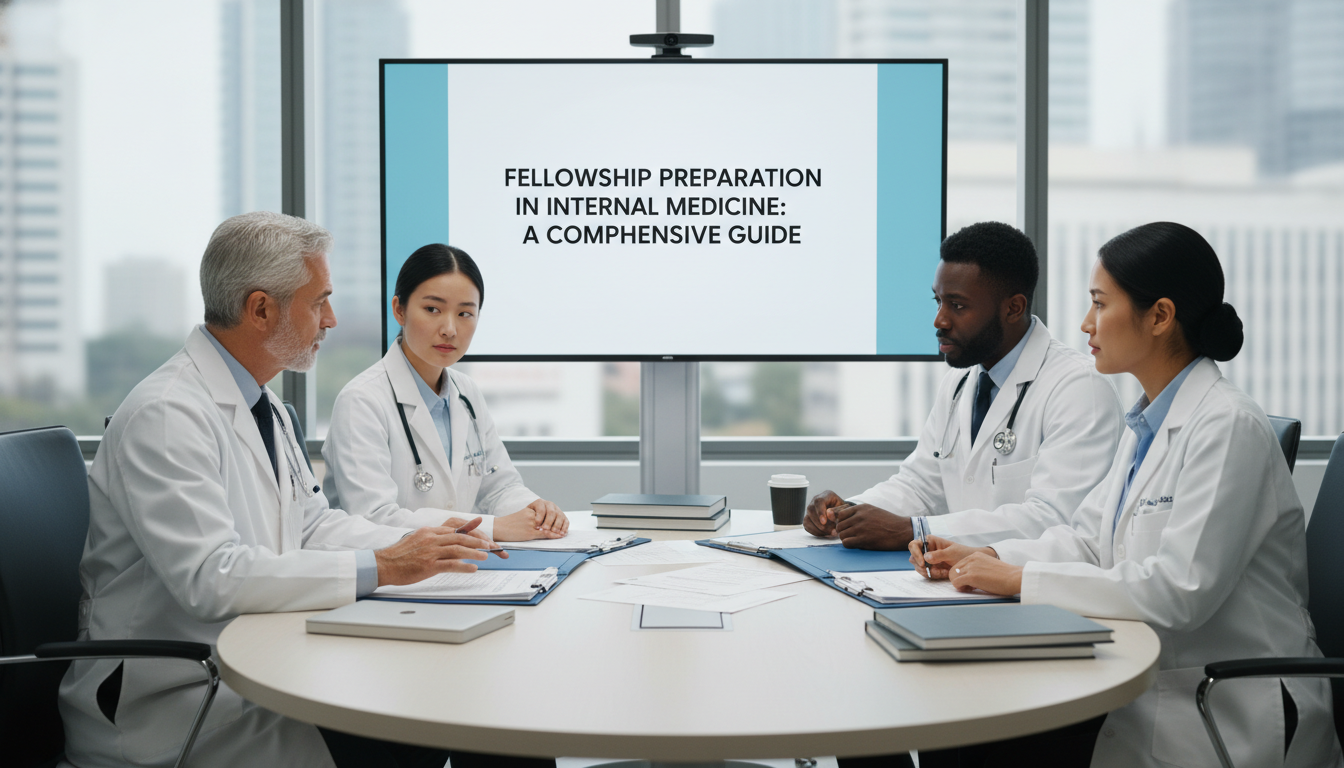
Understanding the Big Picture: Fellowship After Internal Medicine
For many internal medicine residents, fellowship is not just a next step—it’s the step that shapes the rest of their career. Whether you’re aiming for cardiology, GI, heme/onc, pulmonary/critical care, ID, nephrology, endocrinology, rheumatology, geriatrics, or hospital medicine fellowships, thoughtful preparation during residency dramatically improves your IM match for fellowship.
This guide walks through fellowship preparation across all three years of internal medicine residency, with a focus on:
- How to align your residency experience with your long-term goals
- What matters most to fellowship programs
- Strategies for research, mentorship, and letters of recommendation
- The fellowship application timeline and practical tips on how to get fellowship positions in competitive fields
The goal is to give you a structured roadmap, not just a list of tasks.
Clarifying Your Goals: Deciding if Fellowship Is Right for You
Before you plan how to get fellowship, you need clarity on whether and which fellowship is right for you.
1. Reflect on Your Career Priorities
Ask yourself:
- Do you enjoy longitudinal patient care or high-acuity, episodic care?
- Examples:
- Longitudinal: Rheumatology, Endocrinology, Nephrology
- High-acuity: Cardiology (CCU), Pulm/CC, GI (bleeding services), Heme/Onc (inpatient leukemias)
- Examples:
- Do you want procedural work as a major part of your career?
- Procedure-heavy: Cardiology, GI, Pulm/CC, Interventional fields
- Procedure-light: Endocrinology, Rheumatology, Geriatrics, ID
- How important are lifestyle and work-life balance to you?
- Some fellowships offer more predictable hours (e.g., Endocrinology, Geriatrics, some ID jobs) versus shift-based, high-intensity fields (e.g., Pulm/CC, certain ICU-focused roles).
Make notes on what energizes you during rotations. You don’t need all the answers PGY-1, but you should be actively collecting data on what you like.
2. Explore Subspecialties Early and Intentionally
Use PGY-1 and early PGY-2 to gain exposure:
- Pay attention during core rotations:
- Which consult services are you excited to call?
- Which teams (cardiology, GI, oncology, etc.) make you want to stay late to learn?
- Seek out electives in fields you’re considering by late PGY-1 or early PGY-2.
- Attend subspecialty conferences:
- Cardiology cath conference, GI case conference, tumor boards, ICU rounds, etc.
- Talk with upper-level residents:
- Ask what their day-to-day looks like on fellowship interviews, inpatient vs. outpatient balance, and long-term career prospects.
Red flag to notice: Wanting fellowship solely because “everyone else is doing it” or “I’m not sure what else to do” usually leads to misaligned career choices. Clarify your “why” before chasing a specific field.
Year-by-Year Roadmap: Fellowship Preparation Through Residency
PGY-1: Foundation, Exploration, and Relationships
PGY-1 is about building credibility and getting on people’s radar.
Clinical Performance Comes First
Fellowship programs care deeply about:
- Your clinical evaluations
- How attendings describe your work ethic, judgment, and professionalism
- Your ability to be a reliable, kind, and thoughtful team member
Focus on:
- Being prepared on rounds (know your patients cold)
- Owning your patients and following through on tasks
- Asking questions that show curiosity and reasoning, not just fact-gathering
- Being a supportive colleague to co-interns and students
These behaviors translate into strong narrative letters later.
Start Early Mentoring Conversations
By mid-PGY-1:
- Identify 1–2 general internal medicine or subspecialty attendings whose style you respect.
- Request brief meetings (“career check-in” or “exploration chat”) to discuss:
- Your interests and uncertainties
- Their career path and what they wish they’d known
- Advice about exploring subspecialties
Keep this low-pressure, exploratory, and honest.
Dip Your Toe into Research or Scholarly Work
You do not need a first-author NEJM paper to match fellowship, but you should demonstrate:
- Curiosity
- Follow-through
- Ability to contribute to academic or quality-improvement work
PGY-1 options:
- Case report or case series (e.g., an interesting inpatient case)
- Quality improvement (QI) projects (e.g., improving sepsis bundle compliance, optimizing discharge summaries)
- Joining an ongoing project: ask faculty, “Do you have any small projects a resident could help with?”
The primary goals early on are:
- Learn basic research habits
- Start building collaborative relationships
- Get your name on something you can present or list on your CV

PGY-2: Commit, Build Your Portfolio, and Lead
PGY-2 is the most critical year for fellowship applications. Most internal medicine residency trainees apply during PGY-2 for fellowship starting after PGY-3, so your PGY-2 performance is heavily scrutinized.
Decide on a Fellowship Direction (Preferably by Early PGY-2)
You don’t need every detail figured out, but by early PGY-2 you should:
- Narrow down to 1–2 realistic subspecialties
- Discuss your leanings with trusted mentors
- Align your electives and research with that direction
Programs look for coherent narratives, e.g.:
- “I developed a strong interest in heme/onc during PGY-1 on the leukemia service and followed that with research in cancer-related thrombosis and a QI project on chemotherapy order safety.”
- “After seeing the impact of adjusting hemodynamics in the ICU, I became drawn to Pulm/CC, sought out research in ARDS outcomes, and took additional ICU electives.”
Intensify Research and Scholarly Activity
For competitive fellowships (cardiology, GI, heme/onc, pulm/CC), research is a major differentiator in the IM match for fellowship.
PGY-2 goals:
- Be clearly involved in at least 1–2 substantive projects:
- Retrospective chart reviews
- Database or registry analyses
- Clinical trials (e.g., patient recruitment, data collection)
- Educational research
- Aim for:
- At least one poster or oral presentation at a regional or national meeting
- Manuscripts in progress, submitted, or accepted
If you started a project PGY-1, push it forward now with clear deliverables:
- Abstract submission deadlines
- Drafting introduction/methods sections
- Regular check-ins with your PI
If you haven’t started yet, it’s still not too late:
- Seek mentors in your chosen subspecialty with ongoing projects that need extra hands.
- Emphasize your willingness to work and your realistic timeline: “I’m applying this cycle; what could be reasonably completed or at least submitted within 6–9 months?”
Take on Leadership and Teaching
Fellowship programs like to see:
- Chief-of-service roles (if applicable)
- Committee work (e.g., sepsis committee, patient safety committee)
- Resident-led educational sessions (morning reports, noon conferences)
- Teaching of medical students and interns
These activities signal that you are mature, engaged, and capable of contributing to an academic environment.
Build Strong Relationships for Letters of Recommendation
By mid-to-late PGY-2, you’ll need 3–4 high-quality letters. Strong letters typically come from:
- Subspecialty faculty in your target field
- Your program director (PD)
- A core internal medicine faculty member who knows you well
- Optionally, a research mentor, especially for academic career tracks
To set this up:
- Work closely with potential letter writers on inpatient rotations, outpatient clinics, or projects.
- Ask for feedback during and after rotations: “What could I improve as I prepare for fellowship?”
- When the time comes (usually spring of PGY-2), ask explicitly:
- “Would you feel comfortable writing me a strong letter of recommendation for cardiology fellowship?”
If anyone seems hesitant, thank them but consider asking someone else.
PGY-3: Final Polishing, Interviews, and Transition
By PGY-3, you’ve already submitted your applications and are now interviewing and finalizing your plans. But your performance still matters.
Maintain (or Elevate) Your Clinical Performance
Fellowship programs may ask for updated evaluations or contact your PD informally. Red flags late in residency—unprofessional behavior, recurrent lateness, or unresolved remediation—can derail even a strong application.
Treat PGY-3 responsibilities seriously:
- Step into a leadership role on teams
- Continue teaching and mentorship of juniors
- Model professionalism consistently
Finalize and Publish Your Work
Push ongoing projects to completion:
- Submit remaining manuscripts where possible
- Prepare updates for interviews (e.g., “This manuscript is now accepted for publication in…” or “Our data collection is complete; we’re analyzing outcomes now.”)
Fellowship interviewers are often impressed by concrete progress, even if the work is not yet fully published.
Prepare for Transition to Fellowship
Once matched:
- Clarify credentialing, licensure, and visa (if applicable) as early as possible
- Review foundational knowledge in your field (e.g., cardiology guidelines, heme/onc pharmacology, pulmonary physiology) during late PGY-3
- Reach out to future co-fellows or program leadership with any questions, especially if you’re relocating
What Fellowship Programs Actually Look For
Understanding selection criteria helps you deliberately shape your application.
1. Clinical Excellence and Professionalism
Core components:
- Consistently strong evaluations
- No unexplained professionalism concerns
- Evidence that you are reliable, ethical, and team-oriented
Programs want fellows who are safe, trusted, and easy to work with in high-stakes environments.
2. Subspecialty-Relevant Engagement
Programs look for a track record that supports your interest in their field:
- Electives in that subspecialty
- Attendance at their conferences
- Subspecialty clinics (e.g., heart failure clinic, IBD clinic, transplant clinic)
- Research or QI work in that domain
This doesn’t have to be your entire CV, but there should be enough alignment that your career story makes sense.
3. Research and Scholarly Productivity
The weight of research varies:
- Highly competitive fields and academic programs: research is often essential.
- Less competitive or more clinically focused fields may put more weight on clinical performance and fit.
Programs look at:
- Number and quality of abstracts/posters
- Peer-reviewed publications (first-author vs co-author)
- Evidence of intellectual curiosity and persistence
If you’re aiming at academic careers, your record should demonstrate you can produce scholarly work.
4. Letters of Recommendation
Strong letters typically:
- Provide specific examples of your reasoning, compassion, and reliability
- Comment on your trajectory (e.g., “Among the top 10% of residents I have worked with in 15 years”)
- Describe your potential as a future subspecialist and colleague
Generic letters (“hardworking, well-liked”) add minimal value. Depth and specificity matter.
5. Personal Statement and Interview Performance
Your personal statement should:
- Explain the evolution of your interest (not just “I like cardiology”)
- Highlight a few key experiences and what you learned from them
- Show self-reflection, maturity, and a sense of direction (e.g., academic vs. community plans, research or education interests)
In interviews, programs assess:
- Communication skills
- Insight into your strengths and growth areas
- How you’ll fit with their culture and existing fellows
- Whether your goals align with what their program is designed to provide

The Fellowship Application Timeline and Strategy
The exact timing can vary by subspecialty and year, but most internal medicine fellowship applications follow a similar pattern through ERAS and NRMP.
General Timeline (for July Fellowship Start Date)
PGY-1, Winter–Spring
- Start exploring subspecialties
- Seek early mentors and light research/QI opportunities
PGY-2, Fall–Winter
- Confirm intended subspecialty
- Intensify research; aim for abstracts and presentations
- Plan electives strategically
PGY-2, January–March
- Update CV comprehensively
- Identify potential letter writers and give them early notice
- Work with mentors or PD to build a realistic fellowship application list (reach, target, safer programs)
PGY-2, April–June
- Write and refine your personal statement
- Finalize letters of recommendation (provide CV, personal statement drafts, and a summary of your work with each letter writer)
- Submit ERAS fellowship application once it opens (typically late spring/early summer)
PGY-2, Summer–Fall
- Respond promptly to interview invitations
- Schedule off-days or lighter rotations during peak interview months when possible
- Prepare for interviews (mock interviews, review programs, refine your narrative)
PGY-3, Winter
- Submit rank list within NRMP deadline
- Match Day for fellowship
- Begin planning the transition, housing, and logistics
Always verify timelines for your specific subspecialty and cycle at the AAMC/NRMP and society websites, as dates can shift year to year.
Building a Smart Application List
When thinking through how to get fellowship in a competitive market, don’t rely only on reputation lists or hearsay. Consider:
- Your competitiveness:
- USMLE/COMLEX scores and ITE performance
- Research output
- Program pedigree and faculty connections
- Clinical evaluations
- Desired geographic regions (primary vs. secondary preferences)
- Balance of academic vs. community programs
- Fellowship focus:
- Strong in procedures vs. clinical care vs. research
- Niche strengths (e.g., transplant, advanced heart failure, IBD, thoracic oncology, ECMO, interventional procedures)
Discuss your list with your PD and subspecialty mentors; they often know which programs value residents from your institution and where your profile will be competitive.
Interview Preparation: Presenting Your Best Self
Actionable steps:
Prepare “anchor stories”:
- Times you handled a difficult clinical scenario
- Examples of teamwork and conflict resolution
- Instances where you identified an error or safety issue and addressed it
- Research experiences and what you learned from them
Anticipate common questions:
- “Why this subspecialty?”
- “Tell me about a challenging patient encounter.”
- “Where do you see yourself in 5–10 years?”
- “Why are you interested in our program?”
Practice:
- Mock interviews with faculty or co-residents
- Adjust your answers based on feedback—are you concise, reflective, and specific?
On interview days:
- Be courteous to staff and fellows; program directors often ask them for impressions
- Ask genuine, specific questions about the program (not easily answered by the website)
Balancing Residency Demands with Fellowship Preparation
Preparing for fellowship while managing wards, ICU, night float, and exams is challenging. Strategic planning and boundaries are key.
Prioritize and Time-Block
Treat fellowship preparation as a longitudinal project:
- Block 2–4 hours per week for:
- Research tasks
- Updating CV
- Drafting personal statement
- Reaching out to mentors
This is more sustainable than last-minute surges.
Protect Your Well-Being
Burnout sabotages performance and makes it harder to present your best self.
- Sleep: Protect core sleep whenever possible, especially around ICU and night rotations.
- Support: Lean on co-residents, mentors, and, if needed, mental health resources.
- Boundaries: You don’t have to say yes to every research opportunity. Choose quality over sheer quantity.
Communicate with Your Program
Be transparent with your chiefs and PD:
- Let them know your fellowship plans and major deadlines
- Work with them to adjust schedules where possible during peak interview season
- Many programs are supportive if they know your needs early
Frequently Asked Questions (FAQ)
1. Do I need research to match into an internal medicine fellowship?
Research is highly recommended for most internal medicine residency graduates who want subspecialty training, especially in competitive fields like cardiology, GI, heme/onc, and pulm/CC. For less competitive or more clinically oriented fellowships (e.g., geriatrics, some nephrology or endocrinology positions), research may be less critical but still helpful. Aim for at least some scholarly activity—case reports, QI projects, or abstracts—to show academic engagement.
2. How early should I decide on a subspecialty?
You don’t need a firm decision PGY-1, but by early PGY-2 you should have a primary target in mind, especially for competitive fields. This allows you to align your electives, research, and letters of recommendation. If you’re undecided, schedule dedicated time with mentors, take exploratory electives, and reflect on what parts of IM excite you most.
3. My Step scores are average. Can I still match a good fellowship?
Yes. While test scores are part of your fellowship application, they are only one piece. Strong clinical evaluations, excellent letters, meaningful research or QI work, and a clear, compelling narrative can compensate for average scores. Programs—especially those focused on clinical training—often prioritize reliability, professionalism, and fit over purely numerical metrics.
4. How many programs should I apply to for fellowship?
The “right” number depends on your competitiveness, subspecialty, and geographic flexibility. Competitive subspecialties usually require a broader application strategy, whereas less competitive fields may allow a more focused list. Many residents apply to anywhere from 20–50 programs, but the optimal number is individualized. Review your profile with your PD and subspecialty mentors; they can help you build a balanced list with reach, target, and safer options.
Thoughtful, early, and strategic fellowship preparation during internal medicine residency will not only improve your chances of a successful IM match to fellowship, but also help ensure that the pathway you choose truly fits your skills, values, and long-term aspirations.