Understanding the Landscape: Why Fellowship Matters in OB GYN
Fellowship preparation in Obstetrics & Gynecology starts much earlier than most residents realize. Your day-to-day may be dominated by the demands of the OB GYN residency schedule, but decisions you make in PGY-1 and PGY-2 can dramatically shape your competitiveness for the obstetrics match and subsequent subspecialty training.
Why pursue fellowship?
Modern OB GYN practice increasingly favors subspecialization. Common motivations include:
Clinical depth and complexity
- Maternal-Fetal Medicine (MFM): complex pregnancies, fetal diagnosis, and critical care in pregnancy
- Gynecologic Oncology: cancer surgery, chemotherapy, survivorship
- Reproductive Endocrinology & Infertility (REI): IVF, endocrine disorders, reproductive surgery
- Female Pelvic Medicine & Reconstructive Surgery (FPMRS/Urogynecology): pelvic floor disorders, complex prolapse, incontinence
- Minimally Invasive Gynecologic Surgery (MIGS): complex benign surgery, endometriosis, fibroids
- Pediatric & Adolescent Gynecology, Family Planning, Complex Family Planning, and others
Career flexibility and stability
- Academic medicine and research-focused positions
- Niche clinical practices (e.g., fertility centers, cancer centers, surgical referral practices)
- Opportunities in policy, global health, and leadership
Compensation and job market
Some subspecialties offer higher earning potential, yet also longer training and geographic constraints. Understanding this balance early on is part of smart fellowship preparation.
When should you start planning?
You don’t need your exact fellowship choice on day one of internship, but you do need a timeline mindset:
- PGY-1: Explore broadly, focus on building baseline competence and reputation.
- PGY-2: Start leaning toward one or two areas of interest; seek targeted mentorship.
- PGY-3: Intensively prepare your application, portfolio, and research; finalize specialty.
- PGY-4: Interview season, rank list, and transition planning for fellowship.
Knowing this rough fellowship application timeline helps you space out research, leadership, and exams without burning out.
Choosing Your Path: Exploring OB GYN Subspecialties
The first critical step in preparing for fellowship is deciding whether subspecialty training aligns with your interests, strengths, and lifestyle goals.
Self-assessment: What kind of OB GYN are you?
Reflect on:
What clinical days energize you most?
- You look forward to:
- Complex high-risk antepartum rounds or ICUs → consider MFM
- Long gynecologic surgeries and complex pelvic anatomy → MIGS or Gyn Onc
- IVF consults, endocrine puzzles, and lab results → REI
- Reconstructive, functional surgery with long-term patient relationships → FPMRS
- Complex contraception, abortion care, advocacy → Family Planning/Complex Family Planning
- You look forward to:
What kind of procedures do you enjoy?
- Major open cancer surgery vs laparoscopic/robotic vs office procedures
- Ultrasound-heavy practice vs clinic-based counseling vs managing chemo or hormones
What lifestyle can you accept long-term?
- High acuity with frequent nights (MFM, Gyn Onc)
- More clinic-predictable schedules (REI, some MIGS practices)
- Hospital-based call vs outpatient-focused practice
Academic vs community focus
- Most fellowships train you for academic environments, but some pathways lead naturally into high-volume community subspecialty practice.
Practical steps in PGY-1 and PGY-2
Rotate deliberately
During core rotations, actively note:- Which services make you lose track of time (in a good way)
- Attendings whose careers you might want to emulate
- Types of patient problems you’d be happy to manage for decades
Ask targeted questions
When on service, ask fellows and attendings:- Why they chose their subspecialty
- Typical week in their life (clinic/OR/call/research)
- What they would decide differently in retrospect
Shadow outside of formal rotations
If your program has limited exposure in a field (e.g., MIGS), ask for a half-day to observe a specialist — even in another department or allied clinic.

Building a Competitive Fellowship Application During OB GYN Residency
Every fellowship program wants proof that you will be a high-performing clinician, a productive academic contributor, and a reliable colleague. Your strategy is to show steady growth in all these domains throughout residency.
1. Clinical Excellence: The Non-Negotiable Foundation
Fellowship directors will ask your program leadership:
- Would you rehire this resident as faculty?
- Do they show sound judgment and safe patient care?
- Are they trustworthy under pressure?
Focus on:
Early in residency (PGY-1–2):
- Master fundamentals: triage, postpartum care, basic L&D, perioperative care.
- Be the resident who reads before cases and follows through on tasks.
- Seek formative feedback: “One thing I could do better on rounds/on call?”
Later in residency (PGY-3–4):
- Demonstrate senior leadership: running the board, teaching juniors.
- Seek complex patient assignments on your fellowship-of-interest service.
- Document your procedural volumes and growing independence.
Application impact: Strong clinical performance translates directly into powerful narrative comments in your letters of recommendation.
2. Research and Scholarly Productivity
Research expectations differ by subspecialty, but in competitive areas like MFM, REI, and Gyn Onc, scholarly productivity is very influential. For any fellowship, aim to show:
- Longitudinal engagement with at least one project
- Completion (abstracts, presentations, publications), not just participation
How to get started with research
PGY-1: Exposure and groundwork
- Attend research meetings within your department.
- Ask chiefs or recent grads who matched into fellowship which faculty are good mentors.
- Start with a manageable project: case series, retrospective chart review, or QI.
PGY-2: Productivity and visibility
- Work toward at least one poster at a regional or national meeting (CREOG, SMFM, ACOG district meetings, subspecialty societies).
- Learn basic stats or partner with a biostatistician.
- Ask to be involved in writing, not just data collection.
PGY-3 and beyond: Leadership in projects
- Try to be first author on at least one project in your interest area.
- If possible, present your work at a relevant national society:
- MFM → SMFM, SOAP
- REI → ASRM
- Gyn Onc → SGO
- MIGS → AAGL
- FPMRS → AUGS
If your program is not research-heavy:
- Consider multi-center collaborative projects.
- Ask for access to institutional databases.
- Use QI work that you implement and measure as scholarly activity.
3. Mentorship and Networking
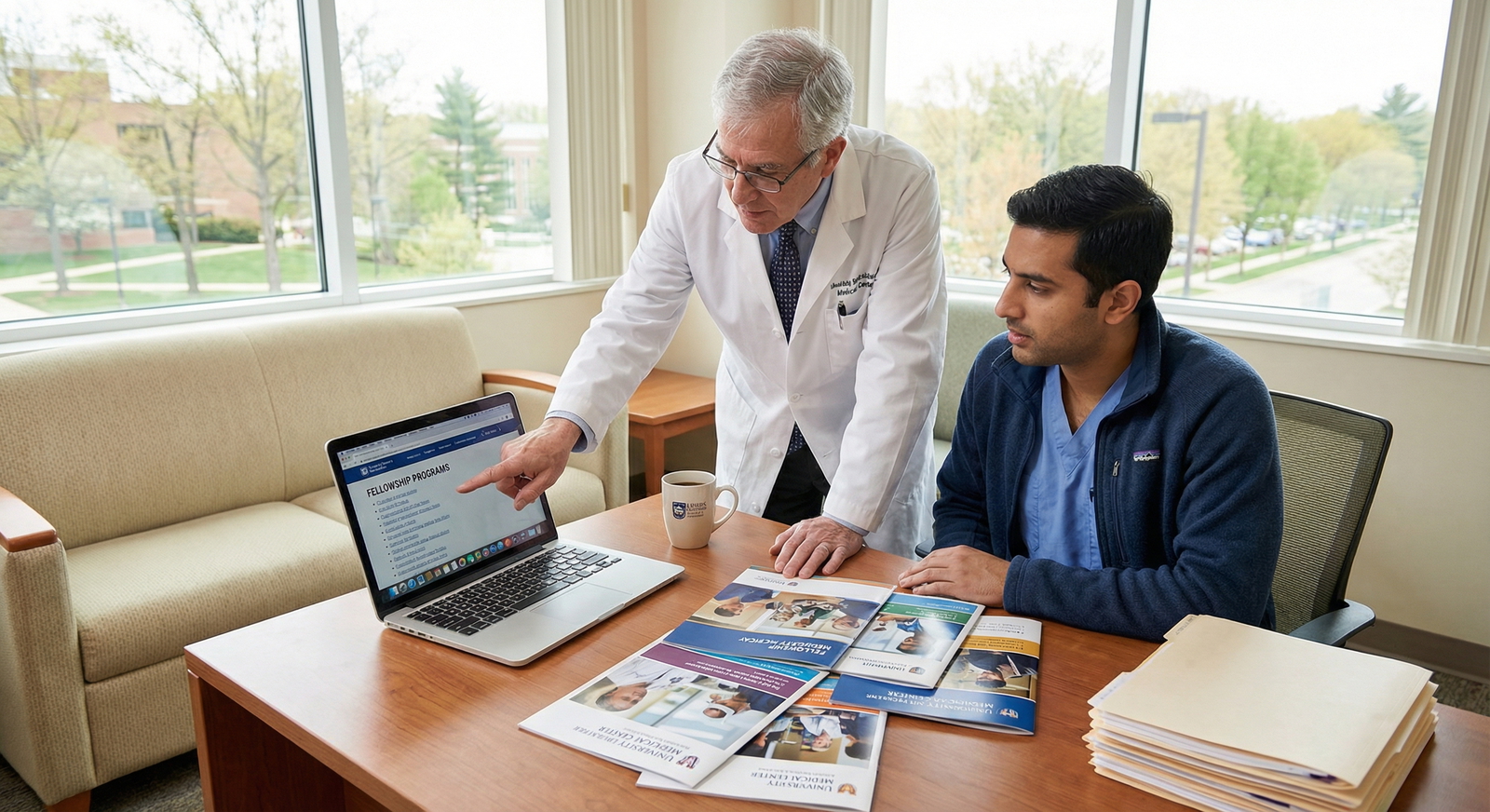
Strong mentorship is one of the most powerful elements in successful fellowship preparation.
Types of mentors you need
- Career Mentor (usually within your subspecialty):
- Helps you choose programs, refine your CV, and time your application.
- Serves as a likely letter writer.
- Program Leader Mentor (PD, APD, or Chair):
- Advocates for you at the institutional level.
- Often receives calls from fellowship PDs asking about you.
- Peer or Near-Peer Mentor (current fellow or recent graduate):
- Provides real-time insights into the current fellowship application landscape.
- Shares sample personal statements, CV formats, and interview experiences.
How to cultivate mentorship
- Request a 20–30 minute meeting with a potential mentor.
- Bring a brief CV and list of interests and questions.
- Follow through on advice and update them periodically.
- Be respectful of their time: prepare specific asks (e.g., feedback on abstract, guidance on which conferences to attend).
Networking also means:
- Attending national meetings and introducing yourself to leaders in your area.
- Joining relevant subspecialty sections or trainee committees.
- Participating in virtual meet-and-greets or fellowship information sessions.
Mastering the Fellowship Application Timeline and Process
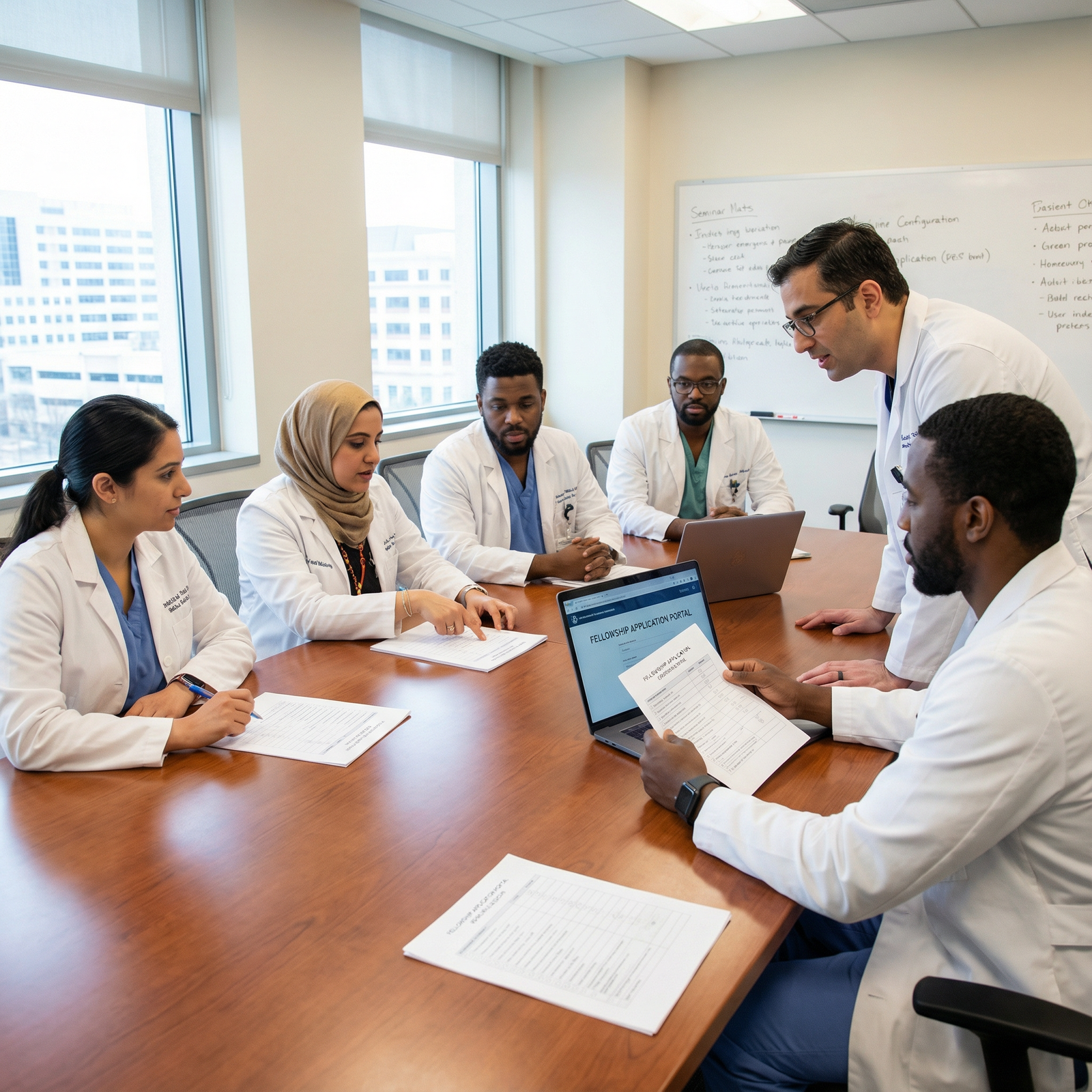
Understanding how the obstetrics match and fellowship cycles work is central to planning. While specific dates may shift each year and differ somewhat by subspecialty, the general structure is consistent.
Big Picture: Fellowship Application Timeline
Most OB GYN fellowships follow a pattern where you:
- Apply during PGY-3 (for a 4-year residency)
- Interview late PGY-3 / early PGY-4
- Start fellowship immediately after residency
Always verify the current year’s timeline via ERAS, NRMP, and the relevant subspecialty society. But as a broad framework:
18–24 months before fellowship start (PGY-2 early to mid):
- Clarify subspecialty choice.
- Strengthen research output and look for presentation opportunities.
- Begin discussing plans with your PD and core mentors.
12–14 months before fellowship start (PGY-3 early):
- Confirm the specific application cycle and deadlines for your subspecialty.
- Identify target programs and create a preliminary list.
- Ask letter writers if they are comfortable writing strong, supportive letters.
10–12 months before start:
- Update your CV comprehensively.
- Draft your personal statement.
- Order transcripts and exam score reports if needed.
8–10 months before start:
- Submit ERAS (or relevant platform) applications early in the cycle.
- Make sure letters and supporting documents are uploaded.
6–9 months before start:
- Interview season: schedule interviews strategically.
- Prepare talking points and program-specific questions.
4–6 months before start:
- Certify rank lists (if match-based) or navigate offer timelines (if non-match).
- Plan for fellowship relocation, licensure, and any visa issues.
Application Components: How to Get Fellowship Offers
Most OB GYN fellowship applications include:
- Curriculum Vitae (CV)
- Personal Statement
- Letters of Recommendation
- USMLE/COMLEX and CREOG scores
- Scholarly activity summary
- Program Director (PD) evaluation form or letter
Crafting a strong CV
- Keep it clean, organized, and specialty-specific.
- Sections typically include:
- Education and training
- Certifications and licenses
- Honors and awards
- Research and publications
- Presentations and posters
- Teaching experience
- Leadership and service
- Professional memberships
Highlight elements that demonstrate alignment with your chosen field (e.g., MFM-related QI projects, REI electives, MIGS workshops attended).
Writing an effective personal statement
Your personal statement explains why this subspecialty, why now, and why you. Avoid generic OB GYN residency narratives; you’re beyond that stage. Focus on:
- A concise story or case that shaped your career direction.
- Evidence of sustained interest (rotations, research, leadership).
- Specific skills and traits you bring (team leadership, surgical skills, data analysis).
- A forward-looking vision of your career (academic vs community, research interests).
Keep it 1–1.5 single-spaced pages. Have at least 2–3 mentors review it.
Letters of recommendation
Typical pattern: 3–4 letters, including:
- Program Director letter (often required)
- Subspecialty mentor letter (from your field of interest)
- Additional faculty letter(s) (ideally including one who has seen you clinically on a demanding service)
Ask early (2–3 months pre-deadline). When you ask:
- Provide your updated CV.
- Provide a bullet list of 5–7 points you hope they may highlight (e.g., “leadership on L&D, MFM research initiative, teaching junior residents”).
- Clarify deadlines and the uploading platform.

Interview Season, Ranking, and Strategic Decision-Making
Interview season is your chance to move from “good on paper” to “obvious fit.” How you present yourself and how thoughtfully you choose programs is crucial for both match success and long-term career satisfaction.
Preparing for fellowship interviews
Know your application cold
- Be ready to describe every research project, including limitations and next steps.
- Be honest about your role (data collection vs analysis vs writing).
- Anticipate questions about any low exam scores or performance dips.
Understand the fellowship’s identity
- Research program priorities: surgical volume, research intensity, global health, community focus.
- Review recent publications and faculty interests.
- Prepare specific questions that show you’ve done your homework.
Practice behavioral and specialty-specific questions Examples:
- “Tell me about a complication you managed on L&D and what you learned.”
- “Describe a conflict in the OR/clinic and how you approached it.”
- “Where do you see your career in 5–10 years?”
- “Why our program specifically, and how would you use our resources?”
Virtual vs in-person
- If virtual, optimize setting: neutral background, professional attire, stable internet.
- Practice mock interviews with someone on Zoom/Teams to adjust eye contact and timing.
Evaluating programs: Beyond prestige
When deciding how to rank programs, consider:
Clinical training quality
- Are fellows primary operators on key cases?
- Is there adequate exposure to the full scope of the subspecialty (e.g., complex twin MFM cases, rare oncologic surgeries, advanced MIGS techniques)?
Research support
- Protected time vs service demands.
- Access to statisticians, databases, and mentorship.
- Track record of fellow publications.
Fellow culture and wellness
- How do current fellows describe their workload and support?
- Is there a culture of respect between residents, fellows, and faculty?
Career outcomes
- Where do alumni end up? Academic vs community? Geographic spread?
- Are graduates successful in securing positions in their desired practice type?
Pragmatic factors
- Location, cost of living, partner/family needs.
- Visa sponsorship if applicable.
- Call schedule and night/weekend responsibilities.
Ranking intelligently
For match-based fellowships, always rank based on true preference, not perceived competitiveness. The algorithm is designed to prioritize applicant preference. That said, be realistic:
- Include a balanced mix of “reach,” “solid,” and “safer” programs.
- Discuss your list with your PD or trusted mentor for an external perspective.
- Don’t underestimate the importance of personal and family well-being in your choices.
Thriving in Residency While Preparing for Fellowship
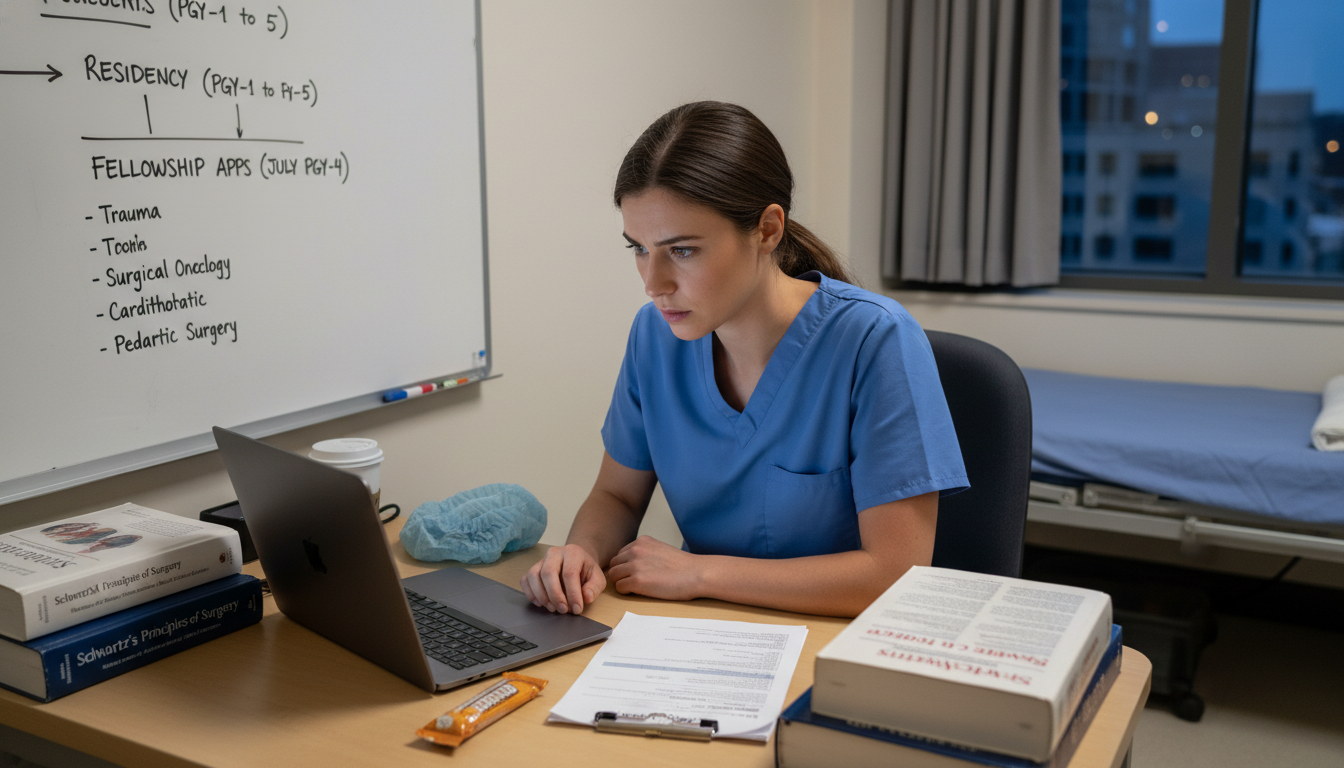
Preparing for fellowship is not just about applications; it’s about surviving and growing during demanding OB GYN residency years.
Managing time and burnout risk
Integrate fellowship preparation into your existing workflow
- Read subspecialty-focused articles during downtime on relevant services.
- Turn clinical curiosities into research/QI questions.
- Use conferences you’re already attending for networking.
Protect your bandwidth
- Avoid overcommitting to multiple large research projects that cannot be completed.
- Learn to say, “I’d love to help, but my plate is full until [date].”
Self-care as a strategic asset
- Fellowship directors value resilience and insight into your own limits.
- Maintain basic anchors: regular sleep when possible, one protected non-medical activity, and a small support crew outside work.
Leveraging your OB GYN residency environment
Teach frequently
- Medical students and juniors: Teaching builds your reputation and is easy to document on your CV.
- Subspecialty conference presentations: Journal clubs, M&M, and grand rounds are opportunities to demonstrate interest and depth.
Seek leadership roles
- Chief resident, committee memberships, curriculum development.
- For those preparing for fellowship, leadership signals maturity and commitment to the field’s future.
Document everything
- Maintain a live CV file.
- Track cases, presentations, and workshops attended.
- Save emails confirming abstracts and talks.
FAQs: Fellowship Preparation in Obstetrics & Gynecology
1. When should I decide on a subspecialty during OB GYN residency?
Aim to have a strong leaning by mid-PGY-2. This gives you enough time to build focused research, secure subspecialty mentorship, and arrange electives in your area of interest. You don’t have to be 100% certain early on, but by the start of PGY-3 you should be aligned enough to craft a coherent application.
2. How many research projects do I need for a competitive fellowship application?
Quality and completion matter more than sheer quantity. For highly competitive fields, a typical strong applicant may have:
- 1–2 first-author projects (abstracts and ideally at least one manuscript)
- Additional co-authorships or collaborative projects
- Presentations at subspecialty or OB GYN national meetings
If your program is not research-heavy, demonstrate initiative and follow-through on smaller but fully completed projects, including QI work.
3. Can I still get a fellowship if I decide late (e.g., early PGY-3)?
Yes, but you’ll need a focused and efficient plan. Concentrate on:
- Securing a subspecialty mentor quickly.
- Maximizing your performance on relevant rotations.
- Highlighting any prior experiences that align with the subspecialty (even if not labeled as such at the time).
- Being transparent with your PD so they can help coordinate elective time and letters.
You may have fewer research products, but strong clinical performance and clear, authentic motivation can still lead to a successful match.
4. How do I decide between going straight into fellowship vs working as a generalist first?
Consider:
- Certainty of your subspecialty choice: If you’re unsure, a year or two as a generalist may clarify your interests and strengthen your application.
- Personal/financial needs: Some residents need time to pay down debt, support family, or stabilize life circumstances.
- Competitiveness: A few years of strong generalist practice plus ongoing scholarly activity can bolster a borderline application.
However, remember that stepping out of training and coming back later can be logistically more complex. Discuss your situation openly with mentors and recent graduates who chose each path.
Fellowship preparation in Obstetrics & Gynecology is an evolving, multi-year process—not a last-minute scramble in PGY-3. By understanding the fellowship application timeline, cultivating mentorship, prioritizing clinical excellence, and strategically engaging in scholarship, you position yourself not only to match successfully, but to build a fulfilling, sustainable career in the subspecialty that fits you best.