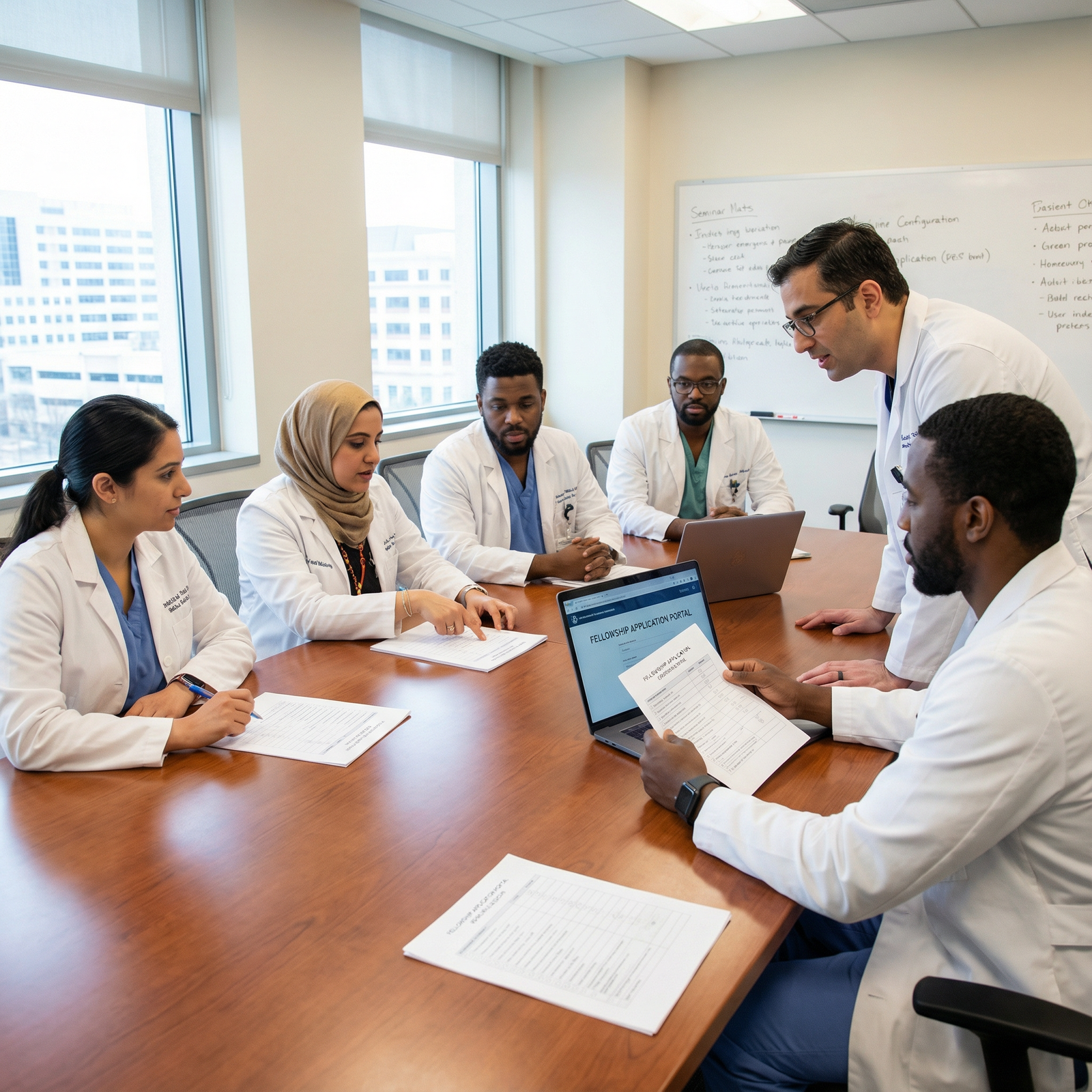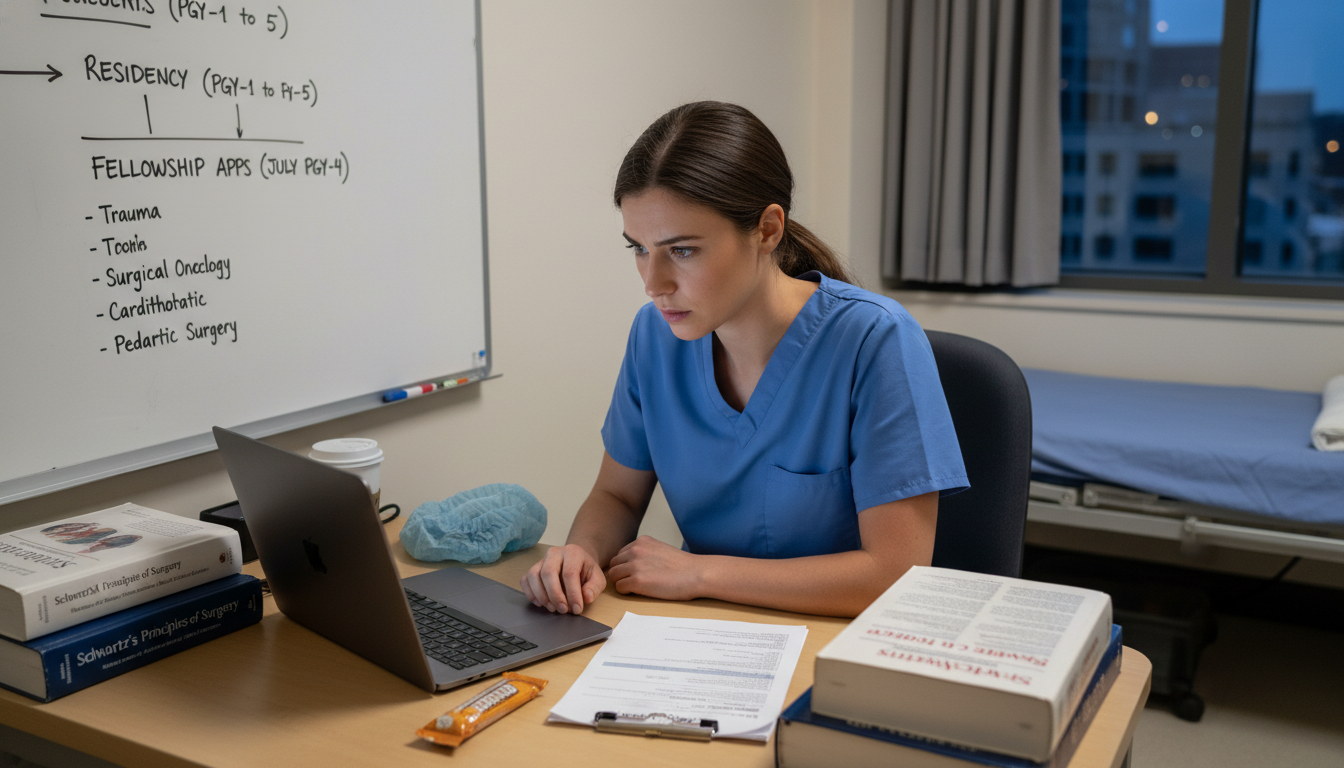
Understanding Fellowship in PM&R: Is It Right for You?
Pursuing fellowship after PM&R residency is increasingly common, but it is not mandatory for a successful, fulfilling career in physiatry. Before you dive into the fellowship application timeline or worry about how to get fellowship offers, step back and define your “why.”
What Fellowship Adds Beyond PM&R Residency
A four-year PM&R residency provides broad training in:
- Inpatient rehabilitation (stroke, TBI, SCI, complex medical rehab)
- Outpatient musculoskeletal and spine care
- Electrodiagnostic medicine (EMG/NCS)
- Pain management basics
- Spasticity and neurorecovery
- Prosthetics and orthotics
- Pediatric rehab exposure (in many programs)
Fellowship usually adds:
- Depth in one focused area (e.g., interventional spine, EMG, sports, SCI, pediatrics)
- Procedural volume and complexity (e.g., fluoroscopic spine injections, ultrasound-guided procedures, intrathecal baclofen management)
- Mentorship and networking within a specific niche
- Scholarly focus, often with a research or QI project tied to that subspecialty
- Career differentiation for competitive markets or academic positions
Common PM&R Fellowship Pathways
While the landscape continues to evolve, major fellowship options relevant to PM&R include:
- Pain Medicine (ACGME-accredited; often multi-specialty)
- Sports Medicine (ACGME, often shared with FM, EM, IM)
- Brain Injury Medicine (BIM)
- Spinal Cord Injury Medicine (SCIM)
- Pediatric Rehabilitation Medicine
- Neuromuscular Medicine / Electrodiagnostic-focused
- Cancer Rehabilitation
- Palliative Care (for some PM&R interests)
- Non-ACGME fellowships, such as:
- Musculoskeletal/Interventional Spine
- EMG/Clinical Neurophysiology (program dependent)
- Research fellowships
- Amputee & Prosthetics-Orthotics, Neurorehab, Stroke-focused programs
Each pathway comes with specific training structures, board eligibility implications, and job-market considerations.
Questions to Clarify Your Goals
Ask yourself:
- What patient population energizes you the most?
- Athletes? SCI? Pediatric CP? Chronic pain? Cancer survivors?
- How procedural do you want your career to be?
- Heavy injections and interventions?
- EMG- and diagnosis-heavy?
- More consultative/longitudinal rehab?
- Where do you envision working?
- Large academic center vs. private practice
- Inpatient rehab hospital vs. outpatient/interventional clinic
- Urban vs. rural
- What is the job market for fellowship-trained physiatrists in your region of interest?
- Some regions heavily favor Pain or Sports fellowship training for procedural jobs
- Others have strong demand for general inpatient physiatrists
Clarifying your values early helps you decide whether fellowship is essential, “nice to have,” or unnecessary given your goals.
Timeline: When and How to Start Preparing
The fellowship application timeline differs by subspecialty and whether the fellowship uses a formal match (e.g., NRMP) or a more informal/off-cycle process. Because this changes over time, always verify directly with each fellowship and your program leadership.
Big-Picture Timeline (PGY-1 to PGY-4)
PGY-1 (Intern Year)
- Explore: Learn what physiatrists actually do, attend PM&R interest group or specialty talks.
- Broad reading: Basic PM&R texts, subspecialty overviews.
- Light exposure: If available, elective or shadowing in PM&R or your area of interest.
PGY-2 (Early PM&R Residency)
- Exposure:
- Pay attention to which rotations feel engaging vs. draining.
- Note mentors in different subspecialties.
- Low-stakes exploration:
- Attend subspecialty conferences or local journal clubs.
- Observe procedures (EMG, ultrasound, spine injections, spasticity management).
- Start a small project:
- Case report or QI project in an area you might pursue.
- Informal conversations:
- Ask upper-level residents how they approached fellowship preparation and the physiatry match or equivalent process for their subspecialty.
PGY-3 (Crucial Application Year)
This is the pivotal year for most PM&R residents.
- Fall–Winter (early PGY-3):
- Narrow to 1–2 subspecialties.
- Identify 2–3 potential mentors.
- Begin CV polishing and think seriously about your narrative.
- If your fellowship type uses ERAS/NRMP (e.g., Pain Medicine in many institutions), confirm key dates.
- Winter–Spring:
- Start drafting your personal statement.
- Request letters of recommendation early—especially from subspecialty faculty.
- Target key rotations that will strengthen your application (e.g., spine, EMG, pain, sports clinic).
- Spring–Summer:
- Submit applications as soon as the cycle opens for your chosen pathway (often around the time you’re finishing PGY-3).
- Prepare for interviews: practice common questions, refine your “story,” and clarify your goals.
PGY-4 (Final Year)
- Interviews (if not already done).
- Rank lists or contract negotiations depending on match/non-match structure.
- Continue building skills and autonomy in your area of future fellowship.
- Plan logistics: board exams, licensing, moving, and benefits.
Differences by Subspecialty
- Pain Medicine:
- Typically follows ERAS/NRMP with timelines similar to other competitive fellowships.
- Applications often due ~15–18 months before fellowship start.
- Sports Medicine:
- Often follows ERAS/NRMP in collaboration with Family/EM/Internal Medicine.
- BIM, SCIM, Pediatric Rehab:
- Many operate through NRMP or other formal match structures; check ACGME and society websites.
- Non-ACGME (e.g., Interventional Spine, EMG-only):
- Highly variable; some recruit early (similar to a match timeline), others later or by direct contact.
- Word-of-mouth, direct emails, and society networking are essential.
Because the physiatry match for residency and the various subspecialty “matches” don’t operate identically, your best resource is your fellowship program directors, recent graduates, and relevant professional societies (AAPM&R, AAP, AAPMR sections, etc.).
Building a Competitive Fellowship Application
Fellowship selection committees review applicants holistically, but several elements consistently stand out: clinical performance, letters of recommendation, scholarly work, and a coherent career vision.
Clinical Performance and Rotation Strategy
Program directors look closely at:
- Rotation evaluations, especially:
- In your target subspecialty (e.g., pain, sports, SCI)
- In core PM&R inpatient and consult rotations
- Evidence of growth: Are your PGY-3/4 evaluations stronger than your earlier ones?
- Professionalism and teamwork: Committee members ask, “Would I trust this person with our patients and fellowship brand?”
Actionable steps:
- Request targeted rotations during PGY-2/3 in your area of interest.
- On these rotations:
- Be punctual and prepared.
- Read about each case the same day.
- Seek feedback mid-rotation (“What one thing could I do better?”).
- Demonstrate ownership of patients and follow-through.
When attendings later write letters, they’ll remember specific examples of your initiative and growth.
Letters of Recommendation: Quality Over Quantity
Strong letters are crucial in how to get fellowship offers, especially in competitive subspecialties.
Aim for:
- 2–3 letters from:
- Subspecialty attendings in your desired field.
- Your residency program director or assistant program director.
- Ideally, at least one letter writer should:
- Know you over multiple rotations or projects.
- Have a reputation in the field (e.g., national committee, publications).
- Be able to describe your skills and character with concrete examples.
How to set up a strong letter:
- Ask early and politely.
- “Would you feel comfortable writing a strong letter of recommendation for my Pain Medicine fellowship applications?”
- Provide a letter packet.
- Updated CV
- Draft personal statement
- Brief list of your key projects and cases you worked on with them
- Remind them of deadlines.
- One month before, then one week before as a gentle reminder.
Research and Scholarly Activity
Not every PM&R resident must have first-author publications to match into fellowship, but scholarly engagement can significantly strengthen your application—especially if you’re preparing for fellowship in academic-centric fields like Brain Injury, SCIM, or sports in university settings.
Forms of scholarly activity:
- Case reports and small case series
- Retrospective chart reviews
- Quality improvement projects tied to clinical care
- Educational projects (curriculum development, teaching modules)
- Abstracts/posters at major conferences (AAPM&R, AAP, etc.)
For each fellowship type:
- Pain / Sports / Interventional Spine:
- Projects involving procedures, chronic pain outcomes, biomechanics, or injection techniques are helpful.
- BIM / SCIM / Pediatrics / Cancer Rehab:
- Neurorecovery, functional outcomes, rehab technologies, spasticity management, or survivorship research are particularly relevant.
- EMG / Neuromuscular:
- Studies on EMG utilization, neuromuscular disease outcomes, or diagnostic yield.
Actionable approach:
- Identify an interested faculty member by early PGY-2.
- Start with a manageable project (case report, small QI) to learn the process.
- Aim for at least one poster or abstract presentation by PGY-3.
- Mention in your application how the project influenced your career goals.
Personal Statement: Tell a Coherent Story
Your personal statement does not need to be literary; it needs to be clear, specific, and authentic.
Key elements:
- Why this subspecialty?
- Specific experiences during PM&R residency that drew you to it.
- What have you done to explore it?
- Rotations, electives, shadowing, research, conferences.
- What are your career goals?
- Academic vs. community, procedural vs. consult-heavy, population interests.
- Why this training is necessary now?
- What gaps in your skill set will the fellowship fill?
- What you offer the fellowship.
- Work ethic, teaching interest, quality-improvement mindset, research skills, or leadership.
Avoid:
- Generic “I like taking care of patients” statements without depth.
- Overly dramatic or embellished stories.
- Negative comments about other specialties or institutions.
Have multiple people review your statement: mentor, co-resident, and ideally a faculty member in your targeted field.
CV and Application Details
Your CV should be:
- Chronological and clear (reverse chronological order is standard).
- Organized into sections: Education, Training, Licensure, Honors, Research, Presentations, Leadership, Volunteering, Teaching.
- Consistent with ERAS or other application systems (dates, titles, roles).
Highlight:
- Leadership roles (chief resident, committee work)
- Teaching experiences (med student lectures, OSCE facilitation)
- Unique skills (fluency in additional languages, prior careers, technology skills)
Strategic Planning by Fellowship Type
Different fellowships value slightly different strengths. Tailor your preparation and application narrative accordingly.
Pain Medicine
Ideal for: Residents who enjoy complex chronic pain management, multimodal analgesia, and interventional procedures.
Emphasis:
- Strong foundation in PM&R-based pain and functional restoration.
- Experience in:
- Outpatient spine and MSK clinics.
- Exposure to fluoroscopy and ultrasound-guided injections.
- Working with multi-disciplinary pain teams (psychology, PT, OT).
- Evidence of resilience and professionalism, given the challenging patient population.
Practical tips:
- Secure at least one strong letter from a Pain physician (PM&R or Anesthesia).
- Seek opportunities to assist with or observe interventions (epidurals, RFA, spinal cord stimulators where applicable).
- Consider a project on pain outcomes, opioid stewardship, or interventional techniques.
Sports Medicine
Ideal for: Those passionate about athletes, MSK medicine, sideline coverage, and ultrasound.
Emphasis:
- Heavy MSK clinic experience and ultrasound skills.
- Sideline coverage of high school or collegiate teams (if available).
- Participation in local races, marathons, or sporting events as medical staff.
- Research in sports injuries, concussion, or exercise science is a plus.
Practical tips:
- Align your application with family medicine or EM colleagues if your institution shares Sports programs.
- Attend sports medicine conferences or ultrasound workshops.
- Document your coverage experiences clearly in your CV.
Brain Injury Medicine (BIM) & Spinal Cord Injury Medicine (SCIM)
Ideal for: Residents driven by neurorecovery, long-term patient relationships, and complex multidisciplinary care.
Emphasis:
- Depth of experience on inpatient ABI/SCI units.
- Comfort with spasticity management (Botox, phenol, intrathecal baclofen).
- Interest in neuroimaging, assistive technology, and functional outcomes.
- Research or QI in stroke/TBI/SCI care pathways is beneficial.
Practical tips:
- Seek rotations on high-acuity inpatient units and outpatient TBI/SCI follow-up.
- Get involved in protocols (e.g., early mobilization, spasticity clinic development).
- Highlight communication skills and cross-disciplinary leadership in your statement.
Pediatric Rehabilitation
Ideal for: Those committed to caring for children with lifelong disabilities and working closely with families.
Emphasis:
- Multiple pediatric rehab rotations, including inpatient and outpatient.
- Comfort with CP, spina bifida, muscular dystrophies, pediatric TBI/SCI.
- Collaboration with pediatric neurology, orthopedics, and developmental pediatrics.
- Longitudinal follow-up and family-centered care.
Practical tips:
- If your home program has limited pediatric exposure, consider away rotations.
- Engage in advocacy or community-based programs for children with disabilities.
- Highlight patience, communication with families, and adaptability.
EMG / Neuromuscular-Heavy Fellowships
Ideal for: Residents who love diagnostics, physiology, and pattern recognition.
Emphasis:
- Strong EMG log numbers and quality.
- Knowledge of neuromuscular diseases and electrodiagnostic indications.
- Potential interest in neuromuscular clinics (ALS, myopathy, neuropathy).
Practical tips:
- Request extra EMG time or specialized clinics.
- Engage in reading groups (e.g., Preston & Shapiro, Dumitru).
- Consider case reports or studies focused on nerve injuries or neuromuscular disease.
Life Logistics, Well-Being, and Long-Term Career Planning
Preparing for fellowship is not just about getting a spot; it’s also about ensuring the choice supports your long-term satisfaction and life outside the hospital.
Geographic and Personal Considerations
Before ranking programs or signing contracts, think about:
- Location and support system:
- Proximity to family or partner’s career needs.
- Cost of living relative to fellowship salary.
- Call schedule and workload:
- Is it sustainable for your health and family responsibilities?
- Childcare, housing, and commuting:
- Fellowship year is intense; minimize avoidable stressors.
Financial Planning
Fellowship may mean:
- One more year (or more) of trainee-level salary.
- Delayed attending-level income.
- Potential long-term financial gain if your subspecialty commands higher compensation (e.g., interventional pain, sports).
Actionable steps:
- Use PGY-3/4 to create a basic financial plan:
- Track expenses.
- Start an emergency fund if possible.
- Understand your loan repayment options (IDR, PSLF if in academic/VA settings).
- Consider negotiating:
- CME funds.
- Conference support.
- Moonlighting opportunities, if allowed.
Avoiding Burnout During the Process
- Set boundaries: You do not need to apply to every program in the country. Be intentional.
- Use mentors: They can help you calibrate competitiveness and construct a realistic list.
- Maintain hobbies and relationships: Even small, consistent breaks protect your mental health.
- Normalize uncertainty: It is acceptable not to know your exact career niche early; many fellows refine their interests during PGY-3/4.
Preparing for Fellowship Success While Still a Resident
Once you’ve matched or accepted a position:
- Request elective(s) that will directly support your fellowship:
- For Pain: more spine/MSK, addiction medicine, behavioral health.
- For BIM/SCIM: neuro ICU exposure, spasticity clinic, assistive technology.
- For Sports: advanced ultrasound, orthopedic clinics.
- Ask your future fellowship PD if there are suggested readings or skills to prepare.
- Use your final year to:
- Solidify core PM&R fundamentals.
- Practice teaching junior residents and students.
- Polish your time-management and triage skills.
These habits will make your transition to fellowship smoother and more fulfilling.
FAQs About Fellowship Preparation in PM&R
1. Do I need a fellowship to have a successful PM&R career?
No. Many physiatrists have fulfilling careers as general physiatrists without fellowship training, working in inpatient rehab, consult services, or general outpatient MSK/EMG clinics. Fellowship becomes more important when:
- You want a procedure-heavy practice (e.g., advanced interventional pain or sports).
- You aim for a niche academic role or subspecialty leadership.
- Your local job market strongly favors fellowship-trained applicants.
The decision should align with your clinical interests, lifestyle goals, and the job market in your desired region.
2. How many programs should I apply to, and how competitive is the physiatry match for fellowships?
Competitiveness varies by subspecialty and region:
- Pain and Sports Medicine tend to be more competitive and may require a broader application strategy.
- BIM, SCIM, Pediatric Rehab, and many non-ACGME MSK/spine fellowships can range from moderately competitive to highly sought after depending on the program.
Residents often apply to anywhere from 8–20 programs for competitive fellowships, but the right number depends on your application strength, geographic flexibility, and mentor advice. Use your faculty’s experience to calibrate your strategy.
3. What if my residency program has limited exposure to my target subspecialty?
You can still build a strong application:
- Seek away rotations if feasible and allowed.
- Attend national conferences and introduce yourself to faculty at programs of interest.
- Look for remote research or QI collaborations with faculty at other institutions.
- Maximize related experiences at your home program (e.g., using general MSK or neuro rehab rotations to build foundational skills).
Explain in your personal statement how you sought out opportunities despite structural limitations.
4. How can I balance fellowship preparation with residency duties without burning out?
- Start early and pace yourself; don’t compress everything into late PGY-3.
- Integrate preparation into your routine:
- Read about patients you see.
- Turn interesting cases into teaching talks or case reports.
- Use checklists:
- CV updated quarterly.
- Letters requested 2–3 months before deadlines.
- Draft personal statement by early PGY-3.
- Protect time for rest and non-medical activities; this preserves your empathy, attention, and decision-making—the same traits fellowship directors value.
Preparing for fellowship in Physical Medicine & Rehabilitation is not merely about securing a training spot. It’s about using residency to clarify who you want to be as a physiatrist, aligning your clinical passions with realistic opportunities, and developing the skills and resilience you’ll need for the next stage of your career. With thoughtful planning, strong mentorship, and purposeful experiences, you can navigate the fellowship application timeline confidently and step into the next phase of your physiatry journey well-prepared.