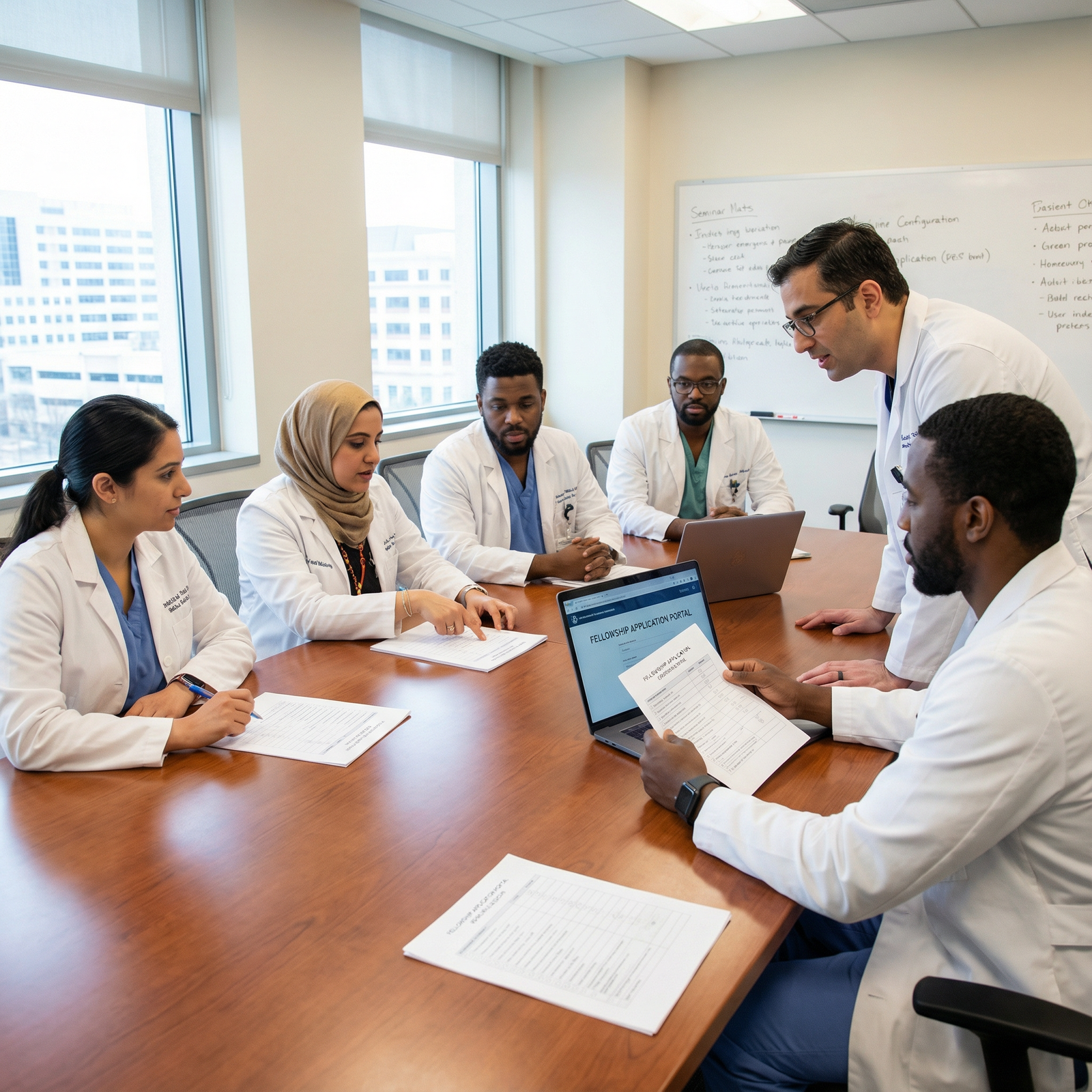
Understanding the Fellowship Landscape as a US Citizen IMG in Pediatrics
For a US citizen IMG (American studying abroad), pediatrics fellowship preparation starts earlier and needs to be more intentional than for many US-MD graduates. You are competing not only for a pediatrics residency and peds match, but also for highly selective subspecialty spots later on—often in the same programs that are still learning how to interpret your international background.
The good news: pediatrics is historically IMG-friendlier than many adult specialties, and numerous pediatric fellowship programs have a long track record of supporting trainees who trained abroad. However, the margin for error is smaller for a US citizen IMG, and late planning can close doors before you realize they were there.
This guide focuses on:
- How to prepare for fellowship starting before and during residency
- Which steps matter most for competitive pediatric subspecialties
- How to strategically build a CV and relationships
- Practical guidance on the fellowship application timeline and interviews
- Special considerations for US citizen IMGs and Americans studying abroad
Throughout, assume you are completing or planning to complete pediatrics residency in the US (categorical program), and are interested in a fellowship such as:
- Pediatric cardiology
- Pediatric critical care
- Neonatology
- Pediatric hematology/oncology
- Pediatric gastroenterology
- Pediatric emergency medicine
- Child abuse pediatrics, adolescent medicine, etc.
The same principles apply broadly across pediatric subspecialties; only some details shift (e.g., competitiveness, research intensity).
Big-Picture Strategy: When and How to Start Preparing
Think in “Phases” Rather Than Single Decisions
Fellowship preparation for a US citizen IMG in pediatrics is best viewed in three phases:
Pre-residency / Early Residency (MS4 / PGY-1)
- Clarify subspecialty interests (at least in broad strokes)
- Understand which fellowships are most IMG-friendly
- Start building academic and clinical credibility in the US setting
Middle Residency (PGY-2)
- Deep dive into your target field: electives, mentors, research
- Start serious work on the CV that programs will review
- Define your strategy: academic vs community, competitive vs moderate programs
Fellowship Application Year (PGY-3 for most programs)
- Execute application: ERAS, letters, personal statement
- Interview strategically, refine your rank list
- Think ahead to preparing for fellowship itself: skills, logistics, and longer-term goals
Unique Considerations for US Citizen IMGs
As an American studying abroad, programs will ask (explicitly or implicitly):
- Can you function at or above the level of US-trained peers?
- Do you understand the US healthcare system, guidelines, and workflows?
- Are you committed to pediatrics and to your chosen subspecialty for the long term?
- Why did you go abroad, and what have you done since to maximize your training?
This means your portfolio for fellowship must address both:
- The standard fellowship expectations (clinical excellence, scholarship, professionalism)
- The additional “confidence gap” that some programs may have about international grads
You close that gap through:
- Strong US-based clinical performance and letters
- Visible engagement in scholarly work (research, QI, teaching)
- Clear, mature narrative in your personal statement and interviews

Building a Fellowship-Ready Profile During Pediatric Residency
1. Clinical Performance: The Non-negotiable Foundation
No amount of research or networking will rescue a weak clinical record. For fellowship selection committees, first impressions come from:
- In-training exam scores (ITE)
- Rotation evaluations (especially in core PICU, NICU, inpatient, and subspecialty rotations)
- Program director’s letter (MSPE-like summary for fellowship)
Actionable advice:
- PGY-1: Focus primarily on being an excellent intern. Show reliability, work ethic, and teachability.
- Be on time, respond quickly to pages, close the loop on tasks.
- Ask for specific feedback: “What is one thing I could do differently on rounds tomorrow?”
- Track your trends: If early evaluations are weaker (very common for IMGs adjusting to the system), show clear improvement by mid-PGY-2.
Red flag to avoid: Repeated concerns about communication, professionalism, or medical knowledge can seriously harm fellowship prospects. Address them early with your chief residents and PD.
2. Choosing a Subspecialty: Explore, Then Commit
You don’t need to decide on day one, but you do need to commit early enough to build a credible story.
Typical decision windows:
- Highly competitive fellowships (cardiology, heme/onc, critical care, GI):
Try to narrow down by mid-PGY-1 to early PGY-2. - Moderately competitive (neonatology, infectious disease, endocrinology, nephrology, etc.):
Decide by mid-PGY-2.
Use these strategies to explore:
- Early elective rotations in your top 2–3 areas
- Ask fellows and attendings:
- “What do you like least about this field?”
- “How does this subspecialty change your lifestyle and schedule?”
- Attend the division’s conferences or journal clubs as a visitor
As a US citizen IMG, conveying realistic insight into your chosen field (not just idealized interest) helps programs trust that you understand what you are committing to.
3. Research and Scholarship: How Much Do You Need?
For many pediatric fellowships, especially academic programs, research is a major filter. This is particularly true in:
- Cardiology
- Hematology/oncology
- Critical care
- GI
- Neonatology (in academic centers)
If your background as an American studying abroad includes little or no research, you will need to prioritize this in residency.
Levels of scholarship (from basic to strong):
Basic (may be enough for less competitive fellowships/community programs)
- QI project with poster at a local or regional meeting
- Case report or small chart review with a local presentation
Moderate (typical for many successful candidates)
- Multi-author abstract at a national meeting (e.g., PAS, AAP specialty sections)
- One or more manuscripts submitted or accepted (not necessarily first-author)
Strong (for top-tier academic programs and highly competitive fields)
- Multiple abstracts, at least one first-author
- Peer-reviewed publications, ideally in your chosen subspecialty
- Visible engagement: research committee work, methods training, or an MPH/MSc
Action steps:
PGY-1:
- Signal interest: “I’m a US citizen IMG interested in a future pediatrics fellowship, and I need to build research experience. Are there ongoing projects I could join?”
- Don’t wait for the “perfect project”; say yes to something feasible that can result in a poster or abstract within a year.
PGY-2:
- Shift toward a subspecialty-aligned project.
- Aim for at least one abstract submission at a national meeting before application season (e.g., PAS, AAP).
- Build a relationship with a subspecialty mentor who understands your fellowship goals.
PGY-3:
- Keep projects moving but do not let them jeopardize clinical performance or interview prep.
- Update your ERAS application when new abstracts or publications are accepted.
If your residency program has limited research infrastructure (common in smaller community hospitals), consider:
- Collaborating with academic centers through multi-site QI or registry studies
- Remote mentorship (e.g., through prior med school contacts or national AAP sections)
- Choosing a fellowship field that places relatively less emphasis on publications, if research is not your strength
4. Letters of Recommendation: Who and How to Ask
For pediatric fellowship, you typically need:
- 3 letters minimum, often 3–4 preferred
- One letter is usually from your program director
- Others should be from subspecialists in your target field and at least one strong general pediatrician
Ideal letter set for, say, pediatric cardiology:
- Program Director (global assessment)
- Division chief or senior cardiologist you’ve worked closely with
- Another cardiology attending or research mentor
- Optional: PICU or NICU attending if relevant to your field
For a US citizen IMG, these letters should:
- Explicitly address any initial adjustment period and emphasize your growth trajectory
- Compare you favorably to US grads at the same level: “She functions at or above the level of our US-trained residents.”
How to get strong letters:
- Ask early (3–6 months before ERAS opens):
“Would you feel comfortable writing me a strong letter of recommendation for pediatric GI fellowship?” - Provide:
- Updated CV
- Personal statement draft or bullet points about your story (especially your path as an American studying abroad)
- Brief summary of cases/research you worked on together
The Fellowship Application Timeline: Planning Backwards
Understanding the fellowship application timeline is central to know how to get fellowship efficiently and avoid last-minute chaos.
General ERAS/NRMP Timeline for Pediatric Fellowships
While specific dates vary slightly year to year, this is a typical schedule for application during PGY-3 (for 3-year categorical residencies):
January–March (PGY-2)
- Clarify your fellowship target.
- Start serious CV polishing and project completion.
- Review prior years’ ERAS fellowship timeline on NRMP/ERAS websites.
April–June (late PGY-2 / early PGY-3)
- Begin drafting personal statement.
- Ask for letters of recommendation.
- Meet with PD to confirm your plan and target programs.
July–August (PGY-3)
- ERAS applications open and are submitted.
- Programs begin reviewing applications and sending interview invitations.
September–November
- Majority of fellowship interviews occur (often virtual).
- Continue to attend conferences, show interest, and respond quickly to communication.
November–December
- Rank lists certified (for specialties using the Match).
- NRMP releases fellowship match results (dates vary by subspecialty).
Post-match (PGY-3)
- Contract finalization, onboarding forms, possible second-look visits.
- Begin planning logistics: relocation, visas for non-citizen spouses, childcare, etc.
Because you are a US citizen IMG, your visa status is usually simpler (no J-1/H-1B for yourself), but consider:
- Will your spouse/partner need a visa?
- Are you planning academic careers that might require further visas for international research?
- Are you aiming for programs that assume J-1 for fellowship but you are not on a visa? Clarify early.

Crafting a Compelling Fellowship Application as a US Citizen IMG
1. Telling Your Story: Personal Statement and Narrative
Your personal statement should do more than declare interest; it must tie together:
- Why pediatrics
- Why this particular subspecialty
- Why you, as a US citizen IMG, chose the path you did
- What you bring that enriches the program
Key elements for an American studying abroad:
- Briefly, clearly explain your training pathway without defensiveness:
- “As a US citizen who completed medical school in [Country], I gained extensive exposure to [global health/resource-limited pediatrics/unique population] that continues to inform my approach in the US setting.”
- Focus on growth and integration into US training:
- “During residency, I prioritized mastering ACGME core competencies and adapting to US healthcare structures, which is reflected in my steadily improving evaluations and leadership roles.”
- Connect international perspective to your subspecialty:
- For example, neonatology: your understanding of global neonatal mortality and follow-up challenges
- Cardiology: exposure to late-presenting congenital heart disease or rheumatic disease
Pitfalls to avoid:
- Over-explaining or apologizing for being an IMG
- Making the statement a CV recap
- Generic language without concrete examples
Use 1–2 focused clinical vignettes to:
- Demonstrate your thought process
- Show traits like resilience, teamwork, attention to detail, and empathy
2. ERAS Application Details That Matter
For fellowship, committees scan quickly for:
- Program reputation and type: Academic vs community, size, exposure to subspecialty
- USMLE scores and ITE (mostly to ensure you can sit for boards)
- Research output aligned with fellowship interest
- Leadership and teaching roles
- Red flags (gaps, failures, unexplained transfers)
As a US citizen IMG, bolster your application with:
Evidence of teaching: residents often underestimate this, but fellowship programs value future educators:
- Morning report leadership
- Student teaching awards
- Peer teaching sessions
Quality of work experiences: if you worked as a research coordinator, chief resident, or in a QI role, spell out what you actually did and what outcomes resulted.
3. Program List Strategy: Where to Apply
Your program list should reflect both aspiration and realism. For most US citizen IMG pediatric residents:
- Aim for a wide range geographically and in competitiveness, especially for highly competitive subspecialties.
- Include:
- Several “reach” programs at big academic centers
- A core group of realistic programs similar to or slightly above your residency’s academic profile
- A few “safety” programs (smaller, newer, or in less-desired locations)
Research IMG-friendliness by:
- Reviewing past fellow lists on program websites to see if IMGs are represented
- Asking current fellows: “Do your faculty consider applications from US citizen IMGs?”
- Talking with your PD, APD, or subspecialty mentors about your competitiveness
Remember: in pediatrics, geographic flexibility significantly improves chances. If you strongly restrict yourself to one city or region, be ready to strengthen the rest of your profile.
4. Interviews: Communicating Confidence and Fit
Interviews are your chance to:
- Confirm that your clinical, research, and personal profile fits the program’s needs
- Address unspoken questions about your IMG background
- Demonstrate readiness for the next level of training
Common questions US citizen IMGs should be ready for:
- “Tell me about your path—how did you end up going to medical school abroad?”
- “What adjustments did you have to make moving into US pediatric residency?”
- “Where do you see yourself in 5–10 years? Academic vs community vs hybrid?”
- “What aspect of this subspecialty do you find most challenging, and how are you preparing for it?”
Use these to demonstrate:
- Insight: you understand your strengths and limits
- Maturity: you can discuss your IMG status confidently, not defensively
- Commitment: you have thought through how this fellowship fits into preparing for fellowship and beyond—including possible later faculty jobs or advanced training
Preparing for Fellowship and Beyond: From Match to Day One
Once you secure a position in the peds match for fellowship (or through non-match subspecialties), your preparation phase shifts from “how to get fellowship” to “how to succeed in fellowship.”
Clinical Skill Gaps to Address Before Starting
Identify gaps during late residency:
For neonatology or critical care:
- Strengthen procedural exposure (intubations, lines)
- Review mechanical ventilation, hemodynamics, and acid–base physiology
For cardiology:
- Basics of EKG interpretation and congenital heart lesion physiology
- Exposure to echocardiography principles if possible
For heme/onc:
- Fundamentals of chemotherapy protocols
- Supportive care: transfusions, infection management, transfusion reactions
Ask your future fellowship PD or mentor:
- “What would you recommend I review or practice in the months before starting?”
- “Are there recommended reading lists or online modules?”
Professional and Academic Preparation
If you plan to pursue an academic career or future leadership roles:
- Clarify whether you’ll need or want additional training (MPH, MSc, research fellowship, educator tracks).
- Use late residency to:
- Complete any ongoing manuscripts
- Identify future mentors at your fellowship institution
- Join relevant professional societies (e.g., AAP sections, PAS-affiliated groups)
Understanding the fellowship application timeline for subsequent steps (e.g., advanced fellowships, junior faculty jobs) early will help you avoid burnout and rushed decisions.
Life Logistics and Wellness
As an American studying abroad who’s already relocated once, you know the personal cost of transitions. Don’t underestimate:
- Housing and cost of living changes
- Partner’s job or training situation
- Childcare and school continuity if you have children
- Support systems (family, friends, community, religious institutions)
Plan these early to reduce cognitive load while you’re adjusting to high-acuity fellowship environments.
FAQs: Fellowship Preparation for US Citizen IMGs in Pediatrics
1. As a US citizen IMG in pediatrics, do I need significantly more research than US grads to match into fellowship?
Not automatically, but you often need to be at least as strong on paper to offset any bias or uncertainty about your training background. For highly competitive fields (cardiology, heme/onc, critical care, GI), having at least moderate research (abstracts, a manuscript or two) is advisable. Strong clinical letters can compensate somewhat, but if your application lacks both research and strong letters, your IMG status will amplify those weaknesses.
2. How early should I start thinking about fellowship during residency?
By mid-PGY-1, start exploring fields; by early–mid PGY-2, you should be seriously narrowing to one subspecialty and aligning your electives and projects. For very competitive fellowships, assume you need at least 12–18 months of visible engagement (electives, research, mentorship) before applying in PGY-3.
3. Are there pediatric fellowships that are more IMG-friendly than others?
In general, pediatrics is more IMG-inclusive than many adult specialties, but IMG-friendliness varies by program and subspecialty. Fields like pediatric endocrinology, nephrology, infectious disease, and some community-based neonatology or hospitalist fellowships may be more approachable than heme/onc, cardiology, or critical care at top-tier academic centers. Investigate each program’s current and past fellows—if IMGs are represented, especially US citizen IMGs, your chances are better.
4. What if I’m undecided about fellowship vs general pediatrics? Will that hurt me as a US citizen IMG?
Uncertainty early in residency is normal and does not hurt you. However, if you remain undecided too late (past mid-PGY-2), you may not build enough of a track record for competitive fellowships. One strategy is to prepare as if you might apply—engage in at least one project, collect strong letters, and keep options open. If you ultimately decide on general pediatrics or hospitalist work, that preparation will still strengthen your job prospects and academic opportunities.
By approaching fellowship preparation as a longitudinal process—from your earliest days as a pediatrics resident through the peds match and into the early months of fellowship—you, as a US citizen IMG and American studying abroad, can transform a potentially perceived disadvantage into a compelling, distinctive strength in the pediatric subspecialty workforce.