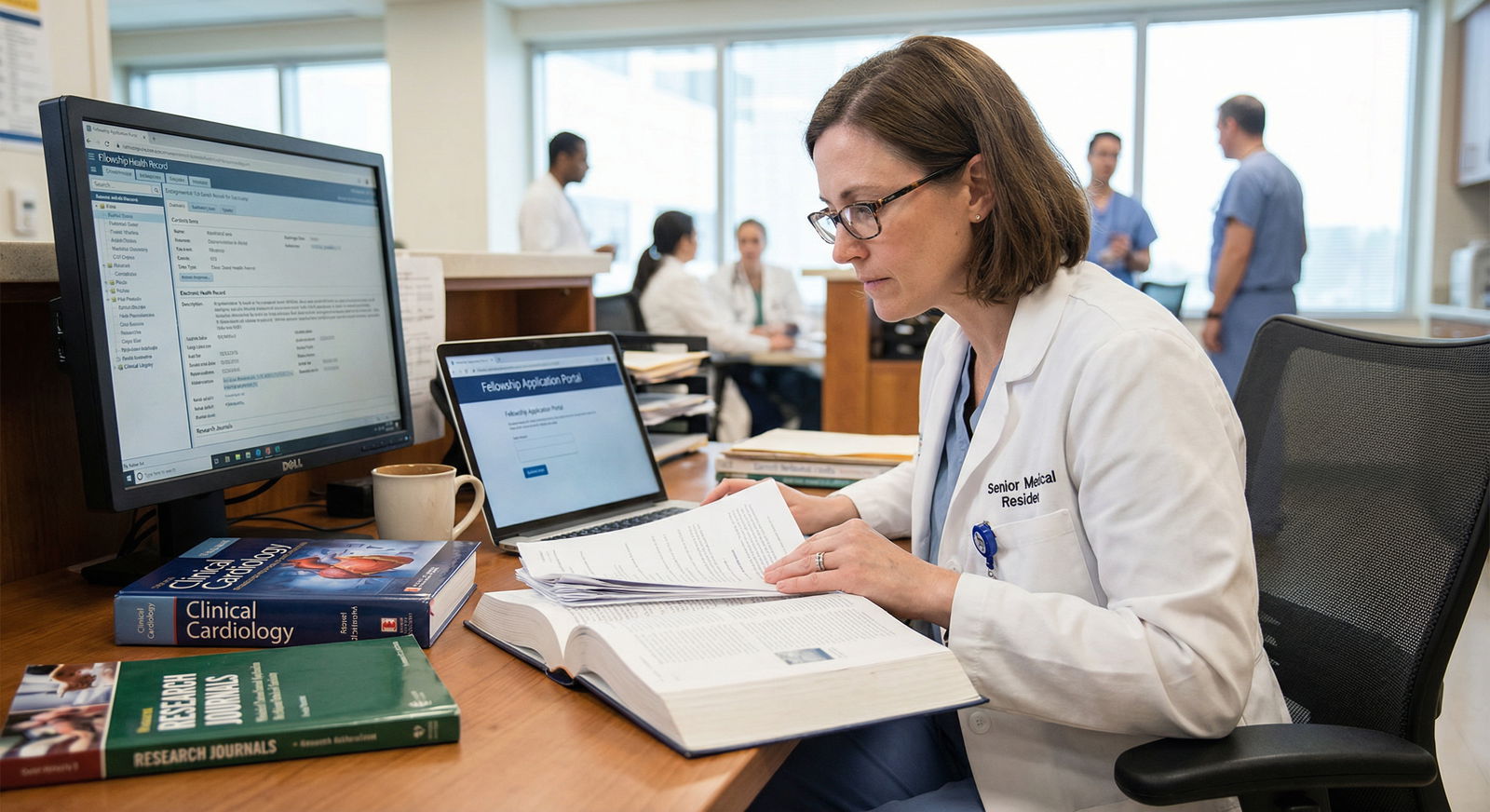
From Resident to Fellow: Advanced Strategies to Elevate Your Fellowship Application
Transitioning from medical residency to fellowship is one of the most defining steps in your career. The move from broad training to focused subspecialization shapes your future practice, opens academic and leadership doors, and often determines your clinical niche for decades.
Yet fellowship applications are increasingly competitive across many medical specialties. Securing your ideal position requires far more than solid clinical evaluations and a polished CV—it demands intentional planning, strategic networking, and a clear narrative about who you are as a future subspecialist.
This enhanced guide walks you through practical, high-yield strategies to strengthen every component of your fellowship applications, from early preparation in residency to interview day.
Understanding the Fellowship Landscape and Planning Early
Clarify Your Career Goals and Subspecialty Fit
Before you dive into specific programs, step back and clarify what you want your future to look like:
- Clinical focus: Do you want to be primarily a clinician, a proceduralist, or a clinician-researcher?
- Practice setting: Academic center, community hospital, hybrid model, or private practice?
- Population and disease focus: For example, interventional cardiology vs. heart failure, inflammatory bowel disease vs. therapeutic endoscopy, pediatric vs. adult subspecialties.
- Lifestyle and geography: Call burden, work–life balance, cost of living, proximity to family or support systems.
Write down your answers; they will guide which fellowship programs and tracks you target and help you articulate a coherent career vision in your personal statement and interviews.
Research Fellowship Programs Strategically
Once you have a sense of your career direction, start researching programs systematically. Aim to begin this process at least 12–18 months before your planned fellowship start date (often during PGY-2 for three-year residencies, or earlier for highly competitive fields).
Key elements to evaluate for each program:
Institutional culture and mission
- Are they known for being resident- and fellow-friendly?
- Is there a reputation for strong mentorship or, conversely, for overwork and limited support?
- Do they emphasize education, research, or service?
Clinical exposure and case mix
- What are the flagship strengths? (e.g., transplant, advanced imaging, inflammatory disease, complex ICU care)
- Are there enough procedural opportunities if your subspecialty is procedure-heavy?
- Do fellows graduate with sufficient autonomy and confidence?
Faculty and mentorship opportunities
- Do faculty research and clinical interests match yours?
- Are there established leaders in your subspecialty of interest?
- Are there structured mentoring programs for fellows?
Educational structure
- Balance of inpatient vs outpatient rotations
- Didactics, journal clubs, and conference schedules
- Opportunities for teaching residents and medical students
Scholarly track record
- Publications, grants, or quality improvement (QI) initiatives produced by recent fellows
- Fellow participation in national meetings
- Support for research time or advanced degrees (e.g., MPH, MS, PhD)
Career outcomes of graduates
- Fellowship alumni career paths: academic appointments, community roles, leadership positions
- Geographic dispersion—do graduates stay local or match across the country?
Create a simple spreadsheet (program name, location, strengths, concerns, competitiveness, contacts) to compare options and track your impressions.
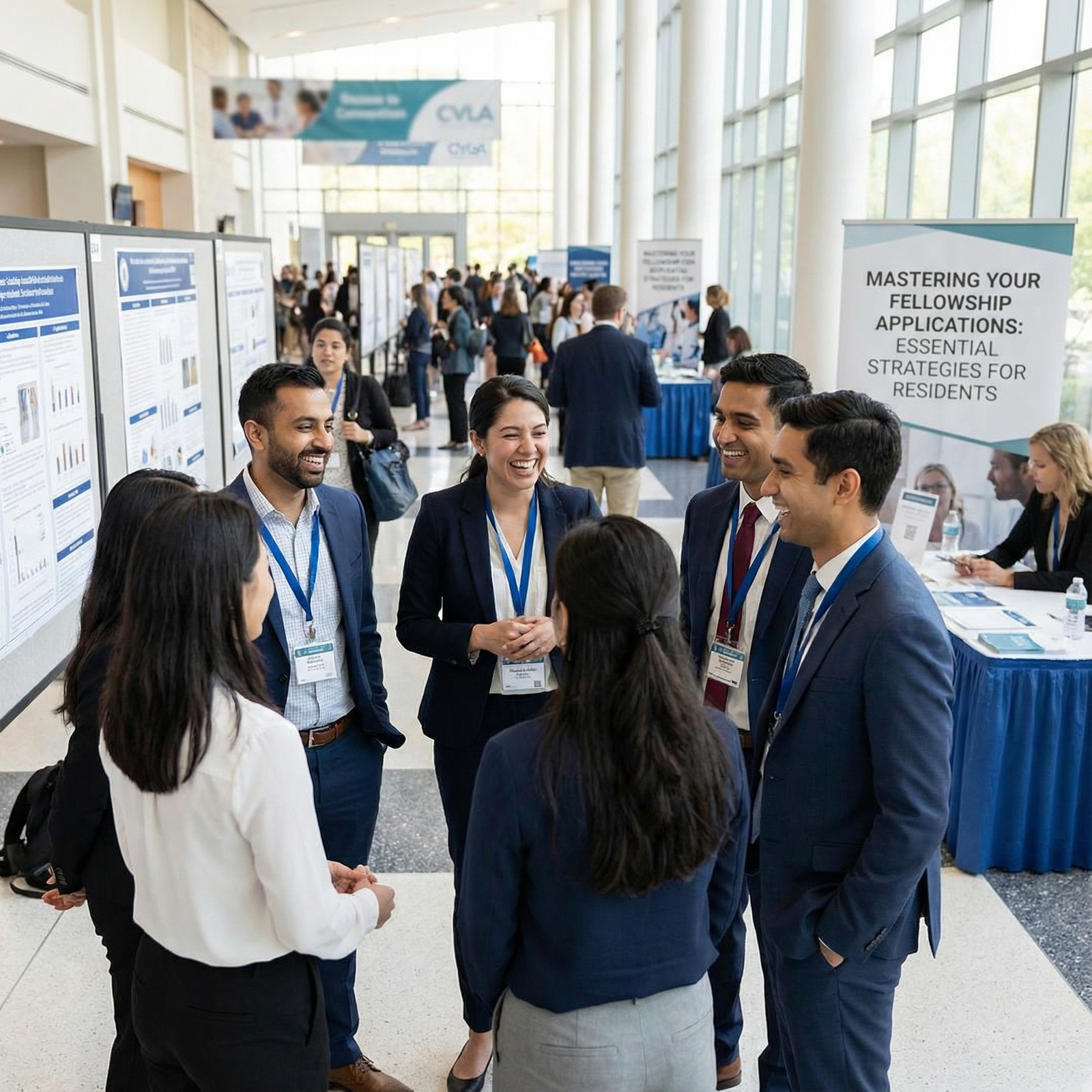
Leverage Fellowship Fairs, Conferences, and Virtual Events
Attending subspecialty conferences and fellowship fairs is one of the most efficient application strategies to learn about programs and begin meaningful networking:
National and regional meetings (e.g., ACC, ACG, ATS, ASN, ASH, AAOS, ENDO, etc.) often host:
- Fellowship fairs with program booths
- Resident-focused sessions on fellowship applications
- Networking events and mentorship “speed dating”
Virtual open houses and town halls
- Many programs now host online informational sessions
- Prepare a few thoughtful questions (away rotations, research support, fellow autonomy, wellness initiatives)
- Turn on your camera, introduce yourself concisely, and follow up with an email if appropriate
Take notes after each interaction—comments from fellows, impressions of faculty, and any “green flags” or “red flags” for program culture.
Building a Truly Competitive Fellowship Application
1. Maximize Clinical Excellence and Thoughtful Rotation Choices
Clinical performance remains the foundation of strong fellowship applications.
Aim for Consistently Strong Evaluations
- Prioritize reliability: show up prepared, follow through on tasks, and communicate clearly.
- Ask for mid-rotation feedback and act on it.
- Take initiative on rounds: anticipate next steps, volunteer for procedures when appropriate, and contribute constructively to discussions.
Be Strategic With Electives
Use your electives to build a focused narrative:
- Subspecialty electives in your chosen field
- Example: A resident interested in advanced heart failure might choose electives in CCU, transplant cardiology, and cardiac imaging.
- Complementary rotations
- For GI: radiology or hepatology
- For pulm/crit: anesthesia or palliative care
- For heme/onc: pathology or blood bank
Signal your interest early to your program leadership so you can secure key rotations with potential letter writers.
2. Develop a Meaningful Research and Scholarship Profile
In many medical specialties, scholarship is a key differentiator in fellowship applications. That does not mean you need an R01-level portfolio, but you should show evidence of curiosity, initiative, and follow-through.
Choose Projects That Align With Your Story
Instead of saying yes to every opportunity, be selective:
- Align projects with your subspecialty interest and career goals.
- Prioritize projects that are:
- Feasible within your time frame
- Supervised by reliable mentors
- Likely to result in a concrete product (poster, abstract, manuscript, QI initiative)
Examples:
- A future rheumatology fellow leading a QI project on improving lupus flare recognition on inpatient services
- A future pulm/crit fellow analyzing outcomes of ARDS patients in your ICU
- A future GI fellow contributing to a database study on outcomes of therapeutic ERCPs
Diversify Types of Scholarly Work
Aim for a mix when possible:
- Original research (retrospective chart reviews, database studies, prospective trials)
- Case reports or series (shorter timeline; good for early exposure)
- Quality improvement projects
- Review articles or book chapters
- Educational projects (curriculum design, simulation, resident teaching innovations)
Present your work at local, regional, and national meetings—this boosts your CV and creates organic networking opportunities with future colleagues and mentors.
Be Organized and Proactive
- Keep a running list of all projects: your role, mentor, status, and target journal or conference.
- Set recurring check-ins with mentors.
- Learn the basics of poster and abstract preparation; ask seniors for examples that led to publication.
Even if not every project results in a publication, your ability to describe what you learned—and how it shaped your career interests—matters in interviews.
3. Secure Strong, Specific Letters of Recommendation
Letters of recommendation can make or break fellowship applications, especially in competitive subspecialties.
Choose Recommenders Strategically
Ideal letter writers typically include:
- Subspecialty faculty who know you well clinically and/or through research
- A program director or associate program director who can speak to your overall performance and professionalism
- A research mentor if scholarship is a core part of your application
Consider:
- Who has seen you manage complex patients or handle high-stress situations?
- Who can comment on growth over time, resilience, and teamwork?
- Who has name recognition or networking connections in the subspecialty?
Make It Easy for Them to Write a Powerful Letter
When you request a letter:
- Ask, “Do you feel you can write a strong letter of recommendation for my fellowship applications?”
- Provide:
- Updated CV
- Draft personal statement or career goals paragraph
- A brief summary of your work together (key patients, projects, rotations)
- List of programs and deadlines
- Gently remind your letter writers 2–3 weeks before deadlines, and again one week prior if needed—always with appreciation and respect.
4. Craft a Clear, Compelling Personal Statement
Your personal statement is not a literary exercise; it is a professional narrative explaining who you are as a clinician and why you are pursuing this subspecialty.
Goals of a Strong Fellowship Personal Statement
- Explain your motivation for the field with specificity
- Connect your experiences (clinical, research, leadership) into a coherent story
- Articulate your career vision (academic vs community, clinical niche, research interests)
- Demonstrate program fit and what you will bring to their team
Structural Blueprint
- Opening paragraph
- A concise clinical moment or theme that authentically illustrates your connection to the specialty (avoid overly dramatized stories).
- Body paragraphs
- Clinical experiences that solidified your interest
- Research or scholarly work and what you learned
- Teaching, leadership, or QI contributions related to the field
- Program fit and future goals
- The type of training you’re seeking
- How this subspecialty aligns with your 5–10 year plan
- Closing paragraph
- Confident, forward-looking statement about how fellowship will help you grow and what you offer as a future fellow.
Have multiple people review your statement—ideally a mentor in the field and someone with strong writing skills. Ask them if the statement sounds like you and clearly communicates your path.
5. Use Networking Intentionally and Professionally
Networking is not about impressing people with your achievements—it’s about building genuine, professional relationships that support mutual goals.
Everyday Networking in Your Residency
- On subspecialty rotations:
- Show up prepared, read about your patients, and ask thoughtful questions.
- Express your interest in the field explicitly: “I’m planning to apply for GI next cycle and would love your advice on preparing.”
- At conferences and grand rounds:
- Ask one or two questions during Q&A when appropriate.
- Introduce yourself briefly to speakers or visiting professors afterward.
- Through professional societies:
- Join relevant subspecialty organizations as a resident member.
- Sign up for mentorship programs or early-career committees.
Maintaining and Leveraging Connections
- Keep a simple contact list of mentors and faculty you connect with.
- Send brief updates about major milestones (poster acceptance, paper publication, application season).
- When reaching out to program leadership or faculty at other institutions:
- Keep emails concise, respectful, and specific.
- Clearly state who you are, your current residency, and why you’re reaching out.
Thoughtful networking often leads to better letters, research collaborations, and informal advocacy during fellowship selection.
Preparing for Fellowship Interviews and Navigating the Match

Once your fellowship applications are submitted, your focus shifts to interviews and final program ranking.
Anticipate Common Fellowship Interview Themes
Most interviews will explore similar domains:
Why this subspecialty?
- Be specific: What aspects of the field sustain your interest long term?
- Tie your answer to concrete experiences and mentors.
Why this program?
- Reference program-specific strengths: unique clinics, research areas, or clinical volume.
- Show you’ve done your homework and can see yourself there.
Clinical and ethical scenarios
- Be ready to discuss challenging cases, conflict with team members, or errors and what you learned.
Research and scholarship
- Know your projects in detail: rationale, methods, limitations, and potential next steps.
Career goals
- Have a realistic 5–10 year plan (it can be flexible, but not vague).
- Be honest about academic vs community interests.
Prepare brief, 1–2 minute responses to common questions, but avoid sounding rehearsed.
Practice With Mock Interviews
Schedule at least a few mock interviews with:
- Your program director or associate program director
- Subspecialty faculty in your field of interest
- Co-residents or recent fellows
Ask for focused feedback on:
- Clarity and concision of your answers
- Professionalism and communication style
- How well your answers align with your written application
For virtual interviews, also test:
- Camera positioning, lighting, and audio quality
- Background (aim for quiet, neutral, and uncluttered)
- Internet stability and a backup plan (hotspot, phone as backup device)
Showcase Professionalism and Fit on Interview Day
During interviews:
- Be on time (or a few minutes early).
- Dress professionally (even for virtual interviews).
- Engage with everyone you meet—fellows, coordinators, faculty—everyone’s feedback may be considered.
- Ask thoughtful questions that show depth, not just logistics (e.g., “How do fellows here typically find their niche within the subspecialty?”).
Take notes after each interview day about:
- Your gut feeling about program culture
- Interactions with fellows—did they seem supported and satisfied?
- How well the training aligns with your career goals
Strategizing Your Rank List
When it’s time to rank programs, resist the urge to prioritize name recognition alone. Instead, weigh:
- Training quality and case exposure
- Mentorship and research opportunities
- Fellow well-being and culture
- Geographic and personal considerations
- Alignment with your long-term goals
Rank programs in true order of preference, trusting the match algorithm. Avoid over- or under-ranking programs based on rumors or perceived competitiveness alone.
Frequently Asked Questions About Fellowship Applications
1. When should I realistically start preparing for fellowship applications?
Ideally, begin serious preparation 12–18 months before you would start fellowship:
- PGY-1/early PGY-2: Explore subspecialty interests, join relevant societies, and observe role models.
- Mid-PGY-2: Commit to a subspecialty, secure research/QI projects, plan key electives.
- Late PGY-2 / early PGY-3: Finalize project outputs, identify letter writers, draft personal statement, and research programs.
Competitive fellowships (e.g., cardiology, GI, hematology/oncology, certain surgical subspecialties) often require even earlier planning to build a strong record of scholarship and mentorship.
2. How important is research for fellowship applications across different medical specialties?
The importance of research varies by field and by program:
Highly research-oriented specialties or academic programs
- Strong expectation of research experience, preferably in your chosen subspecialty.
- Publications and national presentations can significantly strengthen your application.
Clinically focused programs or community-based fellowships
- Less emphasis on extensive research; QI projects, case reports, and local presentations can still show initiative and curiosity.
Across the board, what matters most is your ability to follow through, think critically about patient care or systems issues, and communicate what you learned.
3. Is it better to apply broadly or focus on a smaller number of programs?
Most applicants benefit from a broad but thoughtful application strategy:
- Apply to a range of programs that fit your goals, including a mix of “reach,” “target,” and “safety” options.
- Ensure that each program on your list is one you would genuinely consider attending.
- Tailor your communications and interview preparation to each program; even with a broad list, avoid a generic approach.
Your residency advisors and mentors can help you gauge how competitive your application is and how broad your application list should be.
4. Can strong networking or “connections” compensate for a weaker application?
Networking and professional relationships can:
- Help programs understand your true strengths beyond metrics
- Enhance the credibility and context of your application
- Lead to more nuanced letters of recommendation
However, connections cannot fully compensate for significant deficits in clinical performance, professionalism, or major application gaps. Focus first on building a solid foundation—clinical excellence, professionalism, and honest self-improvement—then use networking to highlight your growth and fit.
5. What if I don’t match into fellowship on my first attempt?
Not matching is difficult, but it is not the end of your journey:
- Meet early with your program leadership and mentors
- Conduct an honest, data-driven review of your application’s strengths and weaknesses.
- Address gaps
- Options might include an additional chief resident year, a hospitalist or instructor position with research time, or a dedicated research fellowship.
- Strengthen specific areas
- Complete and publish projects, gain additional subspecialty exposure, and obtain updated letters that reflect your growth.
- Re-apply with a clearer narrative
- Explain succinctly what has changed since your last application and why you are now stronger and more prepared.
Many outstanding subspecialists matched on their second attempt; persistence, reflection, and sustained performance matter.
By approaching fellowship applications as a multi-year process—rather than a last-minute task—you can build a cohesive, compelling profile that reflects your strengths, values, and future aspirations.
Intentional planning, authentic networking, and a clear narrative about your path from resident to fellow will significantly improve your chances of matching into a fellowship that truly fits your goals and helps you thrive in the next phase of your medical career.