Understanding the Fellowship Landscape in PM&R as an IMG
For an international medical graduate in Physical Medicine & Rehabilitation, fellowship planning starts far earlier than most people realize. Whether you are targeting Pain Medicine, Brain Injury, Sports Medicine, Spinal Cord Injury, Pediatric Rehabilitation, Neuromuscular Medicine, Cancer Rehabilitation, or Interventional Spine, your strategy must be tailored to your IMG status, visa needs, and residency program context.
This IMG residency guide focuses on fellowship preparation for PM&R residents, especially those who trained abroad and are now in US residency programs. You will learn how to:
- Map out the fellowship application timeline
- Build a strong academic and clinical profile
- Strategically network and find mentors
- Navigate visa and program eligibility considerations
- Optimize your chances in competitive fellowships and continue preparing for fellowship during residency
Throughout, the emphasis is: realistic, stepwise planning and practical tactics that IMGs can implement even in busy residency schedules.
1. Start with Strategy: Clarifying Your Fellowship Goals
Before you ask “how to get fellowship,” you must answer: Why this fellowship, and where do I want it to take me? As an IMG, your margin for error is smaller; a clear long-term plan helps you make every rotation, project, and connection count.
1.1 Understand the Major PM&R Fellowship Pathways
Common PM&R fellowships in North America include:
- Pain Medicine (ACGME) – Often multi-departmental (Anesthesia, PM&R, Neurology). Heavy on interventional procedures and longitudinal pain management.
- Brain Injury Medicine (BIM) – Focused on TBI, disorders of consciousness, neurorehabilitation.
- Spinal Cord Injury (SCI) – Management of acute and chronic SCI, spasticity, neurogenic bowel/bladder, pressure injuries.
- Sports Medicine – Often family medicine, PM&R, or emergency medicine-based; includes MSK ultrasound, sports coverage, injections.
- Pediatric Rehabilitation – CP, pediatric brain injury, congenital conditions, spasticity management, multidisciplinary care.
- Neuromuscular Medicine – EMG/NCS, neuromuscular disorders, clinic-based and procedure-based care.
- Cancer Rehabilitation – Functional restoration in oncology patients, pain, lymphedema, fatigue, neuropathy.
- Interventional Spine / Non-ACGME MSK – Procedures, fluoroscopy, ultrasound-guided interventions; vary widely by institution.
Each niche has different expectations for research, procedural skill, and prior exposure. As an international medical graduate, you must show sustained focus on your chosen area starting early in residency.
1.2 Self-Assessment: Where Do You Stand Now?
At the beginning of PGY-2 (or even earlier), take stock:
- Clinical strengths and gaps
- Have you had robust exposure to neurorehab, MSK, pain, pediatrics, or SCI?
- Are there areas you feel underprepared in compared to US grads?
- Academic currency
- Any US-based research? Publications? Posters?
- Any PM&R-specific scholarly work?
- Networking / mentor status
- Do you have at least one faculty mentor in your desired fellowship area?
- Are there program alumni who matched into that fellowship type?
- Visa and eligibility
- Are you on J-1 or H-1B? Are there fellowship types that historically accept more IMGs with your visa?
Use this self-assessment to shape your individual development plan for residency years.
1.3 Choosing a Focus Early (and Why It Matters More for IMGs)
US graduates sometimes keep options open longer; IMGs often cannot. Program directors want evidence that you are not applying “by default” but have built a coherent narrative.
Example:
- IMG A: “I think I might do Pain or Sports, not sure yet.”
- IMG B: “I started working with our Pain division in PGY-2, completed QI on opioid prescribing, presented at AAPM&R on ultrasound-guided procedures, and I’m leading a chart review on post-laminectomy pain.”
IMG B is exponentially more competitive—same credentials, better focus.
You don’t have to lock in a subspecialty in month one, but by the end of PGY-2, you should have:
- A primary target (e.g., Pain Medicine or Neurorehab)
- A secondary back-up pathway (e.g., Interventional Spine or General Neurorehab jobs if fellowship doesn’t work out)
2. The Fellowship Application Timeline: Year-by-Year Roadmap
Understanding the fellowship application timeline is vital for IMG planning. Timelines vary by subspecialty and whether the fellowship uses ERAS/NRMP or an independent process, but there are general patterns.
2.1 PGY-1 (Prelim Year) / Early PGY-2: Foundation and Orientation
Goals: Exposure, orientation, and groundwork.
Key actions:
- Clarify long-term interests
- Use electives (if available) to sample PM&R areas: neuro, MSK, EMG, pain.
- Start networking with PM&R faculty even if you are rotating off-service.
- Ensure your USMLE scores, ECFMG status, and documentation are fully in order; some pain and sports programs screen by Step scores.
- Attend at least one local or national PM&R conference if feasible, even as a PGY-1, to see what fellowship-trained physiatrists actually do.
2.2 PGY-2: Strategic Positioning and Early Scholarly Work
Goals: Identify a focus and start building a track record.
During PGY-2:
- Pick your target fellowship by mid-year if possible.
- Seek a primary mentor in that area.
- Join research or QI projects:
- Even a small retrospective study, case series, or educational project is valuable.
- IMGs often start behind in research; early involvement allows time to complete projects before applying.
- Volunteer for presentations at journal club, grand rounds, or resident teaching sessions, especially in your chosen area.
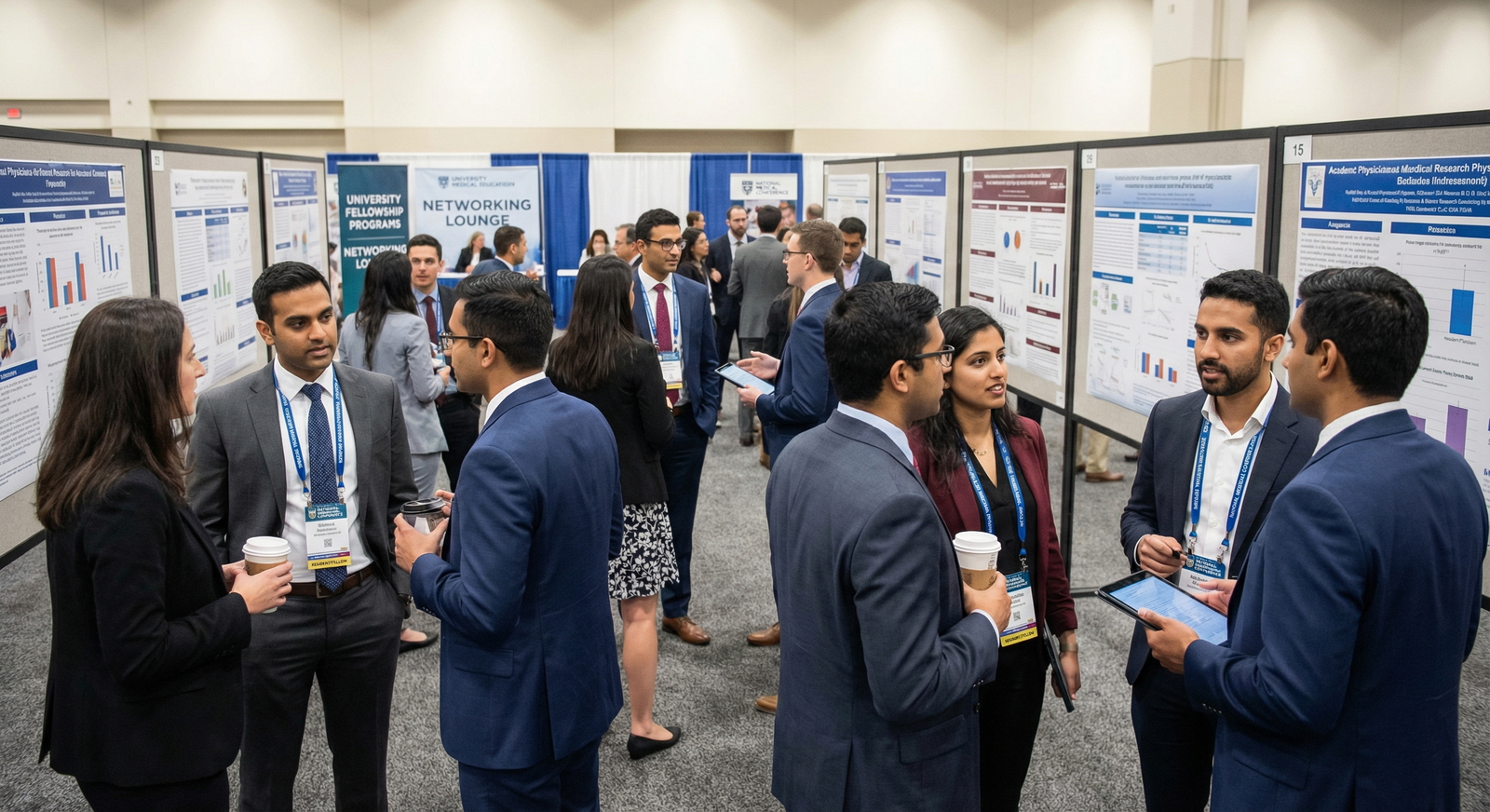
- Attend national meetings:
- AAPM&R, AAP, specialty-specific (e.g., AAPM, NANS for pain).
- Aim to submit at least one abstract.
- Clarify visa implications with your GME office:
- Which fellowships historically accept J-1?
- Whether you could convert to H-1B in the future if needed.
By the end of PGY-2, you should have:
- At least one ongoing project
- Several strong clinical rotations in your area of interest
- A working relationship with at least one attending who could eventually write a detailed letter.
2.3 PGY-3: Peak Application Preparation
For many PM&R fellowships (especially non-match programs), applications open 12–18 months before the start date. That means you may apply:
- Early to mid PGY-3 for fellowships starting after PGY-4
- Or even late PGY-2 in some specialties if they run early application cycles
During PGY-3:
- Confirm application dates:
- Check individual program websites.
- For ERAS/NRMP-based fellowships (e.g., some Pain Medicine programs), review official timelines.
- Finalize your CV and personal statement by early PGY-3.
- Push to complete and submit manuscripts or abstracts from PGY-2 projects.
- Perform away electives or visiting rotations (if possible and strategically useful) at top-choice fellowship programs.
- Systematically collect letters of recommendation:
- 3–4 letters, including:
- At least one from your PD or APD
- 1–2 from subspecialty faculty in your target field
- Optional: letter from a research mentor, especially if academic track is important
- 3–4 letters, including:
2.4 PGY-4: Interview Season and Backup Planning
By PGY-4, many IMGs are busy with:
- Interviews and second looks
- Negotiating rank lists (if match-based)
- Or balancing fellowship offers from independent programs that often extend offers ahead of a formal match
During PGY-4:
- Continue to refine your procedural and clinical skills, especially in your chosen niche.
- Prepare for structured fellowship interviews:
- Practice discussing:
- Your IMG journey (coherently, with emphasis on resilience and adaptability)
- Why PM&R and why this subspecialty
- Long-term career plans (academic vs community vs mixed)
- Practice discussing:
- Maintain a robust Plan B:
- Jobs in your target field without fellowship
- Less competitive fellowships or positions amenable to on-the-job training
- Additional clinical or research year if necessary (and acceptable for your visa status)
3. Building a Competitive Fellowship Profile as an IMG
Because being an international medical graduate can be a perceived risk factor for some programs (fairly or unfairly), your goal is to make your overall profile so strong and coherent that your IMG status becomes a positive narrative rather than a liability.
3.1 Clinical Excellence: The Non-Negotiable Foundation
Fellowship directors consistently prioritize:
- Reliability and professionalism
- Strong clinical reasoning and exam skills
- Ability to communicate clearly with patients and multidisciplinary teams
Actionable steps:
- Ask for direct feedback from attendings after each rotation:
- “Are there any specific things I should work on if I aim for a Brain Injury fellowship?”
- Volunteer for complex patient follow-ups that allow you to demonstrate continuity and ownership.
- Build a reputation as the resident who:
- Shows up prepared
- Knows their patients in detail
- Responds constructively to feedback
Concrete example:
On your SCI rotation, own the bladder and bowel management plans, present succinct updates on spasticity meds, and take initiative on discharge planning. An attending seeing this level of engagement is more likely to advocate for you later.
3.2 Academic Productivity and Research: Doable Even for Busy IMGs
Not every program expects first-author RCTs, but some record of scholarship is increasingly important, especially in competitive fellowships like Pain, Sports, or BIM.
Prioritize:
- Abstracts and posters at national conferences
- Case reports or brief reviews targeted to PM&R journals
- At least one research or QI project that reaches completion
Tips for IMGs:
- If you lack prior US research, start with chart reviews or retrospective studies that are realistic to finish in 12–18 months.
- Collaborate with residents or fellows who already have data—offer to help with:
- Data collection
- Literature review
- Drafting sections of the manuscript
- Ask your mentor:
- “What project could we complete before next year’s AAPM&R meeting?”
- Track everything meticulously:
- Submitted vs accepted abstracts
- In-press manuscripts
- Even well-designed QI projects can be valuable if presented formally.
3.3 Targeted Extracurriculars and Leadership Roles
Even small leadership roles can differentiate you:
- Serve as chief resident or take on a defined leadership role (wellness, scheduling, DEI).
- Participate in national PM&R trainee councils or committees (e.g., AAPM&R Resident/Fellow Councils).
- Engage in community outreach or adaptive sports if your target field is Sports or Neurorehab.
Each activity should support your narrative. For example:
- A Brain Injury Medicine–bound IMG who mentors TBI survivors in support groups demonstrates both commitment and communication skills.
- A Pain fellow candidate who helps design a resident opioid stewardship curriculum shows initiative and systems-based thinking.
4. Crafting a Compelling Application: Documents, Letters, and Interviews
Once your foundation is in place, the next step in preparing for fellowship is optimizing the components programs will evaluate directly.
4.1 Curriculum Vitae (CV): Presenting Your Story Clearly
Your CV should be:
- Chronological, clean, and free of errors
- Tailored to highlight PM&R and your fellowship focus
Tips:
- Group experiences under clear headings:
- Education
- Clinical Experience
- Research & Publications
- Presentations
- Leadership & Service
- Certifications & Skills (e.g., MSK ultrasound, EMG experience)
- For IMG experiences abroad, add brief clarifications:
- “Rotating Internship (equivalent to PGY-1, Internal Medicine and Surgery)”
- Bold or italicize key PM&R and subspecialty-related items to catch reviewer's eyes quickly.
4.2 Personal Statement: Your Fellowship Narrative
Your personal statement should not rehash your CV. Instead, it should answer:
- Why this subspecialty?
- Why you, and why now?
- How does your IMG background enrich your practice?
- What are your long-term goals, and how will this fellowship help?
Structure suggestion:
- Opening vignette: A specific patient or rotation experience that crystallized your interest (e.g., managing a complex TBI patient in an under-resourced setting abroad).
- Body:
- Connect that experience to your IMG journey and decision to pursue PM&R.
- Highlight concrete steps you’ve taken (research, rotations, teaching).
- Clarify your career aspirations (e.g., academic neurorehab, global rehabilitation systems, community-based sports practice).
- Conclusion:
- Tie fellowship training at that particular type of program to your future contributions to patients, teams, and the field.
Avoid:
- Overly dramatic or generic “I just want to help people” language.
- Criticizing health systems in your home country in a way that may be misinterpreted.
- Ambiguous career plans (“Maybe private practice, maybe academic… I’m open to anything.”) – you can be flexible but must sound purposeful.
4.3 Letters of Recommendation: The IMG Advantage You Can Create
Strong letters can offset perceived disadvantages such as visa status or unfamiliar prior training.
Aim for:
- 3–4 letters, usually:
- Program Director (PD) or Associate Program Director (APD)
- At least one letter from a subspecialist in your target field
- A research mentor, if involved in substantial scholarship
Help your letter writers help you:
- Meet them early to discuss your goals.
- Provide an updated CV and draft personal statement.
- Politely remind them of specific examples of your performance:
- “During my SCI rotation, I took the lead on discharge planning for our high-needs patient with C5 tetraplegia…”
If possible, at least one writer should be:
- Known in the national community of that subspecialty, or
- A graduate/alumnus of the programs to which you’re applying.
4.4 Interviews: Communicating as an IMG
Common themes programs explore:
- Your path as an international medical graduate:
- Be prepared to explain exam gaps, transitions between systems, or delayed entry into US training.
- Frame challenges as evidence of resilience and adaptability.
- Fit for their program:
- Have thoughtful questions about their patient population, procedural volume, and graduate outcomes.
- Professionalism and communication:
- As an IMG, clear and concise communication is essential—practice responses with co-residents or mentors.
Practice questions:
- “Tell me about a challenging rehabilitation case and what you learned.”
- “How has your international background influenced your approach to patient care?”
- “Where do you see yourself 5–10 years after fellowship?”
- “Why are you applying here specifically?”
5. Visa, Program Selection, and Strategic Targeting for IMGs
A core part of any IMG residency guide is realistic discussion of visa and program constraints. This is especially critical when preparing for fellowship.
5.1 Visa Status: J-1 vs H-1B and Fellowship Options
Common scenarios:
- J-1 visa during residency
- Most ACGME-accredited fellowships accept J-1 visa holders.
- Some non-ACGME fellowships may not sponsor visas at all.
- After fellowship, you may need a J-1 waiver job (often underserved or rural locations) before long-term practice.
- H-1B visa during residency
- Fewer fellowships are willing/able to sponsor H-1B due to cost and administrative load.
- Clarify early which programs have historically supported H-1B fellows.
Action items:
- Meet with your GME office immigration specialist during early PGY-2.
- Ask explicitly:
- “Which PM&R fellowships have historically sponsored residents with my visa type?”
- “Are there institutions or states that are more amenable to my situation?”
5.2 Targeting Programs that Value IMGs
Not all programs weigh IMG status equally. You have more leverage targeting:
- Programs with a history of matching IMGs into residency or fellowship.
- Large academic centers that host multiple international scholars.
- Institutions in regions with physician shortages, which may be more open to visa sponsorship.
How to research:
- Review program websites and alumni lists:
- Look for international names or explicit mention of prior international trainees.
- Ask upper-year residents and alumni:
- “Which programs were known to be IMG-friendly in your application cycle?”
- At conferences, talk to current fellows:
- “Does your program accept J-1s or H-1Bs? Are there recent IMGs in your program?”
5.3 Balancing Aspirational and Realistic Applications
Construct your list like a residency application strategy:
- Aspirational programs (top-tier, high competition)
- Middle-tier but solid programs with good case mix and faculty
- Safety options:
- Slightly less prestigious but solid training
- Programs in less competitive geographic regions
As an IMG, avoid applying only to “dream programs.” Casting a broad but intelligent net is crucial for the physiatry match at the fellowship level.
6. Continuing Growth During Fellowship and Beyond
Once you secure a fellowship, your focus shifts to preparing for fellowship success and then planning the step after: your first attending job or preparing for fellowship at an even more specialized level (e.g., second fellowship, advanced pain or research year).
6.1 Maximizing Fellowship Training
During fellowship:
- Seek progressive autonomy and own complex cases.
- Pursue teaching opportunities (residents, medical students, therapists).
- Continue scholarship:
- Get involved in at least one publishable project related to your fellowship.
- Network nationally:
- Present at conferences
- Join subspecialty societies and committees
6.2 Thinking Ahead: How to Get Fellowship if You Want a Second Subspecialty
Some physiatrists consider back-to-back fellowships (e.g., Pain then Palliative Care, or SCI then BIM). If you think you might follow this path:
- Begin planning during your first fellowship:
- Identify complementary fields and programs that appreciate your dual focus.
- Track each step for your future fellowship application timeline:
- You will be applying as a fellow with more advanced clinical exposure but still time-limited.
6.3 Transition to Practice: Using Fellowship to Build Your Ideal Career
As an IMG who completes a fellowship, your marketability increases substantially:
- Explore positions aligned with your:
- Visa constraints
- Clinical interests
- Geographic preferences
- Use your fellowship network:
- Many jobs and academic positions arise from connections built during fellowship.
FAQs: Fellowship Preparation for IMGs in PM&R
1. When should I start preparing for fellowship as an IMG in PM&R?
Ideally, start no later than early PGY-2, especially for competitive fields like Pain, Sports, or Brain Injury. By mid-PGY-2 you should have:
- Chosen a likely subspecialty focus
- Identified at least one mentor
- Started at least one scholarly or QI project Because IMGs often need to address visa issues and build US-based research from scratch, early planning is even more critical.
2. Do I need research to match into a PM&R fellowship as an international medical graduate?
You do not always need extensive research, but some scholarly productivity greatly strengthens your application. At minimum, aim for:
- One or more abstracts or posters at national/regional conferences
- One small study, case series, case report, or educational project Competitive subspecialties and academic programs increasingly expect demonstrable academic engagement, especially for IMGs.
3. How can I improve my chances of getting good fellowship letters as an IMG?
Focus on:
- Excellence on rotations in your chosen field—be the resident who is prepared and proactive.
- Identifying letter writers early, then:
- Meeting with them to discuss your goals
- Providing a CV and personal statement
- Reminding them of specific examples of your performance Strong, detailed letters from respected faculty can mitigate concerns about unfamiliar foreign training backgrounds.
4. Which PM&R fellowships are most IMG-friendly, and how do I find them?
There is no official list, but IMG-friendly patterns include:
- Programs with past or current IMG residents or fellows
- Institutions that routinely sponsor J-1 and sometimes H-1B visas
- Large academic centers or hospitals in regions with physician shortages
Research by: - Checking program websites and alumni lists
- Talking to senior residents and alumni from your residency
- Asking fellows at conferences about their program’s experience with international medical graduates
By combining early planning, focused clinical and academic development, realistic program targeting, and clear communication of your IMG journey, you can navigate fellowship preparation in PM&R successfully and build a fulfilling, specialized career in physiatry.