Understanding the Fellowship Landscape for IMGs in Neurology
For an international medical graduate (IMG) in neurology, planning for fellowship should begin early in residency—ideally in PGY-1 or early PGY-2. The transition from residency to subspecialty training is highly structured, deadline-driven, and competitive, especially for IMGs. A clear understanding of the neurology fellowship ecosystem is the foundation of solid preparation.
Common Neurology Fellowships
Most neurology residents pursue at least one year of fellowship. Core options include:
- Vascular Neurology (Stroke)
- Clinical Neurophysiology
- Epilepsy
- Neurocritical Care
- Movement Disorders
- Behavioral Neurology & Neuropsychiatry
- Neuromuscular Medicine
- Headache Medicine
- Multiple Sclerosis/Neuroimmunology
- Neuro-oncology
- Interventional Neurology (for some pathways)
- Clinical Neuroimaging, Sleep Medicine, and others
Many of these are ACGME-accredited; some remain non-ACGME or are research-focused. Competitive intensity varies: vascular neurology and clinical neurophysiology are widely available, while movement disorders, neuroimmunology, and neurocritical care can be more selective at top centers.
How Fellowship Recruitment Works
Most major neurology subspecialties now participate in organized matching systems (“neuro match”), primarily through NRMP or SF Match, though details vary by subspecialty and year:
- Match systems: NRMP, SF Match, or institution-based recruitment
- Application portals: ERAS (used increasingly), SF Match application, or program-specific forms
- Application components: CV, personal statement, letters of recommendation (LORs), USMLE scores, residency performance, visa status, and often research output
For an IMG residency applicant, the fellowship process may look similar to the residency match but on a shorter timeline and with stronger emphasis on:
- Demonstrated subspecialty interest
- US-based clinical and research experience
- Mentorship and networking
- Visa feasibility and long-term career trajectory
Understanding this structure early will help you craft a strategic IMG residency guide to fellowship tailored to neurology.
When to Start: A Fellowship Preparation Timeline for Neurology IMGs
The fellowship application timeline in neurology has shifted earlier over the years. Many fellowships now recruit more than a year before the start date. Planning ahead is critical, especially if you’re wondering how to get fellowship positions at competitive academic centers as an IMG.
Below is a generalized timeline for a fellowship beginning July Year X (for example, July 2028). Adjust for the specific subspecialty and match system.
PGY-1 (Intern Year): Foundation and Exploration
Goals:
- Clarify broad career direction
- Build a strong performance record
- Start laying the groundwork for U.S. professional credibility
Key Steps:
Understand your visa and long-term goals
- If on J-1, anticipate possible home-return requirement or waiver options later.
- If on H-1B, know your institution’s policy and future portability.
- Align your intended fellowship with realistic visa paths (some programs restrict H-1B or visa sponsorship entirely).
Explore subspecialties
- During neurology rotations and electives, observe what excites you:
- Do you enjoy acute decisions and ED consults? Consider stroke or neurocritical care.
- Do you like detailed EEG/EMG interpretation and procedures? Look into clinical neurophysiology, epilepsy, or neuromuscular.
- Are you drawn to chronic, longitudinal care and movement analysis? Consider movement disorders.
- Keep notes on mentors, interesting cases, and potential project ideas.
- During neurology rotations and electives, observe what excites you:
Start small research or QI projects
- Volunteer for a case report, chart review, or Quality Improvement (QI) project.
- Aim for at least one scholarly product from intern or early PGY-2 year (abstract, poster, or case report).
- As an international medical graduate, U.S.-based research shows you can navigate local systems and makes your CV more competitive for neuro match.
Develop relationships with faculty
- Ask for feedback on your performance.
- Express curiosity about subspecialties rather than immediately asking for LORs.
- Show reliability—arriving early, staying professional, and following through on tasks.
PGY-2: Narrowing Focus and Building a Portfolio
PGY-2 is usually the most critical year for fellowship planning. Many application elements must be in progress by the second half of this year.
Goals:
- Choose a primary subspecialty interest
- Build research and clinical depth in that area
- Identify potential letter writers
Key Steps:
Select a primary interest by mid-PGY-2
- Commit to one main direction (e.g., stroke, epilepsy, neuroimmunology).
- You can maintain secondary interests, but most of your “story” should be coherent around one field.
Targeted electives and clinical exposure
- Schedule subspecialty rotations in your area of interest.
- Ask to attend:
- Subspecialty clinics (e.g., MS clinic, movement disorders clinic).
- Relevant multidisciplinary conferences (stroke board, epilepsy conference, tumor board).
- Optional procedural sessions (EEG reading, EMG lab, botulinum toxin clinic, etc.).
Strengthen your scholarly profile
- Aim for:
- 1–3 abstracts or poster presentations at AAN or subspecialty societies (e.g., AES for epilepsy, ANA, AHS for headache, AANEM for neuromuscular).
- Case reports or small studies that you can submit to peer-reviewed journals.
- If possible, join an ongoing prospective study or registry project; continuity makes for a strong fellowship application narrative.
- Aim for:
Cultivate mentors and sponsors
- Identify 2–3 neurologists in your subspecialty who know your work well.
- Show up consistently to their clinics, case conferences, and research meetings.
- Request career guidance meetings:
- Ask where previous residents have matched.
- Seek feedback on your competitiveness and how to get fellowship positions that match your profile.
- Communicate your IMG status honestly (visa, prior non-U.S. training) and ask how that may affect program choices.
Track fellowship programs and eligibility
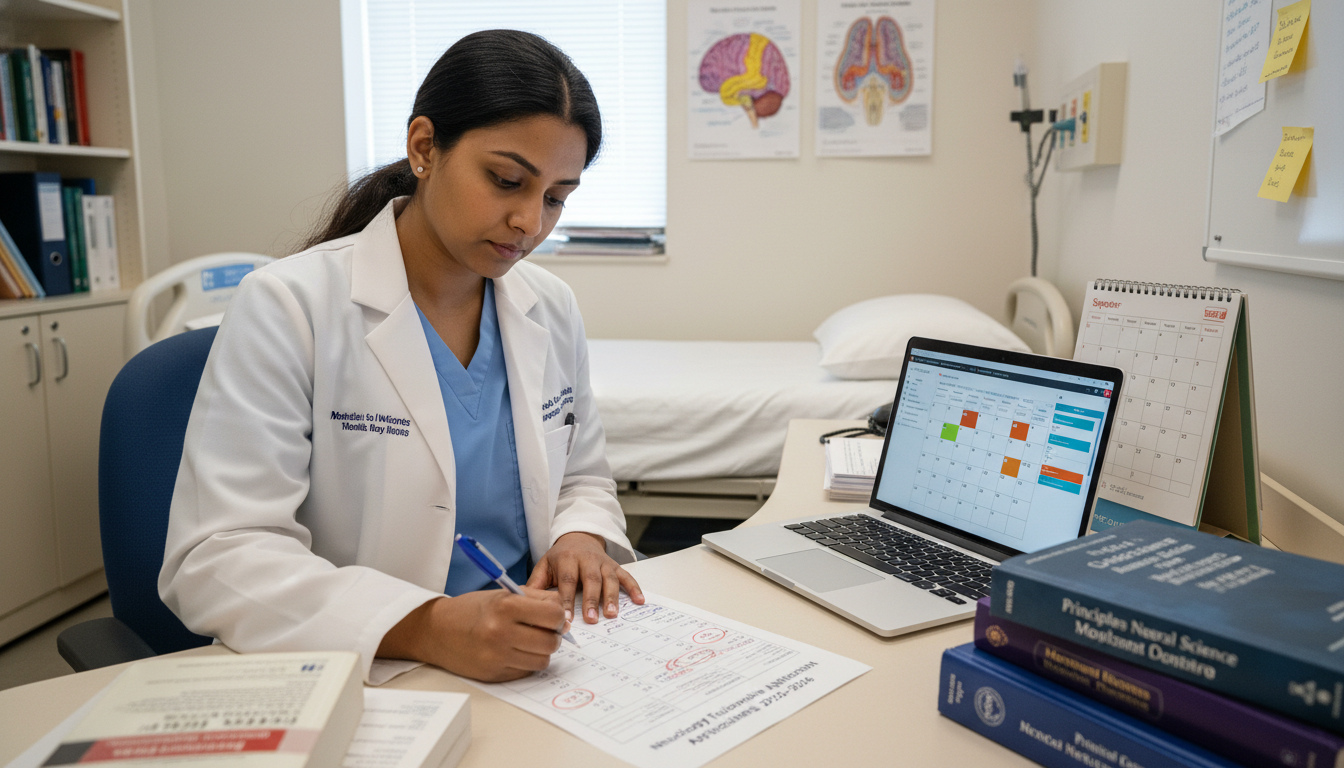
- Create a spreadsheet of potential fellowships:
- Program name and location
- Subspecialty
- Visa policies (J-1 vs H-1B vs no visa sponsorship)
- Typical fellow profile (do they commonly take IMGs?)
- Required application platform (ERAS, SF Match, program website)
- Key faculty contacts and alumni from your residency
- This early research will inform your final target list in PGY-3.
- Create a spreadsheet of potential fellowships:
PGY-3: Application Year – Executing the Plan
This is usually the active application year, both for fellowship applications and neuro match interviews.
Goals:
- Finalize CV, personal statement, and letters
- Submit applications early
- Interview widely and strategically
Key Steps:
Confirm the fellowship application timeline
- Some neurology fellowships open applications 18–20 months before the start date.
- Typical structure (varies by field and year):
- Application opens: Early–mid PGY-3
- Application deadline: Late PGY-3
- Interviews: Late PGY-3 to early PGY-4
- Rank list submission and match: Mid PGY-4 year preceding fellowship
- Double-check the specific year and subspecialty guidelines; these can change.
Assemble a strong CV
- Sections to include:
- Education and training (including your international medical school and any prior degrees)
- USMLE scores and ECFMG certification
- Residency rotations and leadership roles (chief resident, committees, teaching roles)
- Research and scholarly output (abstracts, posters, publications, QI projects)
- Presentations (departmental talks, journal clubs, grand rounds)
- Awards and honors
- Professional memberships (AAN, subspecialty societies)
- Highlight U.S.-based experiences and any work that interfaces directly with your fellowship interest.
- Sections to include:
Craft a focused personal statement
- Core elements for a neurology fellowship PS:
- Concise description of your path from international medical graduate to U.S. neurology resident.
- Specific turning points that led you to your subspecialty interest (key patients, research experiences, or mentors).
- Clear career goal: academic clinician, physician–scientist, community subspecialist, or mixed.
- Why you need fellowship training to reach that goal.
- Avoid generic phrases; instead, give concrete examples:
- “During my stroke rotation, managing a cluster of large-vessel occlusions with our thrombectomy team solidified my interest in vascular neurology…”
- If relevant, briefly and professionally address any red flags (exam failures, gaps) with emphasis on growth and current performance.
- Core elements for a neurology fellowship PS:
Obtain strong letters of recommendation
- Aim for:
- 2–3 subspecialty-specific letters from faculty who closely supervised your clinical or research work.
- 1 general neurology letter (e.g., program director or chair).
- For IMGs, letters that explicitly compare you to U.S. graduates can be particularly helpful.
- Ask early (2–3 months before the deadline):
- Provide your updated CV and draft personal statement.
- Remind them of specific projects or rotations you did together.
- Politely confirm if they can write a “strong and enthusiastic” recommendation.
- Aim for:
Strategically select programs
- Consider:
- Visa policies and institutional sponsorship capacity.
- Track record of accepting IMGs and residents from non-top-tier programs.
- Faculty research interests aligned with your goals (particularly crucial if preparing for fellowship as a step toward a research or academic career).
- Program size and case volume.
- City and region (including cost of living and family considerations).
- Apply broadly, especially as an IMG: 15–30 programs is common in competitive fields.
- Consider:
Prepare for interviews
- Be ready for questions such as:
- “Why this subspecialty?”
- “Why this program specifically?”
- “What is your long-term career plan?”
- “Tell us about a research project or QI initiative you completed.”
- “How has being an international medical graduate shaped you as a physician?”
- Prepare concise case examples (e.g., a challenging stroke case, a status epilepticus patient, a complex MS management scenario).
- Have clear questions for them about:
- Training structure and autonomy
- Research support
- Graduate outcomes (jobs, fellowships, visas)
- Be ready for questions such as:
PGY-4: Finalizing Your Path and Preparing to Transition
Goals:
- Complete any remaining interviews and ranking
- Finish projects and strengthen your teaching/leadership profile
- Prepare for fellowship-level expectations
Key Steps:
Rank list and decision-making
- Prioritize:
- Training quality and case mix
- Mentorship and research fit
- Visa stability and long-term job prospects
- Seek honest input from your mentors and program leadership.
- Prioritize:
Finish and disseminate scholarly work
- Target manuscript submissions before graduation if possible.
- Present at least one more conference if timing allows.
- These activities continue to strengthen your profile as you enter fellowship and may open doors for subsequent positions or advanced research fellowships.
Develop skills for the fellow role
- Take on increased supervision of juniors and medical students.
- Practice independent decision-making in your chosen subspecialty, with appropriate attending backup.
- Consider a small teaching or curriculum project related to your future field (e.g., a teaching module on stroke codes for interns).
Strengthening Your Profile as an IMG: What Matters Most
As an international medical graduate pursuing neurology fellowship, you may worry about competitiveness. Many IMGs match into excellent programs every year, particularly when they focus on the elements they can control.
Clinical Excellence and Reputation
- Strong evaluations and clear progression in responsibility.
- Reliability and professionalism (no issues with documentation, teamwork, or patient interactions).
- Proactively seeking feedback and demonstrating improvement.
Residency directors and fellowship PDs talk to each other. A good internal reputation can significantly bolster your application beyond what is visible on paper.
Research and Scholarly Activity
You do not need to be a prolific researcher to match into most clinical fellowships, but you should show some scholarly engagement:
- At minimum:
- 1–2 case reports or abstracts and one regional or national poster.
- For more competitive or academic tracks:
- Multiple abstracts and at least one peer-reviewed publication.
- Participation in a funded or larger-scale project is helpful.
- Focus your work in or near your subspecialty of interest for a consistent trajectory.
Mentorship, Networking, and Professional Societies
Leveraging professional networks is one of the most powerful strategies for IMGs.
- Attend national meetings (e.g., AAN, subspecialty conferences):
- Present posters or platform talks when possible.
- Introduce yourself to program directors and faculty from target programs.
- Join committees or resident sections:
- AAN resident & fellow sections, subspecialty interest groups.
- Stay in touch with prior mentors from your home country if they have international collaborations; they may connect you with U.S. faculty.
Personal outreach can be especially valuable:
- A brief, polite email to a fellowship director:
- Introduce yourself and your connection to the field.
- Attach or link to your CV.
- Mention a specific shared research interest or faculty member.
- Ask one or two focused questions rather than a generic message asking for “guidance.”

Addressing Visa and IMG-Specific Concerns
Visa status is a major practical factor for IMGs navigating neuro match and fellowship planning.
J-1 visa:
- Common for residency and fellowship.
- May require a return-home period or a waiver through underserved work or academic appointments later.
- Many fellowships readily sponsor J-1.
H-1B visa:
- More complex: subject to institutional policies and sometimes numerical caps.
- Some fellowships will not sponsor H-1B due to cost and complexity.
- If already on H-1B, learn early if your current institution can extend it for fellowship.
Actions you can take:
- Start visa discussions early with your GME office and program director.
- When researching how to get fellowship positions, always include visa policy in your program spreadsheet.
- Be transparent but concise when addressing visa status in applications and interviews.
Preparing for Life After Fellowship: Long-Term Career Planning
Fellowship preparation isn’t just about matching. It should also serve as a bridge to your first attending job and possibly additional training. If you’re already thinking about preparing for fellowship plus subsequent academic positions, plan with your end-goal in mind.
Academic vs Community Career Paths
Ask yourself:
- Do you want to be primarily:
- A clinical academic with teaching and some research?
- A physician–scientist with major research time?
- A community subspecialist in a private or hospital-based practice?
- Your answer will shape:
- Level of research you need.
- Type of fellowship program you prioritize (highly academic vs high-volume clinical vs hybrid).
Considering Additional or Advanced Fellowships
Some neurology subspecialists complete more than one fellowship or combine clinical with research years:
- Example paths:
- Vascular neurology → interventional neurology focus
- Clinical neurophysiology → epilepsy → advanced epilepsy surgery planning
- Movement disorders → research fellowship focused on neurophysiology or imaging
- If you are considering multiple fellowships, clarify:
- Visa feasibility for extended training.
- Family and financial implications.
- How additional training will concretely improve your career prospects.
Building a Sustainable Career as an IMG Neurologist
During fellowship, continue to:
- Network widely with faculty and fellows from other programs.
- Present at national meetings annually.
- Seek leadership roles (fellowship representative, committee work).
- Clarify your next-step job goals early in fellowship; recruitment for attending positions often begins 6–18 months before completion.
By the time you complete fellowship, your trajectory—from international medical graduate to subspecialist neurologist—should look coherent, purposeful, and sustainable.
Frequently Asked Questions (FAQ)
1. When should an IMG neurology resident start preparing for fellowship?
You should start intentional preparation in PGY-1 and solidify your subspecialty choice by mid-PGY-2. Research activities, mentoring relationships, and targeted electives take time to develop. Because the fellowship application timeline often starts more than a year before fellowship begins, late planning can limit your options, especially as an IMG.
2. Do I need research to match into a neurology fellowship as an IMG?
You don’t need a PhD-level research background, but you generally need some scholarly activity:
- At least one or two case reports, abstracts, or posters.
- Ideally, a project aligned with your chosen subspecialty.
- For highly academic or research-track fellowships, you’ll need stronger evidence of research capability, including peer-reviewed publications and involvement in larger projects.
Research demonstrates curiosity, initiative, and an ability to complete projects—attributes that fellowship programs value.
3. How does my visa status affect my neurology fellowship options?
Visa status is a major practical factor:
- Many ACGME-accredited fellowships accept J-1 visa holders without issue.
- H-1B sponsorship is more variable; some institutions restrict it for fellows due to cost or policy.
- A small number of programs may not sponsor visas at all, effectively limiting access for IMGs.
Because of this, include visa policy in your program research, talk early with your GME and program director, and apply more broadly to accommodate these constraints.
4. What can I do if my residency program is not very well known or has limited research resources?
You can still build a competitive application:
- Maximize what your program does offer: QI projects, case series, teaching roles, and strong clinical evaluations.
- Look for external collaborations:
- Reach out to faculty at nearby academic centers.
- Connect with mentors through AAN or subspecialty societies.
- Prioritize high-quality work over quantity:
- A few well-done projects, strong LORs, and clear subspecialty focus can compensate for a less famous residency institution.
- Use conferences and networking to show your work and build name recognition outside your home program.
Fellowship preparation for an international medical graduate in neurology is a long, structured process—but also a highly rewarding one. By starting early, building a coherent narrative, pursuing focused scholarly activity, and leveraging mentorship and networking, you can navigate the neuro match successfully and move confidently toward the subspecialty career you envision.