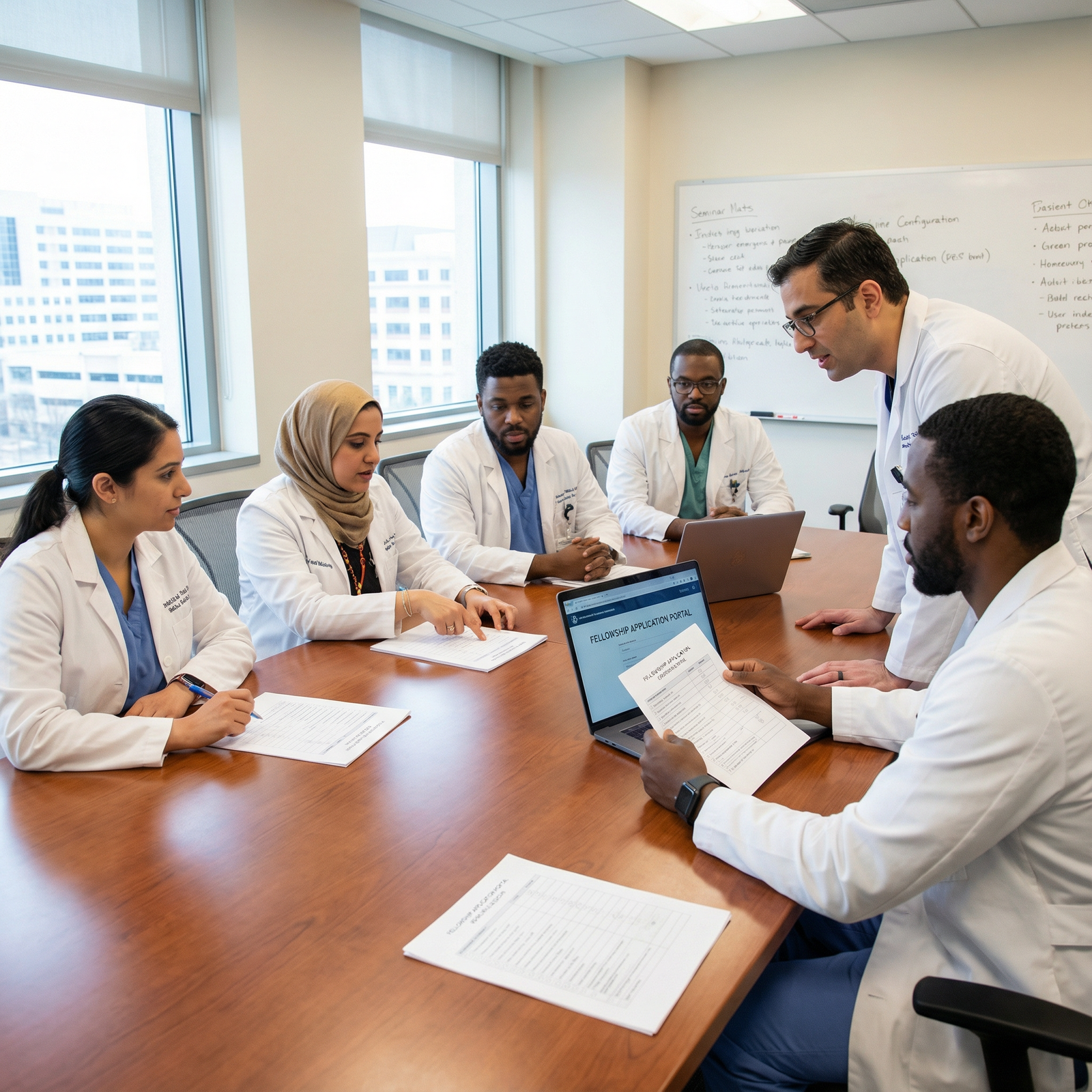
Understanding the Fellowship Landscape as an IMG in Pediatrics
Preparing for fellowship as an international medical graduate (IMG) in pediatrics starts long before your application year. It begins in medical school and continues through every stage of residency. A strong, strategic plan can transform you from “just another applicant” into a compelling future subspecialist.
In the United States, pediatrics fellowship positions are competitive, but IMGs match successfully every year into nearly every subspecialty: neonatology, pediatric cardiology, critical care, endocrinology, hematology/oncology, gastroenterology, infectious diseases, emergency medicine, and more. The key is understanding what program directors are truly looking for and then building that profile early.
For this IMG residency guide, we will focus on:
- How to think about fellowship from day one of pediatrics residency
- Which experiences matter most for subspecialty training
- How to tailor your activities to your target field
- Timing: the fellowship application timeline and key deadlines
- Practical strategies for the peds match and beyond, including preparing for fellowship and planning “how to get fellowship” in a competitive environment
Throughout, the emphasis is on realistic, actionable steps for IMGs, acknowledging visa, cultural, and mentorship challenges unique to international medical graduates.
Start Early: Strategic Planning from PGY-1
Most residents start thinking seriously about fellowship late in PGY-2, but as an IMG in pediatrics, you benefit tremendously from starting earlier. Early planning does not mean locking yourself into one subspecialty; instead, it means deliberately exploring options and building a strong foundation.
Clarify Your “Why” for Fellowship
Fellowship training is a major commitment—often 3 years or more. Before you chase a subspecialty because it seems prestigious or “good for visas,” investigate:
- What patient populations excite you most (e.g., premature infants, adolescents, complex chronic disease, oncology patients)
- Whether you enjoy high-acuity settings (PICU, NICU, ED) vs. longitudinal care
- Your tolerance for night shifts and intensive call schedules
- Your interest in research, QI, or teaching
- Your long-term life goals: location flexibility, academic vs community practice, work–life balance
Practical exercise (PGY-1):
- Keep a small “career journal” during rotations. After each block, ask:
- What did I enjoy most?
- What frustrated me?
- Could I see myself doing this 10 years from now?
- After 6–9 months, patterns will emerge that help narrow fellowship interests.
Build a Strong General Pediatrics Foundation
Programs want fellows who are excellent pediatricians first. Before you worry about the details of how to get fellowship, make sure you:
- Excel clinically
- Be reliable: show up early, stay late when needed, follow through
- Prepare before rounds (know your patients, latest labs, literature when appropriate)
- Communicate clearly with families and the interprofessional team
- Seek feedback early and often
- Ask attending physicians and fellows for specific suggestions:
- “How can I improve my presentations?”
- “What would you focus on if you were in my stage aiming for [subspecialty]?”
- Ask attending physicians and fellows for specific suggestions:
- Address concerns proactively
- If you struggle with documentation speed, organization, or communication, seek help immediately in PGY-1—these issues can impact your fellowship letters later.
Understand IMG-Specific Challenges and Opportunities
As an international medical graduate, you must be realistic and strategic:
Challenges:
- Visa issues (J-1 vs H-1B availability by fellowship and institution)
- Lack of early US-based mentors or references
- Possible bias or assumptions about training background
- Needing more time to adjust to US system and culture
Opportunities:
- Unique global health perspectives
- Often stronger clinical exposure to rare infectious diseases or resource-limited care
- Multilingual abilities and cultural competence with diverse families
Integrate your strengths into your narrative from the beginning: think about how your background will contribute positively to your subspecialty team.
Building a Competitive Profile: Core Components
Regardless of subspecialty, fellowship program directors in pediatrics consistently focus on four pillars:
- Clinical performance
- Letters of recommendation
- Scholarly activity (research, QI, education)
- Professionalism and fit
Clinical Performance: Your Day-to-Day Reputation
Your daily behavior becomes your brand. Because many fellowship letters are written by your residency leadership and subspecialty attendings, every rotation is a hidden audition.
Actionable tips:
- Treat every subspecialty rotation as if it is a 4-week interview.
- Take ownership:
- Know your patients intimately (social background, medical history, current plan)
- Volunteer to present interesting patients at case conference or journal club
- Show growth:
- When given feedback, document it and actively demonstrate improvement
- Ask for repeat feedback to close the loop: “Last month you mentioned I should structure my assessments better—am I doing that more effectively now?”
Letters of Recommendation: Who and How to Ask
Strong letters often make the difference in the peds match for fellowship, especially for IMGs. Letters should come from:
- At least one or two faculty in your target subspecialty
- At least one core residency leader (Program Director, APD, or Chief)
- Additional letters from research mentors, especially if research-heavy specialty
For IMGs, quality matters more than title. A detailed letter from a mid-career faculty who worked closely with you is better than a generic letter from a “famous name” who barely knows you.
Strategy:
- Identify potential letter writers early (PGY-1 end / early PGY-2)
- Ask:
- “Do you feel you know my clinical work well enough to write a strong letter for fellowship in [subspecialty]?”
- Provide a packet:
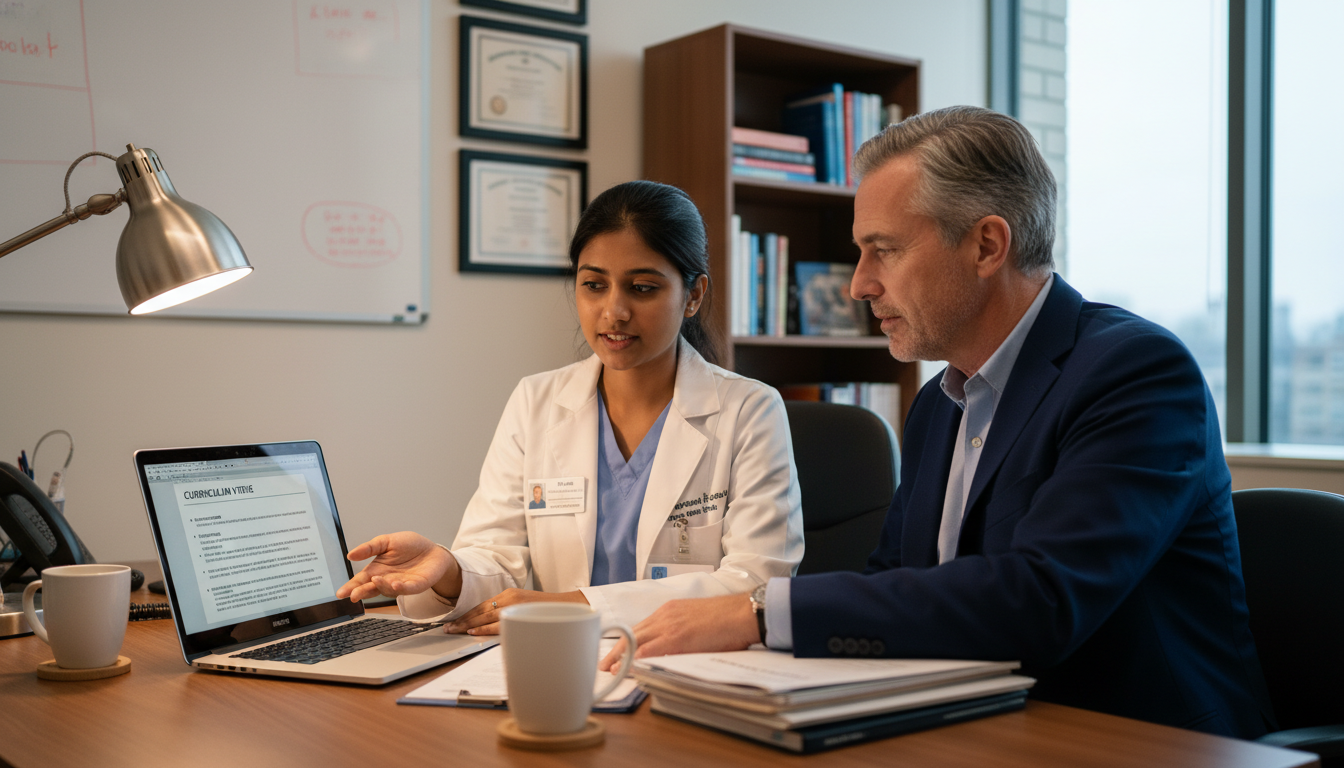
- Updated CV
- Personal statement draft (even if early)
- List of cases/projects you worked on together
- Gently remind them 4–6 weeks before the ERAS letter deadline.
Scholarly Activity: Research, QI, and Education
For many pediatrics fellowships, scholarly activity is the key differentiator among strong clinicians.
Types of scholarly work valued by fellowship programs:
- Clinical research (retrospective or prospective)
- Quality improvement (QI) projects
- Case reports or small case series (useful early in training)
- Educational projects (curriculum design, teaching innovations)
- Global health research or implementation projects (especially relevant for IMGs)
If your program has limited research infrastructure:
- Ask your Program Director or Chief Residents to connect you with interested faculty
- Consider multi-center or collaborative projects via pediatric societies
- Use existing data sets or chart reviews (more feasible time-wise during residency)
Practical path for IMGs with minimal research experience:
- PGY-1: Join a small project or case report with a subspecialty service you enjoy
- PGY-2: Lead a QI project or small retrospective study; aim for a conference abstract
- PGY-3: Convert accepted abstracts into manuscripts; expand your involvement or begin fellowship-oriented research with your intended subspecialty
Remember: programs understand the time limits of residency; they want evidence that you can ask questions, work in a team, and complete projects—not necessarily that you have multiple first-author publications in high-impact journals.
Professionalism, Communication, and “Fit”
Program directors worry about professionalism more than test scores. They ask: Will this fellow be safe, reliable, collaborative, and respectful?
For IMGs, perceived communication differences can be misinterpreted as professionalism issues if not addressed.
Focus areas:
- Clear, concise communication with families and team members
- Responding to pages and messages in a timely manner
- Owning mistakes:
- If an error occurs, be transparent, report it through proper channels, and show what you learned
- Demonstrating cultural humility and respect for diverse families
Your reputation within your residency program often flows informally to fellowship programs through emails and phone calls—treat every interaction as if it might influence your future.
Tailoring Your Preparation to Specific Pediatric Subspecialties
While core preparation is similar, different pediatrics fellowships look for distinct profiles. Below is a simplified guide to help match your interests and strengths to expectations, along with examples of targeted activities.
High-Acuity Subspecialties (PICU, NICU, Emergency Medicine)
What they value:
- Comfort with critically ill children and procedural skills
- Calm performance under pressure
- Strong teamwork in complex, fast-paced settings
- Often a preference for some research or QI in critical care / resuscitation
Targeted steps:
- Seek extra rotations in PICU, NICU, and ED; consider elective time at high-volume centers
- Participate in simulation sessions; volunteer to teach BLS/PALS to junior trainees or nurses
- Join or lead a QI project on sepsis recognition, code cart readiness, or handoff quality
Subspecialties with Strong Research Expectations (Heme-Onc, Cardiology, Endocrinology, GI, ID)
What they value:
- Evidence of sustained scholarly work (abstracts, posters, manuscripts)
- Interest in long-term academic or research careers
- Curiosity and persistence in complex disease management
Targeted steps:
- Approach research-oriented attendings early for projects
- Present at national meetings (PAS, ASPHO, AAP sections, specialty-specific societies)
- Consider a research elective in PGY-3 if allowable within your program
- If you are serious about an academic career, discuss potential research years or fellowships that offer T32 or similar training grants
Outpatient/Chronic Care–Focused Subspecialties (Rheumatology, Endocrinology, Allergy/Immunology, Developmental-Behavioral)
What they value:
- Strong continuity care skills
- Excellent communication with families over long-term treatment
- Interest in complex chronic disease and interdisciplinary teamwork
Targeted steps:
- Develop continuity relationships with complex patients in your clinic
- Work with social workers, psychologists, and therapists; understand the broader care ecosystem
- Engage in QI focusing on adherence, transition to adult care, or patient education
Global Health and Underserved-Focused Careers
Many IMGs bring deep global health insights. Even if your primary goal is US-based fellowship, this background can be a huge asset, especially in infectious diseases, emergency medicine, general academic pediatrics, and public health–oriented fields.
Targeted steps:
- Share your international experiences in talks, resident conferences, or global health tracks
- Join hospital or university global health groups
- Consider research focused on immigrant/refugee health, vaccine uptake, or global disease patterns applicable to your US practice

Fellowship Application Timeline and Process for Pediatric IMGs
Understanding the fellowship application timeline is crucial for planning. While exact dates can vary by subspecialty and year, many pediatrics subspecialties use ERAS and the NRMP Pediatric Subspecialties Match.
Below is a generalized timeline (for a 3-year residency):
PGY-1: Exploration and Foundation
- Explore a broad range of pediatric subspecialties through rotations
- Begin informal mentorship: ask attendings and fellows about their fields
- Participate in at least one small scholarly activity (case report, QI project)
- Strengthen communication and documentation habits
Milestone by end of PGY-1:
You should have a shortlist of 2–3 subspecialties of interest and be involved in at least one scholarly project.
PGY-2: Commitment and Profile Building
- Narrow down to your primary target fellowship by mid-PGY-2
- Arrange elective time in your chosen subspecialty (and possibly at an external site if available and visa-permitted)
- Identify letter writers and discuss your plans with your Program Director
- Deepen your scholarly activity; aim for at least one abstract submission or local presentation
- Begin drafting a fellowship-focused CV that highlights relevant experiences
Milestone by end of PGY-2:
You should have clear fellowship goals, active mentorship, ongoing projects, and preliminary letter commitments.
Early PGY-3: Application Preparation
- Refine your personal statement:
- Why this subspecialty
- Why you, as an IMG, bring unique value
- Evidence of commitment (rotations, projects, advocacy)
- Long-term career vision and how fellowship fits your plans
- Finalize your ERAS application:
- Update all experiences and scholarly work
- Tailor descriptions of projects to show your specific role and impact
- Ensure all letters of recommendation are requested early
- Meet with your Program Director to discuss program list and strategy:
- Visa-sponsoring institutions
- Geographic preferences and flexibility
- Balance of “reach,” “target,” and “safety” programs
Fellowship Application Timeline (Typical):
- January–March of PGY-3: Solidify mentors, finalize project progress
- April–June: ERAS opens; complete application, request letters
- July–August: Application submission and interview invitations
- September–November: Interviews (in-person or virtual)
- November–December: Rank list submission and match results (varies by subspecialty)
Always verify exact dates each year via NRMP and ERAS, as timelines can shift.
Visa Considerations for IMGs
Visa status is a central aspect of the IMG residency guide for fellowship:
- Understand your current visa (J-1 vs H-1B) and implications for fellowship
- Research which programs historically sponsor your visa type
- Some subspecialties and institutions are more flexible with H-1B; others only sponsor J-1
- Discuss visa planning with:
- Your GME office
- Current fellows with similar visa status
- Program leadership
Transparent communication about visa needs early in the process prevents surprises later and can influence your program list.
Succeeding in Fellowship and Preparing for Life After
Fellowship preparation does not end on match day. As you transition from peds match applicant to future subspecialist, think ahead about “preparing for fellowship” and also “preparing for post-fellowship life.”
Before Fellowship Starts
- Clarify expectations with your future program:
- Call schedules
- Rotations
- Research commitments and mentorship structure
- If possible, connect with current fellows (especially IMGs) for practical advice:
- Housing and cost of living
- Childcare or family logistics
- Cultural and institutional norms
Use the gap between residency and fellowship to:
- Review core guidelines and landmark papers in your subspecialty
- Organize your personal documents (certifications, licenses, visa paperwork)
- Take care of health, finances, and family transitions
During Fellowship: Laying the Groundwork for Your Career
Fellowship is not only subspecialty training; it is also the launchpad for your next step: academic, community, hospital-based, or further subspecialty training.
Key elements to focus on:
- Advanced clinical excellence: Become the “go-to” fellow your attendings trust with complex patients.
- Research productivity: Complete at least one substantial project, ideally leading to publication.
- Career mentorship: Maintain at least one clinical and one academic mentor; meet with each periodically to review progress and adjust your plan.
- Networking: Attend national conferences, present your work, and connect with future employers or collaborators.
How to Get Fellowship If You Don’t Match the First Time
Despite best efforts, some strong applicants do not match. As an IMG, this can be especially discouraging, but it is not the end of your subspecialty path.
If you do not match:
- Ask for honest feedback from your Program Director and trusted mentors:
- Was it research, letters, interview skills, visa concerns, or fit?
- Make a targeted improvement plan:
- Additional chief year or hospitalist year in your target subspecialty
- Dedicated research year with clear goals (abstracts, manuscripts)
- Focused work on communication or interview skills if that was a weakness
- Stay connected to the subspecialty:
- Moonlight or work in settings that keep you clinically relevant
- Continue scholarly work or quality improvement projects
- Consider broadening your program list and geographic preferences in the next cycle.
Many IMGs successfully match into fellowship on their second attempt with strategic reapplication and improved profiles.
FAQs: Fellowship Preparation for IMGs in Pediatrics
1. When should an international medical graduate in pediatrics start preparing for fellowship?
You should start deliberate exploration in PGY-1 and early PGY-2. By mid-PGY-2, you should have a primary target subspecialty, at least one active project, and identified mentors. Formal application preparation (ERAS, personal statement, letters) typically occurs in the first half of PGY-3, following the fellowship application timeline specific to your subspecialty.
2. Does being an IMG hurt my chances for pediatrics fellowship?
Being an international medical graduate can add extra challenges—especially visa constraints and fewer early US mentors—but many IMGs match successfully into competitive pediatric subspecialties every year. Programs value strong clinical skills, professionalism, and commitment. A clear narrative that integrates your international background as a strength, plus strong letters and scholarly work, can offset perceived disadvantages.
3. How important is research for matching into a pediatrics fellowship?
Research importance varies by subspecialty. For fields like pediatric hematology/oncology, cardiology, gastroenterology, and critical care, scholarly activity is highly valued and often expected. For other subspecialties, quality improvement and educational projects may suffice, especially if you demonstrate ownership and completion. At minimum, you should aim for at least one meaningful scholarly contribution (abstract, poster, or publication) by the time you apply.
4. Can I still get a fellowship if my USMLE scores are average?
Yes. While test scores may influence initial screening, especially for highly competitive programs, many fellows—IMGs included—match with average scores. Strong clinical evaluations, excellent letters of recommendation, a clear and compelling personal statement, and demonstrated commitment to your chosen field often carry more weight. Focus on what you can control now: clinical performance, professionalism, scholarship, and interview skills.
By approaching fellowship preparation as a multi-year, strategic process—rather than a last-minute scramble—you significantly increase your chances of success as an IMG in pediatrics. With clarity of goals, proactive mentorship, and focused effort, you can build a fellowship application that authentically showcases your strengths and prepares you for a meaningful subspecialty career.