Mastering the Fellowship Application Process: Practical Tips for Residency Applicants
Navigating the medical fellowship application process can feel like working through a second Match—time‑sensitive, high stakes, and full of uncertainty. Yet with deliberate planning, strategic choices, and a clear narrative, you can turn a stressful experience into a powerful step in your long‑term career development.
This enhanced guide walks you through the fellowship application process from start to finish, integrating Fellowship Tips, timeline planning, common pitfalls, and strategies to stand out in a crowded field of strong applicants.
Understanding the Modern Fellowship Landscape
Before you upload a CV or draft a Personal Statement, it helps to understand where fellowships fit in your overall Career Development and why programs are increasingly selective.
What Is a Medical Fellowship?
Medical fellowships are post‑residency training programs that provide advanced, focused education in a subspecialty area. They exist across nearly every field of medicine, from Cardiology, Gastroenterology, and Critical Care to Pediatric Surgery, Global Health, and Medical Education.
Fellowship training typically offers:
- Subspecialty clinical expertise (e.g., advanced heart failure, interventional pulmonology, epilepsy)
- Dedicated research and scholarly activity time
- Opportunities for teaching and leadership
- Access to national and international professional networks
Fellowships may be ACGME‑accredited (leading to subspecialty board eligibility) or non‑ACGME (often niche training such as medical education, simulation, quality improvement, or additional procedural training).
Key Objectives of Pursuing a Fellowship
Understanding your “why” is essential before starting the application process:
Deeper Specialization
You gain advanced clinical skills and procedural competency that are not fully developed during residency. For example, an Internal Medicine resident pursuing Cardiology fellowship will gain expertise in echocardiography, cardiac catheterization, and managing complex cardiovascular disease.Robust Research and Scholarship
Many Medical Fellowships allocate protected time and resources for clinical, translational, or basic science research. This can strengthen your academic trajectory, support future grant applications, and position you for a career in academic medicine.Expanded Professional Network
Fellowships connect you with subspecialty leaders, mentors, and collaborators. These relationships can open doors to jobs, multicenter trials, speaking invitations, and leadership roles.Career Differentiation and Flexibility
Completing fellowship training can expand your career options—hospital‑based practice, academic roles, hybrid clinical-research positions, or specialized private practice niches.
As you proceed through the application process, keep these objectives in mind; they will frame how you present your story and how you evaluate programs.
Step 1: Strategic Research and Selecting the Right Fellowship Programs
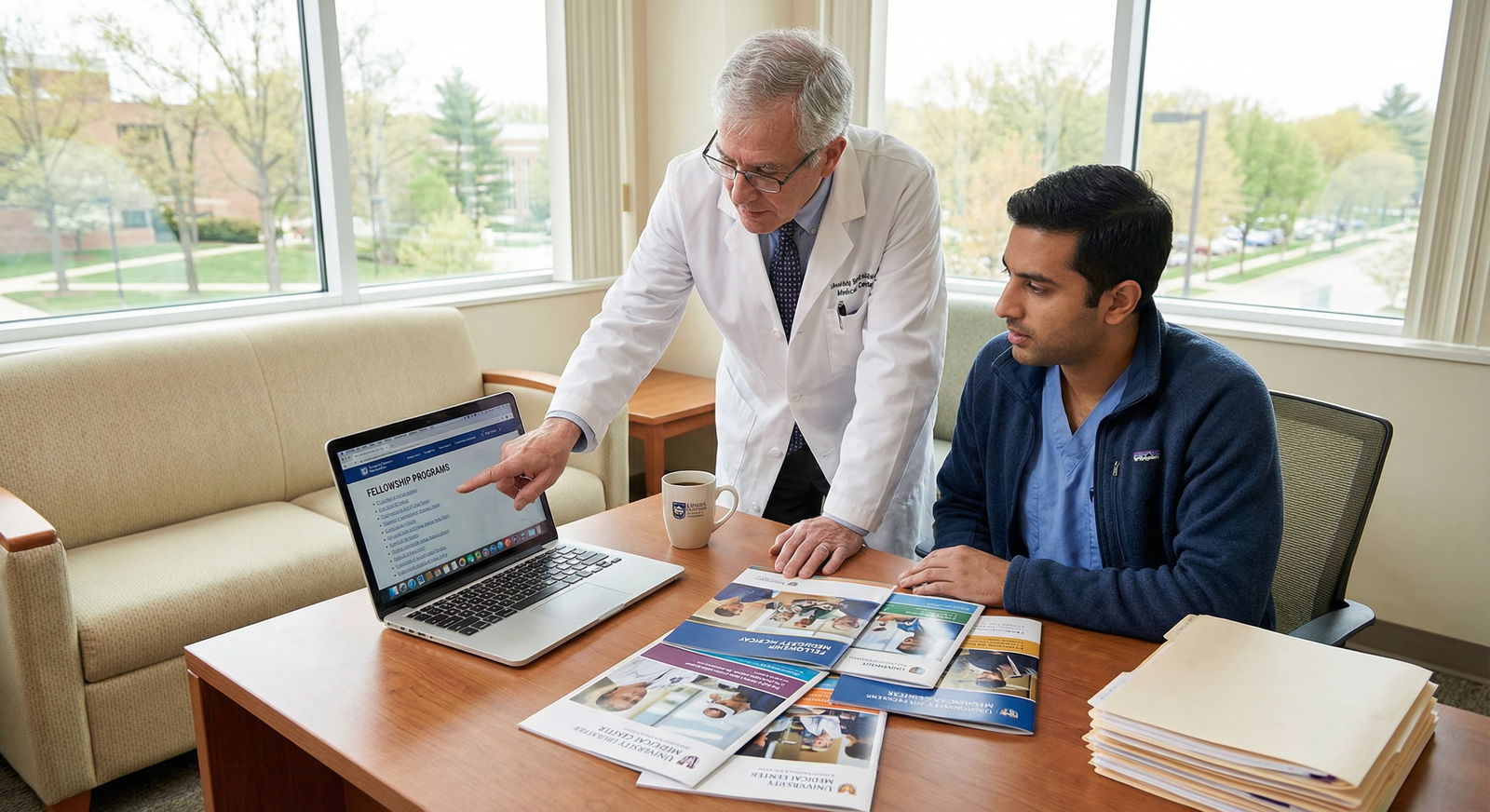
Choosing where to apply is not about casting the widest net—it’s about aligning training with your long‑term Career Development goals, personal values, and life circumstances.
Clarify Your Career Vision First
Before you build a program list, ask yourself:
- What do I want my clinical practice to look like in 5–10 years?
- How important are research and scholarship in my future?
- Do I see myself in academic medicine, community practice, or a hybrid?
- What kind of procedural exposure or niche training do I need?
- What geographic or personal constraints do I have?
Having a clear, honest answer to these questions will help you filter programs meaningfully.
Key Factors When Evaluating Fellowship Programs
Consider these dimensions as you research:
Subspecialty and Clinical Focus
- Does the program’s case mix match your interests (e.g., advanced heart failure vs. general cardiology, neurocritical care vs. general critical care)?
- Are there tracks or concentrations (research track, educator track, global health track)?
Accreditation and Outcomes
- Confirm ACGME accreditation if you plan to take subspecialty boards.
- Review board pass rates, faculty credentials, and job placement of graduates.
Research and Scholarly Environment
- Are there active clinical trials or robust basic/translational research programs?
- What support exists for fellow projects (biostatistics, mentorship, funding)?
- How many fellows present at national meetings annually?
Program Culture and Well‑Being
- Talk with current fellows about workload, autonomy, and support.
- Assess how the program handles wellness, time off, and parental leave.
- Ask about the learning environment: Is feedback constructive? Are fellows supported or overextended?
Location and Lifestyle Considerations
- Proximity to family or a partner’s job
- Cost of living and housing
- Availability of childcare, schools, and community resources
Size and Structure of the Program
- Large programs may offer breadth of exposure and subspecialty niches.
- Smaller programs may provide more personalized mentorship and autonomy.
Example:
If you’re passionate about Pediatric Cardiology with a strong interest in congenital heart disease, prioritize programs with high pediatric cardiac surgical volumes, dedicated fetal cardiology clinics, and active participation in congenital heart disease registries or multicenter trials.
Step 2: Crafting an Outstanding Fellowship Personal Statement
Your Personal Statement is not a restatement of your CV—it is your narrative. This is often the most humanizing part of your application, and it strongly influences whether an interviewer anticipates meeting you.
Core Goals of an Effective Personal Statement
A strong statement should:
- Explain your motivation for the subspecialty.
- Highlight defining experiences that shaped your path.
- Demonstrate insight and reflection—what you learned and how you grew.
- Show clear alignment between your goals and what fellowship training provides.
- Indicate why you are a good fit for the programs you are applying to.
Practical Fellowship Tips for Writing Your Statement
Open with a Specific Story, Not a Generic Statement
Replace “I have always been interested in cardiology…” with a vivid clinical encounter, research challenge, or personal experience that drove you toward the field.Show, Don’t Just Tell
Instead of saying “I am committed to underserved populations,” describe your work in a resource‑limited clinic, the barriers you witnessed, and how that shaped your future goals.Connect Past, Present, and Future
Tie your background, residency experiences, and long‑term aspirations into a coherent arc:- Past: What first drew you to the field?
- Present: What have you done in residency to explore it (rotations, electives, research, QI)?
- Future: What kind of practice or impact do you hope to have after fellowship?
Tailor Themes to Program Types
You can keep one core essay but adjust emphasis:- Research‑heavy programs: Highlight your research trajectory, skills, and questions you want to answer.
- Clinically focused programs: Emphasize clinical excellence, procedural interests, and team‑based care.
- Global or underserved health programs: Focus on systems‑level thinking, advocacy, and sustainability.
Maintain Professional Tone and Clarity
Use clear, direct language. Avoid excessive jargon or overly dramatic statements. Aim for 750–900 well‑edited words, unless a program specifies otherwise.Edit Ruthlessly and Seek Feedback
Ask at least two people to review your statement: someone in your desired field and someone who knows you well. Be open to critique and revise multiple times.
Example:
If you cared for a young patient in an underserved setting whose delayed cancer diagnosis profoundly affected you, you might describe how that case deepened your interest in Hematology–Oncology, led you to pursue related research or advocacy, and shaped your goal of improving access to timely diagnostics.
Step 3: Preparing a Clear, Impactful Fellowship CV
Your CV is the backbone of your Application Process. It should give programs a concise, accurate view of your training, achievements, and trajectory.
Essential Components of a Fellowship CV
Organize your CV in a way that is easy to scan:
Contact Information
- Full name, professional email, phone number
- Optional: LinkedIn or professional website (if well‑curated)
Education and Training
- Medical school, residency, other degrees (MPH, PhD, MBA)
- Graduation dates and institutions
- Chief resident roles or leadership positions
Certifications and Licensure
- USMLE/COMLEX completion
- State licenses (if applicable)
- Board certification status (for advanced/faculty fellowships)
Clinical Experience and Rotations
- Key electives relevant to the fellowship (e.g., advanced heart failure rotation, neuro ICU)
- Away rotations or visiting electives at fellowship institutions
Research and Scholarly Activity
- Peer‑reviewed publications (in press, accepted, submitted clearly labeled)
- Abstracts, posters, oral presentations at local/regional/national meetings
- QI projects, curricular development, or educational scholarship
Teaching and Leadership
- Small‑group teaching, lectures, simulation teaching
- Committee work (e.g., residency program committees, hospital QI committees)
- Leadership roles in organizations, interest groups, or national societies
Awards and Honors
- Residency awards, teaching awards, research recognition
- Distinctions from medical school or undergraduate years (if significant)
Service, Volunteerism, and Advocacy
- Long‑standing volunteer activities
- Health policy or advocacy work
- Community engagement initiatives
Fellowship Tips for Optimizing Your CV
Prioritize Relevance
Place the most fellowship‑relevant accomplishments near the top of each section and describe them briefly but concretely.Use Action‑Focused Descriptions
For major projects, include 1–2 bullet points with outcomes:- “Led a resident QI project that reduced central line infections by 25% over 12 months.”
Maintain Consistent Formatting
Use a single font, uniform date style, and consistent heading structure.Update Continuously
Add new presentations, manuscripts, and roles as they occur—don’t wait until the week before applications open.
Step 4: Securing Strong, Targeted Letters of Recommendation
Letters of recommendation translate your performance into trusted voices. Well‑chosen letters can significantly influence your application’s strength.
Who Should Write Your Letters?
Prioritize recommenders who:
- Work in your desired subspecialty (at least one, ideally two)
- Have directly supervised you clinically or in research
- Know you well enough to comment on your abilities, character, and growth
- Are respected members of the field and write strong, specific letters
A typical fellowship application requires 3–4 letters. A common mix:
- 1–2 letters from subspecialty faculty in your chosen field
- 1 letter from your residency program director or associate PD
- Optional: 1 letter from a research mentor (especially for research‑focused fellowships)
How to Set Your Letter Writers Up for Success
Ask Early and Clearly
Request letters 8–12 weeks before deadlines, especially for busy subspecialists. Politely ask if they can write a “strong, positive letter of support” for your fellowship applications.Provide a Helpful Packet
Share:- Updated CV
- Draft Personal Statement
- Brief summary of your career goals and why you’re pursuing this field
- List of programs you’re applying to (if known)
Remind Tactfully
As deadlines approach, send a polite reminder 2–3 weeks prior, and again 5–7 days before the deadline if needed.Express Appreciation
Send genuine thank‑you messages after letters are submitted and update writers about your match outcomes. These mentors will remain part of your network long after fellowship.
Step 5: Preparing for High‑Yield Fellowship Interviews
Once interview offers arrive, your goal shifts from getting noticed on paper to communicating who you are in person (or via video) and assessing program fit.
Before the Interview: Preparation Strategy
Know the Program Well
Review the website, faculty interests, recent publications, and program structure. Identify 3–4 aspects that genuinely excite you.Prepare Your Core Talking Points
Be prepared to discuss:- Why this subspecialty?
- Your most meaningful clinical and research experiences
- Strengths and areas of growth
- Career goals and how this fellowship supports them
Practice Common Questions
Examples:- “Tell me about yourself.”
- “Why are you interested in our program specifically?”
- “Describe a challenging clinical situation and how you handled it.”
- “Tell me about a time you received difficult feedback.”
- “Where do you see yourself in 5–10 years?”
Prepare Insightful Questions for Them
Show you understand the fellowship and care about fit:- “How are fellows supported in preparing for subspecialty boards?”
- “What are recent graduates doing now?”
- “How does the program support fellow wellness and work‑life balance?”
- “What opportunities are there for fellows to take on teaching or leadership roles?”
During the Interview: Professionalism and Authenticity
Present Yourself Professionally
- Dress in standard professional attire, even for virtual interviews.
- For online interviews, ensure stable internet, neutral background, and good lighting.
Communicate Clearly and Concisely
- Answer questions directly, using concrete examples.
- Avoid over‑rehearsed or generic responses.
Show Enthusiasm and Curiosity
Engage with each interviewer; demonstrate genuine interest in their work and the program.
After the Interview: Follow‑Up Etiquette
Send Timely Thank‑You Notes
Within 24–48 hours, email concise, personalized messages:- Reference specific topics you discussed.
- Reaffirm your interest and how the program aligns with your goals.
Keep Track of Impressions
Immediately after each interview, jot down:- Program strengths and concerns
- Culture and “feel” of the day
- How well it aligns with your professional and personal priorities
These notes will be invaluable when finalizing your rank list.
Step 6: Mastering the Application Platforms and Timeline
Most fellowship applications use centralized systems (e.g., ERAS for many US specialties), but some programs maintain independent or institutional applications. Carefully reviewing requirements is essential.
Key Application Process Logistics
Create a Detailed Timeline
Work backward from submission deadlines. Include:- Personal Statement drafting and revision
- CV polishing
- USMLE transcript requests
- Letter of recommendation deadlines
- Program‑specific requirements (e.g., supplemental essays, case logs)
Maintain a Program Spreadsheet
Track:- Program name and location
- Deadline and interview season
- Research focus and notable faculty
- Required documents and extra materials
- Application status (submitted, interview invite, waitlist, declined)
Proofread Everything
Carefully review your application for:- Typos or grammatical errors
- Inconsistent dates or details
- Incorrect program names in Personal Statements or supplemental answers
Submit Early When Possible
Submitting near the opening date (rather than the final deadline) can help ensure your application is reviewed in the first wave and may improve interview chances in competitive specialties.
Step 7: Maintaining Professionalism, Communication, and Growth Mindset
The fellowship application period can be emotionally taxing—marked by waiting, comparison with peers, and uncertainty. Attitude and professionalism throughout the process are noticed and remembered.
Professional Communication and Follow‑Up
Stay Organized with Email
Use a professional email address. Create folders for:- Invitations and scheduling
- Program information
- Thank‑you notes and follow‑ups
Respond Promptly
Interview spots can fill quickly. Reply within 24 hours (or sooner) to invitations and scheduling requests.Communicate Changes Honestly
If you must reschedule an interview or withdraw an application, do so respectfully and with appreciation for the program’s time.
Cultivating a Growth Mindset During the Process
Reframe Feedback as Opportunity
If mentors suggest revisions to your Personal Statement or CV, treat this as valuable coaching, not criticism.Avoid Excessive Comparison
It’s easy to compare interview counts with co‑residents. Remember that each subspecialty, program list, and applicant profile is different.Use the Process for Career Clarification
Even rejections or fewer interviews than hoped can sharpen your understanding of what matters most and guide alternate paths (e.g., additional research year, non‑ACGME fellowships, or different practice settings).Invest in Relationships
Regardless of match outcome, the mentors, letter writers, and peers you engage with during this time can remain critical allies throughout your career.

Frequently Asked Questions About Fellowship Applications
Q1: How many fellowship programs should I apply to?
The optimal number depends on your specialty competitiveness, academic record, and geographic flexibility.
- Highly competitive fields (e.g., certain surgical subspecialties, interventional fields, some pediatric subspecialties): Applicants may apply to 20–40+ programs.
- Moderately competitive fields: 10–20 programs is common.
- Less competitive or niche fellowships: 5–10 carefully chosen programs may be sufficient.
Discuss your specific situation with mentors in your field, your program leadership, and recent graduates who successfully matched.
Q2: How important is research for matching into a fellowship?
Research is helpful but not always mandatory. Its importance varies by field and program type:
- Academic, research‑heavy programs heavily weigh publications, grants, and scholarly productivity.
- Clinically focused community programs may place more emphasis on clinical performance, work ethic, and team fit.
Even if you are not pursuing an academic career, having at least one scholarly project (QI, case series, education project) shows initiative and curiosity—both valued traits in fellows.
Q3: What common mistakes should I avoid in my Personal Statement?
Common pitfalls include:
- Using a generic statement that could apply to any subspecialty or program.
- Repeating your CV without adding reflection or insight.
- Overly dramatic or embellished stories that feel inauthentic.
- Mentioning a specific program name and forgetting to change it for other applications.
- Writing an essay focused solely on what you will gain, without addressing how you will contribute to the fellowship community and field.
Aim for a balanced, specific, and honest narrative that clearly connects your experiences to your goals.
Q4: What should I focus on during my fellowship interviews?
Prioritize:
- Clarity of your career vision: Be able to articulate why you chose this subspecialty and what you hope to do after training.
- Examples of your clinical and professional behavior: Teamwork, handling conflict, responding to feedback, and clinical decision making.
- Fit and bidirectional assessment: You are also interviewing the program. Ask about things that truly matter to you (case mix, autonomy, research expectations, wellness support).
Above all, be yourself—programs are looking for colleagues they can trust, teach, and work alongside for several years.
Q5: What can I do if I do not match into fellowship on my first attempt?
Not matching is difficult but not career‑ending. Options include:
- Completing an additional year as a chief resident, hospitalist, or instructor, ideally with experiences aligned to your fellowship goal.
- Intensifying scholarly activity, such as joining research teams, publishing, or presenting at conferences.
- Seeking targeted mentorship from faculty in your desired field to strengthen weaknesses in your application.
- Considering alternate paths within your general specialty that still align with your values and lifestyle goals.
A thoughtfully planned “gap” year can substantially enhance your application for the next cycle.
By approaching the fellowship application process strategically—aligning your goals with programs, crafting a compelling Personal Statement, building a focused CV, securing strong recommendations, and interviewing thoughtfully—you are not just applying for a training slot. You are actively shaping the next major chapter of your medical Career Development.
With preparation, reflection, and persistence, the process becomes less of a maze and more of a deliberate path toward the physician you aim to become.