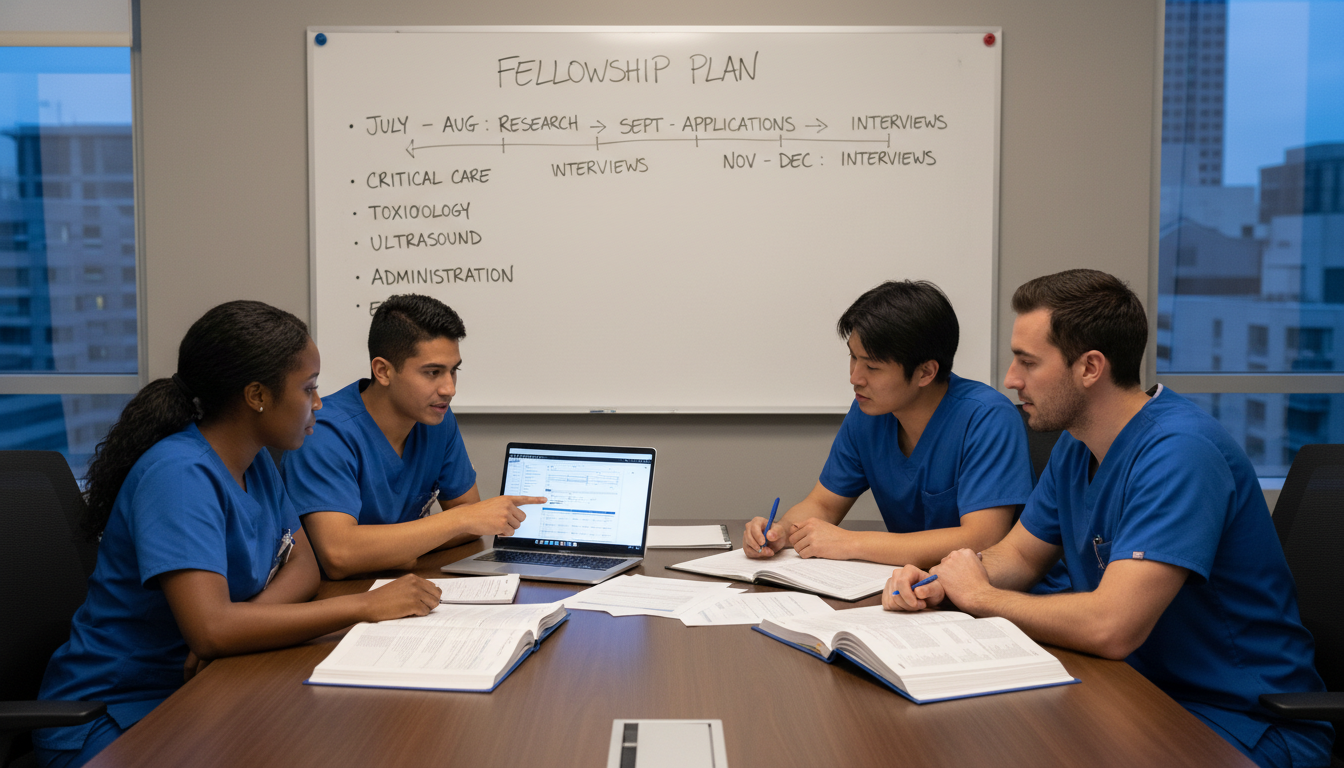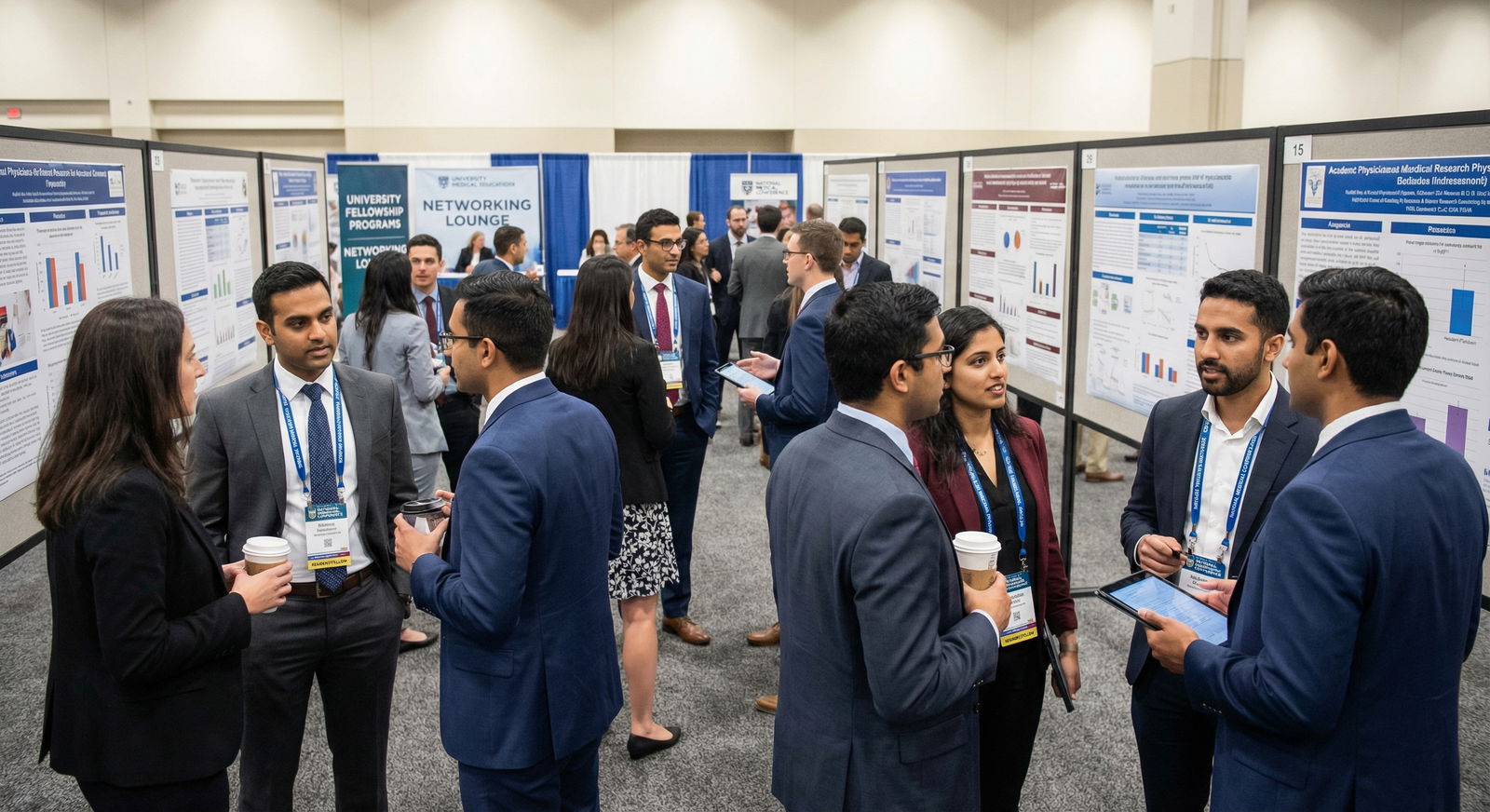
Fellowships can be a transformative accelerator in your medical career, opening doors to subspecialty training, high-impact research, leadership roles, and lifelong Mentorship. Yet for many residents, the path to a coveted fellowship spot feels opaque and intimidating. Positions are limited, competition is intense, and many of the best opportunities are never widely advertised.
Networking—strategic, authentic, and sustained—is often the deciding factor.
This guide reframes Networking not as superficial self-promotion, but as deliberate Professional Development: building relationships, seeking Mentorship, and positioning yourself to hear about and be considered for the right Fellowships. Whether you’re an intern just starting residency or a senior resident preparing applications, you can use these strategies to expand your opportunities and strengthen every part of your Medical Career.
Why Networking is Critical for Fellowship Success
Networking in medicine is not optional “extra credit”; it is a core competency. The more competitive and specialized the fellowship, the more your relationships, reputation, and visibility matter.
How Networking Directly Impacts Fellowship Opportunities
1. Access to the “Hidden” Fellowship Market
Many high-yield opportunities are shared informally:
- A PI gets new funding and quietly looks for a fellow with a specific skill set
- A department is starting a new track (e.g., medical education, health equity, global health) and recruits through word of mouth
- A program director asks trusted colleagues, “Do you know any strong residents interested in our fellowship?”
If your network is thin, you may never hear about these options. If you have mentors and sponsors who know you well, you’re much more likely to be recommended early for these “off-cycle” or unadvertised positions.
2. Better Insight → Stronger Applications
Networking gives you inside knowledge that dramatically sharpens your application:
- What specific qualities a program director really values (e.g., clinical productivity, research output, teaching skills)
- How fellows actually spend their time (clinical vs. research vs. admin)
- How the culture differs between similar-sounding programs
- What fellowship selection committees consider “red flags”
These nuances rarely appear on websites or brochures but often emerge in conversations with current fellows, alumni, and faculty.
3. Mentorship and Long-Term Professional Development
Effective networking also builds your Mentorship ecosystem:
- Career mentors help you decide whether and which fellowship fits your goals
- Research mentors open doors to projects, publications, and letters
- Sponsoring mentors (often senior faculty) actively advocate for you—forwarding your CV, emailing program directors, and nominating you for awards
These relationships shape not just your fellowship outcome, but your entire Medical Career trajectory.
Laying the Foundation: Building Core Networking Skills
You don’t need to be extroverted to be an effective networker. You do need to be intentional, reliable, and willing to learn. Think of networking as a professional skill set that improves with practice.
Clarify Your Goals Before You Network
Networking is most powerful when you know what you’re aiming for. Ask yourself:
- What fellowship(s) am I considering (e.g., cardiology, critical care, heme/onc, palliative, global health)?
- What kind of work do I want in 5–10 years (academic, community, research-intensive, leadership)?
- What gaps exist in my profile (research, teaching, QI, leadership, advocacy)?
Write a brief “career focus statement” for yourself. Example:
“I’m an internal medicine resident interested in a Pulmonary/Critical Care fellowship with a focus on ARDS research and medical education.”
This clarity helps you:
- Select which conferences to attend
- Choose mentors strategically
- Craft a concise, memorable “elevator pitch” when meeting new people
Strategic Networking Channels for Residents and Fellows
Different platforms and spaces give you different types of access. Use several in parallel.
1. Smart Use of Social Media for Fellowship Networking
Social platforms can significantly expand your reach beyond your home institution—especially valuable if your program is small or doesn’t have your desired fellowship on-site.
LinkedIn: Your Professional Landing Page
- Optimize your profile:
- Professional headshot
- Clear headline: “PGY-2 Internal Medicine Resident | Aspiring Cardiology Fellow | Interested in Outcomes Research”
- Concise summary highlighting interests, skills, and goals
- Featured section with posters, publications, or talks
- Connect and engage:
- Add co-residents, attendings, former fellows, and alumni
- Join groups for your specialty (e.g., cardiology, EM, surgical residents)
- Comment thoughtfully on articles or updates from leaders in your field
Action step: Aim to connect with 2–3 new relevant professionals each month and post or share something professionally relevant at least once a month.
X (Twitter) and Specialty Forums (e.g., Doximity)
- Follow:
- Fellowship program accounts
- Major journals and societies (e.g., ACC, ASCO, SCCM)
- Thought leaders and core educators in your interest area
- Engage:
- Reply with thoughtful comments on threads about clinical questions, guidelines, or research
- Share concise reflections from journal clubs, conferences, or cases (de-identified and compliant with privacy rules)
- Discover:
- Many programs post virtual info sessions or open houses on X
- Fellows and program directors often share tips about applying
Pro tip: Save threads or posts that list fellowship application timelines, program resources, or mentorship opportunities and schedule time monthly to review and act on them.
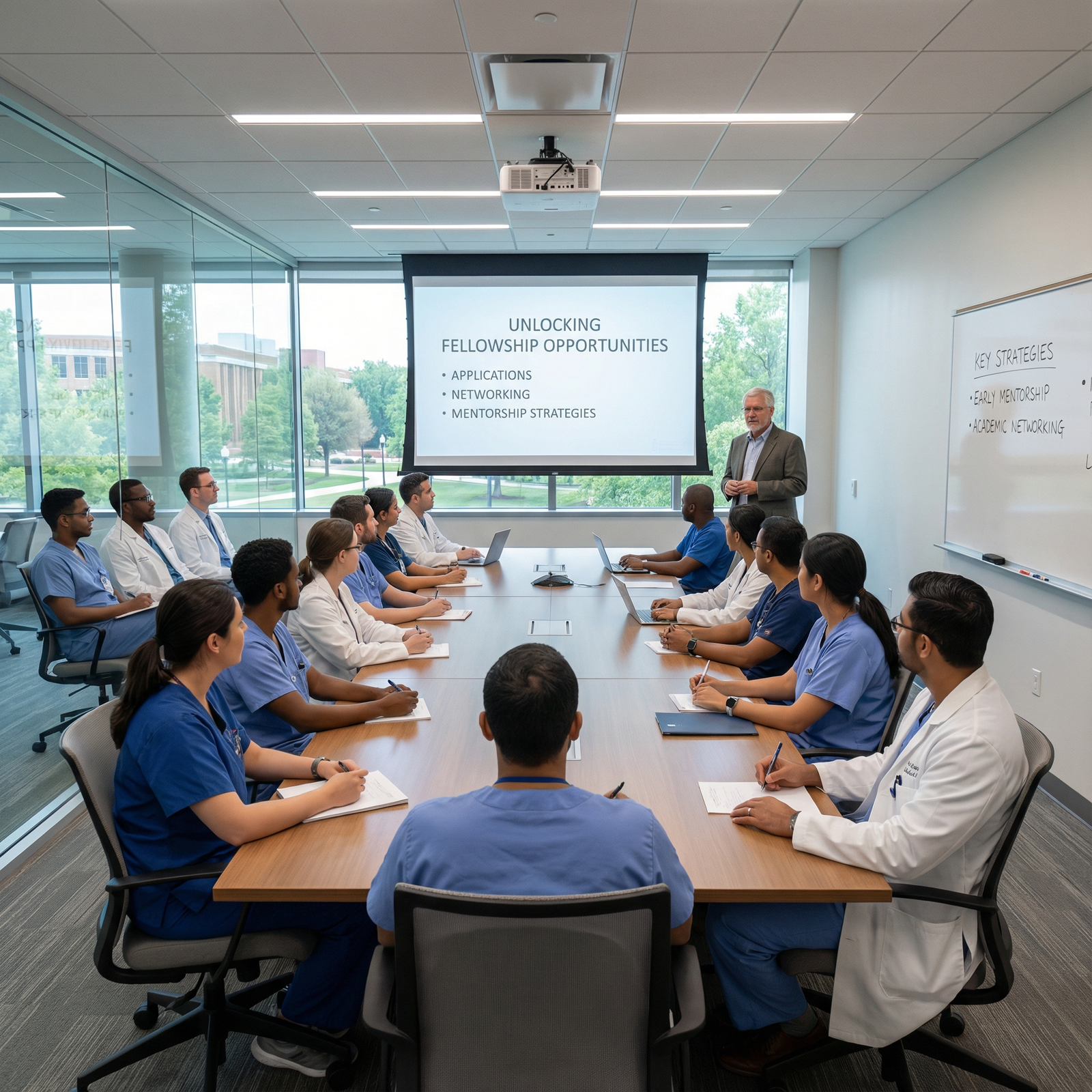
2. Conferences, Workshops, and In-Person Events
Conferences are some of the highest-yield environments for Fellowship networking and Mentorship.
Maximize Conferences for Fellowship Exploration
- Before the conference:
- Identify which programs will have booths or receptions
- Look for “meet the PD” or “meet the fellows” sessions
- Email 1–3 faculty or fellows you admire to ask for a brief coffee or hallway chat
- During the conference:
- Attend sessions led by potential mentors or programs of interest
- Introduce yourself after talks with a concise, specific comment or question
- Visit program booths with a clear purpose: “I’m a PGY-2 interested in your critical care fellowship. Could you share what you look for in applicants?”
- After the conference:
- Email a brief thank-you to people you met (within 72 hours)
- Connect on LinkedIn and reference one specific thing you discussed
Presenting posters or oral abstracts dramatically increases visibility. Being “the resident working on X” makes you more memorable to fellowship faculty in that niche.
Local and Regional Events
Don’t underestimate smaller-scale venues:
- Departmental grand rounds and visiting professor lectures
- Specialty society chapter meetings (e.g., local ACP, ACEP, ACOG)
- Hospital-wide QI or research symposia
These are often quieter spaces where networking is less intimidating, and you may get more one-on-one time with senior faculty.
3. Proactive Engagement with Faculty and Mentors
Your own institution is often the most straightforward starting point for high-impact Networking.
Informational Meetings With Faculty
Even if your home institution doesn’t have the fellowship you want, many attendings know people who do.
How to request a meeting:
- Keep your email short and respectful
- Mention a specific reason: a talk you heard, a paper they wrote, or a shared interest
- Ask for 20–30 minutes to discuss career planning and fellowship
During the meeting:
- Come with 4–6 targeted questions (see informational interview section below)
- Share your goals, current activities, and what you’re trying to decide
- Ask: “Is there anyone else you think I should talk to?” and “May I keep you updated on my progress?”
This approach gradually builds a network of mentors and potential sponsors.
Longitudinal Mentorship Relationships
Aim for at least:
- One career mentor (big-picture planning)
- One research mentor (outputs and skills)
- One sponsor (someone senior who can actively advocate for you)
Show you’re a good mentee:
- Be prepared for meetings
- Follow through on agreed tasks
- Send brief updates every few months, especially before fellowship season
4. Leadership, Committees, and Professional Societies
Leadership roles expand your network horizontally (peers) and vertically (faculty and national leaders).
- Join your specialty’s resident/fellow section within national societies
- Volunteer for:
- Education committees
- Diversity, equity, and inclusion working groups
- Quality improvement or patient safety committees
- Take active roles:
- Organize resident conferences or journal clubs
- Lead a subcommittee or project
- Help with regional or national events
These experiences not only build your CV but also place you in direct, repeated contact with influential people who may later write letters or recommend you for Fellowships.
Making Networking Effective: Strategy Over Serendipity
Networking works when you move beyond collecting business cards and start cultivating meaningful, mutual connections.
Build a Professional “Brand” That Supports Your Fellowship Goals
Your “brand” is what people associate with your name. For fellowship selection committees, this might be:
- “Resident passionate about thrombosis research”
- “Excellent communicator who loves teaching and simulation”
- “EM resident committed to rural and underserved care”
To shape this:
- Choose projects, talks, and roles that align with your niche interest
- Consistently introduce yourself with your focus:
- “I’m Dr. Jones, PGY-3 in IM, very interested in cardio-oncology and outcomes research.”
- Share outputs:
- Posters, abstracts, teaching materials, or QI work on your LinkedIn
- Short summaries of research or education projects in departmental newsletters
The clearer and more consistent your brand, the easier it is for mentors to remember and recommend you for specific Fellowships.
Focus on Depth, Not Just Breadth
You don’t need 500 superficial contacts; you need a smaller number of strong, trusting relationships.
- Listen more than you talk
- Ask about others’ paths and challenges, not just what they can do for you
- Offer help when you can—sharing resources, volunteering on projects, connecting peers
Genuine curiosity and generosity turn contacts into advocates.
Systematic Follow-Up
Failing to follow up is the single most common networking mistake.
Create a simple system:
- Spreadsheet or note with:
- Name, role, institution
- How you met
- Interests/fellowship area
- Date of last contact and next step
- Set a reminder to:
- Send a short update every 3–6 months
- Congratulate them if you see their promotions or publications
- Reconnect before major milestones (e.g., ERAS opens, interview season)
Informational Interviews: Your High-Yield Fellowship Tool
Informational interviews are structured conversations where your goal is to learn—not to directly ask for a spot. Done well, they’re invaluable for both insight and relationship-building.
How to Set Up an Informational Interview
Identify good targets:
- Current fellows in your desired subspecialty
- Recent alumni from your med school or residency now in fellowship
- Program directors or associate PDs
- Faculty prominent in your niche (e.g., sepsis research, simulation education)
Sample email template:
Dear Dr. Smith,
My name is [Name], and I’m a PGY-2 internal medicine resident at [Institution] with a strong interest in [subspecialty] fellowship, particularly [specific area]. I recently [attended your talk / read your article on X / heard great things about your program from Y].
If you have 20–30 minutes in the coming weeks, I would be very grateful for the opportunity to hear your perspective on fellowship training and career development in this field. I’m especially interested in [brief topic or question].
I understand your time is valuable and would be happy to meet virtually or by phone at your convenience.
Sincerely,
[Name, PGY level, institution, contact info]
What to Ask During an Informational Interview
Prepare open-ended questions, such as:
- “What do you wish you had known when applying for this fellowship?”
- “What characteristics make applicants stand out in your program?”
- “How does your fellowship differ from other programs with a similar focus?”
- “What are the most common misperceptions applicants have about your field?”
- “How did you find your key mentors, and how do you recommend residents do the same?”
Near the end, ask:
- “Are there others you recommend I speak with to learn more?”
- “Would it be alright if I occasionally update you as I progress toward fellowship applications?”
After the Interview: Cementing the Connection
Within 24–48 hours:
- Send a personalized thank-you email
- Mention one or two specific insights that were especially helpful
- If appropriate, attach an updated CV or link to your professional profile
Then:
- Add them to your contact-tracking system
- Follow up briefly several months later with an update on how you applied their advice
Translating Your Network Into a Strong Fellowship Application
Your Networking efforts should visibly strengthen your application, not remain background activity.
Letters of Recommendation From Your Network
Strong letters come from people who:
- Have seen your work directly
- Understand your goals
- Are credible voices in the field
Aim to secure at least:
- One letter from a subspecialist in your desired field
- One from a generalist or core faculty who can comment on your overall clinical performance
- One from a mentor who knows your research, education, or leadership work
Tips:
- Ask early (2–3 months before deadlines)
- Provide your updated CV, personal statement draft, and a brief summary of key points you’d be honored if they highlighted
- Clarify deadlines and submission instructions
Incorporating Networking and Mentorship Into Your Personal Statement
Without name-dropping excessively, you can show your engagement with the field:
- Briefly mention:
- Conversations with fellows or faculty that influenced your choice
- Mentorship experiences that clarified your career direction
- Collaborative projects that emerged from Networking or leadership roles
Example:
“Conversations with Dr. X during my rotation at [institution] and subsequent mentorship calls with current fellows have reinforced my desire to train in a program that prioritizes [specific values].”
Mentors as Active Advocates
Some mentors will go beyond letters:
- Email program directors to recommend you
- Introduce you to faculty at other institutions
- Help you choose where to apply and how to rank programs
- Give mock interviews tailored to specific programs
To enable this:
- Share your application list with key mentors
- Ask explicitly: “Would you feel comfortable reaching out to any programs where you know the leadership on my behalf?”
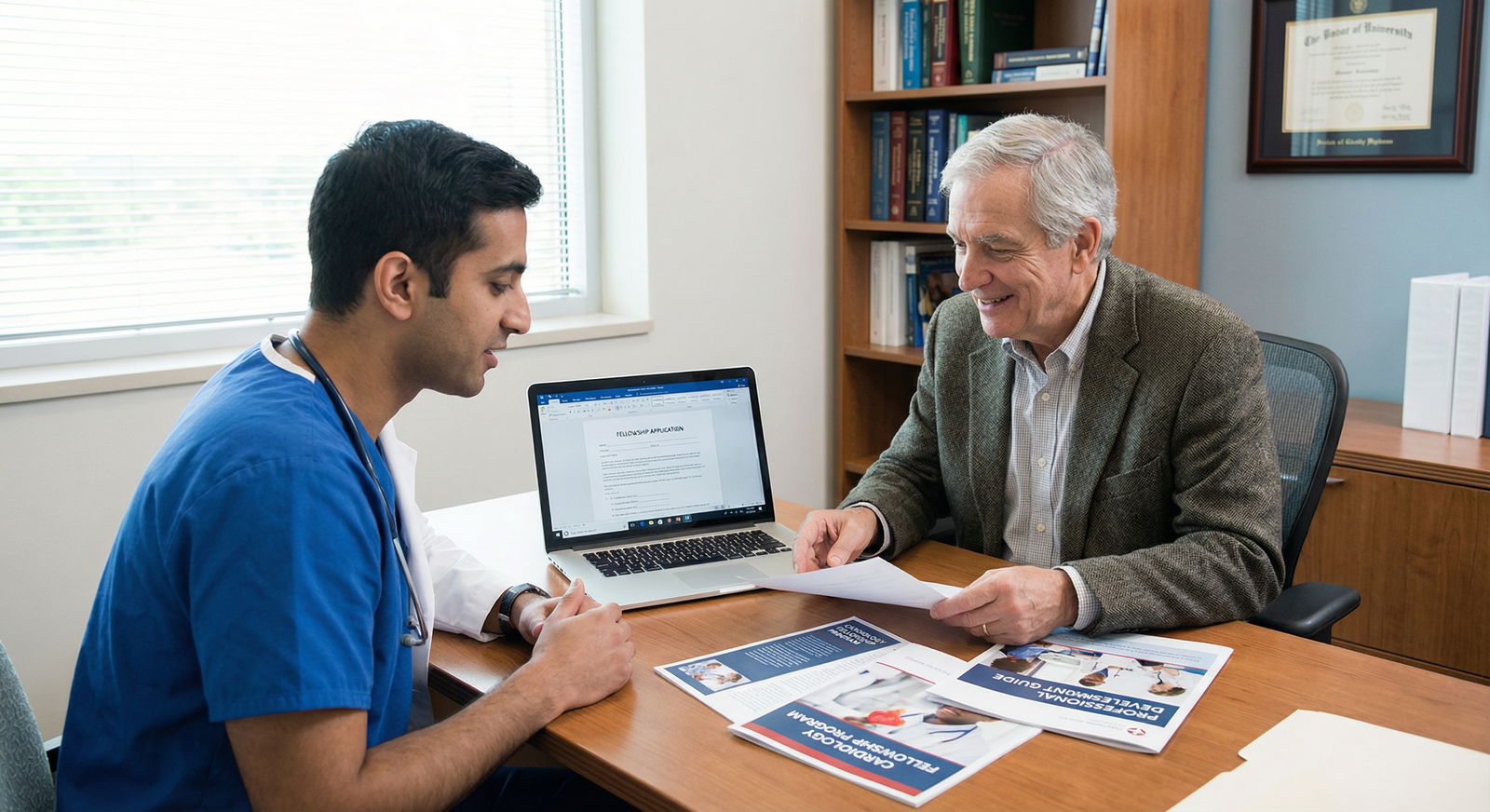
Putting It All Together: A Sustainable Networking Strategy During Residency
Residency is demanding, so your Networking plan must be realistic and sustainable.
A Sample Networking Roadmap
PGY-1 (Intern Year)
- Focus: Exploration and foundational relationships
- Actions:
- Identify 1–2 potential career mentors
- Attend departmental grand rounds and introduce yourself to at least one speaker per month
- Start LinkedIn profile and connect with your co-residents and core faculty
PGY-2
- Focus: Clarifying fellowship interests and building your “brand”
- Actions:
- Commit to 1–2 research, QI, or education projects in your chosen area
- Attend at least one regional or national conference
- Conduct 3–5 informational interviews with fellows and faculty in your field
PGY-3 and Beyond
- Focus: Application strategy and targeted advocacy
- Actions:
- Refine your program list with guidance from mentors
- Secure letters of recommendation early
- Ask key mentors if they can reach out to select programs
- Continue to nurture relationships even after applications are submitted
Frequently Asked Questions About Networking for Fellowships
How early should I start Networking if I’m considering a fellowship?
Begin as soon as you have even a tentative interest—ideally by early PGY-2, and earlier if you’re in a shorter residency (e.g., EM, pediatrics). Building authentic Mentorship relationships and developing a focused track record (research, QI, teaching) takes time. Starting early reduces stress and makes your Professional Development more intentional.
What if I’m introverted or feel awkward approaching people?
You can still be an excellent networker. Focus on:
- One-on-one or small-group conversations rather than large social events
- Structured settings like clinic, teaching rounds, or scheduled meetings
- Email-based or virtual informational interviews
- Asking thoughtful questions and listening more than you talk
Prepare a short self-introduction in advance so you’re not improvising under pressure.
How can I keep track of all my networking contacts effectively?
Use a simple system you’ll consistently maintain:
- Spreadsheet, note app, or contact management tool
- Track:
- Name, role, institution
- How you met and main topics discussed
- Any promised follow-up or shared resources
- Last contact date and a future follow-up reminder
Review this list monthly, especially during fellowship season, to ensure you’re staying in touch strategically.
Is it appropriate to network with people outside my immediate specialty?
Yes—and it’s often advantageous. Cross-disciplinary Networking can:
- Lead to collaborative research or QI projects
- Introduce you to mentors with broader system-level perspectives
- Help if you’re considering combined fellowships (e.g., pulmonary/critical care, palliative/geriatrics) or career pivots
Medicine is increasingly team-based; understanding and connecting across specialties strengthens your overall Medical Career.
How do I avoid coming across as transactional when Networking for fellowships?
Focus on relationship-building, not just outcomes:
- Show genuine curiosity about others’ career paths and challenges
- Offer help when you can—sharing articles, giving feedback to juniors, volunteering on projects
- Stay in touch even when you don’t need anything
- Be transparent: it’s fine to say, “I’m exploring fellowship options and would value your perspective,” as long as you’re not pressuring someone for favors
When Networking is framed as mutual learning and long-term professional community, it feels authentic rather than opportunistic.
Investing in Networking, Mentorship, and Professional Development is one of the highest-yield decisions you can make during residency. Done thoughtfully and consistently, it will not only help you secure the right fellowship—it will also give you a supportive professional network that carries forward throughout your entire Medical Career.