Neurology residency goes by quickly. Between busy inpatient services, EEG and EMG rotations, night float, and boards preparation, it can feel like there’s barely time to think about what comes next. Yet, if you’re considering subspecialty training, strategic fellowship preparation during residency can dramatically improve your options and your experience in the neuro match.
This guide walks you step-by-step through fellowship preparation in neurology—from deciding whether to pursue fellowship, to refining your interests, building a competitive profile, planning your fellowship application timeline, and navigating interviews and offers.
Understanding the Role of Fellowship in a Neurology Career
Fellowship training is increasingly common in neurology. In many practice settings, especially academic and large multi-specialty groups, subspecialty expertise is either expected or strongly preferred.
Why pursue a neurology fellowship?
Common reasons neurology residents choose to subspecialize include:
Clinical depth and expertise
- Desire to manage complex cases (e.g., refractory epilepsy, advanced movement disorders, neuroimmunology).
- Interest in mastering advanced diagnostics (EMG, EEG, intraoperative monitoring, neuroimaging).
Career differentiation and job market
- Subspecialty training can make you more competitive in certain markets (e.g., epilepsy, stroke, neuromuscular).
- Some health systems prefer or require fellowship for specific roles (e.g., neurocritical care attending).
Academic and research interests
- Fellowship often provides protected research time, specialized mentorship, and a pathway to a research-focused career.
- Many NIH and institutional career development awards assume subspecialty fellowship training.
Procedural opportunities
- Some neurology fellowships are procedure-heavy: neurocritical care, interventional neurology (with additional training), EMG-heavy neuromuscular, botulinum toxin and DBS in movement disorders, headache procedures (nerve blocks, trigger points, Botox), etc.
Lifestyle and practice design
- Certain fellowships can help you build more clinic-based or more shift-based careers, depending on your preferences (e.g., headache versus neurocritical care).
Common neurology fellowship options
Not exhaustive, but the major pathways include:
- Vascular Neurology (Stroke)
- Neurocritical Care
- Clinical Neurophysiology (EEG/EMG focus varies by program)
- Epilepsy
- Movement Disorders
- Neuromuscular Medicine
- Multiple Sclerosis / Neuroimmunology
- Cognitive / Behavioral Neurology
- Headache Medicine
- Neuro-oncology
- Neurohospitalist Medicine
- Interventional Neurology / Endovascular Surgical Neuroradiology (usually requires additional pathways)
- Palliative Neurology (often via palliative medicine)
Each subspecialty has its own culture, job market, and typical workload. Your first step in preparing for fellowship is understanding how these options align with your long-term goals and with the realities of residency life and challenges you’re facing now.
Exploring Your Interests During Residency
Your first 18–24 months of neurology residency are critical for exploration. Instead of defaulting to the most visible subspecialty, be intentional in how you sample different areas.
Use rotations strategically
PGY-2 (or early neurology years)
- Treat this year as your “survey course” in neurology.
- Keep a running list (in a note app) of:
- Cases that energized you.
- Cases that stressed you in a good way (challenging but satisfying).
- Cases that drained you consistently (important signal too).
PGY-3
- Focus on 2–3 subspecialties you’re seriously considering.
- Arrange electives or extra outpatient clinics in those areas.
- If your program allows, schedule these electives before the main fellowship application season (typically late PGY-3 for many fellowships).
Questions to ask yourself about each subspecialty
As you rotate through services, reflect on:
Day-to-day work
- Can you see yourself doing these tasks most days?
- Is the work more cognitive, procedural, or mixed—and what do you prefer?
Typical patient population
- How do you feel about seeing mostly chronic versus acute patients?
- Are you okay with end-of-life discussions and high mortality settings (stroke, neurocritical care, neuro-oncology), or do you prefer chronic management (MS, movement disorders, headache)?
Pace and intensity
- Do you thrive in high-acuity, fast-paced environments (ICU, ED-based stroke)?
- Or do you prefer longitudinal, relationship-driven outpatient care?
Lifestyle fit
- Are you comfortable with nights/weekends and in-house call long-term?
- Do you want a primarily outpatient schedule eventually?
Your answers won’t be perfect, but patterns will emerge as you progress through residency.
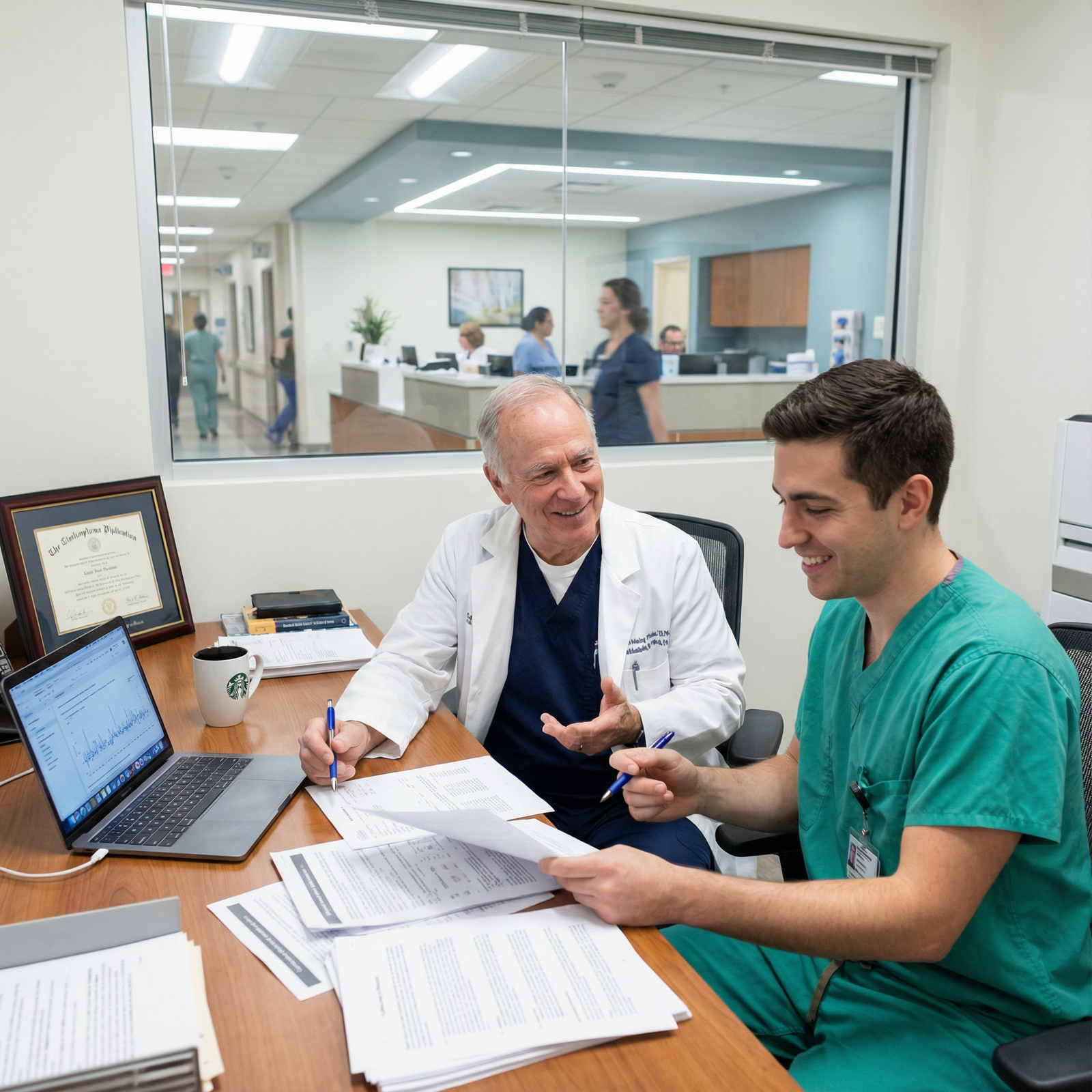
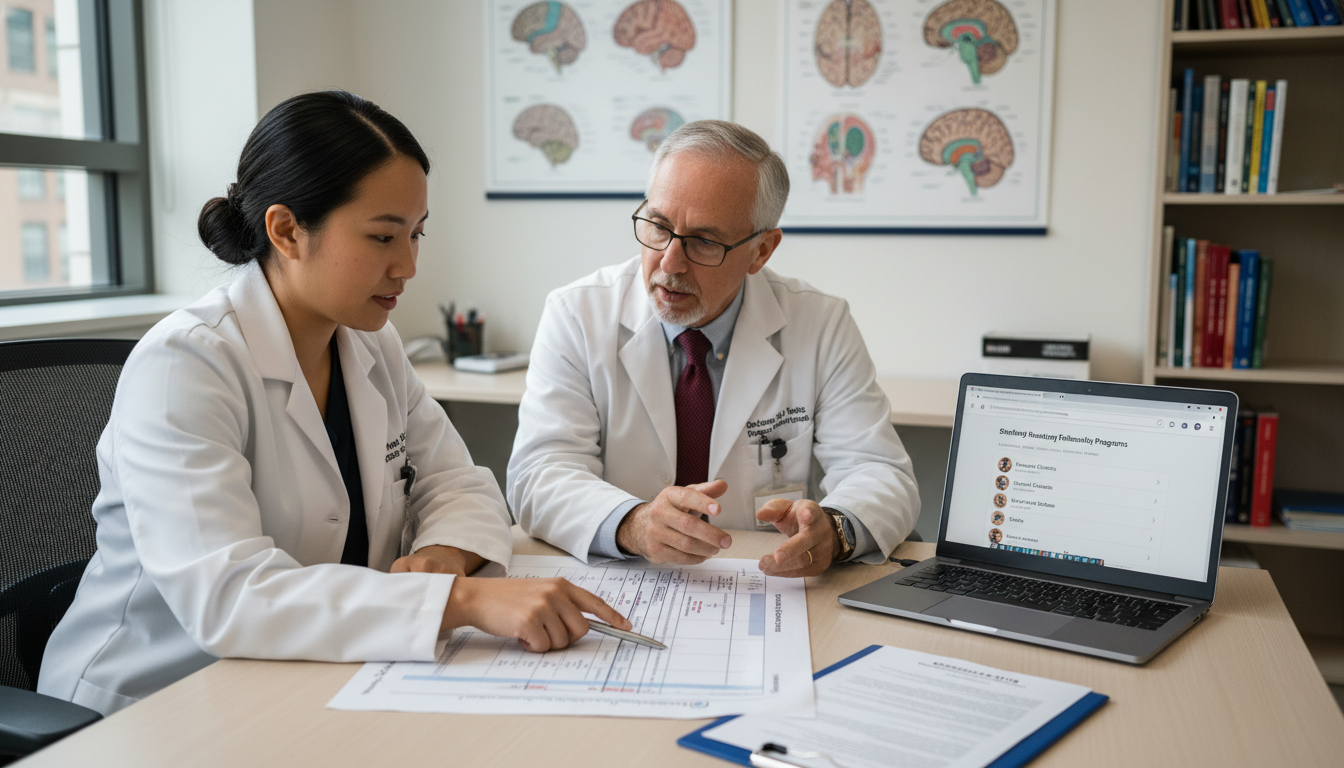
Mentorship: Your most important resource
As you think through how to get fellowship training that fits you well, good mentorship is crucial.
Identify at least 2 types of mentors:
- Career mentor – broad guidance about neurology, job markets, life planning.
- Content mentor – specific guidance within your area of interest (e.g., epilepsy attending if you’re leaning toward epilepsy fellowship).
How to find them
- Notice which faculty you naturally connect with on rounds or in clinic.
- Attend divisional conferences (e.g., stroke conference, epilepsy case conference).
- Ask your program director or chief residents who are good mentors in each subspecialty.
How to use mentorship effectively
- Come to meetings with 2–3 specific questions (e.g., “Should I apply this year or delay?” “What’s the reality of the job market in X?”).
- Ask about fellowship reputations, not just for name recognition but for:
- Procedural volume
- Research support
- Job placement
- Work-life balance
Building a Competitive Fellowship Application Profile
The neurology fellowship landscape is heterogeneous: some fellowships are extremely competitive (e.g., movement disorders at major academic centers), while others are more accessible. Regardless, there are core elements program directors look for during the neuro match.
Core components program directors value
Clinical performance
- Strong ward and consult evaluations.
- Evidence you’re reliable, collegial, and can manage complexity.
- Being a good team member matters as much as test scores.
Letters of recommendation
- At least one from a faculty member in your chosen subspecialty.
- One from your program director or chair.
- Additional letter(s) from faculty who know you well clinically or in research.
Scholarly activity
- Doesn’t need to be high-impact bench science.
- Relevant activities include:
- Case reports or series.
- Quality improvement (QI) projects.
- Clinical research.
- Educational projects (curriculum development, teaching materials).
Clear narrative of interest
- A personal statement that convincingly explains:
- Why this subspecialty.
- Why now.
- How specific experiences shaped your path.
- What career you are aiming for (academic vs community vs hybrid).
- A personal statement that convincingly explains:
Professionalism and communication
- How you present yourself on email, during interviews, and in interactions with coordinators.
- Responsiveness, clarity, and courtesy are quiet but important signals.
Tailoring your profile to different fellowship types
While the basics are universal, different neurology fellowship types may value particular aspects more heavily.
Vascular Neurology / Neurocritical Care
- Strong inpatient performance, especially on ICU and stroke services.
- Comfort with urgency, procedures (central lines, LPs), and cross-disciplinary work.
- QI projects (e.g., door-to-needle time improvements) are highly relevant.
Epilepsy / Clinical Neurophysiology
- Demonstrated interest in EEG/EMU.
- Willingness to interpret large volumes of data.
- Research or case work related to epilepsy, seizures, or neurophysiology.
Movement Disorders / Cognitive Neurology
- Interest in long-term outpatient management.
- Patient communication skills and patience with complex chronic disease.
- Exposure to DBS, botulinum toxin, neuropsychology, or rehabilitation.
Neuromuscular / Neuroimmunology / MS
- EMG exposure and enthusiasm (for neuromuscular).
- Comfort with immunotherapies and longitudinal disease management (for MS).
- Potential involvement with MDA, NM clinics, or MS clinics.
Headache Medicine
- Outpatient clinic enthusiasm.
- Interest in functional impact and quality of life improvement.
- Possible experience with nerve blocks, Botox, or infusion therapies.
Concrete steps by postgraduate year
PGY-1 (if linked) / Early PGY-2
- Focus: Solid clinical foundation.
- Start casually exploring:
- Attend grand rounds and divisional conferences.
- Note which topics and patient stories stay with you.
- Academic preparation:
- Begin tracking interesting cases that could become case reports.
- Get comfortable reading primary neurology literature.
Mid–Late PGY-2
- Narrow to 2–3 likely fellowship interests.
- Actions:
- Ask your program leadership to help arrange electives in potential subspecialties for early PGY-3.
- Join one research or QI project—even a modest one—under a likely letter writer.
- Attend at least one national or major regional neurology conference if possible (AAN, subspecialty meetings).
PGY-3
This is often the key year in the fellowship application timeline.
Early PGY-3:
- Solidify your top-choice subspecialty.
- Take on more responsibility in that service if available (e.g., senior resident roles).
- Meet with potential letter writers at least 4–6 months before application deadlines; discuss your goals and ask how to strengthen your application.
Mid–Late PGY-3:
- Draft your CV and personal statement.
- Finalize your list of programs.
- Keep up momentum on any ongoing scholarly projects (aim to submit an abstract or manuscript before applications go out, even if still in preparation).
PGY-4
- Application, interviews, and ranking.
- Continue clinical excellence; many programs ask for updated evaluations.
- If unmatched or if you decide to change direction, discuss gap-year or alternative pathways with mentors.
Mastering the Fellowship Application Process and Timeline
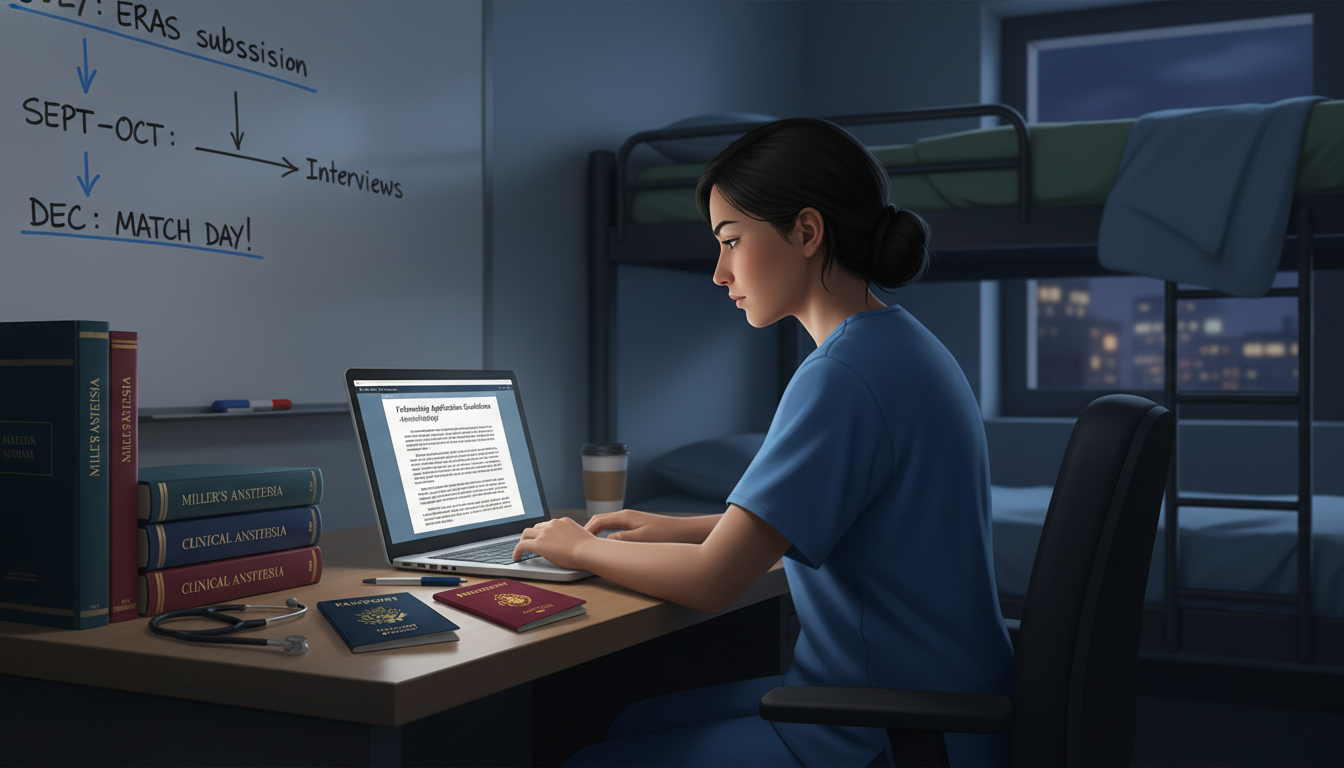
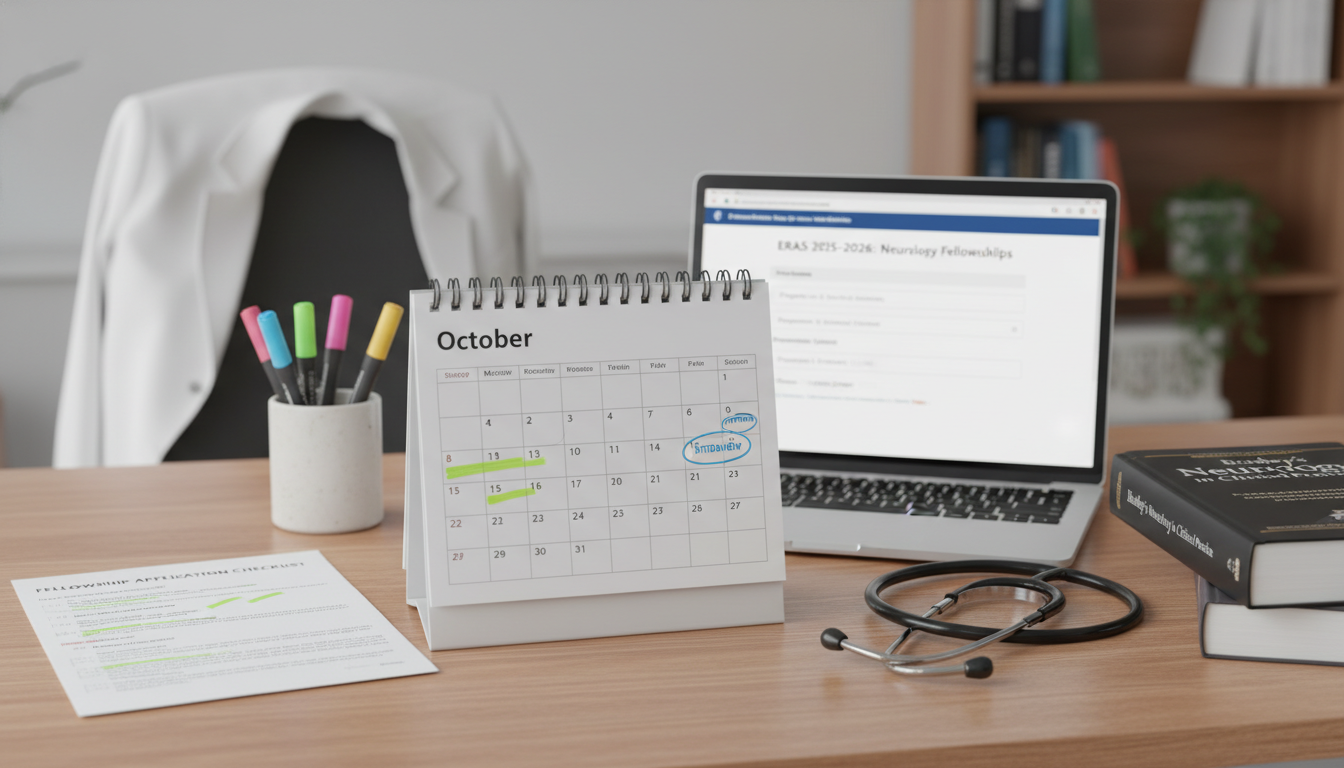
Neurology fellowship applications do not all follow the same system or calendar, which can be confusing. Some use ERAS and NRMP, others use SF Match, and some are still informal or institution-specific. Always verify details for the specific subspecialty and year you’re applying.
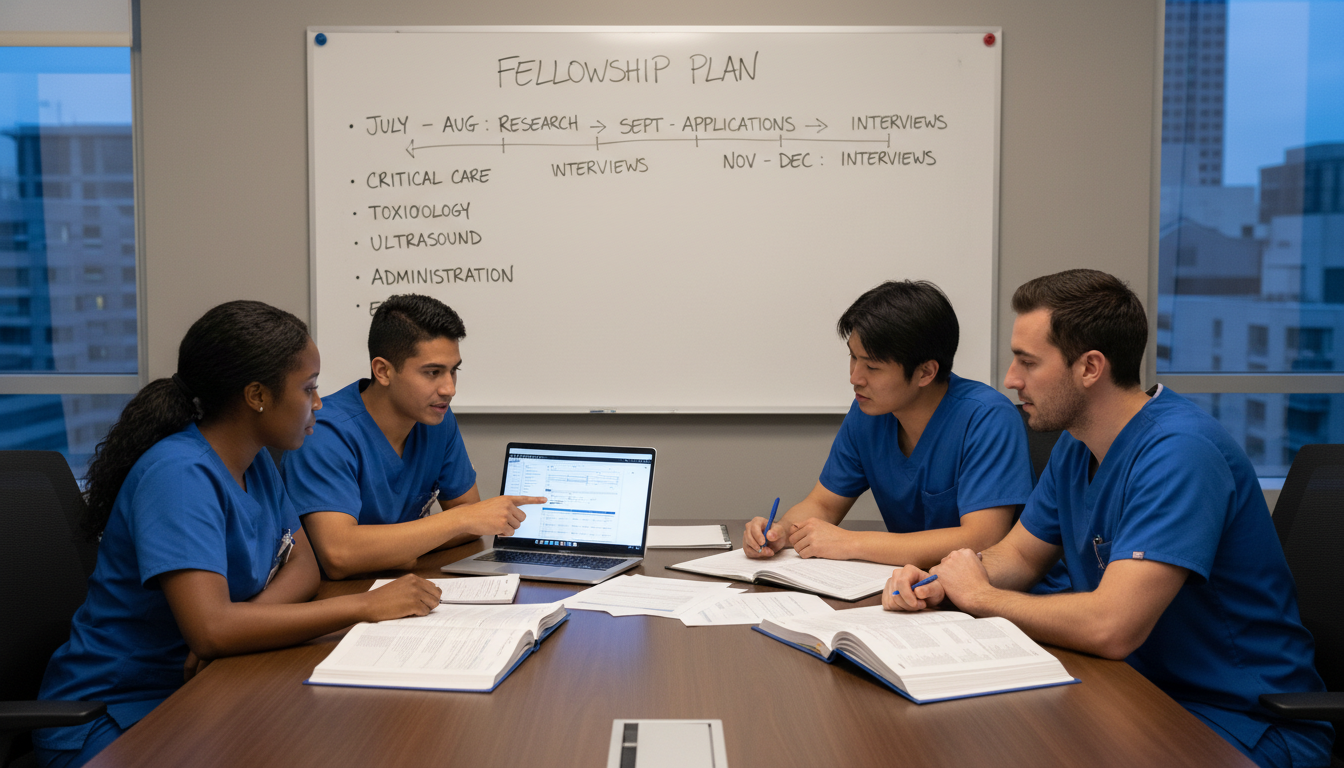
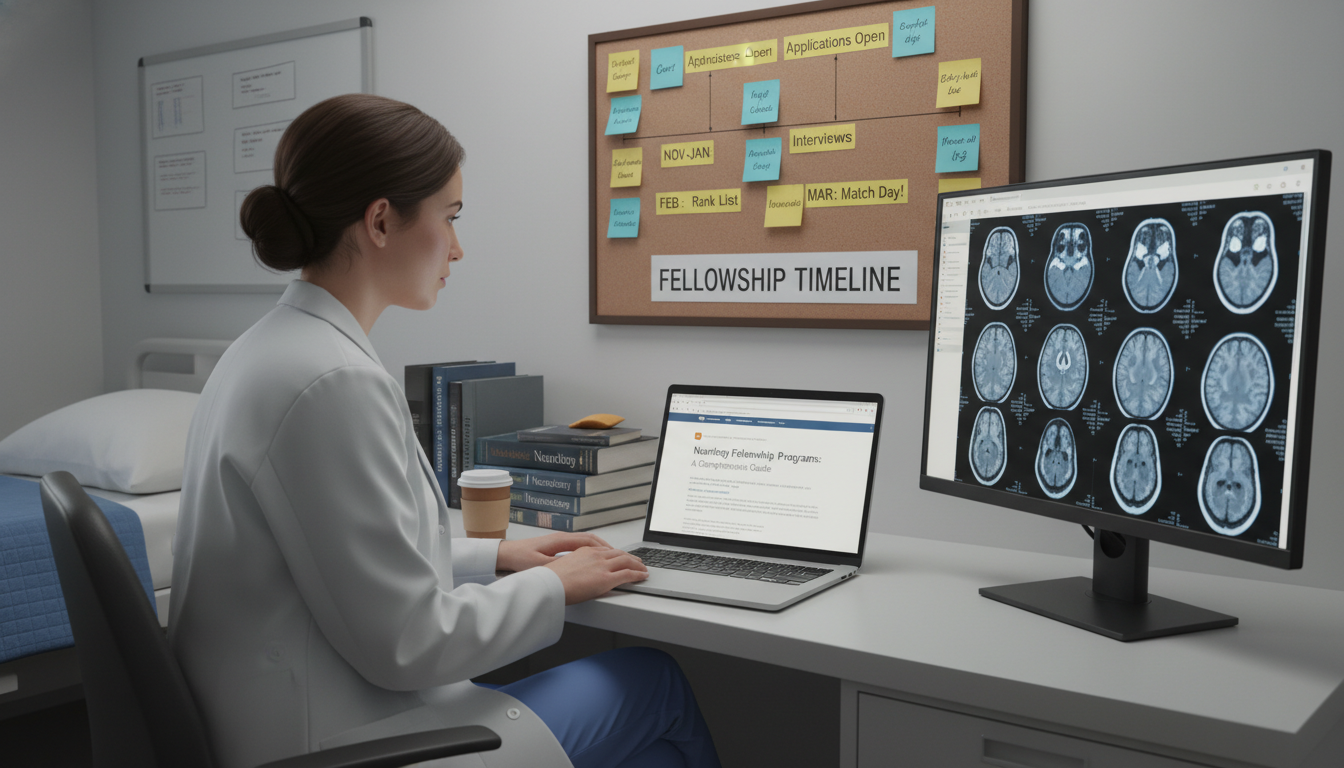
General fellowship application timeline (for a PGY-3 applicant)
This is a generalized structure; exact months may vary by subspecialty and year.
12–18 months before fellowship start (mid PGY-2)
- Start serious career conversations with mentors.
- Identify target subspecialties.
- Begin or join projects related to your area of interest.
9–12 months before fellowship start (early PGY-3)
- Research programs: clinical focus, faculty, call schedule, procedural opportunities.
- Create a spreadsheet tracking:
- Program name and location
- Application platform (ERAS, SF Match, email)
- Deadlines and required materials
- Letter requirements
- Notes on strengths/concerns
6–9 months before fellowship start (mid PGY-3)
- Finalize letter writers; give them:
- Updated CV
- Draft of personal statement
- Brief summary of your goals and key experiences
- Begin submitting applications as systems open.
3–6 months before fellowship start (late PGY-3 to early PGY-4)
- Interview season.
- Follow up with thank-you emails.
- Clarify ranking strategies with mentors.
Match and post-match (mid PGY-4)
- Match day / offer day.
- If unmatched, seek immediate guidance about:
- Unfilled positions.
- Off-cycle positions.
- Reapplying with a stronger profile next cycle.
Optimizing your application materials
CV
- Keep it clean, chronological, and easy to scan.
- Separate sections: Education, Training, Honors/Awards, Research, Presentations, Publications, Leadership/Service, Teaching.
- Emphasize neurology-related activities but don’t omit non-neurology achievements that highlight leadership or resilience.
Personal statement
- Tell a cohesive story:
- Opening: a clinical moment or experience that crystallized your interest (avoid clichés).
- Middle: how your residency training and scholarly work prepared you for this path.
- Closing: your career goals and how this particular fellowship will help you achieve them.
- Avoid generic statements that could apply to any subspecialty or program.
- Tell a cohesive story:
Letters of recommendation
- Choose writers who:
- Know you well enough to comment on your character and clinical performance.
- Work in your subspecialty of interest when possible.
- Approach them early and explicitly ask:
- “Would you feel comfortable writing a strong letter of recommendation for my [subspecialty] fellowship applications?”
- Choose writers who:
Neuro match nuances by subspecialty
Vascular Neurology and Neurocritical Care
- Many programs use ERAS/NRMP.
- Deadlines often earlier due to popularity and structured match processes.
Clinical Neurophysiology/Epilepsy
- Some use NRMP, some SF Match, some direct applications.
- Check both the AAN and subspecialty society websites for up-to-date systems.
Movement Disorders, Headache, Cognitive
- A mix of formal match systems and direct applications.
- Networking at subspecialty conferences can be especially helpful.
Because systems and dates change, always cross-check with:
- AAN Fellowship Directory
- Subspecialty society websites (e.g., ACNS, ASN, AHS, MDS)
- Your program’s fellowship director or coordinator
Succeeding in Interviews, Ranking, and Transitioning to Fellowship
Once your applications are out, the focus shifts to interviews, assessing program fit, and preparing for the actual transition from residency to fellowship.
Interview preparation
Know your application cold
- Be ready to discuss any project, abstract, or line on your CV.
- Anticipate questions about:
- Why this subspecialty?
- Why this particular program?
- Career goals in 5–10 years.
Common neurology fellowship interview questions
- “Tell me about a challenging patient and what you learned.”
- “Describe a time you had a conflict on the team and how you handled it.”
- “What role do you see research playing in your career?”
- “What are your strengths and weaknesses as a clinician?”
Questions to ask programs
- Case mix and volume:
- “What is a typical fellow’s weekly schedule?”
- “How many EMG/EEG/LPs/DBS programming sessions does a fellow usually perform?”
- Supervision and autonomy:
- “How does autonomy progress over the year?”
- Education:
- “What structured didactics exist for fellows?”
- Career outcomes:
- “What have your recent graduates gone on to do?”
- Wellness:
- “How are nights and weekends handled?”
- “What support is in place for fellow burnout or stress?”
- Case mix and volume:
Ranking and decision-making
Clarify your priorities before rank lists are due:
- Geography and family considerations.
- Program reputation vs day-to-day quality of training.
- Procedural experience vs research opportunities.
- Future job goals (academic vs community vs hybrid).
Red flags to weigh carefully:
- Fellows expressing consistent dissatisfaction with workload or supervision.
- Lack of clarity about curriculum or expectations.
- Program leadership turnover with unclear succession.
Discuss your draft rank list with at least one trusted mentor who knows your personality and long-term goals.
Preparing for the transition to fellowship
Once matched, fellowship preparation shifts from getting in to getting ready.
Clinical readiness
- Identify areas you feel less confident in and shore them up before fellowship:
- E.g., an incoming epilepsy fellow might spend time improving EEG basics.
- An incoming stroke fellow might review tPA and thrombectomy literature.
- Identify areas you feel less confident in and shore them up before fellowship:
Licensing and logistics
- Start the state medical license process early (often 4–6 months).
- Complete credentialing paperwork promptly to avoid delays in fellowship start or moonlighting.
Personal and wellness planning
- If moving, plan housing early—particularly in major urban centers.
- Think about support systems: family, friends, therapy, physician support groups.
- Fellowship can be intense; proactive wellness planning is part of realistic residency life and challenges you should address early.
Preparing for Life After Fellowship
Fellowship is a springboard, not the finish line. Think ahead during training about your first job and longer-term career trajectory.
Using fellowship to position yourself for your ideal job
Early in fellowship
- Clarify your career direction with your fellowship director:
- Academic clinician-educator?
- Clinician-scientist?
- Primarily community practice with subspecialty niche?
- Align your projects and experiences accordingly.
- Clarify your career direction with your fellowship director:
CV building during fellowship
- Aim to emerge with:
- 1–3 publications or meaningful scholarly outputs.
- A clear subspecialty niche (e.g., a specific epilepsy surgery interest, demyelinating disorders focus, movement disorders botulinum toxin expertise).
- Strong letters from fellowship leadership.
- Aim to emerge with:
Job search timeline
- Many neurology subspecialists sign contracts 6–12 months before finishing fellowship.
- Start seriously exploring options early in fellowship:
- Attend job fairs at conferences.
- Talk to recent grads about their job search.
- Reach out directly to departments or groups that interest you.
How to get fellowship-level positions if you didn’t do a formal fellowship
In some settings, especially smaller or underserved regions, neurologists without formal fellowship can still develop a focus through:
- Additional mini-fellowships or observerships.
- High-volume practice in an area of focus (e.g., headache, general EMG).
- Continuing medical education and certification (e.g., UCNS for some subspecialties).
However, for many academic or tertiary center positions, a formal ACGME-accredited fellowship remains the standard. If you think you may want such a position, it’s far easier to pursue fellowship during or immediately after residency than to circle back years later.
FAQs: Fellowship Preparation in Neurology
1. Do I have to do a fellowship after neurology residency?
No. Many neurologists practice successfully as general neurologists without additional fellowship training, particularly in community or smaller hospital settings. However, in academic centers and highly specialized practices, fellowship is often expected or strongly preferred. Consider your long-term career goals, preferred practice environment, and interest in subspecialty care when deciding.
2. When should I decide on a subspecialty and start applying?
Most residents decide by mid–PGY-3, but exploration should start much earlier. Use PGY-2 to sample broadly and narrow to 2–3 serious options by late PGY-2. By early PGY-3, you should focus on a single primary subspecialty, identify mentors and letter writers, and actively prepare for the upcoming fellowship application timeline for your target programs.
3. How important is research for neurology fellowship applications?
It depends on the subspecialty and your career goals. For research-heavy fields (e.g., neuroimmunology at major academic centers), research experience is more heavily weighted. For clinically focused fellowships, strong clinical performance and solid letters can outweigh limited research. Still, having at least some scholarly activity—case reports, QI projects, abstracts—demonstrates curiosity and follow-through and can strengthen any application.
4. What if I change my mind about subspecialty after starting fellowship?
It happens. Some residents start one fellowship and realize another field fits them better, or that they prefer general neurology. If this occurs:
- Talk early and honestly with your fellowship director and mentors.
- Explore options such as:
- Completing the current fellowship, then doing another.
- Transitioning to a different fellowship within the same institution (if feasible).
- Moving into a general neurology position and building a niche via experience and CME.
While not ideal, changing direction is not career-ending. Thoughtful reflection and transparent communication can help you realign your path.
Fellowship preparation in neurology is both a strategic and deeply personal process. By exploring intentionally during residency, cultivating strong mentorship, understanding the neuro match landscape, and aligning your choices with your long-term goals, you can move from residency life and challenges into a fulfilling, sustainable neurology career that truly fits you.