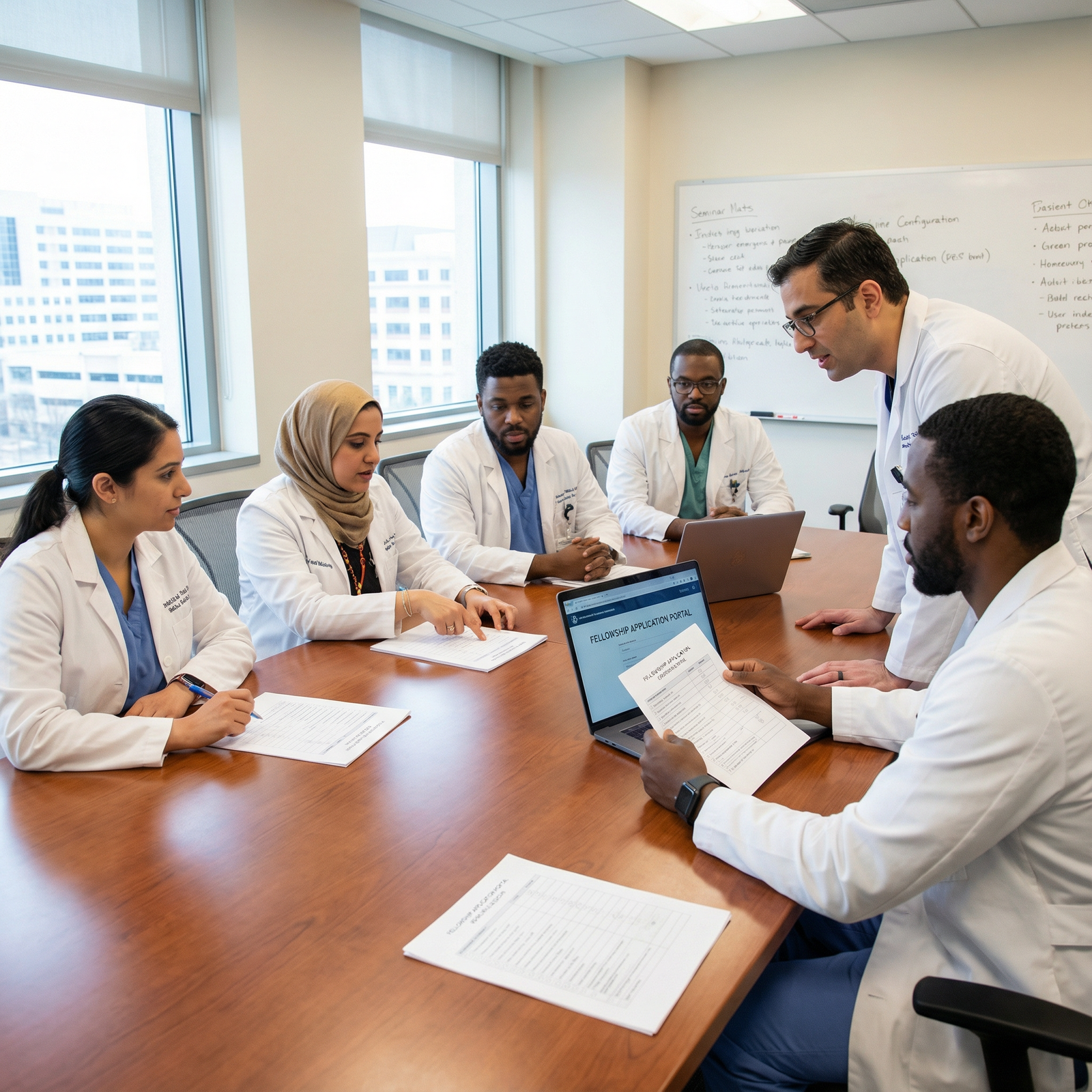
Understanding the Fellowship Landscape as a Non‑US Citizen IMG
For a non-US citizen IMG in pathology, planning early for fellowship is not optional—it is essential. Your status as a foreign national medical graduate adds layers of logistics (visas, timing, credentialing) on top of the already competitive pathology match and fellowship market.
Most pathology residents in the US pursue at least one fellowship, and many complete two. Common accredited pathology fellowships include:
- Surgical Pathology
- Cytopathology
- Hematopathology
- Transfusion Medicine / Blood Banking
- Dermatopathology
- Neuropathology
- Pediatric Pathology
- Molecular Genetic Pathology
- GI, GYN, GU, Breast, Thoracic, and other subspecialty surgical pathology fellowships (some ACGME-accredited, some not)
For a non-US citizen IMG, each of these may differ in:
- Visa sponsorship possibilities (J‑1 vs H‑1B vs no visa)
- Competitiveness and applicant volume
- Requirements for prior residency training or US board eligibility
- Expectations for research or subspecialty exposure
Why Fellowship Planning Is Different for Foreign National Medical Graduates
Compared with US graduates, a non-US citizen IMG must factor in:
- Visa constraints: Most residents are on J‑1 or H‑1B visas. Some fellowships only accept J‑1; others cannot sponsor visas at all.
- Timing pressure: You often need to secure a fellowship earlier so visa paperwork can be processed on time.
- Perceived risk by programs: Some program directors worry about visa delays, funding, and long-term retention. Strong documentation and clear communication become more important.
- Licensing and board exam sequence: Requirements for board eligibility and independent licensure may be different for you, impacting when and where you can start fellowship or moonlight.
Recognizing these realities early—ideally in PGY‑1—allows you to build a strategic plan instead of reacting to deadlines.
Choosing the Right Pathology Fellowship: Strategy for Non‑US Citizen IMGs
The first big step in preparing for fellowship is deciding what you actually want from your career and training. For a non-US citizen IMG, this decision has extra dimensions: visa options, job market stability, and long-term career goals (US vs international practice, academia vs community).
Clarify Your Long‑Term Career Goals
Before locking into a specific fellowship, answer:
- Do you plan to stay in the US long-term, return to your home country, or remain flexible?
- Do you want a primarily diagnostic sign-out career, or a mix of research, teaching, and diagnostics?
- Are you drawn to high-volume private practice, academic medicine, or a hybrid setting?
- How much do you enjoy morphology versus molecular diagnostics, procedures (e.g., bone marrows, FNA), or lab management?
Your responses guide what type of fellowship is most strategic:
Interested in community practice/private groups:
- High-yield fellowships: Surgical Pathology, Cytopathology, Hematopathology, GI, GYN, Breast, GU
- Emphasis: broad diagnostic volume, efficiency, independent sign-out skills.
Interested in academic medicine and research:
- High-yield fellowships: Hematopathology, Molecular Genetic Pathology, Transfusion Medicine, Neuropathology, Pediatric Pathology, or multiple subspecialties.
- Emphasis: research productivity, niche expertise, strong CV.
Considering international career or flexibility:
- Choose fellowships that are globally recognized and in demand (Hematopathology, Cytopathology, Transfusion Medicine, Surgical Pathology).
Balancing Competitiveness, Interest, and Visa Realities
Some fellowships are more competitive nationally, and this can be magnified for a foreign national medical graduate. In many institutions, the most competitive (varies by region and year) tend to include:
- Dermatopathology
- Molecular Genetic Pathology
- GI Pathology (at top-tier programs)
- Hematopathology (at certain academic centers)
- Select elite Surgical Pathology programs
To maximize your chances:
Create a tiered list of fellowship types
- Tier 1: Your dream field (e.g., Hematopathology).
- Tier 2: Acceptable alternative fields that still align with your goals (e.g., Transfusion Medicine, Cytopathology).
- Tier 3: Additional fellowships that strengthen your general diagnostic profile (e.g., Surgical Pathology).
Map these against visa-friendly institutions
- Look for programs that:
- Explicitly state J‑1 and/or H‑1B sponsorship on their websites.
- Have current or recent non-US citizen IMG fellows.
- Have a track record of successfully processing visas.
- Look for programs that:
Investigate informal data
- Talk to senior residents and fellows, especially other non-US citizen IMGs, to understand:
- Which programs consistently take foreign nationals.
- Where visa issues have been a barrier.
- Which fellowship directors are particularly supportive.
- Talk to senior residents and fellows, especially other non-US citizen IMGs, to understand:
Consider Doing Two Fellowships Strategically
Many pathology residents, especially non-US citizen IMGs, complete two fellowships. Benefits include:
- Increased employability in a tight job market.
- Broader skill set that appeals to both academic and community groups.
- More time in training for visa continuity while planning long-term immigration strategies.
Common and practical combinations:
- Surgical Pathology + Cytopathology
- Surgical Pathology + a subspecialty (GI, GYN, Breast, Thoracic, etc.)
- Hematopathology + Molecular Genetic Pathology
- Hematopathology + Transfusion Medicine
- Pediatric Pathology + a high-volume adult subspecialty
Plan these combinations as early as possible so you understand the fellowship application timeline for each and how they interact with your visa constraints.

Key Timelines: When to Start and How the Process Works
One of the most confusing aspects for non-US citizen IMGs is when to apply. Unlike the pathology residency match, many fellowships use a mix of:
- Centralized systems (like ERAS for some subspecialties, or SF Match for dermatopathology)
- Institutional application portals
- Old-fashioned email applications
On top of that, application open and offer dates differ by subspecialty and year and are periodically revised by professional societies (e.g., APC, CAP).
General Timeline Overview
This is a common pattern (though it can vary):
Early PGY‑1:
- Explore subspecialties through rotations.
- Start informal mentorship with faculty in areas of interest.
- Begin small research or quality improvement projects.
Mid to Late PGY‑1:
- Narrow down top one or two fellowship interests.
- Ask mentors about realistic paths for a non-US citizen IMG in those areas.
- Attend subspecialty conferences if possible (even virtually).
Early PGY‑2:
- Intensify research activities (abstracts, posters, manuscripts).
- Start actively tracking fellowship application dates.
- Update your CV and begin drafting your fellowship personal statement.
Mid PGY‑2:
- Many competitive fellowships begin accepting applications.
- You should have:
- An updated CV
- A well-structured personal statement
- LOR commitments from key faculty
- Start sending applications to your top-tier programs.
Late PGY‑2 to Early PGY‑3:
- Interviews typically occur.
- Offers may be extended during or after interviews.
- Visa considerations become real—programs will ask your status and needs.
PGY‑3 to PGY‑4:
- For dual fellowships, this is when you might apply for your second fellowship.
- Continue building your subspecialty portfolio and research output.
This timing means you are often applying for a fellowship 18–24 months before the start date, and sometimes earlier for very competitive areas.
The Fellowship Application Timeline and Visa Processing
As a non-US citizen IMG, your file must be complete earlier to give programs confidence that:
- Your visa paperwork can be processed on time.
- You will complete your residency in good standing.
- You will be eligible for state licensure or training license as required.
Practical steps:
- Clarify your current visa status (e.g., J‑1 with ECFMG sponsorship vs H‑1B with the institution) and its implications for future fellowship.
- Identify:
- Whether you must return to your home country for a 2-year requirement after J‑1 (and whether Conrad 30 or other waivers may apply later).
- Which states and institutions support your visa type for fellowship.
- Indicate your visa needs clearly but briefly in your application or during interviews; surprise visa complications late in the process are a red flag for programs.
Building a Competitive Fellowship Application as a Non‑US Citizen IMG
Your status as a non-US citizen IMG can be an asset if you demonstrate resilience, adaptability, and a strong academic and clinical trajectory. The core elements of a strong pathology fellowship application include:
- Strong clinical performance and evaluations
- Subspecialty exposure and letters
- Research and scholarly work
- Clear, concise, and compelling written materials
- Thoughtful networking and mentorship
Clinical Performance and Rotation Choices
Program directors want fellows who can handle increasing independence. You should:
- Perform consistently well on:
- Core anatomic pathology rotations (surgical pathology, cytopathology, autopsy).
- Core clinical pathology / laboratory medicine rotations.
- Seek additional rotations in your area of interest:
- Extra hematopathology elective if you’re targeting a heme fellowship.
- Focused GI or GYN surgical pathology electives if you’re aiming for those fields.
- Research or molecular electives for translational or molecular fellowships.
Ask your program for guided cases or graduated sign-out responsibilities in your area of interest so you are ready to function at a near-fellow level during interviews and letters.
Research and Scholarly Activities
Research is not mandatory for all fellowships, but it markedly strengthens your application, particularly at academic centers.
For fellowship preparation:
- Aim for at least:
- 1–3 poster or platform presentations at national meetings (USCAP, CAP, ASH, ASCP, etc.).
- A few case reports or small series in peer-reviewed journals.
- For more academic or competitive fellowships (hematopathology, molecular, dermpath, pediatric, neuropath):
- Aim for more substantive original research projects.
- Seek co-authorships on multi-institutional or translational studies.
- If you started late:
- Short-term, high-yield projects like case reports, clinicopathologic conferences, and brief communications are still valuable.
Emphasize that you can complete projects reliably—for a foreign national medical graduate, demonstrating follow-through combats any concerns about administrative or visa-related instability.
Letters of Recommendation (LORs)
Strong LORs are critical. For fellowship preparation in pathology:
- Secure 3–4 letters, typically including:
- At least two from faculty in your target subspecialty.
- One from your residency program director.
- Optionally, one from a research mentor, especially if applying to academic-heavy programs.
- Prioritize letters from:
- Well-known subspecialists with national reputations.
- Faculty who can provide detailed, narrative descriptions of your skills and growth.
- When requesting letters:
- Provide your updated CV.
- Give them your personal statement draft.
- Remind them of specific impactful cases or projects you worked on together.
For non-US citizen IMGs, it helps if a letter explicitly addresses:
- Your communication skills with clinicians and lab staff.
- Your reliability and ability to handle independent responsibilities.
- Your commitment to staying in and contributing to the US health system (if that is your goal).
Crafting an Effective Personal Statement
Your fellowship personal statement should not retell your entire life story. It should:
- Explain why this subspecialty fits you intellectually and professionally.
- Demonstrate evidence of your interest: key rotations, projects, cases, or mentors.
- Show that you understand the role of a subspecialist in that field.
- Address, without overemphasis, your background as a non-US citizen IMG in a positive way (resilience, global perspective, adaptability).
Avoid:
- Long discussions about exam struggles or immigration obstacles.
- Generic claims without examples (“I am passionate about hematopathology” without a concrete story or project).
Do:
- Mention 1–2 specific cases that sparked your interest.
- Describe a project or rotation that solidified your choice.
- Briefly state your career goal (academic vs community, US vs international focus) and how this fellowship fits.

Visa, Licensing, and Practical Barriers: Navigating as a Non‑US Citizen IMG
Visa and licensing issues often matter as much as your CV. Being proactive in this domain can distinguish you from other applicants.
J‑1 vs H‑1B for Pathology Residents and Fellows
Most non-US citizen IMGs in pathology residency are on:
J‑1 (ECFMG-sponsored):
- Most common.
- Requires you to return to your home country for two years after completion, unless you obtain a waiver (e.g., Conrad 30 or other programs).
- Generally accepted for most pathology fellowships.
H‑1B (institution-sponsored):
- Less common in residency but sometimes used for fellowship.
- Some institutions will sponsor H‑1B for fellowships only if you are board-eligible and can obtain a full medical license.
When planning how to get fellowship:
- Document your visa status early on your CV or in the application.
- Ask fellowship coordinators directly if:
- They accept J‑1.
- They sponsor H‑1B for fellows.
- They have internal legal teams that handle the process.
State Licensing and Board Eligibility
Some fellowships require:
- At least a training license in that state.
- Or even a full medical license if the fellowship includes attending-level responsibilities, billing, or independent sign-out.
To avoid last-minute surprises:
- Check the state medical board requirements early in PGY‑2 or PGY‑3.
- Ensure:
- You have USMLE Steps and credentials that satisfy licensing requirements (e.g., number of postgraduate years, type of training).
- Any documentation from your home country (medical school transcripts, diplomas) is readily accessible and translated if needed.
For fellowship directors, a foreign national medical graduate who shows mastery of licensing and visa issues appears more self-sufficient and reliable, which can work strongly in your favor.
Maximizing Success During Fellowship and Preparing for Life After
Fellowship preparation does not end with an offer letter. How you perform in residency and early in fellowship affects references, job prospects, and visa outcomes.
Transitioning from Residency to Fellowship
In the final year(s) of residency:
- Focus on:
- Autonomy: ask for more responsibility in sign-out and case management.
- Efficiency: refine your diagnostic turnaround time.
- Breadth: fill any gaps in your exposure (e.g., limited pediatric cases, rare neoplasms).
Use this period to build a strong relationship with mentors who can later support:
- Additional fellowships (if you plan a second).
- Academic positions.
- Job referrals and networking.
Preparing for Fellowship from a Visa Perspective
For J‑1 holders:
- Ensure your ECFMG-sponsor paperwork is current.
- Confirm that the fellowship program:
- Understands the J‑1 rules.
- Has successfully hosted J‑1 fellows before.
- Know the timeline for:
- DS‑2019 issuance.
- SEVIS registration.
- Any travel limitations during fellowship training.
For H‑1B seekers:
- Clarify with the fellowship program and their HR/legal department:
- Wages and prevailing wage issues.
- Cap-exempt vs cap-subject status of the institution.
- Time needed for petition filing and approval before start date.
Preparing for Post‑Fellowship Jobs and Immigration
A major part of fellowship preparation, especially for a non-US citizen IMG, is what comes after:
If you plan to stay in the US:
- Use fellowship to build connections with potential employers.
- Look for positions that:
- Can sponsor H‑1B or continue your current visa.
- Are in shortage areas where J‑1 waiver positions (for those on J‑1) are more common.
- Attend national meetings and introduce yourself to practice groups and hospital representatives.
If you plan to return to your home country or work internationally:
- Tailor your fellowship to skills most in demand back home (e.g., hematopathology, cytopathology, molecular).
- Document your experience extensively: logs, portfolios, and letters that will help with recognition of your qualifications.
Strategically, a fellowship should strengthen your board certification profile, procedural skill set, and employability, not just add a line to your CV.
Practical Action Plan: Step‑By‑Step for Non‑US Citizen IMGs in Pathology
To consolidate the advice above, here is a practical roadmap for fellowship preparation:
PGY‑1
- Rotate through core AP/CP blocks with curiosity and intentionality.
- Note which areas you naturally enjoy (e.g., hematologic malignancies, cytology, GI biopsies).
- Identify 1–2 mentors in potential subspecialties and schedule brief meetings to discuss:
- Their career path.
- Viability of that subspecialty for a non-US citizen IMG.
- Recommended rotations and research topics.
- Start at least one small research or QI project.
Early PGY‑2
- Narrow your top fellowship choices (primary and backup).
- Begin tracking the fellowship application timeline for your target fields:
- Society guidelines.
- Individual program deadlines.
- Strengthen your subspecialty exposure:
- Request targeted electives.
- Volunteer for extra cases or sign-outs.
- Submit abstracts to at least one major meeting.
Mid to Late PGY‑2
- Finalize your CV and personal statement drafts.
- Ask for letters of recommendation from:
- At least two subspecialty faculty.
- Your program director.
- Send applications broadly, especially if:
- You are targeting competitive fellowships.
- You anticipate any visa or licensing complexity.
- Track interviews and responses carefully; follow up professionally.
PGY‑3 and PGY‑4
- For those planning a second fellowship:
- Repeat the process for your next subspecialty but with a more focused list.
- Continue publishing and presenting.
- Start networking for jobs during your first fellowship:
- Attend job fairs or career sessions at national meetings.
- Tell mentors your intended geographic and career preferences.
Following this structured approach allows a non-US citizen IMG not only to secure a pathology fellowship but to use it as a launchpad for a sustainable career.
FAQs: Fellowship Preparation for Non‑US Citizen IMGs in Pathology
1. As a non-US citizen IMG, is it harder to match into a pathology fellowship?
It can be more complex, but not impossible. Many programs routinely accept non-US citizen IMG fellows. The biggest barriers are often visa logistics and timing, not your background itself. You can compensate by:
- Applying early and broadly.
- Targeting institutions with a history of sponsoring foreign national medical graduates.
- Building a strong portfolio of clinical evaluations, letters, and research.
2. Should I complete more than one fellowship as a foreign national medical graduate?
Many non-US citizen IMGs do two fellowships to improve their competitiveness and flexibility. This is especially helpful if:
- You want to work in a smaller or competitive job market.
- You seek an academic career and need a defined niche.
- Your first fellowship is highly specialized and you want a more generalist complement (e.g., Surgical Pathology + GI).
However, two fellowships mean more years on a visa and more planning, so align this with your immigration strategy.
3. How important is research for pathology fellowship applications?
Research is very helpful but not strictly mandatory for every fellowship. For fields like Hematopathology, Molecular Genetic Pathology, Dermatopathology, or Pediatric Pathology, research clearly strengthens your prospects, especially at academic centers. For more general surgical pathology or community-oriented fellowships, solid clinical performance and strong letters can carry significant weight even with modest research, though any scholarly work still enhances your application.
4. When should I start preparing for fellowship if I am a non-US citizen IMG?
Realistically, you should begin preparing in PGY‑1:
- Use PGY‑1 to explore subspecialties and choose mentors.
- By early PGY‑2, you should have a clear primary fellowship target.
- By mid PGY‑2, you should be assembling your application, confirming letter writers, and tracking deadlines.
Starting this early gives you enough time to build a competitive record, handle visa and licensing issues, and adjust plans if your first fellowship choice proves too competitive.
By planning early, aligning your fellowship choices with your long-term goals, and navigating the visa and licensing landscape proactively, you can turn your status as a non-US citizen IMG into a strength, not a liability, in the pathology fellowship and career journey.