Choosing to pursue fellowship after an OB GYN residency is both exciting and daunting. As an MD graduate in obstetrics and gynecology, you’re balancing call schedules, surgical cases, continuity clinics, board prep—and on top of that, you’re trying to plan your future subspecialty path. This guide walks you through a structured, realistic approach to fellowship preparation, centered on what you can control at each stage of residency.
Understanding Your Long-Term Goals in OB GYN
Before you think about a fellowship application timeline or how to get fellowship positions, you need clarity on why you’re pursuing additional training and what kind of career you want.
Major OB GYN Fellowship Pathways
The most common ACGME-accredited OB GYN fellowships in the U.S. include:
Maternal-Fetal Medicine (MFM)
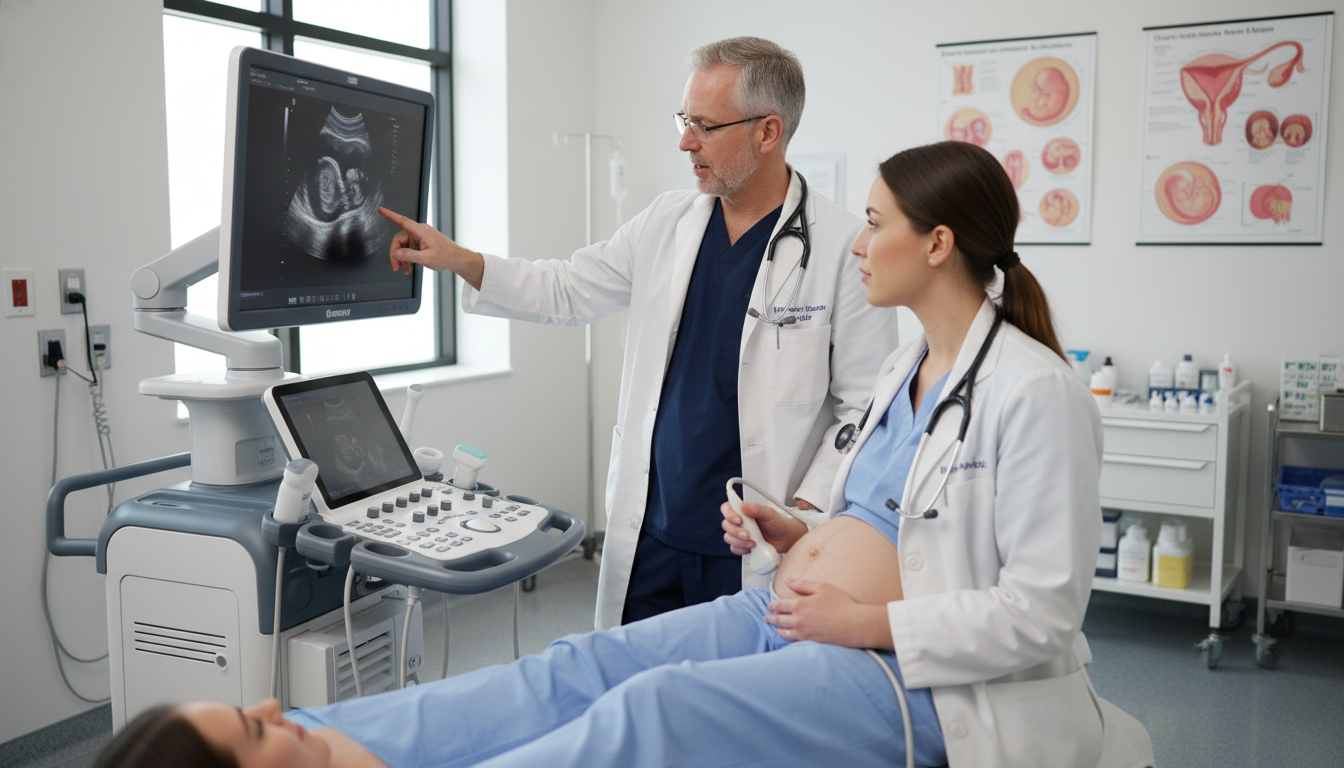
- Focus: High-risk pregnancy, fetal diagnosis, complex obstetrics.
- Ideal if you enjoy: Ultrasound, inpatient obstetrics, complex medical problems in pregnancy, research-heavy academic practice.
Gynecologic Oncology
- Focus: Surgical and medical management of gynecologic cancers.
- Ideal if you enjoy: Big, complex surgeries; longitudinal cancer care; tumor boards; multidisciplinary care.
Reproductive Endocrinology & Infertility (REI)
- Focus: Infertility, IVF, reproductive endocrinology.
- Ideal if you enjoy: Outpatient procedures, hormonal physiology, lab science, continuity with patients.
Female Pelvic Medicine & Reconstructive Surgery (FPMRS/Urogynecology)
- Focus: Pelvic organ prolapse, incontinence, reconstructive surgery.
- Ideal if you enjoy: Pelvic anatomy, functional outcomes, elective surgery, clinic-based continuity.
Complex Family Planning
- Focus: Contraception, abortion care, public health, policy.
- Ideal if you enjoy: Advocacy, ethics, public health, outpatient procedures, systems-level impact.
Other options (often non-ACGME or more niche) include minimally invasive gynecologic surgery, pediatric and adolescent gynecology, global women’s health, and more.
Reflecting on Fit: Clinical, Academic, and Lifestyle
Ask yourself some targeted questions:
- Clinical interests
- Do you gravitate toward L&D, the OR, clinic, or consults?
- Do you enjoy acute, high-adrenaline situations or longitudinal, relationship-based care?
- Academic ambitions
- Do you want an academic career (research, teaching, leadership)?
- Are you drawn to clinical trials, translational research, QI, or educational scholarship?
- Lifestyle and personal considerations
- Geographic flexibility: Are you limited to certain cities or regions?
- Tolerance for long training: Can you commit to 3+ more years?
- Financial planning: How will fellowship salary and deferred attending income affect your goals?
Actionable Step: Create a “Fellowship Fit Matrix”
Make a simple grid with each fellowship type (MFM, Gyn Onc, REI, etc.) in columns and your priorities in rows (clinical interests, procedures you like, desired schedule, interest in research, etc.). Rate each combination from 1–5. This structured exercise often clarifies what aligns best with your preferences.

Building a Competitive Fellowship Profile During Residency
Your path from allopathic medical school match to an OB GYN residency has already proven you can navigate competitive processes. Fellowship selection, however, looks more deeply at trajectory and focus during residency. Programs want evidence that you’re serious, skilled, and likely to contribute meaningfully to their subspecialty.
1. Clinical Performance: Foundation of Your Application
For MD graduate residency trainees, fellowship program directors start by looking at your:
- Rotation evaluations (especially in the desired subspecialty)
- CREOG scores
- In-training and skill progression
- Professionalism, teamwork, reliability
What to do:
- Excel on key rotations.
If you’re considering MFM, for example:- Volunteer for complex cases on L&D.
- Learn to interpret fetal monitoring beyond the basics.
- Ask for feedback from MFM faculty and incorporate it.
- Track your growth.
Keep a small file of exemplary evaluations, notable cases you managed, and emails praising your work. These details help with your personal statement and letter writers’ memory. - Address weaknesses proactively.
If self-assessment or feedback highlights gaps (documentation, OR efficiency, communication under stress), develop and document specific improvement plans.
2. Research and Scholarly Work: Depth Over Quantity
For most OB GYN fellowships—especially MFM, Gyn Onc, and REI—research productivity can strongly influence competitiveness.
Start early (ideally PGY-1 or early PGY-2):
- Identify 1–2 primary mentors in your potential subspecialty.
- Ask:
“I’m exploring [MFM/REI/etc.] and want to engage in meaningful research. Are there ongoing projects I could join where I can take ownership of a piece of the work?”
Aim for:
- At least one first-author project (case series, cohort study, QI project, review).
- One or more co-author projects with faculty or co-residents.
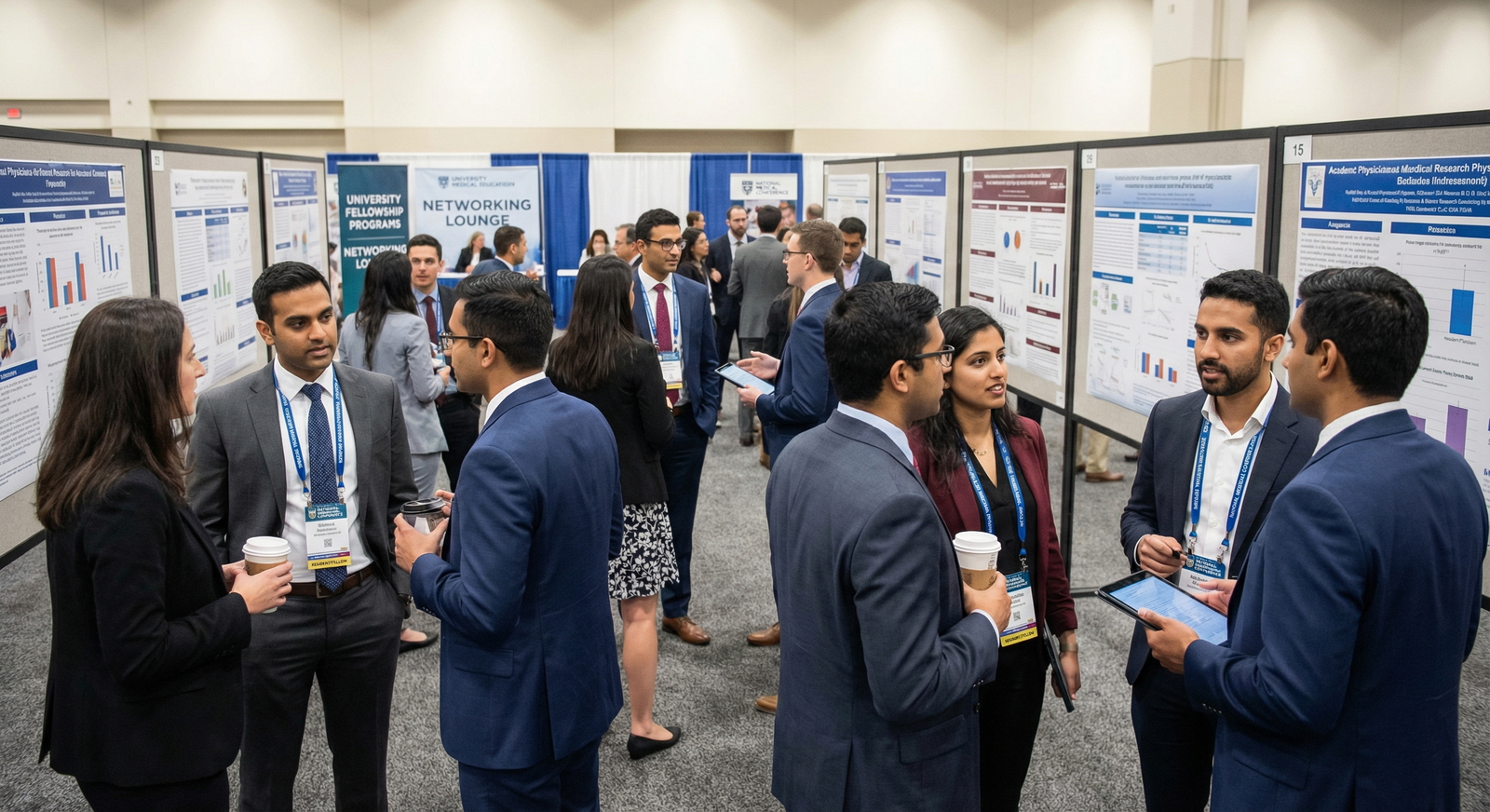
- Presentations at national meetings (SMFM, SGO, ASRM, AUGS, ACOG district meetings, etc.).
- If feasible, at least one peer-reviewed publication by application time. If not, emphasize “manuscript in preparation/under review” clearly and truthfully.
Practical tips:
- Break projects into 30–60 minute tasks you can fit between calls: literature searches, data entry, abstract drafting.
- Use a project management tool (even a simple shared spreadsheet) to track deadlines.
- Be reliable and communicative—a dependable resident collaborator often gets invited to more projects.
3. Letters of Recommendation: Who, When, and How
Strong letters are critical to how to get fellowship positions, often differentiating candidates with similar metrics.
Who to ask:
- At least two letters from faculty in your desired subspecialty.
- One program director or department chair letter (often required).
- Optional additional letter from:
- Surgeon or attending who worked with you longitudinally.
- Research mentor (particularly valuable if distinct from clinical mentors).
Qualities of a strong letter:
- Specific examples of your clinical judgment, technical skill, and professionalism.
- Commentary on your progression and potential.
- Insight into your research, leadership, or teaching contributions.
- Clear statement of enthusiastic support for your application.
Timing:
- Identify letter writers 6–9 months before the obstetrics match (fellowship application) cycle opens.
- Provide:
- Updated CV.
- Draft personal statement.
- List of programs and your career goals.
- Summary of work you’ve done with that faculty member.
Politely remind letter writers of deadlines, with 3–4 week lead time; they are often busy and appreciate organized applicants.
4. Leadership, Teaching, and Extracurricular Involvement
Fellowship programs also value signs you’ll be a strong colleague and future faculty member.
Consider engaging in:
- Residency leadership: Chief resident, wellness committee, scheduling, diversity and inclusion initiatives.
- Teaching roles:
- Regular med student teaching on L&D or in clinic.
- Small group sessions or skills labs for interns or students.
- Quality improvement (QI) projects**:**
- E.g., reducing postpartum hemorrhage transfusion rates, enhancing ERAS protocols, streamlining prenatal screening workflows.
Translate these into your application:
- Quantify impact where possible: “Reduced average time-to-antibiotics in suspected chorioamnionitis by 25% through protocol redesign.”
- Connect with subspecialty interests: Family planning QI for a Complex Family Planning applicant, perioperative pathways for FPMRS, etc.
Fellowship Application Timeline Across Residency
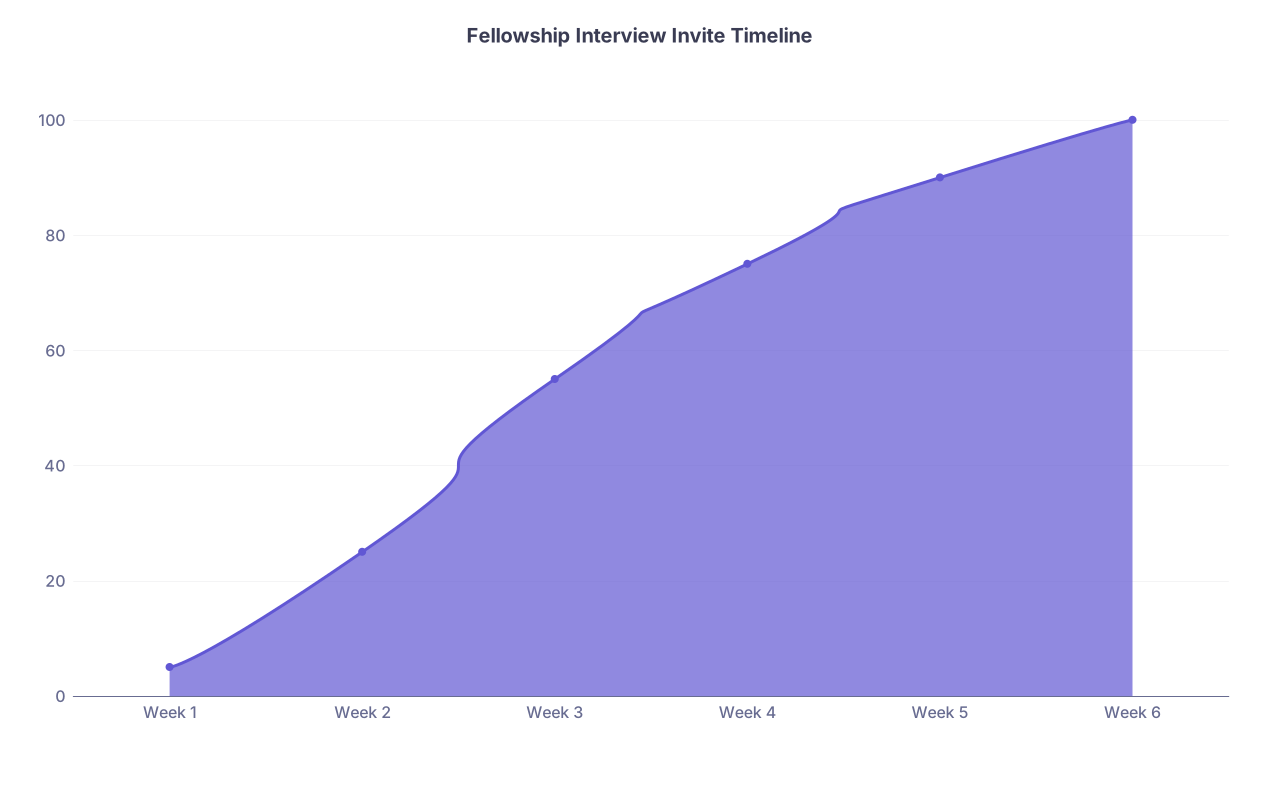
Planning ahead reduces stress and improves the quality of your application. Timelines vary slightly by subspecialty and year, but the framework below fits most U.S. ACGME OB GYN fellowships participating in the obstetrics match or related specialty matches.
PGY-1: Exploration and Foundation
- Goals:
- Adjust to residency and develop strong clinical fundamentals.
- Explore different OB GYN subspecialties.
- Begin to notice what you enjoy and where you excel.
Action items:
- Rotate with different subspecialty services with intention.
Keep a brief reflection journal: what cases excited you, what you disliked, mentors you connected with. - Attend departmental or divisional conferences:
- M&M, tumor boards, MFM conferences, REI journal clubs.
- Ask senior residents and fellows informally:
“What do you like and dislike about your subspecialty? How did you decide on fellowship?”
If you have time and interest:
- Join a small research or QI project to start understanding the research landscape.
PGY-2: Commitment and Early Preparation
- Goals:
- Narrow down your likely fellowship interest (1–2 subspecialties).
- Initiate or deepen research involvement.
- Start preparing for future competitiveness.
Action items:
- Choose 1 main subspecialty and 1 backup you’d be comfortable with if plans change.
- Secure at least one longitudinal mentor in your primary subspecialty.
- Take on a research or QI project with a timeline that allows for abstract submission in PGY-2/3.
- Request mid-year feedback from mentors:
“If I wanted to be competitive for [MFM/REI/etc.], what should I focus on over the next year?”
PGY-3: Application Year (Critical Period)
Most MD graduate residency trainees in OB GYN apply for fellowship during PGY-3 for a start date after residency (post-PGY-4). This year is crucial.
12–18 months before fellowship start (early PGY-3):
- Clarify fellowship decision with mentors.
- Map the fellowship application timeline:
- Identify your subspecialty match (e.g., NRMP for MFM, SGO match, ASRM match, etc.).
- Note specific application open dates, document deadlines, interview season, and rank list deadlines.
9–12 months before start (mid PGY-3):
- Finalize your list of programs:
- Consider geography, program size, clinical volume, research focus, fellow satisfaction.
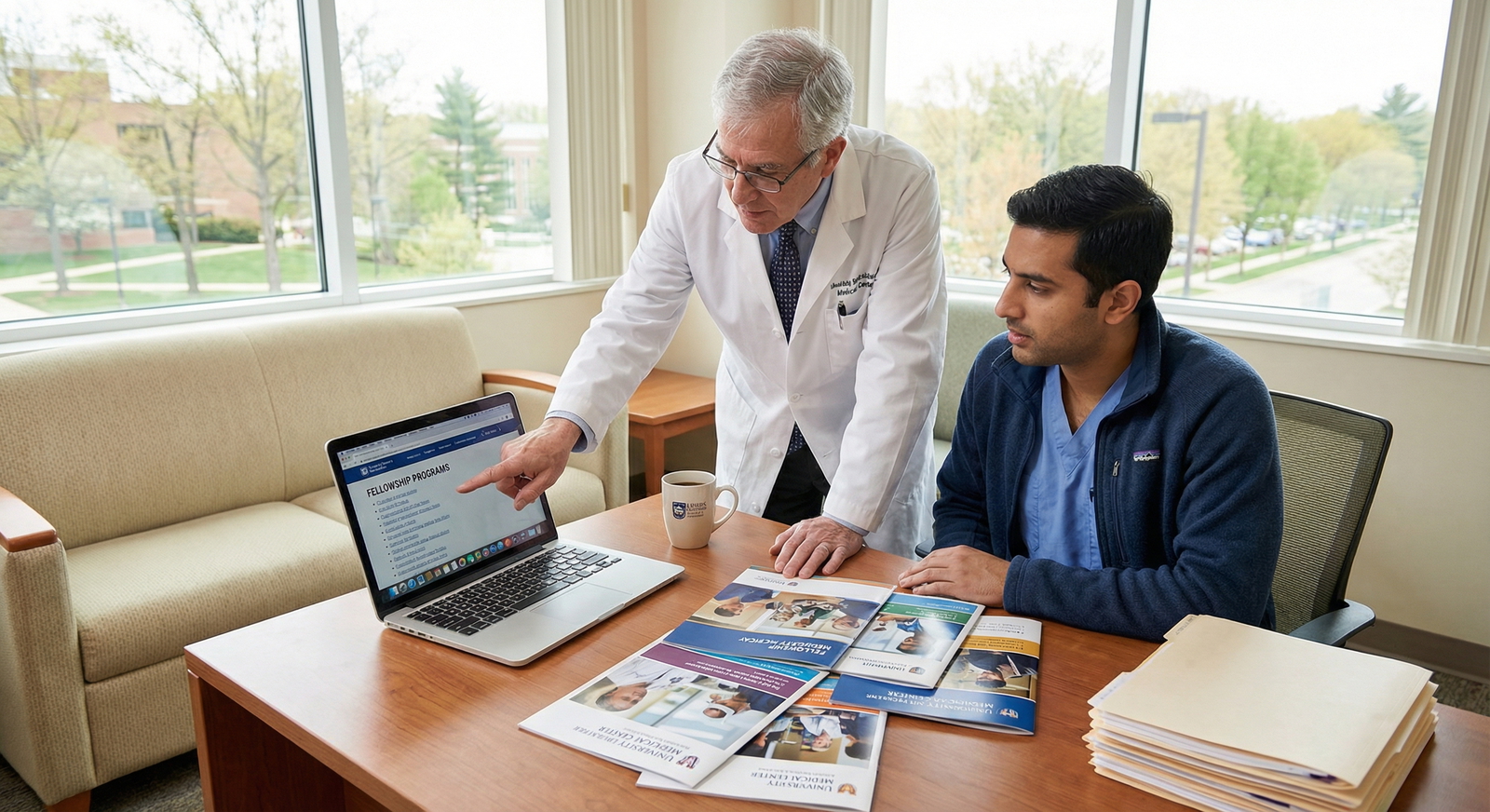
- Use program websites, FREIDA, mentor recommendations, and current fellows’ insights.
- Draft your personal statement (see next section).
- Update your CV with all residency accomplishments.
6–9 months before start (late PGY-3):
- Request letters of recommendation.
- Submit abstracts or manuscripts so they can be listed as “submitted” or “accepted.”
- Complete and submit your fellowship applications early in the cycle if possible.
- Prepare for interviews (mock interviews, common questions, reviewing your own CV and research).
PGY-4: Interviews, Ranking, and Transition Planning
- Interview season:
- Schedule interviews strategically to minimize conflict with rotations—coordinate with your chief or program director.
- Keep a structured note system for each program (clinical exposure, culture, research, your impression).
- Post-interview:
- Send individualized thank-you emails where appropriate.
- De-brief with your mentors about fit and ranking preferences.
- Ranking and match:
- Consider how each program aligns with your career goals, support needs, and geographic priorities.
- Don’t overweight prestige alone; consider training quality, case volume, and mentorship.
Once you match:
- Coordinate with your residency leadership about schedule adjustments for a smooth transition.
- Begin planning logistics: moving, licensing, boards, and possible family considerations.
Crafting a Strong Application: CV, Personal Statement, and Interviews
Optimizing Your CV for OB GYN Fellowship
Your CV should present a coherent narrative of an MD graduate residency trainee evolving into a focused subspecialty candidate.
Key sections:
- Education (BS/BA, MD, allopathic medical school match and training).
- Residency training (program, dates, leadership roles, honors).
- Research and publications.
- Oral/poster presentations.
- Teaching activities and curriculum development.
- Leadership and service.
- Certifications (NALS, ALSO, ultrasound certifications, etc.).
- Awards and recognitions.
Tips:
- Use consistent formatting, with most recent activities first.
- Distinguish peer-reviewed publications, in-press manuscripts, and submitted manuscripts.
- Group experiences by relevance: e.g., “MFM-related research” vs. “Other OB GYN research” if applicable.
Personal Statement: Telling Your Subspecialty Story
Your personal statement answers: Why this field? Why you? Why now?
Structure suggestion (1–1.5 single-spaced pages):
Opening vignette or theme
- An illustrative (HIPAA-compliant) clinical moment that sparked or solidified your interest.
- Focus less on drama, more on what you learned and how you think as a physician.
Development of your interest
- How your experiences in residency shaped your subspecialty focus:
- Specific rotations, mentors, or research experiences.
- Skills and attributes you’ve developed (e.g., calm under pressure, analytical thinking, compassion in complex counseling).
- How your experiences in residency shaped your subspecialty focus:
What you bring to fellowship
- Clinical strengths (e.g., strong ultrasound skills, surgical aptitude, interdisciplinary collaboration).
- Academic strengths (e.g., research methodology, quality improvement mindset, educational innovation).
Future goals
- What you hope to do after fellowship (academic vs. community, focus areas, contributions to the field).
- How this specific subspecialty is essential to your long-term vision.
Closing
- Brief return to your opening theme or clinical moment, emphasizing your readiness and commitment.
Avoid clichés (“I have wanted to be a doctor since I was a child”) and overused phrases; be specific, reflective, and forward-looking.
Interview Preparation: What Programs Look For
Fellowship interviews evaluate:
- Clinical reasoning and judgment.
- Insight into your strengths and weaknesses.
- Alignment with the program’s mission and culture.
- Communication skills and professionalism.
Common questions:
- “Why did you choose [MFM/REI/etc.]?”
- “Tell me about a challenging case and what you learned.”
- “Describe a conflict with a colleague and how you addressed it.”
- “Tell me about your research and your role in it.”
- “Where do you see yourself in 5–10 years?”
Actionable interview prep:
- Craft 5–6 key stories:
- A challenging patient situation.
- A time you made a mistake and learned from it.
- A research or QI project you led.
- A leadership or teaching experience.
- Practice with a mentor or co-resident:
- Focus on being concise, structured, and reflective (Situation–Action–Result–Reflection).
- Review each program:
- Know their key faculty, research strengths, and unique features.
- Be prepared with thoughtful questions beyond logistics.
Preparing for Fellowship and Beyond: Strategic Career Planning
Fellowship is not just more training—it’s a bridge to your long-term career. As you think about preparing for fellowship, also consider how to strategically position yourself for early attending life.
Integrating Fellowship Planning With Board Preparation
During late residency and early fellowship:
- Plan your ABOG written exam timeline relative to fellowship start.
- Develop a manageable study schedule that accounts for rotation intensity.
- Consider study groups or sharing resources with co-residents.
Balancing fellowship responsibilities with board preparation requires honest assessment of your capacity and proactive scheduling.
Financial and Personal Planning
The transition from MD graduate residency salary to fellowship salary is often lateral, not an increase. Meanwhile, responsibilities may grow.
Consider:
- Budgeting and debt:
- Reassess your loan repayment plan.
- Explore Public Service Loan Forgiveness (PSLF) if your fellowship is at a qualifying institution.
- Family and personal life:
- Discuss expectations with partners or family members early (call schedules, research time, potential geographic moves).
- If you’re planning pregnancy, adoption, or other major life events, talk with trusted mentors who have navigated similar paths.
Laying Groundwork for Post-Fellowship Jobs
Even as you’re focused on how to get fellowship positions, keep an eye on the step after completing fellowship:
- Attend national conferences regularly and network within your subspecialty.
- Ask faculty and fellows about common job market trends in your field.
- Keep your CV updated throughout fellowship so you’re ready when job opportunities arise.
Frequently Asked Questions (FAQ)
1. Is fellowship necessary for a satisfying career in OB GYN?
Not at all. Many OB GYNs have highly fulfilling careers in generalist practice, both in academic and community settings. Fellowship makes sense if:
- You’re passionate about a specific subspecialty.
- You want intensive focus on a narrow domain of OB GYN.
- You see yourself pursuing academic or highly specialized practice.
If you enjoy a broad mix of L&D, benign gynecologic surgery, and outpatient care, general OB GYN may fit you well without additional training.
2. How important is research for matching into an OB GYN fellowship?
It depends on the subspecialty and type of program:
- Highly research-focused fields and programs (MFM at major academic centers, Gyn Onc, REI) value research heavily. Strong research experience—including publications and presentations—can significantly strengthen your application.
- More clinically-focused fellowships (some FPMRS, Complex Family Planning, or minimally invasive GYN surgery programs) still value scholarly work but may emphasize clinical performance more.
In general, having at least one meaningful scholarly project where you played a central role is advisable for any fellowship application.
3. Can I decide on fellowship late in residency (e.g., early PGY-3)?
Yes, but it’s more challenging. If you decide relatively late:
- Immediately meet with your program director and faculty in your target subspecialty.
- Prioritize:
- Strong performance on current subspecialty rotations.
- Rapid involvement in ongoing research or QI projects.
- Securing robust letters of recommendation.
- Be flexible with program choices; you may need a broader range of programs in your applications to account for less longitudinal preparation.
Many successful fellows made their decision in PGY-2 or early PGY-3; late decisions are workable if you’re strategic and realistic.
4. What if I don’t match into fellowship on my first try?
Not matching is difficult, but it’s not the end of your subspecialty aspirations.
Consider:
- Gap year options:
- Research fellowship or research staff position in your desired subspecialty.
- Clinical instructor or hospitalist role in OB GYN, ideally with strong subspecialty exposure.
- Application strengthening:
- Enhance your research output.
- Obtain new or stronger letters of recommendation.
- Seek honest feedback from mentors on how to improve (interview skills, geographic flexibility, program list balance).
- Re-application:
- Many applicants successfully match on a second attempt with a more focused, strengthened application.
Fellowship preparation as an MD graduate in obstetrics and gynecology is a multi-year process, but it doesn’t need to feel overwhelming. By clarifying your goals early, building a focused profile during residency, following a thoughtful fellowship application timeline, and seeing fellowship as part of a broader career arc, you position yourself for a training path that fits both your professional aspirations and your life outside the hospital.