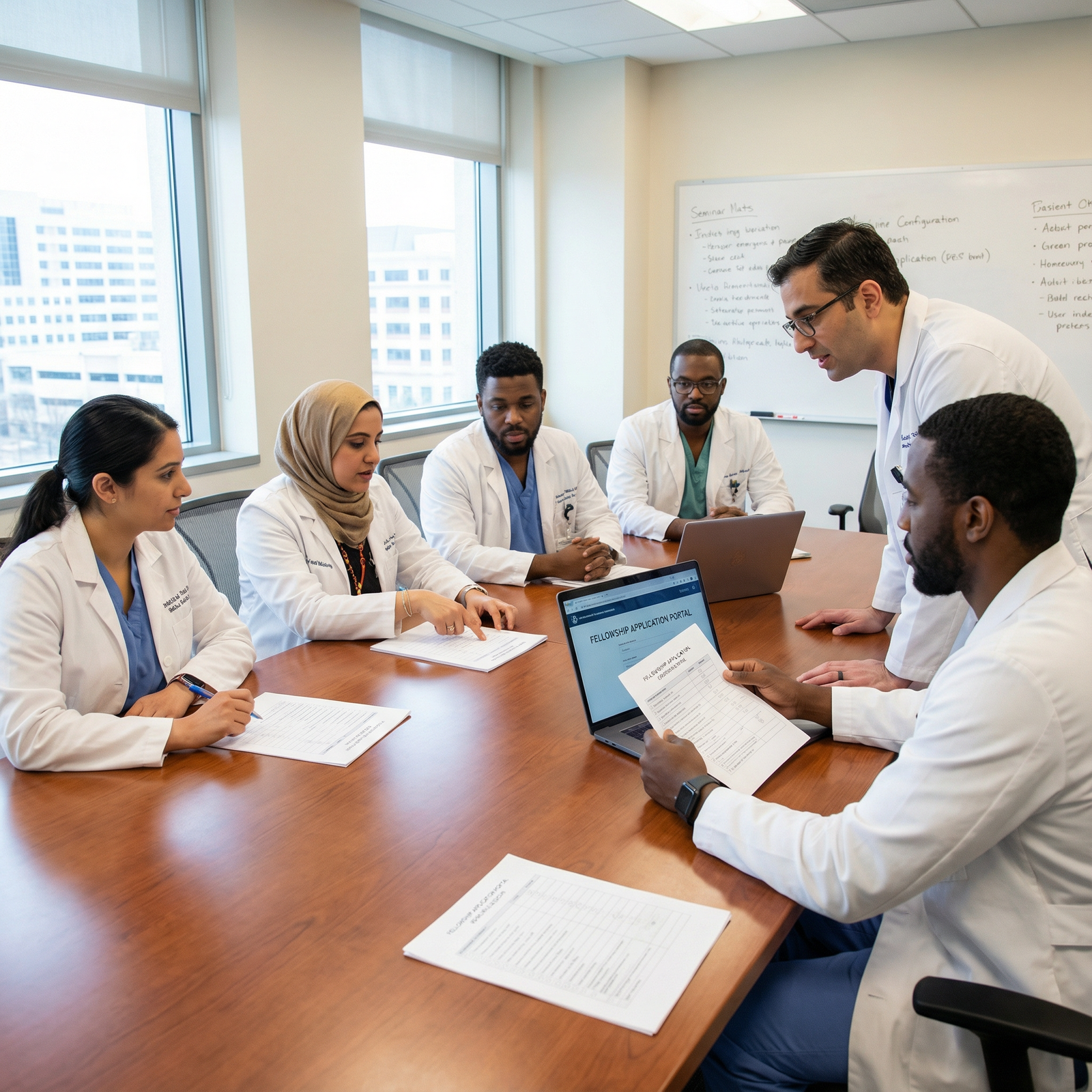
Applying for fellowship is one of the most important decisions in a pathology resident’s training. Whether your goal is academic practice, subspecialty expertise, or a competitive private practice job, thoughtful fellowship preparation can dramatically shape your career trajectory.
This guide walks through the major aspects of fellowship preparation in pathology—from choosing a subspecialty and understanding the fellowship application timeline to building your CV, maximizing mentorship, and navigating the pathology match. It’s written for pathology residents at all levels, with practical, stepwise advice you can implement immediately.
Understanding the Role of Fellowship in Pathology
Fellowship training has become the norm in pathology. Most graduating residents now pursue at least one fellowship, and many complete two.
Why Fellowship Has Become Essential
Several forces make fellowship training increasingly important:
Market expectations
- Many academic departments and large private groups expect subspecialty fellowship training (e.g., GI, hematopathology, cytopathology).
- Certain subspecialties (hematopathology, molecular, transfusion medicine, neuropathology, pediatric pathology) are functionally closed to non-fellowship-trained applicants.
Practice structure
- Rising subspecialization means more services are organized by subspecialty sign-out (e.g., GI, breast, GU, head & neck).
- Even “general” pathology jobs prefer candidates with a subspecialty they can “own” (e.g., “our go-to breast pathologist”).
Competitiveness
- Some fellowships now match via the pathology match (NRMP subspecialty matches such as hematopathology, cytopathology, and others, depending on the year).
- Strong fellowship training can differentiate you for your first job—particularly in saturated geographic markets.
What Fellowship Can and Cannot Do
Fellowship training can:
- Deepen diagnostic expertise in a focused area.
- Provide volume and case diversity you may not get in residency.
- Offer access to mentors, research, and letter writers at national level.
- Improve your competitiveness for academic positions or niche private practice roles.
- Help you clarify your career path (academics vs. community, research vs. clinical, etc.).
Fellowship training cannot:
- Fully compensate for weak general pathology fundamentals or poor work habits.
- Guarantee a job in a specific city or system.
- Turn a minimal research portfolio into an R01 track overnight (though it can be a strong stepping stone).
Recognizing these realities helps you approach fellowship preparation strategically rather than reflexively.
Choosing a Subspecialty: Aligning Interest, Aptitude, and the Job Market
Before thinking about how to get fellowship, you need clarity on which fellowship(s) make sense for you.
Step 1: Understand the Landscape of Pathology Fellowships
Common pathology fellowships include (non-exhaustive):
Anatomic Pathology Focused
- Surgical Pathology / Selective Surgical Pathology
- Cytopathology
- Gastrointestinal & Liver Pathology
- Breast Pathology
- Gynecologic Pathology
- Genitourinary Pathology
- Thoracic or Pulmonary Pathology
- Bone & Soft Tissue Pathology
- Head & Neck Pathology
- Dermatopathology (often with derm; special match)
- Neuropathology (2-year, often separate track)
Clinical / Laboratory Medicine Focused
- Hematopathology
- Transfusion Medicine / Blood Banking
- Clinical Chemistry
- Microbiology
- Molecular Genetic Pathology
- Medical Microbiology / Infectious Disease Pathology
Mixed or Special Areas
- Pediatric Pathology
- Forensic Pathology
- Informatics / Digital Pathology
- Women’s Health / Combined fellowships at some centers
Each has different:
- Case mix (biopsies vs resections, malignant vs benign).
- Procedural elements (e.g., FNA in cytopathology, apheresis in transfusion).
- On-call expectations.
- Typical job opportunities (academic vs community; scarcity vs saturation).
Step 2: Self-Assessment—Interests and Strengths
Use your PGY-1 and PGY-2 years to sample broadly and reflect on:
What cases energize you?
- Do you enjoy pattern recognition (e.g., derm, kidney, neuropath)?
- Do you like integration of flow cytometry, molecular, and morphology (hematopathology)?
- Do you like high-volume biopsy sign-out (GI, breast, GU)?
What environment suits you?
- High-intensity, high-volume sign-out?
- More consultative, interpretive laboratory medicine?
- Hands-on with clinicians (cyto FNAs, transfusion consults, tumor boards)?
What skills come naturally?
- Comfort with numbers and quality metrics (chemistry, transfusion).
- Pattern detail and nuance (derm, nephro).
- Systems thinking and logistics (transfusion, micro, informatics).
Practical tip: Keep a “fellowship reflection” document on your phone or computer. After each rotation, jot down:
- 3 aspects you liked
- 3 aspects you disliked
- 1 thing you’d be happy doing daily for 10 years Review this quarterly; patterns will emerge.
Step 3: Consider the Job Market and Long-Term Plans
Fellowship decisions should be informed, not dictated, by the job market.
Factors to consider:
- Regional demand: Some subspecialties are highly desired in certain regions (e.g., cytopathology or GI in high-volume centers).
- Versatility: Hematopathology, cytopathology, GI, and transfusion medicine often provide broad job options.
- Your geographic flexibility:
- If you must stay in a specific area, research which fellowships are common or valued in that market.
- Planned practice type:
- Community practice may prefer “surg path + ___” (e.g., surg + breast, surg + GI, surg + cyto).
- Academic roles often align best with a single clear subspecialty focus plus scholarly output.
Actionable step: Talk to recent graduates from your program about their job searches—what helped, what didn’t, which fellowship choices opened or closed doors.

Timeline: When to Start and How to Stay on Track
The fellowship application timeline in pathology has historically been chaotic, though recent efforts aim to standardize dates and expand participation in formal pathology match systems. Nonetheless, there is still variation by subspecialty and institution, so you must verify specifics each year.
Below is a general framework; always confirm with individual programs and national societies.
PGY-1: Exploration and Foundations
Goals:
- Build a strong base in general pathology.
- Explore the breadth of the field.
- Begin low-stakes career conversations.
Key actions:
- Keep a running list of rotations you enjoy.
- Introduce yourself to attendings in areas of interest.
- Attend departmental or national-level talks (local CAP meetings, subspecialty society webinars).
- Start a simple CV document and update as you go.
PGY-2: Narrowing Interests and Early Preparation
This is the critical year for fellowship preparation in pathology.
Goals:
- Narrow down to 1–2 subspecialties of interest.
- Begin research or scholarly projects in those areas.
- Clarify the fellowship application timeline for desired subspecialties.
Key actions:
- By mid-PGY-2:
- Identify a primary mentor in your area of interest.
- Start or join at least one project (case series, review article, QI project, or translational study).
- By late PGY-2:
- Create a target list of programs.
- Draft an initial CV and rough personal statement bullet points.
- Track each fellowship’s requirements and deadlines (spreadsheet strongly recommended).
PGY-3: Application, Interviews, and Decisions
By early PGY-3, many residents are actively applying, interviewing, or preparing for the pathology match, depending on subspecialty.
Goals:
- Submit competitive, timely applications.
- Perform well on interviews.
- Decide between offers (or rank lists, if in a match).
Key actions:
- Late PGY-2 / start of PGY-3:
- Finalize and submit applications according to each program’s timeline.
- Request letters of recommendation with plenty of lead time (4–6 weeks).
- Mid-PGY-3:
- Attend interviews; keep detailed notes after each.
- Maintain transparent communication with your PD and mentors.
- Late PGY-3:
- If participating in a pathology match, finalize rankings thoughtfully.
- If outside a match, respond professionally and promptly to offers.
PGY-4: Contingency Planning and Additional Fellowships
Goals:
- Confirm all fellowship paperwork and requirements.
- Adjust if plans change (e.g., additional fellowship, change in interests, unmatched contingency).
Key actions:
- If you do not match or secure a fellowship:
- Talk immediately with your PD about late-cycle positions or alternative options.
- Consider a generic surg path fellowship or a 1-year junior faculty role in some settings.
- If pursuing two fellowships:
- Plan the sequence (e.g., general surg path then subspecialty, or vice versa) based on your career goals and job search timing.
Building a Competitive Application: CV, Letters, and Experiences
To maximize your success in the pathology match or independent application processes, focus on becoming a well-rounded, reliable, and engaged pathology resident.
Core Components of a Strong Pathology Fellowship Application
Most programs will evaluate:
Residency performance
- Rotation evaluations (especially in the relevant subspecialty).
- Professionalism, reliability, case ownership, and work ethic.
- Autopsy completion, call performance, and overall readiness for independent practice.
Letters of recommendation
- Typically 3 letters, including:
- Program Director.
- At least one subspecialty faculty member in your chosen area.
- Another faculty member who knows you well (could be research mentor, AP/CP faculty, etc.).
- Typically 3 letters, including:
Curriculum Vitae (CV)
- Education, training, honors.
- Research, publications, presentations, posters.
- Teaching, leadership, quality improvement, committee work.
- Societies and certifications.
Personal Statement
- Concise explanation of:
- Why this subspecialty.
- Your career goals (academics vs community, research vs clinical, etc.).
- What you hope to gain from that specific program.
- Concise explanation of:
Scholarly Output and Engagement
- Abstracts, posters at USCAP, CAP, ASCP, subspecialty meetings.
- Peer-reviewed publications, invited reviews, book chapters.
- QI projects that show initiative and impact.
Strengthening Each Component
1. Maximizing Rotations
On subspecialty rotations relevant to your targeted fellowship:
- Be consistently prepared:
- Pre-preview cases when possible.
- Read around difficult entities; keep a diagnostic log.
- Be proactive:
- Ask to join interesting consults, tumor boards, and sign-out with different attendings.
- Demonstrate professionalism:
- Show up on time, own your cases, follow up on addenda/learnings.
- Be a “safe pair of hands” — staff quickly notice.
These behaviors will organically yield strong letters of recommendation.
2. Strategic Research and Scholarly Work
For many pathology subspecialties, extensive basic science is not required, but scholarly productivity is a major plus—especially in academic-leaning fellowships.
Practical starting points:
- Case reports or small series in your area of interest.
- Retrospective reviews of a diagnostic issue, classification, or outcome.
- QI projects like diagnostic concordance audits or report template optimization.
Tips:
- Aim for at least one poster and one manuscript related to your chosen subspecialty by the time you apply.
- Present at major meetings (e.g., USCAP, CAP) to:
- Demonstrate initiative.
- Network with faculty at target fellowship programs.
3. Letters of Recommendation: How to Help Your Writers Help You
When requesting letters:
- Ask early and in person when possible: “Would you feel comfortable writing a strong letter of recommendation for my [X] fellowship applications?”
- Provide a brief packet:
- Updated CV.
- Draft personal statement.
- List of programs you’re applying to.
- Reminder of specific cases or projects you worked on together.
Follow up:
- Politely remind them 2–3 weeks before deadlines if needed.
- Thank them after submission, and update them on your outcomes.
4. Personal Statement: Keep It Focused
A strong personal statement should:
- Be 1 page or less, crisp and specific.
- Include:
- A brief narrative of your path to pathology and this subspecialty.
- Evidence of sustained interest (rotations, projects, mentorship).
- Clear career goals.
- Why this particular program (if tailoring for specific institutions).
Avoid:
- Overly generic statements that could apply to any subspecialty.
- Long digressions into non-medical life story.
- Criticism of other specialties or institutions.

Navigating the Pathology Match, Interviews, and Offers
Different pathology fellowships use different mechanisms: some participate in an NRMP pathology match, others offer positions directly on variable timelines. This section focuses on general principles that apply across systems.
Understanding the Pathology Match
As of recent years, subspecialties like hematopathology, cytopathology, and some others participate in the NRMP or structured matching approaches, with common timelines and offer dates. Always check:
- NRMP website.
- Subspecialty society pages (e.g., Society for Hematopathology, ASC, AABB, etc.).
- Program websites.
Key principles:
- Programs submit rank lists.
- Applicants submit rank lists.
- Matches are binding.
- Timelines for interviews and rank list submission are fixed and public.
Regardless of mechanism, treat all interactions with professionalism and honesty.
Fellowship Interviews: Preparation and Performance
Before the Interview
- Research each program:
- Faculty interests.
- Case mix and volume.
- Structure of the fellowship (rotations, electives, research time).
- Prepare talking points:
- Your major cases or projects.
- Your career goals and how this fellowship fits.
- What you hope to learn or experience there.
Have ready answers for:
- “Why this subspecialty?”
- “Why our program in particular?”
- “What are your long-term goals?”
- “Tell me about a challenging case or situation in residency and how you handled it.”
During the Interview
- Dress professionally (business formal, even on virtual calls unless advised otherwise).
- Demonstrate:
- Enthusiasm but not desperation.
- Curiosity about learning, not just job prospects.
- Respect for all staff (coordinators, fellows, faculty).
Ask thoughtful questions, such as:
- “How are fellows integrated into sign-out and clinical responsibilities?”
- “What proportion of graduates go into academic vs community practice?”
- “What opportunities are there for research or teaching?”
- “How do fellows receive feedback and mentorship during the year?”
Take notes after each interview—your impressions will blur after several programs.
After the Interview
- Send brief, personalized thank-you emails to key faculty and program coordinators (within 2–3 days).
- Clarify any outstanding logistical questions (start date, funding, visas).
- Update programs if you present new research or receive awards that strengthen your application.
Evaluating Programs and Making Decisions
When considering how to rank or select programs, weigh:
Training quality
- Case volume and complexity.
- Balance between autonomy and supervision.
- Exposure to both bread-and-butter and rare entities.
Mentorship and culture
- Approachability of faculty.
- Track record of fellows’ job placement.
- Support for well-being and reasonable workload.
Career alignment
- Strength in your specific interests (e.g., lymphomas vs leukemias in hematopath).
- Academic vs community training environment.
- Opportunities for research, teaching, or special skills (e.g., flow, molecular, digital pathology).
Location and life factors
- Cost of living.
- Family/spousal considerations.
- Potential networking opportunities in your target geographic area.
If participating in a pathology match, rank programs in your true order of preference, not based on speculation about how they will rank you; the algorithm is designed to favor applicant preference.
Preparing for Fellowship and Beyond: Transitioning from Resident to Future Attending
Fellowship preparation in pathology doesn’t end when you sign a contract or certify your rank list. The months leading into fellowship are prime time to position yourself for success as a near-future attending.
Clinical Readiness: Sharpening Your Skills
In your final year of residency:
- Seek out senior-level responsibilities:
- More independent preview and sign-out, with attendings acting as consultants.
- “Chief resident” style tasks: triage, workflow oversight, QC projects.
- Focus especially on:
- General diagnostic skills (you will still see bread-and-butter pathology even in subspecialty practice).
- Correlation across modalities: histology, immunostains, molecular, radiology, and clinical data.
Ask your future fellowship director or mentor:
- “Is there anything I can review before starting to be maximally effective?”
- They may suggest:
- Specific textbooks or atlases.
- Key papers or guidelines (e.g., WHO/ICC classifications, CAP/ASCO guidelines).
Career Strategy: Thinking Beyond Fellowship
If you’re preparing for fellowship with an eye on your first job:
- Attend national meetings during fellowship and late residency:
- Network with potential future colleagues and employers.
- Attend career panels and job search sessions.
- Start building your professional identity in your subspecialty:
- Present work annually.
- Join subspecialty societies and their trainee sections.
- Participate in working groups or committees when feasible.
Timing:
- In many subspecialties, the job search begins midway through fellowship (sometimes earlier for highly competitive locations).
- Clarify with mentors:
- When alumni from this fellowship typically secure offers.
- Which employers commonly recruit from your program.
Contingency Plans and Flexibility
Not everything goes according to plan. Good preparation includes:
- Openness to adjusting subspecialty choice if:
- You discover a new passion late in residency.
- The job market shifts substantially.
- Considering a second fellowship if:
- You want to broaden your scope (e.g., hematopathology + molecular).
- Your desired geographic market strongly favors certain skill combinations.
Maintain ongoing communication with:
- Your program director.
- Fellowship director.
- Trusted mentors.
They can alert you to unadvertised positions, late openings, or unique pathways when the standard process doesn’t fit your needs.
FAQs: Fellowship Preparation in Pathology
1. When should I start seriously planning my pathology residency fellowship applications?
Begin exploring during PGY-1 and early PGY-2. By mid-PGY-2, you should have:
- Narrowed to 1–2 target subspecialties.
- Identified mentors.
- Started at least one related project. Applications themselves often go out late PGY-2 or early PGY-3, depending on subspecialty and whether there is a pathology match.
2. Is it better to do a general surgical pathology fellowship before a subspecialty fellowship?
It depends on your goals and residency experience:
- Consider general surg path first if:
- You need more volume and confidence in general diagnostic work.
- You plan a community practice job and want broad exposure.
- Consider direct subspecialty if:
- Your residency provided strong general training.
- You have a clear academic subspecialty goal and projects underway. Discuss your readiness honestly with your PD and mentors.
3. How important is research for getting a competitive pathology fellowship?
Research is helpful but not absolute:
- For research-heavy or academic programs, some scholarly productivity (posters, manuscripts) is expected and can significantly strengthen your application.
- For many clinically focused fellowships, excellent clinical performance and strong letters may outweigh research, but having at least some scholarly work demonstrates initiative and engagement. Aim to show sustained interest in your subspecialty rather than a long publication list alone.
4. What should I do if I don’t match or don’t receive a fellowship offer?
First, talk immediately with your program director and mentors. Options may include:
- Late-cycle or off-cycle fellowship openings (these are more common than many realize).
- A general surgical pathology fellowship at your home or a nearby institution.
- A 1-year junior faculty or instructor position with heavy sign-out and mentored support. Use the year to:
- Strengthen your CV (clinical excellence, additional scholarly work).
- Reapply with clearer goals and stronger letters. Many excellent pathologists took a non-linear path; a setback can still lead to a robust career with thoughtful adjustments.
Thoughtful, early fellowship preparation in pathology—combined with honest self-assessment and strong mentorship—will position you not only to secure a fellowship, but to launch a satisfying, sustainable career in your chosen subspecialty.