
Fellowship training can define the next decade of your medical career, influencing your clinical niche, research trajectory, and long-term opportunities. With competition intensifying across most specialties, small mistakes in your fellowship applications can have outsized consequences.
This guide expands on the top mistakes to avoid when applying for fellowships and offers practical, step-by-step strategies to strengthen every part of your application—from program research and Personal Statements to Networking and Interview Preparation.
1. Neglecting In-Depth Research on Fellowship Programs
Thorough program research is the foundation of a strong application strategy. Many applicants treat all programs the same or apply “blind,” which leads to weak fit, generic materials, and disappointing outcomes.
Why Program Research Matters
Fellowship directors are looking for alignment:
- Does your background match the program’s strengths?
- Do your goals fit their mission and training structure?
- Are you likely to thrive in their culture and setting?
If you don’t understand what a program prioritizes, it’s easy to:
- Overemphasize research to a clinically focused program
- Underplay procedural skills for a procedurally heavy fellowship
- Misrepresent interest in areas the program doesn’t actually offer
How to Research Fellowship Programs Effectively
Use a structured approach instead of browsing casually.
1. Start with official sources
- Program website: curriculum, call schedule, rotation sites, scholarly expectations
- Faculty profiles: academic interests, publications, clinical niches
- Recent fellows: where they came from and where they went afterward
2. Look for key alignment signals Ask:
- What types of graduates does this program produce? (academics vs. private practice, research-heavy vs. clinically focused)
- Are there dedicated tracks (e.g., clinician-educator, research, global health)?
- Does the fellowship offer the specific procedural, scholarly, leadership, or teaching experiences you want?
3. Use secondary sources
- Talk to current fellows and recent graduates (more on Networking below)
- Read recent publications from the division to understand their priorities
- Review national reputation and case volumes if relevant for your specialty
4. Create a program “fit profile” For each program, jot down:
- Three things that strongly match your goals
- One or two potential challenges (e.g., location, call burden, research expectations)
- Specific faculty you’d like to work with and why
These details feed directly into targeted Personal Statements and Interview Preparation and signal genuine interest to selection committees.
2. Submitting Weak or Generic Personal Statements
Your Personal Statement is not just a formality—it’s often the committee’s first narrative impression of you. Many otherwise strong applicants lose ground with vague, cliché-filled, or unfocused essays.
Common Personal Statement Mistakes
- Telling your entire life story instead of focusing on your fellowship-relevant journey
- Relying on generic statements (“I am passionate about cardiology”) without specific evidence
- Copy-pasting the same essay to multiple programs with only the name changed
- Overemphasis on drama (e.g., one emotional patient story) without linking back to your sustained interest and career goals
- Poor structure and flow that makes it hard to identify your key message
Key Principles for Strong Fellowship Personal Statements
1. Be specific and evidence-based
Instead of:
“I love research and teaching.”
Try:
“During residency, I led a quality improvement project on sepsis alerts that reduced door-to-antibiotic time by 25% and presented the results at our regional ACP meeting. That experience confirmed how academic practice could amplify my impact beyond individual patients.”
Concrete examples demonstrate commitment, skills, and follow-through.
2. Show a coherent arc
Structure your Personal Statement around:
- What drew you to the field and when that interest crystallized
- How your residency experiences deepened and refined your goals
- What you hope to gain from fellowship (skills, networks, experience)
- What you envision doing after fellowship (academic vs. community practice, research focus, leadership aspirations)
3. Tailor to the fellowship, not just the specialty
Weave in:
- Program themes or strengths that match your interests (e.g., advanced imaging, outcomes research, health equity work)
- Specific types of patients, procedures, or research problems you want to engage with
- How their environment will support your development (mentors, resources, institutional strengths)
4. Maintain professionalism and maturity
- Avoid overly dramatic narratives that overshadow your professional growth
- Reflect on challenges (burnout, failure, personal obstacles) with maturity and focus on insight and resilience
- Be honest and authentic; committees value self-awareness over perfection
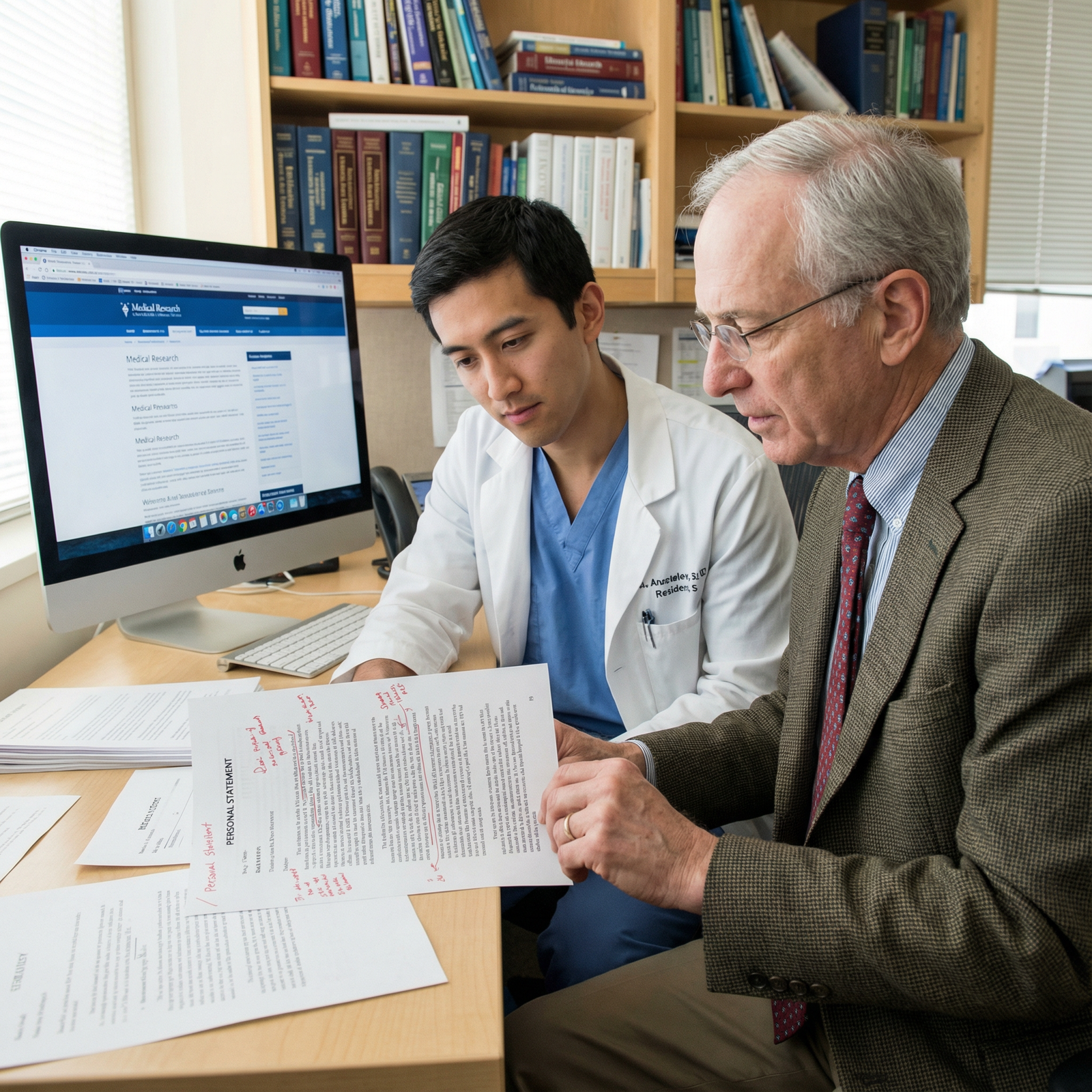
Process Tips: Writing and Refining Your Personal Statement
- Start early—at least 6–8 weeks before deadlines
- Brainstorm key themes and experiences first, then draft
- Ask 2–3 trusted readers (mentor, program director, senior fellow) for feedback
- Revise for clarity, structure, and alignment with your application as a whole
- Proofread meticulously; typos signal a lack of attention to detail
3. Overlooking the Power of Strong Letters of Recommendation
Letters of Recommendation can validate your achievements, provide context, and differentiate you from equally qualified applicants. Inadequate or generic letters are a missed opportunity.
Common Recommendation Pitfalls
- Choosing letter writers who barely know your work
- Asking too late, resulting in rushed or shallow letters
- Not providing your CV, Personal Statement, or fellowship goals
- Failing to ensure a balanced set of letters (e.g., all research, no clinical perspective)
Choosing the Right Recommenders
Stronger letters come from people who can speak to your:
- Clinical competence and judgment
- Work ethic, professionalism, and reliability
- Teamwork and communication skills
- Academic potential (research, QI, education) if relevant
Prioritize:
- Faculty who have observed you closely over time (clinical rotations, continuity clinics, longitudinal projects)
- Mentors or research supervisors who can comment on scholarship
- Leaders (program director, division chief) when appropriate and when they know you well enough
Setting Your Letter Writers Up for Success
Provide:
- Updated CV
- Draft of your Personal Statement
- List of programs and any specific qualities you’d like highlighted
- Bullet points summarizing key cases, projects, or interactions they might mention
Ask explicitly:
“Would you feel comfortable writing a strong letter of recommendation for my [specialty] fellowship applications?”
This allows them to decline if they can’t be enthusiastic.
Managing the Process Professionally
- Request letters at least 4–6 weeks before deadlines
- Send a polite reminder 1–2 weeks before submissions are due
- Confirm when letters are uploaded (through ERAS or equivalent system)
- Thank your recommenders and update them on your match outcome
4. Missing or Mismanaging Application Deadlines
Missing a deadline is one of the few truly disqualifying mistakes in Fellowship Applications—and it happens more often than many residents realize.
Why Deadlines Are Particularly Critical in Fellowships
- Many specialties use centralized timelines and systems (e.g., ERAS), making late submissions impossible
- Some competitive programs review applications as they come in—late applicants may be disadvantaged even if technically “on time”
- Letters of Recommendation, test scores, and transcripts also need to arrive on schedule
Practical Deadline Management Strategies
1. Build a master timeline Include:
- Application open date
- First day programs can review applications
- Individual program deadlines (some close earlier than others)
- Internal deadlines for CV, Personal Statements, and letters
2. Set internal deadlines at least 1–2 weeks earlier Aim to:
- Finalize your Personal Statement and CV before applications open
- Request letters at least a month in advance
- Submit applications early rather than at the last minute
3. Use tools to stay organized
- Calendar apps with alerts
- Project management boards (e.g., Trello, Notion) to track each program’s status
- Shared spreadsheets if collaborating with mentors or advisors
5. Sending Generic, Untailored CVs and Application Materials
Selection committees can easily spot applications that look copy-pasted. Not tailoring your documents suggests lack of genuine interest and weak understanding of the fellowship’s focus.
Why Tailoring Matters
Fellowships differ widely in:
- Clinical exposure (tertiary referral center vs. community-based)
- Research intensity and funding
- Procedural opportunities and case mix
- Educational priorities (teaching, QI, health equity, global health)
Your CV and supporting materials should make it clear:
- Why this program is a logical next step
- How your experiences align with what they offer
- What you bring that will strengthen their team and mission
Strategies to Customize Your CV and Application
1. Reorder content for emphasis
- Highlight fellowship-relevant experiences toward the top:
- Research for research-focused programs
- Leadership and teaching for clinician-educator tracks
- Procedural logs or technical skills for procedure-heavy fellowships
2. Use language that mirrors program priorities If a program emphasizes:
- “Outcomes research” → describe your projects using outcomes terminology
- “Health equity” → explicitly name your work in disparities, vulnerable populations, or systems-level interventions
3. Update your experiences section thoughtfully
- Add brief, targeted descriptions to research or QI projects that clearly state your role and impact
- Include specific metrics when possible (e.g., “decreased readmissions by 15%,” “enrolled 120 patients,” “co-authored 2 abstracts”)
4. Tailor supplemental questions carefully Some fellowships require additional essays or short answers:
- Answer them directly and specifically
- Avoid repurposing unrelated content from your main Personal Statement
6. Underestimating the Importance of the Fellowship Interview
Once you receive an interview invitation, the program is telling you: “On paper, you’re competitive.” The interview is often the deciding factor in how you are ranked.
What Programs Look for in Interviews
- Communication skills and professionalism
- Maturity, insight, and self-awareness
- Fit with program culture and values
- Alignment between your stated goals and what the program offers
- How you interact with faculty, fellows, and staff
If you treat the interview as a formality, you risk:
- Appearing disinterested, unprepared, or unfocused
- Sending mixed signals about your career plans
- Missing opportunities to highlight your strengths
Using the Interview as a Two-Way Evaluation
The Interview Preparation process should help you decide if a program is right for you:
- Are fellows genuinely supported and well-trained?
- Do faculty have time and interest to mentor?
- Are graduates achieving the kinds of Medical Careers you aspire to?
Prepare thoughtful questions about:
- Mentorship structure
- Research expectations and support
- Fellow autonomy and supervision
- Wellness and call burden
- Career development and job placement
Thoughtful questions signal engagement and maturity.
7. Failing to Prepare Adequately for Fellowship Interviews
Even strong residents can struggle in high-stakes interviews without practice. Rambling answers, inconsistent narratives, or weak explanations of your goals can hurt your ranking.
Core Elements of Effective Interview Preparation
1. Anticipate common fellowship questions Prepare and practice answers for:
- “Tell me about yourself.”
- “Why this subspecialty?”
- “Why our program?”
- “Describe a conflict you faced and how you handled it.”
- “Tell me about a challenging case and what you learned.”
- “What are your 5–10 year career goals?”
- “What are your strengths and areas for growth?”
2. Craft clear, structured responses Use simple frameworks:
- STAR (Situation, Task, Action, Result) for behavioral questions
- Past–Present–Future for career goals and background
3. Conduct mock interviews
- Ask a mentor, chief resident, or career advisor to run a formal mock interview
- If interviews are virtual, practice on the same platform (Zoom, Teams, etc.)
- Record yourself to evaluate body language, clarity, and pacing
4. Refine your virtual interview setup (if applicable)
- Neutral background, professional lighting, and reliable internet
- Camera at eye level, minimal background noise
- Test microphone and video beforehand
8. Failing to Highlight What Makes You Unique
Many fellowship applicants have similar metrics—solid board scores, strong evaluations, some research. Programs remember applicants who clearly communicate what sets them apart.
Identifying Your Unique Value
Think beyond test scores and publications. Consider:
- Non-traditional paths (prior careers, military service, engineering, public health)
- Leadership roles (chief resident, committee work, advocacy)
- Teaching and curriculum development
- Global health or underserved community experiences
- Quality improvement, patient safety, or systems-level work
- Technical or language skills relevant to patient populations
How to Showcase Unique Experiences Effectively
- Integrate them into your Personal Statement with clear connections to your future goals
- Highlight impact and skills gained (not just activities listed)
- Mention them in interviews when asked about strengths, challenges, or leadership
- Use them to demonstrate diversity of thought, experience, and perspective you will bring to the fellowship
Programs increasingly value fellows who enrich team dynamics, improve patient care innovation, and contribute to diverse Medical Careers within the specialty.
9. Neglecting Networking and Relationship Building
Many applicants don’t realize how much Networking can improve their understanding of programs and sharpen their application strategy. While connections alone won’t secure a position, they can provide invaluable insight and guidance.
Why Networking Matters in Fellowship Applications
- You gain inside perspectives on culture, expectations, and unadvertised opportunities
- You learn which experiences to emphasize for specific programs
- Mentors and faculty may advocate for you when appropriate
Practical Networking Strategies for Residents
1. Connect with current and former fellows
- Ask your institution’s recent graduates where they matched and if they’re willing to talk
- Use email introductions from your program leadership or faculty mentors
- Prepare specific questions (e.g., “What surprised you about the fellowship?” “How supported do you feel in research?”)
2. Attend national meetings and specialty conferences
- Seek out fellowship program directors’ sessions or meet-the-faculty events
- Introduce yourself briefly and professionally
- Follow up with a short, polite email if a particular conversation was meaningful
3. Leverage your home institution
- Ask division chiefs and faculty where your program has historically placed fellows
- Request honest guidance about target programs and competitiveness
- Seek opportunities to collaborate with faculty who are known in the national community
Networking should be respectful and genuine—not transactional. The goal is to learn, not to pressure anyone to intervene on your behalf.
10. Ignoring Feedback and Missing Opportunities to Improve
A single application cycle provides rich data—if you’re open to learning from it. Many applicants repeat avoidable mistakes by ignoring constructive feedback or not reflecting on their results.
Using Feedback Before and After Application Cycles
Before submitting:
- Have mentors review your CV, Personal Statements, and program list
- Ask senior fellows or recent graduates to share what worked for them
- Be open if someone suggests your narrative is unclear or your goals seem misaligned with your target programs
After the cycle (especially if you didn’t match or didn’t get your top choices):
- De-brief with trusted mentors or program leadership
- Reflect honestly on:
- Where you received interviews—and where you didn’t
- How your interviews felt and what questions you struggled with
- Whether your program list was realistic for your profile and goals
Consider:
- Strengthening your profile with an additional research year, chief residency, or focused scholarly projects if appropriate
- Revising your approach to Interview Preparation and Networking
- Adjusting your program list to better match your portfolio
Being coachable and intentional about growth will serve you not only in Fellowship Applications but across your entire career.

FAQs: Fellowship Application Mistakes and Best Practices
1. What are the most important components of a fellowship application?
Selection committees look at your application as a whole, but several components carry particular weight:
- Personal Statements that clearly communicate your motivation, fit, and future goals
- Letters of Recommendation from faculty who know you well and can attest to your clinical and academic strengths
- CV and application forms that highlight fellowship-relevant achievements and are tailored to the program type
- Interview performance, including how you present yourself, articulate your goals, and engage with faculty and fellows
- Scholarly activity (research, QI, education) when relevant to the fellowship’s mission
Each element should reinforce a consistent narrative: who you are, what you’ve done, and where you’re headed in your medical career.
2. How can I best prepare for fellowship interviews?
Effective Interview Preparation combines content and delivery:
- Know your application cold: Be prepared to discuss anything listed on your CV or in your Personal Statement in detail.
- Research each program: Understand their strengths, structure, and recent changes; prepare specific questions.
- Practice common questions: Use mock interviews and structured frameworks (like STAR) to refine your responses.
- If virtual: Optimize your environment—lighting, camera angle, background, and sound.
- Reflect beforehand: Clarify your own priorities and non-negotiables so your answers are authentic and consistent.
3. Should I apply to multiple fellowships or focus on a few programs?
Most applicants benefit from applying to multiple appropriate programs, but your strategy should be intentional:
- Apply broadly enough to be realistic given your competitiveness and specialty norms
- Avoid “spray and pray”—only apply where you would genuinely consider training
- Tailor your materials to specific program types (e.g., research-intensive vs. community-focused)
- Work with mentors to calibrate your list into “reach,” “target,” and “safe” programs, if applicable in your specialty
Quality and fit matter more than sheer number of applications.
4. How important is networking for fellowship applications?
Networking does not replace merit, but it can significantly improve your process:
- Helps you target programs that genuinely fit your goals
- Provides nuanced information that’s not available on websites
- Allows mentors and faculty to advocate for you when appropriate
- Enhances your understanding of long-term career pathways in your field
Professional, respectful Networking makes you a more informed and strategic applicant and is an essential skill for future academic and clinical leadership roles.
5. What can I do if I feel my application has gaps (e.g., limited research or lower exam scores)?
You can still be competitive with a thoughtful strategy:
- Be honest with yourself and your mentors about your strengths and limitations
- Compensate through other strengths: strong clinical evaluations, teaching, leadership, or QI work
- Pursue targeted projects: a focused research or QI project, teaching portfolio, or leadership role may strengthen your profile
- Tailor your program list: apply to programs whose priorities fit your strengths (e.g., more clinically oriented if your research is limited)
- Nail your Interview Preparation: clear, mature reflection on your trajectory and growth can make a strong impression
By avoiding these common mistakes—and proactively strengthening your research, Personal Statements, Networking, and Interview Preparation—you position yourself not just to match into a fellowship, but to choose one that truly advances your long-term medical career goals.