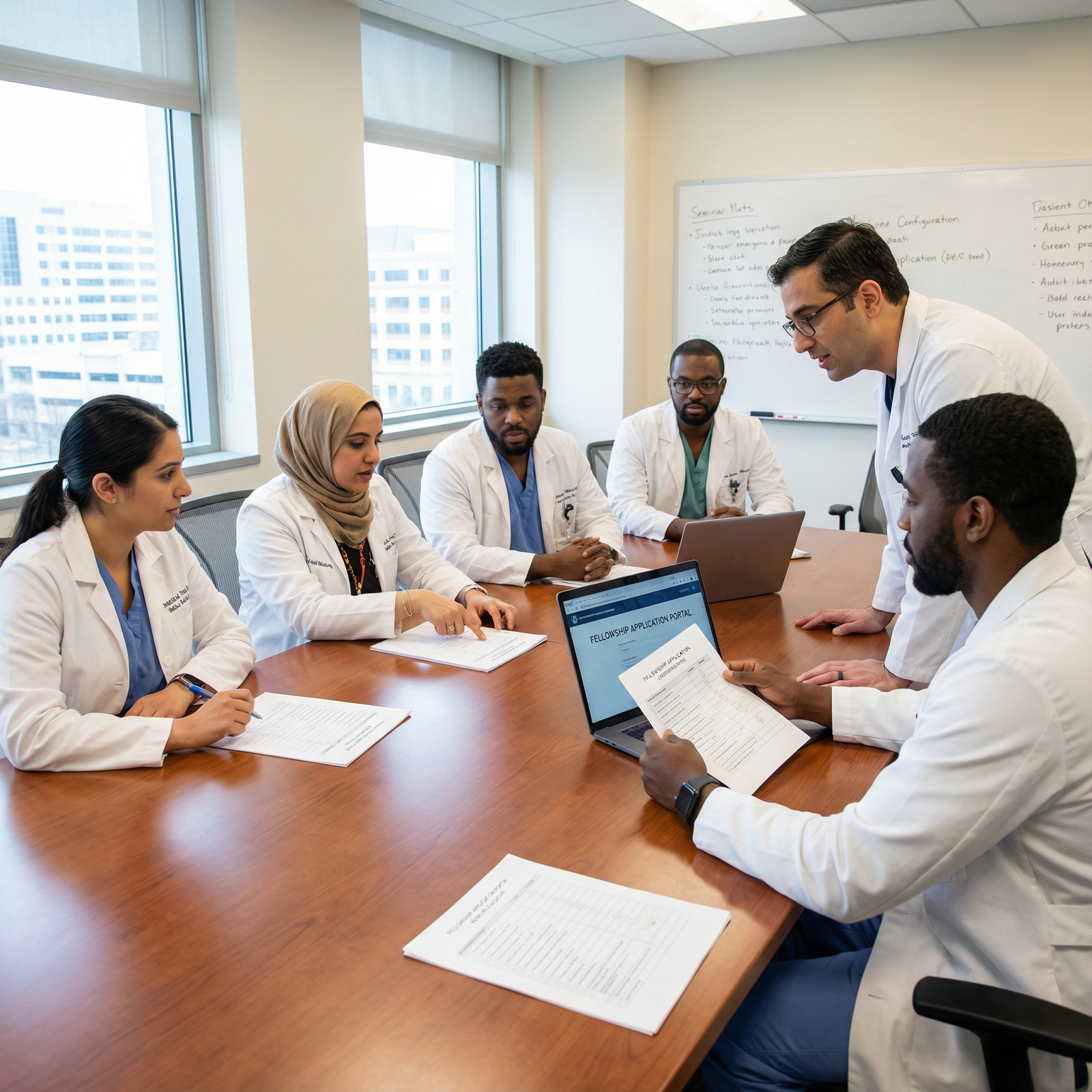
Introduction: Turning a High-Stakes Process into a Manageable Plan
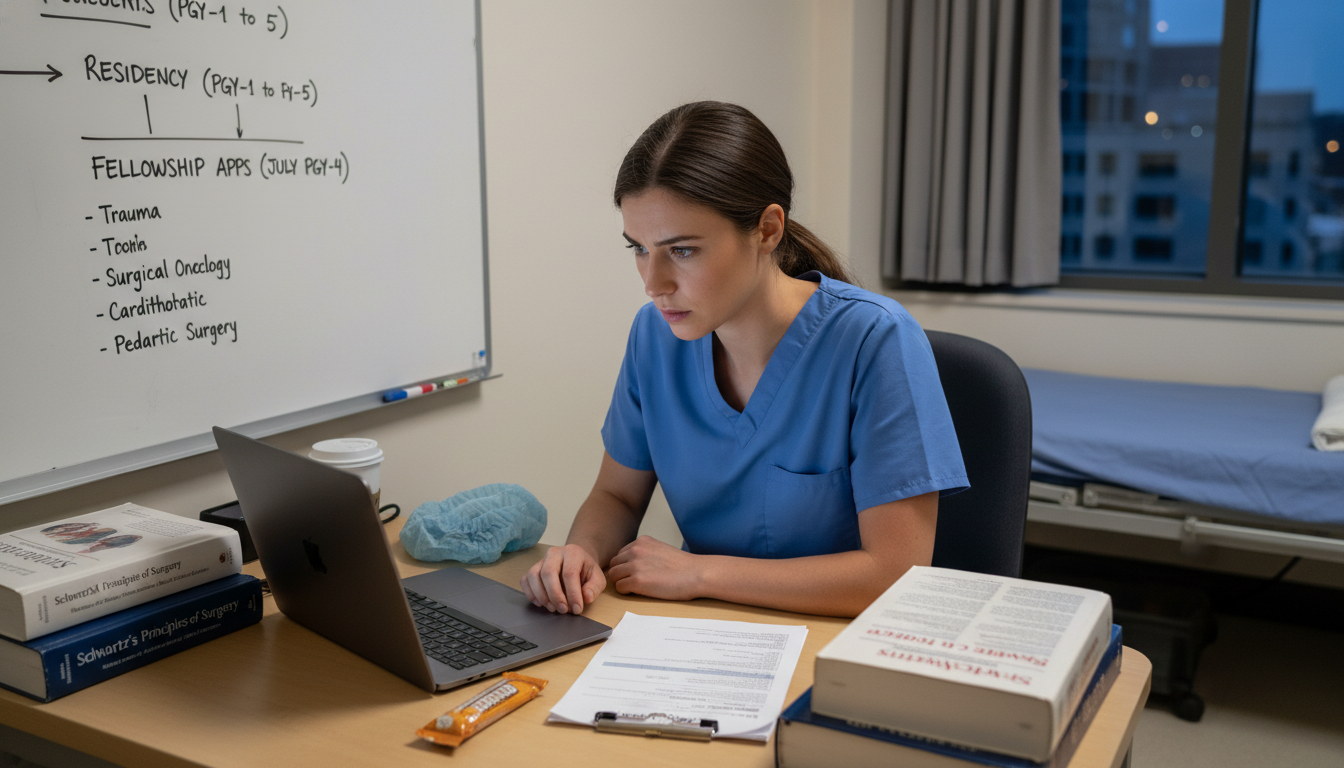
Applying for subspecialty training can feel like navigating a maze while still working 60–80 hours a week. Between clinical duties, research, board exams, and personal responsibilities, it’s easy for fellowship applications to become overwhelming.
Yet this step is a pivotal part of your medical training and long‑term career development. A fellowship can shape your clinical focus, your academic trajectory, and your professional network for decades to come. A structured, realistic Application Checklist is one of the most powerful tools you can use to stay on track and submit a polished, competitive application.
This enhanced guide expands the original checklist into a detailed, step‑by‑step roadmap. It’s designed for residents across all specialties—whether you’re pursuing cardiology, GI, critical care, hematology/oncology, peds subspecialties, or any other field—to help you:
- Stay organized despite a demanding schedule
- Avoid common, preventable mistakes
- Showcase your strengths and unique story
- Align your choices with your long‑term career goals
Use this as a living document throughout the application season, adapting it to your specialty, training level, and personal circumstances.
1. Understanding Fellowship Applications and Your Career Goals
Before you start uploading documents and tracking deadlines, you need clarity on what you’re actually aiming for.
What Fellowship Training Really Adds to Your Career
Fellowships offer advanced, focused medical training beyond residency. They can:
- Deepen clinical expertise in a subspecialty (e.g., interventional cardiology, transplant hepatology, pediatric nephrology)
- Provide structured research training and mentorship
- Open doors to academic medicine, leadership roles, and niche clinical careers
- Strengthen your competitiveness for positions in large health systems or specialized centers
In many fields, fellowship training has effectively become the standard route for those wanting subspecialty practice or certain types of jobs (e.g., tertiary academic centers, quaternary referral centers).
Why a Detailed Checklist is Essential to Success
A solid fellowship application checklist is more than a to‑do list—it’s a strategy document.
A good checklist will help you:
Stay organized amid chaos
Track program requirements, deadlines, and documents across multiple applications while on busy services.Reduce decision fatigue
Break the process into manageable steps so you’re not repeatedly reinventing the wheel or scrambling last‑minute.Highlight gaps early
If you realize you need more research, leadership, or specialty exposure, you can act before application season hits.Boost your confidence
Knowing you’ve systematically addressed each step can lower anxiety and help you present your best self in interviews.
2. Strategic Research: Choosing the Right Fellowship Programs
Before you commit time and energy to applications, you need a targeted program list that fits your goals, competitiveness, and life priorities.
Clarify Your Subspecialty and Career Vision
Start with honest reflection:
- What patient population or disease area do you feel most engaged with?
- Do you see yourself primarily as:
- A clinician-educator?
- A physician-scientist?
- A high-volume proceduralist?
- A community subspecialist?
- Where do you want to work after fellowship—academic center, community hospital, private practice, hybrid?
Write down a brief “career statement” in 3–4 bullet points. This will guide your program selection and eventually shape your personal statement and interview talking points.
Building Your Program List
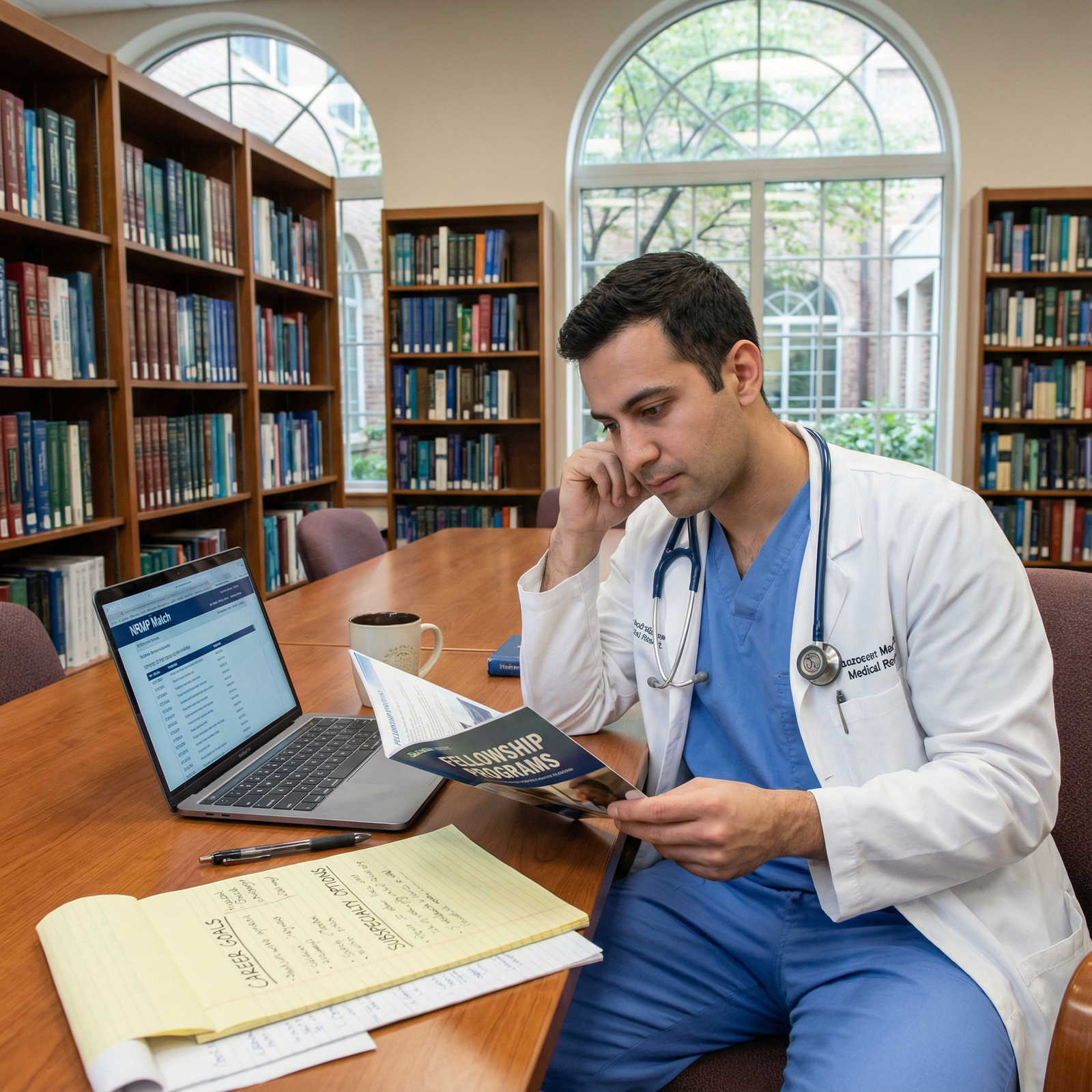
Use multiple sources to identify programs:
- Official society websites and directories (e.g., ACGME, specialty societies)
- NRMP/ERAS or other match systems depending on your specialty and region
- Program websites and institutional GME pages
- Word of mouth from attendings, mentors, and recent graduates
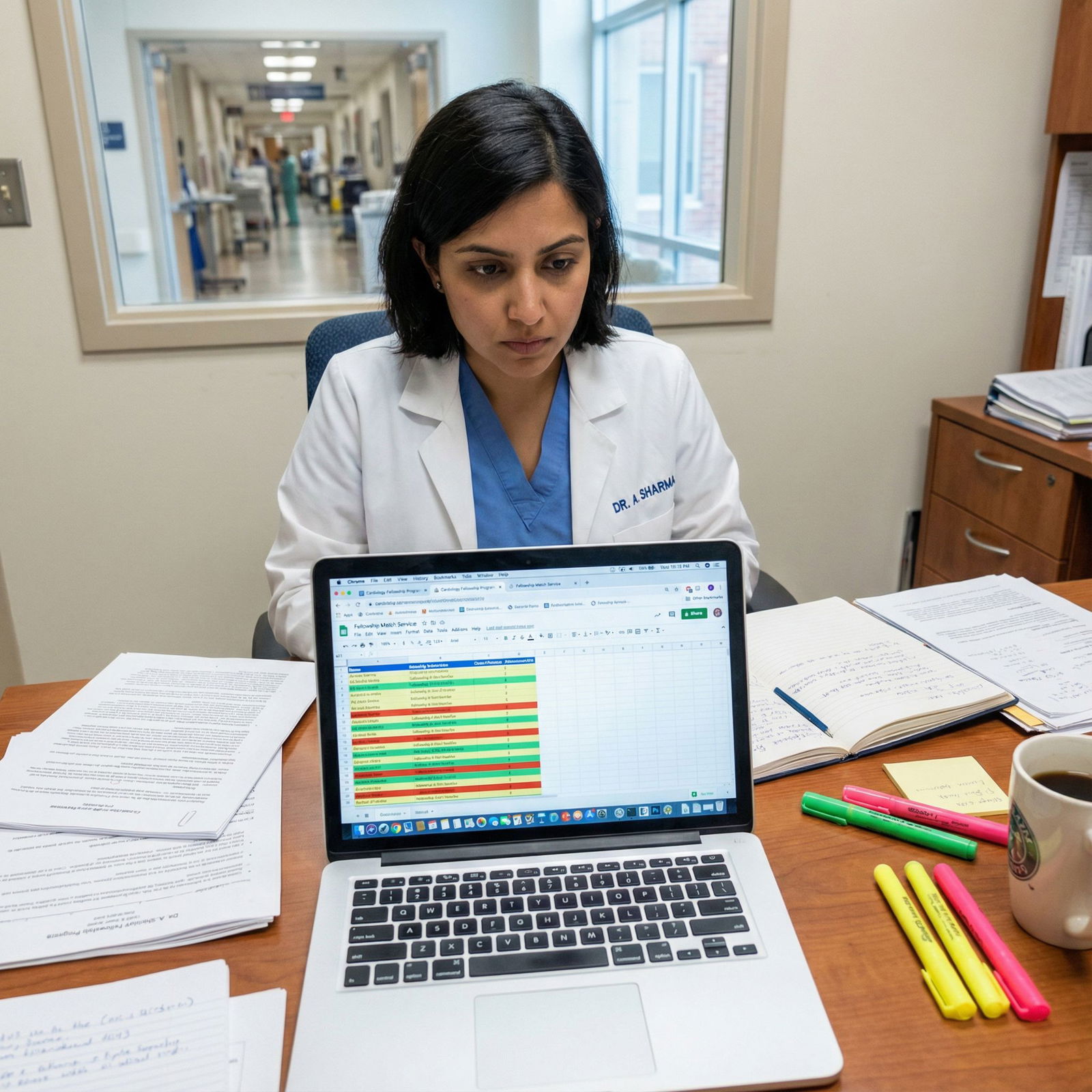
As you research, create a shared spreadsheet (e.g., Excel, Google Sheets) with columns for:
- Program name and institution
- City/region and geographic notes (proximity to family, cost of living)
- Program size and duration
- Research strengths (e.g., outcomes research, bench science, clinical trials)
- Unique features (e.g., global health track, advanced procedural training, QI focus)
- Application deadlines and special requirements
- Perceived “competitiveness” tier for you (reach, realistic, safety)
Aim for a balanced list that reflects both your ambitions and your realistic competitiveness based on your CV, evaluations, exams, and letters.
Get Insider Perspectives
Program websites tell only part of the story. Whenever possible:
- Talk to current fellows and recent graduates from your institution who matched into those programs.
- Ask targeted questions:
- How supportive are the faculty and PD?
- Is there protected time for research or board study?
- How is the clinical workload and call schedule?
- Do graduates achieve the kinds of jobs you want?
These conversations can help you refine your list before you invest in each application.
3. Mastering Fellowship Application Requirements
Every specialty and match system is slightly different, but most fellowship applications share core components. Understanding these early is key to staying ahead.
Track Every Deadline and Requirement
Create a master document or calendar that includes for each program:
- Application open date
- Submission deadline
- Letter of recommendation deadline (if separate)
- Transcript/USMLE/COMLEX requirement details
- Supplemental questions or essays
- Interview season window
Use color coding or reminders to keep high-priority and near‑due items visible. Many residents integrate this with apps like Google Calendar, Notion, or Trello.
Common Application Components
Most programs will require:
- Curriculum Vitae (CV)
- Personal statement (sometimes program- or track-specific)
- Letters of recommendation (LoRs)
- Medical school transcript and dean’s letter (MSPE)
- USMLE/COMLEX scores
- Residency program director letter or evaluation
- Occasionally, supplemental essays, case logs, or research statements
Read each program’s instructions carefully—some will have word limits, specific prompts, or preferences for letter writers (e.g., one research mentor, one clinical attending in subspecialty).
4. Crafting a High-Impact Fellowship CV
Your CV is often the first snapshot a program sees. It should be accurate, clear, and tailored to highlight your fit for this next phase of physician education and training.
Structure and Content Essentials
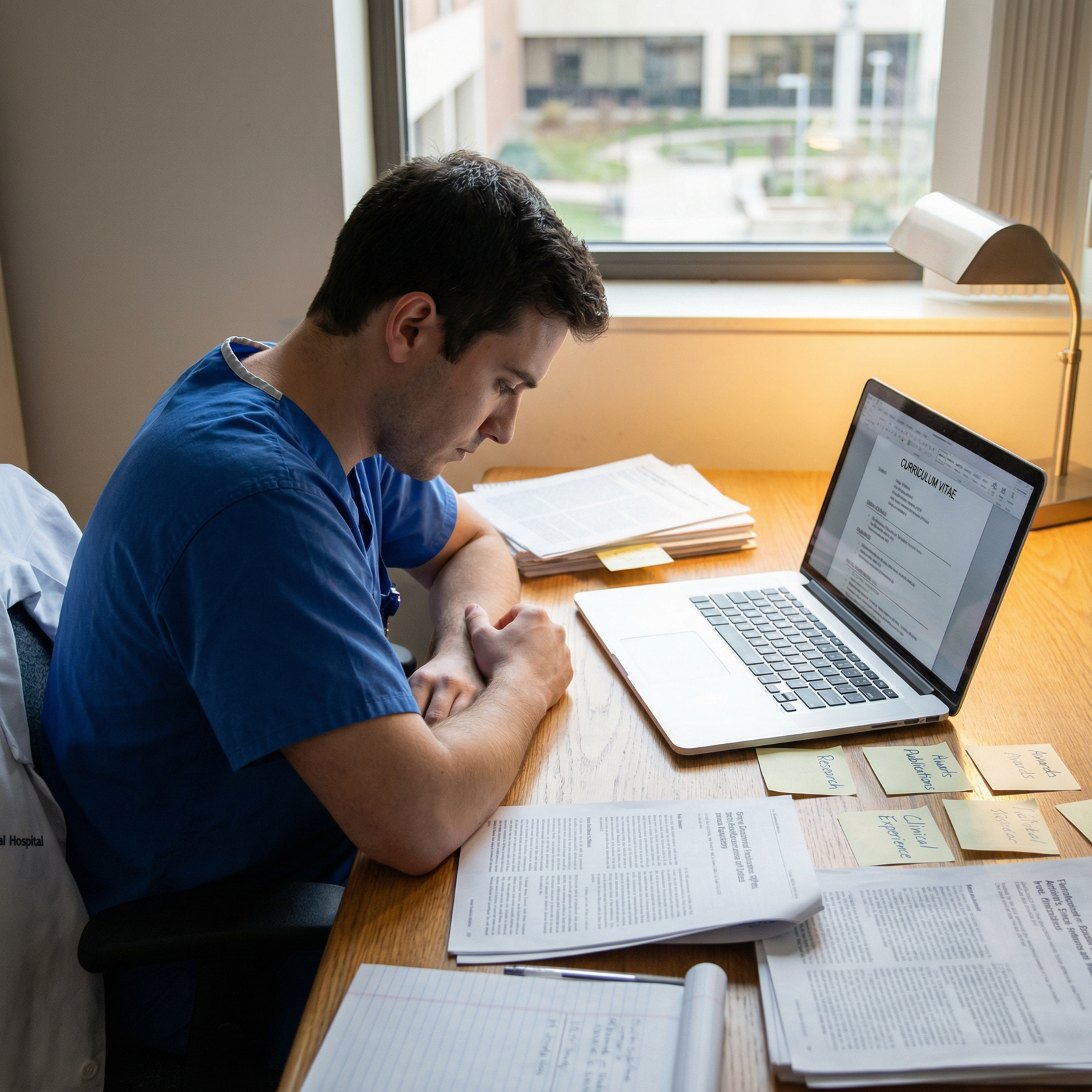
A typical fellowship CV should include:
Contact Information and Identifiers
- Full name, degrees
- Current institution and PGY level
- Email and mobile phone
Education
- Undergraduate, medical school, residency
- Degrees, institutions, locations, graduation years
Medical Training and Clinical Experience
- Residency program details
- Subspecialty rotations (especially in your chosen field)
- Acting fellow or chief resident roles
- Significant elective experiences
Research and Scholarly Activity
- Peer-reviewed publications (published, in press, and submitted—labeled clearly)
- Abstracts, posters, oral presentations
- QI projects and outcomes
- Grants, awards, or research funding (if applicable)
Teaching and Education
- Lectures to med students or residents
- Small-group facilitation
- Curriculum development or simulation activities
Leadership and Service
- Committee membership (e.g., residency education committee, diversity committee)
- Chief roles, resident council, specialty interest group involvement
- Community outreach and volunteer work
Certifications, Licensure, and Professional Memberships
- BLS/ACLS/PALS
- State license (if obtained)
- Memberships in professional organizations (e.g., ACP, AAP, ACC, AASLD)
Presentation Tips
- Keep it professional and consistent (fonts, headings, spacing).
- Typically 2–4 pages is acceptable at the fellowship level; clarity matters more than length.
- Use reverse chronological order within each section.
- Avoid unexplained gaps; brief clarifications (e.g., “Leave of absence for family reasons”) are better than silence.
- Have at least one mentor or faculty member in your specialty review your CV with a critical eye.
5. Writing a Compelling Personal Statement
Your personal statement is your chance to tie your story together—your clinical experiences, your research, and your vision for your career development.
Core Goals of a Strong Fellowship Personal Statement
Your essay should:
- Explain why this subspecialty genuinely fits you
- Demonstrate your understanding of the field’s demands and opportunities
- Highlight 2–3 key experiences that shaped your path
- Convey your professional identity and long‑term career goals
- Show why you and this type of program are a good match
Content and Structure Suggestions
A common and effective structure:
Opening paragraph:
- A specific, meaningful clinical or research vignette that illustrates your connection to the specialty—avoid generic “I have always wanted to be a doctor” openings.
Middle paragraphs:
- Describe clinical experiences that confirmed your subspecialty interest
- Summarize your scholarly work and what you learned from it
- Emphasize skills you bring (e.g., teamwork, communication, resilience, analytic thinking)
Closing paragraph:
- Clearly state your career goals (e.g., “I hope to develop a career as a clinician-educator and outcomes researcher in advanced heart failure.”)
- Articulate what you’re seeking in a fellowship (research mentorship, procedural training, teaching opportunities) and how you hope to contribute.
Practical Writing Tips
- Aim for about 1 page single-spaced (or follow system word limits).
- Use straightforward language; clarity beats ornamentation.
- Avoid repeating your CV—interpret your experiences instead of just listing them.
- Show reflection: What did you learn? How did you grow?
- Get feedback from:
- A mentor in your field
- Someone with strong writing skills
- Ideally, a former fellow who recently matched
Revise multiple times; a well‑crafted personal statement can be a differentiator when your metrics look similar to other applicants.
6. Securing Strong, Specific Letters of Recommendation
Letters of recommendation are one of the most heavily weighted components of fellowship applications. Thoughtful planning here can significantly strengthen your file.
Choosing the Right Letter Writers
Aim for 3–4 letters, depending on program guidelines. Commonly:
- One letter from your residency program director (often required)
- One or two letters from faculty in your chosen subspecialty who have directly supervised you clinically
- One letter from a research mentor if you have meaningful scholarly work
Ideal letter writers should:
- Know you well over time
- Have observed you in multiple settings (clinical, research, teaching)
- Be enthusiastic about supporting your application
- Understand fellowship expectations in your field
How to Ask for Letters Effectively
- Ask early—ideally 2–3 months before deadlines.
- Request a “strong letter of recommendation” specifically; this phrasing allows potential writers to decline if they cannot be enthusiastic.
- Provide:
- Your updated CV
- A draft of your personal statement
- A short summary of your career goals and why you’re applying to this subspecialty
- A list of programs (if relevant) and any specific points you’d like them to highlight (e.g., your teaching, your growth over time).
Following Up Professionally
- Set a personal deadline at least 1–2 weeks before the actual submission deadline.
- Send gentle reminder emails as the deadline approaches.
- After the letter is submitted, send a brief thank-you note and later follow up with your match results. These relationships matter far beyond the application cycle.
7. Preparing Thoughtfully for Fellowship Interviews
Once interviews are offered, your focus shifts from assembling documents to presenting yourself effectively and authentically.
Understanding the Interview’s Purpose
Programs use interviews to assess:
- How you interact with others (fellows, faculty, staff)
- Your communication skills and professionalism
- Your understanding of the specialty and the program
- Your potential for growth, teamwork, and contribution to the fellowship community
Common Fellowship Interview Topics
Practice articulating your thoughts about:
- Why you chose this subspecialty
- Your most meaningful clinical experiences
- Your research and what you actually did (methods, your role, implications)
- Your strengths and areas for growth
- How you handle stress, errors, and conflict
- Your career plans in 5–10 years
Have concise stories ready that demonstrate:
- Teamwork and collaboration
- Leadership or initiative
- Resilience after a setback
- Ethical decision-making
Program-Specific Preparation
Before each interview:
- Review the program’s website thoroughly
- Know their key research areas, special clinics, and unique training offerings
- Look up your interviewers if provided—glance at their academic profiles or recent publications
- Prepare specific questions that show you’ve done your homework, such as:
- “How do fellows typically balance research and clinical responsibilities here?”
- “What types of careers have recent graduates pursued?”
- “How does the program support fellows preparing for boards?”
For virtual interviews, also:
- Test your technology, camera, microphone, and background in advance
- Use a quiet, well-lit space with a neutral backdrop
- Dress professionally as you would for an in‑person interview
8. Submitting, Tracking, and Following Up on Applications
Once your documents are ready, the logistics become critical.
Before You Hit “Submit”
For each application:
- Confirm your CV is updated and error‑free
- Double-check that the correct personal statement is attached (if using program-specific versions)
- Verify that all required fields and supplemental questions are answered
- Ensure the correct letters of recommendation are assigned
If you’re applying through centralized systems (e.g., ERAS, SF Match, specialty-specific platforms), familiarize yourself with the interface early so you’re not troubleshooting at the last minute.
After Submission
- Keep a running log of:
- Date of submission
- Confirmation emails or receipts
- Status updates or communication from programs
- Some applicants create a simple tracking sheet for interview invitations, dates, and any impressions after the interview for later ranking decisions.
Thank-You Notes and Professional Follow-Up
If the culture of your specialty supports it (many still do):
- Send brief, sincere thank‑you emails to key interviewers within 24–72 hours.
- Mention a specific part of your conversation to personalize the note.
Avoid excessive follow-up beyond this unless:
- You have a significant update (e.g., publication accepted, major award)
- A program explicitly invites updates
- There’s a logistical question or correction needed

9. Staying Organized, Managing Stress, and Preserving Well‑Being
Application season often overlaps with demanding rotations, exams, and personal responsibilities. Protecting your mental health and maintaining organization is part of being a sustainable, effective physician.
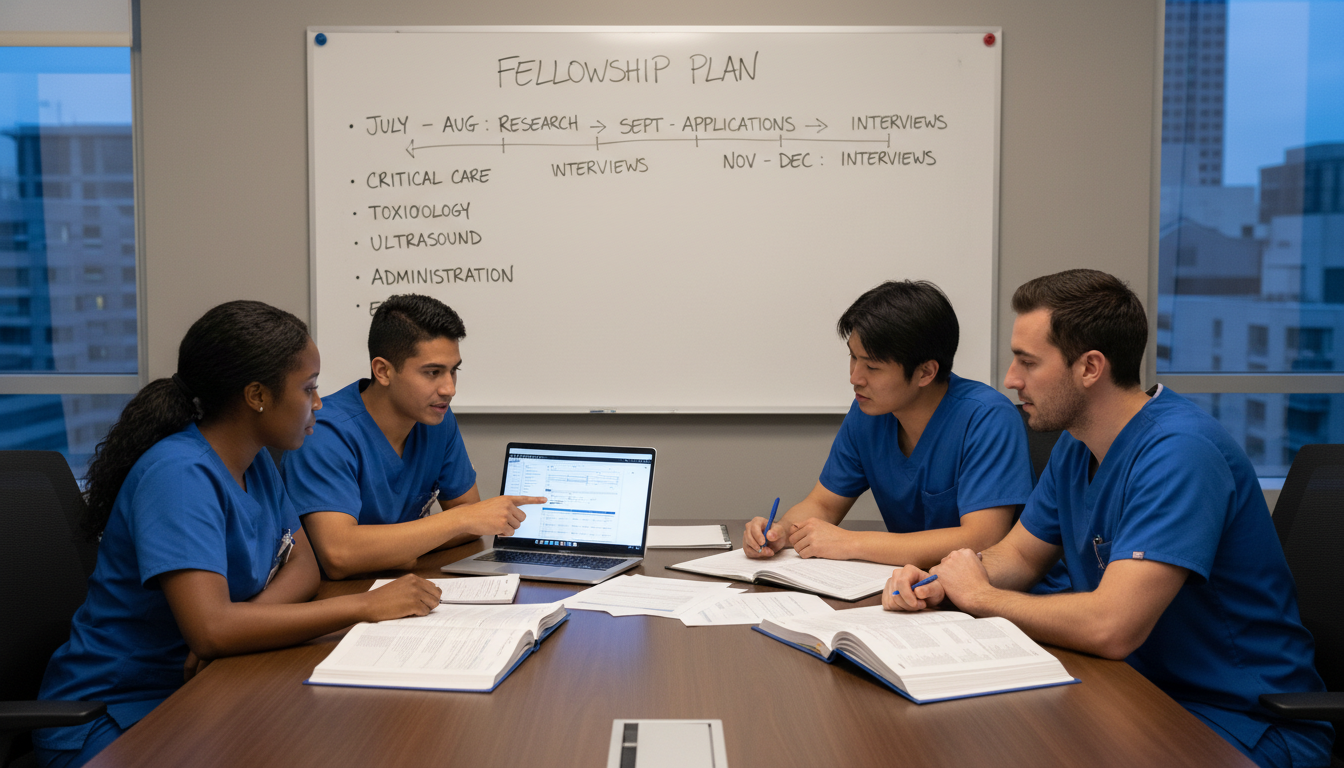
Create a Realistic Application Timeline
Working backward from your earliest deadlines, outline when you will:
- Finalize your program list
- Draft and revise your CV
- Draft multiple versions of your personal statement (if needed)
- Request letters of recommendation
- Complete application forms and supplemental essays
- Prepare for and attend interviews
Block off specific time in your calendar—like any other important commitment.
Practical Stress Management Strategies
Set boundaries:
Choose defined hours each week dedicated to application work. Protect them as you would clinic.Use small chunks of time:
Even 20–30 minutes can be used to update your CV, edit a paragraph, or send emails.Maintain basic self-care:
- Prioritize sleep when possible
- Hydrate and eat regularly
- Use brief exercise or walks as stress relief
Lean on your support system:
- Co-residents applying in the same cycle
- Mentors and advisors
- Family and friends
Talk openly about the stress; others can help normalize the experience and offer perspective.
Perspective: It’s a Match, Not a Judgment of Your Worth
Fellowship applications are competitive and often unpredictable. Many excellent residents don’t match their first time in certain subspecialties. If that happens:
- It reflects a crowded field and complex process—not your value as a physician.
- Alternative paths (research years, hospitalist roles, chief resident positions) can strengthen your application and career trajectory.
- Talk early with trusted mentors about contingency plans.
Conclusion: Using This Checklist as a Living Roadmap
The fellowship application process is undeniably demanding, but it is also an opportunity to reflect on who you are as a physician and where you want your career to go.
By following this ultimate fellowship application checklist, you will:
- Clarify your subspecialty interests and long‑term career development goals
- Identify programs that truly fit your personal and professional priorities
- Assemble a coherent, compelling application that reflects your strengths
- Navigate deadlines and logistics with far less chaos
- Approach interviews and ranking decisions with intention and confidence
Most importantly, remember that the goal is not simply to secure any fellowship—it’s to find a training environment where you can thrive, grow, and build the foundation for the kind of physician you aim to become.
Use this guide iteratively, adapt it to your specialty, and keep updating it as you move through the cycle. Your future self will thank you.
Fellowship Applications FAQ
1. How early should I start preparing for my fellowship application?
Ideally, start 9–12 months before your first application deadline:
- 12 months out: Clarify subspecialty choice, begin research on programs, identify potential letter writers.
- 9–10 months out: Update your CV, outline your personal statement, and discuss strategy with mentors.
- 6–7 months out: Request letters of recommendation, refine your program list, and draft your statement.
- 3–4 months out: Finalize application materials and verify requirements for each program.
Starting earlier gives you time to address gaps (e.g., additional subspecialty rotations, research productivity) before applications go live.
2. Can I apply to multiple subspecialties or tracks at once?
You can, but proceed with caution:
- Applying to closely related tracks (e.g., general cardiology + research track in cardiology) is common.
- Applying to different subspecialties simultaneously (e.g., cardiology and critical care) may dilute your narrative and raise questions about your commitment.
If you do apply broadly, be prepared to clearly explain your reasoning and long‑term career vision to each program in a way that still feels genuine and focused.
3. How important is the personal statement compared to other parts of the application?
While metrics like evaluations, exam scores, and letters often carry significant weight, your personal statement can be decisive in:
- Distinguishing you from applicants with similar credentials
- Providing context for any red flags or gaps
- Highlighting your unique path, values, and goals
Many program directors report that a thoughtful, well‑written statement can strongly influence which applicants they invite for interviews, especially in competitive fields.
4. What should I do if I don’t receive many fellowship interview invitations?
If interview offers are limited or don’t arrive:
Review your application critically with a trusted mentor:
- Are your letters strong and appropriately chosen?
- Does your personal statement present a clear, compelling narrative?
- Is your program list appropriately balanced (reach/realistic/safety)?
Consider timing and logistics:
- Some specialties send invitations in waves; make sure your email filters aren’t blocking messages.
Plan for next steps:
- If you ultimately don’t match, explore options such as:
- Hospitalist or attending positions with strong subspecialty exposure
- Dedicated research or QI years
- Chief residency
- These can significantly strengthen a future application.
- If you ultimately don’t match, explore options such as:
5. How can I stay updated on changes in the fellowship landscape and match process?
- Join your specialty’s professional organizations; many have trainee memberships with newsletters and dedicated resources.
- Attend national or regional conferences where fellowship program directors and fellows present and network.
- Follow reputable professional social media accounts (societies, journals, major programs) and sign up for email alerts from match systems (e.g., NRMP, ERAS, specialty-specific matches).
- Check in periodically with your program’s GME office or fellowship advisors—they often receive updates about application timelines, new requirements, or changes in match structure.
Staying informed ensures that your fellowship applications reflect the most current expectations and opportunities in your field.