Understanding the Fellowship Landscape as a US Citizen IMG in Diagnostic Radiology
If you are a US citizen IMG (American studying abroad) in diagnostic radiology, you are already navigating two complex systems at once: the US graduate medical education structure and the realities of moving from residency to fellowship. The good news is that radiology fellowship pathways are well established, and US citizenship removes many of the visa-related obstacles that non‑US IMGs face.
However, being an IMG still affects how program directors may initially perceive your application, especially at competitive academic centers. That means you need a deliberate, early, and strategic approach to fellowship preparation—starting as early as R1 (PGY‑2).
This guide focuses on:
- How radiology fellowships are structured and recruited
- How to plan your residency years so you’re competitive for subspecialty training
- The fellowship application timeline and what to do at each step
- How to address unique IMG-related challenges, even as a US citizen
- Practical strategies and examples tailored to diagnostic radiology residents
You’ll also see key terms woven in—like radiology residency, diagnostic radiology match, preparing for fellowship, fellowship application timeline, and how to get fellowship—to help you frame your own planning and searches.
1. Radiology Fellowships 101: What You’re Aiming For
Before you can effectively prepare, you need a clear picture of what radiology fellowships look like and how they differ.
1.1 Common Subspecialties in Diagnostic Radiology
Most US diagnostic radiology graduates pursue at least one year of fellowship. Common ACGME-accredited fellowships include:
- Neuroradiology
- Vascular and Interventional Radiology (IR) – now largely an integrated or ESIR pathway, but fellowships still exist in some structures
- Musculoskeletal (MSK) Radiology
- Abdominal/Body Imaging
- Breast Imaging
- Cardiothoracic Imaging
- Pediatric Radiology
- Nuclear Medicine (less common but important niche)
- Emergency Radiology (increasingly formalized)
Non‑ACGME fellowships and niche programs also exist (e.g., advanced body MRI, oncologic imaging, women’s imaging beyond breast).
For a US citizen IMG, it’s important to consider:
- Competitiveness: Neuroradiology, IR-related pathways, MSK, and high-end body imaging at top academic centers can be more competitive.
- Career goals: Do you want to be in community practice, academia, private equity-backed groups, or hybrid models?
- Lifestyle: Some subspecialties (e.g., IR, ER radiology) have more call and procedures; others (e.g., mammo, outpatient MSK) might have more predictable hours.
1.2 Understanding ACGME vs Non‑ACGME Fellowships
- ACGME-accredited fellowships
- Standardized curriculum and accreditation.
- Often require ERAS or structured applications.
- Easier alignment with board certification and credentialing.
- Non‑ACGME fellowships
- Sometimes more flexible and niche.
- May be arranged directly with programs and not through ERAS.
- Can be very strong at specific institutions but require careful vetting.
As a US citizen IMG, you generally won’t have visa concerns, but you do need to:
- Check that your diagnostic radiology residency is ACGME-accredited (it must be, if you’re in the US).
- Confirm whether board eligibility in your country of medical school matters for specific advanced or international fellowships (some global fellowships ask about this).
1.3 How PDs View US Citizen IMGs in the Fellowship Context
By the time you’re applying for fellowship, program directors often care less about where you went to medical school and more about:
- Your diagnostic radiology performance (evaluations, call performance, procedures, independence)
- Board exam performance (Core Exam and prior USMLE scores)
- Letters from trusted faculty they know or institutions with strong reputations
- Evidence of subspecialty commitment (research, electives, teaching, national presentations)
However, being an American studying abroad can still raise questions about:
- How strong your medical school clinical training was
- Whether you’re academically inclined and adaptable
- Whether you can integrate smoothly into US team culture
Your job during residency is to build a record that makes your IMG background an interesting footnote, not a risk factor.
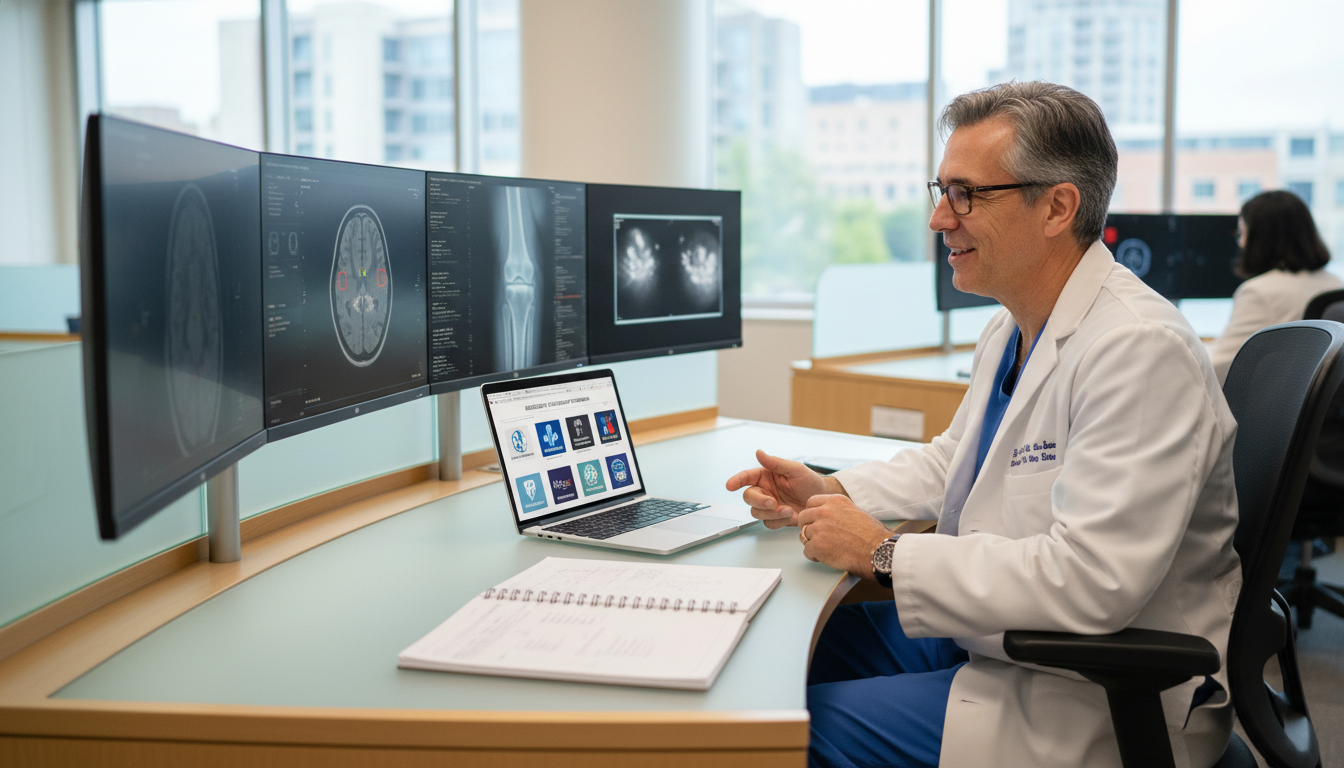
2. Strategic Planning From R1 to R4: Building a Fellowship-Ready Profile
Your preparation for fellowship starts essentially as soon as you begin your radiology residency. Think of each residency year as a stage in your fellowship preparation.
2.1 R1 (PGY‑2): Foundation and Exploration
Focus: Get oriented, build reputation, start exploring interests.
Key steps:
Excel in Fundamentals
- Show up early, be reliable on call, read widely, and ask thoughtful questions.
- Your early professionalism and work ethic are the basis for strong future letters.
Explore Subspecialties
- Use your first-year rotations to notice what you enjoy:
- Do you like procedures and hands-on work? Consider IR, MSK, or breast interventions.
- Do you enjoy high-acuity, emergent settings? ER, neuroradiology (stroke work), or trauma imaging.
- Are you detail-oriented and pattern-recognition heavy? Neuroradiology, MSK, body MRI.
- Keep simple notes: cases you liked, mentors you connected with, and what environments energized you.
- Use your first-year rotations to notice what you enjoy:
Start Relationships with Potential Mentors
- Identify 1–2 faculty in areas that interest you.
- Ask for:
- Tips for reading in that subspecialty
- Recommendations for textbooks or online resources
- Show longitudinal interest without pushing too early for specific opportunities.
Plant the Seed for Research
- Ask: “If I’m interested in [subspecialty], what’s a realistic small project I could help with over the next year?”
- Aim for:
- A case report, retrospective review, or educational poster.
- As a US citizen IMG, demonstrating scholarship directly counters any stereotype that IMGs are less academically inclined.
2.2 R2 (PGY‑3): Commitment and Output
Focus: Start building tangible achievements and a coherent narrative.
Narrow Your Fellowship Interests
- You don’t have to pick a single subspecialty yet, but try to narrow to 1–2 likely areas.
- Example: Neuroradiology vs. body imaging; MSK vs. IR-related tracks.
Deepen Subspecialty Exposure
- Ask your chief or program director if you can:
- Spend more elective time on your top 1–2 subspecialties.
- Attend subspecialty conferences or tumor boards consistently.
- Ask your chief or program director if you can:
Accelerate Research and Educational Activities
- Set realistic goals: by the end of R2, aim for at least:
- 1–2 posters or abstracts at a national or regional meeting.
- Or 1 manuscript (submitted or in preparation).
- Choose projects with clear timelines:
- Avoid large-scale prospective trials you can’t finish before applications.
- Set realistic goals: by the end of R2, aim for at least:
Attend National Meetings
- Meetings like RSNA, ARRS, ASNR, SIR, or subspecialty society conferences are invaluable.
- As a US citizen IMG:
- Use these to network with faculty from broad institutions.
- Introduce yourself as “I’m a diagnostic radiology resident at [US institution], interested in [field]. Looking ahead to fellowship, I’d love advice on the best ways to prepare.”
Start Thinking About Geography
- Reflect on where you want to live and train:
- Major academic centers vs. strong regional programs.
- Proximity to family/support networks (especially important if you did med school abroad and want to re-anchor in the US).
- Reflect on where you want to live and train:
2.3 R3 (PGY‑4): Application Preparation and Visibility
Focus: Turn your work into a compelling application.
This is the prime year where “preparing for fellowship” becomes concrete.
Clarify Your Target Subspecialty
- By early R3, you should be ready to answer:
- “I’m planning to apply for [subspecialty] fellowships, particularly in [academic/community] settings, ideally in [regions if important].”
- You can still apply broadly, but your narrative needs coherence.
- By early R3, you should be ready to answer:
Optimize Your Rotations
- Arrange:
- Advanced electives in your intended fellowship area.
- Away rotations (if feasible) at potential fellowship institutions, especially if:
- Your home program has lower reputation.
- You are targeting a highly competitive subspecialty.
- Away rotations let faculty get to know you beyond your IMG background; they see your real-time performance.
- Arrange:
Secure Strong Mentors and Letter Writers
- Choose 2–3 subspecialty faculty who:
- Know your work ethic and improvement trajectory.
- Can speak specifically to your clinical skills, independence, and professionalism.
- As a US citizen IMG, prioritize letter writers who:
- Have national visibility or known names in the field.
- Potentially know PDs elsewhere and can quietly advocate for you.
- Choose 2–3 subspecialty faculty who:
Polish Your CV and Personal Statement
- Emphasize:
- Your path as an American studying abroad and how it strengthened your resilience, cultural adaptability, and appreciation for US training.
- Clear subspecialty interest and how your experiences support it.
- Quantify accomplishments:
- “Presented 2 posters at RSNA and 1 oral presentation at regional radiology society.”
- “Co-author on retrospective study in neuroradiology (manuscript under review).”
- Emphasize:
Prepare for Interviews
- Practice answering:
- “Why this subspecialty?”
- “Why this program and location?”
- “How does your IMG background influence your career approach?”
- Have concrete examples of:
- High-stakes calls you managed.
- Cases where your decision-making directly impacted patient care.
- Practice answering:
2.4 R4 (PGY‑5): Finalizing Plans and Preparing for Practice
Focus: Secure position, refine skills, and plan long-term career steps.
Confirm Fellowship Position and Paperwork
- Once you’ve matched or signed a contract, track:
- Credentialing requirements.
- State licensure timelines.
- As a US citizen, licensing is simpler than for visa holders, but some states are slow; start early.
- Once you’ve matched or signed a contract, track:
Tailor Remaining Rotations to Your Subspecialty
- Maximize time in your chosen field to enter fellowship at a higher level of independence.
- Ask for:
- Increased autonomy in relevant rotations.
- Opportunities to teach juniors in that area.
Keep Producing Scholarship if Possible
- Finish any pending manuscripts or long-term projects.
- Even just one extra accepted publication can make you more attractive for future jobs or advanced fellowships.
Think Beyond the First Fellowship Year
- If you’re considering academia or advanced subspecialization (e.g., dual fellowships), talk with your mentors about:
- Additional 2nd fellowships (e.g., neuro + spine intervention, MSK + MSK intervention).
- Early steps for preparing for eventual faculty positions.
- If you’re considering academia or advanced subspecialization (e.g., dual fellowships), talk with your mentors about:
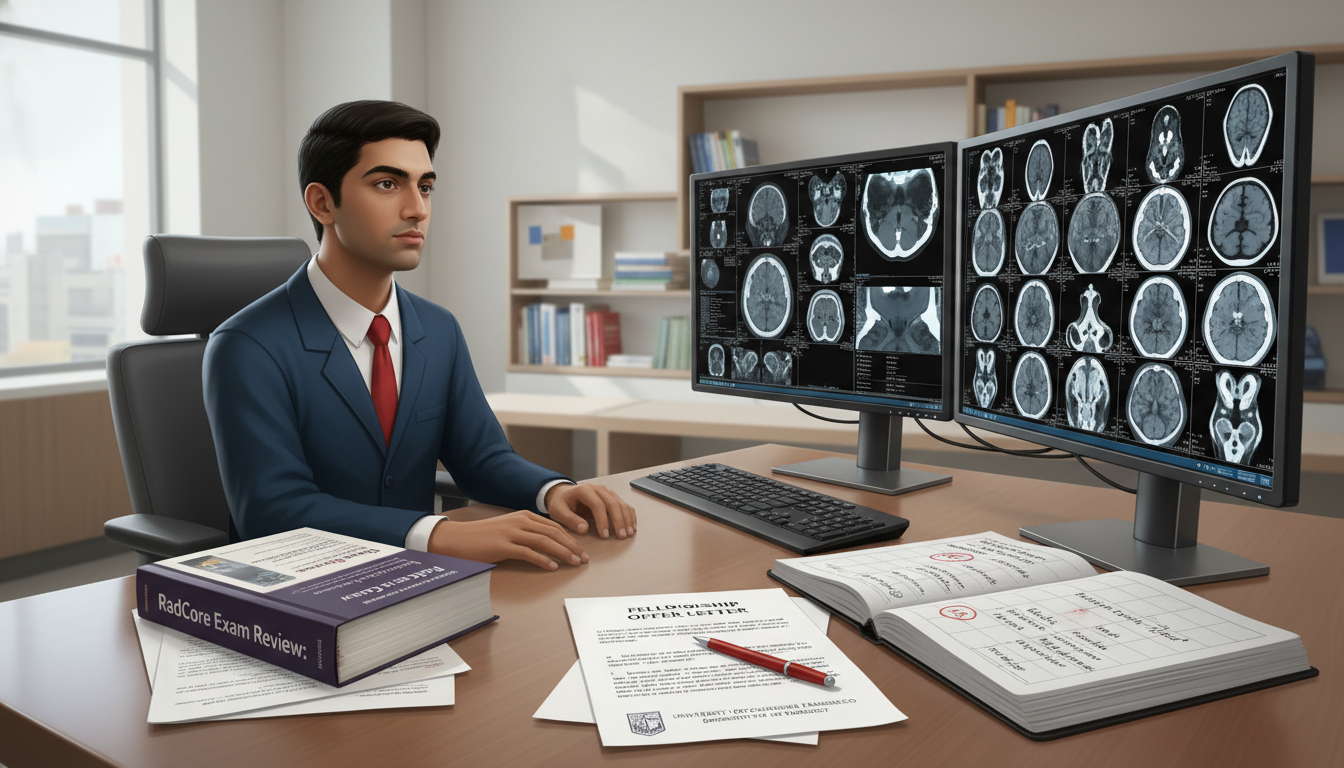
3. The Fellowship Application Timeline and Milestones
Understanding the fellowship application timeline is crucial so you don’t miss opportunities. Note that specific timelines vary somewhat by subspecialty and may evolve, but the general pattern is:
3.1 General Timeline by Residency Year
R2 (PGY‑3)
- Late R2: Start researching programs and timelines for your target subspecialty.
- Attend national meetings and begin informal networking.
R3 (PGY‑4)
- Early–mid R3: Many fellowships open applications (often 18–24 months before fellowship start).
- Late R3: Interviews and offers occur.
R4 (PGY‑5)
- You have usually already accepted a fellowship.
- You may still apply for late-opening or off-cycle positions in some specialties.
3.2 Subspecialty-Specific Patterns (Approximate)
These can change; always verify via society websites and fellowship program pages.
Neuroradiology
- Often uses ERAS and NRMP Match.
- Application season typically opens early R3 for fellowship starting after R4.
MSK, Body Imaging, Breast, Cardiothoracic
- Many are in the NRMP Fellowship Match through ERAS now.
- Application opening ~15–21 months before fellowship start.
Pediatric Radiology, Nuclear Medicine, Emergency Radiology
- Some aligned with ERAS/NRMP; others use direct applications.
- Check individual program websites.
IR / Advanced IR-related Training
- ESIR pathways and IR/DR integrated residencies have their own structures.
- Traditional IR fellowships are fewer but still present in certain settings.
3.3 Concrete Timeline Example
Assume you’re in a standard R1–R4 DV schedule and want a Neuroradiology fellowship starting July 2028:
R2 (2025–2026)
- Fall 2025: Decide neuroradiology is your likely target.
- Spring 2026: Present at a neuroradiology or general radiology meeting.
R3 (2026–2027)
- July–September 2026: Prepare CV and personal statement; ask for letters.
- October–December 2026: Submit ERAS applications if used for that cycle.
- January–April 2027: Interview season.
- Spring/Summer 2027: Rank lists and Match (if applicable), or sign offers.
R4 (2027–2028)
- Confirm paperwork, licensing, and onboarding.
- Continue to refine neuro skills on rotations.
Being diligent about this timeline is a key piece of how to get fellowship at competitive institutions, especially if you’re coming as a US citizen IMG who may not have an automatic network advantage.
4. Overcoming IMG-Specific Challenges as a US Citizen
Even though you don’t have visa issues, your IMG status still affects perceptions and opportunities. You can actively address this throughout your radiology residency.
4.1 Turn Your “American Studying Abroad” Story into an Asset
Many fellowship directors have seen outstanding US citizen IMGs who bring unique perspectives. Frame your background in terms of:
- Adaptability: You navigated education and health systems in two countries.
- Cultural competency: Exposure to diverse patient populations abroad and in the US.
- Resilience and initiative: You chose a non-traditional path and made it work.
In your personal statement and interviews, highlight specific skills your path cultivated—such as comfort with resource-limited environments, strong physical exam skills, or global health insights—but connect them back clearly to radiology.
4.2 Addressing Potential Concerns About Training Background
Program directors may quietly wonder:
- Did your medical school prepare you as well as US schools in clinical reasoning?
- Did you struggle with standardized exams?
You can mitigate this by:
- Strong USMLE scores (already done by residency entry) and a solid Core Exam performance.
- Demonstrably strong call performance and independent case handling.
- Clear feedback from faculty emphasizing your clinical judgment and communication.
Ask your letter writers to include specific lines such as:
“Despite coming from an international medical school background, Dr. X has consistently performed at or above the level of our US MD/DO residents in diagnostic accuracy and clinical integration.”
4.3 Networking Strategically
You may not have the same built-in alumni network as US MDs, so:
- Use national societies:
- Join subspecialty societies early (e.g., ASNR, SSR, SAR, SBI).
- Volunteer for trainee committees or abstract review panels.
- Leverage mentors’ networks:
- Ask: “Are there fellowship directors or faculty you’d recommend I talk to to learn more about programs?”
- Request email introductions where appropriate.
- Use virtual events and webinars:
- Many societies offer free or low-cost webinars where you can ask questions and follow up with speakers.
Short, professional follow-up emails can be powerful:
“Dr. Smith, I enjoyed your webinar on advanced body MRI. I’m a US citizen IMG and current R2 in diagnostic radiology at [Institution]. I’m considering body imaging fellowships and would greatly appreciate any advice you have on preparing for fellowship, particularly for applicants from IMG backgrounds.”
4.4 Filling Gaps in Research or Academic Exposure
If your medical school had limited research, compensate in residency:
- Partner with residents or fellows who already have projects going.
- Ask subspecialty sections if they have:
- Database projects needing extra help.
- QI (quality improvement) projects that can be turned into abstracts.
- Aim for visible output:
- National meeting posters.
- Short education exhibits.
- Case reports in subspecialty journals.
This not only answers the “how to get fellowship” question academically, but also demonstrates sustained intellectual engagement—highly valued in radiology.
5. Practical Tips for a Strong Fellowship Application
Now, translating all of this into an actual application strategy.
5.1 Choosing Programs Realistically but Ambitiously
As a US citizen IMG, you can absolutely aim for top-tier academic programs—especially if:
- You’re in a strong radiology residency.
- You have solid board scores and meaningful academic work.
- Your letters are from respected faculty.
Apply in tiers:
- Top-tier academic centers (if they align with your goals).
- Strong regional academic programs with excellent case mix.
- High-quality community-based or hybrid programs that offer robust training.
Cast a broad net unless your geographic needs are highly specific. Then, tailor your efforts to those regions (e.g., building contacts at multiple programs in the same city or state).
5.2 Crafting a Compelling Personal Statement
Keep it concise and targeted:
- Opening: Briefly frame your path as a US citizen IMG and how it led you to diagnostic radiology.
- Middle: Focus on 2–3 experiences that:
- Cemented your interest in the subspecialty.
- Demonstrate specific skills (e.g., image interpretation for complex cases, multidisciplinary collaboration, comfort with high-volume call).
- Closing: Articulate future goals:
- “I hope to build a career in academic neuroradiology with a focus on stroke imaging research and resident education,” or
- “My long-term goal is to practice in a high-acuity community hospital where I can apply advanced body imaging skills and participate in tumor boards.”
Avoid lengthy discussion of why you went abroad unless it’s relevant; keep the tone forward-looking and professional.
5.3 Maximizing Letters of Recommendation
Aim for:
- At least 2 subspecialty letters from your chosen fellowship area.
- 1 general radiology/residency program letter (PD or chief of service).
Ask early and provide:
- Your updated CV.
- A bullet list of:
- Key cases you discussed together.
- Projects you worked on.
- Specific feedback they gave you that you later implemented.
For faculty who know you well, it’s reasonable to say:
“As a US citizen IMG, I know some programs may not be familiar with my medical school. If you’re comfortable, I’d appreciate any comments comparing my performance to our other residents to help contextualize my background.”
5.4 Interview Performance: Turning IMG Status into Strength
During interviews:
- Be ready for some version of: “Tell me about your path.”
- Keep it professional, positive, and emphasize what you gained.
- Show maturity and self-awareness:
- Acknowledge that your training route was less traditional, and highlight how you compensated (extra reading, proactive clinical learning).
- Demonstrate US system fluency:
- Discuss multidisciplinary conferences you attend.
- Reference US guidelines you use (e.g., ACR appropriateness criteria, BI-RADS, LI-RADS).
- Ask insightful questions:
- About call structure, case mix, teaching expectations, research support.
6. Thinking Beyond Fellowship: Early Steps for Career and Additional Training
Preparing for fellowship isn’t just about the year after residency. It’s also about setting up your longer-term trajectory, especially if you’re considering future subspecialization or academic careers.
6.1 Preparing for Fellowship While Eyeing Future Jobs
Consider:
- Are you aiming for academia, community practice, or a hybrid model?
- Do you prefer large urban centers or smaller cities?
- Do you want heavy procedures, mostly image interpretation, or a mix?
During fellowship selection and training:
- Choose environments that mirror your aspirational job as much as possible.
- If you want an academic role:
- Pick fellowships with strong research infrastructure and a track record of producing academic radiologists.
- If you want community practice:
- Programs with high-volume, broad case mix and exposure to private practice partners can be ideal.
6.2 When a Second Fellowship Might Make Sense
As an IMG—especially an American studying abroad—you may feel you need extra credentials to stand out. A second fellowship can be beneficial when:
- You want a highly specialized niche (e.g., complex neuro + spine interventions).
- You’re aiming for top-tier academic jobs.
- Your first fellowship was at a smaller program and you want the brand name of a major center.
However, consider trade-offs:
- Extra training means delayed attending salary.
- Not always necessary for strong community roles.
Discuss with mentors before committing; they can tell you whether a second fellowship is typical or excessive for your goals.
6.3 Timeline for Future Faculty Positions and Advanced Programs
If you’re preparing for fellowship with an eye toward further steps (e.g., advanced research fellowships, NIH-funded tracks):
- Start talking about this in late R3/R4 or early fellowship.
- Investigate fellowship application timeline for advanced or post-fellowship opportunities (e.g., 2-year research tracks in neuroradiology or IR).
- Build early research productivity and strong relationships with research mentors.
This proactive thinking will make the question of “how to get fellowship” at ultra-competitive environments more manageable because you’re already thinking in multi-year arcs.
FAQs: Fellowship Preparation for US Citizen IMG in Diagnostic Radiology
1. As a US citizen IMG, do I have a disadvantage applying for radiology fellowships compared with US MDs?
You may start with a slight perceived disadvantage, especially at very competitive academic centers, because some PDs are more familiar with US schools. However, by fellowship time, what matters most is your US radiology residency performance, Core Exam results, letters, and scholarly activity. If you build a strong portfolio and secure excellent letters from respected faculty, your IMG background becomes far less relevant and can even be an asset when framed well.
2. When should I start preparing for fellowship during my radiology residency?
Begin informal preparation in R1 by exploring subspecialties and meeting potential mentors. By late R2, you should be sharpening your interests and building tangible achievements (research, presentations). R3 is the critical year for applications in most radiology subspecialties. Waiting until R4 to start thinking seriously about fellowship will severely limit your options.
3. Do I need research to match into a good radiology fellowship as an IMG?
While research is not an absolute requirement for all programs, it is a significant plus, especially in academic centers and competitive subspecialties (neuroradiology, MSK, body MRI). For a US citizen IMG, research:
- Demonstrates academic engagement and curiosity.
- Helps you stand out from peers.
- Provides networking opportunities through national conferences. Aim for at least a few abstracts, posters, or a manuscript by the time you apply.
4. How far in advance do I need to apply to fellowship, and what happens if I miss the main cycle?
Most diagnostic radiology fellowships open applications 18–24 months before the start date, often during your R3 year. Some subspecialties now use ERAS and an official Match with defined deadlines. If you miss the main cycle, you can:
- Look for unfilled positions (some programs recruit late).
- Consider less competitive or non‑ACGME fellowships.
- Potentially adjust your career plan—e.g., do a year of general radiology or teleradiology while applying for the next cycle.
Staying informed through society websites and your mentors is the best way to avoid missing windows.
By understanding the system, planning early, and leveraging your unique background as a US citizen IMG, you can position yourself strongly for the diagnostic radiology fellowship that fits your goals—and set the stage for a fulfilling, sustainable career.