Understanding Program Selection in Anesthesiology
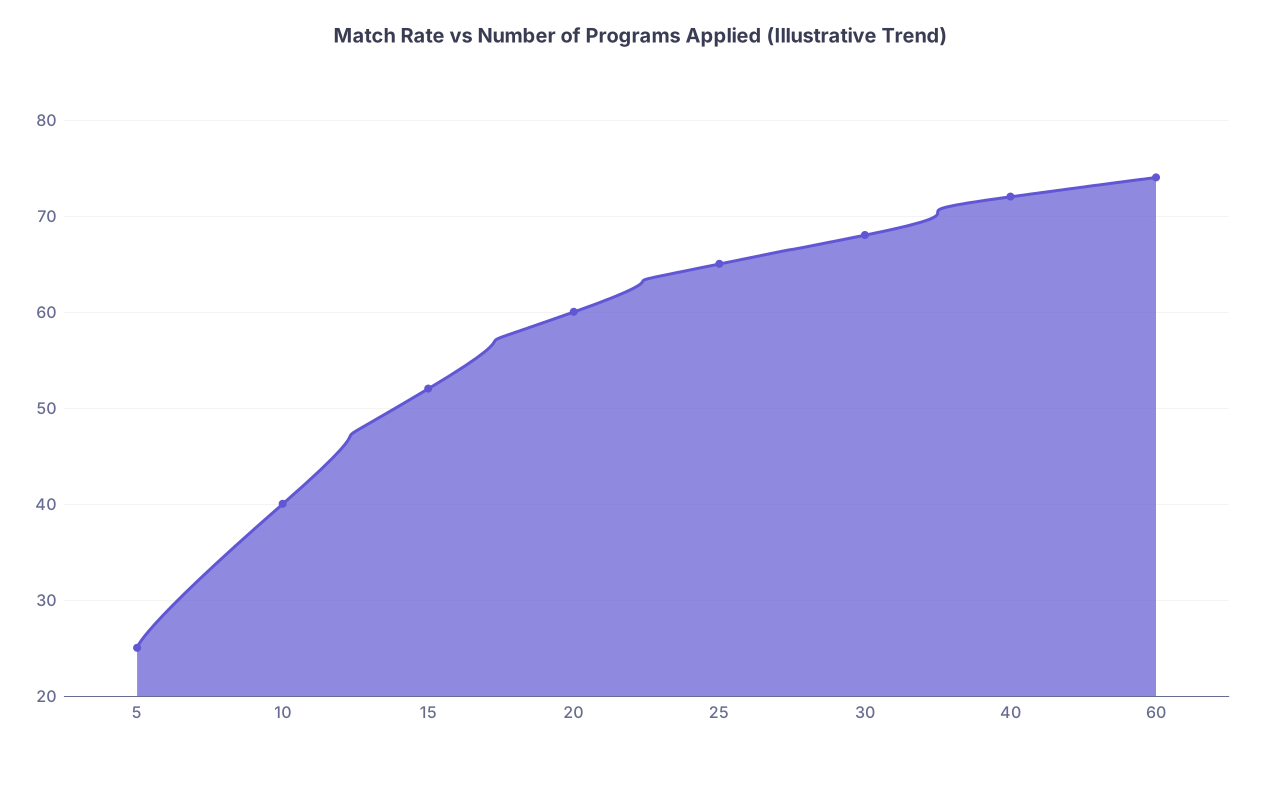
Choosing where to apply for anesthesiology residency is one of the most strategy-dependent parts of the anesthesia match. Beyond Step scores and letters, your program selection strategy—how you build and balance your list—can dramatically influence your chances of matching and your long-term career satisfaction.
In anesthesiology, there are unique factors to consider:
- Variability in case mix and OR exposure
- Differences in ICU and perioperative medicine training
- The mix of community vs. tertiary/quaternary referrals
- Presence of fellowships and research opportunities
- Geographic clustering of programs and lifestyle differences
This guide walks through a stepwise, practical approach to building your list: how to choose residency programs, how many programs to apply, and how to build a data-driven, realistic yet ambitious strategy tailored to anesthesiology.
Step 1: Clarify Your Goals and Constraints
Before you open ERAS or a single program website, define what you actually want and what you can realistically support. Good program selection starts with brutal clarity about your own situation.
A. Academic, Clinical, and Career Goals
Ask yourself:
Academic vs. community focus
- Do you see yourself in academic anesthesiology (research, teaching, subspecialty focus)?
- Or do you envision community practice, private practice, or ambulatory-focused anesthesia?
Subspecialty interests (even if tentative)
Common anesthesiology subspecialties:- Cardiac anesthesia
- Pediatric anesthesia
- Obstetric anesthesia
- Critical care medicine
- Pain medicine
- Regional and acute pain
- Neuroanesthesia
You do not need a fixed choice now, but if you’re leaning strongly (e.g., pediatric or cardiac), prioritize:
- Programs with high volume in that area
- Fellowships in-house or strong fellowship match outcomes
Research and academic profile
- Do you want protected research time?
- Are you aiming for a T32-type research pathway or physician-scientist track?
- If research is a priority, strongly consider large academic centers with a track record of producing academic anesthesiologists.
B. Personal and Geographic Priorities
Your life outside the OR matters—and it shapes your program selection strategy.
Consider:
- Geography
- Regions where you have ties (family, partner, prior schooling)
- States where you’re open to long-term practice
- Climate and cost of living
- Partner/family needs
- Partner’s employment prospects
- Proximity to family or support systems
- School systems, if you have children
- Lifestyle and wellness
- Urban vs. suburban vs. rural
- Commute time tolerances
- Need for robust wellness resources or mental health support
Write down your non-negotiables vs. preferences. This distinction is critical when you inevitably have to make trade-offs.
Step 2: Know Your Applicant Profile Realistically
Your competitiveness strongly affects how to choose residency programs and how many programs to apply. Anesthesiology is moderately competitive and becoming more so. You want to be ambitious but not reckless.
A. Objective Metrics
Important components:
- USMLE/COMLEX scores (or pass/fail + other indicators if applicable)
- Class rank, AOA/Gold Humanism
- Clinical evaluations and sub-internship performance
- Anesthesiology letters of recommendation, especially from anesthesiology faculty or chair/program director
- Research output (especially in anesthesia, pain, perioperative medicine, ICU)
Try to categorize yourself honestly into one of three broad groups:
Highly competitive
- Above-average Step 2 CK (or equivalent indicators)
- Honors in core clinical rotations, especially medicine/surgery
- Strong anesthesia letters, possibly from known faculty
- Research, leadership, or national presentations
Solid/average applicant
- Middle to slightly above middle of the class
- Good clinical evaluations, maybe mixed honors/pass
- At least one strong anesthesia letter
- Some research or meaningful extracurriculars
At-risk or less competitive
- Below-average Step 2 CK or failed/failed then passed
- Remediation, gaps, or professionalism flags
- Limited or late exposure to anesthesiology
- Primarily non-anesthesia letters, or weaker letters
Be honest: your risk category heavily influences how broad your anesthesia match strategy must be.
B. Contribution of Non-Score Factors
For anesthesiology specifically, programs value:
- Evidence of genuine interest in anesthesia
- Anesthesia rotations, electives, sub-is (home and/or away)
- Strong letters from anesthesia faculty
- Anesthesia-related research, QI projects, or case reports
- Teamwork and communication
- Comments about working well with surgeons, nurses, and perioperative teams
- Professionalism and reliability
- OR environments are high-stakes; reliability is paramount
- Adaptability and composure
- How you respond to stress, feedback, and changing situations
If your metrics are middling but you excel in these domains, you can comfortably include a mix of mid to upper-tier programs—just ensure your list is broad.
Step 3: Deciding How Many Programs to Apply To in Anesthesiology
In anesthesiology, how many programs to apply depends on:
- Your competitiveness
- Geographic flexibility
- The strength of your home institution and letters
- Presence/absence of a backup specialty
A. General Application Volume Guidelines
These are ballpark numbers for categorical + advanced anesthesiology residency applications (not counting separate prelim/TY applications if needed). Adjust based on your situation and current NRMP data.
Highly Competitive Applicant
- Broad geographic flexibility, no major red flags
- Target range: 15–25 anesthesiology programs
- Can aim for more “reach” programs but should still include a middle-core safety set
- Many will still apply to ~25–30 for peace of mind
Solid/Average Applicant
- No major red flags, typical US MD/DO
- Target range: 25–40 anesthesiology programs
- Balance of reach, mid-range, and safety programs
- If geographically restricted, lean to the upper end or slightly above (30–45)
At-Risk or Less Competitive Applicant
- Lower scores, attempts, IMG status, major red flags, or strong geographic limitation
- Target range: 40–60+ anesthesiology programs
- Emphasize safety and mid-range programs
- Consider building a structured backup plan (prelim medicine/surgery, or alternate specialty)
Remember: applying to too few is riskier than applying to a somewhat “too many” if finances allow. Application fees increase gradually, but the cost of going unmatched is much higher.
B. When to Extend Beyond Typical Ranges
Increase your number of applications if:
- You’re restricted to one or two regions
- You’re an IMG (even strong IMGs may need 50+ applications)
- You have a failed Step attempt or serious professionalism issue
- You had late exposure to anesthesiology (no home rotation until late MS4)
Decrease or keep within lower range if:
- You’re a strong candidate with broad geographic openness
- You have strong home or regional program advocacy
- You have a clear, well-supported academic trajectory

Step 4: Building a Balanced, Data-Driven Program List
Once you know your general application volume, the next step is program selection strategy: how to choose residency programs and distribute them across tiers to optimize your match chances while honoring your preferences.
A. Define Your Tiers
Create three broad tiers for your list. Each tier is relative to your competitiveness, not absolute program prestige.
Reach programs
- Programs where your metrics and profile are below their typical matched range
- Highly ranked academic centers, ultra-competitive urban locations
- Still a reasonable stretch (not totally unrealistic)
Target/Mid-range programs
- Your profile roughly matches their usual residents (scores, research, school type)
- Solid academic or hybrid programs, strong clinical training
Safety programs
- Your profile is above their typical matched range
- Often community or smaller academic programs, less “name recognition” but strong clinical exposure
B. Recommended Distribution by Applicant Profile
Highly Competitive Applicant (≈15–25+ programs)
- 30–40% Reach
- 40–50% Target
- 20–30% Safety
Solid/Average Applicant (≈25–40 programs)
- 20–30% Reach
- 40–50% Target
- 30–40% Safety
At-Risk/Less Competitive Applicant (≈40–60+ programs)
- 10–20% Reach
- 30–40% Target
- 40–60% Safety
This mix helps ensure you receive enough interviews (aiming for roughly 10–14 anesthesiology interviews for a solid chance to match, depending on applicant type and year).
C. Practical Example
Suppose you’re a solid US MD applicant with decent scores and good anesthesia letters, somewhat flexible geographically. You decide on 32 anesthesiology programs:
- 8 reach (large coastal academic centers, top-ranked hospitals)
- 14 target (regional academic programs, mid-sized cities, balanced reputation and training)
- 10 safety (community or less competitive regions, but with good case volume)
Your program selection strategy then uses these categories to guide effort:
- Tailor your personal statement subtly for top-choice programs
- Seek letters from faculty who can directly advocate for you at certain institutions
- Schedule away rotations strategically at a target or reach program
Step 5: What to Look For in Anesthesiology Programs
Beyond name recognition, look at the substance of training. When deciding how to choose residency programs, evaluate them across several key domains.
A. Clinical Training and Case Mix
Ask or research:
OR volume and diversity
- High surgical volume across subspecialties?
- Balanced exposure to general surgery, orthopedics, neurosurgery, thoracic, vascular?
Subspecialty exposure
- Dedicated rotations in cardiac, pediatric, obstetric, regional, and neuroanesthesia
- Number and complexity of cases residents handle
ICU and perioperative medicine
- How much time in ICUs (surgical, medical, neuro, CTICU)?
- Opportunities in preoperative clinic, PACU, post-op pain services?
In anesthesiology, strong regional anesthesia and OB exposure are particularly valuable for broad practice readiness.
B. Graduated Responsibility and Autonomy
Strong programs offer increasing responsibility:
- Early supervised exposure in CA-1 year
- Gradual transition to handling more complex cases independently (with backup)
- Senior residents running rooms, supervising juniors/CRNAs, or handling overnight calls
Red flags include:
- Residents feel like “extra hands” without real decision-making power
- Limited opportunities to manage cases independently by the end of training
C. Didactics, Simulation, and Support
Evaluate:
Frequency and quality of didactics
- Protected time or routinely interrupted for cases?
- Board review structure?
Simulation
- Access to high-fidelity simulation for crisis resource management, difficult airway, ACLS scenarios
- Availability of ultrasound, TEE, and regional blocks training models
Mentorship and feedback
- Formal mentorship programs?
- Regular performance feedback, individualized learning plans?
D. Fellowship and Career Outcomes
Look at:
In-house fellowships:
- Cardiac
- Peds
- Pain
- Critical care
- OB, Regional, Neuro (where available)
Where graduates go:
- Mix of academia vs. private practice
- Geographic distribution—do they get jobs in the places you’d want to live?
- Competitive fellowship placements?
Even if you’re unsure about fellowship, training in a program that routinely sends graduates to high-quality fellowships gives you options.
E. Lifestyle, Culture, and Wellness
Key aspects:
Call schedule and shift patterns
- Frequency of overnight call vs. night float
- Weekend burden
- Average number of hours per week
Program culture
- Resident morale and camaraderie
- Approachability of faculty
- How they handle mistakes and difficult cases—supportive vs. punitive?
Wellness resources
- Access to mental health services
- Policies around parental leave, sick leave, accommodations
On interview day and second looks, ask upper-level residents candid, specific questions about these areas.

Step 6: Special Situations and Advanced Strategy
Some applicants need to refine their anesthesiology residency program selection strategy due to unique circumstances.
A. Applicants Without a Strong Home Anesthesia Program
If your school lacks a home anesthesiology residency or it’s small with limited advocacy:
- Do at least one away rotation in anesthesiology, ideally at a program type you’re targeting (academic or hybrid).
- Collect strong letters from that away rotation and any anesthesia electives.
- Broaden your program list slightly (add 5–10 more programs across tiers).
B. Osteopathic and International Medical Graduates
For DOs and IMGs, solid planning is crucial:
- Research programs with a track record of taking DO/IMG residents (use program websites, FREIDA, and current residents’ profiles).
- Prioritize:
- Programs with transparent IMG/DO policies
- Regions known to be more open (often Midwest, South, certain community-heavy systems)
- Likely need the upper range in “how many programs to apply” (often 45–60+).
C. Dual-Application or Backup Strategy
If you’re at higher risk of going unmatched:
- Consider:
- Anesthesiology + preliminary medicine or surgery year
- Anesthesiology + a less competitive categorical specialty as a true backup
- Be sure your backup specialty is genuine enough to sustain a full career if needed.
- Apply earlier and broadly in both specialties; tailor personal statements and letters appropriately.
Step 7: Iterating and Refining Your List
Your anesthesiology program selection strategy is not static. Expect to adjust as you move through the season.
A. Pre-ERAS Finalization
Before submitting ERAS:
- Review your list with:
- An anesthesiology mentor or advisor
- Your dean’s office or specialty advisor
- Check balance:
- Enough safety programs?
- Over-concentrated in one or two highly competitive cities?
- Does the list reflect your geographic and personal priorities?
B. Mid-Season Adjustments
After interviews begin:
- Track:
- Invitations received
- Types of programs showing interest (academic vs. community, geography, tier)
- If your interview numbers are below expectations, consider:
- Applying late to additional programs (some will still consider late applications)
- Reaching out politely to programs where you have a genuine connection (regional ties, mentor advocacy)
C. Pre-Rank List Review
After the interview season:
- Reassess programs based on:
- Actual vibe and culture
- Resident satisfaction
- Training quality vs. brand name
- Rank based on fit and training, not pure prestige.
- Use your original goals and constraints (from Step 1) as a compass.
FAQs: Anesthesiology Program Selection Strategy
1. How many anesthesiology programs should I apply to if I’m an average US MD applicant?
Most solid, average US MD applicants should target 25–40 anesthesiology programs, depending on geographic flexibility and specific risk factors. If you’re highly geographically limited (e.g., only one or two metro areas), lean toward the higher end or slightly above. Be sure your list is tiered with a good number of realistic and safety programs.
2. Should I prioritize program “name” or clinical training quality?
For anesthesiology, clinical training quality and case mix should be your primary focus. Name recognition can help with certain academic or fellowship pathways, but even less “famous” programs can provide stellar training and job placement if they have strong case volume, autonomy, and subspecialty exposure. When in doubt, choose the place where you’ll become the most capable and confident anesthesiologist.
3. Is an away rotation necessary for anesthesiology?
Not always, but it can be very helpful if:
- You lack a strong home anesthesiology program
- You want to break into a specific region or highly competitive program
- You discovered anesthesiology late and need additional exposure and letters
If you already have a supportive home program and strong letters, an away is optional but can still enhance your experience and networking.
4. How many anesthesiology interviews do I need to feel safe about matching?
Numbers vary by year and applicant type, but many advisors suggest aiming for around 10–14 anesthesiology interviews for a solid chance to match, assuming your programs are reasonably well-chosen and you rank them all. More at-risk applicants may want more interviews if possible. Focus not just on the count but on the quality and breadth of programs on your list.
A thoughtful, data-driven program selection strategy in anesthesiology residency blends self-awareness, realistic assessment of competitiveness, and careful attention to training quality and culture. Invest time upfront in clarifying your goals, building a balanced list, and continuously refining your approach—you’ll maximize both your chances in the anesthesia match and your long-term satisfaction in the specialty.