Understanding the Ophthalmology Match Landscape as an MD Graduate
For an MD graduate interested in an ophthalmology residency, program selection is both high-stakes and highly strategic. Ophthalmology is among the more competitive specialties, and the overall application environment has become increasingly numbers-heavy and anxiety-driven. But an effective program selection strategy is not simply “apply everywhere.”
A thoughtful, data-informed approach—grounded in your academic profile, clinical interests, geographic priorities, and long-term career goals—will help you:
- Build a realistic but aspirational list
- Decide how many programs to apply to
- Balance reach, target, and safety programs
- Maximize your allopathic medical school match chances in ophthalmology without overspending or burning out
Throughout this article, “ophtho match” refers to the SF Match for ophthalmology, which occurs earlier than the NRMP Match and has its own timelines and nuances.
This guide is tailored specifically for:
- MD graduates from allopathic medical schools
- US-based applicants (though many principles apply broadly)
- Those targeting a categorical or advanced ophthalmology residency in the United States
We’ll break down a practical framework for program selection, integrate current match trends, and end with FAQs that address common worries like “how many programs should I apply to?” and “do I have a chance at X-tier programs?”
Step 1: Know Your Applicant Profile Before Choosing Programs
Before you start building a list, you must understand who you are as an applicant. Your profile determines both your competitiveness and which programs are the best fit.
Core Components of Your Ophthalmology Applicant Profile
USMLE Performance
- Step 1 (now Pass/Fail): Still indirectly relevant; honors in preclinical ophthalmology or related courses can help.
- Step 2 CK: A major objective metric now. Highly competitive ophtho programs often see averages well above the national mean.
- Use Step 2 CK as a stand-in for historical Step 1 filters: if you’re significantly above average, you’re more competitive at higher-tier programs.
Medical School Background (MD Graduate Status)
- Coming from an allopathic medical school (MD) is an advantage in the allopathic medical school match environment.
- Certain ophthalmology residency programs have stronger historical ties with:
- Their own institution’s MD graduates
- Top-tier academic MD programs
- Your school’s reputation and ophthalmology department strength can influence:
- Availability of home ophthalmology rotations
- Research opportunities
- Faculty advocacy for you during the ophtho match process
Ophthalmology-Specific Experiences
- Away rotations / sub-internships in ophthalmology
- Letters of recommendation from ophthalmologists (especially from well-known faculty or chairs)
- Elective experiences (e.g., retina clinic, cornea service, global ophthalmology)
Research and Scholarship
- Number and quality of publications/abstracts/posters, especially in ophthalmology
- Involvement in:
- Clinical trials
- Quality improvement projects
- Basic or translational vision science research
- Strong research (particularly in ophtho) is often a differentiator for more academic programs.
Non-cognitive Strengths and Alignment with Ophthalmology
- Evidence of:
- Fine motor skills (e.g., hobbies like musical instruments, crafts, surgery interest)
- Longitudinal commitment to the field
- Service, leadership, and teaching experience
- Personal story that shows why ophthalmology is the right fit
- Evidence of:
Categorizing Your Competitiveness
While exact thresholds change annually, a rough framework can help you create a program selection strategy:
- Highly Competitive Profile (Top-tier)
- Strong Step 2 CK (well above national mean)
- Honors in clinical rotations, especially surgery/ophthalmology
- Home ophthalmology department with strong letters from well-known faculty
- Multiple ophtho publications or significant research
- Leadership roles, meaningful service
- Solid / Middle-Competitive Profile
- Above-average Step 2 CK
- Strong clinical evaluations
- At least one ophthalmology research project or poster
- Good letters from practicing ophthalmologists
- Borderline / Underdog Profile
- Step 2 CK around or slightly below mean
- Limited or no formal ophtho research
- No home ophthalmology program or limited exposure
- Non-traditional path, academic setbacks, or gaps
Knowing where you roughly fall helps determine how many programs to apply and how aggressively to target different tiers.

Step 2: Define Your Priorities – What Matters Most in a Program?
Program selection isn’t just about where you can match; it’s about where you’ll thrive. MD graduates often underappreciate this step and default to prestige alone.
Key Dimensions to Clarify
Geographic and Personal Priorities
- Proximity to:
- Family or partner
- Support system or childcare
- Urban vs. suburban vs. rural
- Cost of living
- Climate and lifestyle
- Visa or licensing considerations if applicable (e.g., some states are more bureaucratic)
Be honest: if you know you will be miserable far from home, factor that in early.
- Proximity to:
Program Type and Culture
- Academic vs. Community-based vs. Hybrid
- Academic: More research-heavy, subspecialty exposure, often higher pressure.
- Community: High surgical volume, more autonomy, may have less research infrastructure.
- Culture:
- Collegial vs. competitive
- Work-life balance vs. “always on”
- Diversity and inclusion, mentorship quality
- Academic vs. Community-based vs. Hybrid
Training Structure and Clinical Exposure
- Surgical volume in:
- Cataract
- Retina
- Cornea
- Glaucoma
- Oculoplastics, pediatric ophthalmology
- Call structure and intensity
- Strength in your areas of interest (e.g., retina vs. global ophthalmology)
- Access to advanced technology:
- Modern lasers, imaging devices, surgical systems
- Surgical volume in:
Research and Academic Opportunities
- Protected research time
- Track record of residents presenting at major meetings (AAO, ARVO, subspecialty meetings)
- Availability of mentors in your research area of interest
- Integrated or associated fellowship programs
Career Outcomes and Fellowship Placement
- Graduates’ career paths:
- Fellowship placement rates and where (top academic centers vs. community fellowships)
- Proportion entering academics vs. private practice
- Alumni network strength
- Graduates’ career paths:
Translating Priorities Into Concrete Filters
To avoid getting overwhelmed by the number of ophthalmology programs, translate your values into practical filters. For example:
- “Top priority is being in the Mid-Atlantic or Northeast, ideally near a major city.”
- “Need a program where residents have strong cataract numbers and a track record of glaucoma fellowships.”
- “Prefer an academic environment with at least moderate research expectations, but not a pure research track.”
This clarity will later help you trim your list when you feel tempted to apply everywhere.
Step 3: Building an Initial Ophthalmology Program List
Once you understand your profile and priorities, it’s time to build a broad but purposeful list. Think of this as a working draft, not the final list you’ll submit through SF Match.
Sources of Information
SF Match Program Directory
- Official listing of ophthalmology residency programs
- Usually includes:
- Program size
- Contact details
- Links to websites
Program Websites
- Look for:
- Resident roster and where they came from (MD/DO, school types)
- Surgical volume data
- Research, faculty interests
- Fellowship placement lists
- Curriculum structure
- Look for:
FREIDA and AAMC resources
- Supplemental data on program characteristics
- Resident demographics, scholarly productivity (if available)
Ophthalmology Interest Group, Mentors, and Alumni
- Ask recent graduates from your medical school where they interviewed and matched.
- Seek honest feedback on:
- Program culture
- Actual vs. advertised surgical exposure
- Hidden strengths or red flags
Conferences and Networking
- AAO, ARVO, local ophthalmology meetings
- Informal conversations with residents and faculty can refine your perspective on certain programs.
Classifying Programs: Reach, Target, and Safety
Use your applicant profile to stratify programs:
Reach Programs
- Historically attract top-tier applicants
- Often at big-name academic centers
- Very strong research and subspecialty presence
- You meet some but not all typical metrics of their prior matched residents
Target Programs
- Your metrics and experiences align well with typical matched residents
- Solid training, good reputation, but not ultra-elite in name recognition
- You’d be competitive and reasonably likely to earn interviews
Safety Programs
- Programs where your metrics exceed the typical profile of matched residents
- May be in less in-demand locations, smaller cities, or newer programs
- Still must meet your minimum standards for training quality
This classification is relative and somewhat subjective, but it offers structure to your program selection strategy.

Step 4: How Many Ophthalmology Programs Should You Apply To?
This is one of the most common questions MD graduates ask—and the answer depends on your competitiveness, risk tolerance, and budget.
General Benchmarks for Ophtho Match Applications
Specific numbers shift year to year, but common patterns:
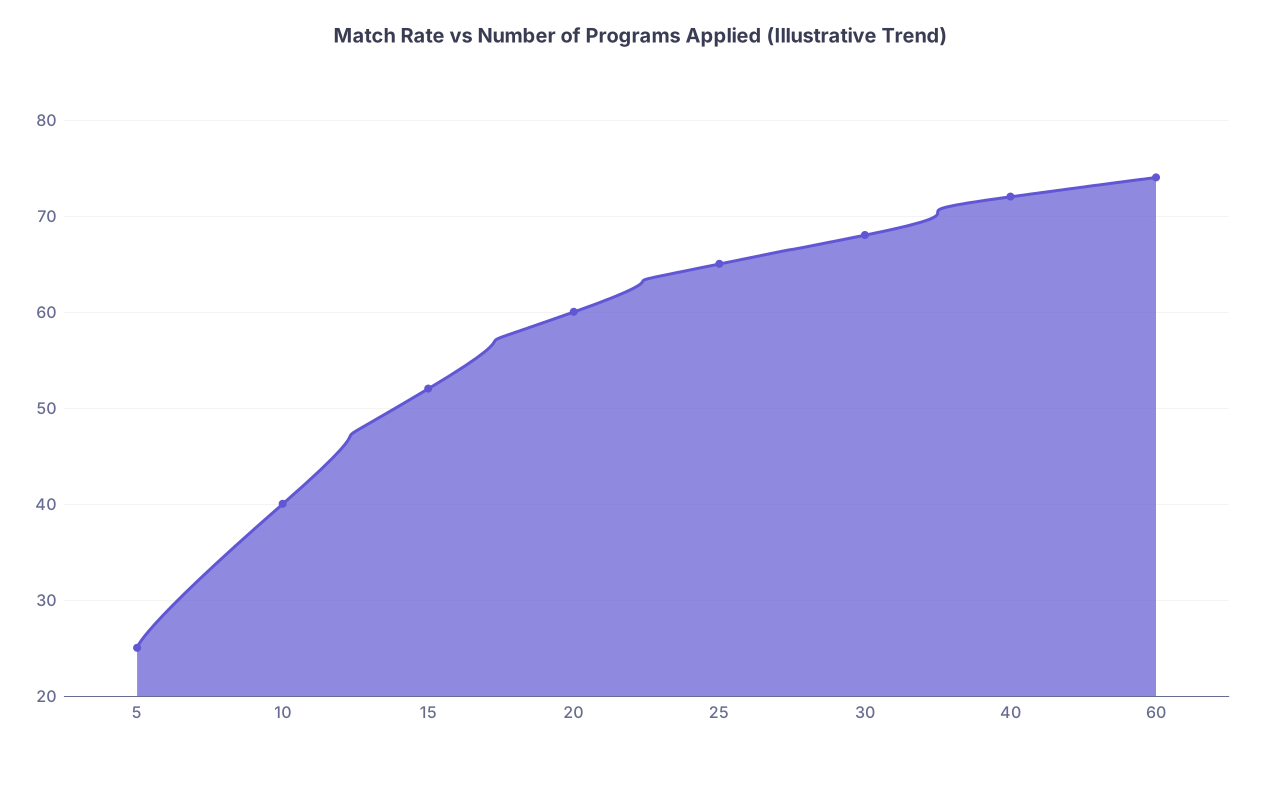
- Ophthalmology applicants increasingly apply to a large number of programs, often 60–80 or more.
- The marginal benefit of every additional application decreases after a certain point.
- Many well-prepared MD graduates could achieve strong match outcomes with fewer, more targeted applications if the list is intelligently built.
A Strategic Framework Based on Applicant Type
These are approximate ranges to guide how many programs to apply to; adjust for personal risk tolerance:
Highly Competitive MD Applicant
- Example profile: High Step 2 CK, strong research, top letters from ophthalmology faculty.
- Approximate range: 40–60 programs
- Reach: 10–15
- Target: 20–30
- Safety: 10–15
- Rationale: You are likely to secure multiple interviews, even at upper-tier programs, so you don’t need to apply to 80+ programs unless geography is extremely narrow.
Solid, Middle-Competitive MD Applicant
- Example profile: Above-average Step 2 CK, some ophthalmology research or robust clinical exposure, strong letters but not from major national figures.
- Approximate range: 60–80 programs
- Reach: 15–20
- Target: 25–35
- Safety: 15–25
- Rationale: You want breadth to offset uncertainty but should still be selective, focusing on programs where your profile fits well.
Borderline / Underdog MD Applicant
- Example profile: Step 2 CK near average, limited ophtho research, or coming from a medical school with fewer ophthalmology resources.
- Approximate range: 75–100 programs (or as close to “all” as realistic)
- Reach: 10–15
- Target: 25–35
- Safety: 30–50
- Rationale: Need more volume for interview opportunities but must ensure the safety bucket contains truly realistic programs and not just “less famous” names.
Financial and Emotional Considerations
More applications mean:
- Higher application fees
- More time to tailor personal statements, track programs, respond to emails
- Potentially more interviews—which also carry travel or virtual fatigue
Program selection strategy shouldn’t be “apply everywhere you’ve ever heard of.” It should be:
- Aggressive enough to protect you from an unmatched outcome
- Disciplined enough to keep your application budget, time, and energy manageable
If your budget is constrained, candidly discuss with an advisor:
- Which programs are realistic to prioritize
- How to tighten your geographic or program-type filters without over-restricting
Step 5: Refining Your List – Moving From Broad to Targeted
Once you have a draft list based on your profile and priorities, you’ll need to refine it. This is where you integrate both data and judgment.
Stepwise Refinement Process
Eliminate Programs That Clearly Don’t Fit Your Non-Negotiables
- Locations where you absolutely would not live for 3+ years
- Programs with red flags (e.g., chronic understaffing, resident attrition)
- Training models that do not match your needs:
- For example, heavily research-focused if you want mainly clinical work
Check Program Histories and Resident Profiles
- Look at:
- Where residents went to medical school (US MD vs US DO vs IMG)
- Distribution of home vs. away students
- If a program almost never matches outside top-20 MD schools and you’re from a smaller allopathic medical school without major research, consider whether it’s truly a realistic “reach” or just a lottery ticket.
- Look at:
Align With Your Research and Subspecialty Interests
- If you are passionate about retina research and plan to pursue a retina fellowship, weight more heavily:
- Programs with retina faculty involved in ARVO, AAO, clinical trials
- If you’re leaning toward comprehensive ophthalmology, focus on programs with:
- High cataract volume
- Strong comprehensive mentorship
- If you are passionate about retina research and plan to pursue a retina fellowship, weight more heavily:
Reassess Balance of Reach/Target/Safety
- Many MD graduates end up over-weighting reach programs out of prestige anxiety.
- Aim for:
- Roughly 25–30% reach
- 35–50% target
- 25–40% safety
- If your safety list is thin, you’re taking on more risk than you may realize.
Use Mentorship to Reality-Check Your List
- Show your list to:
- Ophthalmology faculty mentors
- Recent graduates who matched in ophtho
- Ask:
- “Based on my profile, does this distribution seem reasonable?”
- “Are there programs I missed that I should consider, given my goals?”
- Show your list to:
Example: Refining for a Hypothetical MD Applicant
- Step 2 CK: 247
- Mid-tier allopathic medical school with mid-size ophthalmology department
- One ophtho publication, one poster
- Strong letters, one from department chair
Initial draft list: 90 programs.
After refinement:
- Removed 10 programs in geographic regions they truly wouldn’t consider
- Dropped 5 ultra-elite programs where the last several years matched residents almost exclusively from top 10 MD schools with extensive research
- Added 8 solid regional programs with strong surgical numbers but less brand-name recognition
Final list: ~83 programs, with:
- 18 reach
- 36 target
- 29 safety
This applicant preserved a robust safety net without unrealistically chasing only prestige.
Step 6: Advanced Strategy Tips for the Ophtho Match
Beyond numbers and lists, several nuanced strategies can elevate your program selection approach.
1. Leverage Away Rotations Wisely
For ophthalmology, away rotations (“audition rotations”) can significantly influence where you get interviews and how programs perceive you.
Use them to:
- Demonstrate genuine interest in a short list of target/reach programs
- Secure strong letters from faculty who see you in action
- Learn about program culture firsthand
Strategic considerations:
- Prefer rotations at:
- Programs where you could realistically match
- Regions of high interest
- Don’t overload your schedule with too many aways; 1–2 well-selected ones are usually sufficient.
2. Customize Your Application Materials
Many MD graduates underestimate how much program-specific tailoring matters.
You can:
- Adjust your personal statement to:
- Highlight research if applying to academic-heavy programs
- Emphasize surgical interests and community engagement for more clinically focused programs
- Mention specific faculty, clinical strengths, or tracks that align with your goals
This doesn’t mean writing 80 versions of your statement, but having 2–3 targeted versions is often advantageous.
3. Monitor Interview Invitations and Adjust in Real Time
As interview season begins:
- Track:
- Number of interviews from reach, target, and safety programs
- Region and program type balance
- If you’re getting:
- Many interviews early: you may not need to keep adding additional programs unless there are late openings that strongly interest you.
- Very few interviews: discuss with mentors whether to:
- Send interest emails to additional programs
- Consider backup plans (e.g., preliminary medicine or transitional year strategies, reapplication planning)
4. Maintain a Parallel Plan for the NRMP Match
Because ophthalmology uses SF Match, you must also consider:
- Applying to preliminary or transitional year positions via NRMP
- Ensuring your PGY-1 year fits well with future ophtho training:
- Internal medicine prelim
- Transitional year with strong ophthalmology or surgical exposure
Your overall residency match and applications plan should integrate:
- Ophtho programs (via SF Match)
- PGY-1 programs (via NRMP)
- Contingencies if the ophtho match does not go as hoped
FAQs: Program Selection Strategy for MD Graduates in Ophthalmology
1. As an MD graduate, do I have an advantage in the ophtho match compared to DOs or IMGs?
Typically, yes. Many ophthalmology residency programs, especially highly academic ones, historically show a preference for US MD graduates in their match data. This doesn’t guarantee success, but being an MD graduate from an allopathic medical school generally strengthens your position in the allopathic medical school match context. That said, your USMLE scores, letters, and ophtho-specific experiences still matter immensely.
2. If I’m a borderline applicant, can I still match into ophthalmology?
Yes, but you must be strategic. For a borderline MD applicant:
- Apply broadly (often 75–100 programs).
- Ensure a large safety program list where your metrics are above average.
- Consider:
- Extra research time (e.g., a dedicated research year)
- Additional clinical exposure and strong letters
- Strong performance in sub-internships and away rotations Even for underdog profiles, thoughtful program selection strategy and targeted efforts can yield successful outcomes.
3. Should I prioritize program prestige or clinical training quality?
Aim for a balance, but if forced to choose, clinical training quality and surgical volume generally matter more for your long-term competence and confidence as an ophthalmologist. Prestige can help for competitive fellowships, but many well-trained graduates from less “famous” programs still match into strong fellowships and build outstanding careers. When deciding how to choose residency programs, prioritize:
- Surgical numbers
- Faculty availability and mentorship
- Resident satisfaction
- Alignment with your career goals
4. Is there such a thing as applying to too many ophthalmology programs?
In principle, yes. While there is no formal cap, applying to an excessive number (for example, >100 without clear rationale) may:
- Strain your finances
- Dilute your ability to customize applications
- Lead to interview overload and burnout if you get many invitations A more sustainable approach is to use a data-driven, introspective program selection strategy, targeting:
- A realistic range of programs (often 40–80 for many MD graduates, adjusted for competitiveness)
- A thoughtful mix of reach, target, and safety programs
By systematically evaluating your applicant profile, defining your priorities, and building a balanced, targeted list, you can approach the ophtho match with clarity and confidence. As an MD graduate, you already bring strong training and credibility to the table; the key now is to align that strength with a smart program selection strategy that maximizes your chances of landing in an ophthalmology residency where you will grow, excel, and ultimately build the career you envision.