Understanding the Landscape of Cardiothoracic Surgery Residency
Cardiothoracic surgery residency is one of the most competitive and demanding training pathways in medicine. The stakes of choosing well are high: the programs you apply to will shape not only your chances of matching, but also the type of surgeon—and academic or community leader—you become.
Before you build a program selection strategy, you need to understand what “cardiothoracic surgery residency” actually means today, because pathways and program types differ substantially.
Integrated vs. Traditional Pathways
There are two main training routes:
Integrated (I-6) Cardiothoracic Surgery Residency
- Structure: 6 years directly after medical school, blending general surgery and cardiothoracic surgery from day one.
- Pros:
- Earlier and more continuous exposure to heart and thoracic surgery.
- Faster route to independent practice.
- Often heavy emphasis on mentorship and longitudinal training within a single department.
- Cons:
- You are committing to a highly specialized field very early.
- Very competitive; small number of positions nationally.
- Limited ability to “pivot” to other surgical specialties.
Traditional Pathway (Independent CT Residency/Fellowship)
- Structure: Complete a full general surgery residency (usually 5–7 years), then pursue a 2–3 year traditional cardiothoracic surgery program.
- Pros:
- Broad general surgery foundation.
- Time to confirm strong interest in cardiothoracic surgery.
- More flexible path if career interests evolve during training.
- Cons:
- Longer overall training.
- Still highly competitive at top CT programs; many applicants with robust research.
Implication for program selection:
Your program selection strategy should be different if you’re applying to integrated I-6 positions versus independent CT positions after general surgery. For this guide, we’ll focus primarily on strategy relevant to I-6 cardiothoracic surgery residency applicants, but many principles also apply to independent track applicants choosing where to train.
Why Strategy Matters So Much in CT Surgery
Cardiothoracic surgery has:
- Relatively few programs and positions compared to other specialties.
- Highly variable case volumes and case mix (CABG/valves vs. aortic vs. congenital vs. lung and esophagus).
- Different academic expectations (some are heavily research-focused; others are clinically oriented).
- Long-term mentorship implications that may affect your ability to secure fellowships, early-career jobs, and leadership roles.
Your goal is not only to match into “a” program, but into a program where:
- The operative experience and culture fit your learning style.
- The graduates successfully achieve the types of careers you aspire to.
- You can thrive personally over a long and demanding training period.
That requires a deliberate, data-informed program selection strategy rather than simply applying “everywhere” or only to big-name institutions.
Step 1: Clarify Your Career Goals and Self-Assessment
All effective program selection starts with knowing yourself. The same cardiothoracic surgery residency program might be perfect for one applicant and a poor fit for another.
Define Your Tentative Career Direction
You do not need a fully formed 20-year plan, but you should have a working hypothesis. Reflect on questions like:
- Do you see yourself in academic cardiac surgery, academic thoracic surgery, or community practice?
- Are you more drawn to:
- Complex adult cardiac (valves, coronary, aortic, mechanical circulatory support)?
- Thoracic oncology (lung cancer, esophageal disease, mediastinal pathology)?
- Congenital heart surgery?
- A mixed practice?
- How important is research (especially basic or translational research) to your future?
- Do you envision pursuing additional subspecialty fellowships (e.g., congenital, transplant, structural heart, minimally invasive thoracic)?
These aspirations will shape how you prioritize programs:
- If you want a highly academic career, you may prioritize NIH-funded departments, T32 training grants, and established pathways to K awards.
- If your goal is high-volume clinical practice, operative volume and early autonomy become especially important.
Honest Self-Assessment of Competitiveness
Brutal honesty is essential for a realistic program selection strategy and for determining how many programs to apply. Consider:
- Board scores (USMLE/COMLEX if applicable, including pass/fail context).
- Medical school pedigree (U.S. MD, U.S. DO, IMG) and reputation.
- Research productivity (number and impact of CT-related publications, abstracts, presentations).
- Strength and specificity of letters of recommendation (especially from cardiothoracic surgeons).
- Rotations or sub-internships in CT surgery and performance there.
Broadly, applicants fall into three buckets:
Highly Competitive
- Strong board performance.
- Multiple CT-related publications, presentations.
- Substantive mentorship, strong letters from known CT faculty.
- Often from highly academic institutions.
- For these applicants, it’s reasonable to include many highly academic, research-intense programs and fewer safety programs.
Solid/Typical Competitive
- Good but not exceptional metrics.
- Some research, not all necessarily CT-focused.
- Strong performance on rotations; good letters.
- These applicants benefit from a balanced list that includes:
- Top-tier academic programs.
- Mid-tier academic and strong community-based academic affiliates.
- Some “safety” programs where they are likely to be very competitive.
More Vulnerable/At-Risk Profiles
- Lower test scores, gaps in training, limited research, or coming from less well-known schools.
- Fewer CT-specific experiences.
- These applicants should focus on:
- Broad applications.
- Emphasizing fit, dedication, and clinical performance.
- Strategic use of away rotations to build relationships and strong letters.
Your self-assessment drives not only which programs go on your list, but how many programs to apply to (more on that in a later section).
Step 2: Core Factors in Choosing Cardiothoracic Programs
Now that you have a sense of your goals and competitiveness, you can systematically evaluate programs using several domains.

1. Case Volume, Case Mix, and Operative Autonomy
Cardiothoracic surgery is fundamentally procedural. Adequate hands-on training is non-negotiable.
Key questions to investigate:
- Annual case volume:
- Adult cardiac cases (CABG, valves, aortic).
- Thoracic cases (lung resections, esophagectomy, mediastinal).
- Congenital heart (if present).
- Resident operative logs:
- Do graduating residents meet or exceed ACGME minimums by a significant margin?
- Do they participate as primary surgeon in complex cases?
- Autonomy culture:
- Do attendings allow progressive responsibility?
- Is there a clear stepwise approach to residents taking more of the case over time?
- Are there “resident cases” specifically structured for training?
How to gather this information:
- Program websites and ACGME case log statistics (when available).
- Pre-interview information sessions and Q&As with current residents.
- Talking directly with recent alumni or residents on interview day.
- Away rotations: your best real-world data about autonomy and case mix.
2. Cardiac vs. Thoracic vs. Congenital Balance
Not all cardiothoracic surgery residency programs provide equal exposure to all domains:
- Some are cardiac-heavy, with high CABG/valve/aortic volume but relatively fewer complex thoracic cases.
- Others are thoracic-dominant, especially at major cancer centers, with strong lung and esophageal surgery and less cardiac.
- A few offer significant congenital exposure with opportunities or pathways into congenital fellowships.
Your program selection strategy should align this balance with your interests:
- If you love thoracic oncology and minimally invasive lung surgery, programs with strong thoracic services (and potentially general thoracic fellowships) may be a priority.
- If you dream of complex aortic or transplant work, look for programs with large mechanical circulatory support volumes and transplant programs.
3. Academic vs. Clinical Emphasis and Research Expectations
Heart surgery training has traditionally been linked to strong academic environments, but the degree of research emphasis varies widely.
Evaluate:
- Does the program have structured research time (e.g., 1–2 dedicated research years)?
- Is there an NIH T32 or other formal training grant?
- What types of research do residents typically complete (basic science, translational, outcomes, quality improvement, device trials)?
- What is the typical scholarly output of graduates (publications, presentations, grants)?
Match this to your goals:
- If you aim for a research-intensive academic career, prioritize programs with:
- Robust labs and established funding.
- Mentors with strong records of developing surgeon-scientists.
- Past graduates who have secured academic CT faculty positions.
- If you envision a mostly clinical career, a program with optional rather than mandatory research years and steady operative exposure may be more appropriate.
4. Program Culture, Mentorship, and Support
Culture is harder to measure but critically important, given the length and intensity of cardiothoracic surgery residency.
Things to look for:
- Resident cohesiveness: Do residents support each other? Are they approachable and honest during pre-interview or interview day panels?
- Faculty accessibility: Do residents describe mentors as invested in their careers, or is the environment hierarchical and distant?
- Wellness and support: Are there realistic efforts to mitigate burnout, provide mental health resources, and support life events (illness, family needs)?
- Inclusion and diversity: Does the resident and faculty body reflect diversity in gender, race, and background? Are there explicit DEI initiatives?
You can gauge this through:
- Away rotations and observerships.
- Honest conversations with residents off the formal schedule.
- Alumni perspectives if you can connect through your own institution.
5. Outcomes: Where Do Graduates Go?
A practical way to judge the impact of heart surgery training at a program is to track what happens to their graduates.
Look for:
- Fellowship placement (e.g., congenital, transplant, structural heart, minimally invasive thoracic).
- First jobs:
- Academic vs. community practice.
- Level of responsibility (junior attending, associate, hybrid).
- Leadership roles:
- Graduates who become division chiefs, program directors, or national leaders.
- Research career trajectories (grants, major publications).
A strong program selection strategy goes beyond brand name; it focuses on evidence that the program reliably produces the kind of surgeons you want to become.
Step 3: Practical Program Selection Strategy – Building Your List
Once you understand your personal goals and program characteristics, it’s time to build your actual list of cardiothoracic surgery residency programs.

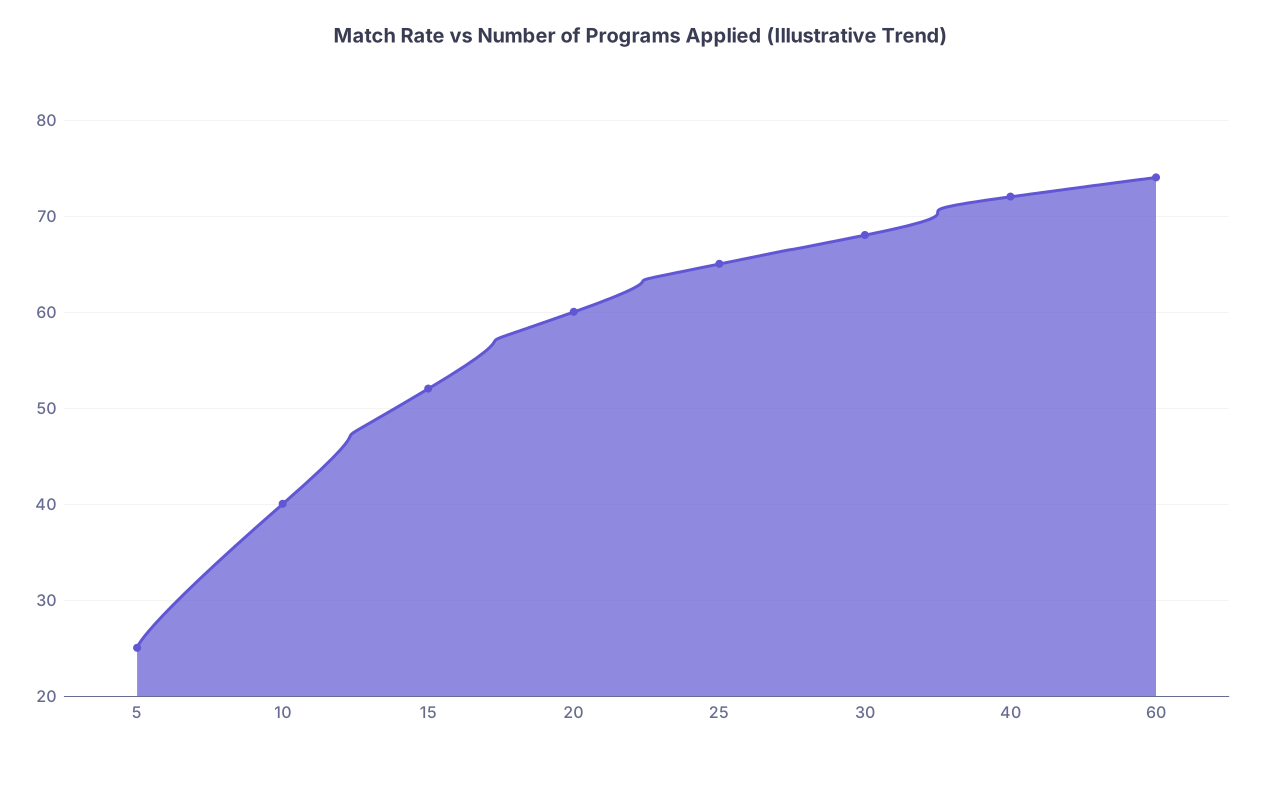
How Many Programs to Apply To in Cardiothoracic Surgery
There is no single universal number, but because this is a HOW_MANY_PROGRAMS_SHOULD_YOU_APPLY_TO category question, we can give realistic ranges based on competitiveness and the small number of slots.
Typical ranges for I-6 cardiothoracic surgery residency:
- Highly competitive applicants: ~15–25 programs
- Solid/typical applicants: ~25–35 programs
- More vulnerable applicants: ~35–45+ programs
Factors influencing where you fall in that range:
- Number of I-6 programs that align with your goals and geography.
- Visa needs (for IMGs).
- Objective metrics (board performance, research, honors).
- Strength of mentorship and letters in CT surgery.
Why not just apply to all programs?
- Time and energy costs to produce genuinely tailored applications and prepare for interviews.
- Limited interview dates in CT; overscheduling can hurt performance.
- You should apply broadly but intentionally, consistent with a thoughtful program selection strategy rather than indiscriminate volume.
For independent cardiothoracic surgery fellowships (post–general surgery), ranges may be slightly narrower but still typically above 20 for most applicants because positions remain highly sought after.
“Reach,” “Target,” and “Safety” Programs
Structuring your list is similar to choosing medical schools, but with greater nuance:
Reach Programs
- Top-tier, heavily academic, often with strong NIH funding, national reputations, and extremely competitive applicant pools.
- You may have <10–20% chance of matching at any single one, even with strong credentials.
- It’s appropriate to include several reach programs, especially if they align with your goals in heart surgery training.
Target Programs
- Programs where your qualifications are in line with or slightly above the historical average of matched residents.
- Good fit in terms of training structure and culture.
- You should have a realistic shot at interviews and matching.
Safety Programs
- Programs where you are likely to be among the more competitive applicants.
- Still must meet your basic standards for operative exposure and culture.
- Especially important for more vulnerable applicants.
A typical balanced list for a “solid” applicant might be:
- ~5–8 reach programs.
- ~12–18 target programs.
- ~8–12 safety programs.
Geographic and Personal Considerations
Location is not a superficial factor. For 6+ years of intense training, personal support and environment matter.
Think about:
- Proximity to family or a partner’s career.
- Urban vs. suburban vs. rural settings.
- Cost of living and resident salary.
- Local culture and availability of activities that help you recharge.
However, one of the most common mistakes in cardiothoracic residency program selection is over-restricting geographically in a highly competitive field. When possible:
- Prioritize program quality and fit over an extremely narrow geographic focus.
- If you must limit geography (e.g., dual-career family), you may need to compensate by applying to a larger percentage of programs in that region.
Using Away Rotations Strategically
Away rotations are a powerful tool in cardiothoracic surgery program selection:
- They give you:
- A real sense of culture, autonomy, and case mix.
- Opportunities to earn strong letters from CT faculty.
- A chance to demonstrate how you function on a team.
Strategic advice:
- Choose 1–2 away rotations at places that:
- Are realistic matches for your profile.
- Align strongly with your interests (e.g., heavy thoracic, strong transplant).
- Target programs you could genuinely see as your top choices.
- After the rotation, assess whether they belong in your “top tier” on your list, or whether the experience suggests you should favor other options.
Step 4: Information Gathering and Comparative Evaluation
Having a long list is not enough; you need a systematic way to compare programs and refine your choices.
Building a Structured Comparison Tool
Create a spreadsheet or table containing:
- Program name and location.
- Pathway type (I-6 or independent).
- Case volume and main strengths (cardiac/thoracic/congenital).
- Presence and structure of research time (optional, mandatory, duration).
- Faculty interests and mentorship opportunities.
- Resident outcomes (fellowships, jobs).
- Call schedule and rotation structure.
- Noted strengths and weaknesses based on your interactions.
Rate each category on a 1–5 scale based on your priorities. This transforms vague impressions into something you can compare logically and use as part of your program selection strategy.
Making Use of Multiple Data Sources
Combine information from:
- Official program websites (curricula, faculty bios, case numbers).
- ACGME and NRMP data when available.
- Resident and applicant forums (with caution; experiences can be highly subjective).
- Conversations with:
- Current residents and fellows.
- Alumni from your medical school currently in CT training.
- Your CT mentors and advisors.
Be alert for:
- Programs that appear to have high prestige but weaker-than-expected operative autonomy.
- Programs that may be less well-known nationally but excel in volume, mentorship, and graduate success.
Step 5: Integrating Strategy with the Application and Interview Process
Your program selection strategy doesn’t stop once you submit ERAS; it continues into interview season and rank list creation.
Pre-Application: Tailoring Your Materials
Use your understanding of each program to:
- Highlight your research when applying to research-heavy programs.
- Emphasize clinical excellence and operative enthusiasm for clinically oriented programs.
- Mention specific faculty or services that attracted you to the program, reflecting thoughtful research rather than generic statements.
During Interviews: Asking the Right Questions
Interviews are key moments to confirm or revise your impressions. Ask targeted questions such as:
- “How has resident operative autonomy changed over the last few years?”
- “What proportion of your graduates pursue fellowships vs. go directly into practice?”
- “How are residents supported if they’re interested in pursuing basic science vs. outcomes research?”
- “Can you describe a recent example where the program leadership responded to resident feedback and made a change?”
For heart surgery training specifically:
- Ask about exposure to transplant/MCS, structural heart, robotic thoracic, or complex esophageal cases if those interest you.
- Clarify how integrated residents are incorporated into the cardiothoracic call schedule over time.
Adjusting Your Program List and Rank Strategy
As the season unfolds:
- You may add a few more applications early if interviews are fewer than expected.
- Post-interview, update your spreadsheet with:
- Cultural fit.
- Impression of the faculty-resident relationship.
- Support for your specific career interests.
For your final rank list:
- Resist the urge to rank purely by brand or prestige.
- Weight heavily:
- Operative training quality.
- Culture and support.
- Consistency with your long-term career goals.
- Ask senior CT mentors for advice—they often have insights into subtle but important differences between programs.
Frequently Asked Questions (FAQ)
1. How many cardiothoracic surgery residency programs should I apply to?
For integrated I-6 applicants:
- Highly competitive candidates: ~15–25 programs.
- Typical competitive candidates: ~25–35 programs.
- More vulnerable candidates: ~35–45+ programs.
These ranges should be tailored to your specific profile, geographic flexibility, and advice from mentors. A thoughtful program selection strategy is more important than sheer volume.
2. Should I prioritize program prestige or operative volume?
Ideally, you do not have to choose between them, but if you must, consistent, high-quality operative experience with progressive autonomy generally matters more for your development as a safe, competent surgeon. Prestige is helpful for networking and academic trajectories, but a well-trained, confident surgeon from a less famous program often has excellent career options. Evaluate each program individually rather than assuming name recognition equals superior training.
3. How important is research when choosing a cardiothoracic program?
It depends on your goals:
- If you want an academic career, choose programs with strong research infrastructure, dedicated research time, and mentors with a track record of launching surgeon-scientists.
- If you envision a primarily clinical career, make sure research requirements don’t excessively limit operative exposure. Some scholarly activity is still essential, but the balance should support your priorities.
4. What role should geography play in my program selection strategy?
Geography affects quality of life, social support, and partner/family logistics, all of which influence your resilience during training. It is reasonable to weigh location, but in a small, competitive field like cardiothoracic surgery, overly narrowing to one city or state can significantly reduce your chance of matching. When possible, consider a broader geographic net, then use interviews and further reflection to refine where you’d actually be comfortable living for 6+ years.
By treating cardiothoracic surgery residency program selection as a structured, strategic process—anchored in self-assessment, clear goals, and evidence-based evaluation—you maximize both your chance of matching and your likelihood of thriving in the demanding, rewarding world of heart and thoracic surgery.