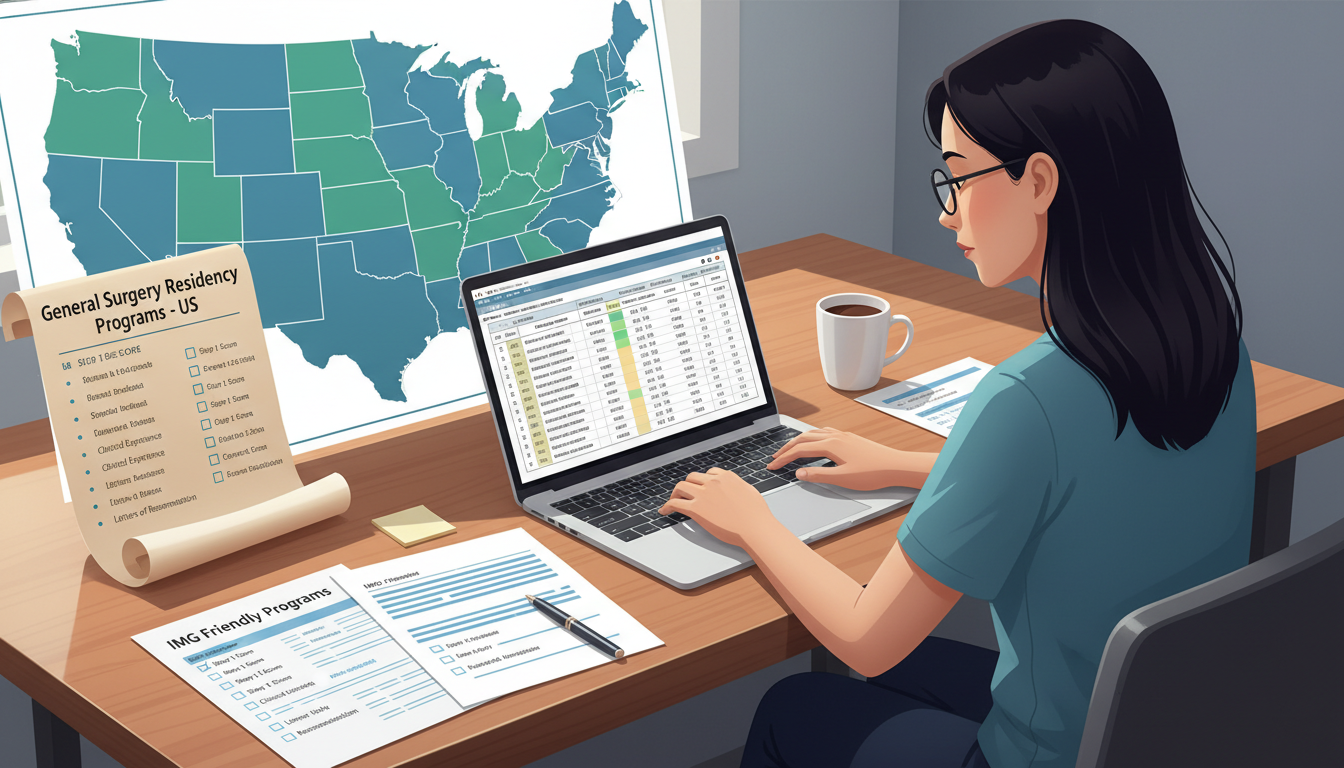
Understanding the Unique Challenge: Caribbean IMG + Interventional Radiology
Interventional Radiology (IR) is one of the most competitive specialties in the Match, and being a Caribbean medical school graduate adds an additional layer of complexity. That does not mean it’s impossible—SGU residency match data and outcomes from other Caribbean schools show that IR matches do happen—but it does mean you must approach your program selection strategy with precision and realism.
You are navigating three demanding variables at once:
- Specialty competitiveness – Integrated interventional radiology residency (IR/DR) is consistently among the most competitive specialties by USMLE scores and fill rate.
- IMG status – Programs vary dramatically in how open they are to IMGs, and some explicitly do not sponsor visas.
- Caribbean medical school residency bias – Even within IMG-friendly programs, some view Caribbean schools differently than other international schools.
This article focuses on how a Caribbean IMG in IR should:
- Decide how many programs to apply to
- Build a tiered program list that balances dream, reach, and realistic options
- Use data and filters to identify IMG-friendly IR programs
- Combine IR goals with backup strategies without undermining your primary aim
- Make smart decisions even if your profile has weaknesses (scores, attempts, gaps, late step completion)
Throughout, you’ll see targeted guidance relevant to Caribbean medical school residency applicants and IR in particular.
Step 1: Know the Landscape of IR and IMG Friendliness
Before deciding how to choose residency programs, you need a realistic understanding of the IR match landscape for an IMG coming from the Caribbean.
IR Pathways: Integrated vs ESIR vs DR
There are three main avenues into Interventional Radiology:
Integrated IR/DR residency (primary goal for many)
- 6-year combined program leading to IR and DR board eligibility.
- Enters directly from medical school via ERAS/NRMP.
- Highly competitive and relatively small number of positions.
Diagnostic Radiology (DR) → ESIR → IR fellowship
- Match into DR first.
- During DR you secure ESIR (Early Specialization in IR) and then complete an IR residency or fellowship.
- This is often a more realistic path for IMGs.
Independent IR residency after DR
- After finishing DR, you match into a 2-year IR independent residency.
- Not directly applicable from medical school, but important for long-term planning.
As a Caribbean IMG, your program selection strategy should often involve:
- Applying to some Integrated IR programs (if your profile is strong enough),
- Applying more broadly to DR programs with strong IR exposure/ESIR, and
- Ensuring you still have a viable match outcome even if not directly into Integrated IR.
Competitiveness: How Strong Is Your Application?
IR/DR programs typically favor:
- High USMLE Step scores (Step 2 CK is now critical)
- Strong clinical performance and letters from radiologists/IRs
- Research experience, ideally in radiology/IR
- No exam failures, limited gaps, strong communication skills
For Caribbean IMGs:
- A Step 2 CK > 245–250 significantly improves your odds for Integrated IR.
- Step 2 CK 235–245 may still be competitive for some DR programs and a few IMG-friendly IR programs.
- Below this, you should be heavily weighting DR and backup fields.
Your SGU residency match or similar school’s match data can give you a sense of how many IR/DR or DR spots are historically achieved by graduates with profiles similar to yours. Even if you’re not from SGU, their published match lists are useful for identifying IR- and radiology-friendly programs that consider Caribbean candidates.
Step 2: How Many Programs to Apply to as a Caribbean IMG Aiming for IR
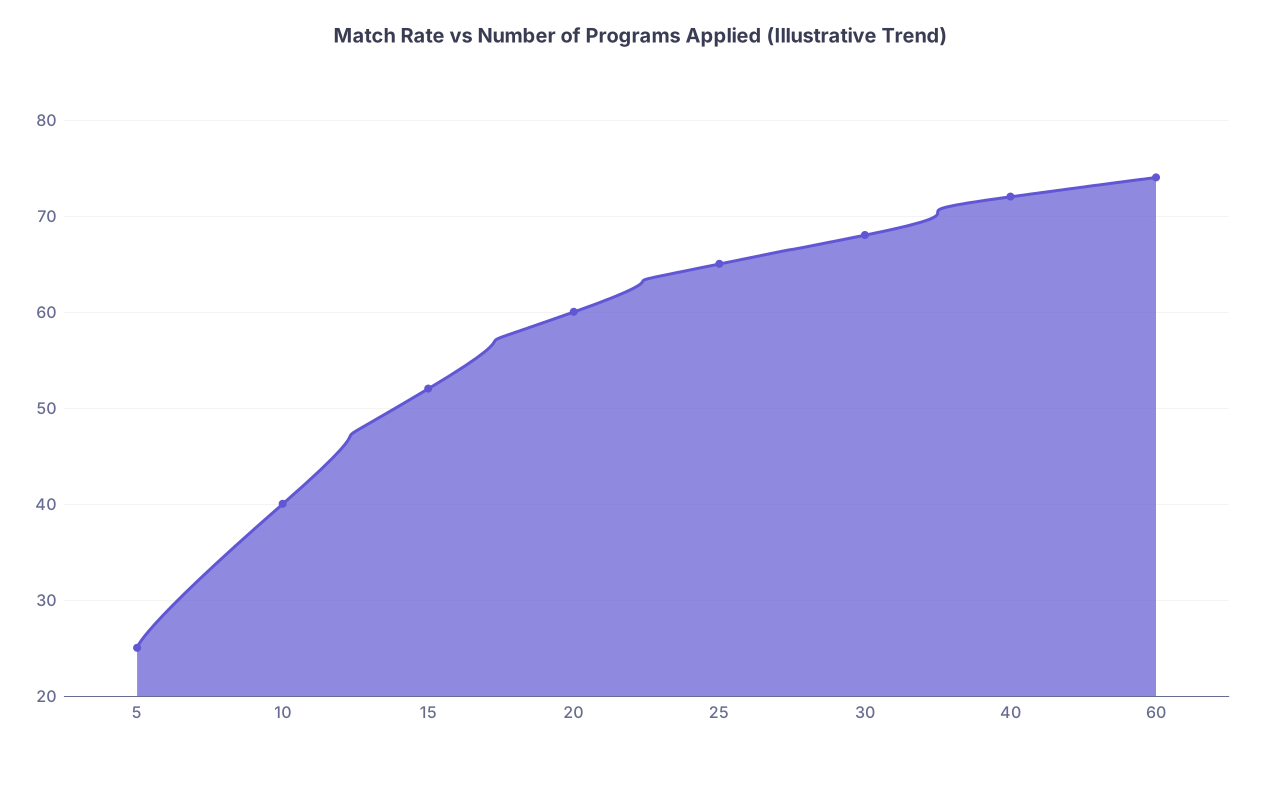
There is no universal number that fits everyone, but for a Caribbean IMG targeting a highly competitive field like interventional radiology, you should err on the side of applying broadly.
General Range for IR-Focused Caribbean IMG
For most Caribbean IMGs:
Integrated IR programs:
- Strong applicants (excellent scores, research, US letters): 20–40 IR programs
- Modest applicants: 10–25 IR programs (selectively, only where there is some evidence of IMG friendliness)
DR programs (with IR exposure/ESIR):
- Strong to moderate applicants: 60–100+ DR programs
- Weaker applicants: 80–120+ DR programs
Backup specialty (if used) – e.g., Internal Medicine, Transitional Year prelim, Surgery prelim:
- Often 20–40 programs, depending on risk tolerance.
In total, a Caribbean IMG with IR aspirations might apply to 90–140+ programs spanning Integrated IR, DR, and possibly a backup field. Application fees will be high, but the cost of not matching (lost year, additional expenses, visa uncertainty) is usually far greater.
Factors That Influence “How Many Programs to Apply”
USMLE Scores
- Higher scores → can be slightly more selective, especially with IR.
- Lower scores or attempts → apply more broadly and expand non-IR options.
Clinical Experience in the U.S.
- 2+ strong U.S. rotations in radiology or IR with letters → may justify a heavier IR/DR emphasis.
- Weak or no U.S. rotations → increase the number of DR and backup programs.
Research and IR Involvement
- Publications, abstracts, or posters in IR/radiology allow a more aggressive IR list.
- If research is limited or non-radiology, tilt more heavily toward DR and backup.
Visa Needs
- If you require a visa (J-1/H-1B):
- You must filter heavily by visa sponsorship, which shrinks your pool.
- To compensate, you often need to apply to more programs across specialties that are visa-friendly.
- If you require a visa (J-1/H-1B):
Risk Tolerance
- Some applicants would rather risk a non-match than match outside radiology; others want any match.
- Your answer to “Is any residency better than no residency?” will affect how many backup programs you add.
Step 3: Building a Tiered Program List (Dream, Reach, Realistic, Safety)
Once you have a target number for how many programs to apply, you need a program selection strategy that assigns each program to a “tier” based on fit and feasibility.
Tier 1: “Dream” Integrated IR Programs
These are highly competitive IR/DR programs where you’d love to train, but where your chances may be lower as a Caribbean IMG.
Characteristics:
- Prestigious academic centers or top-20 radiology departments
- Highly research-oriented with large IR divisions
- Historically low proportion of IMGs
- Located in highly desirable cities
- Sometimes explicit preference for U.S. MDs
For a strong Caribbean IMG:
- Apply to 5–15 of these programs.
- Only include them if you meet or exceed their general score ranges and can show serious IR interest (research, subinternship, IR letters).
Tier 2: “Reach but Possible” IR/DR and DR Programs
These are still competitive but more plausible than top-tier academic powerhouses.
Characteristics:
- University-affiliated or mid-tier academic centers
- Some history of taking IMGs, occasionally from Caribbean schools
- Strong IR faculty and exposure; may have ESIR
- Not necessarily in the most competitive locations
For most Caribbean IMGs:
- 15–25 programs in this tier across Integrated IR and DR.
- Focus on those that:
- Have at least one IMG in current or recent classes
- State willingness to sponsor visas
- Do not explicitly exclude Caribbean schools
Tier 3: “Realistic” DR Programs with IR Exposure
This is the core of your application list and where your match is most likely to happen.
Characteristics:
- Community-based or hybrid community–academic DR programs
- Known IMG representation, possibly including Caribbean graduates
- Documented IR rotations, ESIR spots, and/or IR faculty
- Geographically diverse, sometimes in less competitive regions
For a Caribbean IMG:
- Aim for 40–70+ programs in this tier.
- Use Filters:
- IMG/Caribbean alumni
- Clear visa sponsorship stance
- Radiology residency in locations where fewer U.S. MDs compete (Midwest, South, some smaller cities)
This is where your question of how to choose residency programs becomes crucial: every program added here should have at least one concrete reason you might actually match there.
Tier 4: Backup Specialty Programs
If you decide that any match is better than no match, add:
- Internal Medicine categorical programs
- Preliminary surgery or transitional year (if you’re planning to reapply to DR/IR later)
- Potentially Neurology or Anesthesiology if they align with your skills and interests and are relatively more IMG-friendly.
Number of backup programs:
- Conservative approach (very IR-focused): 0–15 backup programs
- Balanced risk: 20–30 backup programs
- Risk-averse (especially with weaker scores): 30–40+ backup programs
Step 4: Finding IR- and IMG-Friendly Programs Systematically
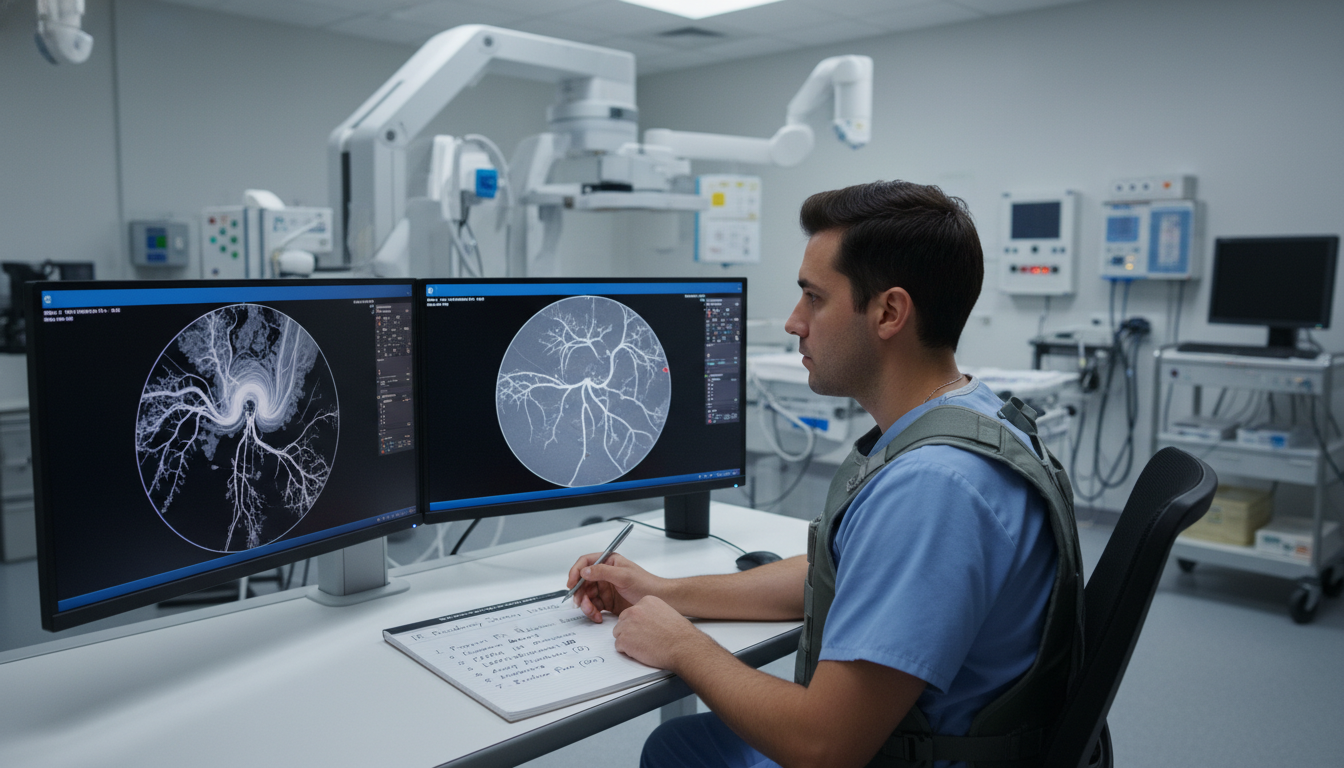
A strong program selection strategy is data-driven. You should not be guessing which programs are open to a Caribbean IMG aiming for IR.
Key Data Sources and Tools
FREIDA (AMA)
- Filter by:
- Specialty: Integrated Interventional Radiology, Diagnostic Radiology
- Visa sponsorship (J-1/H-1B)
- Review:
- Program type (community vs university)
- Number of positions
- Program benefits and required qualifications
- Filter by:
NRMP Data & Charting Outcomes
- Review IR and DR sections:
- Step score ranges for matched vs unmatched IMGs
- Number of IMGs matching in IR/DR
- Use this to benchmark your competitiveness.
- Review IR and DR sections:
Program Websites
- Look at:
- Current residents’ medical schools
- Alumni lists (older pages sometimes show Caribbean or IMG graduates)
- ESIR availability and IR faculty
- Explicit statements: “We sponsor J-1 visa” or “We do not sponsor visas”
- Look at:
Your School’s Match List (e.g., SGU residency match reports)
- Identify:
- Which DR and IR programs have taken Caribbean grads
- Patterns (e.g., certain regions, community vs academic)
- If SGU or similar schools regularly match into a particular program, that’s a strong sign of openness to Caribbean medical school residency applicants for radiology.
- Identify:
Networking
- Connect with:
- Alumni from your Caribbean school who matched into DR or IR
- IR attendings or fellows from your rotations
- Ask about:
- Which programs they know to be IMG-friendly
- Which programs value work ethic over pedigree
- Where they would apply if they were you today
- Connect with:
Practical Filtering Steps for a Caribbean IMG
Start Broad
- Generate a comprehensive list of all IR/DR and DR programs in FREIDA.
Filter for Visa
- Eliminate programs that explicitly say “No visa sponsorship.”
- Mark “Yes for J-1” and “Yes for H-1B” separately if that matters to you.
Check IMG Presence
- Visit each program’s website:
- If no IMGs at all in multiple years: put it in a lower likelihood category or consider removing.
- If some IMGs, especially Caribbean grads: give it a higher priority.
- Visit each program’s website:
IR Strength and ESIR
- For DR programs, note:
- Is ESIR available?
- How many IR attendings?
- Is there an independent IR residency at the institution (often a sign of a robust IR division)?
- For DR programs, note:
Location Considerations
- Programs in highly desirable major cities may receive a huge volume of U.S. MD applications.
- Consider increasing the number of applications to less “popular” areas to improve your odds.
Step 5: Balancing Your List: Examples by Applicant Profile
To make this more concrete, here are example strategies for different Caribbean IMG profiles.
Example 1: Strong Caribbean IMG with IR Research
- Step 2 CK: 252, no failures
- 1 IR publication, 2 IR abstracts
- 2 U.S. IR electives with strong letters
- Needs J-1 visa
Program Selection Strategy:
- Integrated IR: 25–35 programs
- Mix of mid-tier academic and a few top-tier with prior IMG matches.
- DR: 60–80 programs
- Strong emphasis on programs with ESIR and active IR divisions.
- Backup (IM or TY): 10–20 programs (optional, depending on risk tolerance).
Total applications: about 95–130. This applicant can afford to be aggressive but still needs a strong DR core.
Example 2: Average Caribbean IMG, No IR Research
- Step 2 CK: 238, no failures
- Strong clinical evaluations, 1 DR letter, 1 IM letter
- Limited research, no IR publications
- Needs visa
Program Selection Strategy:
- Integrated IR: 10–15 programs
- Only those with clear IMG presence and no explicit bias against Caribbean schools.
- DR: 80–110 programs
- Focus on community and hybrid programs, many in non-major urban centers.
- Backup (IM categorical): 20–30 programs
Total applications: about 110–150. Main focus is DR, with realistic IR hopes via ESIR.
Example 3: Weaker Caribbean IMG, Score Challenges
- Step 2 CK: 227, one Step 1 attempt
- Limited radiology exposure, no IR research
- Some U.S. clinical experience, strong work-ethic letters
Program Selection Strategy:
- Integrated IR: 0–5 programs
- Only if you have a compelling personal connection (home institution, mentor recommendation).
- DR: 70–90 programs
- Very IMG-friendly places, mostly community.
- Backup (IM or Family Medicine): 30–40+ programs
Total applications: about 100–130. IR may be a long-term aspiration (e.g., later interventional pathways) rather than immediate integrated IR.

Step 6: Putting It All Together – A Practical Workflow
Here is a step-by-step program selection strategy checklist tailored to Caribbean IMGs aiming for IR.
1. Self-Assessment
- Record:
- USMLE Step 1 (if applicable) and Step 2 CK scores + attempts
- Research output (especially in IR/radiology)
- U.S. clinical experience and letters, particularly from IR/DR
- Visa needs
- Decide:
- Primary goal: Integrated IR vs DR with IR path
- Risk tolerance for using (or not using) a backup specialty
2. Define Application Volume
Based on your profile and finances, decide approximate numbers:
- Integrated IR: X programs
- DR: Y programs
- Backup: Z programs (if used)
Where:
- Strong: X 20–40, Y 60–80, Z 0–20
- Average: X 10–25, Y 80–110, Z 20–30
- Weaker: X 0–10, Y 70–90, Z 30–40+
3. Long List Creation
- Use FREIDA, NRMP, and other lists to create:
- All IR/DR programs
- All DR programs
- Mark visa status and program type.
4. Intelligent Filtering
For each program, label:
- Visa: J-1/H-1B/No
- IMG presence: None / Occasional / Regular
- Caribbean-specific alumni (if visible)
- IR strength: Integrated IR / ESIR / strong IR division / minimal IR
Remove:
- Programs with no visa sponsorship (if you need one).
- Programs with consistent “U.S. MD only” culture, unless you have a direct mentor or connection.
5. Tier Assignment
Assign each remaining program as:
- Tier 1 (Dream IR)
- Tier 2 (Reach IR + DR)
- Tier 3 (Realistic DR)
- Tier 4 (Backup specialty)
Verify that the total in each tier aligns with your planned application numbers.
6. Final Sanity Check
Ask yourself:
- Do I have enough realistic DR programs (Tier 3) to make a match likely?
- Is my number of Integrated IR programs ambitious but not unrealistic for my profile?
- Have I included backup options appropriate to my risk tolerance?
- Does every program on my list have at least one concrete reason I might match there (IMG-friendly, IR exposure, location fit, alumni track record)?
FAQs: Caribbean IMG Program Selection for Interventional Radiology
1. Is it realistic for a Caribbean IMG to match into an Integrated Interventional Radiology residency?
It is difficult but not impossible. The IR match is highly competitive, and Caribbean IMGs face additional scrutiny. A strong profile (high Step 2 CK, no failures, IR research, strong U.S. IR letters) is almost mandatory. Even then, you should not rely only on Integrated IR; build a broad DR list with strong IR opportunities so you have multiple pathways to an IR career.
2. How many IR programs should I apply to if my main goal is IR but I’m from a Caribbean medical school?
If you are a strong applicant, applying to 20–40 Integrated IR programs is reasonable, combined with 60–80 DR programs. If your profile is more average for a Caribbean IMG, 10–25 IR programs plus 80–110 DR programs is more realistic. The exact number depends on your scores, research, visa needs, and finances, but your DR list should always be larger than your IR list.
3. What’s the best backup specialty for a Caribbean IMG who wants IR?
The most common backups for IR-focused applicants are:
- Diagnostic Radiology (primary alternative, not really a backup but a parallel path)
- Internal Medicine (if you want to secure any categorical residency)
- Transitional Year or Preliminary Surgery (if you plan to reapply to DR/IR)
If your priority is staying close to the IR field, DR is the best backup. If your priority is any match, then internal medicine or another IMG-friendly field can be added to your list.
4. How can I tell if a program is Caribbean-IMG-friendly for radiology?
Look for multiple cues:
- Current residents or recent alumni from Caribbean schools on the program website
- Statements about welcoming IMGs and clear visa sponsorship policies
- Anecdotal reports from alumni or mentors who know the program
- Historically, inclusion in match lists from large Caribbean schools (e.g., SGU residency match lists often reveal radiology programs open to Caribbean graduates)
Combine this information with your own priorities and IR interests, and you’ll be able to build a strategic, data-informed list that maximizes your chances of matching into radiology and positioning yourself for an interventional radiology career.