Understanding the Landscape: Nuclear Medicine Residency as a Caribbean IMG
For a Caribbean international medical graduate (IMG), carving a path into a nuclear medicine residency in the United States involves more than test scores and a strong CV—it demands a deliberate, data-driven program selection strategy. Nuclear medicine is a relatively small specialty, the number of categorical positions is limited, and the expectations for imaging and diagnostic reasoning are high. At the same time, some nuclear medicine programs are IMG-friendly and open to Caribbean medical school graduates, especially those who demonstrate maturity, solid internal medicine or radiology exposure, and genuine interest in molecular imaging.
Before deciding how many programs to apply to—or which ones—step back and understand a few realities:
- Nuclear medicine is small and niche. Fewer programs mean fewer spots, but also less applicant volume compared with high-demand specialties like radiology or internal medicine.
- Training pathways vary. There are traditional nuclear medicine residencies (often 3 years after a preliminary year), combined diagnostic radiology/nuclear medicine tracks, and nuclear radiology fellowships after diagnostic radiology. As a Caribbean IMG, you will primarily be targeting:
- Categorical or advanced nuclear medicine residency positions
- In some cases, nuclear radiology fellowships if you pursue diagnostic radiology first (a more complex route for most Caribbean IMGs)
- IMG-friendliness differs by program. Some programs have a history of taking Caribbean IMGs; others rarely or never do. You cannot afford to ignore this pattern.
- Caribbean medical school residency outcomes matter. If you are from a school like SGU, Ross, AUC, or Saba, your school’s established clinical network and alumni presence often facilitate opportunities. Look closely at SGU residency match lists and other Caribbean medical school residency outcomes to identify nuclear medicine match precedents.
Your program selection strategy must balance ambition and realism: applying broadly enough to secure interviews, yet targeted enough to highlight genuine fit and keep application costs manageable.
Step 1: Clarify Your Applicant Profile and Competitiveness
Before asking how many programs to apply to, you must define what kind of applicant you are. Your nuclear medicine match prospects hinge on a few core elements.
1. Academic Metrics
USMLE/COMLEX scores
- Strong performance (e.g., USMLE Step 2 CK ≥ 240–245) significantly improves your competitiveness in a small field like nuclear medicine.
- If your Step 2 is closer to the low 220s or you had multiple attempts, you will likely need a broader application strategy.
Clinical performance
- Honors or high passes in internal medicine, surgery, radiology electives, and any imaging-related rotations carry weight.
- Narrative comments in clerkship evaluations that highlight diagnostic reasoning, attention to detail, and systems-based thinking are key for imaging specialties.
2. Nuclear Medicine Exposure and Experience
Program directors want to see that you understand what nuclear medicine is—not just that you need a residency spot.
Helpful elements include:
- Electives in nuclear medicine or diagnostic radiology (ideally at U.S. academic centers)
- Observerships or research in PET/CT, SPECT, theranostics, or molecular imaging
- A personal statement that speaks clearly to:
- Why nuclear medicine (vs. radiology or internal medicine alone)
- Your understanding of the field’s evolving scope (e.g., theranostics, molecular imaging, oncology)
- Concrete experiences that sparked and sustained your interest
3. Visa and Citizenship Status
Your visa status heavily influences which programs to consider:
- U.S. citizens / permanent residents (green card holders) from Caribbean schools
- You avoid visa sponsorship hurdles and are more competitive at some community-based and smaller academic programs.
- Non-U.S. citizens requiring J-1 or H-1B visas
- Must prioritize programs that explicitly sponsor visas.
- Some nuclear medicine programs do not sponsor H-1B; J-1 is more common.
4. Red Flags or Barriers
Be honest about:
- USMLE failures or low scores
- Extended time to graduation
- Major gaps in training
- Serious professionalism or academic issues
These don’t automatically end your nuclear medicine match chances, but they require:
- A larger application pool (more programs)
- Strong mentoring, polished application materials, and possibly a bridge step (e.g., prelim internal medicine with strong imaging electives)
Actionable Task:
Write a one-page self-assessment that summarizes:
- Scores, clinical performance, and graduation date
- Nuclear medicine exposure and research
- Visa status
- Strengths and weaknesses
Use this to shape your program selection tiers later.
Step 2: Define Your Program Priorities and Constraints
Your Caribbean medical school residency experience gives you some flexibility in geography and institution type—but you must prioritize.
1. Geographic Preferences vs. Flexibility
Ask yourself:
- Do you have strong regional ties (family, spouse, prior education) in certain states?
- Can you realistically relocate anywhere, or do you need to stay near a support system?
- Are your clinical rotations already clustered in a region (e.g., Northeast, Midwest)? Programs sometimes favor applicants who trained locally.
As a Caribbean IMG in a niche field, over-restricting geography can significantly reduce your nuclear medicine match chances. For many, the best strategy is:
“I have preferred regions, but I will apply broadly at first; I can decide where to rank later based on interviews and fit.”
2. Academic vs. Community vs. Hybrid Programs
Most nuclear medicine residency programs are connected to academic medical centers, but not all are “top 10” institutions.
- Academic flagships
- High research volume, complex oncologic imaging, theranostics, and structured didactics.
- Often more competitive and sometimes more U.S.-grad heavy.
- Mid-sized university-affiliated or hybrid programs
- Good mix of teaching, clinical volume, and potentially more IMG-friendly culture.
- VA-based or smaller programs
- May be very hands-on, with strong SPECT/PET exposure.
- May have variable research requirements and more flexibility in candidate profile.
As a Caribbean IMG, a mixed list is wise: a small number of aspirational academic powerhouses, a strong core of mid-tier academic/hybrid programs, and a few safety-like options known to be IMG-friendly.
3. Visa Sponsorship and IMG-Friendliness
This is non-negotiable for non-U.S. citizens.
- Check:
- Program websites (visa policy, prior residents)
- FREIDA and NRMP for self-reported IMG acceptance patterns
- Alumni and SGU residency match or similar Caribbean medical school residency lists to see where prior graduates matched in nuclear medicine or related specialties.
If a program has no history of Caribbean IMG residents or explicitly says “no visa sponsorship”, deprioritize unless you have an exceptional connection there (e.g., strong mentorship or research).

Step 3: Researching Programs and Creating Tiers
The most effective nuclear medicine match strategy is organized. Instead of randomly applying, build a structured list.
1. Sources of Information
Use multiple data streams:
- ERAS & FREIDA
- Number of positions, program type (categorical vs. advanced), visa info, contact details.
- Program websites
- Curriculum (PET/CT, SPECT, theranostics, molecular imaging research)
- Call structure, didactics, affiliated hospitals
- Resident profiles (look for IMGs, Caribbean graduates)
- NRMP “Charting Outcomes in the Match” (if available for your cycle)
- Provides overall competitiveness and match stats by specialty and applicant type.
- Residency Explorer (if accessible)
- Helps compare programs in terms of characteristics and competitiveness.
- Caribbean school match lists
- For example, SGU residency match outcomes in nuclear medicine or diagnostic radiology can reveal IMG-friendly institutions.
2. Building Tiers
Group programs into three main tiers based on your self-assessment:
- Tier 1 – Reach/Aspirational
- Highly ranked academic centers, big-name cancer institutes, and programs with intense research expectations.
- May favor U.S. MDs and PhD-level researchers.
- Your chances are lower but not zero, especially with strong scores and research.
- Tier 2 – Core/Target
- Solid academic or hybrid programs with:
- Good clinical volume
- Some prior IMGs (not necessarily Caribbean-specific)
- Reasonable research expectations
- These should represent the bulk of your applications.
- Solid academic or hybrid programs with:
- Tier 3 – Safety/IMG-Friendly
- Programs with:
- A track record of Caribbean medical school residency matches (directly in nuclear medicine or related fields)
- Clear J-1 sponsorship policies
- Historically lower average board scores
- Their training may be less research-heavy, but still adequate for board eligibility and future practice.
- Programs with:
3. Example of Tiering in Practice
Imagine your profile:
- Step 2 CK: 238
- Strong internal medicine and radiology electives in the U.S.
- One case report in nuclear medicine
- J-1 visa needed
A reasonable tiering might be:
- Tier 1: 4–6 programs
- Top cancer centers and major university hospitals with nuclear medicine residencies.
- Tier 2: 10–15 programs
- Mid-tier academic centers, VA-affiliated programs with PET/CT strength.
- Tier 3: 6–10 programs
- Programs known to be IMG-friendly, with Caribbean IMG alumni or clearly stated openness to J-1.
You end up with 20–30 total applications, weighted heavily toward Tier 2 and Tier 3.
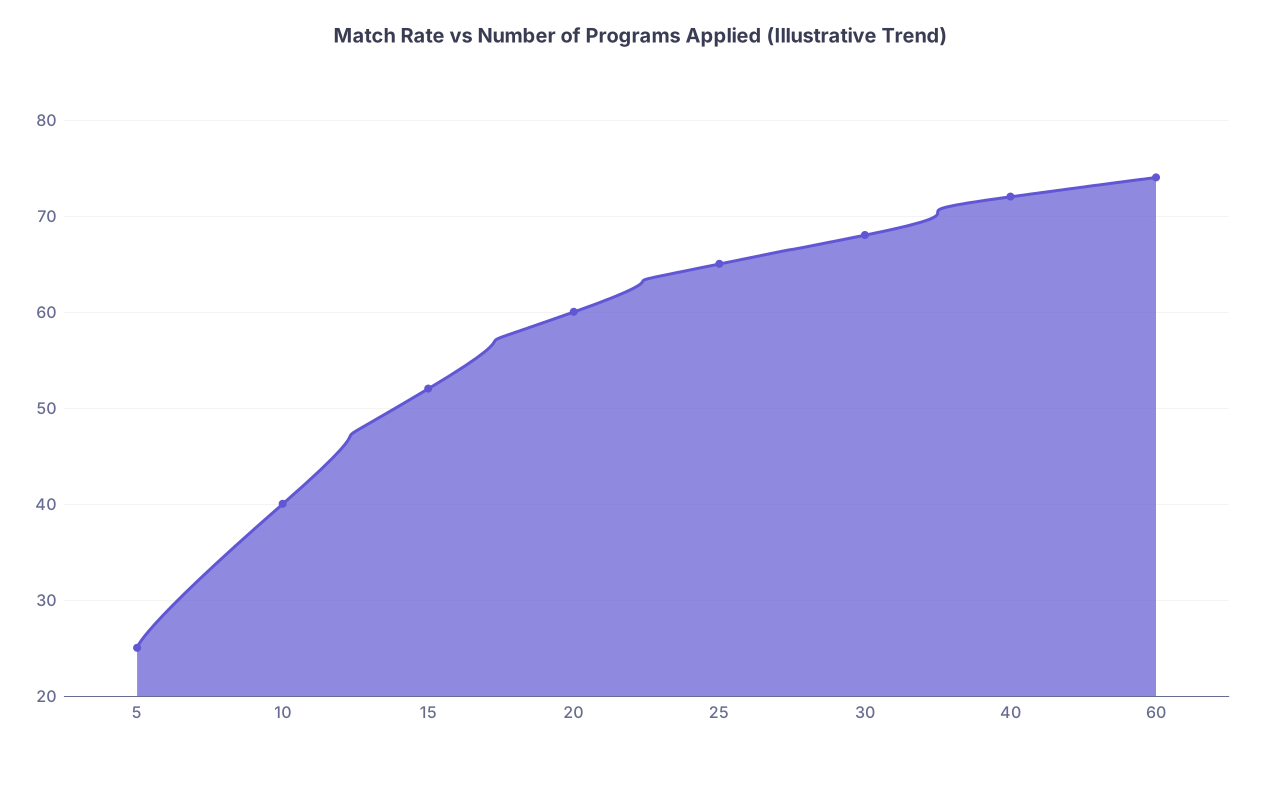
Step 4: How Many Programs to Apply to as a Caribbean IMG in Nuclear Medicine?
This is the central “how many programs to apply” question, and the answer depends on your profile and risk tolerance.
1. General Ranges
For a Caribbean IMG targeting nuclear medicine residency, a reasonable baseline:
- Highly competitive profile (strong scores, research, U.S. clinical experience, no red flags):
- ~15–20 programs
- Moderately competitive profile (average scores, some imaging exposure, minor weaknesses):
- ~20–30 programs
- Less competitive profile (low scores, attempts, significant gaps):
- ~25–35+ programs, focusing strongly on IMG-friendly programs and possibly including some nuclear medicine + preliminary year combinations or backup specialties
Because nuclear medicine is small, the total number of programs is limited; your upper bound is often determined by what actually exists and sponsors IMGs, not just your budget.
2. Adjusting for Specific Factors
a. Visa Requirement (J-1 / H-1B)
- If you need a visa, increase your application count by ~20–30% compared to an equivalent U.S. citizen Caribbean IMG.
- Some programs that are less competitive overall may still not sponsor visas, shrinking your pool.
b. Lack of U.S. Clinical Experience
- If you have minimal or no hands-on U.S. clinical experience, consider:
- More applications
- Strategically including internal medicine or transitional year programs as a backup, with plans to build imaging exposure later.
c. Strong Nuclear Medicine Research or Publications
- If you have strong nuclear medicine research—especially at a major U.S. academic center—you can:
- Target more academic-heavy lists
- Lean slightly lower in total number (e.g., 15–22), but only if other components are solid.
3. Balancing Cost and Yield
ERAS fees increase with the number of applications; travel expenses for interviews add up as well. To optimize your program selection strategy:
- Start with a longlist of all nuclear medicine programs that:
- Are accredited
- Sponsor your required visa
- Do not openly exclude IMGs
- Narrow this down based on:
- Geography (priorities, not strict prohibitions)
- Program size and exposure (PET/CT, theranostics)
- Evidence of prior Caribbean IMG or broader IMG presence
- Aim for:
- ≥ 70–80% of programs in realistic tiers (Tier 2 and Tier 3)
- ≤ 20–30% aspirational (Tier 1)
Remember: nuclear medicine match success often comes from a focused, realistic list rather than a scattered application to every prestigious name.

Step 5: Strengthening Fit and Maximizing Interview Invites
Program selection doesn’t stop after choosing where to apply. Your strategy continues with how you present yourself and how you tailor your application.
1. Tailoring Your Application to Nuclear Medicine
Personal Statement
- Avoid generic radiology wording—speak specifically about nuclear medicine.
- Mention:
- Understanding of targeted radiopharmaceuticals and theranostics
- Interest in oncology imaging (PET/CT, SPECT/CT)
- Experiences in multidisciplinary tumor boards or imaging conferences.
Letters of Recommendation (LoRs)
- Aim for at least one letter from nuclear medicine or radiology faculty familiar with your clinical work or observership.
- Strong internal medicine letters that highlight clinical reasoning, reliability, and communication skills are valuable.
CV and ERAS experiences
- Highlight:
- Imaging electives, nuclear medicine shadowing, and tumor boards
- Any quality improvement projects, case reports, or presentations involving imaging.
- Highlight:
2. Strategic Communication with Programs
- Signal genuine interest. If ERAS signaling is available for your cycle, prioritize signals to:
- Programs you realistically want AND where your profile is competitive.
- Consider polite, concise emails:
- Post-application but pre-interview, if you have a specific tie or research alignment.
- Avoid spamming; a carefully worded message to a small number of programs (5–8) where you have a realistic connection is enough.
3. Handling Interviews and Ranking
Once interviews arrive, your program selection strategy shifts to ranking:
- During interviews, assess:
- Volume and diversity of PET/CT and SPECT cases
- Exposure to theranostics and oncology
- Support for IMGs (ask residents or fellows about their experiences)
- Faculty interest in teaching and mentorship
- Board pass rates and graduate destinations
As a Caribbean IMG, also ask (tactfully) about:
- How they support residents with visas and licensing
- How often IMGs match into fellowships or jobs after completing their nuclear medicine residency
Rank programs according to:
- Training quality and career prospects
- IMG support and culture
- Location and personal factors
Avoid over-ranking a “prestigious name” where you felt unwelcome or where imaging volume is actually lower than mid-tier options.
Step 6: Backup and Contingency Planning
A mature program selection strategy anticipates uncertainty. You’re targeting a specialized field as a Caribbean IMG; it’s smart to plan for multiple paths.
1. Parallel or Backup Specialties
Some applicants interested in nuclear medicine also apply to:
- Internal medicine (categorical or prelim)
- Then later seek:
- Nuclear medicine fellowship (where available)
- Imaging-heavy oncology or cardiology tracks
- Then later seek:
- Diagnostic radiology (in rare cases)
- Highly competitive route; usually requires top-tier scores and strong research, often less realistic as a backup for many Caribbean IMGs.
If you choose this approach:
- Make sure you understand application caps, costs, and split focus.
- Prepare specialty-specific personal statements and LoRs that maintain a coherent narrative (e.g., interest in imaging and oncology, whether via nuclear medicine or medicine with an imaging niche).
2. Strengthening for a Reapplication (If Needed)
If you don’t match in nuclear medicine:
- Consider:
- Preliminary inpatient internal medicine year with nuclear medicine electives.
- Dedicated research year in nuclear medicine at an academic center.
- Build:
- Stronger U.S. clinical evaluations
- Publications or abstracts in molecular imaging
- Expanded professional network in imaging departments
A structured improvement plan can make you a significantly stronger candidate for a future nuclear medicine match.
Frequently Asked Questions (FAQ)
1. As a Caribbean IMG, is nuclear medicine a realistic specialty for me?
Yes, nuclear medicine can be realistic for Caribbean IMGs, especially if you:
- Have solid USMLE scores and good clinical evaluations
- Demonstrate clear, sustained interest in imaging and molecular medicine
- Gain at least some U.S. exposure to nuclear medicine or radiology
- Apply strategically to IMG-friendly programs
Reviewing SGU residency match outcomes and other Caribbean medical school residency lists can help you identify programs that have taken IMGs in nuclear medicine or related specialties.
2. How many nuclear medicine residency programs should I apply to?
For most Caribbean IMGs:
- Competitive profile: ~15–20 programs
- Average profile: ~20–30 programs
- Less competitive or visa-needing profile: ~25–35+ programs
The exact number depends on your scores, visa status, research, and prior U.S. experience. Focus on a balanced list with a strong core of realistic targets and IMG-friendly programs.
3. How can I tell if a nuclear medicine program is IMG-friendly?
Look for:
- Current or recent residents who are IMGs (check program websites, LinkedIn, Doximity)
- Clear statements on J-1 or H-1B sponsorship
- Caribbean or other IMG graduates listed on match outcomes (e.g., SGU residency match lists)
- Positive feedback from IMGs who have rotated or trained there (ask mentors, alumni)
If a program has never taken IMGs and does not sponsor visas, it is unlikely to be a good target.
4. Should I also apply to internal medicine or another specialty as a backup?
It depends on your risk tolerance and how strongly you are committed to nuclear medicine:
- If your profile is borderline (low scores, few interviews expected) and you want to maximize your chances of matching into something, adding internal medicine or a prelim year as a backup can be reasonable.
- Keep your story coherent—emphasize your interest in imaging and oncology so that both paths make sense.
- Be aware that adding another specialty increases application costs and preparation time, so plan accordingly.
A thoughtful, data-based program selection strategy—aligned with your profile, visa status, and long-term goals—will substantially improve your chances of a successful nuclear medicine match as a Caribbean IMG. Focus on understanding your strengths, identifying IMG-friendly programs, applying to an appropriate number of programs, and presenting a clear, imaging-focused narrative throughout your application.