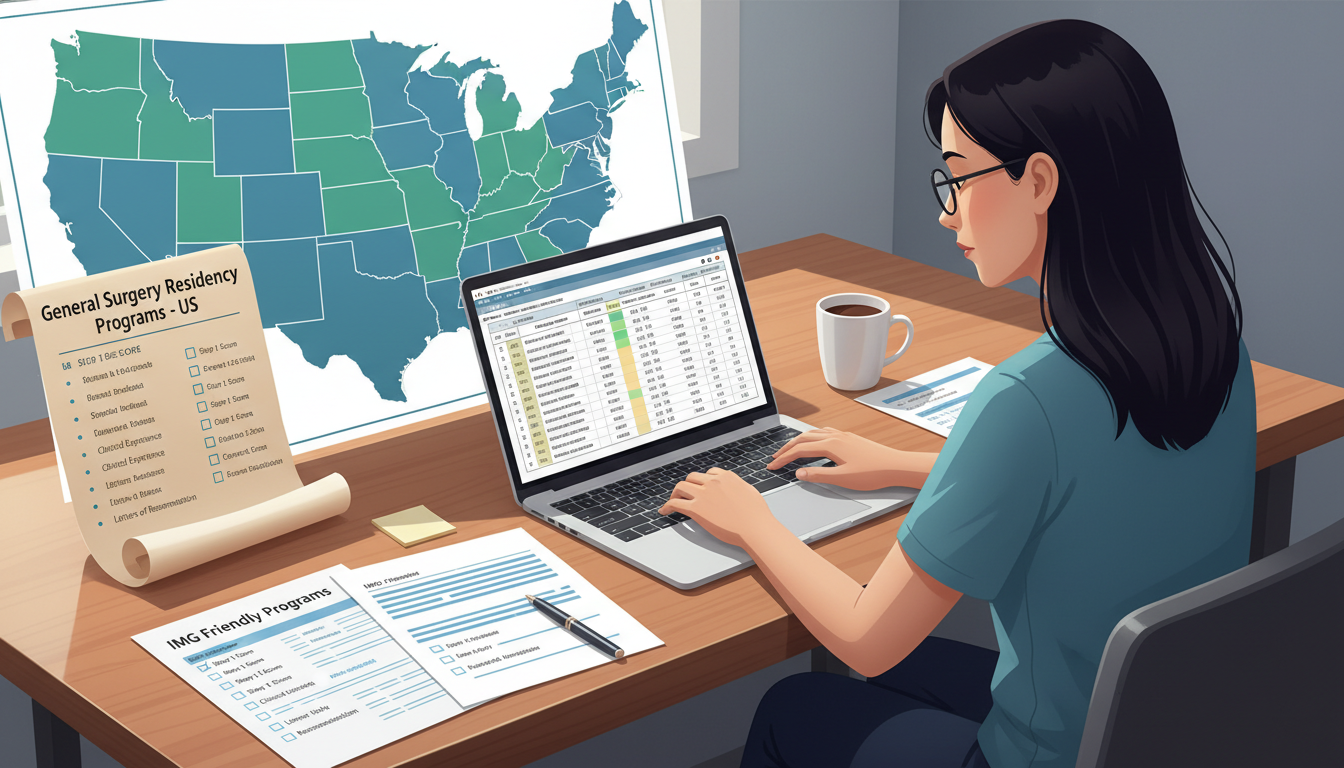
Choosing where to apply for residency is one of the most strategic decisions you’ll make as a Caribbean IMG pursuing pathology. Your program selection strategy will influence your match chances more than almost any other single factor—sometimes even more than an extra point or two on your Step scores.
This guide is tailored specifically for Caribbean IMGs targeting a pathology residency in the United States. It covers how many programs to apply to, what types of programs to prioritize, and how to build a realistic, balanced list that maximizes your chances of a successful pathology match.
Understanding Your Starting Point as a Caribbean IMG in Pathology
Before building a list, you need an honest assessment of your profile. As a Caribbean IMG, you’re not starting from zero, but you are competing with US MDs, US DOs, and non‑US IMGs. Your Caribbean medical school residency outcomes—especially from schools like SGU, AUC, Ross, Saba—will depend on how well you understand your positioning.
Key factors that shape your strategy
USMLE performance
- Step 1 (even if pass/fail, programs still see your history)
- Step 2 CK (now the main numerical academic filter)
- Any failed attempts
Citizenship and visa status
- US citizen/green card vs. needing J‑1/H‑1B sponsorship
- Many community programs sponsor J‑1 but not H‑1B
- Some academic programs strongly prefer US citizens/permanent residents
Pathology‑specific exposure and interest
- Pathology electives in the US
- Letters of recommendation (LORs) from pathologists in the US
- Research in pathology or related fields
Medical school reputation and track record
- For SGU students, reviewing the SGU residency match lists in pathology can show which programs historically accept SGU graduates
- Same approach for AUC, Ross, Saba, etc. if your school publishes match lists
Red flags
- Any USMLE failures
- Gaps after graduation
- Professionalism or academic issues
The stronger your profile, the more you can target competitive academic programs and desirable locations. The more challenges you have, the more emphasis you’ll place on IMG‑friendly, community‑based pathology programs and a larger application volume.
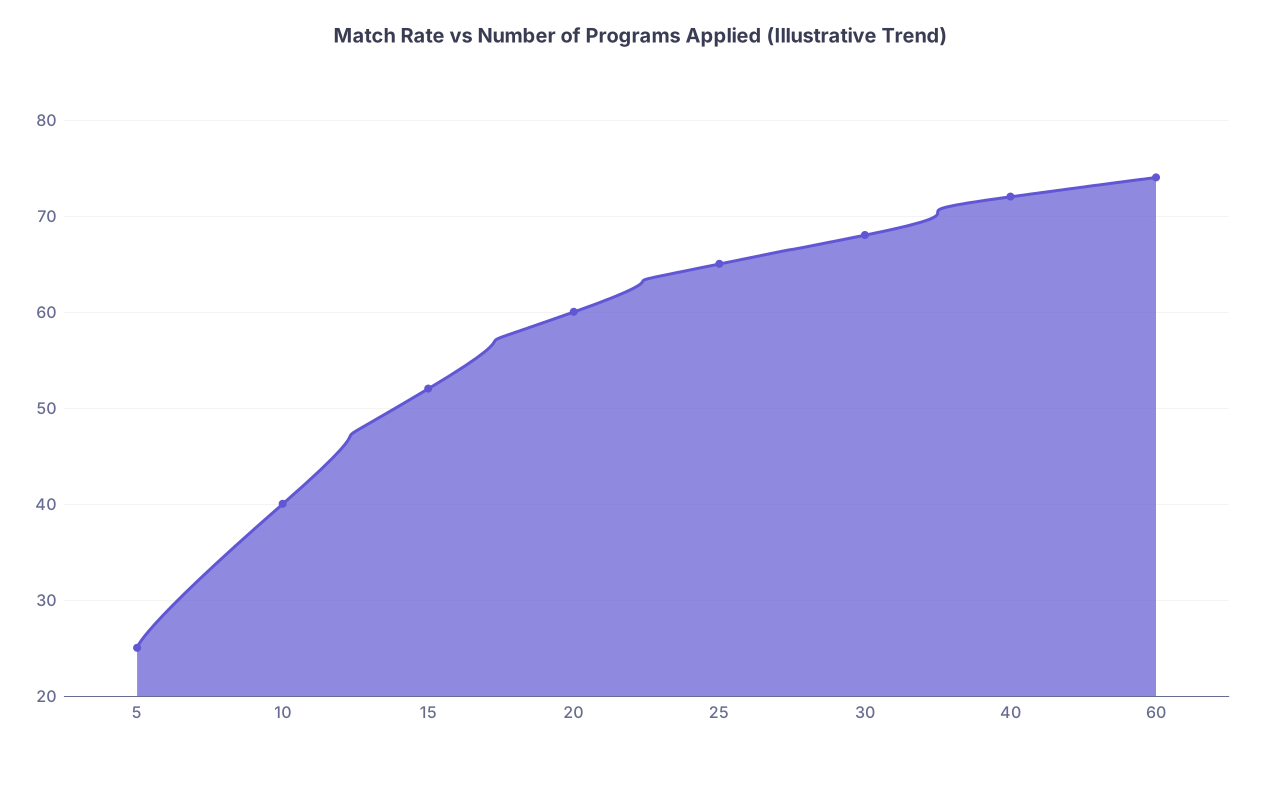
How Many Pathology Programs Should a Caribbean IMG Apply To?
One of the most common questions is: how many programs to apply to for a realistic pathology match as a Caribbean IMG?
While exact numbers vary by individual profile, here are reasonable ranges:
General ranges for Caribbean IMGs in pathology
These are broad guidelines, assuming you’re applying to categorical AP/CP or combined pathology residency programs:
Very strong profile
- Step 2 CK ≥ 245 (first attempt)
- No red flags
- US clinical experience including pathology electives
- Strong US LORs, including at least one in pathology
- US citizen/green card or easy visa case
- Recommended number of applications: ~40–60 programs
Average competitive Caribbean IMG
- Step 2 CK around 230–245
- No or minimal red flags
- Some US clinical experience, maybe limited pathology exposure
- 1 US pathology LOR or strong non‑pathology US LORs
- Recommended number of applications: ~60–80 programs
Challenged or higher‑risk profile
- Step 2 CK < 230 or failed attempts
- Gaps since graduation (>1–2 years)
- Limited US experience or no pathology electives
- Visa‑requiring with unclear support from many programs
- Recommended number of applications: ~80–120+ programs
These ranges align with what many successful Caribbean IMGs in pathology report, though individual circumstances can shift recommendations slightly up or down.
Why Caribbean IMGs generally need to apply more broadly
Lower odds per program
- Many pathology programs receive hundreds of applications for a small number of spots.
- Some academic programs filter out IMGs by default; others do so unofficially.
Less predictable screening criteria
- Some programs emphasize research, others US experience, others Step scores.
- It’s hard to perfectly predict which committees will value your specific strengths.
Geographic bias
- Many programs prioritize applicants with local ties.
- Caribbean IMGs often lack strong geographic preferences in the US, which means more cold‑applications.
The guiding principle:
You’re not buying lottery tickets; you’re targeting reasonable possibilities. But as a Caribbean IMG in pathology, “reasonable” still means casting a wide net.

Building a Balanced Pathology Residency List
A strong program selection strategy for pathology is not just about quantity; it’s about strategic distribution across different tiers of programs.
Categorizing your potential programs
For Caribbean IMGs, it’s helpful to think in three broad tiers:
Reach programs
- Prestigious academic centers or highly ranked pathology departments
- Often in major metropolitan areas and competitive states (NYC, Boston, California, etc.)
- Historically lower IMG match rates
- Examples: Large university hospitals, “Top 20” pathology departments, major NCI cancer centers
- You should still include some reaches, especially if you have strong research or scores, but not the majority of your list.
Target programs
- Solid university‑affiliated or large community academic programs
- Mix of US MD, DO, and IMG residents
- Often in medium‑sized cities or non‑coastal states
- Reasonably IMG‑friendly with published Caribbean medical school residency matches
- These should be the core of your list.
Safety programs
- Community‑based or smaller academic programs
- Historically take Caribbean IMGs or other IMGs regularly
- Often in smaller cities, rural areas, or less competitive states
- Might be less research‑heavy but still provide strong AP/CP training
- As a Caribbean IMG, you absolutely need a meaningful number of these.
Approximate distribution strategy
For a Caribbean IMG applying to 70 programs in pathology, a balanced breakdown might look like:
- Reach: 10–15 programs (about 15–20%)
- Target: 35–40 programs (about 50–60%)
- Safety: 15–20 programs (about 20–30%)
If your profile has more risk factors (lower scores, gaps, visa requirement), lean toward more safety and target programs and fewer reaches. If you’re a top Caribbean IMG (high Step 2, strong US pathology exposure, publications), you can shift more toward target and reach programs, but never abandon safeties entirely.
How to identify program tier for YOU
Because tier is relative, not absolute, you must individualize it:
- Compare your Step 2 CK to the program’s average or minimum (if available).
- Look at current residents’ backgrounds (US grads vs. IMGs, Caribbean representation).
- Check past match lists from your school—has your school sent graduates there?
- Consider research intensity: if you have little research, a program with heavy publication output may be more of a reach.
The goal is a realistic yet ambitious list where you’d be happy at many programs, not just a tiny handful.
How to Choose Residency Programs in Pathology: A Step‑by‑Step Strategy
With so many programs, how to choose residency programs becomes a practical challenge. Use this step‑wise program selection strategy to methodically build your list.
Step 1: Define your non‑negotiables
Before you look at program names:
Visa requirements
- Do you need J‑1, H‑1B, or both?
- Immediately exclude programs that explicitly state they do not sponsor ANY visas if you need one.
Training type
- Most pathology programs are combined AP/CP (Anatomic Pathology/Clinical Pathology).
- Some are AP‑only or CP‑only; apply to those only if they align with a clear career plan.
Board accreditation & status
- Confirm ACGME accreditation and good standing.
- Avoid programs with recurring probation or major instability unless you have strong reasons.
Dealbreakers
- Geographic regions you truly cannot live in (family obligations, financial constraints, etc.).
This initial filter often trims the list substantially.
Step 2: Use IMG‑friendliness as a primary screen
For a Caribbean IMG targeting pathology residency, IMG‑friendliness is critical:
- Use tools like FREIDA, program websites, and alumni networks.
- Look at:
- Percentage of current residents who are IMGs
- Presence of Caribbean grads specifically
- Openness about visa sponsorship on official pages
If a program has almost exclusively US MD residents and no history of IMG matches, treat it as a reach—or exclude it if your profile is weaker.
Step 3: Align program profiles with your strengths
You want the program to see something in your file that matches their priorities:
If you have research experience:
- Look for programs with active research, publications, and subspecialty pathology services.
- Academic medical centers or university‑affiliated hospitals may fit well.
If your strength is strong clinical performance but little research:
- Community academic or community‑based programs that emphasize service, volume, and practical AP/CP training may fit better.
If you have strong US pathology electives & LORs:
- Programs that value demonstrable commitment to pathology and US clinical experience.
Step 4: Investigate training quality and environment
Even as a Caribbean IMG focused on matching, you want a residency where you’ll succeed long‑term:
Look at:
- Case volume and diversity (especially surgical pathology, cytology, hematopathology)
- Subspecialty services (hematopathology, dermpath, neuropathology, forensic pathology, etc.)
- Fellowship placement history (do their graduates get good fellowships?)
- Resident support and wellness: call schedules, teaching, faculty accessibility
- Board pass rates
You can get this from:
- Program websites
- Virtual or in‑person open houses
- Talking with current or former residents (including any Caribbean IMG alumni)
Step 5: Geographical and lifestyle considerations
While you must be flexible, it’s acceptable to factor in:
- Cost of living (some major cities are extremely expensive on a resident salary)
- Proximity to family or support systems
- Transportation (public transit vs. needing a car)
- Climate and safety
However, as a Caribbean IMG in pathology, avoid over‑restricting geographies early. In the pathology match, broad geographic flexibility improves your odds.
Step 6: Prioritize programs and finalize numbers
Once you’ve filtered for visa, IMG‑friendliness, personal fit, and training quality:
Create a spreadsheet (or use a tool) listing:
- Program name
- Location
- Visa policy
- IMG‑friendliness
- Type (academic, community, hybrid)
- Tier (reach/target/safety)
- Notes (research, case mix, your connections, etc.)
Mark clear “NOs” (programs that obviously don’t align with you) and “YES/Strong Maybe” programs.
Adjust your total number of programs until you’re within your target range (e.g., 60–80), maintaining a solid distribution of reach/target/safety.

Special Considerations for Caribbean IMGs in the Pathology Match
Pathology is often perceived as “less competitive,” but that’s misleading. For Caribbean IMGs, there are specific dynamics to understand.
Academic vs. community programs in pathology
Academic pathology programs
- More likely to have:
- Subspecialty fellowships in‑house
- Higher research expectations
- Greater emphasis on publications and scholarly activity
- May be more cautious with IMGs, especially Caribbean schools, unless you bring strong research or excellent metrics.
- More likely to have:
Community or hybrid programs
- Strong focus on service, surgical pathology volume, and bread‑and‑butter cases
- Often very solid AP/CP training
- Typically more open to Caribbean IMGs and other IMGs
- May require more self‑direction for research if that is a long‑term goal
Most Caribbean IMGs achieve their first pathology residency via community or hybrid programs, then later obtain competitive fellowships.
Using your school’s match history as a guide
If you’re at a school like SGU, review the SGU residency match results in pathology over the last 3–5 years:
- Identify programs that repeatedly accept SGU or other Caribbean grads.
- These are high‑yield targets and often good “target” or “safety” programs for you.
- For non‑SGU schools, request similar data from student affairs or your dean’s office.
Even if the list is short, every data point matters in designing your program selection strategy.
Managing red flags strategically
If you have:
- A failed Step attempt
- A prolonged gap
- Late decision to switch to pathology
Then:
- Emphasize pathology commitment: electives, observerships, possibly a post‑grad research or lab position.
- Apply widely and include more safety programs.
- Use your personal statement and LORs to explain your path thoughtfully.
You want programs to see your trajectory trending upward, with maturity and clarity of purpose.
Putting It All Together: Example Strategies by Applicant Profile
To make this concrete, here are three example Caribbean IMG pathology applicant profiles and how they might approach program selection and how many programs to apply to.
Example 1: Strong Caribbean IMG, SGU graduate
- Step 1: Pass (no failures)
- Step 2 CK: 245
- US citizen
- Two US pathology electives with strong LORs
- One publication in a pathology‑related project
- No gaps, graduating on time
Strategy:
- Apply to ~50–60 pathology programs.
- Distribution:
- 10–12 reach academic programs (university hospitals, major cities)
- 25–30 target programs (university‑affiliated or community‑academic, IMG‑friendly, known to take SGU graduates)
- 10–15 safety programs (smaller community programs that regularly accept Caribbean IMGs)
Focus on:
- Highlighting research and pathology commitment
- Leveraging the SGU residency match history to identify programs that have taken similar applicants
- Targeting regions with known IMG‑friendly reputations (Midwest, some Northeast and South programs)
Example 2: Average Caribbean IMG, AUC graduate, needs J‑1 visa
- Step 2 CK: 233, first attempt
- Step 1: Pass
- Needs J‑1 visa
- One US pathology elective, one US internal medicine elective
- No publications
- Graduation on time, no gaps
Strategy:
- Apply to ~70–80 programs.
- Distribution:
- 10 reach (some academic centers that explicitly sponsor J‑1 and have some IMGs)
- 40 target (community academic or university‑affiliated, J‑1 friendly, visible IMGs in current residents)
- 20–25 safety (community programs in smaller cities; very IMG‑friendly; consistent Caribbean representation)
Focus on:
- Confirming J‑1 sponsorship for every applied program
- Highlighting strong clinical performance and solid LORs
- Using geography flexibility to open more options (Midwest, South, some East Coast, fewer in high‑competition states like California)
Example 3: Challenged profile, Ross graduate, Step failure, older grad
- Step 1: one failed attempt, passed on second try
- Step 2 CK: 225
- Graduated 3 years ago; working in research and observerships since then
- Needs H‑1B or J‑1 (non‑US citizen)
- One pathology research experience but no major publications
Strategy:
- Apply to 90–120+ programs.
- Distribution:
- 10–15 reach (only if they are explicitly IMG‑ and visa‑friendly and have matched candidates with similar profiles historically)
- 40–50 target (clear IMG presence, open to Step failures, flexible about year of graduation, sponsor J‑1)
- 40–60 safety (community or hybrid programs, strong IMG tradition, less competitive geographies)
Focus on:
- Strong personal statement explaining your journey and growth
- Clear evidence of commitment to pathology (recent observerships, research)
- Maximizing interview numbers by widening geography and prioritizing IMG‑friendly programs over prestige
Frequently Asked Questions (FAQ)
1. Is pathology a good specialty choice for Caribbean IMGs?
Yes. Pathology often has more openness to IMGs compared with high‑intensity clinical specialties, and many programs value strong analytical skills, attention to detail, and long‑term commitment over where you went to medical school. However, it is not “easy”—programs do filter based on performance, preparedness, and clear interest in pathology. A focused program selection strategy and strong preparation are still essential.
2. How many programs should I apply to if my Step 2 CK is below 230?
If you are a Caribbean IMG with Step 2 CK < 230, consider:
- 80–120+ applications, depending on other factors like visa status, gaps, and US experience.
Compensate by: - Strengthening your pathology‑specific exposure (electives, observerships)
- Targeting IMG‑friendly community and hybrid programs
- Applying widely in less competitive geographic regions.
3. Do I need pathology research to match into pathology as a Caribbean IMG?
Research is helpful but not strictly required for all pathology programs. It becomes more important for:
- Academic and research‑heavy institutions
- Applicants aiming for competitive fellowships early
If you don’t have research, prioritize programs that are more clinically oriented (community or hybrid) and emphasize strong clinical training over publications. That said, even small projects or case reports can signal your curiosity and engagement with the field.
4. Should I apply to preliminary or transitional year programs as a backup?
Pathology residencies are usually categorical (AP/CP), so separate preliminary or transitional years are not typically required.
For a Caribbean IMG specifically targeting the pathology match, it is usually more effective to:
- Increase the number of pathology programs you apply to
- Improve your pathology‑focused profile
rather than investing heavily in prelim applications that don’t guarantee a direct path into pathology.
By approaching your Caribbean medical school residency journey with a structured, data‑driven program selection strategy, you significantly increase your chances of a successful pathology match. Define your profile honestly, apply broadly but intelligently, and build a balanced list of reach, target, and safety programs tailored to your specific strengths and constraints.