Understanding the Landscape: Clinical Informatics Pathways for Caribbean IMGs
Clinical informatics is a rapidly growing field that blends medicine, data, and technology to improve patient care. For a Caribbean medical school graduate, the path into clinical informatics in the U.S. looks different from traditional residency specialties.
Before building a program selection strategy, you need to understand:
Clinical Informatics is a subspecialty, not a primary residency
- In the U.S., Clinical Informatics is an ACGME-accredited subspecialty.
- You must first complete a primary clinical residency (e.g., Internal Medicine, Family Medicine, Pediatrics, Emergency Medicine, Pathology, etc.).
- After or during that residency, you can pursue:
- An ACGME-accredited Clinical Informatics fellowship, or
- Health IT–focused roles and certificates (for those who don’t pursue formal fellowship).
Your immediate goal = match into a residency that supports informatics
- As a Caribbean IMG, your first competitive bottleneck is the primary residency match.
- Your program selection strategy therefore has two layers:
- Layer 1: Selecting residency programs (e.g., IM, FM, EM, Pathology) that are realistic and IMG-friendly.
- Layer 2: Within those, prioritizing programs that offer strong informatics exposure, research, or connections to a clinical informatics fellowship or health IT training ecosystem.
Why this is different for Caribbean graduates
- Caribbean medical school residency outcomes can be excellent, but data consistently show:
- Lower match rates for Caribbean IMGs than for U.S. MD/DOs.
- Higher importance of program selection, application volume, and strategy.
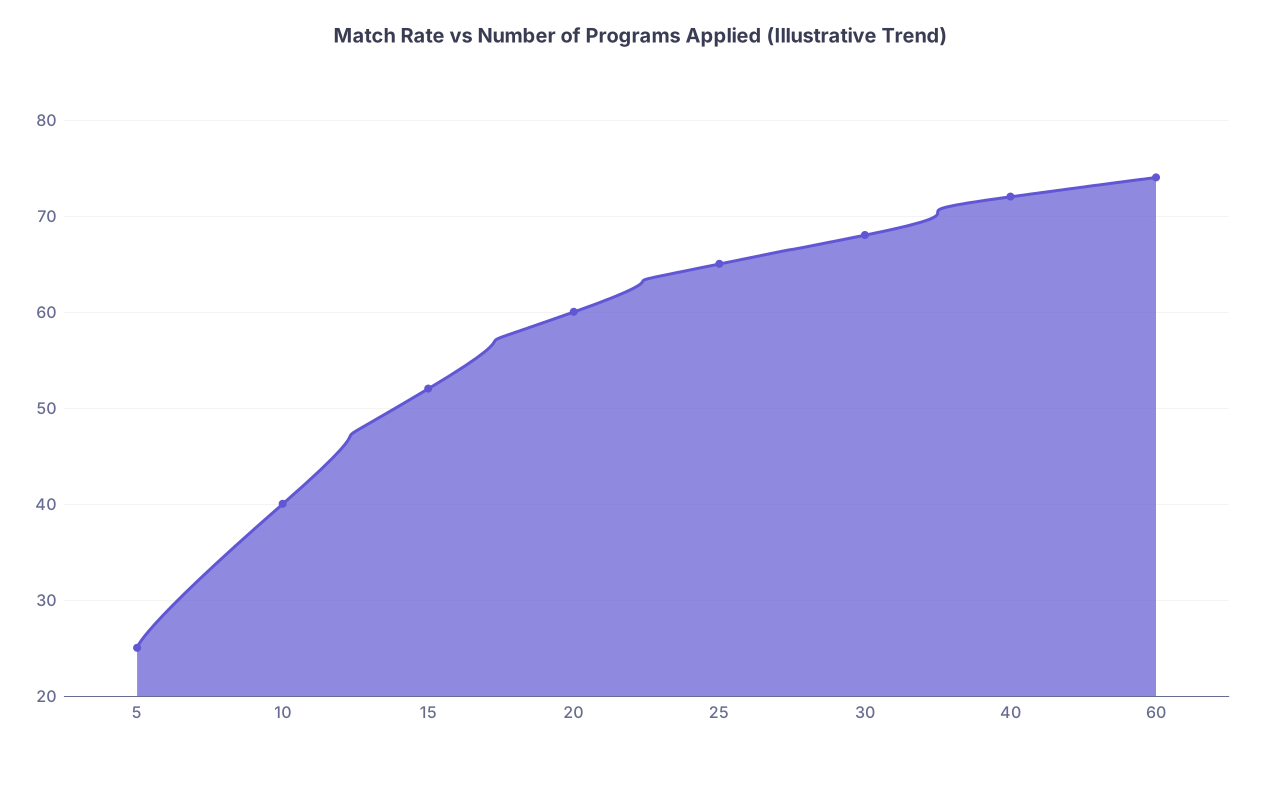
- You must be more systematic and conservative about “how many programs to apply” and which tiers to prioritize, especially given the niche nature of clinical informatics.
- Caribbean medical school residency outcomes can be excellent, but data consistently show:
In short: Your strategic focus is on securing a solid, IMG-friendly residency with informatics opportunities, then using that foundation to pursue a clinical informatics fellowship or advanced health IT training later.
Clarifying Your Goals: What “Informatics-Friendly” Means for You
Before constructing your program list, define what you want out of your training. “Clinical informatics” can mean different paths:
Physician–Informatics Leader
- Goal: Become a CMIO, medical director of informatics, or digital health leader.
- Pathway:
- Competitive residency (often academic or large health system)
- Strong exposure to EHR optimization, data analytics, quality improvement
- Formal clinical informatics fellowship at an academic center.
Clinician with Strong Health IT Skills
- Goal: Practice clinically while leading or supporting local health IT initiatives.
- Pathway:
- Solid residency (can be academic or community-based)
- Focused health IT training, informatics electives, projects, or certificates
- Possibly industry collaborations, but not necessarily a fellowship.
Translational / Data Scientist–Type Physician
- Goal: Work with big data, AI/ML, or clinical decision support development.
- Pathway:
- Academic residency with robust research infrastructure
- Close ties to informatics, biostatistics, or data science teams
- Clinical informatics fellowship or other data science training (MPH, MS, PhD).
Action Step: Define Your Priority “Informatics Elements”
For each potential residency, ask:
EHR Exposure & Governance
- Does the program use a major system (Epic, Cerner, etc.)?
- Are there resident roles on EHR optimization, user groups, or clinical decision support committees?
Formal Clinical Informatics Presence
- Does the institution have a clinical informatics fellowship?
- Are there faculty with titles like “Chief Medical Information Officer (CMIO),” “Clinical Informatics Director,” or “Medical Director of Quality and Analytics”?
Project & Research Opportunities
- Is there an informatics or health IT–focused research track?
- Are there ongoing QI or data projects that residents join?
Health IT Training or Certificates
- Any structured health IT training workshops, certificate programs, or partnerships with schools of public health, informatics, or computer science?
Clarifying which of these matter most to you will guide which programs you prioritize, which you include as backups, and which you exclude even if they are IMG-friendly.
Building a Realistic Program List: Balancing Ambition and Safety
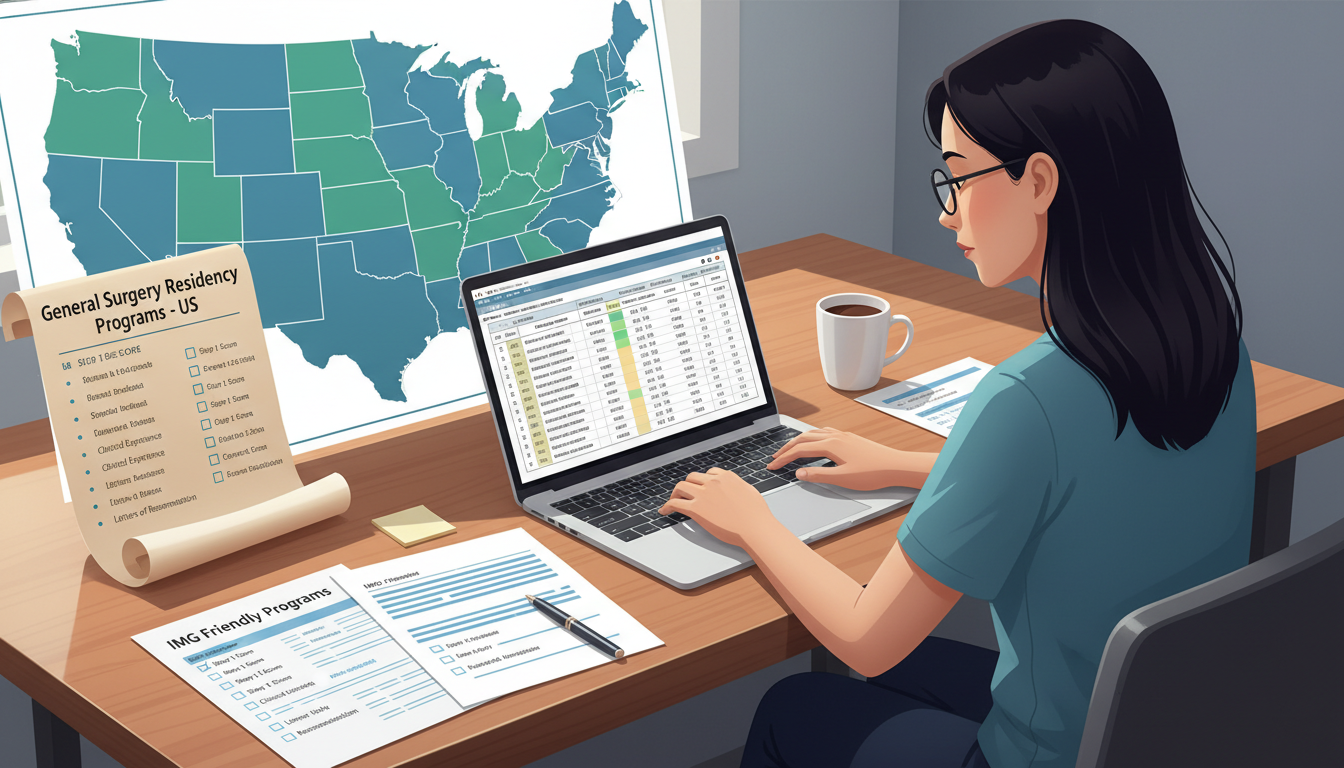
For Caribbean IMGs, a thoughtful program selection strategy is arguably as important as your application materials. Two questions dominate:
- How to choose residency programs?
- How many programs to apply to?
Step 1: Start with Hard Filters
Begin by narrowing down the universe of programs with non-negotiable criteria:
Specialties that lead to Clinical Informatics
- Most common entry residencies for future informaticians:
- Internal Medicine (IM)
- Family Medicine (FM)
- Pediatrics
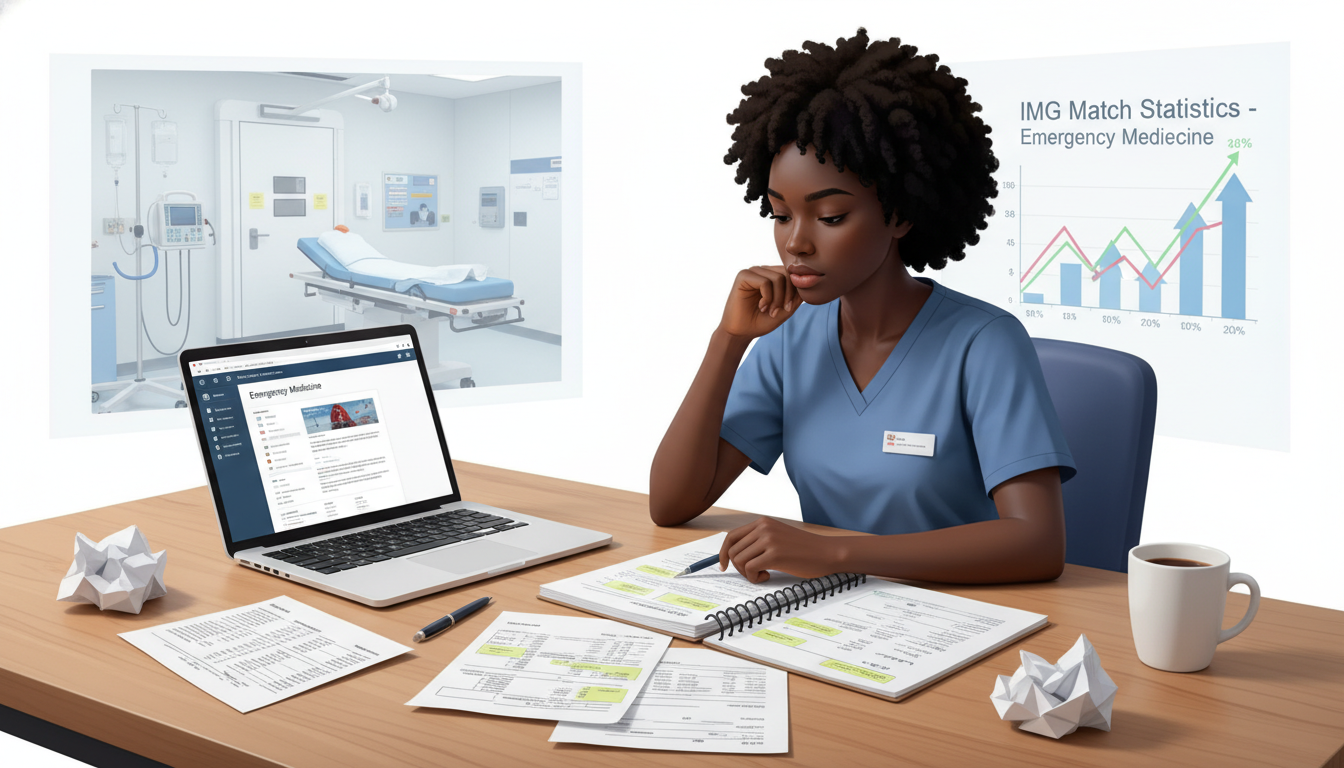
- Emergency Medicine (EM)
- Pathology
- Anesthesiology (less common, but possible)
- For a Caribbean IMG, IM and FM are typically the most accessible and versatile.
- Most common entry residencies for future informaticians:
Visa and IMG Policies
- Check each program’s site and FREIDA for:
- Visa support: J‑1, H‑1B, both, or none.
- International medical graduate acceptance rates and policies.
- As a Caribbean graduate, you are usually classified as an IMG even if you’re a U.S. citizen; always verify the program’s definition.
- Check each program’s site and FREIDA for:
Minimum Requirements
- USMLE/COMLEX score cutoffs
- Graduation year limits (e.g., “within 5 years of graduation”)
- Required U.S. clinical experience
If a program explicitly does not consider IMGs or does not sponsor your visa type, do not waste an application there—even if they have strong informatics.
Step 2: Layer in Informatics-Relevant Criteria
Once you have a base pool of programs that will consider you, refine it using informatics-related features:
- Presence of a Clinical Informatics Fellowship at the same institution or health system.
- Faculty with informatics roles or health IT leadership positions.
- Evidence of:
- Quality improvement infrastructure.
- Data analytics projects.
- EHR optimization or digital health innovation.
- Proximity to a university with:
- A department or center for health informatics,
- Data science programs or AI-in-medicine initiatives.
Programs with these elements become your priority targets, even if some are more competitive.
Step 3: Tiers and Program Mix
To manage risk, categorize your programs into three tiers:
Reach Programs
- Academic centers with:
- Well-known SGU residency match or other Caribbean IMG precedents, but still relatively competitive.
- Strong research and possible clinical informatics fellowship.
- You may be slightly below their average scores or profile.
- Target: ~10–20% of your list.
- Academic centers with:
Target Programs
- Programs where:
- Your metrics (scores, experiences) are within or above their norm.
- They accept IMGs regularly.
- Some informatics exposure is present (even if no full fellowship).
- Target: ~40–60% of your list.
- Programs where:
Safety Programs
- Community or smaller academic programs known to:
- Take multiple IMGs, including Caribbean graduates.
- Possibly weaker formal informatics options, but solid clinical training.
- You are above their typical applicant profile.
- Target: ~30–40% of your list.
- Community or smaller academic programs known to:
Key principle: As a Caribbean IMG, do not sacrifice overall match safety just to chase informatics. It is better to match into a safe program with minimal informatics and then build your informatics portfolio through online training, remote research, and later fellowships, than to go unmatched aiming only at highly specialized centers.
Step 4: How Many Programs Should You Apply To?
The “right” number depends on:
- Your specialty (IM vs EM vs Pathology, etc.).
- Your scores and attempts.
- Year of graduation and clinical gaps.
- Visa needs.
- Strength of your CV and informatics portfolio.
However, for a Caribbean IMG targeting Clinical Informatics via IM or FM, broad but strategic application is recommended.
General ranges (for Internal Medicine or Family Medicine):
Very competitive profile (strong scores, no gaps, robust U.S. letters, some informatics exposure):
- IM: ~40–60 programs
- FM: ~30–50 programs
Average Caribbean IMG profile:
- IM: ~60–100 programs
- FM: ~40–70 programs
Red flags (attempts, older YOG, significant gaps):
- IM: 100+ programs (if financially feasible)
- FM: 70+ programs
Use the upper end of these ranges if:
- You need visa sponsorship.
- You have lower scores or multiple attempts.
- You’re aiming for competitive geographic regions (e.g., NYC, California).
Financial and Time Constraints
ERAS fees escalate quickly. To stay efficient:
- Track each program in a spreadsheet:
- IMG-friendly status
- Visa policy
- Informatics features
- Tier (Reach/Target/Safety)
- Prioritize:
- Apply to all realistic target and safety programs first.
- Add reach programs as your budget allows.
- Remember: Quality of each application (personalized experiences section, meaningful program fit) still matters more than pure volume.
Evaluating Individual Programs: A Systematic Framework
Once you have a long list, go deeper to evaluate each program. This is where your program selection strategy becomes more granular.
1. IMG Friendliness and Outcomes
Look for:
- Current residents or alumni who are IMGs or Caribbean graduates.
- Match lists showing graduates entering:
- Academic roles
- Fellowships (including clinical informatics fellowships or other subspecialties).
- Program statements such as:
- “We welcome applications from international medical graduates.”
Where to find this:
- Program websites (residents page, alumni page).
- FREIDA “Percent of IMGs”.
- Forums and match data from Caribbean schools (e.g., SGU residency match reports can give you a sense of institutions that are historically open to Caribbean IMGs).
2. Strength of Clinical Training
No informatics career is sustainable without strong clinical training. Assess:
- Board pass rates.
- Patient volume and case mix.
- Inpatient vs outpatient balance.
- Faculty engagement and mentorship.
You want a program where you will be seen as a competent clinician first, informatician second.
3. Informatics Ecosystem
Assess each program’s informatics environment:
Is there a clinical informatics fellowship on site?
- If yes:
- Do fellows teach residents?
- Are there informatics lectures or electives?
- If not:
- Are there partnerships with external fellowships or universities?
- If yes:
Are there informatics-minded leaders?
- CMIO, Associate CMIO, VP for Clinical Transformation, or similar titles.
- Look for these on the health system’s leadership pages.
Research and QI infrastructure
- Access to:
- Data warehouses
- Quality dashboards
- EHR reporting tools
- Protected time for QI or research.
- Access to:
4. Health IT Training and Mentored Projects
Look for concrete opportunities to build your portfolio:
- Formal tracks:
- “Clinician Educator & Innovator Track”
- “Quality Improvement and Patient Safety Track”
- “Population Health & Analytics Track”
- Electives:
- EHR optimization elective
- Healthcare analytics elective
- Digital health or telemedicine rotation
- Sponsored training:
- Institutional support for courses in R, Python, SQL, or data visualization
- Support to attend informatics conferences (AMIA, HIMSS, local informatics meetings).
5. Location and Lifestyle
Geography matters for several reasons:
- Concentration of health IT companies (e.g., Boston, San Francisco, Seattle, Research Triangle, major urban centers).
- Presence of:
- Tech incubators
- Digital health startups
- Academic centers with robust IT departments
Even in a modest clinical program, being in a tech-rich city can expand your informatics opportunities through collaborations, meetups, or internships.

Practical Strategy: Applying, Interviewing, and Signaling Interest in Informatics
Once the list is built, your next challenge is to communicate clearly why you’re a good fit for both clinical training and informatics growth.
1. Tailoring Your ERAS Application
In your personal statement and experiences section:
- Emphasize:
- Long-term goal: becoming a clinician with advanced skills in data-driven care, quality improvement, or health IT leadership.
- Short-term goal: excelling in residency while contributing to EHR optimization, data projects, or digital health initiatives.
- Share specific examples, such as:
- Participation in an EHR workflow project as a student.
- A quality improvement initiative, even if small-scale.
- Self-directed learning (e.g., online courses in data analysis, basic programming, or an intro informatics certificate).
Avoid sounding like you only care about computers; highlight that informatics is a tool to deliver better patient care, not a replacement for clinical work.
2. Program-Specific Signals of Interest
For programs with strong informatics:
Mention specific features in your personal statement addendum or “why this program” paragraph:
- “I am particularly interested in your residents’ involvement with the clinical informatics fellowship and EHR optimization committees.”
- “Your department’s quality and data analytics initiatives strongly align with my goal of combining internal medicine with clinical informatics.”
If ERAS or supplemental applications allow program signaling (in specialties where it’s available), use at least some signals on informatics-rich programs, provided they are still realistic about IMGs.
3. Interview Preparation Focused on Informatics
During interviews:
Be prepared to answer:
- “Why our program?” with a nod to both clinical strength and informatics opportunities.
- “Where do you see yourself in 5–10 years?”
- Frame: “I see myself as a practicing internist/family physician who leads data-driven quality improvement and may pursue a clinical informatics fellowship to formalize my training.”
Ask informed questions:
- “Are residents involved with any EHR optimization or data analytics committees?”
- “Do residents have opportunities to work with the clinical informatics team or fellows?”
- “What kind of health IT training or quality improvement tools are available?”
These questions help you assess fit and simultaneously signal your serious but realistic interest in informatics.
4. Ranking Strategy: Balancing Informatics and Match Safety
When it’s time to rank:
- Never rank a program higher just for informatics if you wouldn’t be happy there clinically.
- Place programs roughly in this order:
- Strong clinical + good informatics + IMG supportive
- Strong clinical + modest informatics + IMG supportive
- Moderate clinical + good informatics + IMG supportive
- Moderate clinical + modest informatics + IMG supportive
- Anything where you doubt IMG support or resident wellbeing should be off your list.
For a Caribbean IMG, matching into a stable, supportive environment—where you can later build an informatics path—is almost always a better long-term decision than chasing prestige alone.
Leveraging Your Caribbean Background: Turning Perceived Weakness into Strength
Caribbean graduates often carry a stigma in the U.S. system, but you can actively reframe your background as an asset, especially in clinical informatics and health IT.
1. Diverse Clinical and Cultural Experience
Highlight:
- Exposure to different health systems, resource contexts, and patient populations.
- Understanding of documentation challenges and data limitations in low-resource settings.
These perspectives are highly valuable in designing equitable digital health solutions and real-world clinical workflows.
2. Resilience and Adaptability
Your path already demonstrates:
- Adaptation to new environments.
- Navigation of complex systems (visa, licensing, exams).
- Persistence through a more challenging match process.
Informatics work—especially EHR change management and large-scale implementation—requires exactly these traits.
3. Strategic Skill-Building During and After Medical School
Given that you might not have had a robust informatics curriculum, emphasize the steps you’ve taken on your own:
- MOOCs or certificates in:
- Healthcare informatics
- Data analysis (R, Python, SQL)
- Quality improvement or Lean/Six Sigma basics
- Student research projects using data or digital tools.
- Volunteering with telemedicine or digital health initiatives.
Collectively, these show that regardless of school name, you’ve intentionally aligned yourself with an informatics trajectory.
FAQs: Program Selection Strategy for Caribbean IMG in Clinical Informatics
1. As a Caribbean IMG, should I only apply to programs that have a clinical informatics fellowship?
No. While programs with an on-site clinical informatics fellowship are ideal, they are relatively few and often more competitive. As a Caribbean IMG, your priority is to secure a solid, IMG-friendly residency where you can:
- Gain strong clinical training.
- Participate in quality, data, or EHR-related projects.
- Network with informatics-minded faculty, even if no formal fellowship exists.
You can later apply to clinical informatics fellowships from a variety of residency backgrounds, provided you build a credible informatics portfolio during training.
2. How many programs should I apply to if I want to pursue clinical informatics later?
For most Caribbean IMGs targeting Internal Medicine or Family Medicine with a future informatics goal:
- Internal Medicine: Plan on 60–100 programs, depending on your competitiveness, visa needs, and red flags.
- Family Medicine: Plan on 40–70 programs.
Use more applications if:
- Your scores are marginal, you have attempts, or you graduated several years ago.
- You require visa sponsorship.
- You’re geographically restricted to competitive areas.
The clinical informatics focus does not reduce the number of programs you need; if anything, it argues for casting a broader net while selectively prioritizing informatics-rich environments.
3. Should I mention “clinical informatics” explicitly in my personal statement?
Yes—but with balance. Mention clinical informatics as a medium-term goal, framed within your dedication to becoming an excellent clinician. For example:
- Emphasize how informatics will help you:
- Improve patient outcomes.
- Support quality improvement and population health.
- Bridge gaps in care coordination.
Avoid giving the impression that you want residency only as a stepping stone to a tech job and don’t care about direct patient care. Program directors want to see that clinical excellence is your foundation, and informatics is a complementary passion.
4. How do I compete with U.S. grads for informatics-oriented programs as a Caribbean IMG?
You may not be able to change your school name, but you can strongly influence your profile and story:
- Build concrete informatics-relevant experiences:
- QI projects with data elements.
- EHR-related initiatives.
- Online health IT training or basic analytics courses.
- Demonstrate consistent interest:
- Joining informatics or digital health interest groups.
- Attending virtual informatics conferences or seminars.
- Apply and rank strategically:
- Mix IMG-friendly academic centers with informatics exposure and strong community programs.
- Avoid over-focusing on “famous” institutions that rarely take IMGs.
A focused, credible informatics portfolio—paired with a realistic program selection strategy and adequate application volume—can make you a compelling candidate despite the Caribbean label.
By understanding the structure of the clinical informatics field, intentionally crafting your program selection strategy, and applying broadly yet thoughtfully, you can turn a Caribbean medical school background into a powerful, differentiated narrative. Your goal is not only a successful Caribbean medical school residency match but a long-term trajectory that positions you for clinical informatics fellowship, health IT leadership, or advanced digital health roles in the years ahead.