Understanding the Landscape: Caribbean IMGs and the Genetics Match
For a Caribbean medical school graduate aiming for a medical genetics residency, the program selection strategy you build will often matter as much as your board scores. As an IMG, the margin for error is smaller, and the “apply everywhere and hope” approach is inefficient, expensive, and often ineffective.
Medical genetics is a small, highly specialized field. Many spots are in combined programs (e.g., Pediatrics–Medical Genetics and Genomics, Internal Medicine–Medical Genetics and Genomics, or OB/GYN–Genetics pathways), and relatively few are open to IMGs each year. This reality makes it especially important to understand:
- How many programs to apply to
- Which programs to prioritize
- How to build a realistic, evidence-based program selection strategy tailored to a Caribbean IMG profile
Throughout this article, we’ll integrate the key questions you should be asking, including how to choose residency programs, what an effective program selection strategy looks like for medical genetics, and how many applications usually make sense for a Caribbean IMG.
Step 1: Clarify Your Pathway into Medical Genetics
Before you can decide which programs to apply to, you must be clear on which pathway you’re targeting. Medical genetics doesn’t function exactly like core specialties (e.g., Internal Medicine or Pediatrics).
Primary Pathways in Medical Genetics
Combined Residency (Categorical Entry)
- Pediatrics–Medical Genetics (most common)
- Internal Medicine–Medical Genetics
- OB/GYN–Medical Genetics (less common)
- These are structured as combined 4–6 year programs leading to eligibility in both specialties.
- You enter these directly through ERAS as an R-1 (first-year resident).
Residency Followed by Fellowship
- Complete a core residency first (e.g., Pediatrics, Internal Medicine, OB/GYN, or even other fields).
- Then apply to clinical genetics fellowship (2 years) to become board-eligible in Medical Genetics and Genomics.
- This is often more accessible for IMGs who may initially struggle to secure a combined slot.
What This Means for a Caribbean IMG
If you’re at, say, SGU (St. George’s University), AUC, Ross, or another Caribbean medical school, your SGU residency match (or equivalent) outcome might first be into a core field (usually IM or Pediatrics) with a later genetics match at fellowship level.
When forming your program selection strategy, you should decide clearly:
- Am I applying directly to combined medical genetics programs?
- Am I applying to core residencies now with a plan to pursue genetics fellowship later?
- Am I doing both, and if so, how will I allocate applications?
For many Caribbean IMGs, the pragmatic strategy is:
- Primary target: A solid match in Pediatrics or Internal Medicine at a program with strong genetics exposure (or affiliated genetics fellowship).
- Secondary target (if competitive): A smaller number of combined genetics programs that have a documented track record of interviewing or matching IMGs.
Defining your pathway early helps you answer the big practical question: how many programs to apply and in which categories.
Step 2: Realistic Self-Assessment as a Caribbean IMG
Your program list is only as good as your self-assessment. Caribbean graduates often underestimate how much they need to compensate for location of medical school with exam performance, clinical evaluations, research, and networking.
Key Factors to Consider
USMLE/COMLEX Performance
- For combined genetics programs and strong university-based categorical residencies, you typically want:
- Step 1: Pass on first attempt (ideally above ~220–230 if scored; if pass/fail, program will rely more heavily on Step 2).
- Step 2 CK: Ideally > 230–240+ for competitiveness as a Caribbean IMG.
- Multiple attempts or low scores don’t disqualify you, but you must compensate with other strengths and an adjusted program list.
- For combined genetics programs and strong university-based categorical residencies, you typically want:
Clinical Performance and Letters of Recommendation
- Strong US clinical rotations, ideally at academic centers, matter a lot.
- For medical genetics interests:
- Pediatric or internal medicine sub-specialty rotations, NICU, PICU, oncology, or dysmorphology/genetics clinics are very helpful.
- Letters from faculty who can speak to your academic curiosity, pattern recognition, and compassion for patients with complex, chronic conditions are valuable.
Research and Genetics-Related Exposure
- Any of the following improves your fit:
- Research in genomics, rare diseases, cancer genetics, biochemical genetics, or bioinformatics.
- Case reports of rare syndromes or inborn errors of metabolism.
- Participation in genetics interest groups, genomics electives, or online genomics courses.
- Publications aren’t mandatory, but they differentiate you in a small field like medical genetics.
- Any of the following improves your fit:
Red Flags
- Multiple exam failures, professionalism concerns, or major gaps in training will shape where you can realistically match.
- These don’t end your chances, but they do require:
- A wider net of programs
- More community-focused and IMG-friendly targets
- A clear narrative in your personal statement and interviews
Classifying Yourself: Competitive, On-Target, or At-Risk
This classification helps you build a rational program list:
- Competitive IMG for Genetics/Combined Programs
- Step 2 CK >240 (or high percentile), strong US clinical letters, some research exposure, no red flags.
- On-Target IMG
- Step 2 CK ~225–240, decent clinical letters, maybe limited but relevant genetics exposure.
- At-Risk/Underdog IMG
- Step 2 CK <225 or attempts, limited US experience, or red flags; may need to focus primarily on core residency first, then genetics fellowship later.
Your program selection strategy should mirror this self-assessment; overly ambitious lists often lead to no match, while purely defensive lists can limit your future trajectory.

Step 3: Choosing Programs Intelligently: Filters and Tiers
Once you’ve defined your pathway and assessed your competitiveness, the next task is how to choose residency programs in a structured way. Think of this as building tiers and using objective filters.
Core Principles for Caribbean IMGs
IMG-Friendliness
- Check if the program has:
- Current or recent IMGs in residency or fellowship
- Explicit mention of accepting IMGs/Caribbean graduates
- Use:
- Program websites
- FREIDA and NRMP data
- Alumni databases (e.g., SGU residency match lists)
- Look for phrases like:
- “We welcome applications from qualified international graduates”
- Lists of residents showing DO/IMG representation
- Check if the program has:
Visa Sponsorship
- Confirm if the program sponsors:
- J-1 (most common)
- H-1B (less common, but more favorable for some)
- Many university-based genetics programs will sponsor J-1, but not all sponsor H-1B.
- Confirm if the program sponsors:
Geographic Strategy
- Certain regions historically show more openness to IMGs:
- Midwest, some Southern states, parts of the Northeast
- Highly competitive coastal urban areas (e.g., NYC’s top academic hospitals, Boston, San Francisco) may be harder for Caribbean IMGs—though exceptions exist.
- Certain regions historically show more openness to IMGs:
Institutional Profile
- University-based vs community:
- Combined medical genetics programs are mostly university-based.
- For core residencies (IM, Peds), community and university-affiliated programs may be more IMG-friendly, and some have strong genetics connections.
- University-based vs community:
Building Program Tiers
Use three tiers for both your core residency and combined genetics lists:
Reach Programs
- Prestigious academic centers, top research institutions.
- Known for strong genetics departments and cutting-edge genomics work.
- Fewer IMGs traditionally, more US grads, and strong research emphasis.
- Apply to a limited number of these as a Caribbean IMG.
Target Programs
- Mid-level academic or large community programs with genetics exposure.
- Demonstrated history of accepting IMGs (check current residents).
- Offer solid training, some research or QI opportunities, and mentorship.
Safety/Anchor Programs
- Community or university-affiliated residencies/fellowships openly IMG-friendly.
- May be in less competitive geographic locations.
- Might not be top-ranked, but provide reliable training and can be a launching pad to a genetics fellowship later.
Practical Example: Tiers for a Caribbean IMG Targeting Pediatrics + Genetics
Assume you’re a Caribbean IMG with Step 2 CK = 234, some genetics research, no red flags.
Pediatrics–Medical Genetics (Combined)
- Reach: 3–5 large academic centers with major children’s hospitals and top genetics programs.
- Target: 5–8 mid-sized academic centers with genetics divisions and known IMG presence (even if in other departments).
- Safety: 2–4 programs that have matched IMGs previously or explicitly state openness to IMGs.
Categorical Pediatrics Programs
- Reach: 10–15 academically strong programs with pediatric subspecialties and genetics exposure.
- Target: 20–30 programs that regularly accept IMGs and have solid academic resources.
- Safety: 15–25 IMG-friendly community or university-affiliated pediatric programs in less competitive regions.
You won’t necessarily apply to all of these numbers; instead, this framework guides how to balance your list as we discuss application volume next.
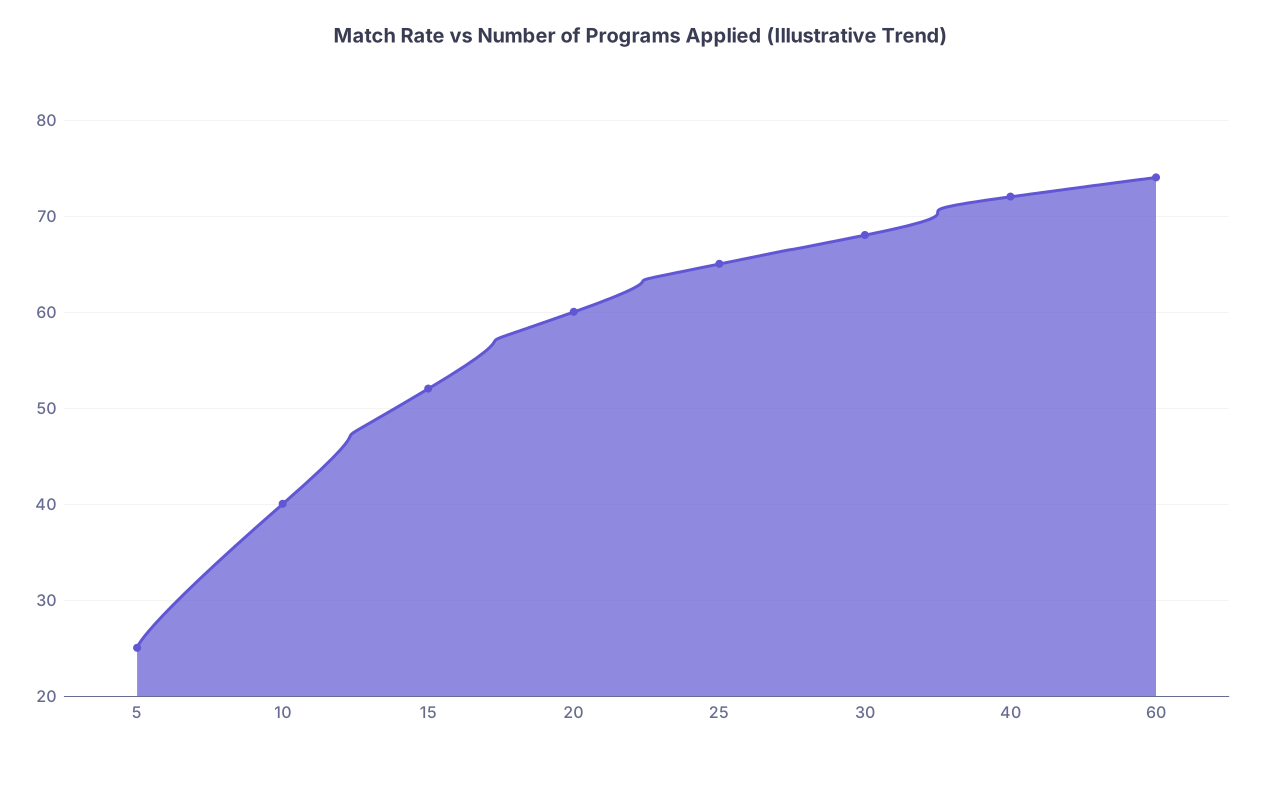
Step 4: How Many Programs to Apply to as a Caribbean IMG
For Caribbean IMGs, the question of how many programs to apply to is central. The answer varies based on competitiveness, budget, and pathway.
A General Range for Caribbean IMGs
For the core residency (e.g., Pediatrics or Internal Medicine):
- Competitive IMG:
- ~35–50 programs (balanced across reach, target, safety)
- On-Target IMG:
- ~60–80 programs
- At-Risk IMG:
- ~80–120 programs (heavier on IMG-friendly and safety programs)
For combined medical genetics residencies:
- These programs are few in number, so your ceiling is naturally low.
- Realistic range:
- Competitive IMG: 10–15 combined programs (if your profile supports it)
- On-Target IMG: 5–10 programs
- At-Risk IMG: 0–5, only if you have a compelling genetics story; otherwise focus on core first
Overall, many Caribbean IMGs applying in Pediatrics or Internal Medicine (with future genetics plans) end up applying to around:
- 60–100 total programs across their primary specialty.
- Plus 5–15 combined genetics programs if feasible and financially manageable.
Budget and Diminishing Returns
ERAS costs escalate as you cross certain thresholds (e.g., after 30, 40, 60 programs). More is not always better. Beyond a certain point, you’re paying for applications to programs that:
- Rarely, if ever, interview IMGs
- Don’t sponsor your visa type
- Are extremely saturated with US MD applicants
Your program selection strategy should aim for efficiency:
- Prioritize programs where you:
- Meet or exceed published score cutoffs
- Align with their typical resident profile
- Have some geographic or institutional tie (clinical rotation, research, alumni)
If your SGU residency match (or similar Caribbean school outcomes) data show strong match rates in specific regions or systems, lean into those patterns.

Step 5: Evidence-Based Program Research: Turning Data into a Strategy
Beyond counting programs, the key is which programs make your list. This step will separate a random application scatter from a targeted program selection strategy.
Data Sources You Should Use
FREIDA (AMA Residency & Fellowship Database)
- Check:
- Number of positions
- Type of program (university vs community)
- Past or current IMGs (sometimes listed)
- Visa information
- Check:
Program Websites
- Look for:
- Resident roster (do they have DOs, IMGs, Caribbean grads?)
- Faculty profiles—any geneticists, genomics or rare disease specialists?
- Curriculum: Is there structured exposure to genetics?
- Statements about diversity and international graduates.
- Look for:
NRMP and Specialty Match Data
- For medical genetics residency and fellowships, examine:
- Number of positions vs applicants
- Percentage IMGs (both US-IMG and non-US-IMG)
- Use this to understand where IMGs tend to succeed.
- For medical genetics residency and fellowships, examine:
Caribbean School Match Lists
- For SGU residency match and other Caribbean schools:
- Identify which hospitals repeatedly appear in IM, Peds, and combined genetics.
- This indicates established pipelines and familiarity with Caribbean graduates.
- For SGU residency match and other Caribbean schools:
Networking and Mentorship
- Seek out:
- Alumni from your school in genetics, pediatrics, or internal medicine.
- Faculty mentors with genetics connections.
- Ask targeted questions:
- “Which programs have historically interviewed or matched Caribbean IMGs?”
- “Which genetics departments are open to non-traditional paths?”
- Seek out:
Creating a Scoring System
To make your program selection more objective, consider assigning a simple score (e.g., 1–5) to each program based on:
- IMG-friendliness (evidence of IMGs in current residents)
- Score competitiveness fit (are you near/above their typical range?)
- Genetics exposure (presence of a genetics division, clinic, or fellowship)
- Visa policy
- Geographic preference (family ties, cost of living, location where you’d be willing to live long-term)
You can then rank programs and ensure your application stack has:
- Some high-score, high-ambition programs
- Many mid-score, realistic targets
- Enough lower-score but open and IMG-friendly safety options
Step 6: Aligning Your Profile with Medical Genetics
Even if you start with a core residency, you’ll eventually need to be a strong candidate for a genetics match (fellowship or combined). Your program selection and application materials should already signal this.
Building a Genetics-Focused Application Narrative
In your personal statement, CV, and interviews:
- Emphasize:
- Interest in inherited diseases, rare syndromes, or genomics
- Experiences working with families over time, explaining complex conditions
- Any exposure to bioinformatics, genomics courses, or research
- Highlight:
- Specific cases that sparked your interest, such as:
- A NICU baby with dysmorphic features
- A patient with a suspected metabolic disorder
- A family with hereditary cancer syndromes
- Specific cases that sparked your interest, such as:
Selecting Rotations and Experiences
If you still have time before applying:
- Choose electives in:
- Pediatric subspecialties (neurology, cardiology, heme-onc)
- Genetics clinics (even if virtual or observerships)
- Metabolic or rare disease clinics
- Participate in:
- Case reports on unusual phenotypes or genetic disorders
- Quality improvement projects that involve genetic testing workflows
When you choose residency programs, prioritize those with:
- In-house genetics services or affiliated genetics fellowships
- Faculty engaged in:
- Genomics research
- Newborn screening programs
- Precision medicine initiatives
This ensures that even if you match in core IM or Peds, you’ll be in an environment that supports a future medical genetics residency or fellowship.
Step 7: Special Considerations for Caribbean IMGs
As a Caribbean IMG, you’re operating with unique constraints and advantages that should shape your program selection strategy.
Leverage Caribbean School Strengths
- Schools like SGU, AUC, and Ross have:
- Large alumni networks in US residency programs.
- Advising offices with historic match data broken down by specialty and location.
- Use that data:
- If your school’s SGU residency match lists show repeated placements at Hospital X in Pediatrics, that’s a sign:
- They understand Caribbean training
- They may be more open to your application
- If your school’s SGU residency match lists show repeated placements at Hospital X in Pediatrics, that’s a sign:
- Ask:
- “Which programs have historically taken our graduates, especially those interested in genetics?”
Be Strategic About Time and Attempts
- Avoid multiple unmatched cycles by:
- Applying sufficiently broadly the first time.
- Being realistic about program tiers.
- If you have a weak year (limited interviews), next cycle’s strategy should:
- Re-focus on IMG-friendly programs
- Maybe shift to a preliminary or transitional year if necessary
- Solidify your profile with US clinical work and research in genetics-related areas
Be Transparent but Strategic About Caribbean Background
- Do not attempt to hide your Caribbean background; instead:
- Present it as a story of resilience, adaptability, and exposure to diverse pathology.
- Emphasize how your training prepared you for a career in medical genetics, which often involves working with rare and diverse disorders.
Frequently Asked Questions (FAQ)
1. As a Caribbean IMG, should I apply directly to medical genetics residency or focus on a core specialty first?
Most Caribbean IMGs should prioritize a core specialty first (usually Pediatrics or Internal Medicine) at an IMG-friendly program that has strong genetics exposure, then aim for a genetics fellowship later. Direct entry into combined genetics residencies is possible, especially if you are a competitive applicant with strong scores, US clinical experience, and some genetics involvement. However, because there are few combined positions and many are highly academic, this route is more selective.
A blended approach—applying to a reasonable number of combined programs along with a broad list of core residencies—is often the most balanced program selection strategy.
2. How many combined medical genetics programs should I apply to?
For most Caribbean IMGs:
- Competitive profile: 10–15 combined programs
- On-target profile: 5–10 programs
- At-risk profile: 0–5 programs, only if there’s a compelling genetics background
These numbers assume you are also applying broadly to a core specialty. Because the genetics match at the residency level is small, over-investing in combined programs while neglecting core residencies can be risky.
3. What makes a residency program “genetics-friendly” if it’s not a formal genetics residency?
Characteristics of a genetics-friendly core residency program:
- Presence of:
- In-house geneticists or a genetics department
- Genetics clinics (pediatric or adult)
- Affiliated medical genetics fellowship
- Evidence of:
- Residents presenting cases with genetic diagnoses at conferences
- Participation in newborn screening programs, precision medicine initiatives, or rare disease clinics
- Willingness to:
- Support electives in genetics
- Mentor residents in genetics-related research and case reports
When evaluating how to choose residency programs, prioritize those with these features if your long-term goal is medical genetics.
4. If my scores are below average, is medical genetics still realistic for me as a Caribbean IMG?
Yes, but likely via a stepwise approach:
- Focus on matching into a solid, IMG-friendly core residency (Pediatrics or Internal Medicine) using a broad, well-balanced program list.
- During residency, build:
- A strong clinical reputation
- Genetics-related experiences (electives, clinics, research, case reports)
- Mentorship with geneticists
- Apply to medical genetics fellowship with a robust track record, not just test scores.
Lower scores mean you must be more strategic and persistent, but they do not automatically close the door to a future genetics career. Many geneticists enter the field after demonstrating excellence and commitment during their core residency, even if their initial exam scores weren’t stellar.
A thoughtful, data-driven program selection strategy can convert the inherent challenges of being a Caribbean IMG into a manageable pathway toward a medical genetics residency or fellowship. By clarifying your pathway, objectively assessing your profile, building rational program tiers, applying to an appropriate number of programs, and consistently aligning your experiences with genetics, you significantly increase your chances of ultimately securing a genetics match that fits your long-term career goals.