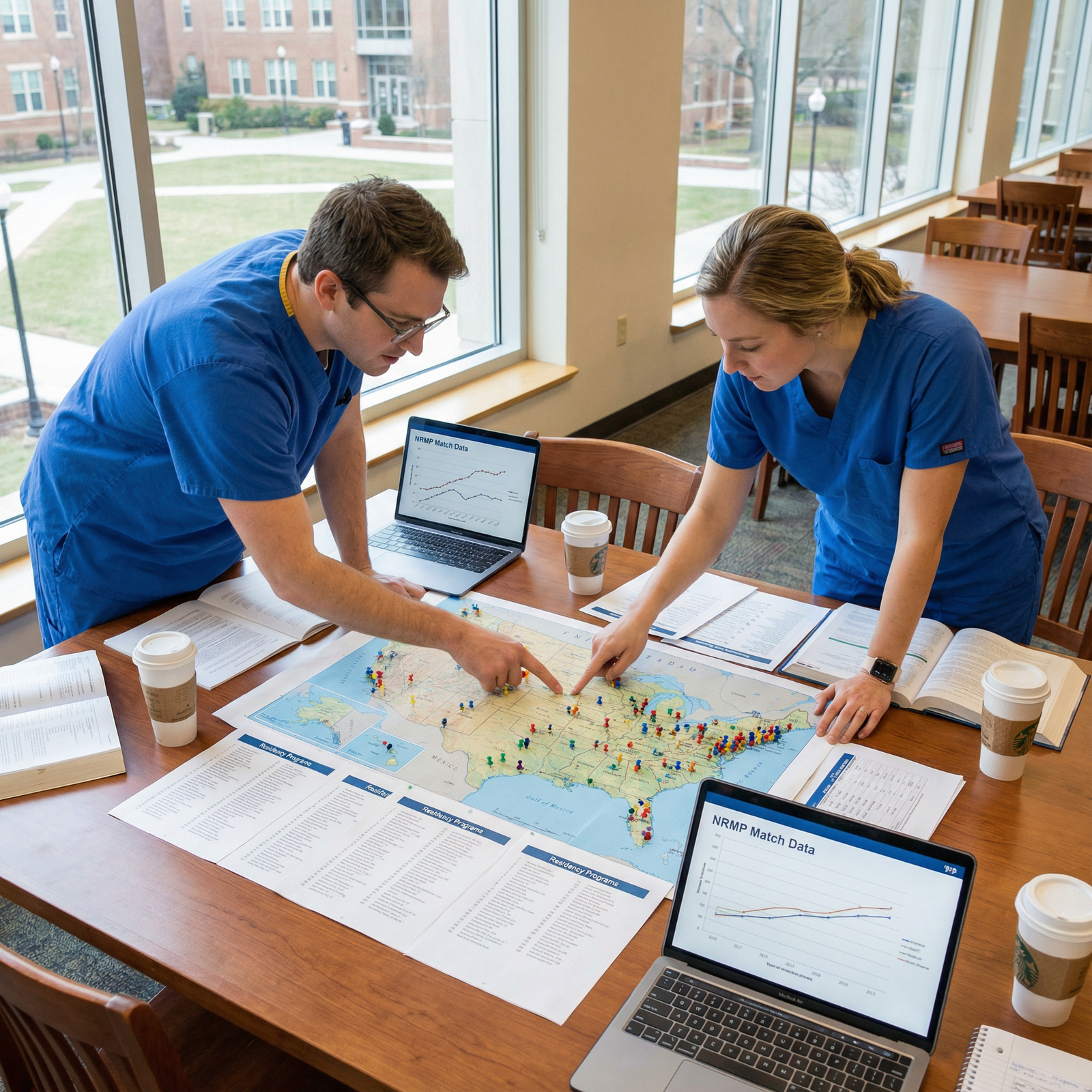
Understanding the Orthopedic Surgery Landscape as a DO Graduate
The orthopedic surgery residency match is one of the most competitive pathways in medicine. For a DO graduate, the stakes can feel even higher. You’re not only competing in a historically sought-after specialty, but also navigating lingering biases and structural challenges in the post–single accreditation era.
A thoughtful, data-informed program selection strategy is therefore essential. It affects:
- Your likelihood of matching at all
- Your chances of matching into a program where you will thrive
- How much time and money you spend on applications and interviews
This article breaks down how to build a smart, individualized list of orthopedic programs as a DO graduate—how to choose residency programs, how many programs to apply to, and how to weigh your unique strengths and limitations.
We’ll focus on the allopathic (ACGME) orthopedic surgery residency match and what it means for a DO graduate residency applicant.
Step 1: Know Where DO Applicants Succeed in Orthopedic Surgery
Before you decide how many programs to apply to or which ones to target, you need to understand the context of the osteopathic residency match in orthopedic surgery.
A. Competitiveness & Baseline Expectations
Orthopedic surgery residency is consistently among the most competitive specialties. Programs tend to prioritize:
- Strong board scores (COMLEX and/or USMLE)
- High class rank and a solid transcript
- Orthopedic research (ideally with publications or presentations)
- Strong letters of recommendation from orthopedic surgeons
- Demonstrated interest and performance on orthopedic rotations
As a DO applicant, you should assume:
- You’ll be compared directly against MD and DO applicants.
- Some programs remain more MD-leaning, while others are very DO-friendly.
- You may need to apply more broadly and strategically than your MD peers with similar metrics.
B. DO-Friendly vs. DO-Neutral vs. DO-Averse Programs
In the current environment, programs tend to fall into three informal categories:
DO-Friendly Programs
- Have current DO residents or faculty
- List COMLEX explicitly as accepted
- Historically interview and rank DOs regularly
DO-Neutral Programs
- Accept DOs but have limited experience with them
- Accept COMLEX but often prefer or “strongly recommend” USMLE
- May match DOs occasionally but not consistently
DO-Averse Programs
- Rarely or never interview DOs despite DO applications
- Historically have zero or negligible DO representation
- May not list COMLEX acceptance clearly, or effectively screen based on USMLE-only criteria
A core part of your program selection strategy is identifying programs in each of these buckets and weighting your list accordingly.
C. Using Data to Understand DO Match Outcomes
Sources to guide your orthopedic program selection strategy:
- NRMP Program Director Survey & Charting Outcomes
- Provides average board scores and research metrics for matched applicants.
- Program websites & resident rosters
- Look at current residents: How many are DOs? From which schools?
- FREIDA and residency explorer tools
- Check if programs accept DOs and COMLEX, and how many DOs they have taken historically.
- Mentors and recent graduates from your DO school
- Ask where DO graduates have matched in orthopedic surgery and what the programs were like.
This background will shape your assumptions about where you’re competitive and how broad your application spread needs to be.

Step 2: Assess Your Competitiveness Honestly
An effective program selection strategy starts with a clear, honest self-assessment. Your ortho match odds depend heavily on objective metrics and contextual strengths.
A. Key Metrics to Evaluate
Board Exams
- USMLE Step 2 CK (especially now that Step 1 is pass/fail)
- COMLEX Level 2-CE
- Programs vary in whether they:
- Accept COMLEX-only
- Require or prefer USMLE
- If you didn’t take USMLE, you’ll need to focus more heavily on DO-friendly programs, especially those explicitly stating COMLEX-only is acceptable.
Class Rank & Honors
- AOA (if applicable), Sigma Sigma Phi, or school-specific honors
- High clinical evaluations, especially in surgery and orthopedics
- Honors in core clerkships and sub-internships
Research & Academic Output
- Orthopedic-focused projects: publications, posters, presentations
- Number of projects and your role (first-author vs. co-author)
- Involvement in quality improvement, chart reviews, clinical trials, or basic science
Clinical Experience in Orthopedics
- Number of orthopedic rotations, including:
- Home ortho rotation
- Away rotations (audition rotations or VSLO/VSAS)
- Strength and specificity of your ortho exposure (trauma, sports, joints, spine, etc.)
- Number of orthopedic rotations, including:
Letters of Recommendation
- At least 2–3 strong letters from orthopedic surgeons, ideally:
- One from your home institution (if available)
- One from an away rotation where you were highly visible and performed well
- Letters that clearly state you are comparable to or better than prior strong orthopedic residents weigh heavily.
- At least 2–3 strong letters from orthopedic surgeons, ideally:
Additional Factors
- Leadership roles (e.g., orthopedic interest group, student government)
- Volunteer work and community engagement
- Unique experiences (military service, high-level athletics, engineering background, etc.)
B. Rough Competitiveness Tiers for Orthopedic Surgery (DO Perspective)
These are generalized, not guarantees, but they help guide how many programs to apply to and which.
“Highly Competitive” DO Ortho Applicant
- Strong USMLE Step 2 CK (e.g., ≥250) and/or high COMLEX Level 2
- Substantial ortho research with at least one publication or multiple presentations
- Stellar letters from recognized orthopedic surgeons
- Honors in key rotations and strong clinical performance
- Multiple away rotations with standout evaluations
“Solid/Typical” Competitive DO Ortho Applicant
- Above-average Step 2 CK and/or COMLEX (around or slightly above historical medians)
- Some ortho-related research or at least research experience
- Good letters, maybe not from “big names” but strongly supportive
- Good clinical performance, consistent evaluations
- At least one away rotation
“Borderline/At-Risk” DO Ortho Applicant
- Below-average or inconsistent board scores
- Limited or no ortho-specific research
- Mixed clinical evaluations or weaker letters
- Late decision to pursue ortho, fewer rotations in the field
Being realistic about which category you fit into will help you design a safer, more targeted list and avoid over-relying on “reach” programs.
Step 3: Determine How Many Programs to Apply To (DO-Ortho Specific)
One of the most common questions is: how many programs to apply to for orthopedic surgery as a DO graduate.
While exact numbers depend on your competitiveness and financial constraints, some broad guidelines are helpful.
A. General Ranges for DO Orthopedic Applicants
These approximate ranges can be adapted based on your profile:
Highly Competitive DO Applicant
- Typical range: 40–60 programs
- May lean towards more selective and academic programs, with some community DO-friendly programs as a safety net.
Solid/Typical Competitive DO Applicant
- Typical range: 60–80 programs
- Mix of DO-friendly academic and community programs, plus a few reaches.
Borderline/At-Risk DO Applicant
- Typical range: 80–100+ programs
- Heavily weighted toward DO-friendly and community programs with a documented history of accepting DOs.
These numbers are intentionally higher than many MD counterparts because the osteopathic residency match in ortho involves additional barriers. A broad application list is often a rational investment for DOs aiming for such a competitive specialty.
B. Factors That Might Push You Toward the Higher End
You should consider applying to the higher end (or even beyond) if:
- You did not take USMLE and have COMLEX-only scores
- Your scores are below the average for matched ortho applicants
- You have limited ortho research
- Your home institution does not have an orthopedic residency
- You are location-flexible and primarily focused on matching in ortho at all (not on specific cities or prestige)
Conversely, if you are an exceptionally strong DO applicant with USMLE, robust research, and glowing letters, you may not need to apply at the very upper range—but most still benefit from a relatively broad list.
C. Balancing Cost, Time, and Benefit
Every additional program costs:
- Extra ERAS fees
- Time to research and tailor materials
- Possible interview schedule congestion later
But in a field like ortho, the incremental cost of adding more programs often remains modest relative to the benefit of increasing your ortho match odds, especially early in your career.
When in doubt, DO applicants leaning into competitive fields usually err on the side of a somewhat larger list, then later refine interview attendance decisions.

Step 4: Build a Smart Program List: Strategy Over Randomness
Once you have a sense of your competitiveness and a target number of applications, the next step is how to choose residency programs intelligently.
A. Categorize Programs: Reach, Target, and Safety
A structured program selection strategy divides programs into three tiers:
Reach Programs
- Highly academic, research-heavy, often large university centers
- Historically low DO representation
- Extremely competitive applicant pools
Target Programs
- Reasonable alignment with your metrics and experiences
- Some track record of matching DOs
- Good but not extreme research expectations
Safety Programs (for Ortho, “Relative” Safety)
- Community or hybrid community-academic programs
- Clear DO-friendly orientation (multiple DOs in the program)
- History of interviewing and matching DOs with similar metrics to yours
A healthy distribution for a solid DO ortho applicant might look like:
- ~20–25% Reach
- ~40–50% Target
- ~30–35% Safety/DO-friendly
For a borderline DO applicant, lean even more heavily on DO-friendly and “safer” programs.
B. Objective Criteria for Screening Programs
When you evaluate whether a program belongs on your list, consider:
DO-Friendliness
- Current or recent DO residents
- DO faculty on staff
- Explicit mention of accepting COMLEX, ideally without a USMLE requirement
Geographic Realities
- Programs close to your medical school or home region may know your institution better.
- If you have strong ties to a location (family, spouse job, etc.), highlight that in your application.
Program Type & Training Environment
- Academic/university vs. community vs. hybrid
- Case volume, trauma level (Level I vs. II vs. III), subspecialty exposure
- Resident autonomy and culture
Research Environment
- If you’re research-strong, you can leverage that for academic programs.
- If you lack research, focus on programs emphasizing clinical training and case volume more heavily.
Program Size and Structure
- Larger programs (e.g., 5+ residents per year) may afford more diverse exposure but also more competition internally.
- Smaller programs may offer closer mentorship but fewer research resources.
USMLE/COMLEX Policies
- Programs that explicitly require USMLE may not be worth applying to if you didn’t take it.
- If you have both USMLE and COMLEX, you’re more flexible.
C. Using Away Rotations Strategically
For ortho, away rotations (audition rotations) are often the single most powerful factor under your control:
- They allow you to show your work ethic, team fit, and skills in real time.
- Many ortho programs fill a substantial portion of their class with students who rotated there.
Strategy for DO applicants:
- Prioritize away rotations at DO-friendly or DO-curious programs where your performance can make a difference.
- Try to schedule 2–3 ortho away rotations, if feasible.
- Once you’ve rotated at a program and done well, that program should generally be upgraded in your rank of “target” or even “high-priority target.”
Additionally, use information from away rotations to refine your list:
- You may discover programs whose culture doesn’t fit you.
- You may identify places where faculty proactively advocate for DO students.
Step 5: Tailor Your Application & Communication to Programs
A carefully chosen list is only effective if your application materials convey why you fit well with those programs.
A. Customizing Personal Statements and Program-Specific Messaging
While you’ll likely use a core personal statement, you can adapt:
- A short paragraph referencing:
- Why you’re drawn to a specific region
- Research or clinical themes aligned with that program
- Connections (previous rotations, mentors, or institutional collaborators)
For programs that are particularly DO-friendly or high on your list, consider:
- Sending a well-timed, professional interest email later in the cycle (or after interviews) to express genuine enthusiasm, especially if you rotated there or have ties.
B. Highlighting DO Strengths
As a DO graduate, you may bring distinctive advantages:
- Strong musculoskeletal medicine foundation and hands-on skills
- Training in holistic, patient-centered care
- Flexibility and resilience built from navigating a competitive match with structural challenges
Make sure your experiences, leadership roles, and letters showcase not only your orthopedic drive but also the strengths of your osteopathic training.
C. Manage Interview Season Strategically
If your application strategy works well, you might receive more interview invitations than you can reasonably attend.
For a DO applicant in orthopedic surgery:
- Goal #1: Secure enough interviews to make matching statistically likely (often cited ballpark: ≥10–12 ortho interviews, though more is always better).
- Once you’ve reached a comfortable threshold, you can:
- Prioritize programs aligning best with your training goals and geographic preferences.
- Thoughtfully cancel lower-priority interviews early enough for others to benefit.
Your initial choice of how many programs to apply to sets the stage—but your mid-season decision-making about which interviews to accept or decline refines your final outcome.
Step 6: Example Scenarios for DO Ortho Applicants
To bring this all together, here are three brief example profiles and how their program selection strategy might differ.
Example 1: Strong DO Applicant with USMLE and Research
- Step 2 CK: 255, COMLEX 2: 650+
- Multiple ortho publications and national poster presentations
- Strong letters from a university ortho department and a high-volume community program
- Completed 3 away rotations, with excellent feedback
Strategy:
- Apply to 50–60 programs
- Mix: ~30% reach (highly academic, some with limited DO representation), ~40–50% target, ~20–30% DO-friendly/safety
- Emphasize research and academic interest in personal statement
- Target at least one away rotation site and one research-heavy program as top choices
Example 2: Solid DO Applicant with COMLEX-Only
- COMLEX 2: 580
- One small ortho research project (poster at a regional meeting)
- Good letters, including one from an away rotation
- No USMLE
Strategy:
- Apply to 70–85 programs
- Heavy emphasis on DO-friendly programs and programs explicitly accepting COMLEX-only
- 10–15 reach programs that are COMLEX-accepting but not known to be anti-DO
- 30–40 target programs with a history of matching DOs
- Remaining as safety/DO-friendly community or hybrid programs
- Use away rotations to strengthen relationships and create advocates
Example 3: Borderline DO Applicant, Late Switch to Ortho
- COMLEX 2: 540
- Minimal ortho-specific research, some general surgery exposure
- Average clinical evaluations, but strong work ethic and strong non-ortho letters
- One last-minute ortho away rotation
Strategy:
- Apply to 90–110 programs
- Extremely heavy focus on DO-friendly and community programs
- Consider dual-application strategy (e.g., also applying in a backup specialty) if advisers strongly recommend it
- Leverage your away rotation and non-ortho mentors to craft powerful, narrative letters focusing on work ethic, coachability, and team skills
- Be realistic: the goal is to maximize exposure to programs open to DOs with mid-range scores and strong clinical growth potential.
Frequently Asked Questions (FAQ)
1. As a DO graduate, do I need to take USMLE for orthopedic surgery?
Not always—but it can help significantly.
- Many ortho programs will accept COMLEX-only, particularly those that are DO-friendly.
- Some programs, especially highly academic ones, require USMLE or strongly prefer it.
- If you’re early in your training and committed to ortho, taking USMLE Step 2 CK can broaden the number of programs where you’re fully competitive.
- If you’re further along and can’t take USMLE, focus on programs that clearly accept COMLEX and have a track record of matching DOs.
2. How many orthopedic surgery programs should I apply to as a DO if I’m average on metrics?
For a “solid” DO applicant—mid-range scores, some research, good letters, and at least one away rotation—a common range is 60–80 programs.
This range balances cost with the competitiveness of ortho and the realities of the osteopathic residency match. Within that range, emphasize programs with demonstrated DO-friendliness and a mix of academic and community training environments.
3. How should I weigh prestige versus DO-friendliness in choosing programs?
For DO applicants, DO-friendliness usually matters more than prestige when the primary goal is simply to match into ortho:
- A prestigious program that rarely interviews DOs may be a “lottery ticket” rather than a realistic target.
- A slightly less prestigious program with a strong training environment and multiple DO residents likely offers a better chance of matching and thriving.
That said, including a modest number of “reach” academic programs is reasonable—just don’t let them dominate your list.
4. If I don’t match orthopedic surgery, does my program selection strategy matter for reapplication?
Yes. Even if you don’t match on the first try, a thoughtful program list:
- Shows you understand your positioning and the market
- Helps you gather feedback (from interviewers or mentors) about where you fell short
- May create relationships with programs that will consider you strongly when you reapply (especially if you complete a preliminary surgery year or a research fellowship in ortho)
For a re-applicant, program selection becomes even more critical. You’ll typically need to further emphasize DO-friendly programs, highlight growth (improved scores, new research, stronger letters), and potentially consider a slightly larger or more targeted list.
A well-crafted program selection strategy for a DO graduate targeting orthopedic surgery residency is not about applying everywhere; it’s about applying wisely. By honestly assessing your competitiveness, understanding DO-friendly landscapes, deciding how many programs to apply to based on your profile, and strategically balancing reach, target, and safety programs, you maximize your chances not just of matching—but of landing in a residency where you can become the best orthopedic surgeon you’re capable of being.