Understanding the Landscape: DO Graduates and Addiction Medicine Pathways
Addiction medicine is rapidly evolving, and as a DO graduate you are uniquely positioned to address substance use disorders with a whole-person, biopsychosocial lens. Before you can craft a smart program selection strategy, you need to understand the training pathways and what “residency” versus “fellowship” means in this space.
Residency vs. Fellowship in Addiction Medicine
Currently, addiction medicine is primarily a subspecialty pursued after completing a primary residency. The typical route is:
Complete an ACGME-accredited residency in:
- Internal Medicine
- Family Medicine
- Psychiatry
- Emergency Medicine
- Pediatrics (less common, but possible in certain tracks)
- Or other eligible core specialties depending on evolving board criteria
Pursue an Addiction Medicine Fellowship (ACGME-accredited)
- Usually 1 year
- Prepares you for subspecialty board certification in Addiction Medicine
- Focused on substance abuse training, including pharmacotherapy (e.g., buprenorphine, methadone), psychosocial treatments, systems-based practice, and public health aspects
For DOs, that often means your immediate question is:
How do I choose a core residency that will set me up well for an addiction medicine fellowship and career?
In parallel, there are osteopathic-friendly core residencies and increasingly DO-friendly addiction medicine fellowships, especially as ACGME single accreditation has brought most previously osteopathic programs under a unified system.
When people talk about “osteopathic residency match” or “DO graduate residency” in this context, they’re usually referring to:
- Your initial core residency match (e.g., Family Medicine or Psychiatry)
- Your subsequent addiction medicine fellowship match
This article will focus mainly on your program selection strategy for core residency, with a strong eye toward your long-term plan for an addiction medicine fellowship.
Step 1: Clarify Your Career Vision in Addiction Medicine
You cannot build a smart program selection strategy without a clear picture of your career endpoint. Addiction medicine is not monolithic. You should narrow your vision along several dimensions.
Clinical Scope: Where Do You Want to Practice?
Common practice settings include:
Hospital-based consult services
- E.g., you’re called to evaluate inpatients with alcohol withdrawal, opioid use disorder, perioperative pain in patients on MAT (medication-assisted treatment)
- Best supported by backgrounds in Internal Medicine, Family Medicine, or Psychiatry
Outpatient addiction clinics
- Methadone clinics, office-based buprenorphine practices, dual-diagnosis centers
- Family Medicine and Psychiatry are especially strong springboards
- Internal Medicine can be equally powerful, especially in complex medical comorbidity settings
Emergency department and crisis settings
- ED-initiated buprenorphine, overdose interventions, brief interventions
- Emergency Medicine plus addiction medicine fellowship is a growing pathway
Public health and systems-level work
- Policy work, population health initiatives, statewide MAT programs
- Any core specialty can work, but programs strong in research and community engagement are ideal
Academic medicine and teaching
- Involves research, curriculum development, and mentorship
- Look for residencies with strong scholarly infrastructure and existing addiction faculty
Patient Population and Special Interests
Reflect on what kind of substance abuse training and patient populations appeal to you:
- Adults vs. adolescents/young adults
- Co-occurring serious mental illness (e.g., schizophrenia, bipolar disorder)
- High medical complexity (e.g., cirrhosis, HIV, HCV, chronic pain)
- Special populations (pregnant patients, justice-involved populations, veterans, rural communities)
Your preferences will influence both your choice of core specialty and specific residency programs.
DO Identity and Osteopathic Approach
As a DO graduate:
- You bring a philosophy emphasizing whole-person care and the integration of mind, body, and spirit.
- Many addiction medicine leaders value DO training because substance use disorders intersect with chronic pain, mental health, social determinants, and functional status.
Your program selection strategy should therefore consider:
- How open is the program to DO graduates?
- Are there DO faculty or fellows in addiction medicine or related fields?
- Does the culture respect osteopathic perspectives, even if OMT is less central in addiction care?
Step 2: Choose the Right Core Specialty for Your Addiction Medicine Goals
One of the most critical strategic decisions is choosing the specialty that will be your home base before pursuing addiction medicine fellowship. While no single path is “best,” there are advantages to each.
Psychiatry as a Pathway
Pros:
- Direct alignment with co-occurring mental health and substance use issues
- Strong training in psychotherapy, motivational interviewing, and psychopharmacology
- Many addiction medicine attendings come from psychiatry; some fellowships are more psychiatry-centric
Consider if:
- You’re drawn to severe mental illness, personality disorders, trauma, and complex psychosocial dynamics
- You want to integrate psychotherapy heavily into your addiction practice
- You see yourself treating both SUDs and non-SUD psychiatric conditions
Family Medicine as a Pathway
Pros:
- Ideal for longitudinal care in primary care settings where SUDs are common but under-treated
- Broad exposure to public health, preventive medicine, and community-based care
- Good springboard for rural or underserved addiction work
Consider if:
- You enjoy cradle-to-grave care and behavioral health integration
- You want to lead primary care–based MAT programs
- You envision a mixed practice of primary care + addiction medicine
Internal Medicine as a Pathway
Pros:
- Strong foundation in managing complex medical comorbidities of SUD (e.g., liver disease, HIV, endocarditis, COPD)
- Well-aligned with inpatient consult models and hospital-based addiction services
Consider if:
- You like hospital medicine or academic internal medicine
- You want to handle high medically complex SUD populations
- You envision collaboration with cardiology, ID, hepatology, or critical care services
Emergency Medicine as a Pathway
Pros:
- Frontline exposure to overdose, withdrawal, intoxication, and crisis
- Growing movement toward ED-initiated buprenorphine and harm reduction
- Unique vantage point for public health and systems change
Consider if:
- You thrive in fast-paced environments with acute decision-making
- You want to champion ED-based substance abuse training and initiatives
- You see yourself as a bridge between acute care and longitudinal addiction treatment
How to Choose Residency Programs Once You’ve Picked a Specialty
Once you decide your core specialty, your program selection strategy should prioritize:
- Programs with existing addiction medicine or addiction psychiatry faculty
- Institutions that host an addiction medicine fellowship (even if you won’t necessarily train there later)
- Strong behavioral health integration and SUD curricula in the residency
- Evidence of DO-friendly culture (current residents, leadership, or alumni who are DOs)
This decision should precede the finer-grain question of how many programs to apply to and which ones belong on your list.
Step 3: Core Criteria for Evaluating Programs as a DO Interested in Addiction Medicine
Now that you understand your pathway and specialty, you need to systematically evaluate programs. Think in terms of four core buckets: training content, structural factors, DO-friendliness, and outcomes.
1. Training Content: Addiction-Relevant Exposure
Look for clear, concrete evidence that residents are meaningfully exposed to substance use disorder care:
Dedicated SUD or addiction medicine rotations
- Inpatient addiction consult services
- Outpatient MAT clinics
- Detox units, residential programs, or dual-diagnosis units
Formal substance abuse training curriculum
- Didactics on opioid use disorder, alcohol use disorder, harm reduction, pain management, co-occurring disorders
- Training in buprenorphine waiver / X-waiver concepts (even though formal waivers have evolved, programs that once prioritized this usually still take SUD education seriously)
- Structured teaching in motivational interviewing and brief interventions
Interdisciplinary collaboration
- Joint rounds with social work, psychology, peer recovery specialists, and case management
- Exposure to community agencies, shelters, syringe services programs, and public health departments
If a program’s website barely mentions addiction, it isn’t automatically a poor choice, but it may not be optimal for someone targeting an addiction medicine fellowship.
2. Structural Factors: Environment and Support
Consider:
Size and type of program
- Larger academic centers often have more dedicated addiction faculty and research
- Community programs may offer more hands-on responsibility and real-world SUD exposure, especially in underserved areas
Location and patient population
- Urban vs. rural vs. suburban
- Regions with high rates of opioid or stimulant use may offer higher case volumes and more varied SUD pathologies
Call and workload
- Ensure the clinical burden leaves room for scholarly and elective experiences in addiction medicine
- Robust but humane schedules preserve your capacity to pursue an addiction medicine fellowship later
Electives and flexibility
- Ability to design addiction-focused electives
- Opportunities to rotate in methadone clinics, correctional health, HIV clinics, or pain management programs
3. DO-Friendliness and Culture
From a DO graduate residency perspective, this is critical:
Proportion of DO residents
- Are DOs represented across classes, or is there a token DO every few years?
- DO presence signals that program leadership understands the osteopathic pathway and osteopathic residency match background
PD and faculty attitudes
- Look at social media, resident blogs, and online reviews
- During interviews, note whether they ask about your DO background respectfully and with interest rather than skepticism
Integration of osteopathic principles
- Even if OMT isn’t routinely used, programs that value holistic care and mind-body integration may be better aligned philosophically with addiction medicine
4. Outcomes and Fellowship Trajectories
Investigate:
Fellowship placement history
- Have graduates matched into addiction medicine fellowship programs?
- If not addiction, where do graduates typically go (cards, ID, psych subspecialties, hospital medicine, etc.)?
Presence of an in-house addiction medicine fellowship
- Not mandatory, but a strong plus
- You’ll be more visible to fellowship faculty; you can build longitudinal mentorship relationships
Research and scholarly opportunities
- Availability of SUD-related QI projects, clinical research, or community initiatives
- Mentors with active grants or publications in substance use disorders
Step 4: How Many Programs to Apply To—and How to Build Your List
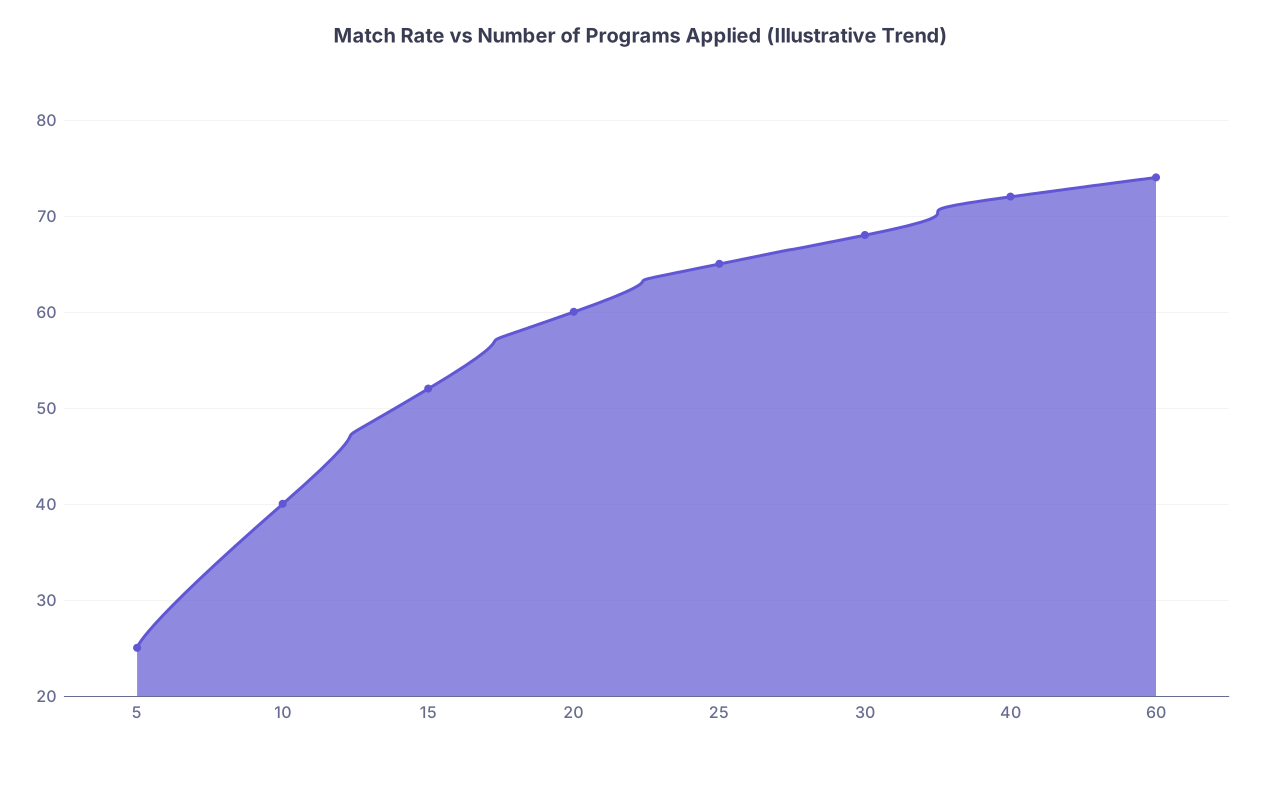
The phrase “how many programs to apply to” doesn’t have a single formula, but you can make an informed decision based on competitiveness, specialty, and your profile as a DO graduate.
General Ranges by Specialty (for DO Applicants)
These are rough, evolving ranges and should be adapted to your individual situation and the most current NRMP data:
Psychiatry (DO graduate)
- Many DOs match successfully, but popularity has increased
- Typical application range: 25–40 programs
Family Medicine (DO graduate)
- Generally DO-friendly and less competitive overall
- Typical application range: 20–35 programs
Internal Medicine (categorical, DO graduate)
- Highly variable depending on aiming for community vs. university programs
- Typical application range: 25–45 programs
Emergency Medicine (DO graduate)
- Competitiveness has fluctuated; DOs can do very well
- Typical application range: 25–40 programs
Your personal number should factor in:
- Board scores (COMLEX and/or USMLE)
- Location restrictions or family needs
- Red flags (e.g., course failures, leave of absence, late specialty switch)
- Strength of clinical performance and letters
Risk-Stratified Program Selection Strategy
Use a “portfolio” approach:
Reach Programs (20–30%)
- Highly academic, well-known addiction medicine resources
- Possibly less DO-heavy but still open to osteopathic graduates
- Aim high while understanding these are not guaranteed
Target Programs (50–60%)
- Historically DO-friendly, mid-tier academic or strong community-based programs
- Addiction-related resources exist but may be somewhat limited or developing
Safety Programs (15–25%)
- Strong history of accepting DOs, solid clinical training, may be community-focused
- Important backup options where you would still be happy and can carve out your own addiction niche
This balanced approach helps you protect against an unsuccessful match while still pursuing ambitious options aligned with your addiction medicine goals.

Step 5: Practical Tactics for Researching and Prioritizing Programs
A good program selection strategy is structured, not random. Use a stepwise approach to investigate and prioritize options.
Step 5A: Build a Long List
Start broad:
- Use FREIDA, program websites, and specialty organizations (APA, AAFP, ACP, ACEP)
- Filter by:
- Geographic preferences
- Program size
- Presence of addiction medicine or addiction psychiatry faculty
- DO representation
- Existing addiction medicine fellowship in the same institution or region
Create a spreadsheet listing:
- Program name, city, and type (academic/community)
- Number of residents per year
- Known addiction-focused rotations or fellowships
- Evidence of DO acceptance
- Contact information and notes
Step 5B: Shortlist Using Addiction-Relevant Criteria
Narrow based on:
- Addiction-specific features
- SUD clinics, MAT programs, detox units, or consult services
- Dedicated addiction electives or pathways
- Behavioral health integration
- Co-located mental health services in primary care or inpatient units
- Community need
- High overdose rates or underserved populations can be both challenging and educational
Prioritize programs where you can clearly see concrete opportunities to gain substance abuse training and experience.
Step 5C: Weigh DO-Friendliness and Culture
From your long list, identify:
- Programs where DOs are currently chief residents or recent graduates
- Institutions with multiple osteopathic alumni in leadership roles
- Programs that specifically mention COMLEX on their websites and explicitly value DO training
For each program, assign a subjective rating:
- DO culture: High / Medium / Low
- Addiction relevance: High / Medium / Low
- Overall fit: 1–5
Use these ratings to sort your list into reach/target/safety categories.
Step 5D: Reach Out Strategically
Where information is unclear:
Email program coordinators with targeted questions, such as:
- “Do residents have opportunities to rotate on addiction consult services or outpatient MAT programs?”
- “Are there current or recent DO residents I might talk with about the program?”
Engage with addiction medicine–relevant mentors:
- Ask osteopathic faculty or addiction specialists you’ve worked with to suggest DO-friendly programs or to review your list
- Use national osteopathic and addiction organizations for informal networking
This step helps refine your list before you commit to submitting applications.
Step 6: Using Interviews and Signals to Refine Your Rank List
Once interviews arrive, your program selection strategy shifts from “how many programs to apply to” toward “how to rank programs wisely.” Use interviews to probe deeper into addiction and DO-specific issues.
Questions to Ask Interviewers About Addiction Medicine
- “What formal substance abuse training is included in the curriculum?”
- “Do residents have access to elective rotations in addiction medicine, detox units, or community SUD programs?”
- “Is there any faculty member specifically trained in addiction medicine or addiction psychiatry?”
- “Are residents able to obtain training in buprenorphine prescribing and other MAT modalities?”
- “Have any graduates recently gone on to addiction medicine fellowship, and where?”
Their responses will reveal not only the presence of opportunities but also the program’s culture and priorities.
Questions to Ask Current Residents (Especially DOs)
- “How supportive is the program if you want to pursue addiction medicine?”
- “Have residents had success building SUD-focused QI or research projects?”
- “As a DO graduate, how have you felt supported in your career development?”
- “What is the patient population like in terms of substance use disorders?”
Current residents’ real-world experiences often differ from the glossy brochure.
Interpreting “Program Signals” and Preference Expressions
If your specialty uses preference signals (as some are piloting):
- Use your top signals for programs that combine good addiction exposure and reasonable match probability.
- Avoid “wasting” all your highest signals on ultra-reach programs with a poor track record of DO acceptance; maintain a balance.
When ranking:
- Rank based on true preference, but factor in:
- Addiction training depth
- DO culture and mentorship
- Personal quality-of-life (location, workload, support systems)
Your strategy should prioritize long-term alignment with your goal of pursuing an addiction medicine fellowship and practicing in that space.
Step 7: Positioning Yourself as a Strong Addiction Medicine Candidate
Your success in the osteopathic residency match and later in an addiction medicine fellowship also depends on how you present your profile.
Leverage Addiction-Relevant Experiences
Highlight:
- Rotations where you cared for patients with SUDs (e.g., inpatient medicine, ED, psych, clinics)
- Research or QI on opioid prescribing, overdose prevention, or integrated behavioral health
- Volunteer work with shelters, harm-reduction organizations, or community health outreach
- Any addiction medicine shadowing or electives
Make sure your personal statement and CV clearly illustrate a sustained interest, not a last-minute “add-on.”
Map Your DO Background to Addiction Medicine Strengths
As a DO graduate:
- Emphasize your comfort with biopsychosocial models, patient-centered communication, and chronic disease management
- If relevant, connect OMT training to understanding pain, function, and non-opioid treatment options (even if OMT itself is not central in your envisioned practice)
Programs often appreciate DO applicants who can articulate how their osteopathic training naturally aligns with addiction medicine principles.
Plan Ahead for Fellowship
Once in residency, continue to build your addiction-focused profile:
- Seek addiction-focused mentors early
- Aim for at least one addiction-themed scholarly project
- Maintain high performance in core rotations; addiction medicine fellowship programs still care about your overall clinical excellence
Your initial program selection strategy should set you up for this trajectory, but your actions during residency will complete the story.
FAQs: Program Selection Strategy for DO Graduate in Addiction Medicine
1. As a DO graduate, should I prioritize osteopathic-focused programs or broader ACGME programs if I want addiction medicine?
Aim for ACGME-accredited programs that demonstrate strong addiction training, even if they’re not historically osteopathic. That said, DO-friendly culture matters. A balanced list often includes:
- Some programs with a strong DO presence (prior AOA or many DO residents)
- Some large academic centers with robust addiction medicine resources and experience with DOs
Prioritize training quality and addiction exposure over labels, but don’t ignore DO-friendliness.
2. Does my choice of core specialty limit my ability to pursue an addiction medicine fellowship later?
Not significantly, as long as your specialty is eligible under current board criteria (e.g., Internal Medicine, Family Medicine, Psychiatry, Emergency Medicine). However, your practice style will differ:
- Psychiatry → Stronger MH/SUD integration, psychotherapy
- Family Medicine → Primary-care-based MAT and community work
- Internal Medicine → Hospital-based and complex medical comorbidities
- Emergency Medicine → Acute crisis, ED-initiated SUD care
Choose based on the type of addiction practice you want, not just perceived competitiveness.
3. How many programs should I apply to if I have geographic limitations (family, partner, etc.)?
If you’re geographically restricted, you should generally increase the number of programs within your acceptable region. For example:
- Instead of 25–30 psychiatry programs nationwide, you might aim for 35–45 within your chosen states.
- Use a disciplined reach/target/safety mix within each region.
Geographic constraints increase your risk, so compensate with a broader net within that area and careful targeting of DO-friendly, addiction-relevant programs.
4. What if the residency I like doesn’t have a formal addiction medicine fellowship—will that hurt my chances later?
Not necessarily. You can still be highly competitive if:
- You obtain strong SUD clinical experiences (electives, consult rotations, MAT clinics)
- You develop at least one addiction-focused scholarly or QI project
- You secure mentors who can advocate for your fellowship application
Programs with an in-house addiction medicine fellowship offer convenience and networking advantages, but many excellent addiction medicine fellows come from residencies without such fellowships. Focus on creating your own addiction niche if formal structures are limited.
By approaching your program selection strategy with clarity about your long-term addiction medicine goals, thoughtful specialty choice, and a structured plan for how to choose residency programs and how many programs to apply to, you can build a trajectory that leverages your DO training and positions you to become a highly effective addiction medicine physician.