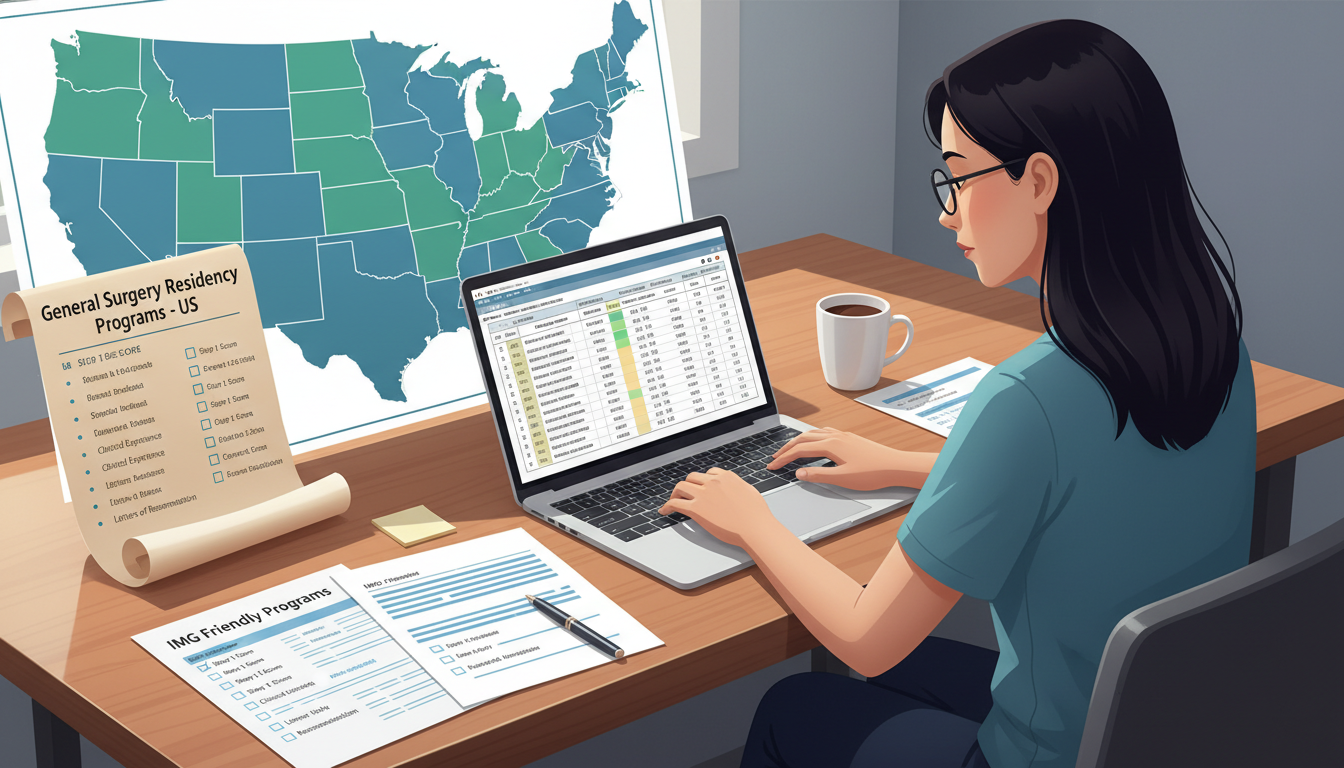
As a DO graduate interested in diagnostic radiology, you’re entering a competitive but highly rewarding specialty. One of the most critical—and often most confusing—parts of your application journey is deciding where and how many programs to apply to, and building a rational program selection strategy rather than just “applying everywhere.”
Below is a detailed, step‑by‑step framework specifically tailored to a DO graduate pursuing a radiology residency, with a strong focus on the osteopathic residency match landscape, diagnostic radiology match dynamics, and practical guidance on how to choose residency programs strategically.
Understanding the Diagnostic Radiology Landscape for DO Graduates
Before you decide how many programs to apply to or where to send your ERAS, you need a realistic understanding of the diagnostic radiology match environment—especially as a DO graduate.
Competitiveness of Diagnostic Radiology
Diagnostic radiology (DR) is moderately to highly competitive:
- Historically, US MD seniors have strong match rates, but
- DO graduates can and do match successfully every year—often very well—if they apply smartly and realistically.
- Step/Level scores, clinical grades, letters, and school reputation all matter, but your program selection strategy can dramatically amplify (or undermine) your chances.
Key realities for a DO graduate:
- Some academic programs still show a preference for MD applicants.
- Some university and top-tier academic programs take few or no DOs each year.
- Many excellent community and hybrid academic–community DR programs are DO‑friendly and provide excellent training and fellowship outcomes.
Your goal is to identify where your application will be competitive and where DOs have historically matched, and then balance aspirational, realistic, and safety programs across that spectrum.
The Transition from Osteopathic to Single Accreditation
With the single GME accreditation system, there is no separate “osteopathic residency match” anymore. However:
- DO‑friendly vs. DO‑neutral vs. DO‑unfriendly cultures still exist.
- Some programs are former AOA programs or have osteopathic recognition, often very welcoming to DO grads.
- Other programs take DOs inconsistently, only occasionally, or not at all.
Don’t treat all programs as equivalent. Historical DO match patterns should be one of your core filters when deciding where to apply.
Step 1: Honestly Assess Your Competitiveness as a DO Applicant
Everything in your program selection strategy depends on a clear, honest self‑assessment.
Core Metrics to Consider
USMLE / COMLEX Scores
- If you have both, programs will typically use USMLE as the primary comparison tool.
- If you have only COMLEX:
- Many DR programs accept COMLEX alone, but some require USMLE.
- Lack of USMLE can reduce the number of programs you can realistically apply to in diagnostic radiology.
Class Rank and Clinical Performance
- Honors in core clerkships (especially medicine and surgery) are valuable.
- Strong radiology elective evaluations (home and away/audition rotations) can help significantly.
Research and Scholarly Output
- Radiology is academic-leaning; research matters more here than many fields.
- Any radiology‑related research (case reports, QI, posters, publications) is a plus.
- Large research portfolios help for high‑tier academic DR programs, but are not mandatory for solid community or hybrid programs.
Letters of Recommendation
- At least one strong letter from a diagnostic radiologist is critical; two is even better.
- A letter from a department chair or program director in radiology carries extra weight, particularly if from a known academic center.
School Name & Clinical Site Reputation
- DO schools vary in how well-known their graduates are to PDs.
- Strong affiliations with academic centers or known radiology departments can boost your profile.
Red Flags
- Course repeats, Step/Level failures, professionalism concerns, or long leaves of absence.
- None are automatic disqualifiers, but they shift your “risk category” and should influence your program list and how many programs you apply to.
Rough Applicant Tiers (for Strategy Purposes)
These are strategic tiers, not value judgements, to guide your program selection.
Tier 1: Highly Competitive DO Applicant
- USMLE Step 2 CK ≥ 245 (or COMLEX Level 2 ≥ 640–650)
- Strong grades (mostly honors/HP), positive narrative comments
- Radiology research or meaningful research portfolio
- Multiple strong LORs from radiologists, possibly well-known names
- No significant red flags
Tier 2: Solid / Average Competitive DO Applicant
- USMLE Step 2 CK roughly 230–244 (or COMLEX Level 2 ≈ 600–640)
- Mostly HP, some honors, maybe one weaker rotation
- Some scholarly activity; maybe one radiology project or poster
- At least one strong radiology LOR
- No major red flags
Tier 3: At-Risk/Underdog DO Applicant
- USMLE Step 2 CK < 230 (or COMLEX Level 2 < 600)
- Mixed evaluations, some passes or low passes
- Limited or no research
- Few radiology‑specific letters or generic letters
- Any of: failed Step/Level, course remediation, gap year not clearly explained, etc.
You should identify which tier you most closely resemble. Your honest tier assessment drives how broad your program list should be and how many programs to apply to in the diagnostic radiology match.
Step 2: Decide How Many Diagnostic Radiology Programs to Apply To
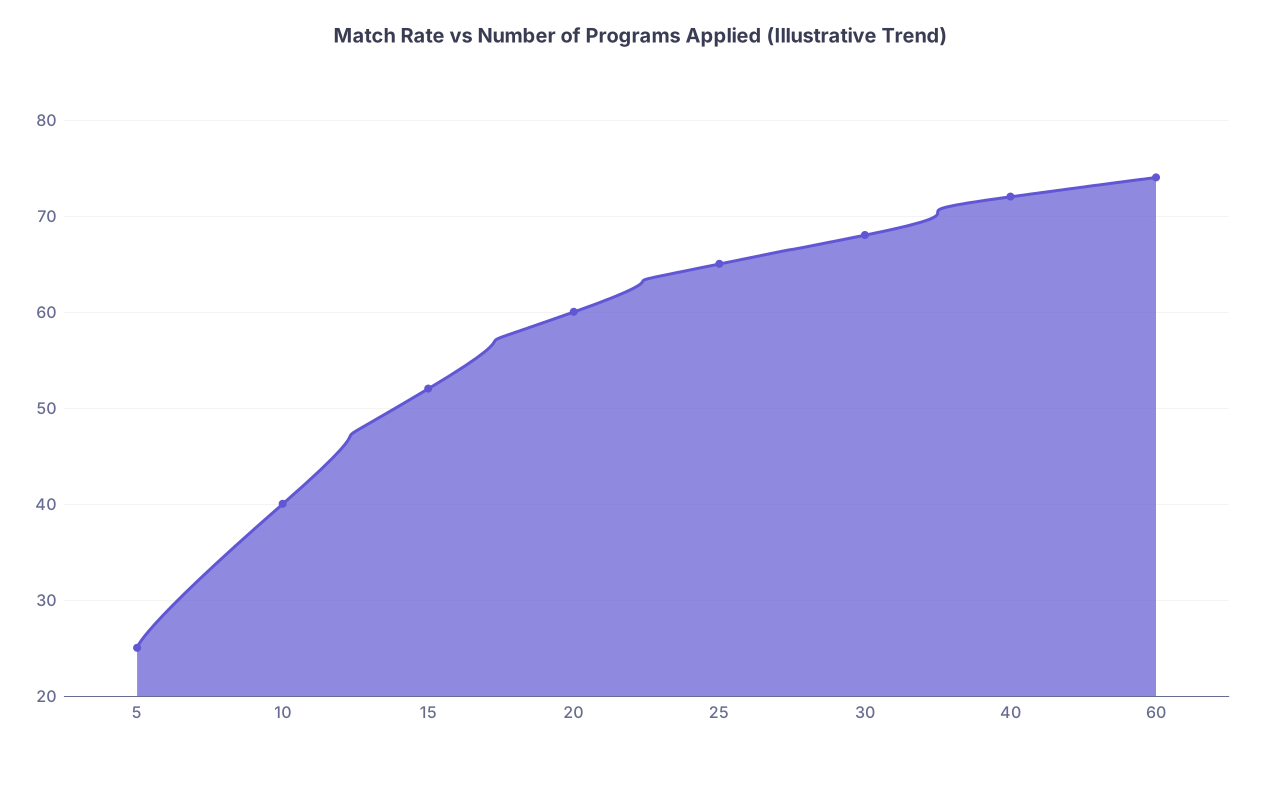
There is no universal number, but we can craft realistic ranges based on your tier and risk factors. For diagnostic radiology, US applicants often err on the side of over‑applying; however, DO applicants do benefit from a somewhat broader strategy than MD counterparts.
General Targets for a DO Graduate in Diagnostic Radiology
These ranges assume you are applying primarily to diagnostic radiology (not dual applying or heavily hedging into another specialty):
- Tier 1 (Highly Competitive DO):
- Roughly 35–50 DR programs
- Focus: mix of DO‑friendly university/hybrid programs, some top/mid-tier academic, plus solid community programs.
- Tier 2 (Solid DO Applicant):
- Roughly 50–70 DR programs
- Focus: many DO-friendly hybrid and community programs, plus a handful of reach academic programs and a robust core of realistic options.
- Tier 3 (At-Risk / Underdog DO):
- Roughly 70–90 DR programs
- Focus: mostly DO‑friendly community programs and former AOA programs, with selective hybrid/university options that routinely interview DOs.
- Strongly consider dual applying (e.g., to transitional year, preliminary medicine, or another backup specialty) depending on risk profile.
These numbers are not strict rules; they should be tailored to your resources, timeline, and specific situation.
Factors That Push You Toward Applying to More Programs
Increase your program count (within reason) if:
- You have low or marginal test scores for DR.
- You have a USMLE failure or COMLEX failure.
- You are from a lesser-known DO school with minimal radiology presence.
- You lack radiology research or radiology LORs.
- You are limited geographically (only 1–2 regions).
- You are only applying to diagnostic radiology with no backup.
Factors That Allow Applying to Fewer Programs
You may safely trim your list toward the lower end if:
- You have strong USMLE and COMLEX scores (Tier 1).
- You have substantial radiology research or clearly impressive academic credentials.
- You have multiple strong, specific radiology LORs.
- You are geographically flexible and open to community programs.
- Your medical school has a strong history of DO graduates matching in radiology.
Dual Applying: When to Consider It
Dual applying is a serious decision:
- Consider if you:
- Are Tier 3, especially with failed exams or significant red flags.
- Cannot or do not want to apply broadly enough in DR due to finances or personal constraints.
- Would be genuinely happy in another specialty if DR does not work out.
Common dual‑apply strategies for radiology applicants include:
- Diagnostic radiology + internal medicine (or another field you’d accept long-term)
- Diagnostic radiology + transitional year / preliminary medicine, combined with reapplying
If you dual apply, adjust the number of DR applications downward slightly, but still keep it robust; your DR chances depend heavily on your initial application breadth.

Step 3: Building a Rational Program List: Filters and Priorities
Once you know your target number, you must decide which programs make the cut. This is where your program selection strategy becomes crucial.
Primary Filters: The Non-Negotiables
Start by removing any program that clearly doesn’t fit key requirements:
USMLE/COMLEX Requirements
- Remove programs that:
- Require USMLE when you only have COMLEX.
- State they do not accept COMLEX only.
- Check official program websites and FREIDA; do not rely solely on hearsay.
- Remove programs that:
Visa Status
- If you need visa sponsorship, confirm the program offers the visa type you require (e.g., J‑1, H‑1B).
Location Deal‑Breakers
- Remove locations where you truly would not live for 4–5 years (not just “not ideal” but truly unacceptable).
- Be cautious: eliminating too many regions can significantly reduce options.
Program Type (Categorical vs Advanced + PGY‑1)
- Most diagnostic radiology programs are advanced (PGY‑2–5).
- Confirm whether they offer an integrated categorical track or if you must secure a separate PGY‑1 year (prelim medicine, transitional year, etc.).
- Align with your overall match strategy (e.g., also applying prelim medicine).
DO Friendliness: A Critical Filter for Osteopathic Applicants
For a DO graduate, DO friendliness is one of the most powerful predictors of interview offers.
Ways to assess DO friendliness:
- FREIDA or program website: look at current/former residents’ medical schools.
- Program social media: resident profiles and med schools often listed.
- NRMP/ERAS data (historical): some specialties release match statistics showing DO percentages.
- Word of mouth: upperclassmen, mentors, advisors, and forums (use cautiously).
You should:
- Prioritize programs with multiple DO residents across years.
- Be cautious but not automatically dismissive of programs with 0–1 DOs; check if they recently took a DO or if there’s a known rationale.
Program Type: Academic vs Community vs Hybrid
Each type has distinct implications:
University / Academic DR Programs
- Often more competitive.
- Stronger research environment, more subspecialty exposure, easier access to competitive fellowships.
- Historically lean toward MDs, but many are increasingly DO‑friendly.
- Better fit if you have significant research and top scores.
Community DR Programs
- Often more DO‑friendly.
- High clinical volume, solid hands-on experience, sometimes less formal research infrastructure.
- Fellowship placement can still be excellent, especially with proactive effort.
Hybrid Academic–Community Programs
- Mix of university affiliation and community practice.
- Often sweet spot for DO applicants: good training, some research, DO-friendly cultures.
Your list should reflect your profile:
- Tier 1 DO: balanced mix of university, hybrid, and strong community.
- Tier 2 DO: mostly hybrid/community, with some university reaches.
- Tier 3 DO: predominantly community and DO‑heavy programs, selective hybrids.
Geographic Strategy
Geography impacts both match probability and personal satisfaction.
Action steps:
- Rank regions by preference (e.g., 1 = must consider, 2 = open, 3 = unlikely, 4 = no).
- Focus more applications in your “1” and “2” regions, but include some “3” regions if you’re more at risk.
- Programs close to your home region or medical school may:
- View you as more likely to stay.
- Be more familiar with your institution and DO graduates.
Avoid hyper‑restricting yourself (e.g., only 1–2 big cities). This can dramatically increase your risk as a DO applicant in a competitive field like DR.
Step 4: Practical Workflow to Build Your Program List
A methodical approach to selecting programs can prevent both under‑ and over‑applying.
Step-by-Step Workflow
Initial Long List (100–150+ programs)
- Use FREIDA, program lists, and specialty societies to generate a long list of all diagnostic radiology programs that:
- Are in the US (or preferred country).
- Are accredited.
- Are open to DO applicants.
- Use FREIDA, program lists, and specialty societies to generate a long list of all diagnostic radiology programs that:
Filter for USMLE/COMLEX and Visa Requirements
- Remove programs that don’t meet your exam profile or visa needs.
Tag DO Friendliness
- For each remaining program:
- Check resident rosters for DO representation.
- Tag programs as:
- High DO: multiple DOs in residence.
- Moderate DO: 1–2 DOs.
- Low/Unknown DO: rare or no DOs, or unclear data.
- Prioritize High and Moderate DO programs on your list.
- For each remaining program:
Categorize by Program Type & Setting
- Academic, Hybrid, Community.
- Urban, suburban, rural.
- Note program size and case volume if easily available.
Apply Your Personal Fit Filters
- Geography: mark preferred vs acceptable vs last‑resort regions.
- Family or personal commitments: e.g., partner’s job, childcare, support systems.
- Training style preferences (e.g., high-volume trauma center versus smaller community hospital).
Assign Programs to “Reach,” “Target,” and “Safety” Buckets
Based on your tier and the program’s characteristics:
- Reach Programs
- Historically favor high Step scores and lots of research.
- Highly prestigious academic centers with few DOs.
- Target Programs
- Academic or hybrid programs where DOs are present and your stats are around or slightly below their presumed average.
- Safety Programs
- Strongly DO‑friendly community or hybrid programs.
- Programs with multiple DOs and moderate competitiveness.
A general distribution for a Tier 2 DO applicant might be:
- 15–20% reach
- 50–60% target
- 25–30% safety
- Reach Programs
Trim to Your Target Total Number
Compare your list to your earlier target ranges (e.g., 50–70 programs for Tier 2). If you’re above:
- Trim mostly from:
- Least desirable locations.
- Programs with minimal DO presence and high competitiveness.
- Preserve:
- DO‑friendly programs.
- Reasonable geographic spread.
- Your core “target” group.
- Trim mostly from:

Step 5: Refining Strategy with Advisors, Mentors, and Data
Once you build a preliminary list, refine it with objective input and updated information.
Use Objective Data Sources
FREIDA and Program Websites
- Check for:
- Program size
- Call frequency
- Fellowship placements (if listed)
- Explicit policies on DOs, COMLEX, and USMLE
- Check for:
NRMP and Specialty Data Reports
- Look at:
- Match rates by Step scores and applicant type
- Average number of applications and interviews for successful DR applicants
- These can guide whether your target number is appropriate.
- Look at:
School-Specific Match Outcomes
- Ask your dean’s office or career advisor:
- “Where have DO graduates from our school matched in diagnostic radiology over the last 3–5 years?”
- Programs that have taken your classmates are often more approachable.
- Ask your dean’s office or career advisor:
Seek Honest Feedback from Mentors
Radiology Faculty Mentors
- Share your CV, scores, and draft list.
- Ask directly: “Given my profile, are these programs realistically within reach?”
- Ask which programs they know personally and whether they’ve seen DOs match there.
Recent Graduates
- Talk to DOs who recently matched into DR:
- How many programs did they apply to?
- Which programs were DO-friendly?
- Which programs they would or would not re‑apply to?
- Use their firsthand experience to adjust your list.
- Talk to DOs who recently matched into DR:
Adjusting Throughout the Application Cycle
Be ready to adapt:
- If your Step 2 CK/Level 2 returns higher than expected:
- You may add a few more academic reach programs if early enough.
- If your score is lower than anticipated:
- Consider:
- Expanding the list, especially DO‑friendly community programs.
- Strengthening dual-apply plans.
- Consider:
- Monitor application costs and time; balance practicality with safety.
Putting It All Together: Example Scenarios
Example 1: Solid DO Applicant, Broadly Open Geographically
- Profile:
- COMLEX 1: 605, Level 2: 630; USMLE Step 2: 238
- No research, but excellent clinical comments, 1 strong radiology LOR
- No red flags, open to most US regions
- Strategy:
- Target 55–65 diagnostic radiology programs
- Mix:
- 10 reach academic (taking some DOs, strong fellows)
- 30 target hybrid/community DO‑friendly programs
- 15–20 safety community and former AOA programs with multiple DO residents
- No dual‑apply unless a new red flag appears.
Example 2: At-Risk DO Applicant, Geographic Constraints
- Profile:
- COMLEX 1: 560, Level 2: 580, no USMLE
- One failed course remediated; clinical grades mixed.
- Wants to stay in Midwest and Northeast only.
- Strategy:
- Apply to 75–85 DR programs that:
- Accept COMLEX only
- Are in Midwest/Northeast
- Show DO residents currently
- Heavy emphasis on community and hybrid programs.
- Seriously consider dual applying to internal medicine or transitional year programs in those regions.
- Apply to 75–85 DR programs that:
Example 3: Strong DO Applicant with Research
- Profile:
- USMLE Step 2: 252; COMLEX Level 2: 660
- Several radiology abstracts and one publication
- Two well-known radiologists’ letters
- Strategy:
- Apply to 40–50 DR programs
- Mix:
- 15–20 academic university programs (including some highly competitive)
- 15–20 hybrid programs
- 5–10 DO‑friendly community programs as safety net
- Strong chance to match; may not need to dual apply if no other concerns.
Final Thoughts: Principles to Guide Your Program Selection Strategy
As a DO graduate entering the diagnostic radiology match, your success depends not only on your application strength, but also on how intelligently you approach program selection.
Key principles:
- Be honest about your competitiveness and risk factors.
- Research DO friendliness; this is non‑negotiable for osteopathic applicants.
- Apply broadly enough to protect your chances, especially if you’re Tier 2 or Tier 3.
- Diversify program types and regions whenever possible.
- Get feedback early from mentors and advisors who understand radiology.
- Stay flexible and data‑driven, adjusting your plan as new information (scores, mentorship input) emerges.
A thoughtful, evidence‑based program selection strategy will increase your odds of matching into a diagnostic radiology residency that fits both your training needs and your life circumstances—and set you up for a strong, sustainable career in radiology.
FAQ: Program Selection Strategy for DO Graduates in Diagnostic Radiology
1. As a DO graduate, should I take USMLE in addition to COMLEX for diagnostic radiology?
If you’re still early enough in training to decide, taking USMLE Step 2 is usually advantageous for DR:
- Many programs use USMLE to compare applicants; some will not review applications without it.
- As a DO, having a strong USMLE score can open doors at programs that otherwise might not consider COMLEX alone.
- If you already have only COMLEX, don’t panic—focus your list on programs explicitly accepting COMLEX and with a track record of DO residents.
2. How many diagnostic radiology programs should I apply to as a DO?
Approximate targets:
- Highly competitive DO: 35–50 programs
- Solid DO: 50–70 programs
- At-risk DO: 70–90 programs, plus serious consideration of dual applying
Adjust upward if you have red flags or geographic restrictions; adjust downward slightly if you are very strong, flexible, and well-advised.
3. How can I quickly tell if a diagnostic radiology program is DO‑friendly?
Use a combination of:
- Check current residents’ medical schools on the program’s website or social media.
- Look for multiple DOs across PGY years (strong sign).
- Ask your school’s advisor if DOs from your institution have matched there previously.
- On FREIDA and program websites, see if they explicitly welcome DOs or list DOs among alumni.
If a program has never had a DO resident and is a high‑powered academic center, consider it a reach, not a target.
4. Should I rank a program highly just because it’s DO‑friendly?
DO friendliness is one factor, not the only one. You should also weigh:
- Training quality (case volume, subspecialty exposure, teaching culture)
- Location and lifestyle
- Fellowship outcomes (if available)
- Program culture and resident happiness (gauge on interview day, social media, alumni feedback)
An ideal program for you is both DO‑friendly and aligned with your educational needs and personal priorities.