Understanding the Landscape: Vascular Surgery and DO Applicants
Vascular surgery is a highly specialized, procedurally intense field with a relatively small number of residency positions compared with many other specialties. As a DO graduate, you occupy an important and growing segment of the applicant pool, but you also face unique strategic considerations, particularly around program selection strategy and the osteopathic residency match.
Before you decide how many programs to apply to and which ones, you need to understand:
- The structure of vascular surgery training
- The competitiveness of the field
- How DO graduates are viewed
- Where DO-friendly opportunities are more likely
Integrated vs. Traditional Pathways
There are two main training pathways:
Integrated Vascular Surgery Residency (0+5)
- Five years total, straight from medical school
- Combines core surgery and vascular training from the start
- Referred to as an integrated vascular program
- Very competitive, with limited positions nationwide
Fellowship Pathway (5+2)
- Five years of general surgery residency
- Followed by a 2-year vascular surgery fellowship
- May be more flexible for some DO graduates, especially if initial vascular opportunities are limited
This article focuses on program selection strategy for DO graduates applying to integrated vascular surgery programs, but many principles also apply if you plan a general surgery–first route.
Competitiveness and DO Considerations
Vascular surgery is consistently among the more competitive surgical subspecialties:
- Small number of programs and positions
- Applicants often have robust research, strong board scores, and excellent letters
- Many programs historically favored MD applicants, though this is gradually shifting
For a DO graduate residency applicant in vascular surgery:
- Some programs explicitly state they welcome DOs and value osteopathic training.
- Others are neutral but have few or no DOs on faculty or in their resident complement.
- A smaller subset may be implicitly or explicitly MD-preferential (often seen through their historical match lists).
Your program selection strategy must therefore:
- Identify DO-friendly integrated vascular programs
- Balance reach, target, and safety programs
- Account realistically for your academic metrics and experiences
The rest of this guide walks through a step-by-step approach to building a powerful, realistic, and efficient application list.
Step 1: Clarify Your Profile and Risk Tolerance
You cannot create a rational list of programs until you perform an honest self-assessment. Your competitiveness relative to other vascular applicants will strongly influence how many programs to apply to and which tiers you should emphasize.
Key Components of Your Applicant Profile
Board Scores
- COMLEX (required for DOs) and USMLE (if taken)
- Integrated vascular programs often place high weight on Step 1/COMLEX 1 and Step 2/COMLEX 2
- Many program filters are automated; scores below certain cutoffs may block you from review
Clinical Performance
- Core clerkship grades, surgery rotations, and any vascular electives
- Sub-internships (sub-Is) in surgery or vascular surgery
- Honors/High Pass, especially in surgery, are helpful
Letters of Recommendation (LoRs)
- At least one strong LoR from a vascular surgeon is highly desirable
- Additional letters from general surgeons or research mentors
- Strength of advocacy often outweighs prestige alone
Research and Scholarly Work
- Vascular-related projects, QI initiatives, or case reports
- Presentations at meetings (SVS, regional vascular societies, ACS, etc.)
- Publications in surgery or vascular journals
School Reputation and Clinical Environment
- Prior match history of your DO school into surgical subspecialties
- Availability of a home vascular surgery service
Non-cognitive Attributes
- Professionalism, teamwork, maturity, grit
- Documented through narrative evaluations, LoRs, and personal statement
Stratifying Yourself: High, Moderate, or Higher-Risk Applicant
Use an approximate framework to guide your program selection strategy. (These are general guidelines; consult with your advisors for personalized calibration.)
Relatively Strong/Competitive DO Applicant (for integrated vascular):
- COMLEX 1/USMLE Step 1: At or above national averages for matched vascular applicants (often high 240s+ Step 1 or equivalent; adjust year-to-year)
- Strong Step 2/COMLEX 2 score
- Honors in surgery, strong performance on sub-I
- One or more vascular-focused LoRs from recognized surgeons
- Vascular-related research or meaningful scholarly work
- Solid evidence of professionalism and leadership
Mid-Range DO Applicant:
- Scores near the mean for vascular applicants but not outstanding
- Good but not exceptional rotation grades; perhaps some High Pass or Pass in core rotations
- At least one vascular LoR, others solid
- Some research or scholarly activity, though possibly limited
Higher-Risk DO Applicant:
- Below-average or inconsistent board scores
- Mixed clinical performance, potential concerns or remediation in record
- Limited or no vascular exposure
- LoRs more generic, lacking strong advocacy
- Minimal research or scholarly productivity
Your category (and your tolerance for risk) will heavily influence:
- How many programs to apply to
- Proportion of reach vs. target vs. safety programs
- Whether to also apply in general surgery as a dual strategy
Step 2: Determining How Many Programs to Apply To
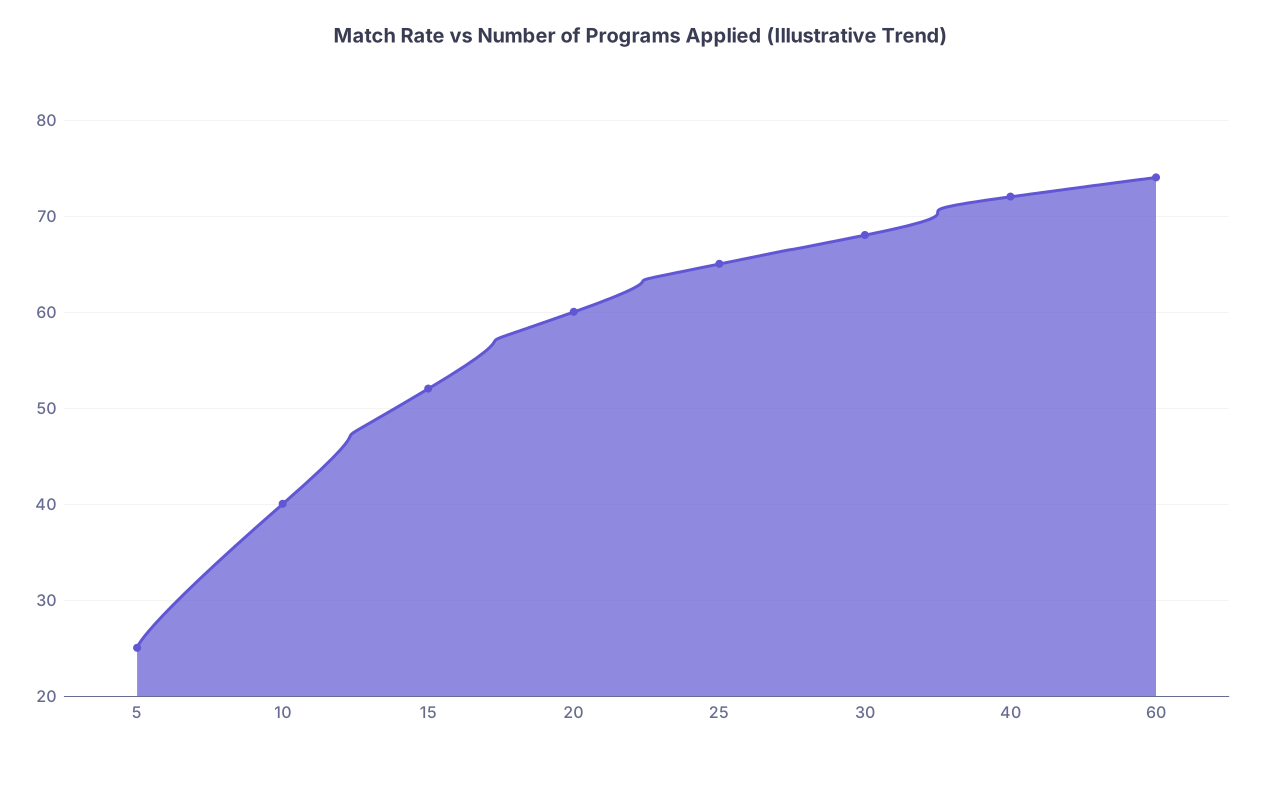
The question “how many programs should you apply to?” in an integrated vascular program is crucial for DO applicants. The field is small; thus, raw application numbers are lower than larger specialties, but competition is intense.
General Numerical Guidance for DO Applicants
Because exact numbers vary yearly, use these as broad starting points:
Competitive DO applicant
- Integrated vascular only: 25–40 programs
- Optional general surgery backup: 10–20 programs (if you want a parallel safety net)
Mid-range DO applicant
- Integrated vascular: 35–55 programs
- Strongly consider 20–30 general surgery programs as well
Higher-risk DO applicant
- Integrated vascular: 45–70 programs
- Heavier emphasis on general surgery (25–40 programs), especially DO-friendly and community-based academic programs
Why such a wide range?
- Small denominator of programs: There simply aren’t that many integrated vascular programs nationally; you can reasonably apply to most if needed.
- DO status in a competitive field: Some programs may not seriously consider DO applicants, effectively shrinking your realistic pool.
- Signal saturation: Over-applying is common; carefully chosen applications are more effective than indiscriminate mass applications, but you still need enough breadth to capture interest.
Strategic Considerations That Modify the Numbers
Adjust up or down based on the following:
- Geographic constraints: If you are tied to 1–2 regions, you must apply more broadly within those and may still need to expand geographically to maintain a reasonable match chance.
- Dual-apply or not: If you are also applying in general surgery, you may:
- Maintain a smaller vascular list (e.g., 25–35) and a moderate general surgery list.
- Or, if vascular is your non-negotiable goal, maintain a large vascular list (40–60) and a modest but strategic general surgery list.
- Financial constraints: Application fees add up; prioritize programs more likely to be realistic and DO-friendly rather than simply applying everywhere.

Step 3: Building Your Program List: A Tiered, Data-Driven Approach
Once you know your approximate competitiveness and target application volume, your next task is to decide which programs to include. A well-designed program selection strategy for DO applicants relies on:
- Objective data (match lists, resident rosters)
- Program culture and training structure
- Geographic preferences
- DO-friendliness indicators
A. Tiers: Reach, Target, and Safety
Battle the temptation to think of programs as “good vs. bad.” Instead, categorize them:
Reach Programs (Ambitious)
- Historically match primarily MDs from highly-ranked schools
- Heavy research focus, strong NIH funding
- Very small resident complement
- Limited or no history of DO residents
- Still may be worth applying if:
- You have very strong metrics, or
- You have a meaningful connection (research, visiting rotation, mentorship)
Target Programs (Realistic)
- Mixed resident pool, including DOs or IMGs
- Balanced emphasis on clinical training and some research
- Mid-range score and research expectations
- Your metrics align reasonably with their historical match patterns
Safety Programs (More Likely)
- Documented DO graduates in the current or recent classes
- Community-based academic or regional university programs
- Strong clinical volume; research expectations more modest
- Fit well with your scores and experiences
For a typical mid-range DO applicant applying to 45 integrated vascular programs, a distribution might look like:
- Reach: 10–15
- Target: 20–25
- Safety: 10–15
B. Identifying DO-Friendly and Realistic Programs
To refine your list, systematically review:
Current Residents and Faculty
- Check program websites and residency profiles.
- Look for DO residents or DO faculty on vascular and general surgery teams.
- Note how often DOs appear and in what roles.
Program Match Lists and Histories
- Search for your intended programs in online forums, residency databases, and school advising materials.
- Ask upper-level residents or recent graduates from your DO school where recent vascular/interested students have matched.
Program Policies and Statements
- Some programs explicitly state they welcome DO applicants and accept COMLEX alone.
- If they require USMLE for consideration and you did not take it, they may not be realistic.
Interpersonal Intelligence
- Speak with vascular surgeons and educators you know.
- Ask: “Which integrated vascular programs have been particularly open to DO applicants?”
C. Geography, Lifestyle, and Training Priorities
You also have to live your residency, not just survive it. When deciding how to choose residency programs, factor in:
Geography:
- Proximity to family or support systems
- Urban vs. suburban vs. rural environments
- Weather and cost of living
Training Environment:
- High-volume tertiary care vs. smaller regional referral center
- Open vs. endovascular case mix
- Trauma exposure and general surgery experience
- Breadth of vascular pathology (e.g., aortic disease, limb salvage, dialysis access)
Culture and Mentorship:
- Collegial vs. hierarchical vibe
- Faculty approachability and resident autonomy
- Support for research, conferences, and professional development
Rank-order these priorities and use them to compare programs systematically. But as a DO applicant in a small specialty, avoid overly rigid constraints (e.g., “only programs within 3 hours of my hometown”) unless absolutely necessary.
Step 4: Using Away Rotations and Signals Strategically
Your application is more than a numbers game; personal exposure is extremely powerful in a small field like vascular surgery.
Away Rotations as Strategic Leverage
An away rotation (sub-internship) at a desired integrated vascular program:
- Places you in front of the decision-makers for four weeks
- Demonstrates your technical abilities, work ethic, and team fit
- Allows you to secure tailored, powerful letters of recommendation
- Can counterbalance modest board scores if your clinical performance is excellent
For a DO applicant:
- Prioritize away rotations at programs that:
- Have integrated vascular residencies
- Have a history of taking DO residents or welcoming DO rotators
- Match your desired geographic or academic profile
Example strategy:
- Rotate at one “target” and one “reach” program if scheduling allows.
- Treat these rotations as month-long interviews: be hardworking, reliable, teachable, and collegial.
Program Signaling Systems
Some specialties use Preference/Program Signaling (e.g., ERAS signals) to allow applicants to indicate heightened interest. If integrated vascular surgery participates in signaling in your application cycle:
- Use your strongest signals on programs where:
- You have rotated or have a clear, genuine fit
- You are within realistic competitive range
- You would seriously consider ranking them highly
Avoid using all signals on “dream” programs where you are far outside their typical profile; balance ambition with realism, especially as a DO.

Step 5: Integrating Backup Plans and Long-Term Goals
A core question in any program selection strategy is risk management. For a DO applicant targeting a vascular surgery residency, you should think on two levels:
- Matching into an integrated vascular program now
- Achieving a vascular surgery career even if you start in general surgery
A. Dual-Application Strategy: Vascular + General Surgery
A thoughtful method to protect your long-term goals:
- Apply primarily to integrated vascular programs.
- Simultaneously apply to DO-friendly general surgery programs that:
- Have vascular fellowships at the same institution, or
- Have strong vascular case volume and mentorship.
This approach gives you:
- A realistic chance to match this cycle
- The flexibility to pursue a 5+2 fellowship later
Example distribution for a mid-range DO applicant intensely committed to vascular surgery:
- 40–50 integrated vascular programs
- 20–25 general surgery programs (with strong vascular presence)
B. Scenario Planning
Scenario 1: You Match Integrated Vascular
- Outstanding; stay focused on strong performance, research, and long-term academic/procedural goals.
Scenario 2: You Match in General Surgery
- Immediately seek early mentorship with vascular faculty.
- Pursue vascular-centered research, electives, and early exposure.
- Consider applying for 5+2 fellowship with convincing vascular portfolio.
Scenario 3: You Do Not Match
- Conduct a clear, honest debrief with advisors and mentors.
- Consider a surgically oriented preliminary year, research year, or re-application with strengthened credentials.
- Reassess: integrated vs. 5+2 route, and whether geographic or program expectations need adjustment.
C. Aligning Program Selection With Your Career Vision
Ask yourself:
- Do I see myself in academic practice, community-based vascular surgery, or a mix?
- How important is research to me?
- Do I want a high-endovascular practice, high-open practice, or balanced mix?
Then, examine whether each program:
- Prepares graduates for your desired practice environment
- Offers the research infrastructure you need
- Has alumni in roles you aspire to (academia, leadership, outreach practice, etc.)
Your program selection strategy should not just chase prestige; it should align training with your future career.
Practical Checklist: Step-by-Step Program Selection for DO Vascular Applicants
Use this checklist to operationalize what you’ve read.
Self-Assessment
- Compile your scores, grades, LoRs, research experiences.
- Classify yourself: relatively strong, mid-range, or higher-risk DO vascular applicant.
- Clarify geographic and lifestyle flexibility.
Preliminary List Building
- Pull a complete list of integrated vascular programs.
- Remove programs that categorically cannot consider you (e.g., require USMLE when you did not take it).
- Flag any that have current DO residents or recent DO alumni.
Tiering Programs
- Assign each program: Reach, Target, or Safety, based on:
- Resident profiles (DO presence, scores if known)
- Research prominence
- Your own metrics and experiences
- Assign each program: Reach, Target, or Safety, based on:
Volume Decision
- Decide how many programs to apply to based on your competitiveness:
- Competitive: 25–40
- Mid-range: 35–55
- Higher-risk: 45–70
- Determine whether you will also apply in general surgery, and if so, how many programs.
- Decide how many programs to apply to based on your competitiveness:
Refinement Using Soft Factors
- Rank programs by:
- DO friendliness
- Geographic acceptability
- Training environment and case mix
- Culture, mentorship, and research support
- Rank programs by:
Away Rotations & Networking
- Schedule 1–2 away rotations strategically (one target, one reach if possible).
- Build connections with vascular surgeons who can guide your list and advocate for you.
Final Sanity Check
- Confirm that:
- You have a spread across tiers.
- You’re not overly concentrated in hyper-competitive “dream” programs.
- You understand the financial and emotional costs of your application volume.
- Confirm that:
FAQs: Program Selection Strategy for DO Graduate in Vascular Surgery
1. As a DO graduate, should I take USMLE for vascular surgery residency?
If you are early enough in your training, taking USMLE can help:
- Some integrated vascular programs still prefer or require USMLE scores.
- Having USMLE plus COMLEX makes you easier to compare directly to MD applicants.
However, if you are already beyond that point and only have COMLEX, it is still possible to match. You just need to:
- Focus on programs that accept COMLEX and have DOs in their ranks.
- Strengthen other aspects of your portfolio (away rotations, LoRs, research).
2. How do I know if a program is truly DO-friendly?
Look for concrete indicators:
- Current residents or alumni who are DOs
- Faculty with DO degrees, especially in leadership positions
- Program websites and recruitment materials that explicitly mention DO inclusivity
- Anecdotal reports from your school’s advising office or recent graduates
If in doubt, consider politely emailing the program coordinator to confirm that DO applications are welcomed and COMLEX is accepted.
3. Is it risky to apply only to integrated vascular programs as a DO?
Yes, it can be risky, especially if:
- Your metrics are mid-range or below average for the field
- You are geographically restricted
- You lack vascular research or strong specialty-specific letters
For many DO applicants, a safer pathway is to:
- Apply broadly to integrated vascular programs
- Also apply to a reasonable number of DO-friendly general surgery programs, aiming for a pathway to a vascular fellowship later
This dual approach preserves your long-term career goal while reducing your risk of going unmatched.
4. How important is research in vascular surgery applications for DO graduates?
Research is valuable but not the only factor:
- Vascular-focused projects, even if small, demonstrate interest and commitment.
- Presentations or posters at regional or national meetings are particularly helpful.
- Strong clinical performance and specialty-specific LoRs can sometimes outweigh limited research, especially at clinically focused programs.
If you have minimal research now, consider short-term achievable projects (case reports, QI, chart reviews) and highlight them effectively in your application.
By approaching your osteopathic residency match with a clear, data-informed program selection strategy, you give yourself the best chance of securing a place in an integrated vascular program that fits your strengths and aspirations. As a DO graduate, you bring a valuable perspective to vascular surgery—your task now is to ensure programs can clearly see that value through a thoughtful, strategic application plan.