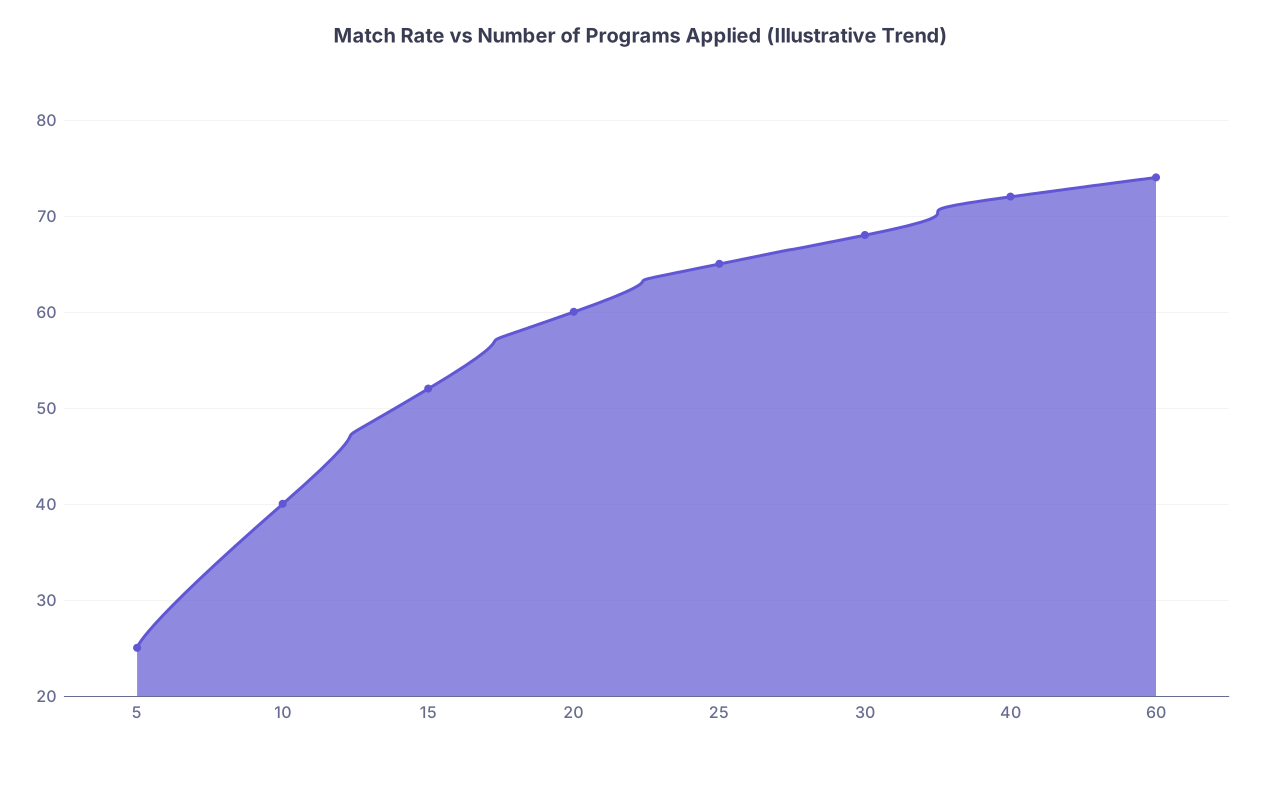
Understanding the Big Picture: Strategy Before Numbers
For an MD graduate targeting a general surgery residency, program selection is both a data problem and a self-awareness exercise. Before asking “how many programs to apply?” you need clarity on which programs fit your profile, goals, and risk tolerance.
Key realities for an allopathic medical school match in general surgery:
- General surgery is moderately competitive and getting more selective.
- Categorical spots are limited, and many applicants over-apply.
- MD graduates from U.S. allopathic schools generally have an advantage over DO and IMG applicants, but still face real competition.
- A good program selection strategy can matter as much as one extra publication or a few extra Step points.
Your goal is not just to match; it’s to match into a program where you can thrive clinically, professionally, and personally. A smart program list balances:
- Reach programs – where matching is possible but not likely.
- Target programs – realistic fits for your profile.
- Safety programs – where your chances are high.
This article will walk you through a structured process for how to choose residency programs in general surgery, how to build tiers, and how many programs to apply based on your competitiveness and goals.
Step 1: Assess Your Competitiveness as a General Surgery Applicant
Before you build a list, you must know where you stand in the allopathic medical school match landscape for general surgery.
A. Core Competitiveness Domains
For MD graduates, program directors typically focus on these major factors:
USMLE/COMLEX performance
- Step 1: Now pass/fail, used more as a screening tool (no red flags).
- Step 2 CK: A key numeric metric. Strong programs may prefer applicants with scores at or above their historical mean.
- Fails or multiple attempts can significantly affect your surgery residency match prospects.
Clinical performance
- Clerkship grades, especially surgery and medicine.
- Honors in core rotations, Sub-I performance.
- Strength and detail of clinical evaluations.
Letters of recommendation (LORs)
- Letters from academic surgeons, especially those known to program leadership.
- At least one strong letter from a surgeon with whom you worked closely.
- Sub-I/Away rotation letters can carry heavy weight.
Research and scholarly activity
- General surgery programs increasingly value academic interest.
- Quality of involvement (surgical projects, outcomes research, QI projects) often matters more than sheer number of abstracts.
- First-author work or meaningful participation at regional/national meetings is a plus.
Professionalism and “fit”
- Evidence of teamwork, reliability, maturity.
- Commitment to surgery (longitudinal interest, electives, mentorship).
- Interview performance and interpersonal skills.
Red flags
- Exam failures, professionalism concerns, significant leaves of absence.
- Unexplained gaps or major inconsistencies in your record.
B. Self-Categorize: Highly Competitive, Competitive, or Developing
Create a realistic self-assessment. As an MD graduate from an allopathic medical school, place yourself into one of three broad categories:
Highly Competitive MD Applicant
- Step 2 CK: Well above national average for matched general surgery (for example, historically ≥250+ range; adjust to current norms using updated NRMP data).
- Mostly Honors in core clerkships; Honors or excellent evaluations in surgery.
- Strong academic surgical letters, ideally from known faculty.
- Solid surgical research (e.g., multiple papers/abstracts/posters).
- No red flags.
Competitive / Typical MD Applicant
- Step 2 CK: Around the average of matched general surgery applicants (roughly mid-230s to mid-240s historically; check current NRMP for updated numbers).
- Mix of High Pass and Honors, or solid Pass/High Pass with strong narrative comments.
- Strong letters, even if writers are not nationally known.
- Some research or scholarly work (not necessarily extensive).
- No major red flags.
Developing / At-Risk Applicant
- Step 2 CK: Below historical matched average or with a borderline score.
- Limited Honors, possibly Pass in surgery with mixed narrative comments.
- Weak or generic letters, or fewer surgical letters.
- Minimal or no research, or off-specialty research only.
- One or more red flags (exam failure, LOA, professionalism issue).
This classification is not rigid but will anchor your program selection strategy and help calibrate your expectations for the surgery residency match.
Step 2: How Many Programs to Apply to in General Surgery?
Now that you’ve characterized your competitiveness, you can address how many programs to apply in general surgery. Numbers vary slightly each year and by applicant type, but we can provide strategic ranges for MD graduates.
A. Recommended Ranges for MD Graduates in General Surgery
Assuming you are a U.S. allopathic MD graduate with no major red flags:
Highly Competitive MD Applicant
- Typical range: 20–35 categorical programs
- Rationale: You’re likely to secure many interviews; over-applying wastes time and money.
- You may still include a few “reach” academic powerhouses but don’t need 60+ programs.
Competitive / Typical MD Applicant
- Typical range: 35–60 categorical programs
- Rationale: This is the group for whom a smart, balanced list is most critical.
- Enough breadth to ensure interview volume, but still curated.
Developing / At-Risk MD Applicant
- Typical range: 60–80+ categorical programs
- Rationale: You’ll need a broader net, especially with any red flags or weak areas.
- Strong emphasis on mid-tier and community programs in varied regions.
- Consider adding preliminary positions as a backup (more on this below).
These ranges assume you are applying only to general surgery. If you are dual applying (e.g., surgery + anesthesia or surgery + internal medicine), recalibrate these numbers based on your primary vs backup goals and budget.
B. Categorical vs Preliminary Positions
For MD graduates, the primary goal is a categorical general surgery residency. However:
If you are a developing/at-risk applicant, or have a strong geographic constraint, consider:
- Applying to 5–15 preliminary general surgery positions as a safety net.
- Preliminary year can be a bridge to a future categorical position, but it carries risk and demands a clear plan.
If you are a highly competitive MD applicant with no red flags:
- You may not need to apply to prelim positions at all, unless there is a very specific strategic reason.

Step 3: Defining Your Priorities for Program Fit
Numbers alone won’t guide a good program selection strategy. You need to intentionally define what matters most to you within the spectrum of general surgery residency training.
A. Core Dimensions of Fit
When considering how to choose residency programs, evaluate each program across a few key dimensions:
Training Environment & Case Volume
- High-volume academic medical centers vs mixed academic/community vs predominantly community-based.
- Breadth of operative exposure (trauma, minimally invasive, HPB, transplant, vascular, etc.).
- Graduated autonomy and resident role in the OR.
Fellowship and Career Outcomes
- Historical match into competitive fellowships (surgical oncology, CT, vascular, MIS, colorectal, trauma/critical care).
- Percentage of graduates pursuing fellowship vs general practice.
- Support for academic careers vs community surgery.
Location & Lifestyle
- Geographic preference (regions where you’d genuinely be willing to live).
- Proximity to family/support system.
- Cost of living, commute, and overall quality of life.
Program Culture & Well-Being
- Resident camaraderie, support, and mentorship.
- Program attitude toward wellness, duty hours, and education.
- Diversity and inclusion efforts, leadership responsiveness to resident feedback.
Academic and Research Opportunities
- Protected research years vs non-mandatory research.
- Availability of mentors, NIH-funded faculty, clinical trials, quality improvement infrastructure.
- Expectations for publishing and presenting at conferences.
Program Reputation & Name Recognition
- Nationally known vs strong regional vs community programs.
- How much program prestige matters for your long-term goals (academics vs private practice).
Program Size and Structure
- Large programs (6–10 residents per year) vs small programs (2–4).
- Presence of multiple training sites and their distances.
- Structure of rotations, early vs late operative experience.
B. Rank Your Personal Priorities
List these domains and assign each a priority level:
- Must-have
- Strong preference
- Flexible
For example:
- Must-have: High-volume operative exposure, strong trauma experience, supportive culture.
- Strong preference: In a major city in the Northeast or Midwest.
- Flexible: Mandatory research year, NIH-level research infrastructure.
This exercise helps you later when you inevitably have to choose between “better name” vs “better fit” programs.
Step 4: Building a Tiered Program List
Once you’ve assessed yourself and clarified your priorities, you can systematically build a program list for your general surgery residency application.
A. Start with an Initial Long List
Sources for this long list:
- AAMC/ERAS and FREIDA databases.
- NRMP program lists and outcomes.
- Department websites for general surgery.
- Faculty and mentors’ recommendations (especially surgeons who know you well).
- Your medical school’s match list and alumni who matched in surgery.
Filter out obvious mismatches:
- Regions you absolutely wouldn’t live in.
- Programs that don’t sponsor visas (if relevant).
- Programs whose culture or structure clearly conflict with your must-have criteria.
This might leave you with, say, 80–120 programs before deeper triage.
B. Triage into Tiers: Reach, Target, Safety
Use available data (program websites, Doximity, alumni advice, your advisor’s input) to approximate tiers. For an MD graduate:
Reach Programs
- Top academic centers or highly selective mid-tier programs.
- Historically attract very high Step 2 CK scores and strong research-heavy applicants.
- Programs with strong national reputation, exceptional fellowships, or very desirable locations.
Target Programs
- Solid academic or academic-community hybrids.
- Programs where your metrics (Step 2 CK, grades, research) fit comfortably in the expected range, based on advisor feedback and public data.
- Reasonable chance for multiple interview offers.
Safety Programs
- Smaller academic or community-heavy programs.
- Programs in less competitive geographic regions.
- Your metrics and experiences are likely above their typical range.
C. Suggested Tier Distribution by Applicant Type
For MD graduates targeting general surgery:
Highly Competitive MD Applicant (20–35 programs)
- Reach: 25–40% (5–12 programs)
- Target: 40–50% (8–16 programs)
- Safety: 20–30% (4–10 programs)
Competitive / Typical MD Applicant (35–60 programs)
- Reach: 15–25% (5–15 programs)
- Target: 45–60% (20–35 programs)
- Safety: 20–35% (10–20 programs)
Developing / At-Risk MD Applicant (60–80+ programs)
- Reach: 10–15% (6–12 programs)
- Target: 35–45% (20–35 programs)
- Safety: 40–55% (25–45 programs)
- Plus: Consider 5–15 prelim applications.
The absolute numbers can flex, but the proportions ensure a balanced and realistic application strategy for the surgery residency match.

Step 5: Practical Filters to Refine Your Program List
After tiering, you need to refine your list using practical filters and informed judgment.
A. Geographic Strategy
General surgery is somewhat regional. Program directors often favor applicants with demonstrated ties to their region.
Ask yourself:
- Do you have genuine ties to certain regions (grew up, undergrad, medical school, family)?
- Are you open to training in less popular regions (Midwest, certain parts of the South)?
- Are there deal-breaker climates or cities?
For most MD graduates:
- Consider casting a wide net across multiple regions, especially if you’re not highly competitive.
- At the same time, don’t apply to places you genuinely would not attend. Ranking a program you do not want is a psychological trap and a safety risk.
B. Academic vs Community Balance
Decide your desired academic vs community mix:
If you’re aiming for highly competitive fellowships or an academic career:
- Tilt your list toward strong academic and academic-community programs.
- Still maintain some community-heavy programs as safeties, but ensure they have decent fellowship placement records.
If you envision a career in community general surgery:
- Community or hybrid programs can be excellent options, often with strong hands-on operative experience and robust autonomy.
- Fellowship match prestige may be less critical, but operative volume and operative independence become even more important.
C. Research Infrastructure vs Clinical Volume
If you have strong research, or want an academic career:
- Favor programs with:
- Established research years or protected time.
- Active clinical and outcomes research groups.
- Fellows and faculty who publish and attend conferences regularly.
If you are more clinically oriented:
- Prioritize:
- Programs known for early and high-volume operative exposure.
- Strong mentorship in bread-and-butter general surgery.
- Trauma centers or high-acuity hospitals if that interests you.
D. Program Size and Culture
Talk to recent graduates, mentors, or current residents when possible:
Small program (e.g., 2–3 residents per year):
- Tight-knit environment.
- High responsibility; potentially more direct faculty interaction.
- Vulnerable to strain if one resident leaves or a site changes.
Large program (6–10 residents per year):
- More peers and broader social/professional network.
- Potentially more flexibility in scheduling and elective experiences.
- Culture can be more variable across services.
Pay attention to:
- How residents talk about each other and leadership.
- Whether they feel heard and supported.
- Any patterns of burnout, attrition, or chronic under-staffing.
Step 6: Integrating Budget, Time, and Application Logistics
Your program selection strategy must be compatible with your financial and logistical realities.
A. Application Costs and Time
For an MD graduate applying to general surgery:
- Application fees rise in tiers as you apply to more programs.
- Additional costs:
- Transcript, USMLE score transmission, ERAS fees.
- Travel or lodging if interviews are in-person (virtual interviews can reduce this burden but still demand time).
Ask:
- Can you realistically manage 60–80 customized applications and potentially >10 interviews?
- Will over-applying compromise the quality of your personal statements and program-specific communication?
Sometimes, 40–50 well-chosen programs with strong, tailored applications outperform 80 generic, minimally customized submissions.
B. Customizing Your Application
To optimize your surgery residency match chances:
Craft a general surgery–focused personal statement emphasizing:
- Your commitment to surgery.
- Operative and clinical experiences.
- Professional attributes relevant to surgery (resilience, teamwork, decisiveness).
Consider modest customization for:
- Region-specific motivations.
- Programs where you have meaningful ties or research collaborations.
Ensure your CV and ERAS entries clearly highlight:
- Surgical research.
- Leadership roles.
- Surgical interest groups, mission trips, or longitudinal surgery-related experiences.
C. Pre-Interview Communication
In most cases:
- Avoid excessive pre-interview emails unless:
- You have a genuine, specific connection to a program.
- You are updating them on a major accomplishment (new publication, award).
- You want to clarify eligibility (e.g., visa issues).
Quality over quantity applies: targeted, sincere communication matters more than broad, generic emails.
Step 7: Calibrating Expectations During Interview Season
Once interviews start arriving, your program selection strategy should continue to evolve.
A. How Many Interviews Are Enough?
Historically, for MD graduates in general surgery:
- Rough rule-of-thumb: 10–14 categorical interviews can provide a high probability of matching, assuming you rank them all.
- Highly competitive MD applicants may match with fewer, but more interviews increase security.
- If you approach mid-November with fewer than ~8 interviews, especially as a typical or at-risk applicant:
- Consider:
- Expanding your list if applications are still open.
- Signaling genuine interest to selected programs.
- Evaluating prelim options.
- Consider:
B. Reassessing Your List
As interviews roll in:
- If mostly reach programs are ignoring you, it doesn’t mean you won’t match; you may still be strong at target/safety programs.
- If you’re getting few or no interviews anywhere:
- Seek urgent advice from your dean’s office or a surgical mentor.
- Reassess whether there are major red flags or weaknesses in your application presentation.
C. Rank List Strategy
At the end of the season:
- Rank all programs where you’d be willing to train, in genuine preference order.
- Don’t rank a program that you truly would not attend, even as a last resort.
- Consider how each program aligns with your:
- Operative training goals.
- Fellowship aspirations.
- Personal and family needs.
- Fit and culture impressions from interviews.
Putting It All Together: A Sample Strategy
To illustrate, consider three MD graduates from allopathic medical schools, all applying to general surgery:
Applicant A: Highly Competitive MD
- Step 2 CK: 255+
- Honors in most clerkships, including surgery and Sub-I.
- 4 surgical publications, 3 posters.
- No red flags.
Strategy:
- Apply to 25–30 categorical programs.
- Tiers:
- Reach: 8–10 top-tier academic centers.
- Target: 10–15 strong academic or hybrid programs in preferred regions.
- Safety: 5–7 mid-tier academic or community-based programs.
- No prelim applications.
- Goal: High-quality training with excellent fellowship opportunities.
Applicant B: Competitive / Typical MD
- Step 2 CK: 238–245.
- Mix of High Pass and Honors, strong narrative comments.
- 1–2 surgical research projects, local poster presentations.
- No red flags.
Strategy:
- Apply to 45–55 categorical programs.
- Tiers:
- Reach: 7–10 well-known academic programs and highly desirable city locations.
- Target: 20–30 regional academic/hybrid programs that fit metrics.
- Safety: 10–15 community or smaller academic programs in varied regions.
- Consider 0–5 prelims only if geographic or personal constraints are very tight.
- Goal: Solid training, flexibility to pursue fellowship, geographically reasonable.
Applicant C: Developing / At-Risk MD
- Step 2 CK: Below mid-230s or history of Step failure.
- Mostly Pass/High Pass, mixed comments in surgery.
- Limited research, no surgical projects.
- No major professionalism issues but clear academic vulnerability.
Strategy:
- Apply to 70–80+ categorical programs, plus 10–15 prelims.
- Tiers:
- Reach: 6–10 realistic academic centers willing to consider applicants with your profile.
- Target: 25–30 academic-community and community-leaning categorical programs.
- Safety: 30–40 community programs in less competitive regions.
- Focus heavily on:
- Resolving any red-flag narratives in your personal statement.
- Strong letters from current surgical mentors vouching for your growth and reliability.
- Goal: Secure a categorical position; prelim reserved as a carefully considered fallback.
FAQs: Program Selection Strategy for MD Graduates in General Surgery
1. How many general surgery programs should an MD graduate apply to?
For U.S. allopathic MD graduates, a typical guideline is:
- Highly competitive: 20–35 categorical programs
- Competitive/typical: 35–60 categorical programs
- Developing/at-risk: 60–80+ categorical programs, plus 5–15 prelims if needed
Your exact number depends on score profile, red flags, geographic flexibility, and whether you’re applying to other specialties.
2. Should I apply to preliminary general surgery positions as an MD graduate?
It depends on your risk profile:
- If you are a highly competitive or typical MD applicant with no red flags, you usually do not need prelim applications.
- If you have exam failures, low scores, or significant weaknesses, applying to some prelim positions (5–15) can serve as a backup.
- Only pursue prelims if you’re willing to navigate the uncertainty of seeking a categorical position later and understand the logistical and emotional demands.
3. How important is research for matching into general surgery?
Research is helpful but not mandatory for all programs:
- For top academic programs and research-heavy residencies, surgical research is strongly preferred and can be a differentiator.
- For many community or hybrid programs, research is less critical than:
- Strong clinical performance
- Good letters
- Demonstrated commitment to surgery
- Even limited research (e.g., one project or poster) can show curiosity and initiative, especially if surgery-related.
4. How do I decide between a higher-ranked program and a better “fit” program?
Consider:
- Your career goals: If you’re committed to an academic or highly specialized fellowship pathway, a program with strong fellowship placement and academic reputation may matter more.
- Your learning style and well-being: A slightly less “prestigious” program where you feel supported and can operate a lot may be better for your long-term happiness and competence.
- Mentor advice: Ask trusted surgeons who know both you and the programs in question; they can often provide nuanced insight beyond rankings.
When building and ranking your list, remember: the best program is the one where you will become a safe, confident, and fulfilled surgeon—not just the one with the biggest name.