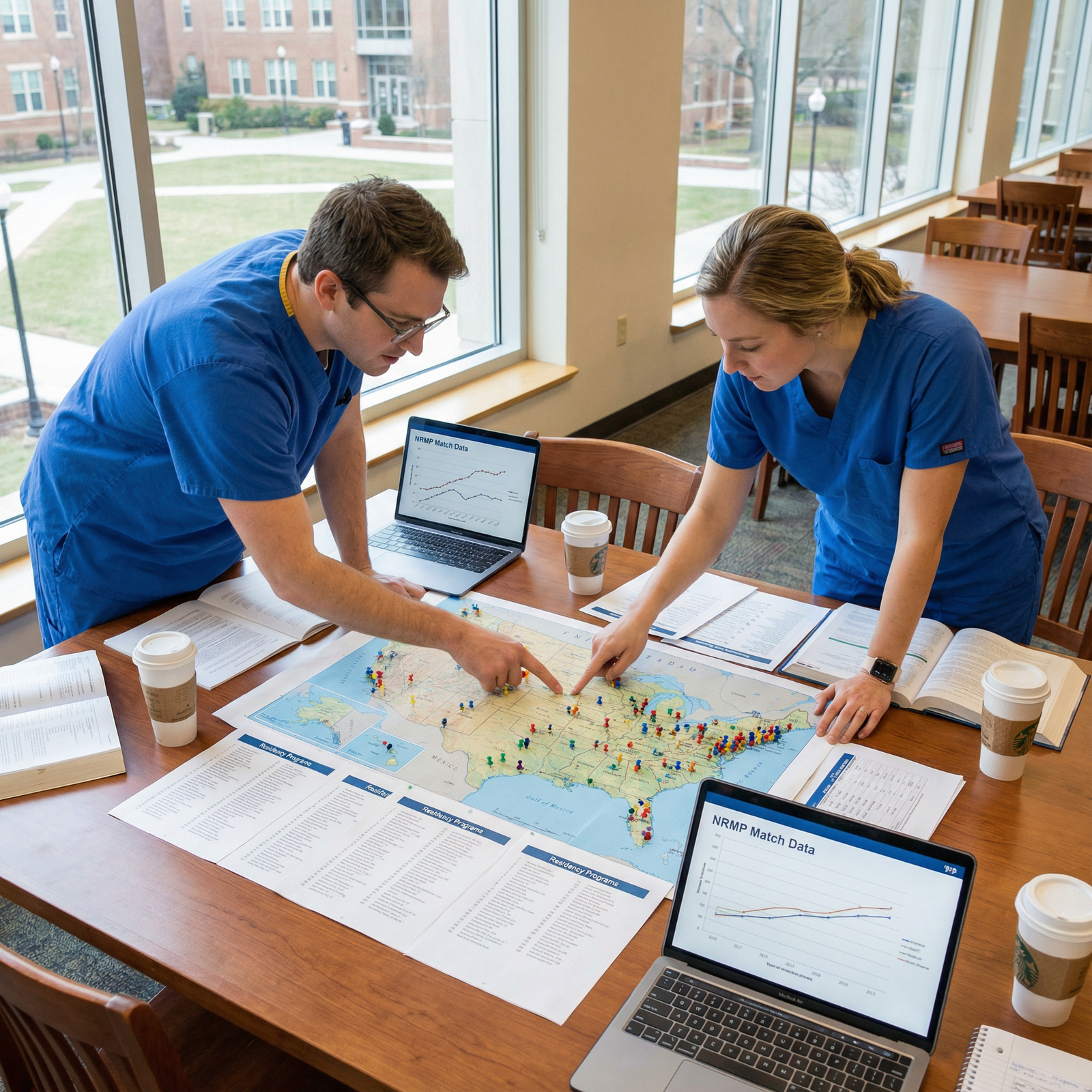
When planning your medical residency applications, one of the most stressful decisions is not just where to apply, but how many programs to include on your list. The answer depends heavily on specialty competitiveness, your own applicant profile, and your geographic and career preferences. Applying too few programs can put your Match chances at risk; applying too many can drain your time, money, and energy.
This guide breaks down how to decide the right number of programs based on specialty competitiveness, with practical application strategies, examples, and key data points like match rates and USMLE preparation considerations.
Understanding Specialty Competitiveness and Match Rates
Before you can decide how many programs to apply to, you need to understand how competitive your target specialty is and where you fit within that landscape.
What Makes a Specialty “Competitive”?
Specialty competitiveness is multi-factorial, typically influenced by:
Match Rates
- Lower overall match rates indicate higher competition.
- Some specialties fill nearly all positions with highly qualified US grads; others rely more on IMGs or have higher unmatched rates.
Applicant-to-Position Ratio
- The more applicants per available position, the tougher it is to match.
- NRMP Charting Outcomes and Match Data provide these ratios each cycle.
Program Popularity and Prestige
- Highly ranked academic programs, major urban centers, and specialties with desirable lifestyle or salary often have far more applicants than positions.
USMD/DO vs. IMG Dynamics
- Some specialties are far more difficult for IMGs (both US and non-US) to enter.
- Match rates can differ significantly by degree type and citizenship status.
Current Examples of Competitive vs. Less Competitive Specialties
Based on recent NRMP data (2023–2024 cycles; exact numbers vary slightly year to year):
Highly Competitive Specialties
- Dermatology: ~40% match rate (all applicants), heavy emphasis on research and high board scores.
- Plastic Surgery (Integrated), Neurosurgery, Orthopaedic Surgery, Otolaryngology: very limited positions and high applicant volume.
Moderately Competitive Specialties
- Categorical Internal Medicine (university-based), Emergency Medicine, Pediatrics, Anesthesiology, General Surgery.
- Match rates are generally higher than ultra-competitive fields, but top-tier programs can still be very selective.
Less Competitive Specialties (Overall)
- Family Medicine, Psychiatry, Pathology, some community-based Internal Medicine and Pediatrics programs.
- Many of these have match rates above 90–95% for US seniors and remain accessible to a broader range of applicants.
Example: In recent NRMP reports:
- General Surgery had a match rate around 70%.
- Dermatology around 40%.
- Family Medicine often approaches or exceeds 95% for US seniors.
These numbers alone don’t dictate your strategy, but they provide a baseline when deciding how widely to apply.
Key Personal Factors When Deciding How Many Programs to Apply To
Application volume decisions must be grounded in an honest assessment of your own profile.
1. Assessing Your Qualifications and Competitiveness
Start with an objective review of your application compared to typical matched applicants in your desired specialty.
USMLE/COMLEX Scores and Exams
- Step/Level Scores
- Although Step 1 is now pass/fail, some specialties still strongly favor applicants with strong Step 2 CK / Level 2 CE scores.
- For competitive specialties, successful applicants often have scores well above the specialty’s average.
- Red Flags
- Failures, significant score gaps, or delayed exams may warrant a broader and more cautious application strategy.
Actionable Tip:
Compare your Step 2 CK (and Level 2 for DOs) to:
- The mean and 10th–25th percentile scores of matched applicants in your specialty (from NRMP Charting Outcomes).
- If you are above average, you may apply to fewer programs.
- If you are average or below, apply to more programs and consider including less competitive backup specialties.
Clinical Experience and Clerkship Performance
- Honors in core clerkships (especially in your target specialty).
- Strong performance on sub-internships or away rotations.
- Robust clinical exposure in the U.S. (especially important for IMGs).
Applicants with weaker clerkship grades or limited specialty exposure should offset this by:
- Applying more broadly.
- Adding a parallel specialty in some cases.
Research, Publications, and Academic Productivity
For academic and research-heavy specialties such as Dermatology, Neurosurgery, or Radiation Oncology:
- Significant research, abstracts, and publications can be essential.
- Lack of research may require you to increase the number of programs you apply to and lean into programs with a more community or clinical focus.
Letters of Recommendation (LoRs)
- Strong LoRs from faculty in your chosen specialty—especially known figures—can dramatically enhance your competitiveness.
- Generic or lukewarm letters may reduce your relative strength and should prompt a broader application list.
2. Understanding the Competitiveness of Your Chosen Specialty
Once you have a clear sense of your profile, look outward.
Use Objective Data Sources
- NRMP Match Data & Charting Outcomes
- Review:
- Number of positions vs. applicants
- Match rates by USMD, DO, US-IMG, Non-US IMG
- Mean Step 2 scores of matched vs. unmatched applicants
- Review:
- Specialty Society Resources
- Many specialties (e.g., AAD for Dermatology, AANS for Neurosurgery) publish guidance or applicant profiles.
- Program Websites
- Check for board score cutoffs, average scores, or class data.
- Look at resident bios to understand typical profiles.
Seek Qualitative Input
- Talk to:
- Specialty advisors and your Dean’s office.
- Faculty in the department where you did rotations.
- Current residents—especially those who recently matched in your specialty.
They can help you categorize yourself as:
- Very strong applicant
- Typical/average applicant
- Borderline/at risk for your chosen field
This relative self-rating will largely drive your application volume.

Geographic Preferences and Their Impact on Application Strategy
1. Regional Competitiveness Variations
Not all geographic areas are equal in terms of residency competition.
Highly Desirable Urban Centers
- Places like New York City, Boston, San Francisco, Chicago, and other coastal metros attract many applicants.
- Even traditionally less competitive specialties may require more applications in these regions.
Suburban and Rural Programs
- Often receive fewer applications, particularly from USMDs.
- May offer more opportunities—especially for IMGs or applicants with red flags.
2. Personal and Family Considerations
- Proximity to family or partner’s job/school.
- Visa sponsorship needs for international graduates.
- Desire for certain lifestyle features (urban vs. rural, climate, cost of living).
Strategic Insight:
If your geographic preferences are very narrow (e.g., only one metropolitan area), you typically need to:
- Apply to more programs within that area if options exist, or
- Consider adding a parallel specialty or expanding your region to avoid an excessively risky Match.
If you are geographically flexible, you can:
- Target a wider range of programs across multiple regions.
- Potentially apply to fewer programs while maintaining a high chance of matching.
Balancing Application Volume, Time, and Cost
1. Application Workload and Quality
While ERAS makes it straightforward to click “apply” to dozens of programs, every additional program adds work:
- Tailoring personal statements (e.g., academic vs. community, research-heavy vs. clinical).
- Customizing experiences and meaningful activities.
- Tracking communications, interview invites, and deadlines.
Overapplying can dilute the quality and customization of your applications. An overly broad list may lead to:
- Generic personal statements.
- Poorly researched program choices.
- Burnout during interview season.
2. Financial Costs
- ERAS fees increase in tiers as you apply to more programs per specialty.
- Interviews may involve travel (although many remain virtual or hybrid).
- Additional expenses: USMLE transcript fees, NRMP registration, visa-related costs for IMGs.
Actionable Tip:
Create a realistic application budget early. Work backward from what you can afford to spend on:
- ERAS fees
- Interview travel or technology
- Post-interview second looks (if relevant)
Then adjust your targeted number of programs accordingly.
Recommended Number of Programs by Specialty Competitiveness
These are general guidelines and should be adapted based on your individual competitiveness, degree type (USMD, DO, IMG), and geographic flexibility.
1. Highly Competitive Specialties
Examples: Dermatology, Plastic Surgery (Integrated), Neurosurgery, Orthopaedic Surgery, Otolaryngology, some Radiation Oncology programs.
Characteristics:
- Low match rates
- High applicant-to-position ratios
- Strong emphasis on research, high USMLE scores, strong LoRs
Typical Application Range:
- 20–40+ programs for most applicants
- Closer to 20–25 if you are a very strong, research-heavy USMD applicant with high scores and strong mentorship.
- 30–40+ if you:
- Are an average or below-average candidate for the field.
- Are a DO or IMG applying in a traditionally USMD-dominated specialty.
- Have geographic limitations but are committed to the specialty.
Additional Strategies:
- Strongly consider a parallel plan, such as:
- Dermatology + Internal Medicine (with aim for Derm fellowship or research)
- Neurosurgery or Ortho + Preliminary Surgery or a backup specialty
- Invest heavily in:
- USMLE preparation for Step 2 CK
- Research productivity and meaningful scholarly projects
- Away rotations at realistic target programs
2. Moderately Competitive Specialties
Examples: Internal Medicine (especially university/academic programs), General Surgery, Emergency Medicine, Pediatrics, Anesthesiology, OB/GYN.
Characteristics:
- Moderate-to-high match rates overall.
- Significant variation in competitiveness between “top-tier” academic programs and community-based sites.
Typical Application Range (USMD/Strong DO Applicants):
- 15–25 programs total in your primary specialty.
- 15–18 if you have strong scores, good clinical evaluations, and flexible geography.
- 20–25 if you are average in competitiveness or have mild red flags (e.g., one low score, fewer honors, limited research).
For DOs and IMGs:
- Consider 20–30 programs or more, depending on:
- Specialty’s historical IMG friendliness (e.g., IM vs. EM vs. OB/GYN).
- Whether you can apply also to community-based and IMG-friendly programs.
Sub-stratification Example (Internal Medicine):
- Applying mostly to university, research-heavy IM programs:
- 20–30 programs, especially if aiming for competitive fellowships.
- Applying broadly to a mix of academic and community programs:
- 15–25 programs may suffice for many USMDs with solid profiles.
3. Less Competitive Specialties
Examples: Family Medicine, Psychiatry, Pathology, some community-based Internal Medicine and Pediatrics programs.
Characteristics:
- Generally high match rates.
- Programs distributed across a wide geography.
- Often more open to a broad range of applicant backgrounds, including DOs and IMGs (varies by region).
Typical Application Range (USMD/Strong DO Applicants):
- 8–15 programs can be sufficient when:
- You have no major red flags.
- You are geographically flexible or target a mix of locations.
For DOs and IMGs:
- 12–25 programs, depending on:
- Visa requirements.
- Step scores and the presence of any fails or gaps.
- Whether you’re limiting your region (e.g., only one state or major metro area).
Example:
A US citizen IMG applying to Family Medicine with:
- Strong US clinical experience
- Passing Step 1 and solid Step 2 CK scores
- Good LoRs from U.S. attendings
Might target 20–30 Family Medicine programs across multiple states, prioritizing IMG-friendly sites.
4. Personal Considerations That Can Shift Your Numbers
Several personal factors may push your target number up or down:
- Red Flags: Exam failures, professionalism issues, large gaps in training
- Usually require a wider application strategy.
- Dual-Career Couples / Couples Match:
- Often need more applications, spread across programs that commonly interview couples or have multiple specialties in the same institution.
- Niche Career Interests:
- If you’re aiming for a specific fellowship (e.g., GI, Cardiology) and want strong research exposure, you may apply more broadly within your primary specialty—especially to academic programs.
- Risk Tolerance:
- Some applicants are willing to accept a higher risk of not matching in exchange for a narrower list of programs; others prefer a safer, broader approach.
Dynamic Strategies: Adjusting During the Application and Interview Season
Reassessing Mid-Cycle
Once interview invitations start arriving:
If you receive fewer invites than expected:
- Consider:
- Reaching out to programs expressing genuine interest.
- Adding more programs if the ERAS window and budget allow (some specialties/programs may still accept later applications).
- Discuss contingency plans with your advisor (SOAP preparedness, reapplication, or switching specialties next cycle).
- Consider:
If you receive more than enough interviews:
- Focus on:
- Prioritizing your top programs.
- Managing time and finances.
- Potentially declining late invites that clearly fall below your realistic rank list.
- Focus on:
Maintaining Flexibility
Residency application seasons can be unpredictable:
- Program priorities may shift.
- Some specialties may suddenly become more or less competitive (e.g., Emergency Medicine saw rapid changes in competitiveness over recent cycles).
Stay in close contact with:
- Your school’s advising office.
- Mentors who can provide real-time feedback as the season unfolds.

Frequently Asked Questions About Residency Application Volume and Competitiveness
1. How do I know if a specialty is competitive for me personally?
Look at your profile relative to matched applicants in that specialty:
- Compare your Step 2 CK (and COMLEX Level 2) to national matched averages from NRMP Charting Outcomes.
- Assess your honors, research, and LoRs versus what is common in residents’ bios at your target programs.
- Get candid feedback from:
- Specialty advisors.
- Faculty who know your work.
- Current residents in your field.
If you’re significantly below the mean for matched applicants or have notable red flags, you should:
- Apply to more programs within the specialty.
- Consider adding a backup specialty or a broader geographic range.
2. Should I apply to a mix of highly competitive and less competitive specialties?
This can be a very effective risk-mitigation strategy, especially if you are committed to practicing in a particular area of medicine but flexible on the exact specialty.
Examples:
- Applying to both Dermatology and Internal Medicine (with future Derm or Rheum interests).
- Combining Orthopaedic Surgery with Preliminary Surgery and possibly a categorical Family Medicine or PM&R backup.
However:
- Dual applications require separate, tailored personal statements, LoRs, and narratives.
- Programs may ask you about your commitment during interviews; be prepared to explain your reasoning thoughtfully and honestly.
3. How does USMLE preparation and exam performance affect how many programs I should apply to?
Your USMLE preparation directly impacts your competitiveness:
- Strong scores (especially Step 2 CK) allow you to be more selective and sometimes apply to fewer programs.
- Borderline or below-average scores, or exam failures, usually warrant:
- More applications to increase your chances.
- A strategic mix of academic and community programs.
- In some cases, a shift to a less competitive specialty or an additional research year.
If you have not yet taken Step 2 CK when applying:
- Some programs may delay interviews or be more cautious.
- A very strong Step 2 CK score reported mid-season can improve your outlook, but usually doesn’t change the number of programs you already applied to.
4. Is there a maximum or “too many” number of programs to apply to?
Technically, ERAS doesn’t impose a strict hard cap on the number of programs you can apply to. But there are practical caps:
- Financially: ERAS fees escalate significantly at higher application numbers.
- Time-wise: You might not be able to:
- Tailor materials properly.
- Prepare adequately for a large number of interviews.
- Strategically: Beyond a certain point, more applications don’t yield proportionally more interviews or significantly improve match odds.
For most applicants:
- Applying to more than 60–80 programs in one specialty is rarely efficient, unless:
- You’re in an extremely competitive specialty as an at-risk applicant (e.g., IMG with red flags).
- You’ve discussed this with an advisor and it aligns with your situation and budget.
5. How many interviews do I need to feel confident about matching?
While exact numbers vary by specialty and applicant type, historical NRMP data suggest:
- Many specialties see a steep rise in match probability once you have around 10–12 interviews in that specialty.
- Some applicants match with fewer interviews; others may need more depending on their competitiveness and where they interview.
Therefore:
- Your goal is generally to secure enough interviews (often 10–15 in your primary specialty) to build a safe rank list.
- Adjust your application volume ahead of time so that your expected interview number falls into this safer zone.
Deciding how many residency programs to apply to is a crucial strategic step in your Medical Residency journey. Anchor your decision in:
- Objective data on specialty competitiveness and match rates.
- Honest assessment of your own strengths, weaknesses, and USMLE preparation outcomes.
- Realistic appraisal of your geographic preferences, finances, and time.
By combining data-driven planning with thoughtful self-reflection, you can create an application list that maximizes your chances of matching—without overwhelming your resources or diluting the quality of your applications.