Understanding the Landscape: Addiction Medicine Pathways for IMGs
For an international medical graduate (IMG), “addiction medicine training” in North America can be confusing because the structure is different from most other specialties and varies by country.
United States: Fellowship-Based Pathway
In the U.S., Addiction Medicine is:
- A subspecialty, not an entry-level residency
- Usually pursued after completing a primary residency (e.g., Internal Medicine, Family Medicine, Psychiatry, Pediatrics, Emergency Medicine, OB/GYN, Preventive Medicine, etc.)
- Accredited by the ACGME as an Addiction Medicine Fellowship
For most IMGs, the route looks like:
- Match into a core residency (most commonly Internal Medicine, Family Medicine, or Psychiatry).
- Complete residency (3–4 years).
- Apply for Addiction Medicine Fellowship (1–2 years).
- Sit for Addiction Medicine board certification through ABPM/ABFM/ABIM pathways as applicable.
Canada & Other Systems
In Canada and some other countries, addiction training may be:
- Integrated within Psychiatry or Family Medicine residencies, or
- Offered as enhanced skills/fellowships after Family Medicine.
Because this article is an IMG residency guide with a focus on the U.S. Match, it will primarily address:
- How to choose residency programs strategically as an IMG aiming for Addiction Medicine
- How many programs to apply to (core residency and later fellowship)
- How to evaluate substance abuse training opportunities within programs
Clarify Your Goal: Residency vs Addiction Medicine Fellowship
A strong program selection strategy starts with clearly defining your phase and end-goal.
Phase 1: Core Residency (Most IMGs)
Your immediate question:
“Which residency programs should I apply to so that I can realistically match and build a strong foundation for an Addiction Medicine career?”
Common core specialties for future Addiction Medicine physicians:
- Internal Medicine (IM)
- Family Medicine (FM)
- Psychiatry
- Emergency Medicine (EM) – less IMG-friendly in many areas
- Pediatrics – niche but possible
- Preventive Medicine or Public Health – limited entry as first residency for IMGs
For most IMGs:
- IM or FM = best balance of IMG-friendliness + Addiction Medicine opportunities
- Psychiatry = excellent pathway where available and IMG-amenable
Phase 2: Addiction Medicine Fellowship
Once you’re in residency, you’ll ask:
“Which Addiction Medicine Fellowships should I pursue, and how can I maximize my chances?”
For this article, the primary focus is on program selection strategy for residency, with a dedicated section later on addiction medicine fellowships.
Step 1: Define Your Profile and Constraints as an IMG
Before deciding how many programs to apply to or which ones, you must be brutally honest about your starting point. This step shapes your entire program selection strategy.
1. Academic Metrics
Key factors program directors consider:
- USMLE/COMLEX scores (if applying in the U.S.)
- Number of attempts per exam
- Medical school performance (class rank, honors)
- Gaps since graduation
- ECFMG certification status (or timeline)
For IMGs, the “competitiveness” tiers are often:
- Strong:
- USMLE Step 2 CK: ≥ 245–250
- No failures
- Recent graduate (≤ 3–4 years)
- Solid clinical experience (U.S. or equivalent)
- Average:
- Step 2 CK: ~230–245
- No more than one failure
- Some time since graduation (3–7 years)
- Challenged:
- Step 2 CK: < 230 or multiple failures
- Older graduate (> 7–10 years)
- Limited structured clinical exposure
Your realistic program selection strategy depends heavily on which band you fall into.
2. Citizenship, Visa, and Location
Residency and addiction medicine fellowship options differ based on:
- Citizenship/Residency status: U.S. citizen/Green card, Canadian PR, or needing visa
- Visa type: J-1 vs H-1B sponsorship (many programs do not sponsor H-1B)
- Desired geographic region and willingness to relocate
For example:
- If you require J-1, your program list must explicitly filter for J-1-sponsoring programs.
- If you must have H-1B, your list will shrink significantly, and you may need to apply more broadly to reach a safe total.
3. Time Since Graduation and Clinical Experience
Programs often prefer:
- Recent graduates (within ~5 years)
- Or those with documented clinical activity (research, practice) if older
If you’re an older graduate, your IMG residency guide–style approach must prioritize programs historically open to older IMGs and place extra emphasis on strong clinical/research narratives, especially around substance abuse training, public health, or underserved care.

Step 2: How Many Programs Should You Apply To?
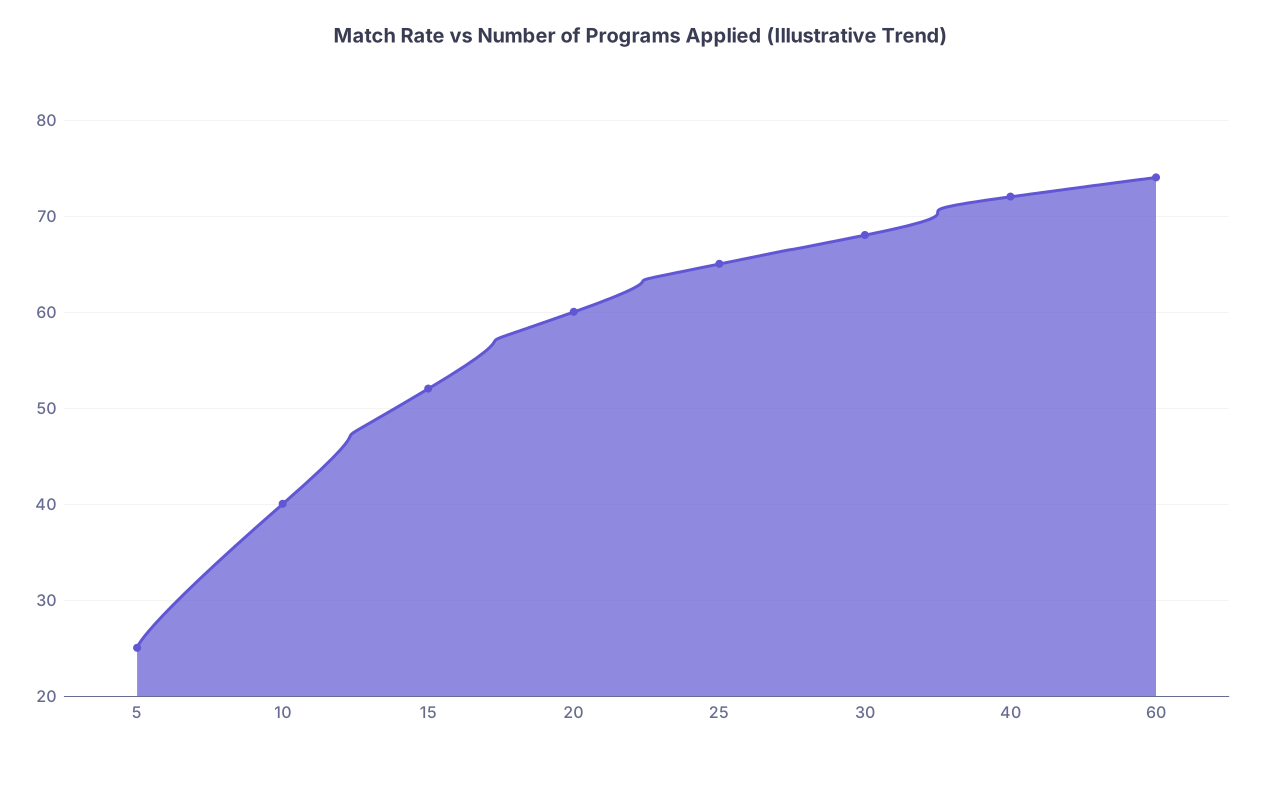
This is one of the most frequent questions in any IMG residency guide: how many programs to apply to? The answer: it depends on your profile, specialty, and visa needs—but there are evidence-based ranges you can use.
General Principles
- Your goal is not just to match; it’s to match into a program that
- Will train you well, and
- Gives you access to addiction medicine exposure and mentorship.
- As an IMG, especially needing a visa, you must apply broadly enough to overcome systemic barriers.
- Quality > Quantity, but once a minimum volume is reached, every additional appropriate application increases options.
Recommended Application Ranges (U.S. Residency)
Below are approximate ranges for common core specialties for an IMG interested in Addiction Medicine. These numbers assume ERAS applications in the U.S.
Internal Medicine (Categorical)
- Strong IMG (good scores, recent grad, minimal red flags):
60–80 programs - Average IMG:
90–120 programs - Challenged IMG (low scores, older grad, multiple attempts):
130–160+ programs
Family Medicine
- Strong IMG:
40–60 programs - Average IMG:
70–90 programs - Challenged IMG:
100–130+ programs
Psychiatry
Psychiatry is competitive and less IMG-friendly in certain regions.
- Strong IMG:
60–80 programs - Average IMG:
90–120 programs - Challenged IMG:
130–160+ programs
You may mix specialties (e.g., 70 IM + 50 FM), particularly if you’re deeply committed to addiction work and flexible about core specialty.
Adjusting for Visa Status
If you need visa sponsorship, especially H-1B:
- Increase the numbers above by 20–30%, or
- Maintain the same number but filter out non-sponsoring programs and expand geographically to compensate.
Balancing Budget and Strategy
Application fees rise with each additional program. To use a smart program selection strategy:
- Decide your essential minimum (e.g., 70–80 programs).
- Allocate additional funds only if:
- You have significant red flags, or
- You’re aiming at more competitive regions/specialties.
- Prioritize programs where your profile is realistic and which offer robust substance abuse training options.
Step 3: Building a Targeted Program List for Addiction Medicine–Oriented IMGs
Now that you know approximately how many programs to apply to, the next step is to identify which ones. For an IMG aiming for Addiction Medicine, you need a dual filter:
- IMG-friendliness
- Addiction-related exposure and training
A. Filter 1 – IMG-Friendliness
Use databases and public information to identify:
- Programs with a history of matching IMGs (look at current residents’ bios/photos).
- Explicit mention of:
- ECFMG certification accepted
- J-1 or H-1B sponsorship
- Fewer restrictions on:
- Years since graduation
- U.S. clinical experience
Practical Steps:
- Use official program websites + FREIDA (U.S.) or CaRMS (Canada) for data.
- Review resident rosters and count how many appear to be IMGs.
- Search “international medical graduate” or “ECFMG” on program websites.
- Note any programs that:
- Don’t list exam cutoffs
- Have current residents who graduated ≥7–10 years ago (good sign for older grads)
B. Filter 2 – Addiction Medicine and Substance Abuse Training
Once you have a broad list of IMG-friendly programs, refine based on your addiction medicine goals. Look for evidence of:
Addiction Medicine Fellowship on-site or affiliated
- Programs that also host an addiction medicine fellowship are prime choices.
- This indicates committed faculty, a clinic structure, and research activity in substance use disorders.
Dedicated Rotations or Curriculum in Substance Use Disorders Examples:
- Required Addiction Medicine rotation
- Integrated modules on opioid use disorder, methadone/buprenorphine, harm reduction
- Training in SBIRT (Screening, Brief Intervention, and Referral to Treatment)
Clinical Sites Reflecting Addiction Care
- Methadone clinics, buprenorphine-based MAT clinics
- Needle exchange/harm reduction programs
- Consultation-liaison services specifically for substance use
- Integrated behavioral health with substance use counseling
Faculty with Addiction Expertise
- Core faculty with titles like:
- “Director of Addiction Services”
- “Addiction Medicine Specialist”
- Faculty with publications or leadership roles in addiction-focused organizations
- Core faculty with titles like:
Research or QI Projects in Addiction
- Ongoing studies or projects related to:
- Opioid prescribing
- Overdose prevention
- SUD screening/management
- Public health interventions
- Ongoing studies or projects related to:

Step 4: Prioritizing and Tiering Your Program List
Once you’ve filtered for IMG-friendliness and addiction training, you may still have a list longer than you can afford to apply to. This is where tiering your list becomes essential.
Tiering Strategy
Divide your programs into three tiers based on match probability and desirability from an Addiction Medicine perspective.
Tier 1 – High Fit / Realistic Reach
Characteristics:
- Strong IMG track record
- Accept your visa type
- Have clear substance abuse training components:
- Addiction Medicine rotation, on-site fellowship, or MAT clinics
- Your stats are within or slightly below their typical accepted range
These are your core “must-apply” programs.
Tier 2 – Safety Programs
Characteristics:
- Very IMG-friendly, often in less competitive geographic areas (rural, smaller cities)
- Possibly more flexible with scores and graduation year
- May have:
- Less formal addiction curriculum, but
- Access to underserved or high SUD-burden populations, where you can create your own addiction-focused opportunities
You should ensure a good number of Tier 2 programs in your total list, especially if you have red flags.
Tier 3 – Aspirational/Competitive
Characteristics:
- Located in popular metro or coastal areas
- Affiliated with prestigious universities
- Some addiction-related strengths:
- Research-heavy addiction programs
- Renowned faculty
- Limited history of taking IMGs or higher score expectations
Apply to some, but avoid overloading this tier at the expense of more realistic programs.
Example Allocation (For an Average IMG in Internal Medicine, Target ~100 Programs)
- Tier 1 (High Fit): 40–50
- Tier 2 (Safety): 35–45
- Tier 3 (Aspirational): 10–20
Use similar proportions for Family Medicine or Psychiatry, adjusting to your total number.
Step 5: Evaluating Programs for Long-Term Addiction Medicine Career Growth
Beyond simply matching, you want an environment that practically prepares you for Addiction Medicine fellowship and practice.
Key Questions to Ask (on Websites or During Interviews)
Addiction Exposure and Curriculum
- “Does your residency have a dedicated Addiction Medicine rotation?”
- “How are residents trained in managing opioid use disorder and other SUDs?”
- “Do residents get experience with buprenorphine, methadone programs, or harm reduction services?”
Mentorship and Faculty
- “Is there faculty board-certified in Addiction Medicine or Addiction Psychiatry?”
- “Can residents easily find mentors to support addiction-related QI or research?”
Fellowship Pipeline
- “Have recent graduates pursued Addiction Medicine fellowships?”
- “Do you have an in-house Addiction Medicine Fellowship?”
- “How does the program support residents applying for addiction fellowships?”
Patient Population and Clinical Sites
- “Do residents rotate through community clinics, public hospitals, or VA systems with high SUD prevalence?”
- “Is there collaboration with social work, psychology, or community addiction services?”
Research and Quality Improvement
- “Are there ongoing projects related to SUDs, overdose prevention, or population health?”
- “How easy is it for a resident to initiate an addiction-focused scholarly project?”
Red Flags for an Addiction-Focused IMG
While some programs offer organic exposure even without formal Addiction Medicine labels, be cautious if:
- There is no mention anywhere of substance use, SUDs, or MAT in the curriculum.
- No faculty list any interest even remotely related to:
- Behavioral health
- Public health/addiction
- Community medicine reaching high-risk populations
- Program leadership appears ambivalent about addiction as a core competency.
Step 6: Strategy for Addiction Medicine Fellowship Applications as an IMG
Once in residency, your next-level program selection strategy will focus on Addiction Medicine Fellowship programs.
Fellowship Competitiveness for IMGs
The field is growing, and many addiction medicine fellowships are open to IMGs, often more so than top-tier primary residencies. But there are still considerations:
- Some university-based fellowships may prefer U.S. graduates.
- Visa sponsorship policies vary.
- Clinical research-heavy programs may expect prior publications.
How Many Addiction Medicine Fellowships to Apply To?
Typical ranges for fellowship applications are lower than for residency, but as an IMG you should err on the side of generosity:
- Strong IMG resident (good performance, strong letters, addiction activities):
10–15 programs - Average profile:
15–25 programs - With multiple constraints (visa + limited addiction activities):
20–30 programs
Selecting Addiction Medicine Fellowships Strategically
Prioritize fellowships that:
- Have a history of accepting IMGs
- Offer visa sponsorship consistent with your needs
- Provide training across:
- Outpatient and inpatient addiction medicine
- MAT (methadone, buprenorphine, naltrexone, etc.)
- Special populations (pregnant patients, adolescents, dual-diagnosis, justice-involved populations)
Also consider:
- Research vs Clinical Focus – what fits your career vision?
- Community vs Academic Setting – where do you see yourself working long term?
- Networking potential – placement of prior graduates in jobs or academic positions
Step 7: Action Plan and Timeline for IMGs Targeting Addiction Medicine
To pull everything together, here’s a streamlined actionable plan.
Pre-Application Year (Residency Phase)
- Clarify core specialty (IM, FM, or Psychiatry) based on:
- Your interests
- Competitiveness as IMG
- Regional opportunities
- Assess your profile honestly:
- Scores, attempts, graduation year, visa needs
- Research programs:
- Build an Excel/Sheets document with columns:
- IMG history
- Visa type
- Addiction medicine rotation
- Faculty addiction expertise
- In-house fellowship (Y/N)
- Build an Excel/Sheets document with columns:
- Set your application volume:
- Use the ranges above to decide how many programs to apply to in your primary and secondary specialties.
- Work on addiction-focused CV elements:
- Electives or observerships in addiction clinics
- Research or QI projects related to SUDs
- Volunteering with community organizations (e.g., harm reduction, shelters)
Application Season
- Submit ERAS early with:
- A personal statement that explains:
- Why you, as an international medical graduate, are committed to addiction medicine
- How addiction is a global public health issue you’ve seen firsthand
- LORs that highlight your skills in:
- Communication
- Working with vulnerable or stigmatized populations
- A personal statement that explains:
- Target your programs:
- Apply to your full list at the outset if possible
- If budget-limited, prioritize Tier 1 and Tier 2
- Prepare for interviews:
- Be ready to discuss:
- Cases involving substance use disorders
- Ethical and cultural issues in addiction care
- Your long-term goal (Addiction Medicine Fellowship and career)
- Be ready to discuss:
During Residency
- Seek addiction-related rotations early when possible.
- Build relationships with addiction-focused faculty or psychiatrists.
- Start at least one addiction-focused scholarly project.
- Attend local or national meetings (e.g., ASAM, APA with addiction tracks).
- In PGY-2 or equivalent, begin your fellowship search using similar filtering strategies to residency.
FAQs: Program Selection Strategy for IMGs in Addiction Medicine
1. As an IMG, which core residency is best if I want to pursue Addiction Medicine?
Internal Medicine, Family Medicine, and Psychiatry are the most common and practical pathways. For IMGs:
- Internal Medicine – strong hospital-based training, broad fellowship options, many addiction fellowships linked to IM/Primary Care.
- Family Medicine – excellent for outpatient addiction care, MAT in primary care, community and rural practice.
- Psychiatry – best for dual-diagnosis and mental health + addiction focus, but often more competitive for IMGs.
Choose based on where you will be most competitive and what type of patients you envision working with.
2. How many residency programs should I apply to as an IMG interested in Addiction Medicine?
Numbers vary, but a general guide for the U.S.:
- Internal Medicine: 60–80 (strong), 90–120 (average), 130–160+ (challenged)
- Family Medicine: 40–60 (strong), 70–90 (average), 100–130+ (challenged)
- Psychiatry: 60–80 (strong), 90–120 (average), 130–160+ (challenged)
If you require visa sponsorship, especially H-1B, consider increasing by ~20–30% or widening your geographic range.
3. What should I look for in a residency program if I know I want an Addiction Medicine Fellowship later?
Key elements:
- History of addiction medicine rotations or SUD curriculum
- Presence of Addiction Medicine Fellowship on-site or affiliated
- Faculty with addiction medicine or addiction psychiatry expertise
- Opportunities for SUD-related research/QI
- Clinical exposure to MAT programs, inpatient consult services, and community addiction services
These features give you experience, mentorship, and stronger fellowship applications later.
4. Are Addiction Medicine Fellowships IMG-friendly, and how many should I apply to?
Many addiction medicine fellowships are open to IMGs, but visa and institutional policies differ. A rough guide:
- Strong resident profile: 10–15 programs
- Average profile: 15–25 programs
- Additional constraints (visa, limited addiction experience): 20–30 programs
Research each program’s visa policy, prior fellows’ backgrounds, and addiction training structure to create a realistic and strategic list.
By approaching your applications with a structured program selection strategy, understanding how many programs to apply to, and carefully targeting institutions that align with both IMG-friendliness and substance abuse training, you greatly improve your chances—not just of matching, but of launching a sustainable, impactful career in Addiction Medicine.