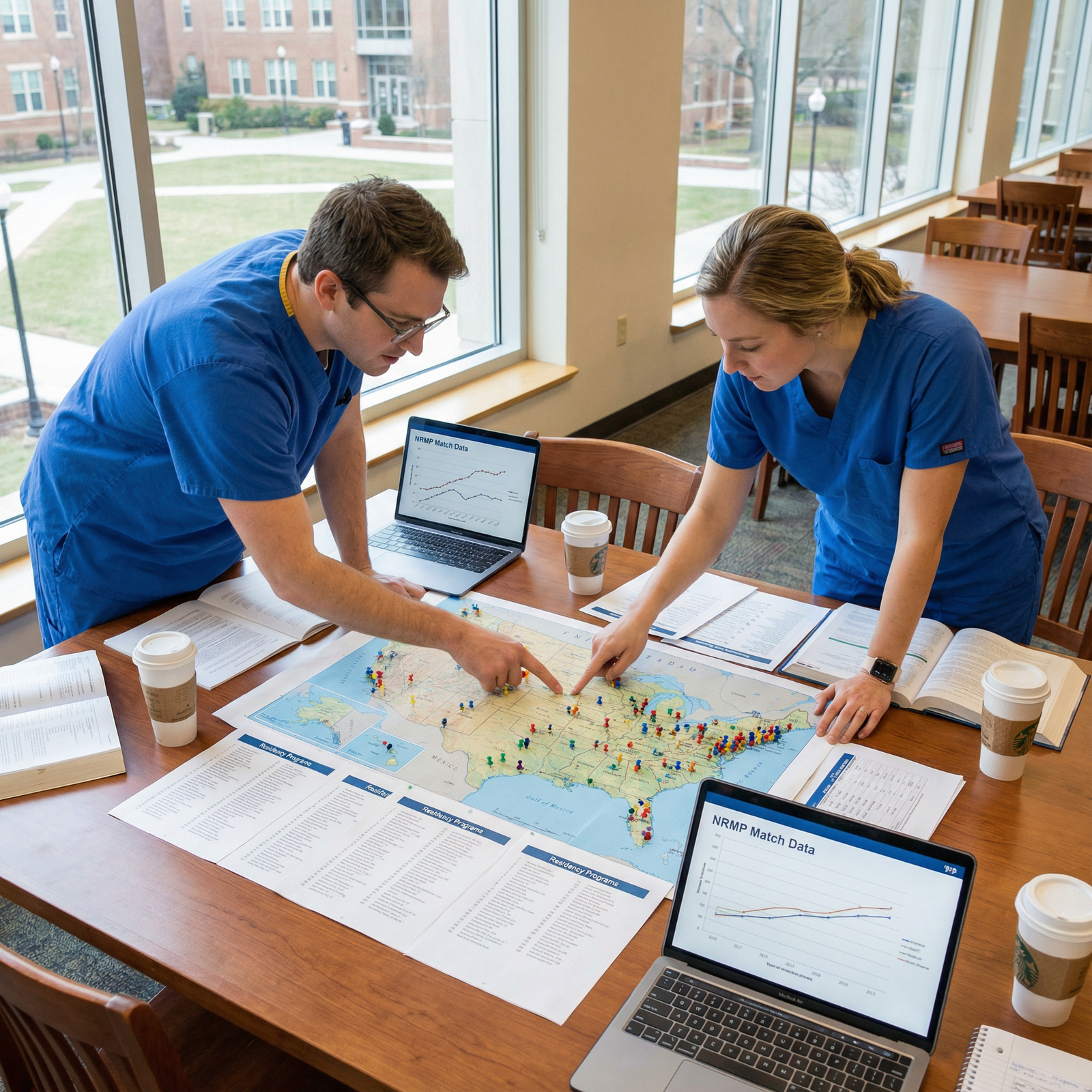
Selecting the right cardiothoracic surgery residency programs as an international medical graduate (IMG) is one of the most strategic and high‑stakes decisions you will make in your career. Cardiothoracic surgery is small, competitive, and intensely training‑heavy. For IMGs, every application slot, every email, and every interview invitation matters.
This IMG residency guide will walk you step‑by‑step through a practical, data‑driven program selection strategy tailored specifically to IMGs pursuing cardiothoracic surgery residency or integrated heart surgery training pathways in the U.S. and similar systems. We’ll also address common questions like how many programs to apply to and how to choose residency programs in a realistic, grounded way.
Understanding the Cardiothoracic Training Pathways (and Why They Matter for IMGs)
Before building a program list, you must understand the training structures and where IMGs typically fit best. Your program selection strategy depends heavily on which pathway you pursue.
1. Traditional Pathway: General Surgery → Cardiothoracic Fellowship
Historically, most cardiothoracic surgeons have followed this route:
- 5–7 years of General Surgery residency
- 2–3 years of Cardiothoracic Surgery fellowship (ACGME-accredited)
Advantages for IMGs:
- More positions and more IMG-friendly: General surgery has a larger number of residency positions than cardiothoracic surgery residencies, and a higher proportion of programs that routinely consider IMGs.
- Time to build a U.S. portfolio: During general surgery you can strengthen your CV—research, letters, publications, and clinical outcomes—before applying for CT fellowship.
- Geographic flexibility: You can train in general surgery at one institution and then move to a top-tier cardiothoracic center for fellowship.
Disadvantages:
- Longer total training time.
- Not all general surgery programs provide strong exposure to cardiothoracic surgery or robust mentorship in the field.
- Competition for top cardiothoracic fellowships is still intense.
2. Integrated Cardiothoracic Surgery Residency (I‑6)
The I‑6 pathway combines general and cardiothoracic training into a single 6‑year residency directly after medical school.
Advantages:
- Straight line from medical school to heart surgery training with early and continuous exposure to cardiothoracic surgery.
- Structured, cohesive curriculum designed specifically for future CT surgeons.
Key Challenges for IMGs:
- Very few positions nationwide compared with general surgery.
- Many I‑6 programs rarely or never take IMGs.
- Selection is extremely competitive, with a strong emphasis on:
- Top‑tier exam scores
- Research (especially in cardiothoracic/vascular fields)
- U.S. clinical experience and letters from CT surgeons
- Demonstrated long‑term commitment to cardiac or thoracic surgery
For many IMGs, the probability of matching is significantly higher via general surgery → CT fellowship than via I‑6. However, if you have an exceptional profile and early CT exposure, a carefully targeted I‑6 application can be part of a broader strategy.
3. Independent Cardiothoracic Fellowship (Post‑General Surgery)
Even if your final goal is CT surgery, your first match is usually into general surgery. Therefore:
- Your program selection strategy should primarily focus on choosing general surgery programs that:
- Frequently feed graduates into strong cardiothoracic fellowships,
- Have a CT surgery department on site, and
- Provide good exposure to cardiac and thoracic ORs, ICU, and research.
This means your CT career really begins with strategic selection of general surgery programs, then a later strategic selection of CT fellowships.

Step 1: Clarify Your Personal Profile and Constraints
A strong program selection strategy starts with a clear assessment of who you are as a candidate and what limitations or strengths you bring. This is especially critical for IMGs aiming for such a specialized field.
Key Profile Dimensions to Assess
Exam Performance (USMLE/COMLEX or Equivalent)
- Step 1 (if scored) and Step 2 CK remain central in screening.
- Competitive I‑6 applicants typically have top‑decile scores.
- For general surgery, strongly competitive scores are helpful but not always mandatory if you have mitigating strengths.
Visa Status
- Are you U.S. citizen / permanent resident?
- Require J‑1?
- Require H‑1B?
- Some programs do not sponsor visas; others sponsor J‑1 only; a smaller subset will sponsor H‑1B.
- Visa sponsorship is one of the most practical filters when deciding how many programs to apply to and which.
Medical School Background
- Is your school recognized / well‑known to U.S. program directors?
- Is it English‑language instruction?
- Does it have alumni in U.S. residencies, especially surgery?
Clinical Experience in the U.S.
- Hands‑on U.S. clinical experience (USCE) in surgery or ICU is highly valuable.
- Observerships are better than nothing but weaker than true clerkships or sub‑internships.
- Strong U.S. letters of recommendation, especially from surgeons, can compensate for some academic gaps.
Research Profile
- CT surgery is a research‑intensive field, especially at academic centers.
- Publications (PubMed‑indexed), presentations, abstracts, and quality improvement projects in:
- Cardiac surgery,
- Thoracic oncology,
- Vascular surgery,
- Critical care, or
- Outcomes research
all demonstrate commitment and potential.
Personal Constraints
- Geographic limitations (family, spouse, financial, cultural support).
- Tolerance for high workload and research-heavy programs.
- Willingness to move for preliminary positions or research years.
Once you define your profile, you’re ready to think about program tiers and realistic targets.
Step 2: Tiering Programs and Building a Rational Program List
A deliberate program selection strategy means avoiding both extremes:
- Applying to too few programs (high risk of not matching).
- Applying indiscriminately to every program in the country (expensive, unfocused, and often ineffective).
Understanding Program Tiers (for General Surgery and I‑6)
For an IMG interested in cardiothoracic surgery, think of programs in approximate tiers:
Tier 1: Highly Competitive, Research-Intensive Academic Centers
- Examples: major university hospitals, NCI‑designated cancer centers, large academic heart centers.
- Features:
- Strong cardiothoracic department and fellowship on‑site.
- High research output; many residents with publications.
- Usually limited IMG intake; some may have historically matched IMGs with outstanding profiles.
- Best suited for:
- IMGs with excellent scores, substantial research in CT/thoracic, and strong U.S. letters.
Tier 2: Solid Academic or Hybrid Programs with CT Exposure
- Mid‑sized university or large community academic affiliates.
- May have:
- Thoracic or cardiac surgeons on site,
- Regular CT rotations,
- Established pathways for residents to match into CT fellowships.
- More likely to consider well‑prepared IMGs, especially those with:
- Solid (even if not perfect) scores,
- Some research or strong clinical evaluations.
Tier 3: Community or Regional Programs with Variable CT Exposure
- Community-based general surgery programs, possibly with limited in‑house CT but:
- Affiliated rotations at tertiary CT centers, or
- Good alumni track record in CT fellowship.
- Often more IMG‑friendly, but you must verify that recent graduates have actually gone into cardiothoracic.
- Community-based general surgery programs, possibly with limited in‑house CT but:
Within integrated I‑6 cardiothoracic surgery residencies, most programs function like Tier 1 in competitiveness, with very few seats and intense competition.
How Many Programs to Apply To?
The number depends on your competitiveness, visa needs, and pathway. Approximate ranges (for IMGs aiming at becoming cardiothoracic surgeons):
General Surgery (Categorical) as Primary Pathway
- Strong IMG profile (high scores, U.S. research, strong letters, some U.S. clinical):
- 40–70 categorical general surgery programs.
- Average IMG profile (moderate scores, limited U.S. research/experience):
- 70–120 categorical programs, plus a selective number of preliminary positions.
- Weaker or high‑risk profile (low scores, older graduation, limited U.S. exposure):
- 100+ categorical programs, plus additional preliminary programs as a backup.
- Strong IMG profile (high scores, U.S. research, strong letters, some U.S. clinical):
Integrated I‑6 Cardiothoracic Surgery
- Even for a very strong IMG, treat I‑6 as a high‑risk “bonus” pathway:
- 5–15 I‑6 programs max,
- always combined with a broad general surgery application strategy.
- Do not rely solely on I‑6 unless your credentials are truly exceptional and you fully accept the match risk.
- Even for a very strong IMG, treat I‑6 as a high‑risk “bonus” pathway:
Balancing Cost and Yield
- Application fees increase as you apply to more programs, especially beyond 30–40.
- Focus on quality and fit, not just quantity:
- Avoid applying to programs that clearly do not sponsor your visa or have zero history of IMGs where your profile does not stand out.
- Use data (NRMP, FREIDA, program websites, alumni lists) to refine your list.

Step 3: Practical Filters for Choosing Programs (Beyond Reputation)
When deciding how to choose residency programs for a cardiothoracic‑focused career, you need to look far beyond just “big names.” For an IMG, the most important filters include:
1. Visa Sponsorship and IMG Policy
- Start by filtering programs based on:
- Whether they sponsor J‑1 and/or H‑1B.
- Whether they explicitly accept IMGs on their website or in FREIDA.
- Look at recent resident rosters:
- Do you see graduates from international schools?
- Is there at least one IMG in the last 5–10 years?
- If visa or IMG status is unclear, you can:
- Email the program coordinator politely.
- Ask current residents via LinkedIn or program contacts.
2. Evidence of Cardiothoracic Exposure and Support
For general surgery programs, ask:
- Does the program have:
- In‑house cardiothoracic surgery service?
- A thoracic oncology service?
- Access to cardiac ICU and postoperative CT care?
- Are there rotations in:
- Cardiac surgery,
- Thoracic surgery,
- Vascular surgery?
- Does the website or resident CVs show:
- Graduates matching into CT fellowships?
- Faculty with CT surgery board certification?
Red flag: Programs where residents consistently go into general surgery practice only, with no graduates entering CT fellowships, may make your later transition to CT more difficult.
3. Research Infrastructure
- Check if the institution:
- Publishes frequently in Journal of Thoracic and Cardiovascular Surgery, Annals of Thoracic Surgery, JTCVS Open, or related journals.
- Has a CT or cardiology research lab, outcomes research group, or MPO (morbidity and mortality) database.
- Look for:
- Research months or protected time offered to residents.
- Mandatory or elective research years for those targeting competitive fellowships.
- For your heart surgery training ambitions, research is a powerful currency:
- It boosts your future CT fellowship application.
- It helps you build relationships with CT faculty and letter writers.
4. Alumni Outcomes and Network
A strong IMG residency guide should emphasize this: the best predictor of what a program will help you achieve is what their recent graduates have done.
- Search program websites and alumni profiles:
- How many graduates entered cardiac or thoracic fellowships in the last 5–10 years?
- At which institutions (e.g., nationally recognized CT centers vs. smaller programs)?
- If possible, contact:
- Alumni who are now in CT fellowships or practice.
- Ask about:
- How well their general surgery training prepared them,
- Whether they had CT mentors early on,
- Whether IMGs received equal support for fellowship applications.
5. Culture, Size, and Support for IMGs
- Consider:
- Program size (larger programs often have more diverse residents and mentorship opportunities).
- Geographic location (metropolitan areas sometimes have more diverse faculty and residents).
- Presence of international faculty or former IMGs among attending surgeons.
You can assess this via:
- Virtual open houses,
- Conversations with current residents,
- Social media (program Instagram/Twitter/X accounts),
- Alumni networks.
Programs where IMGs have thrived—not just survived—are more likely to provide the mentorship and support you need for a future in cardiothoracic surgery.
Step 4: Constructing a Balanced, Strategic Application Portfolio
With your filters in place, build a tiered list of programs and then adjust the numbers based on your risk tolerance.
Example Portfolio for a Strong IMG Focused on CT
Assume:
- High USMLE scores,
- Several U.S. rotations,
- At least 2–3 surgery‑related publications,
- Good letters from U.S. surgeons.
Your list might look like:
- Integrated I‑6 CT Programs:
- 5–10 programs where:
- They historically accept or at least interview IMGs,
- You have a connection (research collaboration, elective, faculty contact), or
- Your profile stands out (e.g., CT research, strong letters).
- 5–10 programs where:
- General Surgery Categorical Programs (primary focus):
- 10–20 Tier 1 academic centers with strong CT departments and occasional IMG matches.
- 20–30 Tier 2 academic/hybrid programs with clear CT exposure and regular IMG intake.
- 10–20 Tier 3 community programs with CT rotations or affiliation and a record of supporting fellowships.
Total: 40–70 general surgery programs + 5–10 I‑6 programs.
Example Portfolio for an Average IMG with CT Ambition
Assume:
- Moderate scores,
- Limited U.S. clinical exposure,
- Some research or strong home‑country surgical experience.
Your list might lean more toward IMG‑friendly institutions:
- Integrated I‑6 CT Programs:
- 0–5 (only if you have at least some CT‑related research or strong letters).
- General Surgery Categorical Programs:
- 5–10 Tier 1 (stretch targets if you have some research or unique strengths).
- 25–40 Tier 2.
- 40–60 Tier 3 with proven IMG acceptance.
- Preliminary General Surgery Programs (Backup):
- 10–20 prelim programs, focusing on:
- Large academic centers,
- Institutions with CT fellowships,
- Potential for transition to categorical spots.
- 10–20 prelim programs, focusing on:
Total: 70–120 categorical programs + 10–20 prelim + 0–5 I‑6.
Step 5: Maximizing Your Competitiveness for Cardiothoracic‑Focused Programs
Program selection is only half the battle. Once you have a target list, you must align your application content and experiences with your stated goal of cardiothoracic surgery.
1. Tailor Your Personal Statement and CV
- Emphasize:
- Long‑standing interest in heart and thoracic disease.
- Specific CT or thoracic cases that shaped your decision.
- Any cardiovascular physiology, anatomy, or ICU exposure.
- Highlight:
- Research relevant to cardiac, thoracic, vascular, critical care, or outcomes.
- Leadership roles in surgery or cardiology interest groups.
- Willingness to commit to rigorous training and long-term academic or clinical goals.
2. Strategic Letters of Recommendation
For an IMG targeting heart surgery training:
- Aim for at least one letter from a cardiothoracic or thoracic surgeon (if possible).
- Other letters can be from:
- General surgeons,
- Surgical intensivists,
- Internal medicine or cardiology faculty who know you well and can vouch for your clinical performance and work ethic.
- Strong letters from U.S.-based surgeons are particularly valuable for IMG applicants.
3. Communicating Your CT Interest Without Appearing Narrow
Program directors may worry that an applicant overly fixated on CT could be unhappy if they change their mind. Frame your interest as:
- A clear primary goal with:
- Openness to surgical training more broadly.
- Recognizing that outstanding general surgery skills are essential to being a good cardiothoracic surgeon.
- Emphasize:
- You value comprehensive general surgery training as the foundation of your career.
- You are committed to contributing to the program in all rotations, not just CT.
4. Using Interviews to Assess Fit
During interviews, especially at general surgery programs, ask targeted but respectful questions:
- “How many residents in the past 5 years have gone on to cardiothoracic or thoracic fellowships?”
- “Are there opportunities for residents to participate in cardiothoracic surgery research projects?”
- “How early in training do residents get exposure to the CT service or cardiac ICU?”
This both signals your interest and helps you further refine your ranking strategy.
Step 6: Ranking Strategy – Turning Your Program List into a Match Plan
Once interviews are complete, your rank list becomes the final stage of your program selection strategy.
For an IMG aiming for cardiothoracic surgery:
Prioritize Programs With:
- Strong CT exposure and mentorship,
- Demonstrated success in placing graduates into CT fellowships,
- Supportive culture for IMGs.
Balance Prestige vs. Practical Support
- A slightly less “famous” program where you will be:
- Well‑mentored,
- Supported in research,
- Given early OR responsibility
may be better for your CT career than a big‑name institution where competition for CT opportunities is intense and IMGs are rarely sponsored.
- A slightly less “famous” program where you will be:
Don’t Overvalue I‑6 Over a Strong General Surgery Training
- Matching into a robust general surgery program with excellent CT exposure can be a more secure and ultimately more effective route than banking everything on a rare I‑6 spot.
Be Honest About Geographic Limits
- Broader geographic flexibility increases your chance of:
- Matching,
- Finding a CT‑supportive environment.
- If you must restrict geography, compensate with a larger number of applications within that region.
- Broader geographic flexibility increases your chance of:
Frequently Asked Questions (FAQ)
1. As an IMG, should I apply to integrated I‑6 cardiothoracic surgery programs at all?
You can, but only as part of a broader strategy. I‑6 positions are few and intensely competitive; many programs rarely take IMGs. If you have:
- Very high exam scores,
- Substantial CT‑related research,
- Strong U.S. letters from CT surgeons,
then applying to 5–10 I‑6 programs where there is at least some evidence of IMG openness is reasonable. However, you should simultaneously apply broadly to general surgery and view I‑6 as a high‑risk bonus, not your sole pathway.
2. How many general surgery programs should I apply to if my goal is cardiothoracic surgery?
For most IMGs:
- Strong profile: approximately 40–70 categorical general surgery programs.
- Average profile: 70–120 categorical programs, plus 10–20 preliminary as backup.
Within that list, focus on programs with robust CT exposure, CT fellowships, and alumni who have successfully matched into CT. This approach balances the question of how many programs to apply with realistic match chances and financial constraints.
3. Is it possible to reach cardiothoracic surgery from a community general surgery program?
Yes, but you must be much more proactive and strategic:
- Choose community programs that:
- Have CT rotations or affiliations,
- Have at least some alumni going into CT fellowships.
- During training:
- Seek CT‑focused research,
- Attend CT conferences,
- Network with CT faculty at affiliated academic centers.
- A strong, motivated resident from a community program can absolutely match into CT fellowship, but it requires planning, initiative, and mentorship from early in residency.
4. What are the biggest mistakes IMGs make in cardiothoracic program selection?
Common pitfalls include:
- Over‑applying to top-tier I‑6 programs while under‑applying to general surgery.
- Ignoring visa sponsorship realities and wasting applications on programs that cannot sponsor them.
- Failing to check alumni outcomes, selecting programs with no track record of placing residents into CT fellowships.
- Choosing programs solely based on city or prestige, rather than genuine:
- CT exposure,
- Research opportunities,
- Support for IMGs.
Avoiding these mistakes—and following a structured program selection strategy—will significantly increase your likelihood of ultimately achieving your goal of a successful cardiothoracic surgery career as an international medical graduate.