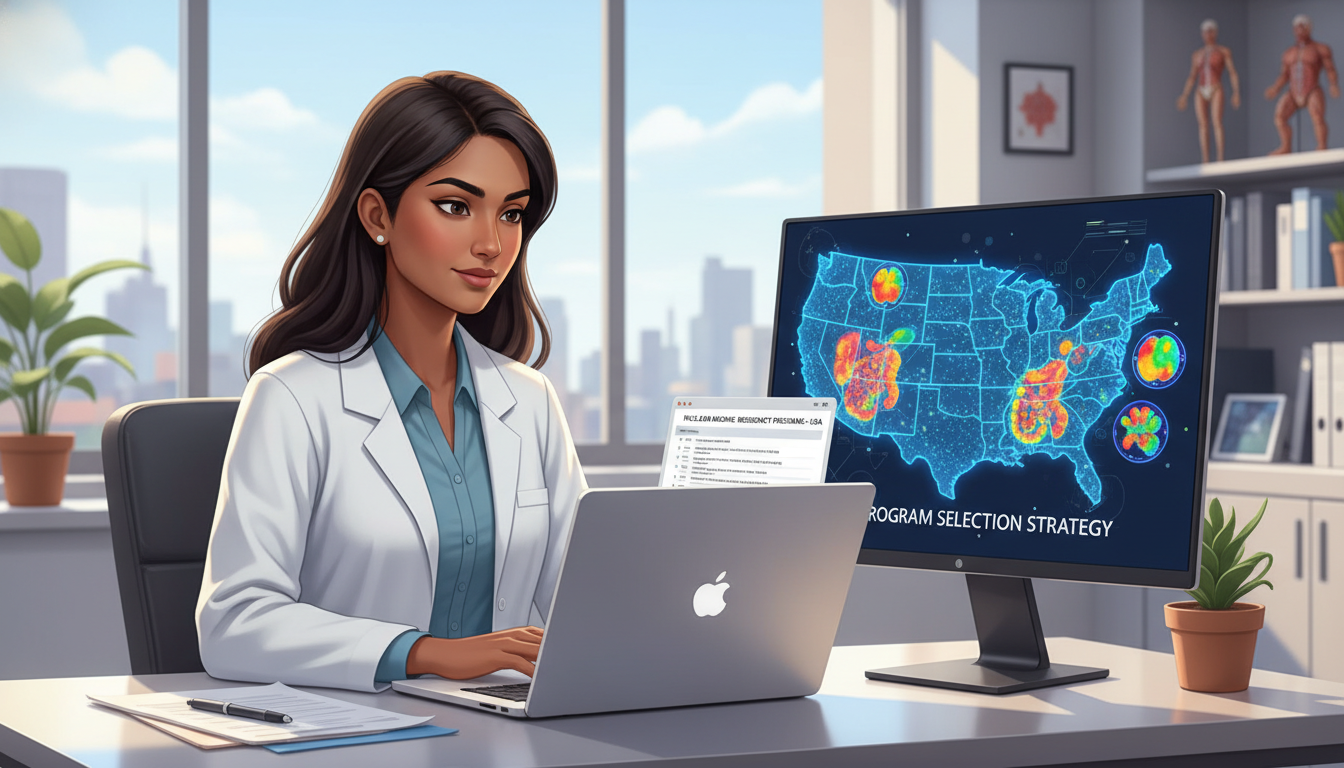
Clinical informatics is one of the fastest-growing and most strategically important fields in medicine. For an international medical graduate (IMG), it can also be one of the most complex to navigate—especially when you’re trying to decide where to apply and how many programs to include on your list.
This IMG residency guide focuses specifically on program selection strategy for pursuing clinical informatics training in the U.S.—whether through a Clinical Informatics Fellowship, combined pathways (e.g., internal medicine + informatics), or health IT–focused training environments. You’ll learn how to evaluate your profile, research programs, and build a balanced list that maximizes your chances of matching while aligning with your career goals.
Understanding the Clinical Informatics Pathways as an IMG
Before you can design a program selection strategy, you need a clear understanding of how clinical informatics training is structured in the U.S.—and what’s realistic for an IMG.
1. What is Clinical Informatics?
Clinical informatics is the application of information technology and data science to improve patient care, health systems, and population health. It includes:
- Electronic health record (EHR) design and optimization
- Clinical decision support systems
- Data analytics and quality improvement
- Interoperability and health information exchange
- Digital health, telemedicine, and mobile health
- AI/ML applications in clinical workflows
Your health IT training pathway may be different depending on where you currently stand in your career.
2. Training Pathways for Clinical Informatics
For IMGs, there are three common scenarios:
You are not yet in U.S. residency
- Primary route: Apply to a core clinical residency (e.g., Internal Medicine, Pediatrics, Family Medicine, Pathology, Emergency Medicine) with strong informatics opportunities.
- Later: After board eligibility/certification, apply to a Clinical Informatics Fellowship (2 years, ACGME-accredited).
You are already in or have completed a U.S. residency
- Primary route: Apply directly to an ACGME-accredited Clinical Informatics Fellowship.
- Alternative: Apply for non-ACGME health IT training positions (e.g., health systems innovation, research, data science) if fellowship options are limited.
You have non-U.S. residency training only
- Most ACGME-accredited Clinical Informatics Fellowships require U.S. ACGME residency completion and American Board eligibility.
- Strategy:
- Step 1: Match into a U.S. core specialty residency.
- Step 2: Target residency programs with strong informatics affiliations or tracks.
- Step 3: Apply to Clinical Informatics Fellowships after residency.
Understanding which category you fall into shapes your program selection strategy and the kind of programs you should prioritize.
Step 1: Clarify Your Career Goals and Starting Point
An effective program selection strategy starts with honest self-assessment—who you are now and who you want to become.
1. Clarify Your End Goal in Informatics
Examples of common end goals:
- Health system informatics leader (e.g., CMIO, CNIO, Director of Clinical Informatics)
- Clinical data scientist / analytics leader
- Digital health or telemedicine program director
- EHR implementation and optimization lead
- Academic informatician focusing on research, AI/ML, or population health
- Industry role in health tech, digital therapeutics, or medical AI
Each goal may point you toward different types of programs:
- Leadership track → Programs integrated with large health systems, strong operations exposure
- Data science/AI → Programs tied to robust bioinformatics or data science departments
- Academic career → University-based programs with well-funded research labs
- Industry interface → Programs with partnerships with EHR vendors, startups, or big tech
Be explicit: write down your top 2–3 career goals. You’ll use these as filters when comparing programs.
2. Assess Your Current Profile as an IMG
Key factors that influence your match strategy:
- USMLE scores (Step 1, Step 2 CK; Step 3 if taken)
- Visa status (needs J-1, H-1B, or no visa needed)
- Clinical experience
- U.S. clinical experience (USCE) vs. home-country practice only
- Any informatics-related clinical quality projects, EHR optimization work, etc.
- Technical background
- Prior degree in computer science, data science, engineering, or public health
- Programming skills (SQL, Python, R), data analytics, or EMR configuration exposure
- Research & publications
- Any informatics, digital health, AI, or quality improvement projects
- Language and communication
- Strong interpersonal skills, presentations, and teaching experience
Objectively rate yourself as:
- Highly competitive
- Moderately competitive
- Needing a broad and flexible strategy
Your competitiveness determines how many programs to apply and how broad your net should be.
Step 2: Identify the Right Target Programs and Settings
Your next task is to decide which kinds of programs might actually fit your trajectory.

1. For IMGs Not Yet in U.S. Residency
In this phase, you’re primarily exploring core residency programs that offer:
- Formal Clinical Informatics tracks, pathways, or electives
- Affiliation with an ACGME-accredited Clinical Informatics Fellowship
- Strong health IT infrastructure (e.g., Epic, Cerner, custom systems)
- Institutional emphasis on quality improvement and data-driven care
Targets by specialty (examples):
- Internal Medicine / Pediatrics / Family Medicine
- Programs at large academic centers with well-known informatics divisions
- Institutions where the CMIO or informatics team visibly engages residents
- Pathology
- Programs with digital pathology, LIMS integration, AI research
- Emergency Medicine
- Programs with teleemergency services, ED clinical decision support, and EHR innovation
Use search terms such as:
- “Internal Medicine residency clinical informatics track”
- “Emergency Medicine residency with health IT training”
- “Residency program with EHR optimization projects”
You’re not only learning how to choose residency programs, but how to align them tightly with long-term informatics goals.
2. For IMGs Applying Directly to Clinical Informatics Fellowships
If you already completed U.S. residency:
- Focus on ACGME-accredited Clinical Informatics Fellowships that:
- Explicitly mention accepting IMGs
- Have a history of sponsoring J-1 and/or H-1B visas
- Offer substantial protected time for data projects, research, and leadership roles
Also consider:
- Health IT training programs outside of formal ACGME fellowships:
- Innovation fellowships
- Digital health fellowships
- Data science programs within medical schools or health systems
These may not lead to ABPM board eligibility in Clinical Informatics, but they can still be valuable, especially for industry-oriented careers.
Step 3: Create Your Program Filter Checklist
A solid program selection strategy requires a consistent checklist for comparing options. Use the same criteria for every program so you can rank them rationally.
1. Core Filters (Deal-Breakers for IMG Applicants)
For each residency or fellowship, verify:
Visa sponsorship
- Do they sponsor J-1?
- Do they sponsor H-1B (more restrictive, especially for fellowships)?
- Are there recent IMGs in the program?
- Do they explicitly state “No visa sponsorship available”? (Cross these off early.)
Minimum score or attempt requirements
- Explicit cutoffs for USMLE (e.g., Step 2 CK > 220 or no more than 1 attempt).
- Time since graduation limits (e.g., within 5 or 7 years).
- Policy on Step 3 (often needed for H-1B sponsorship).
Accreditation and board eligibility
- For fellowships: ACGME-accredited Clinical Informatics = ABPM board-eligible.
- For residencies: Fully accredited with no probationary status.
Programs failing these core filters should be moved to a “do not apply” list unless there is a compelling reason.
2. Informatics-Specific Filters
Key factors for a strong clinical informatics environment:
EHR platform and maturity
- Epic, Cerner, or other advanced systems with robust decision support
- Evidence of active build, optimization, and innovation teams
Dedicated informatics faculty
- Board-certified clinical informaticians
- Faculty with strong publication records or leadership positions (CMIO, CIO, etc.)
Project opportunities for trainees
- QI/QA projects involving data extraction and analytics
- AI/ML, predictive modeling, or machine learning in operations
- EHR customization, order set development, clinical pathways
Research infrastructure
- Access to data warehouses or clinical data repositories
- Institutional Review Board (IRB) and support for trainee projects
- Possibility of first-author publications in informatics/digital health
Interdisciplinary environment
- Collaboration with computer science, engineering, public health, or business
- Joint offerings with schools of informatics, data science, or biomedical engineering
As an IMG, you want health IT training that allows you to demonstrate measurable impact—projects, publications, implemented tools—not just passive electives.
3. Personal and Practical Filters
Don’t ignore practical considerations:
- Location and cost of living
- Family considerations and support systems
- Climate and lifestyle
- Call schedule and work-life balance
- Safety and cultural environment
These may not directly affect your match probability, but they dramatically impact your life and well-being during training.
Step 4: Decide How Many Programs to Apply To
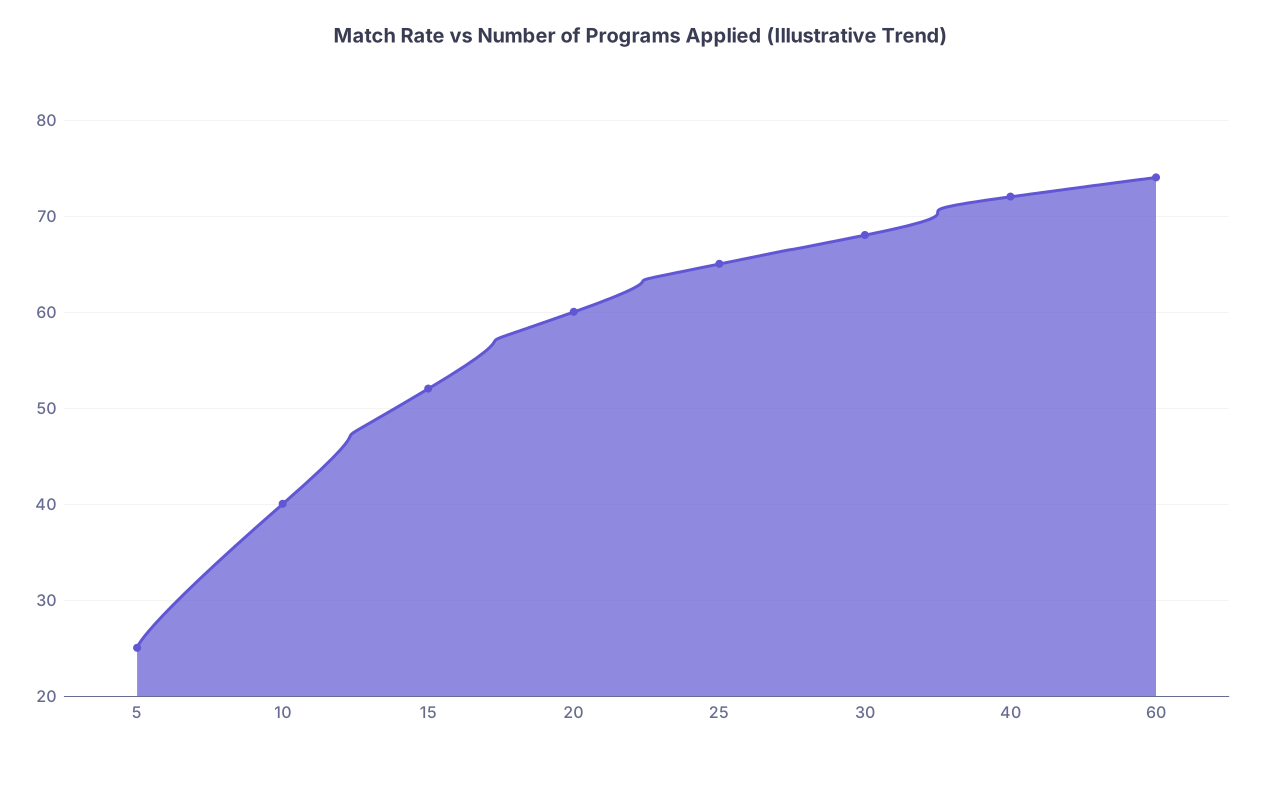
This is the question everyone asks: how many programs to apply to for residency and/or Clinical Informatics Fellowship—especially as an IMG.

There is no exact number that guarantees success, but we can build a rational range.
1. For Core Residency Applications (IM, FM, Pediatrics, etc.)
Typical U.S. graduates might apply to 20–40 programs in less competitive specialties. For IMGs—especially those targeting informatics-friendly institutions—the numbers are usually higher.
Suggested ranges (for IMGs):
Highly competitive profile
- Strong USMLE scores (top quartile), recent graduation, U.S. clinical experience, some informatics research
- Target: 30–50 residency programs, with:
- 15–25 “reach” (top-tier academic centers, strong informatics presence)
- 10–20 “solid” programs with good training and some informatics activity
- 5–10 “safety” programs with a history of accepting IMGs
Moderately competitive profile
- Average scores, 1–2 years since graduation, limited U.S. clinical experience, modest informatics exposure
- Target: 50–80 residency programs, with:
- 10–20 “reach”
- 25–40 “solid”
- 15–25 “safety” (community or mid-tier academic programs known to take IMGs)
Less competitive / multiple risk factors
- Older year of graduation, multiple attempts, minimal USCE, or visa restrictions
- Target: 80–120 residency programs, with:
- 5–10 “reach”
- 35–60 “solid”
- 40–60 “safety”
These numbers are high, but they reflect the reality that many IMGs face lower interview rates. Balance volume with quality: don’t sacrifice thoughtful, tailored applications just to hit a higher number.
Key point: As someone aiming for informatics, do not apply only to informatics-heavy academic centers. Include community and smaller academic programs; you can still do QI/data projects and later move into a Clinical Informatics Fellowship.
2. For Clinical Informatics Fellowship Applications
The number of ACGME-accredited Clinical Informatics Fellowships is much smaller than for core residencies, but competition can be intense—especially at major academic centers.
Typical ranges (for applicants with U.S. residency completed):
Highly competitive (strong informatics background)
- Robust informatics projects, publications, maybe a prior master’s in informatics or data science
- Target: 10–20 fellowships, including:
- 5–10 top-tier academic programs
- 5–10 mid-tier but strong training environments
Moderately competitive
- Solid clinical training, some informatics exposure (EHR projects, QI, but limited publications)
- Target: 15–25 fellowships, emphasizing:
- 5–10 aspirational top-tier programs
- 10–15 programs that explicitly welcome IMGs and have robust practical project work
Less competitive / limited informatics experience
- Few projects, minimal technical background, or visa complications
- Target: 20–30 fellowships, including:
- 5–10 aspirational
- 10–20 programs where your clinical strengths and motivation can stand out
In addition, consider 2–5 non-ACGME health IT training positions (e.g., digital health fellowships, quality informatics roles) as parallel options if you’re industry- or systems-oriented.
Step 5: Build a Balanced, Data-Driven Program List
Now that you know how to choose residency programs and fellowships in theory, you need to execute systematically.
1. Create a Spreadsheet (Or Database) of Programs
Include fields such as:
- Program name and specialty/pathway
- City/state and institution type (academic vs community)
- Visa sponsorship (J-1, H-1B, none)
- Prior IMGs in current or past classes
- Required scores / attempts / year-of-graduation limits
- Informatics features:
- EHR type (Epic, Cerner, others)
- Clinical Informatics Fellowship affiliation (Y/N, name of program)
- Dedicated informatics tracks/electives
- Named faculty informaticians (CMIO, fellowship directors)
- Research and project opportunities
- Your initial tier: Reach / Solid / Safety
- Subjective notes: pros, cons, culture, location preferences
This turns your IMG residency guide into a personalized, living database.
2. Use Public Data and Signals Wisely
To refine your program selection strategy, look for:
- Program websites and fellowship pages
- Faculty profiles (PubMed, Google Scholar for informatics publications)
- Program social media (X/Twitter, LinkedIn, YouTube) for informatics-related content
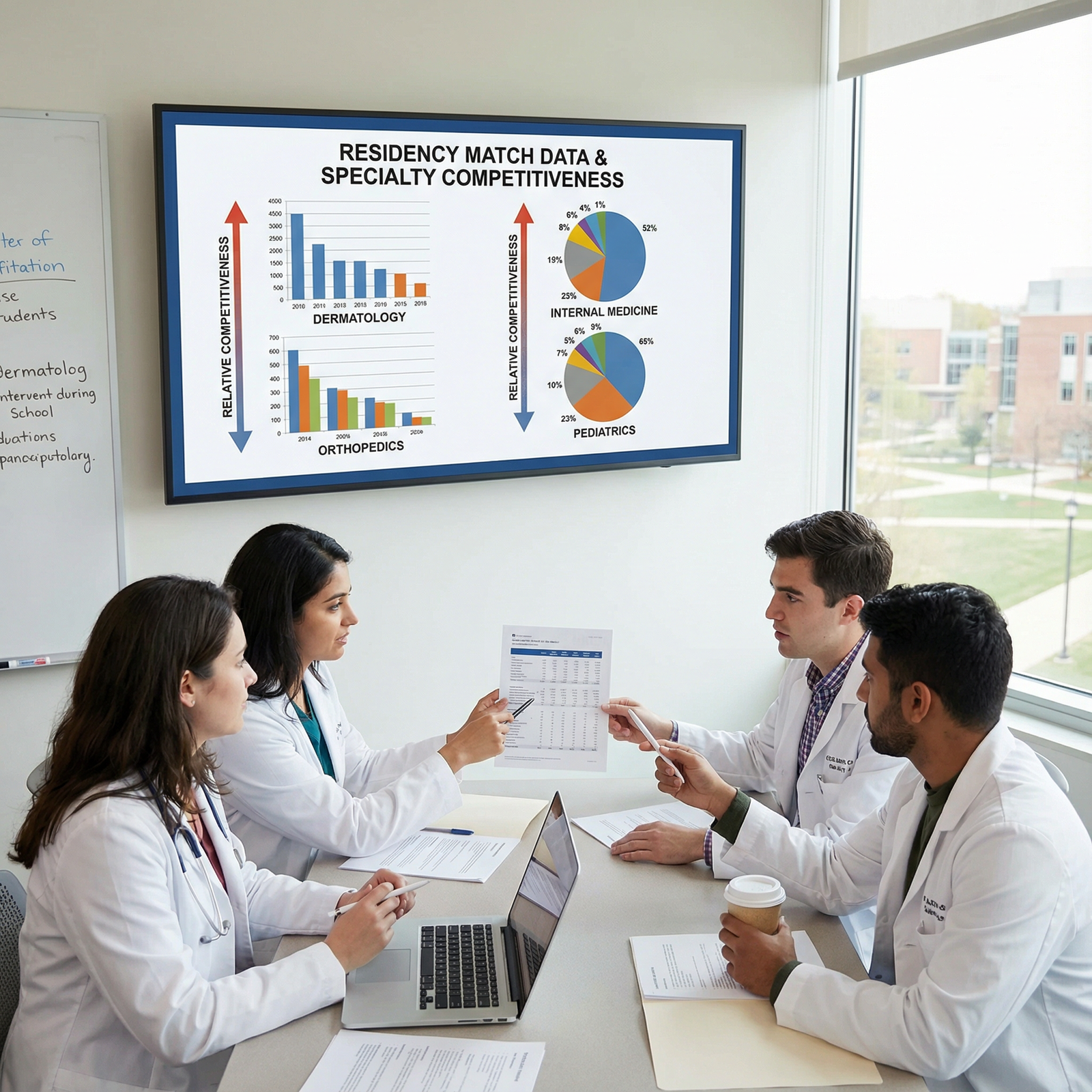
- NRMP Charting Outcomes data for IMGs (to estimate competitiveness by specialty)
- Program lists from AMIA or ABPM for Clinical Informatics Fellowships
While not all programs publish detailed statistics, a pattern of past IMGs, active projects, and informatics-oriented leadership is a very positive sign.
3. Balance Ambition and Realism
A good final list is:
- Ambitious enough to include aspirational programs that would be ideal for your goals
- Grounded enough that, based on your profile, you realistically can secure interviews
Example breakdown (IMG applying to Internal Medicine with informatics interest):
- 15 reach academic IM programs with Clinical Informatics Fellows on site
- 30 solid university-affiliated or mid-tier academic programs with good QI infrastructure
- 20 safety programs (community or smaller academic) with at least EHR-based projects or quality initiatives
Example breakdown (IMG with U.S. IM residency applying to Clinical Informatics Fellowships):
- 8 reach fellowships at large academic centers with major NIH-funded informatics research
- 10 solid programs at regional academic centers known for strong hospital operations and EHR innovation
- 5 safety options or non-ACGME digital health/analytics fellowships
Step 6: Tailor Your Application to Informatics and Follow Up Strategically
Even the best program selection strategy fails without a targeted application.
1. Align Your Personal Statement and CV with Informatics
Highlight:
- Concrete informatics-related experiences:
- EHR optimization projects
- Clinical decision support or order set improvements
- Dashboard or reporting design with IT teams
- Telemedicine implementation
- AI/ML, predictive analytics, or population health projects
- Technical skills (even basic) and desire for health IT training:
- Data querying, Excel, SQL, R, Python
- Participation in hackathons, digital health startups, or coding bootcamps
- Clear long-term vision:
- How you plan to integrate informatics into patient care, system redesign, or policy
Programs want to see evidence of sustained interest, not just a last-minute decision to “try” informatics.
2. Use Networking to Refine and Validate Your List
- Attend virtual open houses, AMIA events, or informatics webinars.
- Reach out (politely) to:
- Current or former fellows
- CMIOs or informatics faculty
- Residents in your home program who rotated through informatics electives
Ask targeted questions:
- “How involved are residents/fellows in EHR optimization?”
- “What types of informatics projects do trainees typically complete?”
- “Are there IMGs in your current or previous classes?”
The answers can move a program up or down in your ranking.
3. Adjust Your Strategy Based on Interview Yield
Once interviews start coming in:
- If you receive fewer interviews than expected (e.g., <8–10 for residency, <5 for fellowship) by the mid-season:
- Consider expanding your application list to additional solid and safety programs if the timeline allows (for fellowships, this is often less flexible, given rolling deadlines).
- If you receive many interviews:
- Begin prioritizing programs that best fit your long-term clinical informatics goals, not just name recognition.
This dynamic adjustment is crucial; it transforms a static plan into an adaptive program selection strategy.
Frequently Asked Questions (FAQ)
1. As an IMG interested in Clinical Informatics, should I prioritize big-name academic centers?
Prestige is valuable, but not at the expense of match probability. Many large academic centers are more competitive and may have fewer IMG positions. Your strategy should:
- Include some top-tier programs with strong informatics reputations.
- Balance them with mid-tier academic and community programs that:
- Sponsor visas,
- Have active EHR and QI projects, and
- Provide you with space to build a strong informatics portfolio.
Your long-term success often depends more on the quality of projects and mentorship you receive than just the brand name of your institution.
2. Is it possible to go into Clinical Informatics without a formal fellowship?
Yes, but with caveats. Some clinicians build informatics careers through:
- Internal health system roles (EHR physician champion, medical director of informatics)
- Non-ACGME digital health or innovation fellowships
- Industry roles in health tech (EHR vendors, AI startups, device companies)
However, a formal Clinical Informatics Fellowship (especially ACGME-accredited) significantly improves your competitiveness for leadership roles and ABPM board certification. For an IMG, a fellowship can also serve as a structured environment to consolidate U.S. experience and network.
3. Do I need a strong programming background to be competitive for Clinical Informatics programs?
Not necessarily—but it helps. Fellowship directors primarily look for:
- Solid clinical foundation
- Demonstrated interest in informatics (projects, QI, EHR work)
- Ability to think in systems and processes
Basic familiarity with data tools (SQL, Excel, R, or Python) and some comfort with technical teams are significant advantages. If you lack this background, you can:
- Take online courses in data analytics or health informatics
- Participate in small data/QI projects
- Highlight your learning trajectory and motivation in your personal statement
4. How can I tell if a residency program really supports informatics, beyond what is written on the website?
Look for concrete evidence:
- Named informatics faculty (with board certification listed)
- Ongoing or recent informatics publications from residents or faculty
- Presence of an affiliated Clinical Informatics Fellowship
- Detailed descriptions of EHR optimization projects, decision support, or data analytics in the program’s materials
- Feedback from current residents via networking or alumni from your own school
If informatics appears only as a vague keyword on a page, and you cannot find any concrete activities or projects, treat the claim cautiously and dig deeper before ranking it highly for informatics reasons.
By combining a clear understanding of your goals, a structured evaluation of programs, and a rational approach to how many programs to apply to, you can design a powerful program selection strategy as an international medical graduate pursuing clinical informatics. Your path might be longer and more complex than that of a U.S. graduate—but with deliberate planning, targeted health IT training, and strategic applications, you can position yourself exceptionally well for a meaningful, impactful career in Clinical Informatics.