Understanding the Unique Path of an IMG in Global Health
For an international medical graduate (IMG) interested in global health, program selection is not just about getting into any residency; it is about choosing training environments that align with your long-term goals in international medicine, health equity, and cross-cultural care.
A strong IMG residency guide must address three realities:
IMG status affects your options.
Visa needs, graduation year, exam history, and clinical experience directly influence which programs will seriously consider your application.Global health opportunities vary widely.
Some residencies offer a formal global health residency track; others have strong global health exposure without an official label; many have almost none, despite buzzwords on their website.Program volume and fit both matter.
You need a smart program selection strategy that balances how many programs to apply to and how well they fit your specific global health interests and IMG profile.
This article walks you step-by-step through building a practical, data-driven, and mission-focused program list as an IMG seeking a career in global health.
Step 1: Clarify Your Global Health Career Vision
Before you look at a single residency website, you need clarity on what “global health” means for you. It is a broad term, and your program selection strategy should reflect specific aims, not just a general interest.
Define Your Priority Roles in Global Health
Ask yourself what you realistically want to be doing 5–10 years after residency:
Clinical international medicine
- Working periodically at mission hospitals, NGOs, or humanitarian organizations
- Deploying with organizations like MSF, Partners In Health, or WHO-affiliated projects
Academic global health
- University-based physician with protected time for global health programs, research, or policy work
- Designing and evaluating health systems interventions in low- and middle-income countries
Community and migrant health
- Serving refugee, immigrant, and underserved populations in your training country (e.g., FQHCs in the U.S.)
- Working at the interface of clinical care and social determinants of health
Health systems or policy
- Ministry of health roles, NGOs, or international agencies
- Focus on health policy, implementation science, or global financing
Your answers will affect:
- Which specialties you consider (e.g., Internal Medicine, Family Medicine, Pediatrics, OB/Gyn, Emergency Medicine)
- Whether you truly need a formal global health residency track or if a resource-rich, flexible program is enough
- Which geographic settings (urban vs rural, academic vs community) make sense
Decide How Central Global Health Is During Residency
Programs differ in how much time and structure they provide for global work:
Global health as your core identity
You want a track with:- Designated global health curriculum
- Funded international electives
- Mentors with global health careers
- Potential for research, MPH, or certificate programs
Global health as one important component
You are satisfied with:- 1–2 international rotations
- Diverse local underserved populations
- Strong mentorship and flexibility to shape your own path
Global health as a future goal You prioritize:
- Solid core clinical training
- Visa support and board eligibility
- Some exposure to international medicine or underserved care, but not necessarily a formal track
Clearly defining this spectrum helps avoid two common IMG mistakes:
- Applying to programs that talk about global health but cannot realistically support your goals.
- Over-fixating on a formal track when a strong, flexible residency might serve you better.
Step 2: Understand the Landscape of Global Health Residency Options
Core Specialties with Strong Global Health Relevance
Most IMGs pursuing global health in high-income countries enter one of these core specialties:
Internal Medicine (IM)
- Broad clinical base for infectious diseases, non-communicable diseases, and health systems care
- Common pathways: Global health tracks, Infectious Diseases fellowships, academic global health centers
Family Medicine (FM)
- Strong focus on primary care, preventive medicine, maternal and child health
- High applicability in low-resource settings and rural/underserved global contexts
Pediatrics
- Ideal for interests in child health, vaccination programs, nutrition, and global burden of pediatric disease
Obstetrics & Gynecology (OB/Gyn)
- Critically important for maternal morbidity/mortality globally, reproductive health, family planning
Emergency Medicine (EM)
- Acute care, trauma, and disaster medicine; important in humanitarian and conflict settings
If you are early in your decision-making, investigate which specialty:
- Has more IMG-friendly programs in your target country
- Has established pathways for global health after residency
- Fits your clinical interests and strengths (e.g., continuity care vs acute care)
Types of Global Health Opportunities in Residency
Not all “global health programs” look the same. Expect a spectrum such as:
Formal Global Health Residency Track
- Structured curriculum: lectures, seminars, journal clubs on global health topics
- Required or elective international rotations
- Faculty with active international partnerships and research
- Often includes:
- Certificate in Global Health
- Optional MPH or advanced degree
- Protected time for global projects
Strong Global Health Infrastructure, No Formal Track
- Affiliation with a university global health institute
- Multiple faculty working in global medicine
- Regular opportunities for funded or supported electives abroad
- Consistent record of residents doing international or refugee work
Locally Focused Underserved/International Medicine Exposure
- Residency clinics serving:
- Refugee and asylum-seeking populations
- Non-English-speaking immigrants
- Uninsured or underinsured patients
- Partnerships with community organizations and public health departments
- Less international travel; more focus on global issues “at home”
- Residency clinics serving:
Programs with Minimal True Global Health Support
- Website has vague statements like “diverse patient population” or “commitment to global citizenship”
- No clearly documented track, faculty, or ongoing projects
- Occasional electives abroad that residents must self-organize and fund
For your program selection strategy, you should determine:
- How many programs from each category you want in your list
- Where you are willing to sacrifice some global health intensity for better IMG support or visa reliability
Step 3: Build a Data-Driven Program List (Quality vs Quantity)
A central question for every IMG residency guide is: how many programs to apply?
The answer depends heavily on your profile, specialty, and visa status—but it must be linked to quality of fit, not just raw numbers.
Step 3A: Assess Your Competitiveness Honestly
Key objective factors:
USMLE or equivalent scores
- Step 1 (if scored), Step 2 CK
- Multiple attempts? Gaps?
Year of graduation
- Many programs prefer applicants within 3–5 years of graduation
Clinical experience in the target country
- USCE (for US), UKCE (for UK), etc.
- Rotations, observerships, externships, or hands-on experiences
Research and global health involvement
- Publications, posters, global health projects, NGO work
- Pre-residency global health fellowships or structured experiences
Visa need
- J-1 or H-1B (in the U.S.), or equivalent in other countries
- Some programs do not sponsor any visas
Based on these factors, categorize yourself:
Highly competitive IMG
- Strong scores, recent graduation, solid USCE, no red flags
- Target mix can include more selective programs and academic global health tracks
Moderately competitive IMG
- Decent scores, perhaps older graduation or limited USCE
- Need broader range of programs, including community and IMG-friendly institutions
At-risk IMG
- Low scores, older graduation (>5–7 years), visa-dependent, or multiple red flags
- Strategy must emphasize volume and IMG-friendly programs that explicitly welcome IMGs
Step 3B: How Many Programs to Apply (Global Health–Focused IMG)
Numbers vary by specialty and country, but for a broad guideline (especially in the U.S.):
Highly competitive IMG in IM/FM/Peds with strong global health record
- Typically: 25–60 programs
- Emphasis on:
- Academic programs with global health residency track
- Programs with strong global medicine faculty
- A smaller number of very competitive “reach” schools
Moderately competitive IMG
- Typically: 60–100 programs
- Mix of:
- Global health tracks at mid-tier or IMG-friendly institutions
- Strong community programs with international medicine opportunities
- Safety programs known to rank IMGs highly
At-risk IMG
- Often: 100–150+ programs
- Priority:
- IMG-friendly programs regardless of global health branding
- Then identify any that have even modest international medicine or vulnerable population exposure
- Use global health electives and fellowships after residency if necessary
Your program selection strategy should not sacrifice match probability for an idealized global health dream. It is better to match into a solid, IMG-friendly training environment with moderate global exposure than to not match because your list was too narrow and aspirational.
Step 4: Evaluate Programs Using a Structured “Global Health + IMG” Lens

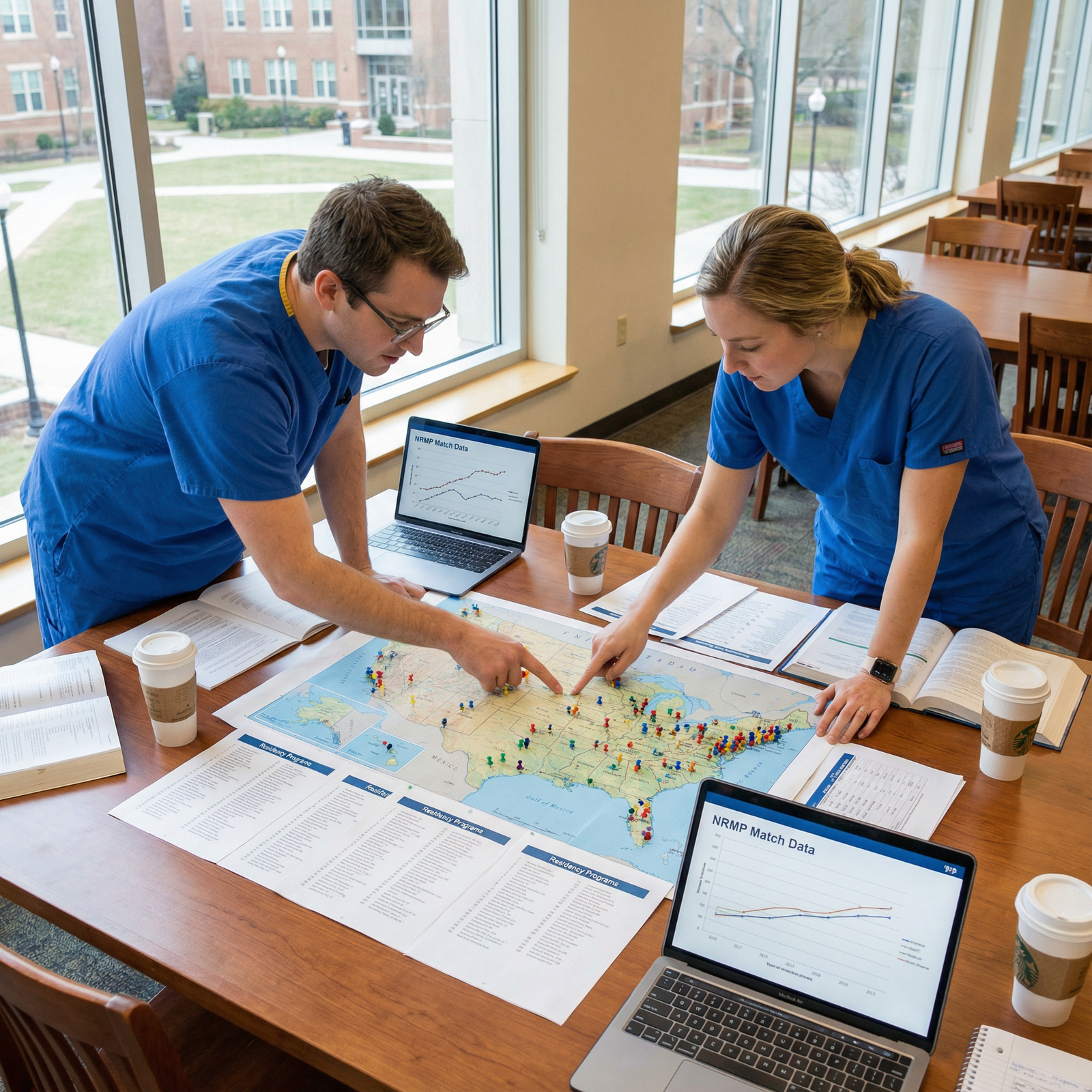
Once you know your target number range, you need a practical way to filter and compare programs. Create a spreadsheet and systematically record information.
Key Filters for IMGs
Visa Sponsorship
- Does the program:
- Sponsor J-1 only?
- Sponsor H-1B?
- Sponsor no visas?
- Prioritize programs that explicitly state they accept IMGs and sponsor your required visa type.
- Does the program:
IMG Match History
- Does the program’s current or recent residents include IMGs?
- Are they recent graduates or mainly older graduates (indicating flexibility)?
- Look at:
- Program websites (resident bios)
- NRMP/ERAS data reports
- Online forums (with caution)
USMLE / Entrance Requirements
- Minimum Step 2 CK score?
- Limitations on attempts?
- Year of graduation cutoffs?
Clinical Environment
- Academic vs community vs hybrid
- Safety-net or public hospitals
- Exposure to underserved, diverse, immigrant, or refugee populations
Key Filters for Global Health
For each program, ask:
Is there a formal global health residency track?
- Look for:
- Dedicated page on departmental website
- Clear structure: curriculum, goals, timelines
- Named track director
- Look for:
What are the actual international opportunities?
- Number and location of partner sites
- Frequency: How many residents per year go abroad?
- Duration: 2–4 weeks vs 2–6 months
- Funding: Are travel and housing covered?
Who are the global health faculty?
- Faculty profiles with:
- Ongoing projects abroad
- Joint appointments in schools of public health or global health institutes
- Evidence of:
- Peer-reviewed global health publications
- Grants, humanitarian partnerships
- Faculty profiles with:
Local “global health at home” opportunities
- Clinics for:
- Refugees and immigrants
- Non-English-speaking communities
- Community health outreach or mobile clinics
- Collaboration with NGOs or public health agencies
- Clinics for:
Scoring System: Example Approach
Create a 1–5 scale for each dimension:
- IMG-friendliness (1–5)
- Visa support (1–5)
- Global health structure (1–5)
- Clinical diversity / underserved exposure (1–5)
- Overall competitiveness vs your profile (1–5; 1 = reach, 5 = safety)
Your program selection strategy should then aim for a balanced final list:
- ~20–30% reach programs with strong global health residency track
- ~40–60% solid fit programs with clear global health or underserved opportunities
- ~20–30% safety programs that are very IMG-friendly, even with limited global health branding
This approach transforms your search from emotional and random to deliberate and strategic.
Step 5: Use Rotations, Networking, and Signals Strategically

Beyond online research, your interactions and experiences shape which programs you should prioritize.
Maximize the Value of Clinical Rotations
If you are able to do clinical rotations or observerships:
Choose sites with global or underserved reputations.
- Urban safety-net hospitals
- Programs known for immigrant or refugee clinics
Demonstrate sustained interest in global health.
- Ask supervisors about patient populations, social determinants of health, and global health pathways
- Volunteer for quality improvement or research projects with global or public health themes
Convert performance into mentorship and advocacy.
- Seek strong letters of recommendation from faculty who appreciate your global vision
- Ask about which residencies they think align with your goals
Leverage Mentors and Networks
Global health mentors in your home country
- Former supervisors in NGOs, mission hospitals, or university global health units
- They may have direct connections with residency programs abroad
Alumni from your medical school
- Especially those matched in IM/ FM/ Peds/ EM/ OB-Gyn with global health interests
- Ask:
- How IMG-friendly their program truly is
- Whether the global health track lives up to its website promises
Conferences and global health events
- Virtual or in-person global health conferences
- Talk to faculty about:
- Which residencies actively support global work
- How they view IMGs in their programs
Strategic Signaling (Where Applicable)
In systems where programs can receive “signals” or prioritized interest (e.g., ERAS signaling in the U.S.):
Use signals for:
- Programs with well-developed global health residency track, aligned with your exact focus (e.g., HIV care, maternal health, refugee health)
- Programs that have previously matched IMGs with similar backgrounds
In your personal statement and application, align your message:
- Show that you have done your research on their global health offerings
- Connect your past experiences and future goals to specific elements of their program
Step 6: Align Your Application Materials With Your Program List
Your program selection strategy should be tightly integrated with your overall application narrative.
Tailor Your Personal Statement(s)
Consider writing two versions of your personal statement if allowed:
Global Health–Focused Statement
- Emphasize:
- Long-term commitment to global health or international medicine
- Concrete experiences (NGOs, rural clinics, research, advocacy)
- Desire for structured global health residency track or strong global focus
- Use for:
- Programs with established global health tracks
- Academic centers with global health institutes
- Emphasize:
Core Clinical/Underserved–Focused Statement
- Emphasize:
- Commitment to high-quality patient care
- Interest in underserved and diverse populations (even if not explicitly international)
- Flexibility and gratitude for any path that leads to a solid training
- Use for:
- Safety programs, community-based programs, or those with minimal global branding
- Emphasize:
Highlight Global Health Skills That Programs Value
Residency programs often worry global health enthusiasts might:
- Be more interested in travel than training
- Spend too much time abroad instead of building core clinical competency
Mitigate this by showing:
- You understand the priority of solid clinical training first
- Your global health work has:
- Improved your clinical reasoning
- Strengthened your cultural humility and communication
- Taught you resource stewardship and adaptability
Include specific examples:
- Managing limited resources in rural clinics
- Cross-language or cross-cultural communication
- Working in multidisciplinary or public health teams
Putting It All Together: Example Program Selection Strategy
Imagine you are:
- IMG, graduated 3 years ago
- Applying in Internal Medicine
- Step 2 CK: average-high
- 6 months of USCE
- Strong global health experience (NGO work, 2 publications)
- Requires J-1 visa
A reasonable plan:
Target number of programs: 70–90.
Program mix:
- 15–20 academic IM programs with formal global health residency track
- 30–40 mid-tier academic or hybrid programs serving large immigrant/refugee populations or safety-net hospitals
- 20–30 IMG-friendly community programs with at least some underserved or international medicine exposure
Process:
- Use filters: J-1 sponsorship + evidence of recent IMGs
- Score each program on:
- Global health track/structure
- Clinical diversity
- IMG-friendliness
- Signal or prioritize top 10–15 programs with strong alignment to your global health goals
- Adapt personal statement version based on program focus
For a more at-risk IMG (older graduation year, lower scores), you might maintain the same global health aspirations but shift strategy:
- Apply to 120–150+ programs
- Focus more heavily on IMG-friendly community programs and lesser-known institutions
- Look for even small signs of international medicine or underserved care (e.g., safety-net hospitals, public health partnerships)
- Plan to further develop your global health career post-residency via fellowships, MPH, or NGO work
Frequently Asked Questions (FAQ)
1. Do I need a formal global health residency track to have a global health career?
No. A formal global health residency track can be very helpful, but it is not mandatory. Many global health leaders trained in standard programs and then:
- Pursued global health fellowships
- Obtained MPH or global health certificates
- Joined NGOs or academic global health teams after board certification
If your competitiveness as an IMG is limited, prioritize matching into a strong, IMG-supportive residency first, then build your global health pathway from there.
2. How many programs should I apply to as an IMG interested in global health?
It depends on your competitiveness, specialty, and visa requirements. For most IMGs in Internal Medicine, Family Medicine, or Pediatrics:
- Highly competitive: ~25–60 programs
- Moderately competitive: ~60–100 programs
- At-risk: ~100–150+ programs
Within those numbers, balance your list so that only a fraction are very selective global health residency track programs; the majority should be realistic fits with at least some international medicine or underserved exposure.
3. Are global health–heavy programs more or less IMG-friendly?
It varies. Some academic global health programs actively value IMGs for their international perspectives and language skills. Others are very competitive and accept only a small number of residents, often favoring graduates of domestic medical schools.
You should:
- Check current resident profiles for IMGs
- Look for explicit statements about IMGs and visa sponsorship
- Reach out to current residents (especially IMGs) for candid feedback
4. How can I show my commitment to global health without making programs worry I will leave often for international work?
Frame your global health interest as aligned with strong training, not competing with it. Emphasize that:
- You see robust clinical training as essential to being effective in low-resource or international settings.
- Your past global health experiences have made you more resilient, adaptable, and responsible.
- You intend to follow program policies regarding international electives and maintain full commitment to residency responsibilities.
By presenting a balanced, professional narrative, you become an asset rather than a “flight risk” in the eyes of program directors.
A deliberate, evidence-based program selection strategy tailored to your profile as an international medical graduate—and grounded in realistic global health opportunities—will dramatically improve both your match chances and your long-term satisfaction in international medicine.