Choosing where to apply for pathology residency as an international medical graduate (IMG) can feel overwhelming. There are hundreds of programs, complex requirements, and limited time and money. A smart, structured program selection strategy can make the difference between a scattered, expensive application and a focused, competitive pathology match plan.
This IMG residency guide will walk you step‑by‑step through how to choose residency programs in pathology, how many programs to apply to, and how to build a balanced application list that matches your profile and your goals.
Understanding the Pathology Landscape for IMGs
Before you start choosing programs, you need a clear picture of where IMGs actually match in pathology and what makes this specialty unique.
Why Pathology Can Be IMG-Friendly
Pathology is often considered relatively welcoming to IMGs compared with some highly competitive specialties. Key reasons:
- Less direct patient care in training (more lab-based, diagnostic focus)
- Many programs value strong academic and research backgrounds
- A steady need for pathologists in academic centers and community hospitals
- Some U.S. graduates preferentially choose other frontline specialties, leaving more positions accessible to well-prepared IMGs
However, “IMG-friendly” is not the same as “easy.” Successful IMGs usually show:
- Solid USMLE scores (or Step equivalents)
- Demonstrated commitment to pathology (electives, observerships, research)
- Strong letters of recommendation from U.S. pathologists
- A clear, focused personal statement
Types of Pathology Residency Programs
Most applicants apply to AP/CP combined programs (Anatomic and Clinical Pathology, 4 years). Others include:
- AP-only (3 years) – often more academic or research-focused
- CP-only (3 years) – less common, often for candidates already strong in lab medicine
- AP/NP, AP/HP, AP/CP with research tracks – may be more competitive but excellent for academic careers
As an IMG, AP/CP combined programs should generally be your default target unless you have a very specific path in mind and strong mentorship.
Step 1: Define Your Applicant Profile Honestly
Your program selection strategy starts with a realistic appraisal of your own strengths and limitations. This will shape how many programs to apply to and what types.
Core Profile Components
Examination performance
- USMLE Step 1 (if scored), Step 2 CK
- Any exam failures or attempts
- OET/IELTS (if needed), language fluency
Graduation timeline
- Year of medical school graduation
- Gap years and what you did in them (research, work, family, etc.)
Clinical and pathology exposure
- U.S. clinical experience (USCE): observerships, externships, electives
- Pathology-specific exposure: autopsy, histology, grossing, sign-out observation
Research and academic output
- Publications, posters, abstracts, QI projects
- Any pathology- or lab-focused research
Networking and recommendations
- Strong letters from U.S. pathologists
- Connections to program directors, faculty, or fellows
Visa status
- U.S. citizen/green card
- Needing J-1 or H-1B visa
- Previous U.S. visas (B1/B2, F-1, etc.)
Rough Tiering of Applicant Strength
This is a general guide, not an absolute rule. Use it to align your program selection, not to limit your goals.
Strong IMG pathology applicant
- Step 2 CK: ~240+ (or strong equivalent)
- No exam failures
- Graduated within last 3–5 years
- Multiple U.S. pathology rotations
- At least some pathology research or QI
- 2–3 strong U.S. pathology letters
- Clear visa plan or no visa needed
Moderate IMG pathology applicant
- Step 2 CK: ~225–239
- No major red flags (or well-explained)
- Graduation within last 5–8 years
- Some U.S. clinical or pathology exposure
- Limited or emerging research
- Mix of home-country and U.S. letters
Challenged/risk IMG profile
- Step 2 CK: <225 or multiple attempts
- Large graduation gap (>8–10 years)
- Little/no U.S. experience
- No pathology-focused exposure
- Limited letters, mostly non-U.S.
- Visa needs + other red flags
Your program selection strategy will differ for each category—especially in terms of how many programs to apply to and how broad to go geographically and by competitiveness.
Step 2: Decide How Many Programs to Apply To (Realistically)
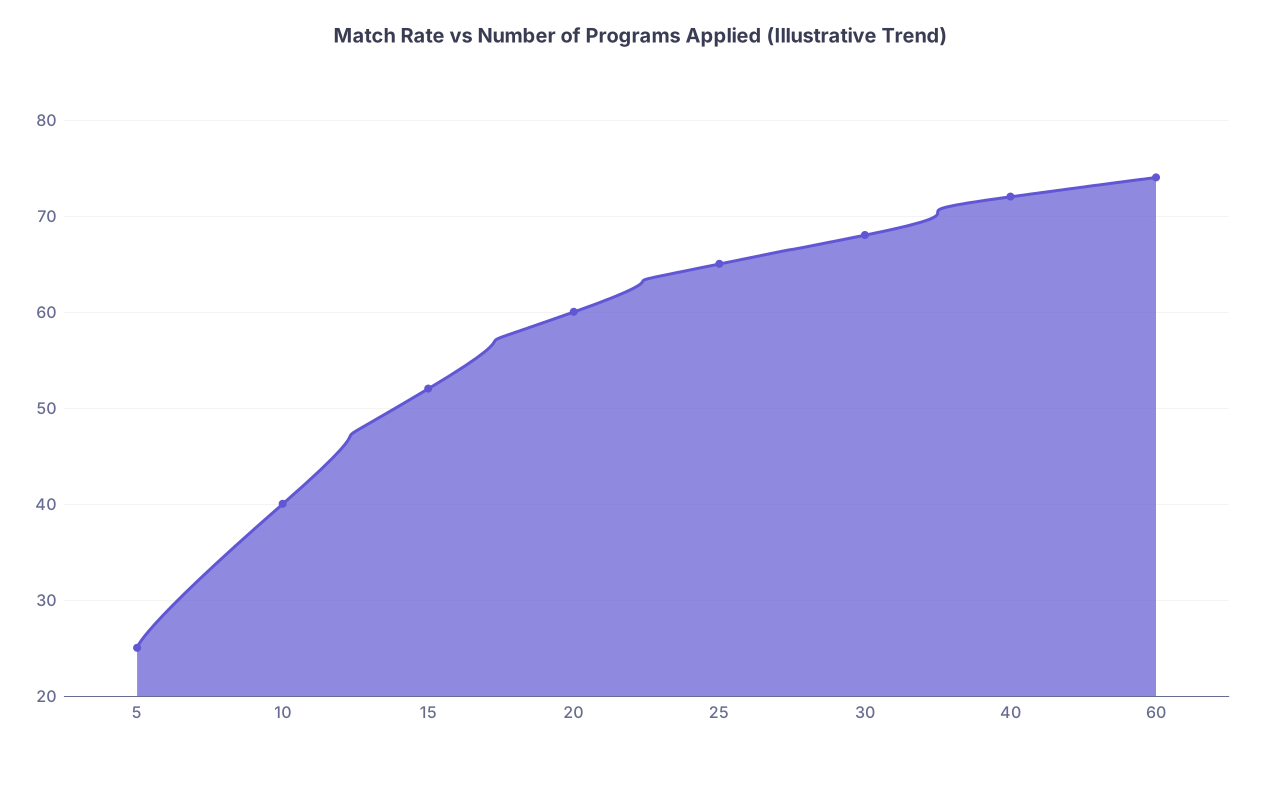
The question “How many programs to apply?” is critical for IMGs. For pathology, the answer depends on your profile, budget, and flexibility—but we can approximate some ranges.
General Pathology Match Numbers for IMGs
While exact numbers vary year to year, trends show:
- IMGs often apply more broadly than U.S. graduates.
- Pathology is less application-heavy than ultra-competitive specialties, but IMGs still commonly apply to 40–100+ programs.
- Successful IMGs typically secure ~8–12 interviews to maximize match probability.
Recommended Ranges by Applicant Strength
These are reasonable starting ranges for an IMG residency guide in pathology:
Strong IMG profile
- Target: 35–60 programs
- Rationale:
- Enough breadth to account for competition
- You can afford to be selective: more mid-to-high tier IMG-accepting programs
- Strategy:
- Emphasize university and strong community programs that regularly match IMGs
- Use filters for Step cutoffs, IMGs in current residents, and visa options
Moderate IMG profile
- Target: 60–90 programs
- Rationale:
- Wider net to counter mid-range scores or some weaknesses
- Focus on IMG-friendly and mid-tier community/university-affiliated programs
- Strategy:
- Decrease applications to very competitive academic powerhouses
- Include small- to mid-sized programs and regionally known centers
Challenged/risk IMG profile
- Target: 90–120+ programs (if financially feasible)
- Rationale:
- Need maximum exposure to find places willing to consider non-traditional profiles
- Heavy focus on proven IMG-friendly programs
- Strategy:
- Few or no top-tier programs unless you have a unique strength (e.g., strong research)
- Include some AP-only or CP-only tracks if they are more accessible and you’re flexible
Budgeting and Practical Constraints
ERAS and NRMP fees escalate quickly with large application lists. To manage:
- Set a maximum budget first (ERAS + NRMP + exam + travel).
- Aim for a “core list” of programs you strongly fit plus an “expansion ring” if you can afford more submissions.
- Use your program selection strategy to aggressively filter:
- No IMGs in last several years → likely exclude
- No visa sponsorship if you need one → exclude
- Very high USMLE cutoffs above your scores → usually exclude unless strong connection
The goal is not just “apply to as many as possible,” but “apply to as many relevant programs as your resources allow.”
Step 3: Build a Rational Program Selection Strategy
Now that you understand your profile and your target number range, structure your program selection strategy step-by-step.

3.1 Start with Broad Data Sources
Use multiple data sources to create your initial long list (often 120–180 programs before filtering):
FREIDA (AMA)
- Check number of positions, program type (AP/CP vs AP only), contact info.
- Look for fields: “Percent IMGs,” “Visa sponsorship,” “USMLE requirements” when available.
Program websites
- Resident roster: Do you see IMGs? From which schools/countries?
- Stated minimum scores or exam attempt policy.
- Visa sponsorship explicit statements (J-1, H-1B, or none).
NRMP and specialty organization data
- Review pathology match trends, fill rates, and IMG match outcomes.
Networking
- Talk to senior IMGs, fellows, or mentors who matched recently.
- Attend pathology conferences (USCAP, CAP, local meetings) and ask residents informally.
3.2 Apply Critical Filters
Once you have a large master list, apply objective filters to remove clear mismatches.
Essential filters:
Visa Sponsorship
- If you require a visa:
- Remove programs that explicitly state “no visa sponsorship.”
- Mark preferences:
- J‑1 only
- J‑1 and H‑1B (more complex but favorable if you want options later)
- If you don’t need a visa: you can still keep track; some programs prefer permanent residents/citizens.
- If you require a visa:
IMG Track Record
- Check current residents:
- Programs with multiple IMGs in the past 5–7 years → IMG-friendly
- Only AMGs/Osteopathic grads for many cycles → more difficult for IMGs
- If in doubt, search program names in:
- PubMed acknowledgments
- Residents’ personal pages
- Check current residents:
USMLE / Exam Requirements
- Hard cutoffs:
- If program states “minimum Step 2 CK 240” and you have 220, it’s likely a low yield.
- Multiple attempts or failures:
- Eliminate programs that require “first attempt only” if you have repeats.
- Hard cutoffs:
Accreditation status and program stability
- Avoid programs on probation or with frequent leadership turnover, unless advised otherwise by mentors.
After these filters, your list might shrink to 60–120 programs, depending on your starting pool.
3.3 Stratify Programs by Competitiveness
Next, separate programs into tiers based on prestige, research, and historical competitiveness. This is not official, but practical:
Tier 1 (Highly competitive)
- Top academic institutions, major research centers
- Strong fellowship placements at top institutions
- Limited IMG presence, often prefer high scores and research
Tier 2 (Mid-tier academic / strong community)
- University-affiliated or reputable community programs
- Moderate research activity
- Regularly accept IMGs with solid profiles
Tier 3 (Community-based / smaller programs)
- Smaller class sizes (1–3 residents/year)
- Less research-heavy, more service-oriented
- Often more IMG-friendly, but variable training depth
For an IMG-focused program selection strategy, a typical balanced distribution might look like:
- Strong profile: ~20–30% Tier 1, 40–50% Tier 2, 20–30% Tier 3
- Moderate profile: ~10–15% Tier 1, 40–50% Tier 2, 35–45% Tier 3
- Challenged profile: 0–10% Tier 1 (if strong connections), 30–40% Tier 2, 50–70% Tier 3
This is how to choose residency programs logically rather than guess.
3.4 Factor in Personal and Lifestyle Priorities
Once academic and visa filters are set, refine based on your personal constraints:
- Geographic preferences
- Family in specific states/regions
- Willingness to live in smaller cities or rural areas (often more IMG-friendly)
- Cost of living
- Salary vs housing, transportation, childcare
- Climate and lifestyle
- Some applicants strongly prefer coastal vs inland, cold vs warm climates
- Future plans
- Interest in specific fellowships (e.g., hematopathology, cytopathology, GI, molecular)
- Desire for academic vs community practice career
These factors should adjust within your already filtered list—don’t over-prioritize preference at the expense of match probability, especially as an IMG.
Step 4: Practical Tools and Examples for Organizing Your List
An effective IMG residency guide is not complete without concrete tools. Treat your program list as a living document, not something you create once and forget.

4.1 Build a Program Spreadsheet
Create a spreadsheet (Excel, Google Sheets, Notion, etc.) with columns such as:
- Program name
- City, State, Region
- Program type (AP/CP, AP-only, CP-only)
- Number of positions/year
- IMG percentage (approximate)
- Visa type (J‑1 / H‑1B / none)
- USMLE minimums / average scores
- Observerships/electives offered?
- Presence of IMGs in current residents? (Yes/No/Unknown)
- Research strength (high/medium/low)
- Personal connection (mentor, alumni, etc.)
- Tier (1/2/3)
- Priority level (High/Medium/Low)
- Status (Applied, Interview Invited, Rejected, On Hold)
This helps you visually balance your list and adjust in real time.
4.2 Example: Moderate IMG Building a Pathology List
Profile:
- Step 2 CK: 232
- Graduate 4 years ago
- One U.S. pathology observership
- One case-report publication
- Needs J‑1 visa
Strategy:
- Initial long list: 150 pathology programs from FREIDA and other sources.
- Filter for:
- J‑1 sponsorship: list shrinks to 110.
- Programs with at least one IMG in the last 5 years: shrinks to 85.
- Exclude programs stating “minimum Step 2 CK 240”: down to ~75.
- Tiering:
- Tier 1: 10 programs
- Tier 2: 35 programs
- Tier 3: 30 programs
- Final target: 75 programs (within 60–90 recommended for moderate profile).
This candidate may then adjust slightly:
- Remove 2–3 Tier 1 programs with no visible IMG presence.
- Add 2–3 more Tier 3 programs in less popular locations that are clearly IMG-friendly.
4.3 Use Signals From Program Communications
During the season, use new information to refine your strategy:
- Program websites updated to “no more applications” → you won’t add them later.
- Early rejections from multiple Tier 1 programs → your likelihood there is low; don’t obsess about them.
- Early interview invitations from mid-tier programs → signal that your range is realistic.
If another application cycle is possible, keep notes on where you received attention—and where you did not.
Step 5: Maximizing Your Odds After You Choose Programs
Program selection is the foundation, but how you present yourself to those programs is just as important.
Customize Within Reason
You won’t write 80 completely different personal statements, but you can:
- Create 2–3 versions of your personal statement:
- General pathology interest
- Research-heavy interest (for academic/Tier 1)
- Community practice/lab operations interest (for community/Tier 3)
- Adjust program-specific paragraphs for:
- Programs where you did rotations
- Institutions tied to your research collaborators
Highlight Pathology Commitment
Programs want to be sure you know what pathology really is. Strengthen your application by clearly showing:
- Specific experiences: autopsy, gross room exposure, case conferences, tumor boards.
- Reflections: what you learned from observing sign-outs, lab meetings, QA processes.
- Long-term goals: subspecialties you’re curious about (e.g., hematopathology, GI pathology), academic vs community focus.
Manage Communication and Professionalism
- Email programs sparingly and politely—for:
- Major updates (new publication, Step score, visa status change)
- Genuine questions not answered on the website
- Do not send mass generic emails or pressure for interviews.
- Attend virtual open houses; these:
- Clarify culture and educational structure
- Reveal how IMG-friendly the environment feels
- Provide names of faculty and residents you can mention in your communication
Common Pitfalls IMGs Should Avoid in Program Selection
To refine your program selection strategy, be aware of frequent mistakes:
Over-focusing on “big names”
- Applying heavily to top-10 academic centers with minimal IMG history wastes precious slots.
- Include a few if you have a strong academic profile, but not at the expense of IMG-friendly options.
Ignoring visa realities
- Applying to many programs that don’t sponsor visas or only sponsor H‑1B when you need J‑1 is inefficient.
- Be absolutely clear about your needs.
Under-applying due to overconfidence
- A strong profile is valuable, but pathology still has variability year to year.
- Falling below 30–35 programs as an IMG is very risky unless under exceptional circumstances.
Not documenting your research and pathology exposure clearly
- Even if you did significant work, if it’s not well described in ERAS and your CV, programs won’t realize its value.
Overweighting geography early
- Limiting yourself to only one or two states can sharply reduce your match chances.
- As an IMG, it’s often safer to prioritize match success first, location second.
Putting It All Together: A Structured Action Plan
To turn this IMG residency guide into action, follow this condensed plan:
Assess your profile
- Classify yourself as strong, moderate, or challenged.
- Identify red flags and specific strengths (research, unique background).
Set target application numbers
- Strong: 35–60
- Moderate: 60–90
- Challenged: 90–120+ (budget permitting)
Build a master list
- Pull 120–180 pathology programs from FREIDA and program websites.
Apply hard filters
- Visa sponsorship, IMG presence, exam cutoffs, accreditation.
Tier and prioritize
- Assign Tier 1/2/3 and high/medium/low priority.
- Ensure a balanced mix appropriate for your profile.
Refine for personal factors
- Geographic tolerance, family needs, cost of living.
Organize systematically
- Create and maintain a spreadsheet with key metrics and statuses.
Optimize your application content
- Tailor personal statements and CV entries to highlight pathology commitment.
- Secure strong pathology-specific letters, ideally from U.S. faculty.
Track outcomes and learn
- Note which programs respond, where you get interviews.
- Use this data if you need to re-strategize in a future cycle.
By following a thoughtful program selection strategy for international medical graduates in pathology, you transform the application process from guesswork into a deliberate, data-driven pathway to the pathology match.
FAQ: Pathology Program Selection Strategy for IMGs
1. As an IMG, is pathology a good specialty choice for matching in the U.S.?
Yes, pathology is generally more accessible to IMGs than many highly competitive clinical specialties. Many programs value strong academic foundation, attention to detail, and commitment to diagnostic work—areas where IMGs often excel. However, you still need solid scores, documented pathology interest, and a broad, strategic program list.
2. How many pathology programs should I apply to if I have a low Step 2 CK score?
If your Step 2 CK is significantly below the national average (e.g., <225) or you have attempts, and you’re otherwise a viable candidate, consider applying to 90–120+ programs, focusing on:
- Programs with clear IMG presence
- Smaller community or university-affiliated programs
- Regions that are less saturated (midwest, some southern states) Always weigh this against your budget, but under-applying in this scenario is very risky.
3. Should I include AP-only or CP-only programs in my list as an IMG?
For most IMGs, AP/CP combined is the safest default choice, as it offers the broadest training and job flexibility. However, adding a few AP-only or CP-only programs may help if:
- Your interests align strongly (e.g., academic AP with research, or lab medicine-focused CP)
- Those programs are known to be IMG-friendly Just ensure you understand the implications for licensing and employment in your desired practice setting.
4. How can I quickly identify IMG-friendly pathology programs?
Practical indicators of IMG-friendliness include:
- Multiple IMGs among current residents or recent graduates
- Clear mention of visa sponsorship on the website (especially J‑1, sometimes H‑1B)
- No extremely high stated USMLE cutoffs
- Alumni from diverse international schools You can verify by:
- Checking resident profiles on program websites
- Searching LinkedIn for pathology residents/fellows at that institution with international degrees
- Asking senior IMGs and mentors about their experiences
Using these strategies systematically will help you choose residency programs that are realistic, supportive, and aligned with your long‑term goals in pathology.