Understanding the Landscape of Interventional Radiology Residency
Interventional Radiology (IR) has transitioned into a fully recognized primary specialty, and the interventional radiology residency pathway is now the standard for those who want a career as an IR attending. This shift has also made the IR match more competitive and nuanced. Thoughtful program selection strategy is no longer optional; it’s a core part of a successful application.
Before you decide how many programs to apply to and which ones to prioritize, you should understand the basic structure and unique aspects of IR training:
Training Pathways in IR
Most applicants now go through one of two main pathways:
Integrated IR/DR Residency (PGY-1/PGY-2 to PGY-6)
- You match directly into an IR/DR integrated program (either into a categorical position that includes the internship year or an advanced position beginning at PGY-2).
- Training structure typically:
- 1 year internship (surgical prelim, medicine prelim, transitional year, or occasionally integrated)
- 3 years of mostly Diagnostic Radiology (DR) with gradually increasing IR exposure
- 2 years primarily IR (plus some DR) to complete IR/DR requirements
- On graduation, you are board-eligible in both IR and DR.
Independent IR Residency (2 years after DR)
- You first complete a full DR residency, then match separately into IR.
- More relevant if you are already in DR or plan on an ESIR (Early Specialization in IR) pathway.
For MS4 applicants, integrated IR/DR residency is the primary focus. The rest of this article will emphasize integrated programs, but most principles of program selection strategy also apply to independent IR.
Why Strategy Matters More in IR Than Many Other Specialties
IR has several distinctive features that influence program selection:
- Limited number of positions: Far fewer IR spots than internal medicine or general surgery.
- High procedural intensity: Requires strong clinical and operative training, not just imaging knowledge.
- Variable program models: Some programs are IR-heavy with robust clinical services, others are more image-interpretation oriented with smaller IR volumes.
- High burnout risk if fit is poor: Misalignment in call structure, procedural interests, or clinical culture can significantly affect your career satisfaction.
Your program list should be built deliberately, not just by prestige or geography. The goal is to maximize the chance of matching while finding a place where you can actually enjoy and grow through training.
Clarifying Your Priorities Before Building Your List
Before you ask how to choose residency programs, you need clarity on your own goals, constraints, and tolerance for risk in the IR match.
Step 1: Define Your Career Vision in IR
Consider these dimensions:
Clinical vs Procedural Focus
- Do you want a practice with heavy clinic involvement (IR-led clinics, longitudinal follow-up)?
- Or are you more drawn to procedure-centered roles with limited clinic time?
Academic vs Community Practice
- Academic IR: research, teaching, subspecialization (e.g., interventional oncology, complex venous work, structural heart).
- Community IR: broader case mix, more general procedures, often more autonomy sooner.
Subspecialty Interests
- Interventional oncology (Y-90, TACE, tumor ablation)
- Vascular interventions (PAD, venous disease, aortic work)
- Neurointerventional (in some integrated curricula or post-residency)
- Women’s health (UFE, pelvic congestion)
- Trauma/acute care IR
- Dialysis and access interventions
You don’t need a rigid plan, but you should have directional preferences. Programs prioritize different strengths, and knowing your trajectory helps you differentiate them.
Step 2: Identify Non-negotiable Personal Factors
Location and lifestyle often matter more than applicants are willing to admit:
- Geographic ties or constraints (family, partner, visa issues)
- Desire for an urban vs suburban vs rural environment
- Cost of living and financial considerations
- Support systems (spouse, children, extended family)
- Climate and commuting preferences
Example:
If your partner must stay in the Northeast for their career, then your program selection strategy should primarily focus on the Northeast, possibly trading some “prestige” for geographic reality. Honest self-assessment early prevents regret later.
Step 3: Assess Your Competitiveness Objectively
Your risk posture in the IR match depends on your profile:
Key factors:
- USMLE/COMLEX scores (or now, Step 1 pass/fail + Step 2 CK)
- Class rank, AOA, honors in core rotations
- Letters of recommendation (especially from IR faculty)
- IR research output (papers, abstracts, case reports, QI projects)
- Strength of home IR program and faculty advocacy
- Away rotations (subinternships in IR)
- International vs US graduate status
Create a realistic tier estimate:
- Top-tier applicant: Strong Step 2, robust IR research, outstanding letters from recognized IR faculty, honors, home IR program advocates.
- Mid-tier applicant: Solid scores, some research or IR involvement, good letters, but not heavily “branded.”
- At-risk applicant: Lower scores, late decision to pursue IR, limited IR exposure, or IMG/DO without home IR program support.
Your assessment should directly shape:
- How many programs to apply to
- How broad your range of program competitiveness should be

How Many IR Programs Should You Apply To?
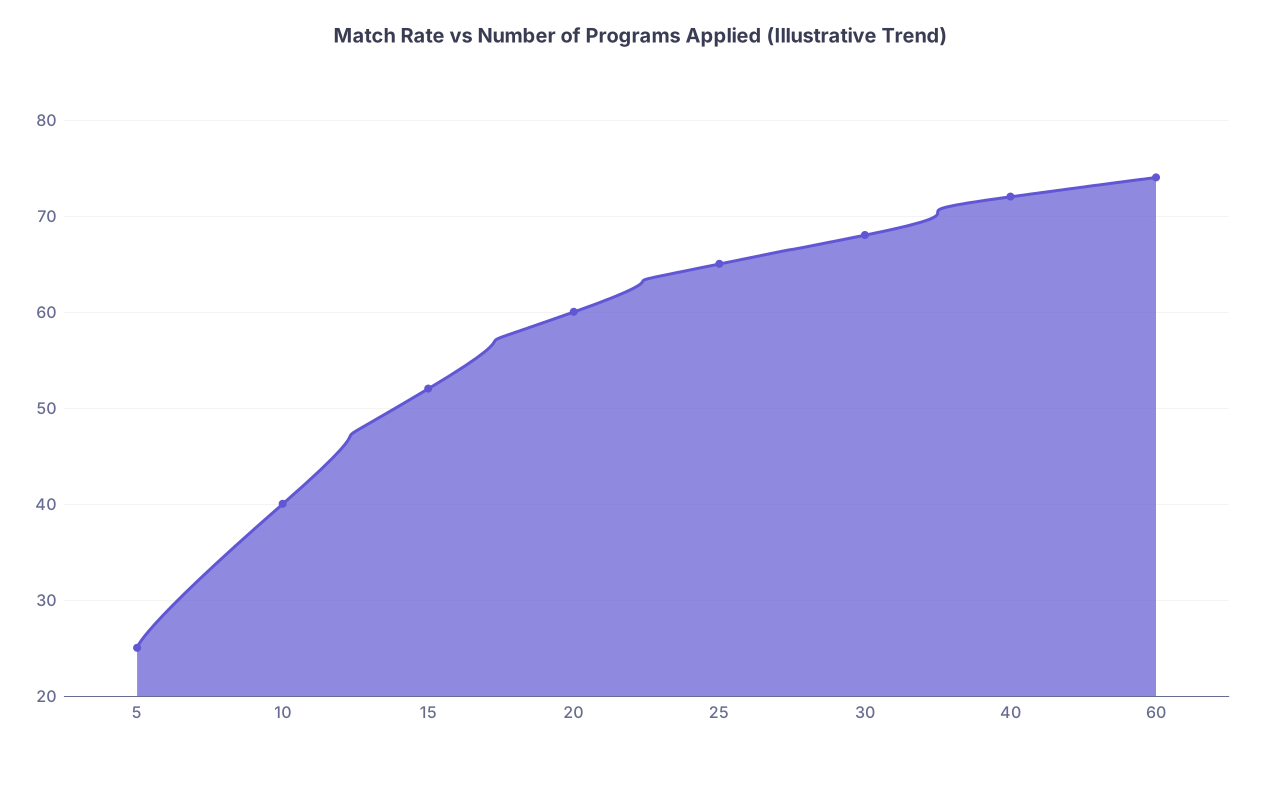
There is no universal number, but there are evidence-based ranges and considerations. IR is competitive, and most applicants should err on the side of breadth—without applying blindly to every program.
General Application Range for Integrated IR
For integrated interventional radiology residency applicants, approximate ranges:
- Top-tier applicant:
20–30 IR programs (plus DR back-ups as needed) - Mid-tier applicant:
30–45 IR programs (plus a robust DR back-up strategy) - At-risk applicant / IMG / DO without strong IR home support:
45–60+ IR programs, plus substantial DR applications and possibly other specialty plans
Why such high numbers?
IR has:
- Fewer total spots per program
- A strong draw among highly competitive candidates
- Variable interest in DOs/IMGs by institution
If you are uncertain about your competitiveness, lean toward the upper half of the range.
Balancing Integrated IR and DR Back-Up
One of the most important elements of an IR program selection strategy is a parallel DR application plan. Many future IRs match into DR first, then pursue IR via ESIR + independent IR.
Consider:
- Applying to a significant number of DR programs where IR is strong and where independent IR or ESIR pathways are available.
- Asking explicitly on websites or at open houses:
- How many residents per year go into IR?
- Is ESIR available, and how many residents get it?
- Do graduates successfully match into quality IR fellowships/independent programs?
A common pattern:
- Apply to 30–40 IR programs
- Apply to 25–40 DR programs
- Rank lists are then combined strategically after interviews
Factors That Modify How Many Programs You Should Apply To
- Geographic Restriction
- If you only apply to one region, you may need more programs to ensure coverage.
- Late Switch to IR
- If IR exposure is limited, broaden your application reach and strengthen DR back-up.
- Limited IR Letters or Research
- You may appear less IR-committed; compensate with a broader list and strong explanation in your personal statement and interviews.
- Financial and Time Constraints
- Application fees and interview travel (even in virtual eras) can add up.
- Be intentional: don’t apply to programs you would never attend.
Building a Rational IR Program List: Tiers, Fit, and Filters
Once you’ve decided roughly how many programs to apply to, the next step in how to choose residency programs is to create a structured list.
Step 1: Categorize Programs into Tiers for You (Not for Rank Lists)
Avoid the trap of using generic “top 10” IR lists. Instead, create your own tier system based on fit:
Tier A – Dream programs
- Highly competitive academic centers
- Ideal location or niche (e.g., strong interventional oncology)
- You might be a stretch candidate here, but not impossible
Tier B – Target programs
- Programs where your application is realistically competitive
- Good training, acceptable location, strong clinical IR service
Tier C – Safety-ish programs
- Slightly less competitive reputation or locations with less demand
- Still must meet a high bar for training quality; no true “safety” in IR, but relatively more attainable
Aim for a balanced distribution:
- 20–30% Tier A
- 40–60% Tier B
- 20–30% Tier C
This ensures you don’t overload your list with either extreme (all reaches or all lower-tier).
Step 2: Evaluate Core Training Quality Indicators
Across all tiers, never compromise on fundamental training quality. Use the following criteria:
Case Volume and Diversity
- Look for:
- High procedure numbers per resident
- Breadth: embolization, ablation, PAD, venous work, biliary, GU, dialysis access, trauma, women’s interventions
- Red flags:
- Very small number of IR attendings with limited backup
- IR sharing angio suite time with many external services without clear priority
- Look for:
IR Clinical Presence
- Does IR run consult services and clinics?
- Are IRs primary providers for certain conditions (e.g., PAD, varicose veins, oncology follow-up)?
- Are there admitting privileges or at least co-management of inpatients?
IR/DR Balance
- Are your IR years robust but not at the expense of solid DR training?
- How much early IR exposure do you get?
- Do residents feel competent as both imagers and interventionalists?
Graduates’ Career Outcomes
- Where do graduates go?
- Academic positions, competitive independent IR, or strong community jobs?
- Is there a track record of graduates doing the type of work you want?
Step 3: Factor in Lifestyle, Culture, and Support
Training is long and IR call can be intense. Consider:
Call structure
- Frequency of home call vs in-house night float
- IR-specific call vs shared with DR
- Backup systems for complex emergent cases
Resident wellness culture
- Honest commentary from current residents about workload and support
- Presence of mentorship, especially for underrepresented groups
Program size and support
- Enough residents to share workload
- Adequate nursing, tech, and APP support in the IR suite
Example:
Two programs may have similar case volumes, but one has strong IR clinic time, a structured mentorship program, and protected research days. The other has excellent procedures but constant understaffing. Long-term, the first may be a better choice even if its “name” is less flashy.
Step 4: Use Strategic Filters to Refine Your List
Practical filters help you make a large list manageable:
- Geography filter:
Start with all IR programs in your preferred regions, then expand outward until you hit your target number. - Academic vs community mix:
Decide whether you want predominantly academic or a mix including strong community programs. - Subspecialty alignment:
Prioritize programs with strong presence in your interest area (e.g., interventional oncology, venous). - Support for independent IR or ESIR (for DR back-up programs):
A DR program with robust IR infrastructure is a stronger safety net for your future IR goals.

Information Gathering: How to Research and Compare IR Programs
Sound program selection strategy depends on accurate data, not just reputation. Use multiple sources to evaluate programs.
Source 1: Official Program Websites and FREIDA
On each program’s website, look for:
- Number of IR and DR residents per year
- Call structure and rotation schedules
- Description of IR clinics, inpatient services, and consults
- Case mix and highlight procedures
- Research opportunities, IR faculty interests, and major trials
- ESIR and independent IR connections (for DR pathways)
FREIDA and AAMC data can supplement:
- Program size
- Accreditation status
- Visa sponsorship (crucial for IMGs)
Source 2: Virtual Open Houses, Webinars, and Social Media
Many IR programs now host:
- Virtual open houses
- Q&A sessions with residents
- IR interest group webinars
These settings are ideal to ask:
- “How hands-on are residents on IR rotations?”
- “What is a realistic week like for an IR resident here?”
- “How competitive is it to get ESIR (if DR) or advanced IR rotations?”
Twitter/X, Instagram, and institutional LinkedIn pages can show:
- Academic productivity
- IR outreach and culture
- Resident camaraderie and diversity initiatives
Source 3: Away Rotations and Mentorship
Away rotations (sub-internships) remain one of the best ways to evaluate programs and demonstrate your interest.
Use away rotations to assess:
- Attending engagement and teaching style
- Resident satisfaction and burnout signs
- How quickly students are entrusted with responsibility
- Program openness to feedback and teaching
Mentors (especially IR faculty) can:
- Provide honest assessments of program reputation in specific niches
- Suggest “hidden gem” programs that may be perfect fits but not widely known
- Offer insights into how your application might be viewed at particular institutions
Source 4: Talking to Current and Recent Graduates
Informational conversations (outside official interview channels) are invaluable.
Ask them:
- “What do you wish you had known before matching there?”
- “Did the training prepare you for your first job or fellowship?”
- “How manageable was call and how was backup handled?”
- “Would you choose the same program again?”
Putting It All Together: A Practical IR Program Selection Plan
Here is a step-by-step framework you can follow to build a targeted, realistic, and strategic program list for the interventional radiology residency match.
Step A: Self-Assessment and Goal Setting
- Honestly assess your competitiveness (scores, research, letters, IR exposure).
- Define:
- Geographic boundaries
- Academic vs community preference
- Level of risk you’re comfortable taking in the IR match
- Decide your desired proportion of:
- Integrated IR
- DR back-up programs with strong IR options
Step B: Initial List Construction
Start with all integrated IR programs within your preferred regions and those known for IR excellence outside your region.
Add DR programs with:
- Strong IR divisions
- ESIR opportunities
- Good track record of sending residents into IR
Assign each program a provisional tier (A, B, or C) based on:
- Competitiveness vs your profile
- Fit with your goals (case mix, clinical culture, research)
Step C: Refinement via Research
Visit programs’ websites and FREIDA to confirm:
- Case volume
- IR clinical presence
- Call structure
- ESIR / independent IR options
Attend virtual events and connect with current residents:
- Adjust programs up or down a tier based on what you learn.
- Remove programs where red flags appear: poor support, consistently negative culture reports, very limited IR exposure.
Ensure the final number of applications:
- Falls within your target range (e.g., 30–45 IR, plus 25–40 DR).
- Has a good tier distribution and geographic spread.
Step D: Monitor and Adjust in Real Time
As interview offers come in:
- If you receive few or no IR interview invitations early:
- Reassess: Are your application materials strong? Ask for feedback from mentors.
- Consider adding more DR programs if historically allowed by timelines.
- If you receive many IR invitations:
- Be selective in attending. Over-booking can lead to superficial choices and burnout.
Your ultimate program selection strategy should remain flexible but anchored in your foundational priorities: training quality, realistic match chances, and personal well-being.
Frequently Asked Questions (FAQ)
1. How many interventional radiology residency programs should I apply to if I’m an average applicant?
For a mid-tier applicant, a common target is 30–45 integrated IR programs, plus a solid DR back-up plan (often 25–40 DR programs, ideally with strong IR exposure and ESIR availability). Your exact number should reflect your geographic flexibility, financial constraints, and mentor feedback about your competitiveness.
2. Do I need a DR back-up plan if I’m committed to IR?
In almost all cases, yes. Many practicing interventional radiologists reached IR through a DR → ESIR → independent IR pathway. Applying to DR programs with robust IR divisions and ESIR slots is a smart program selection strategy that protects your long-term IR goals even if you do not match into an integrated IR position immediately.
3. How should I weigh prestige versus program fit in IR?
Program “prestige” matters less than case volume, clinical responsibilities, culture, and graduate outcomes. A less famous program with strong IR clinics, diverse high-acuity cases, supportive faculty, and excellent job placement may prepare you better than a marquee name with low autonomy or poor support. Fit and training quality should take precedence over rank-list prestige.
4. What are red flags when evaluating IR programs?
Potential red flags include:
- Minimal IR clinic or consult service (purely procedural model with little clinical follow-up)
- Overwhelmed residents with frequent unprotected call and no backup
- Very small or unstable IR faculty group
- Limited case diversity, with many bread-and-butter procedures but few complex cases
- Former residents or graduates expressing significant dissatisfaction or lack of preparation
Careful attention to these signals can help you avoid programs that might compromise your training or well-being.
Thoughtful planning of how many programs to apply to, combined with a deliberate, evidence-based program selection strategy, will put you in the best position to navigate the IR match successfully and start the career in interventional radiology you envision.