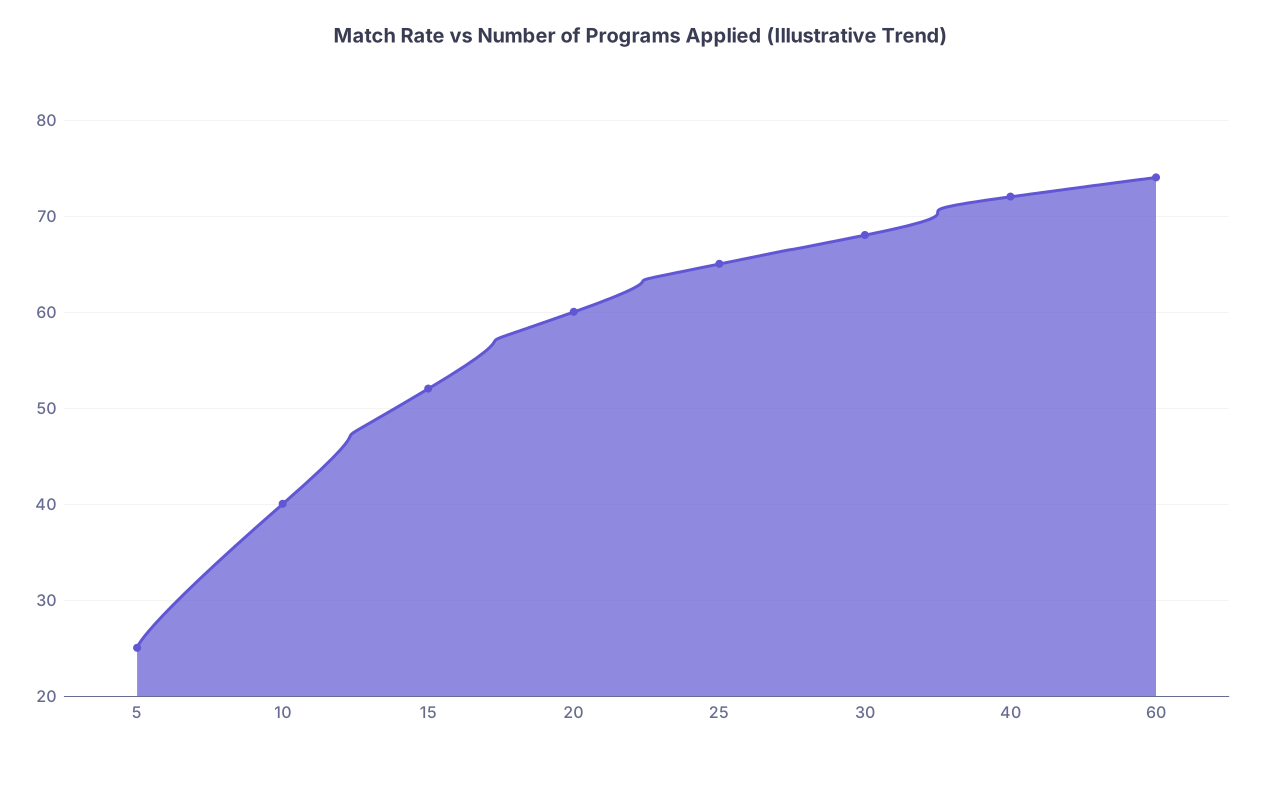
Understanding the Big Picture: How Anesthesia Program Selection Fits into the Match
For an MD graduate pursuing anesthesiology, your program selection strategy is one of the most important decisions you will make in the residency application process. The anesthesiology residency landscape has grown increasingly competitive, and simply asking “how many programs to apply to” is no longer enough. You need a structured, data-informed, and personally aligned approach to choosing where to apply and how to rank programs.
For MD graduates from allopathic medical schools, the anesthesiology residency match is generally favorable, but variability between applicants is significant. Factors like USMLE scores, research, subinternships, geographic preferences, and whether you’re a current-year graduate or have a gap all influence your strategy. Your goal is to:
- Maximize your chances of matching safely
- Optimize fit with your career goals and personal needs
- Avoid wasting time and money on applications that are very unlikely to yield interviews
This article breaks down a stepwise, practical program selection strategy specifically tailored to an MD graduate in anesthesiology. We’ll cover:
- How to analyze your competitiveness honestly
- How to decide how many programs to apply to
- What to prioritize when choosing anesthesia programs
- How to build a balanced list (reach, target, and safety programs)
- How to refine your rank list after interviews
Throughout, we’ll connect these concepts to the allopathic medical school match process and the unique dynamics of the anesthesia match.
Step 1: Analyze Your Competitiveness Objectively
Before you can build a program list, you need a clear-eyed understanding of your profile relative to typical anesthesiology residency applicants.
Core Competitiveness Factors for Anesthesiology
Key elements that affect how you approach program selection:
USMLE/COMLEX Performance
- Step 1 (now Pass/Fail): Still used as a screening tool at many programs, though officially pass/fail. Any fails matter significantly.
- Step 2 CK: Increasingly central. Programs often set informal cutoffs (e.g., 230–240+ for more competitive academic programs; community programs may be more flexible).
- Multiple attempts: A Step 2 CK fail or multiple attempts will push you toward applying more broadly and including more safety programs.
Clinical Performance & Letters of Recommendation (LORs)
- Honors in core clerkships and subinternships, especially anesthesia, medicine, and surgery, strengthen your academic profile.
- Anesthesiology-specific letters (ideally 2–3) from faculty who know you well are critical.
- Strong narrative comments on your MSPE can offset slightly lower scores.
Research & Scholarly Activity
- Not mandatory for anesthesiology, but meaningful research, especially in anesthesia, pain, critical care, or perioperative medicine, helps at academic programs.
- Leadership, quality improvement, and teaching experience also matter, particularly for “fit.”
Red Flags & Context
- Leave of absence, professionalism issues, unexplained gaps, or multiple exam failures require a more cautious, broad application strategy.
- If you are an MD graduate who has been out of medical school for >1–2 years without active clinical work, some programs may be hesitant.
Special Circumstances
- Couples match
- Need to stay in a specific region for family or visa reasons
- Desire for a physician–scientist track or combined programs (e.g., anesthesia–critical care, early subspecialty emphasis)
Categorizing Your Competitiveness Level
A practical framework for the anesthesia match:
Highly Competitive MD Applicant
- Step 2 CK: often ≥ 245–250
- No exam failures
- Honors in several core clerkships and anesthesia rotations
- Multiple strong anesthesiology LORs
- Some research or unique leadership experiences
- No major red flags
Moderately Competitive / Typical MD Applicant
- Step 2 CK: ~230–245
- Mostly passes with some honors in clerkships
- At least 1–2 solid anesthesia LORs
- Limited or no research, but good clinical comments and professionalism
Less Competitive / At-Risk MD Applicant
- Step 2 CK < 230, or exam failures / repeated attempts
- Mostly passes with limited honors; possible remediation or leaves
- Sparse anesthesia exposure or weaker specialty letters
- Red flags in MSPE, professionalism issues, or significant time since graduation
Your program selection strategy and how many programs to apply to will differ significantly between these categories.

Step 2: How Many Programs to Apply to in Anesthesiology?
The question “how many programs to apply” does not have a universal answer, but we can use NRMP data trends, allopathic medical school match statistics, and your competitiveness profile to define reasonable ranges.
General Application Volume Benchmarks (MD Anesthesiology)
Recent match data (and program director surveys) suggest the following rough guidance for categorical and advanced anesthesiology positions combined for MD graduates:
Highly Competitive MD Graduate
- Typically: 20–30 programs
- May be able to go lower (15–20) if not geographically restricted and no red flags
Moderately Competitive / “Average” MD Applicant
- Typically: 30–40 programs
- This is the most common range and offers a strong balance of safety and cost.
Less Competitive / At-Risk MD Applicant
- Typically: 45–60+ programs
- Especially if: Step failures, limited anesthesia exposure, time since graduation, or geographic restrictions.
Remember that these are starting points. You must layer on geographic goals, couples match, and your realistic budget for ERAS fees.
Factors That Push You Toward Applying to More Programs
Increase your application volume if:
- You have Step 2 CK below ~230 or any exam failures.
- You are applying from a less well-known medical school or have limited home institution support.
- You have geographic restrictions, e.g., you must stay in one region or in one city because of family.
- You are in the couples match, particularly if your partner is in a more competitive specialty.
- You’ve had prior unsuccessful match attempts or you are a reapplicant.
In these cases, a broader program selection strategy protects you from the variability inherent in the anesthesia match.
The Cost–Benefit Perspective
ERAS fees escalate as you add more programs. You should balance cost with benefit:
- The marginal benefit of program #40 vs #60 is smaller than of program #10 vs #30.
- That said, for applicants with risk factors, those additional marginal programs can make the difference between matching and going unmatched.
A practical approach:
Set a realistic financial budget, then start with a core list of target and safety programs. Add reach programs only after you have enough reasonably attainable options.
Step 3: Building a Balanced Anesthesiology Program List
Once you know roughly how many programs to apply to, the next step is to design a balanced portfolio of programs that reflects a coherent program selection strategy.
Use Tiers to Structure Your List
While not official designations, thinking in tiers helps you balance risk:
Reach Programs
- Very competitive academic centers, top national names, highly research-oriented departments, or programs with a history of very high average board scores.
- You are below or at the low end of their usual metrics or coming from a less common background.
Target Programs
- Your board scores, clerkship grades, and experiences are roughly in line with their typical residents.
- You can reasonably expect to be a strong candidate if you interview.
Safety Programs
- Programs whose metrics and historical trends suggest you are above average for their typical applicant pool.
- Often community-based, smaller academic centers, or less geographically popular locations.
A healthy program selection strategy for anesthesiology often looks like:
Highly Competitive MD Graduate (25 programs example)
- Reach: 5–7
- Target: 12–15
- Safety: 3–5
Moderately Competitive Applicant (35 programs example)
- Reach: 5–7
- Target: 15–20
- Safety: 8–12
Less Competitive Applicant (50+ programs example)
- Reach: 5–8
- Target: 15–20
- Safety: 20–25+
Your exact distribution may shift based on geography and couple’s match considerations.
Researching Programs: Data Sources and Signals
To place programs in reach/target/safety categories, use multiple data sources:
Program Websites and Resident Profiles
- Look at where current residents trained, their exam scores if publicly available, and their research backgrounds.
- A program with many residents from top-tier schools and PhDs may be more competitive.
FREIDA and AAMC/NRMP Data
- Use FREIDA to filter by program size, setting (academic vs community), features (critical care exposure, case volume), and benefits.
- Review NRMP Program Director Survey data for anesthesiology to understand typical score ranges and priorities.
Your School’s Advisor and Recent Graduates
- Talk with anesthesiology faculty and recent alumni:
- “Where have our recent MD graduates matched in anesthesiology?”
- “How did applicants with similar scores and grades to mine fare?”
- Talk with anesthesiology faculty and recent alumni:
Red Flags in Program Description
- “Highly competitive,” “strong research focus,” “scores above national mean,” or “preference for advanced degrees” may indicate a reach program for many.
This is where allopathic medical school match experience at your institution helps: advisors often have a practical sense of “fit” between your profile and specific anesthesia programs.
Step 4: What to Prioritize When Choosing Anesthesiology Programs
Beyond statistics, a strong program selection strategy for anesthesiology must align your training environment with your clinical and personal goals.
Core Dimensions of Program Fit
Clinical Volume and Case Diversity
- Look for broad exposure: general surgery, pediatrics, obstetrics, cardiac, neuro, thoracic, trauma, ambulatory anesthesia, and critical care.
- Ask: “How early and how independently do residents manage cases, under supervision?”
Subspecialty Training and Fellowship Pathways
- If you’re considering cardiac, peds, pain, critical care, regional anesthesia, or research careers, examine:
- Does the program offer in-house fellowships?
- Do graduates successfully match into top fellowships?
- If you’re considering cardiac, peds, pain, critical care, regional anesthesia, or research careers, examine:
Didactics, Simulation, and Board Preparation
- How structured are weekly conferences, morning lectures, and simulation sessions?
- What is the program’s ABA board pass rate over the past several years?
Resident Autonomy and Supervision Balance
- Larger academic centers: more complex cases, but sometimes slower autonomy progression.
- Smaller programs: earlier hands-on experience, but variable case diversity.
Call Structure and Work Hours
- Understand in-house call vs night float, weekend frequency, and post-call days off.
- Reasonable workload supports learning, wellness, and long-term performance.
Institutional Culture and Resident Satisfaction
- Look for signs of a supportive environment:
- Resident advocacy, mentorship, wellness initiatives
- Stability of leadership
- How current residents talk about their experience (and what they don’t say).
- Look for signs of a supportive environment:
Geographic Location and Lifestyle
- Cost of living, commute times, partner job opportunities, family support nearby, and climate all matter.
- Burnout risk is lower when your life outside the hospital is sustainable.
Research and Academic Opportunities
- For MD graduates interested in academic anesthesiology, look for:
- Ongoing clinical or translational research
- Protected time or mentorship programs
- Evidence of residents presenting at national meetings
- For MD graduates interested in academic anesthesiology, look for:
Aligning with Long-Term Goals
Ask yourself:
- Do I see myself in an academic or community practice?
- Am I drawn toward a subspecialty fellowship, and does this program support that path?
- Do I want a strong critical care or perioperative medicine emphasis?
- Is geographic stability (e.g., same region as family) more important than program prestige?
Your answers should shape your program selection strategy more than name recognition alone.

Step 5: Concrete Examples of Anesthesiology Program Lists
To make this actionable, here are example strategies for three fictional MD graduates with different profiles.
Example 1: Highly Competitive MD Graduate
Profile:
- Step 2 CK: 252
- Clerkships: Mostly honors, including anesthesia and medicine
- Multiple anesthesia LORs (one from Department Chair)
- 2 anesthesia-related publications
- No red flags, flexible geographically
Program Selection Strategy:
- Apply to 25 anesthesia programs
- Distribution:
- Reach: 7 (top 10–15 national academic centers, heavy research focus)
- Target: 13 (strong academic programs in a variety of cities)
- Safety: 5 (solid mid-size programs, some less-popular locations)
Rationale: Strong candidate with good chance at top academic anesthesiology residency programs; doesn’t need a huge volume of applications but still includes some safety programs as insurance.
Example 2: Typical / Moderately Competitive MD Applicant
Profile:
- Step 2 CK: 236
- Clerkships: Mix of high pass and honors, strong medicine and surgery comments
- 1 strong anesthesia LOR, 2 strong medicine LORs
- Minimal formal research, but leadership in anesthesia interest group
- Prefers to remain in the Midwest but open elsewhere
Program Selection Strategy:
- Apply to 35 anesthesia programs
- Distribution:
- Reach: 5 (higher-profile academic centers in Midwest and a few coastal cities)
- Target: 18 (mid-range academic and hybrid programs with solid case volume)
- Safety: 12 (community-based or smaller academic programs, some in less competitive regions)
Rationale: Good chance to match in anesthesiology, but should balance Midwest preference with a broad enough list across multiple regions to avoid geographic over-restriction.
Example 3: Less Competitive MD Applicant with Red Flags
Profile:
- Step 2 CK: 221 (second attempt; fail on first)
- Mostly passes, some remediation in surgery
- One anesthesia elective, solid but not standout LORs
- No research
- Needs to stay within a broad multi-state region for family reasons
Program Selection Strategy:
- Apply to 55–60 anesthesia programs
- Distribution:
- Reach: 5 (small number of aspirational academic programs in the region)
- Target: 20 (programs in region and neighboring states where metrics are within range)
- Safety: 30–35 (community-focused programs, smaller cities, and less popular locations across multiple states)
Rationale: Red flags and lower score profile increase the importance of casting a wide net. Geographic constraints remain, but the region is defined broadly (e.g., multiple adjacent states rather than one metro area).
Step 6: After Interviews – Refining Your Rank Strategy
Your program selection strategy doesn’t end with applications. After the interview season, you must convert the programs you visited into a rank list that balances safety and preference.
Trust the NRMP Algorithm (Within Reason)
The NRMP algorithm is applicant-proposing, meaning it tries to give you the highest-ranked program that also ranks you. Therefore:
- Rank programs in true order of preference rather than trying to “game” the system based on where you think you are competitive.
- Do not place a lower-preference “safety” above a program you would truly rather attend just because you think it’s easier to match there.
Still Be Realistic and Strategic
Within your true preferences, consider:
- Ensure that you rank every program where you would be willing to train.
- Do not leave interview offers unranked unless you would genuinely prefer not to match rather than attend that program.
- If your interview count is on the low side (e.g., fewer than ~10–12 anesthesia interviews for a moderately/less competitive applicant), it’s crucial to rank all programs.
Qualitative Ranking Criteria
After your interviews, refine your rank list by asking:
- Where did I feel most supported and welcomed as a learner?
- Which programs had attendings and residents I could see as mentors and colleagues?
- Where does the clinical exposure best match my interests (e.g., cardiac-heavy, trauma, regional)?
- What environment supports my mental health, family life, and long-term well-being?
- How do call schedule, benefits, and cost of living compare realistically?
Combining these qualitative impressions with your original program selection strategy ensures that the final outcome of your allopathic medical school match in anesthesiology aligns with both your professional growth and personal needs.
Frequently Asked Questions (FAQ)
1. As an MD graduate, what is a safe minimum number of anesthesiology programs to apply to?
For a typical MD graduate without major red flags, applying to 30–40 anesthesiology programs is a reasonable target. Highly competitive applicants might successfully apply to 20–30, while applicants with lower scores, exam failures, or significant gaps should consider 45–60 or more. Your personal profile, geographic flexibility, and budget should guide the final number.
2. How should I balance academic vs community programs in anesthesiology?
Start from your career goals:
- If you want academic practice, research, or competitive fellowships, prioritize academic or hybrid (academic–community) programs with strong subspecialty exposure.
- If you prefer community practice and earlier autonomy, include more community-focused programs with strong case volume and hands-on experience.
Most MD graduates benefit from a mix of both, using academic programs as reach/target options and community programs as target/safety options.
3. Should I avoid applying to “reach” anesthesiology programs if my scores are average?
No. A robust program selection strategy includes some reach programs, even with average scores—just not at the expense of a strong base of target and safety programs. If, for example, you plan to apply to 35 programs, having 5–7 reach programs is reasonable. Just ensure that at least half (or more) of your list consists of places where you are clearly within the typical range of accepted residents.
4. How much should geography influence my anesthesiology program selection?
Geography is an important part of wellness and support systems, but it can become a liability if over-restrictive. If you strongly prefer one region, you can lean heavily there; however:
- Avoid limiting yourself to a single city or narrow area, especially if your application is not very strong.
- If you have significant risk factors (exam failures, reapplicant status), you should expand your geographic range to include multiple nearby regions or states.
A balanced approach maximizes both your chance of matching and your long-term satisfaction in anesthesiology residency.
By combining an honest self-assessment of competitiveness, a data-informed understanding of how many programs to apply to, and a thoughtful program selection strategy that prioritizes both clinical training and personal fit, you can approach the anesthesia match as an MD graduate with clarity and confidence.